
Natural and Synthetic Fibres and What Each Does in a Fabric
Fibre composition dictates physical durability, moisture regain, dye chemistry, and customs classification before spinning machinery turns.
Fibre composition dictates physical durability, moisture regain, dye chemistry, and customs classification before spinning machinery turns.
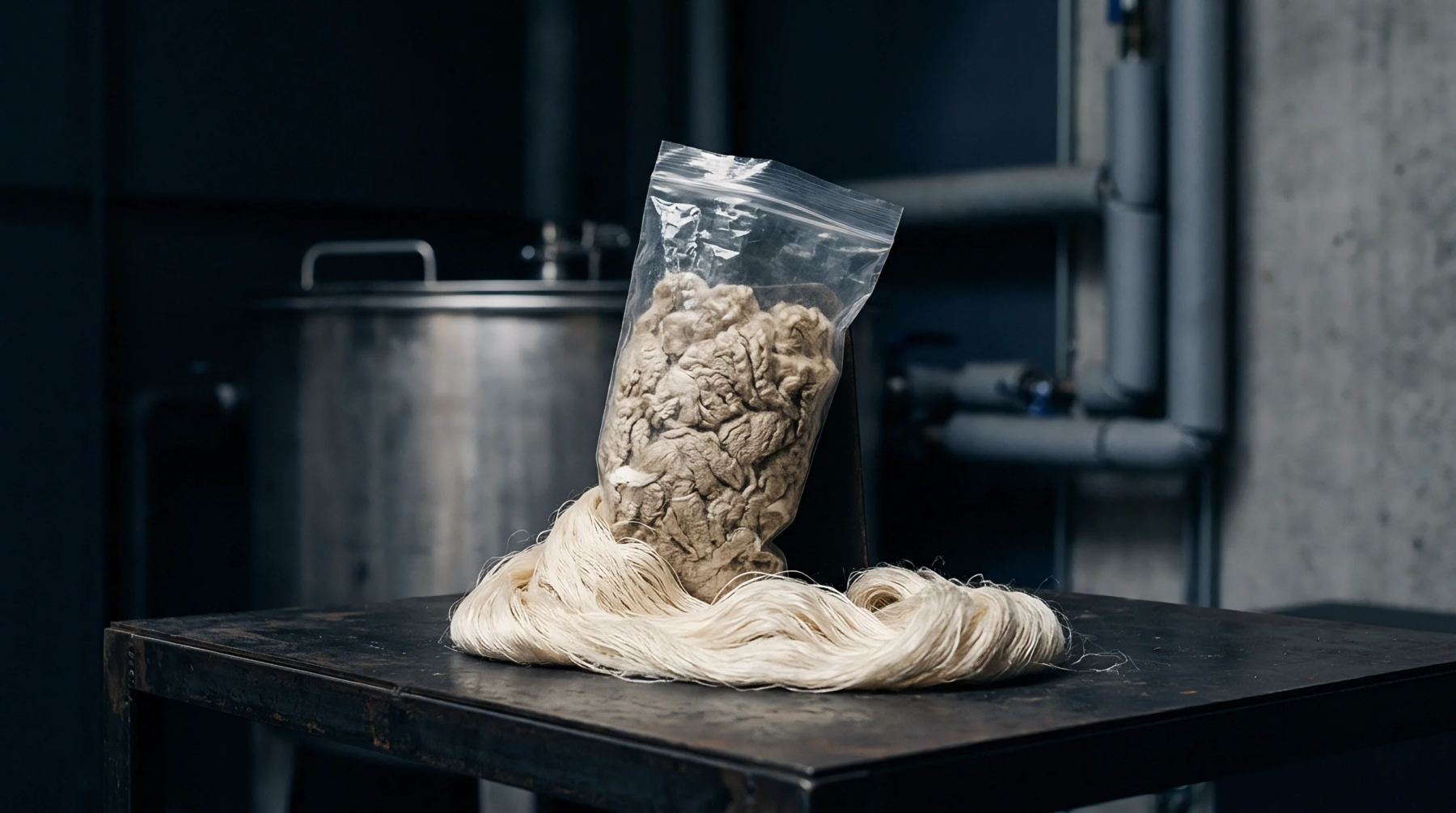
Commercial mass equals oven-dry mass multiplied by standard regain allowances, establishing an immutable billable weight independent of transit moisture shifts.

Solvent extraction adjustments correct non-fibrous loss and moisture regain to convert raw dry residual weights into accurate commercial mass for tariff settlement.

Unextracted spinning oils distort oven-dry fiber mass ratios, triggering false chief-weight customs reclassifications between cotton and viscose tariffs.

Wet finishing contraction alters fabric mass per square metre and relative fiber weight fractions, driving tariff classification drift and landed cost escalation.

Commercial mass calculations prevent paying for atmospheric moisture by basing billing on clean dry mass plus official fiber regain allowances.

Sulfuric acid extraction isolates polyester residue to verify yarn composition against commercial moisture regain standards and tariff weight thresholds.
Determining cotton viscose yarn blend composition requires solvent extraction pretreatment, precise reagent temperature control, and empirical d-factor corrections.
Quantitative fibre blend analysis uses selective chemical dissolution, gravimetric desiccation, and microscopic counting to verify trade declarations.

Seasonal raw cotton purity shifts alter chemical extraction mass ratios, triggering customs tariff reclassifications across chief weight thresholds.
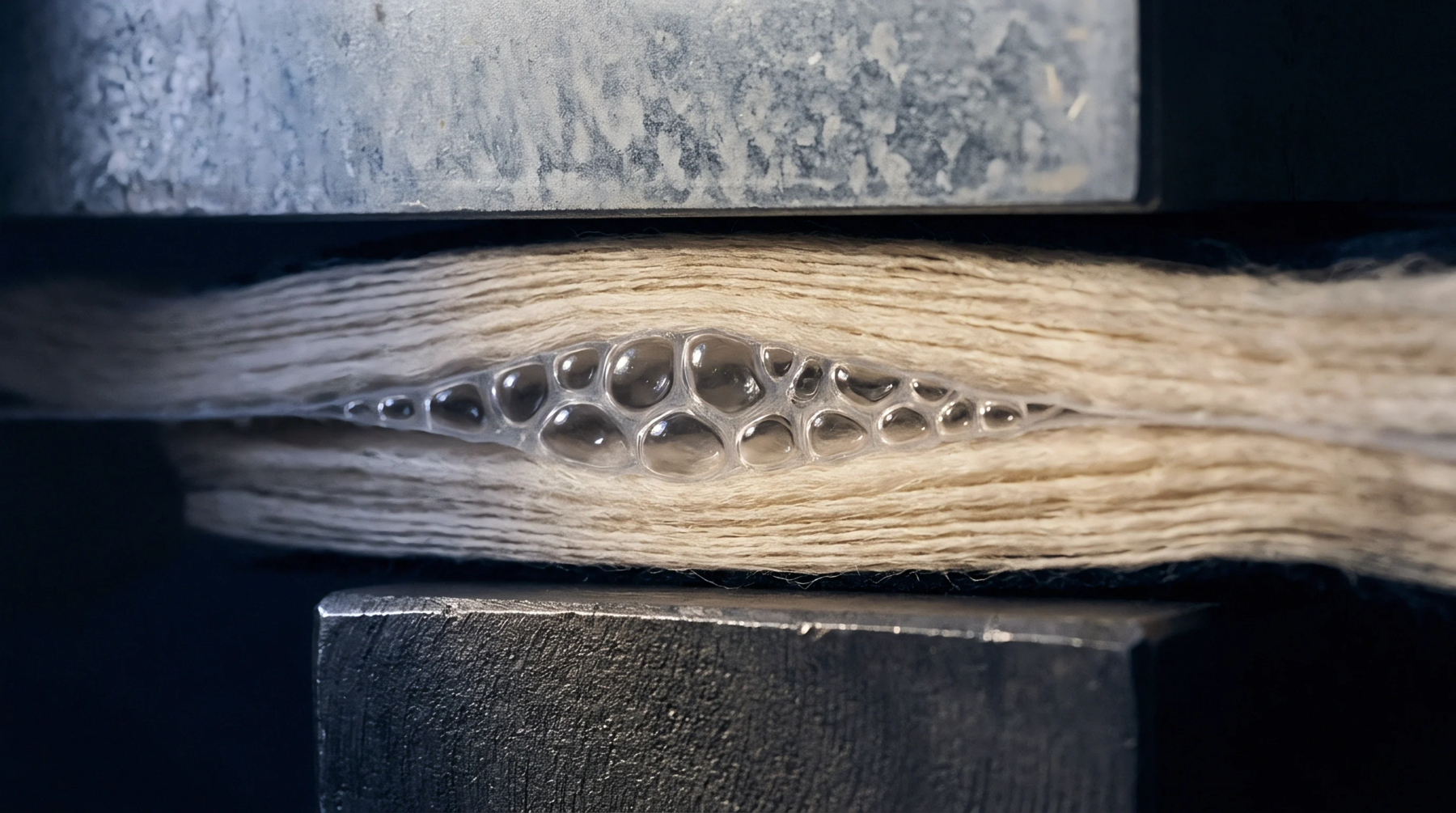
Predictive mass balance modeling tracks wet finishing mass gains and losses to declare compliant tariff chief weight classifications before customs entry.

Standard chemical separation of cotton polyester yarns uses 75% sulfuric acid dissolution with gravimetric recovery corrected for commercial moisture regain.

Disparity resolution requires calibrating ISO 1833 d-factors for degraded recycled polymers and enforcing P40 filter split-sample arbitration protocols.

Coupling multi-scale drag and tribological simulations stabilizes binary fiber ratios across chute and drafting zones, eliminating costly customs misdeclarations.
Selective dissolution via seventy-five percent sulfuric acid or formic acid zincate separates cotton from viscose after solvent scouring and mass correction.

Commercial moisture regain additions legally alter dry fibre mass ratios, shifting predominant weight and triggering customs tariff reclassifications.

Agricultural cotton crop shifts alter non-cellulosic mass loss and laboratory chemical test d-factors, driving borderline synthetic blends across tariff thresholds.

Commercial weight disputes resolve by testing oven-dry core mass via ISO 6741 and adding official commercial moisture regain rather than paying weighbridge scale tickets.

Commercial yield disputes in ocean-transported cellulosics resolve by calculating dry mass under ISO 6741 and applying contract regains to settle losses.

Statutory moisture regain tables alter dry laboratory mass into distinct legal percentages across customs regimes, moving tariff codes near chief-weight cliffs.

Aerodynamic drag and velocity differentials in pneumatic ducting segregate mixed fiber tufts, causing ratio drift, card sliver variance, and customs reclassification.

Differential pneumatic stripping removes short cotton fibers faster than polyester, altering yarn composition by two percent and shifting tariff lines.

Solvent residue correction factors adjust clean dry fibre mass for non-fibrous loss, ensuring precise commercial weight calculations for tariff classification.
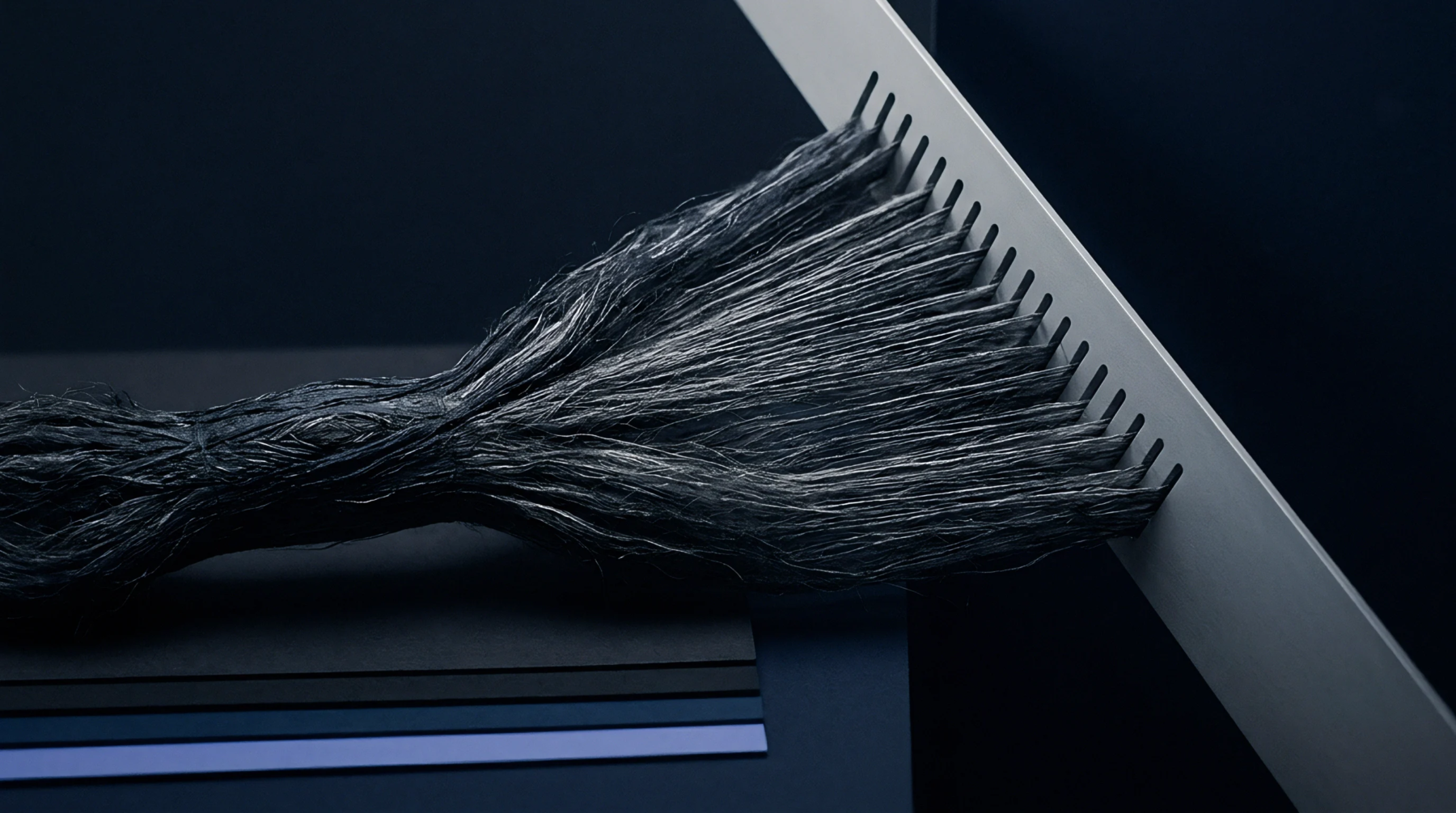
Finishing compaction increases the relative dry mass density of shrinking fibres, shifting verified finished composition percentages past nominal greige specs.

Commercial weight settlement corrects wet scale mass to dry fiber mass plus official regain allowance, preventing buyers from paying fiber prices for transit water.

Commercial moisture regain adjustments under ISO 1833 prevent customs reclassifications caused by ambient humidity variations during quantitative fibre testing.

Chemical separation of post-consumer blends requires sample-specific correction factors to account for altered polymer solubility and fine particle filtration losses.

Adjust invoiced cotton mass by converting net scale weight to oven-dry mass and applying the standard 8.5 percent regain factor under ISO 6741 standards.

Transoceanic yarn weight shifts stem from differential fiber regain kinetics, requiring vapor barrier foil packaging and ISO 6741 dry mass contract rules.

Chemical digestion in 75% sulfuric acid combined with ISO 6741 moisture regain adjustments provides precise quantitative ratios for recycled polyester and cotton yarns.
Expertise is a utility, not a secret. sentiention™ publishes its working knowledge as open reference: intelligence layer covering the materials it sources, the markets it enters, and the reference that serves both.