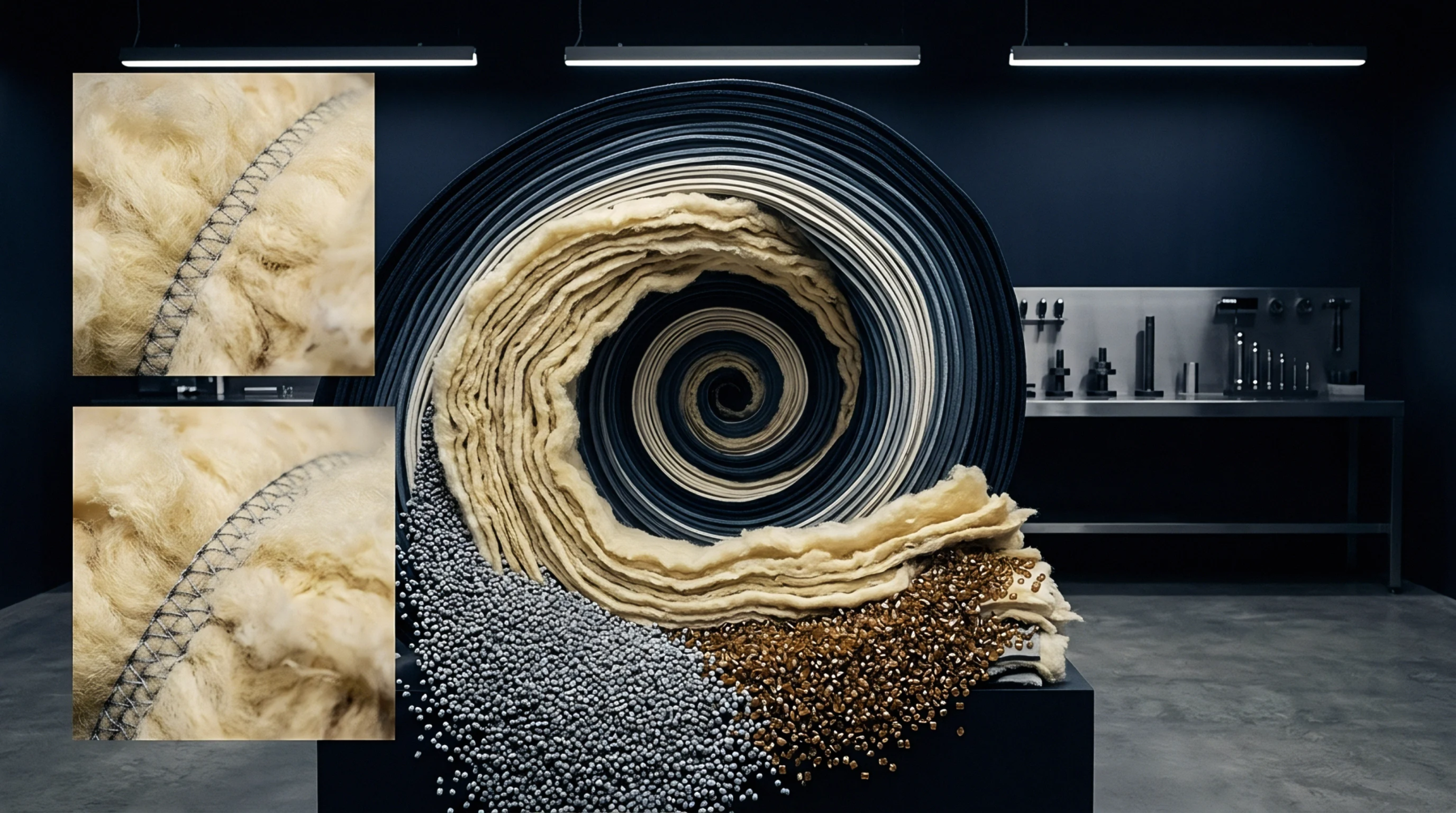
Structural Matrix
Fibrous structural proteins form the fundamental helical architecture of natural animal fibers like wool and cashmere. In textile raw materials, alpha-keratin provides the mechanical strength and elasticity observed during fiber stretching under tension. The protein chains coil into right-handed helices that dimerize into coiled coils, establishing the core structural network of the fiber cortex.
Thermal Behavior
Thermal energy reorganizes molecular bonds within keratinous cortex structures during industrial finishing. When steam setting or decatizing wool fabrics, alpha-keratin transitions from its native helical state into a stretched beta-sheet structure under heat and moisture. Rapid cooling locks the new dimensional state into the fabric matrix.
Uncontrolled thermal exposure degrades hydrogen bonds and permanent set failure occurs.
Chemical Resistance
Disulfide bridges between cysteine residues restrict wet processing degradation across alkaline scouring or dyeing operations. Oxidation or reduction of these cystine crosslinks weakens the mechanical integrity of alpha-keratin inside wool tops during bleaching treatments. Alkaline pH levels above nine cause hydrolysis of peptide bonds and loss of fiber tenacity.
Acidic dye baths below pH three preserve molecular weight distribution while achieving uniform color uptake.
Commercial Inspection
Laboratory testing verifies cortex stability through cystine content analysis and tensile recovery measurements. High-performance liquid chromatography determines damaged amino acid proportions after chemical processing. Fabric buyers specify minimum bundle strength values to prevent yarn breakage during high-speed weaving.