Standardized Climate
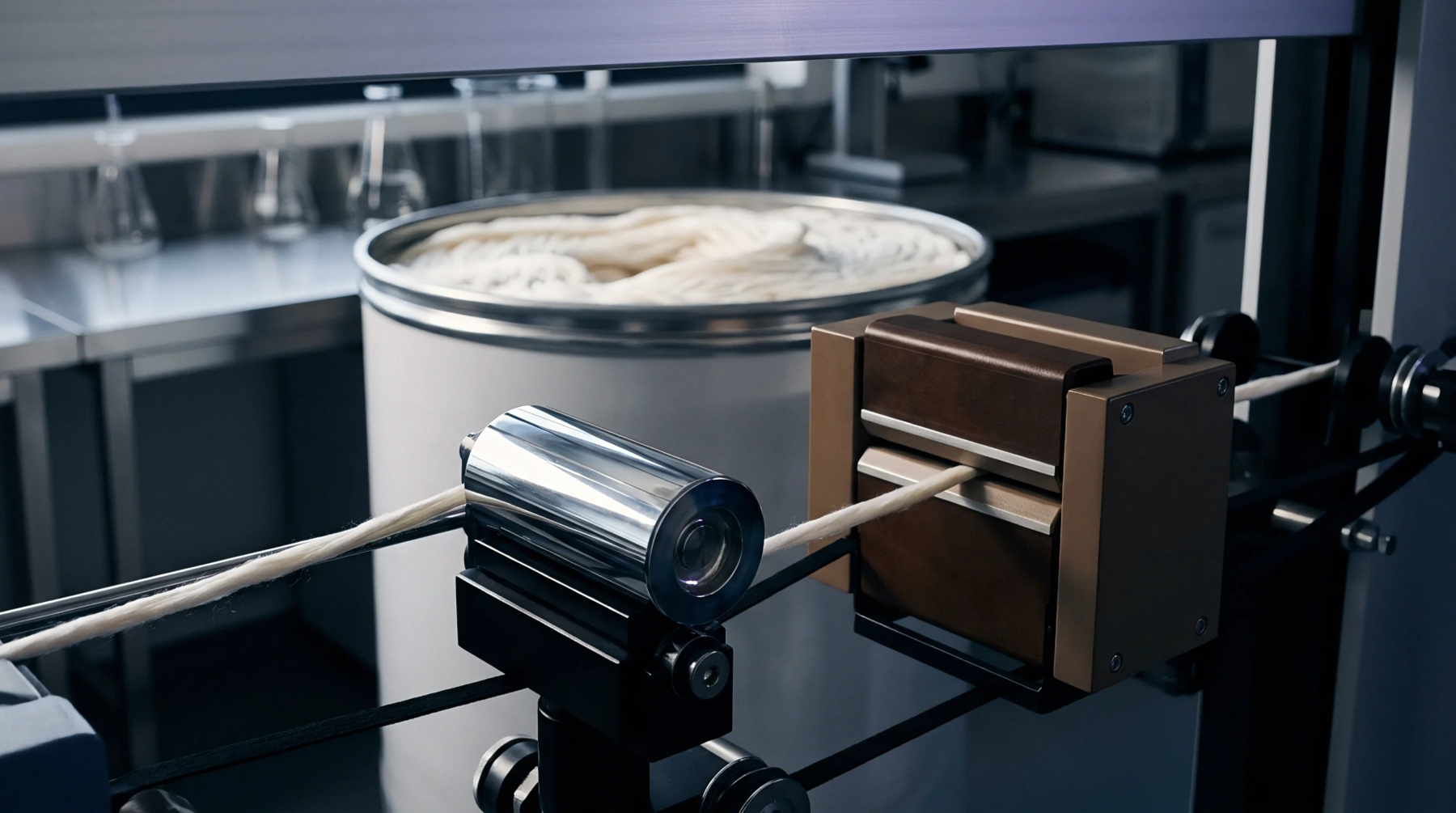
Controlled laboratory environments maintain specific levels of humidity and temperature to ensure repeatable textile testing. The conditioning room atmosphere provides the technical baseline required by international standards for material evaluation. Consistent thermal and moisture parameters reduce variance in weight, tensile strength, and dimension checks.
Technicians rely on these stable conditions to avoid erroneous data caused by local climatic shifts.
Laboratory Control
Regulated air circulation and sensors monitor the stability of the conditioning room atmosphere throughout the testing cycle. Mechanical systems remove moisture when humidity exceeds the set point or add vapor through automated humidifiers to compensate for dry air. Filtration units protect the internal environment from dust and particulate accumulation that interfere with precise weight measurements.
Sensors log readings every few minutes to track deviations from the required set point.
Material Response
Natural fibres exhibit significant physical changes when the conditioning room atmosphere fluctuates during sample preparation. Cotton absorbs moisture from the air, increasing its mass and modifying its break strength. Synthetic polymers respond less to these shifts but still require stabilization to ensure that static electricity does not corrupt instrument readings.
Testing protocols dictate that specimens reside in this area for a set duration to achieve equilibrium with the air.
Compliance Integrity
Documentation proves that a sample batch underwent exposure within the conditioning room atmosphere before final approval by a commercial buyer. Discrepancies between the laboratory report and the actual received weight often originate from variations in moisture regain resulting from unstable air controls. Consistent measurement environments permit the comparison of test results across different geographical locations and manufacturing sites.
Accurate data depends on the strict maintenance of the ambient air state.