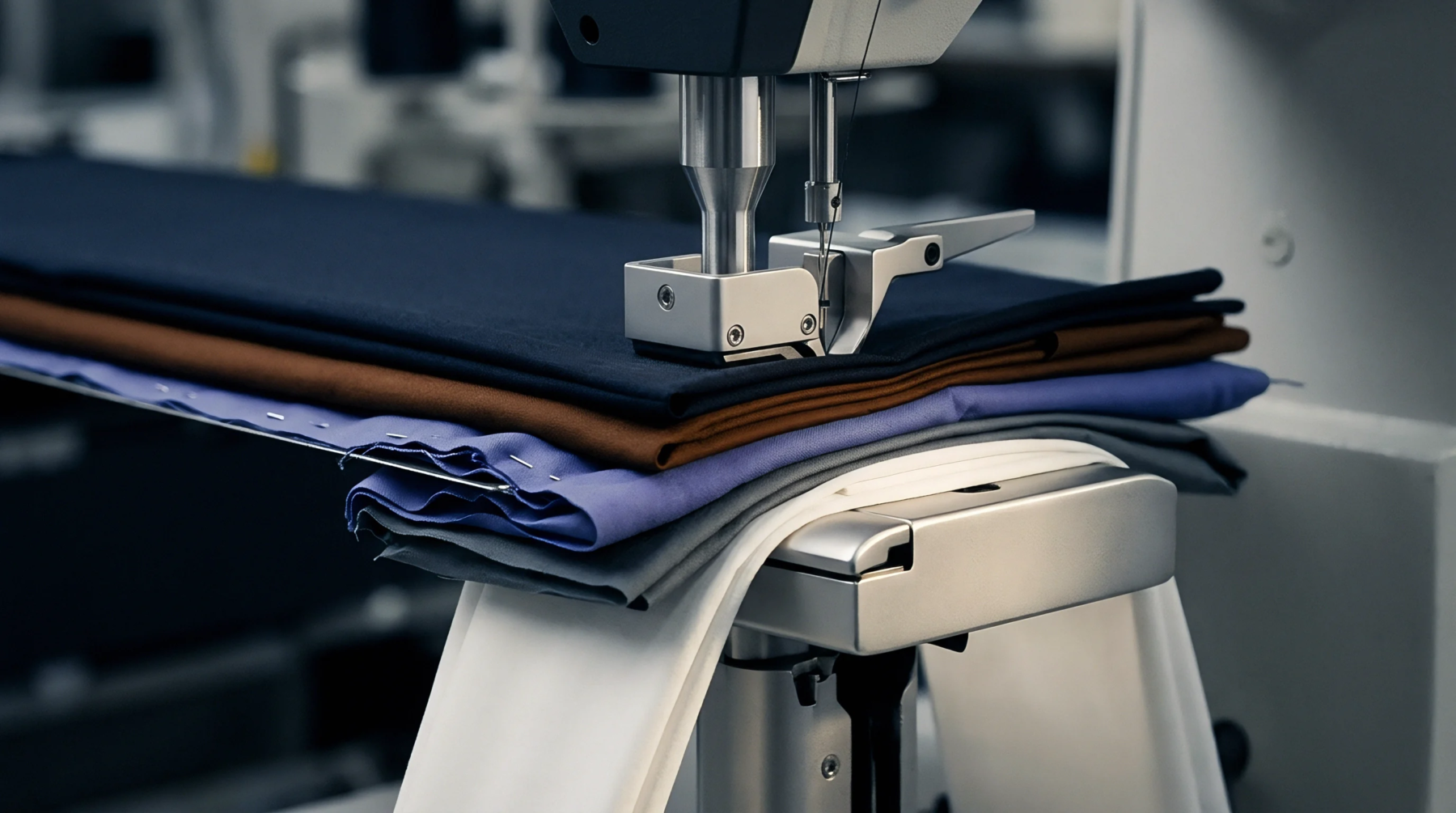
Sliver Parallelization
A textile prep process combines multiple strands of fiber slivers into a single, uniform strand through drawing rollers. During drawframe sliver blending, slivers of different fiber types, such as cotton and polyester, are fed together to create an intimate mix. This step is essential for producing multi-fiber yarns with consistent properties, and it represents the last point where different fibers can be merged before spinning.
The process does not apply to combed cotton production lines that use a single fiber source.
Fibre Cohesion
The machine pulls the parallel slivers through several pairs of rollers running at progressively higher speeds. This draft action straightens the fibers and blends them as they are drawn down to the desired thickness. The output sliver has a highly uniform distribution of both fiber types.
Blend Uniformity
Accurate drafting depends on setting the correct spacing between the rollers based on the longest fibers in the mix. If the rollers are set too close, the fibers break, while setting them too far apart creates thin places. The process ensures fiber parallelization.
Yarn Consistency
Spinning mills use this method to combine different fibers or to merge different grades of the same fiber to reduce cost. The blended sliver then goes to the roving frame and the ring frame for spinning. This mechanical blending is simpler to control than blending raw fibers in the blowroom.