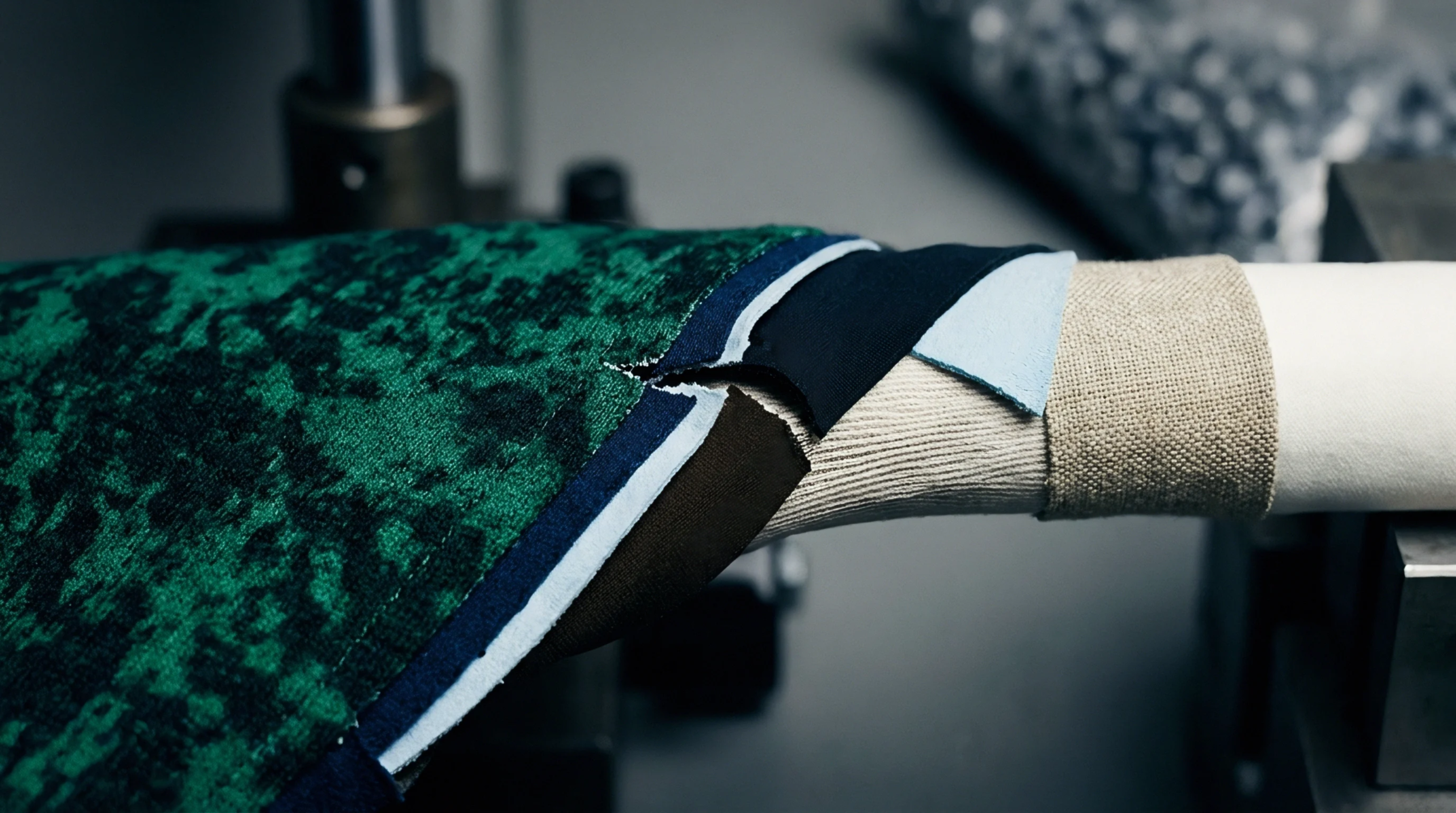
Mathematical Decoupling
Calibration protocols remove bias in high-precision textile scanning by isolating independent variables from observed data. External parameter orthogonalization accomplishes this through a projection matrix that forces non-essential noise into a null space while preserving the integrity of primary sensor readings. Digital signal processing units inside industrial colour spectrometers apply this operation to eliminate the influence of ambient light fluctuations during batch inspection.
Covariance Reduction
Analysts employ this method to prevent feature contamination where secondary variables like heat or humidity drift mask actual fibre density measurements. Data transformation rotates coordinate systems until the interfering factors occupy a perpendicular plane relative to the desired quality metrics. Consistent application ensures that test results remain valid across varying factory environments.
Calibration Stability
Technical standards define the application of this correction when sensors perform at extreme ranges. Processing boards execute these vector calculations in real time to counteract sensor saturation. Errors remain restricted to the specific noise floor established during baseline testing.
Measurement Accuracy
Controlled variables provide a reliable foundation for automated grading systems in yarn production. Orthogonal structures isolate the true physical properties of the strand from environmental interference. Accurate data output allows for tighter tolerance management in long-term manufacturing cycles.