Chemical Modification
Natural ovine fleece treated through intensive oxidative descaling and subsequent resin application yields a modified animal fibre exhibiting diminished felting tendencies and enhanced surface luster. The chemical process strips away the sharp, raised edges of the outer cuticle scales, softening the directional friction effect responsible for shrinkage during wet agitation. Industrial processors pass wool tops through chlorine, hypochlorite, or potassium monopersulfate solutions, followed by an ultra-thin polymer coating that seals the treated shaft.
Mercerized wool displays rounded scale margins under low magnification, presenting an artificially smoothed exterior that alters both physical hand and dye absorption kinetics. The definition excludes traditional cellulosic caustic mercerization, applying strictly to chemically and mechanically smoothed wool filaments.
Surface Transformation
Eliminating the cuticle step height alters how the individual filaments interact physically and optically within yarns. Untreated wool features scale edges that catch adjacent fibres when agitated in water, ratcheting them into tightly locked, irreversible felt structures. Chemical descaling erodes these protruding protein scales, reducing the differential friction coefficient between tip-to-root and root-to-tip passes.
Light reflects more uniformly from the polished cylindrical cortex, converting the natural matte finish of ovine fleece into a distinct, high-sheen surface. The removal of the outer epicuticle layer also speeds up dyestuff diffusion, enabling deeper, more vibrant color yields under shorter dyeing cycles and lower liquor temperatures.
Analytical Ambiguity
Chemical erosion of cuticle scales complicates standard laboratory procedures used to verify fiber composition in commercial blends. Because scale step heights drop from roughly 0.8 micrometres down toward 0.2 micrometres, treated fibres physically resemble the low-profile scale margins typical of natural cashmere under basic projection light microscopy. The modified filaments mimic luxury down, creating false positives during routine quality screening of delivered apparel goods.
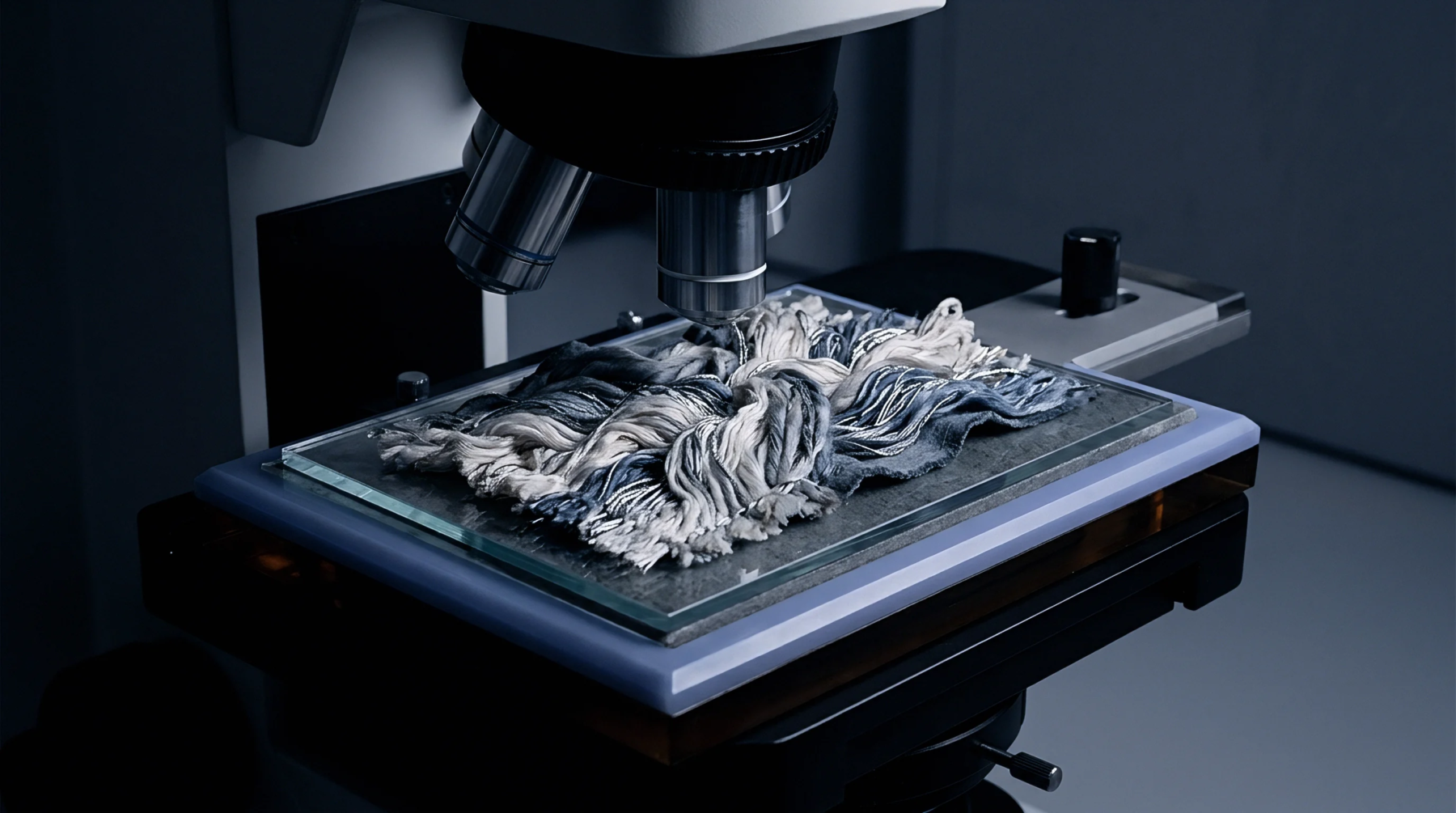
Laboratories resolve this diagnostic overlap by utilizing high-resolution scanning electron microscopy. Electron imaging reveals chemical oxidation artifacts, such as striated shaft lines, stripped cortical cell edges, and irregular resin puddles, features that never appear on untreated caprine down fibres.
Contractual Compliance
Purchase orders for luxury knitwear require verification that soft-hand garments do not conceal treated wool sold at pure cashmere price points. Suppliers sometimes blend treated sheep wool into cashmere top lots, exploiting the reduced scale profile to bypass entry-level optical microscope inspections. Fabric testing laboratories subject disputed lots to chemical staining, scanning electron microscopy, and amino acid analyses to detect cysteic acid markers created by oxidative descaling baths.
Discovering oxidized wool residues in lots sold as pure specialty down triggers contract rejection, commercial chargebacks, and regulatory re-labeling of the finished goods. Mills buying treated wool specifications intentionally do so to produce machine-washable garments that retain soft touch without shrinking during consumer maintenance.