Optical Reagent
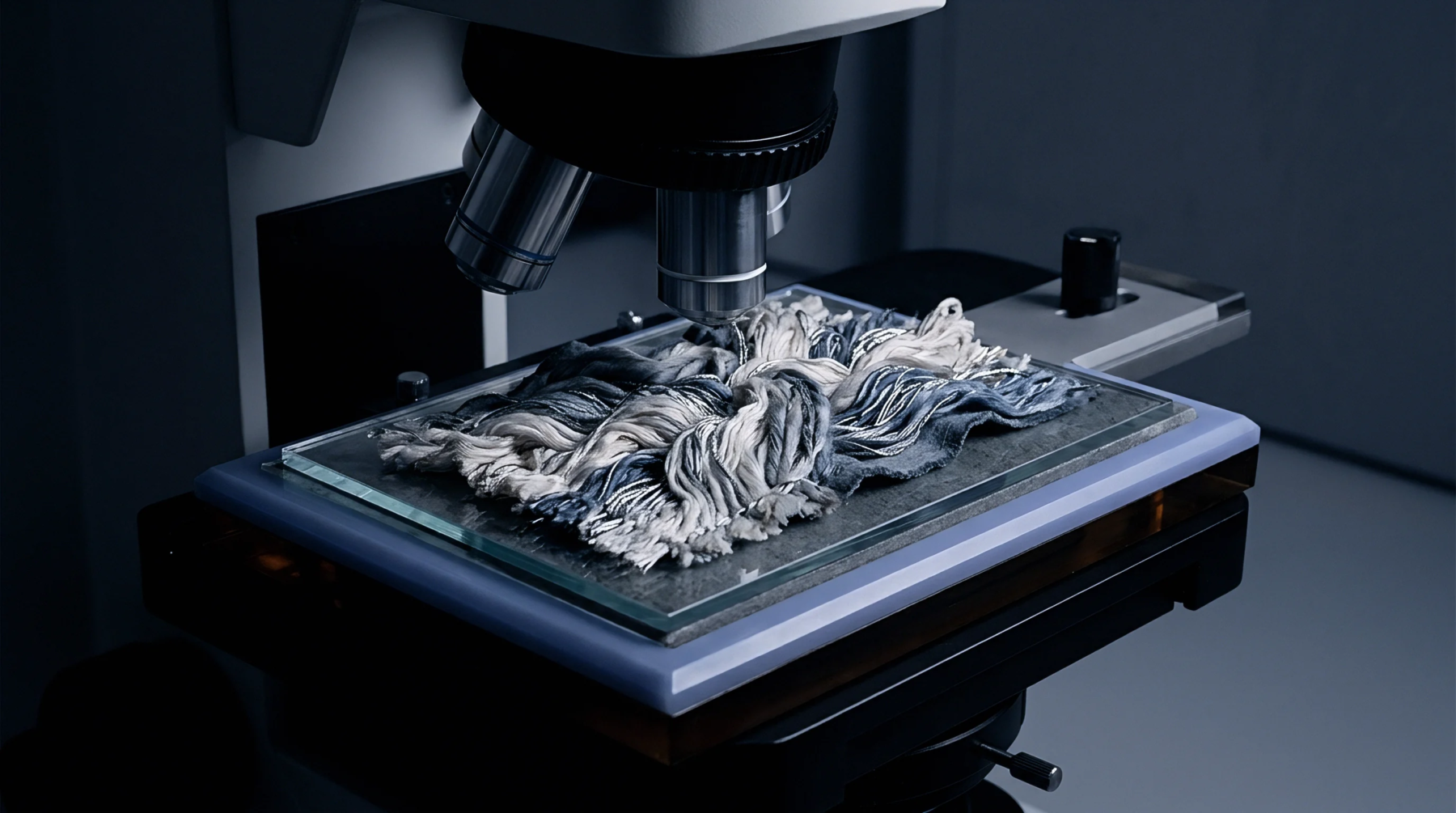
Viscous, transparent liquid chemical preparations composed of purified propane-1,2,3-triol provide an inert viewing vehicle for preparing temporary textile specimen slides. Laboratories spread glycerol mounting medium across glass slides to eliminate air pockets and suspend fibre snippets without altering their natural morphology. The fluid possesses a refractive index of approximately 1.47 at room temperature, sitting comfortably near the 1.54 refractive index of solid keratin proteins.
This matched refractive proximity minimizes harsh optical refraction at the fiber boundaries while leaving scale margins clearly visible under brightfield light illumination. The reagent remains purely a non-permanent mounting solution, drying out over extended storage and washing away readily during water rinsing steps.
Specimen Preparation
Creating an optical projection slide demands precise handling of the mounting fluid to prevent air bubbles and optical distortion. Laboratory technicians cut clean fibre snippets to lengths between 0.4 and 0.8 millimetres using a specialized microtome or cross-section tool. A controlled drop of the liquid medium is placed directly onto the center of a degreased glass slide.
The technician disperses the snippets throughout the liquid drop using a fine dissecting needle, ensuring individual fibres do not overlap or clump together. Lowering a cover glass slowly at an angle expels trapped air bubbles, creating a flat, uniform layer suitable for automated scanning or manual reticle measurement across the full viewing plane.
Refractive Control
Balanced refractive contrast between the immersion liquid and the fibre core governs the clarity of surface diagnostic features. Highly mismatched fluids cause severe refraction haloes, known as Becke lines, which obscure the delicate edges of animal hair cuticle scales. Liquid paraffin or water can serve as alternate mounting agents, but water evaporates too rapidly under stage heat, while paraffin lacks the optimal refractive match needed for subtle scale step resolution.
Glycerol maintains its viscosity and volume during lengthy measurement procedures under intense microscope illumination. The fluid does not dissolve animal hairs, synthetic polymers, or cotton cellulose, providing a stable, non-reactive physical environment throughout standard test durations.
Operational Boundaries
Environmental humidity and storage conditions dictate the functional lifespan of slides prepared with this reagent. Pure glycerol absorbs atmospheric moisture over time, reducing its viscosity and shifting its refractive index downward toward that of pure water. This hygroscopic dilution degrades edge resolution during fine diameter evaluations.
Furthermore, the medium remains mobile between the slide and cover glass, meaning inadvertent stage contact can shift the specimen snippets during counting procedures. Laboratories conducting legal arbitration testing discard glycerol-mounted slides after completing immediate measurements, as drying borders and shifting snippets prevent identical re-testing of the same prepared slide at later inspection dates.