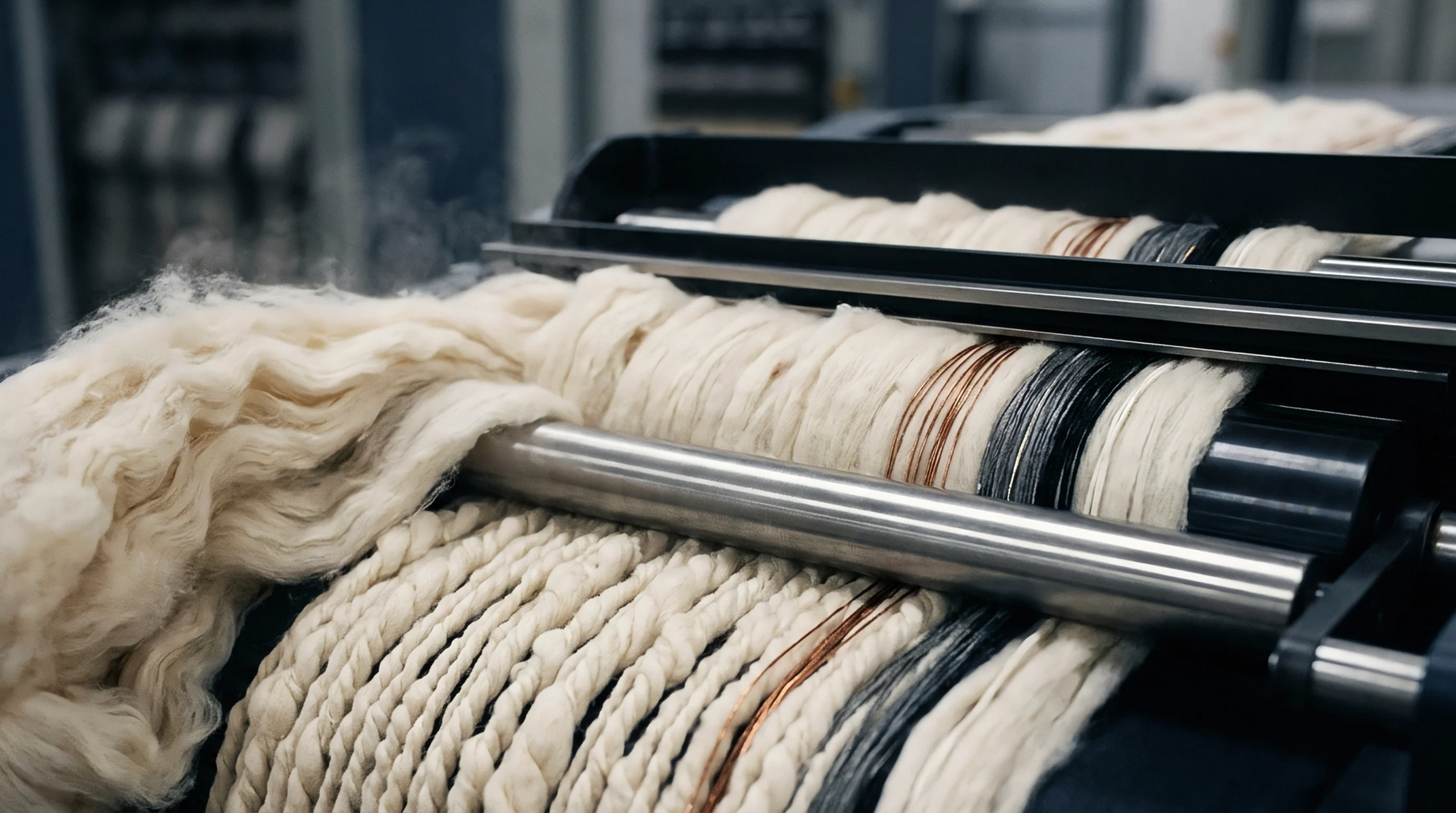
Surface Layer
Natural lipids covering the outer sheath of raw cotton fibers protect them from moisture and environmental damage during crop growth. The primary wall wax is the thin lipid barrier that resides on the outer surface of the raw fiber. This wax acts as a protective shield against rain and pests while the cotton boll is developing in the field.
Spinning Lubrication
Mechanical processing of cotton in the spinning mill relies on these natural lipids to prevent fiber breakage. The primary wall wax acts as a natural lubricant that reduces friction as fibers pass through the cards and draw frames. If this wax layer is prematurely stripped away by harsh pre-treatments, the fibers become brittle and prone to static buildup, which increases the rate of ends-down during spinning.
The presence of this wax layer is therefore essential for high-speed rotor and ring spinning.
Scouring Chemistry
Wet processing of cotton fabrics requires the complete removal of these hydrophobic lipids to ensure uniform dye uptake. Industrial scouring utilizes hot alkaline solutions and surfactants to emulsify and wash away the primary wall wax. After scouring, the fabric exhibits high absorbency, which allows chemical dyes and finishes to penetrate the fiber core.
Quality Control
Absorbency tests like the drop test confirm that the wax has been successfully removed from the prepared fabric. If residual wax remains, it creates uneven splotches during dyeing, which causes the finished fabric to be rejected for shade inconsistency.