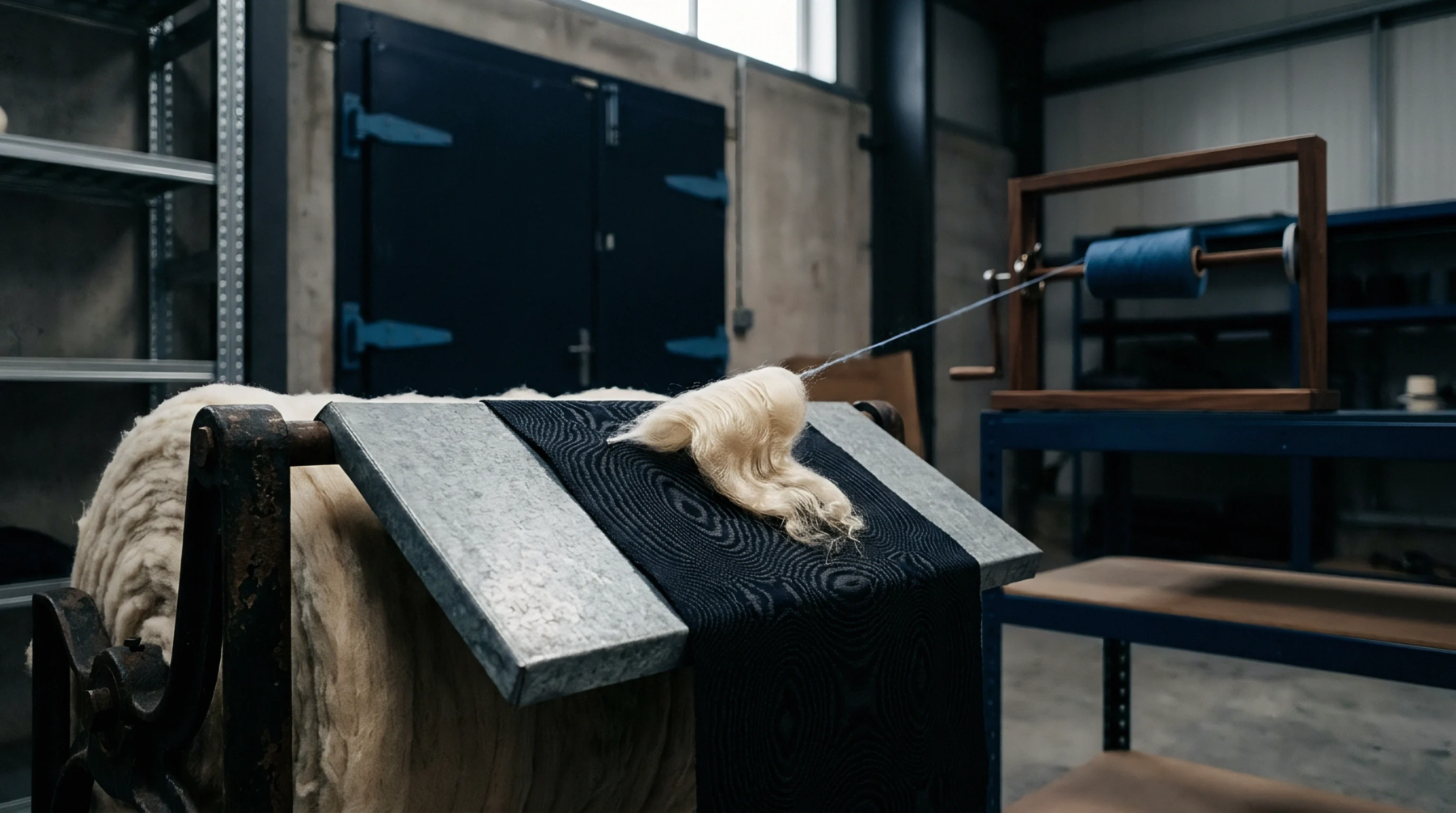
Raw Cashmere Classing and Guard Hair Percentage Estimation
Raw cashmere value hinges on clean down yield and optical verification of residual coarse hair content below zero point five percent by mass.
Insulating waterfowl down relies on mechanical separation where secondary follicle down denotes the under-plumage cluster harvested from avian skin structures during processing. Raw waterfowl feathers enter automated sorting machinery after slaughterhouses collect the material from meat production lines. Industrial gins separate the mature contour feathers from the soft thermal clusters based on aerodynamic properties inside vertical air columns.
Commercial buyers grade the resulting mass by measuring fill power values in specialized laboratory chambers maintained at standard atmospheric conditions. High-grade clusters possess three-dimensional filaments that trap still air efficiently within insulated apparel compartments. Lower selections contain broken plumes and excessive dust fractions that fail standard purity tests conducted before filling high-end sleeping bags.
Down quality assessments demand rigorous laboratory protocols to verify actual performance characteristics inside finished winter garments. Technicians compress standardized samples inside transparent cylinders under a specified piston load to measure volume recovery speed. Premium secondary follicle down expands rapidly after release because natural oil residues repel moisture and maintain individual filament resilience.
Processors treat raw material with industrial detergents to remove organic impurities that degrade thermal properties over extended wear cycles. Moisture accumulation inside jacket baffles reduces trapped air volume and lowers the overall warmth rating of the commercial product.
Sourcing authentic down requires strict supply chain traceability from processing plants to final garment manufacturers. Mills provide certificates of analysis detailing species composition percentages alongside species admixture limits verified through microscopic examination. Synthetic adulteration remains a persistent commercial risk addressed through ultraviolet spectroscopy and amino acid profiling during customs clearance procedures.
Ethical sourcing standards mandate independent auditing of feather collection farms to prevent live plucking practices prohibited by international animal welfare agreements. Finished parkas carry hangtags displaying certified fill power numbers derived from standardized laboratory drop-test results.
Down-processing specifications enforce strict cleanliness thresholds to guarantee hygienic standards in consumer bedding products. Residual grease percentages must remain below two percent of total mass to prevent bacterial growth and unpleasant odors during humid weather. Laboratories measure turbidity by shaking extracted down samples in distilled water and recording light transmission through the resulting liquid.
High turbidity values indicate inadequate washing cycles and excessive particulate matter remaining attached to the delicate down branches. Manufacturers reject batches failing cleanliness parameters because dusty fillings compromise fabric breathability and trigger allergic reactions among sensitive end users.
Raw cashmere value hinges on clean down yield and optical verification of residual coarse hair content below zero point five percent by mass.
Expertise is a utility, not a secret. sentiention™ publishes its working knowledge as open reference: intelligence layer covering the materials it sources, the markets it enters, and the reference that serves both.