Yarn Feed
Continuous filament supply eliminates bobbin changes on the weaving floor. Modern rapier and projectile looms employ shuttleless insertion to pull yarn across the warp shed at high speeds. Mechanical grippers or fluid jets carry the pick from a stationary package mounted outside the loom frame.
Production output increases substantially because off-loom packages hold significantly more material than traditional wooden bobbins. Mill operators verify this feed rate during pre-production setup to prevent tension spikes that cause warp breaks.
Velocity Vector
Acceleration rates dictate the mechanical limits of the pick transfer. Inertial forces acting on the yarn package demand precise control systems during the initial pick acceleration phase. Electromagnetic brakes manage the deceleration cycle as the gripper releases the yarn at the opposite salvage.
Engineers calculate these trajectories to minimize yarn abrasion against the reed wires.
Edge Formation
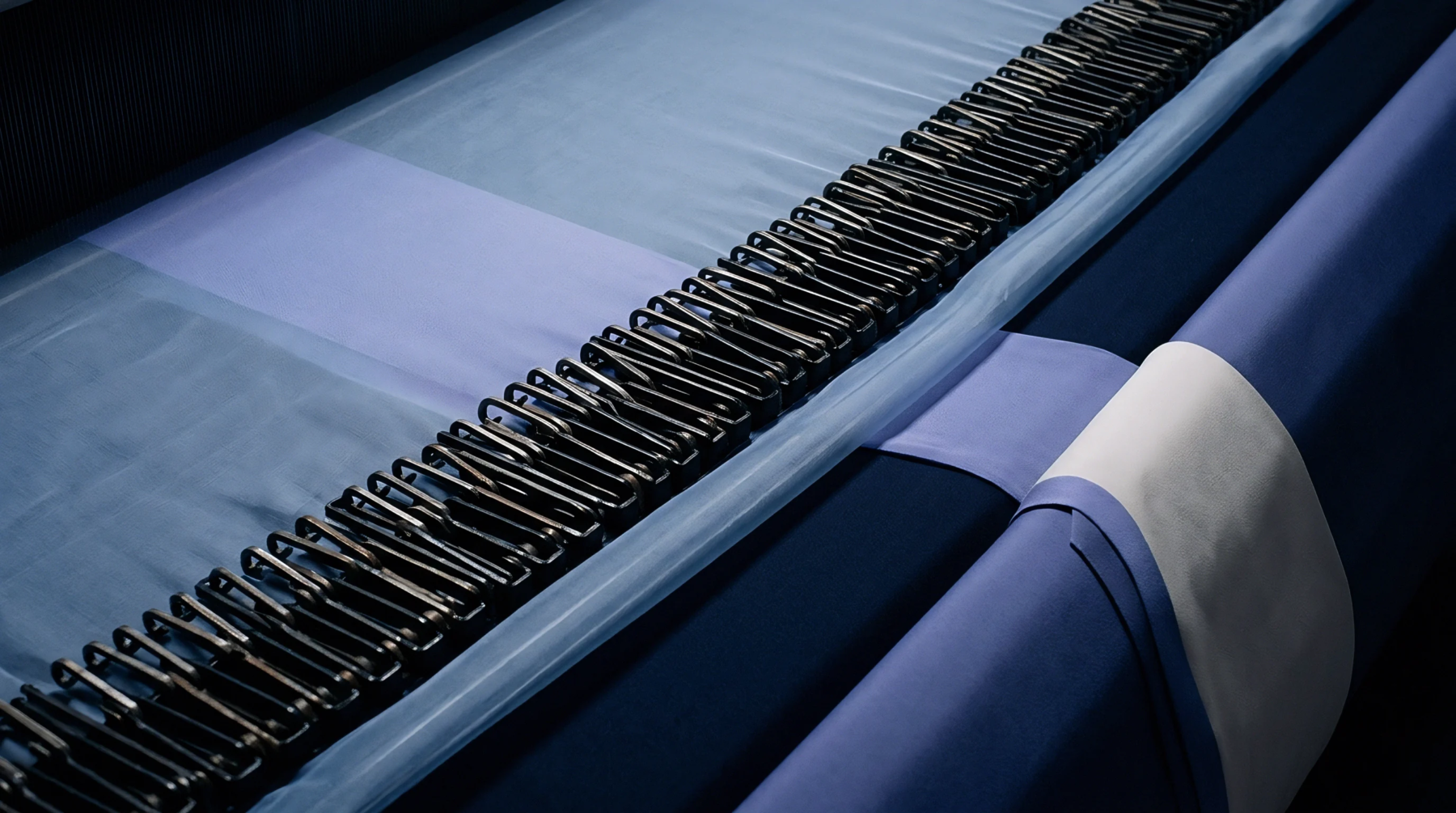
Selvedge integrity depends on how the fabric margins are secured after the pick is cut. Leno binding or tuck-in devices finish the fabric edges on high-speed machines without traditional shuttle bounds. Loose ends decrease commercial value during garment assembly operations.
Quality control inspectors check edge density under magnification to ensure downstream dyeing processes do not fray the margins.
Mechanical Limit
Maximum reed widths restrict loom speed parameters on heavy industrial fabrics. Dynamic stress on the drive mechanism escalates exponentially as the insertion rate exceeds standard thresholds. Plant managers balance speed against component wear to maintain consistent fabric density across large bulk orders.
Tension monitoring equipment halts the machine instantly when yarn anomalies disrupt the insertion cycle.