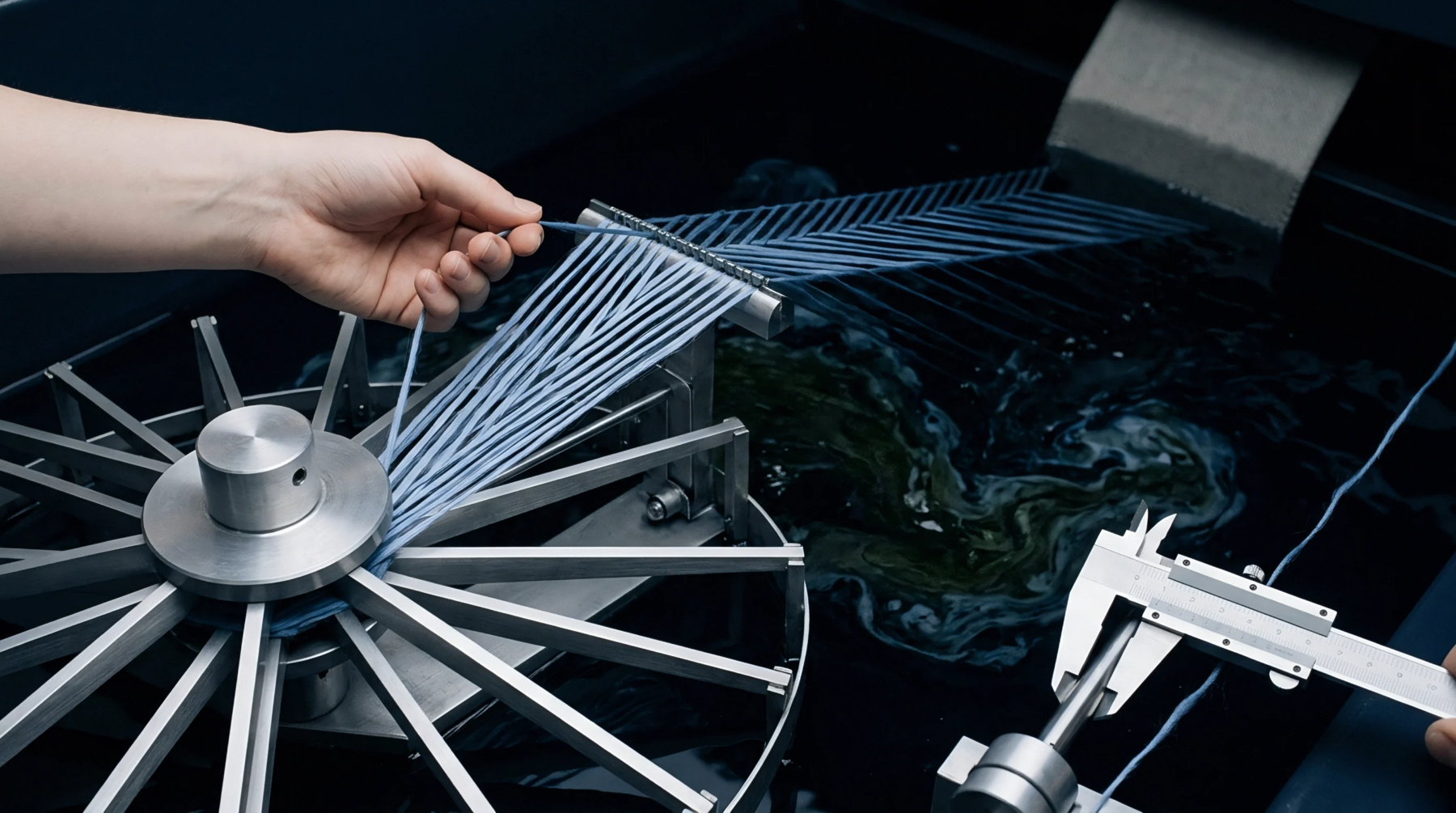
Physical Disturbance
Direct mirror-like reflection of light from a fabric surface into a sensor lens represents a major source of measurement error during automated inspections. In textile color and composition testing, specular glare occurs when the incident light reflects directly off shiny synthetic fibers or wet coatings without penetrating the material. This raw reflection bypasses the chemistry of the sample and saturates the detector with uninformative white light.
Optical Correction
Minimizing this surface reflection is achieved by setting the illumination source and the detector at specific offset angles. Standard laboratory instruments use a forty-five degree illumination angle and a zero degree detection angle to ensure that only diffuse light is collected. For in-line sensors, circular polarizing filters are often installed to block the aligned waves of specular glare before they reach the imaging array.
Quality Interference
Erratic composition readings and false chemical defects are the primary consequences of uncorrected surface reflections. When the sensor encounters a patch of high sheen, it misinterprets the bright reflection as a change in fiber blend or chemical coating thickness. This false signal can cause the automated sorting system to reject compliant fabric rolls.
Structural Constraint
Wet finishing processes and calendering represent the boundary where standard glare reduction techniques can fail. When a fabric is heavily compressed or wet, its surface behaves like a mirror, which increases the intensity of the reflection.