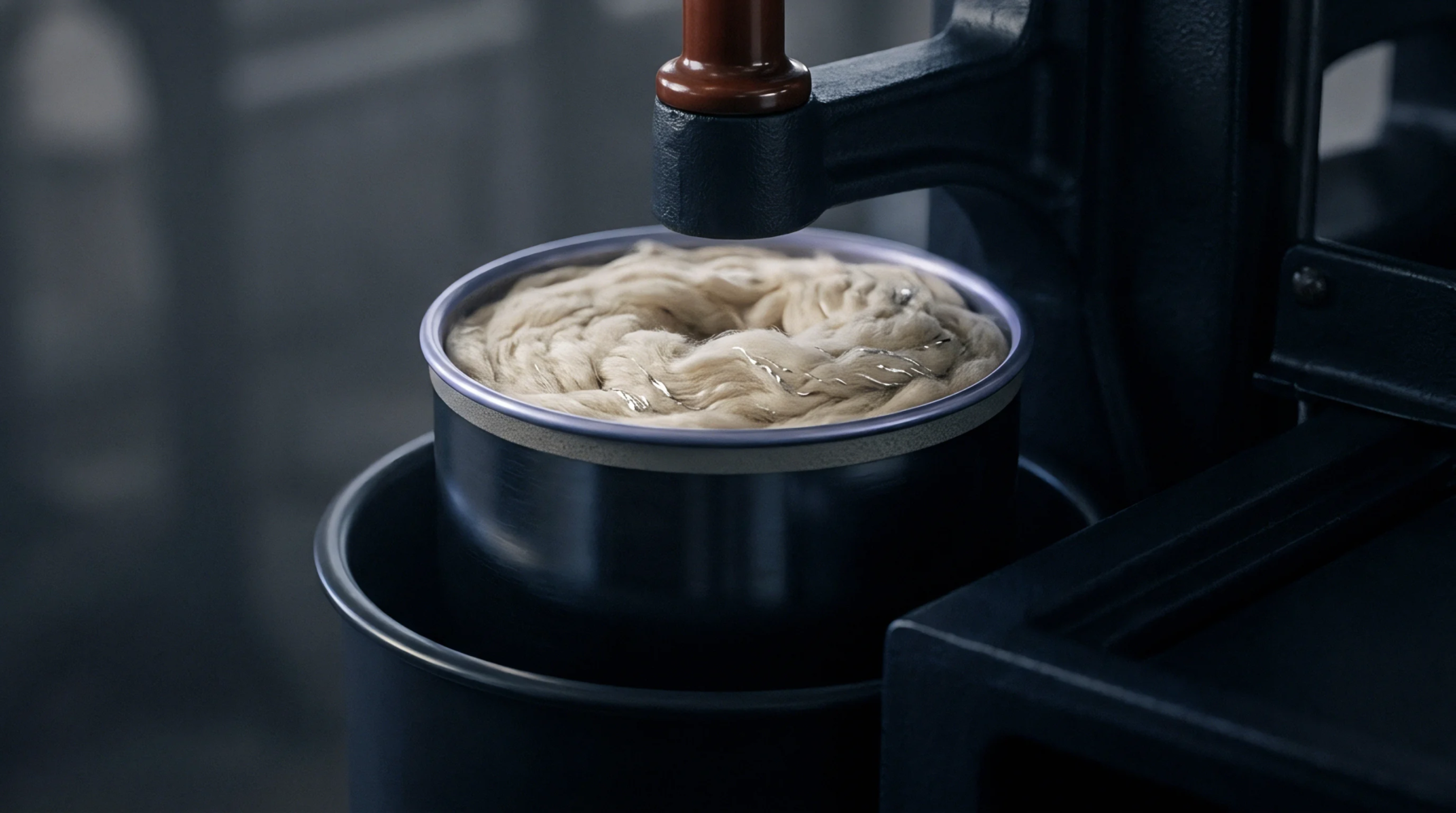
Feeding Geometry
Rectilinear combing machine configurations determine the direction of lap sheet movement relative to the swinging nipper assembly during the nipping phase. During backward feed combing, the feed roller rotates to advance the lap sheet while the nipper frame moves backward away from the detaching rollers. This movement isolates short fibres before the circular comb rotates through the fringe.
The boundary of this mechanism lies within cotton combing machinery operating on short and medium staple lengths.
Fibre Selection
Circular combs engage the tuft while the tail end remains secured under the closed nipper. Because backward feed combing introduces fresh sheet material during the backward stroke, a higher proportion of longer fibres is presented to the nipper jaws prior to the action of the top comb. This mechanical sequence removes short fibres and residual neps with high selectivity.
Waste Extraction
Noil generation increases under backward feeding relative to forward feeding at equivalent gauge settings. The distance between the nipper lip and the detaching roller dictates the precise fraction of short fibres pulled into the waste collector. Adjustments to the feed distance per cycle alter the percentage of extracted material, directly influencing sliver yield.
Process parameters must account for the trade off between waste volume and yarn cleanliness.
Sliver Uniformity
Resulting combed sliver exhibits elevated parallelisation of long fibres. Fibres remaining in the main sliver path pass to the drafting system with consistent orientation.