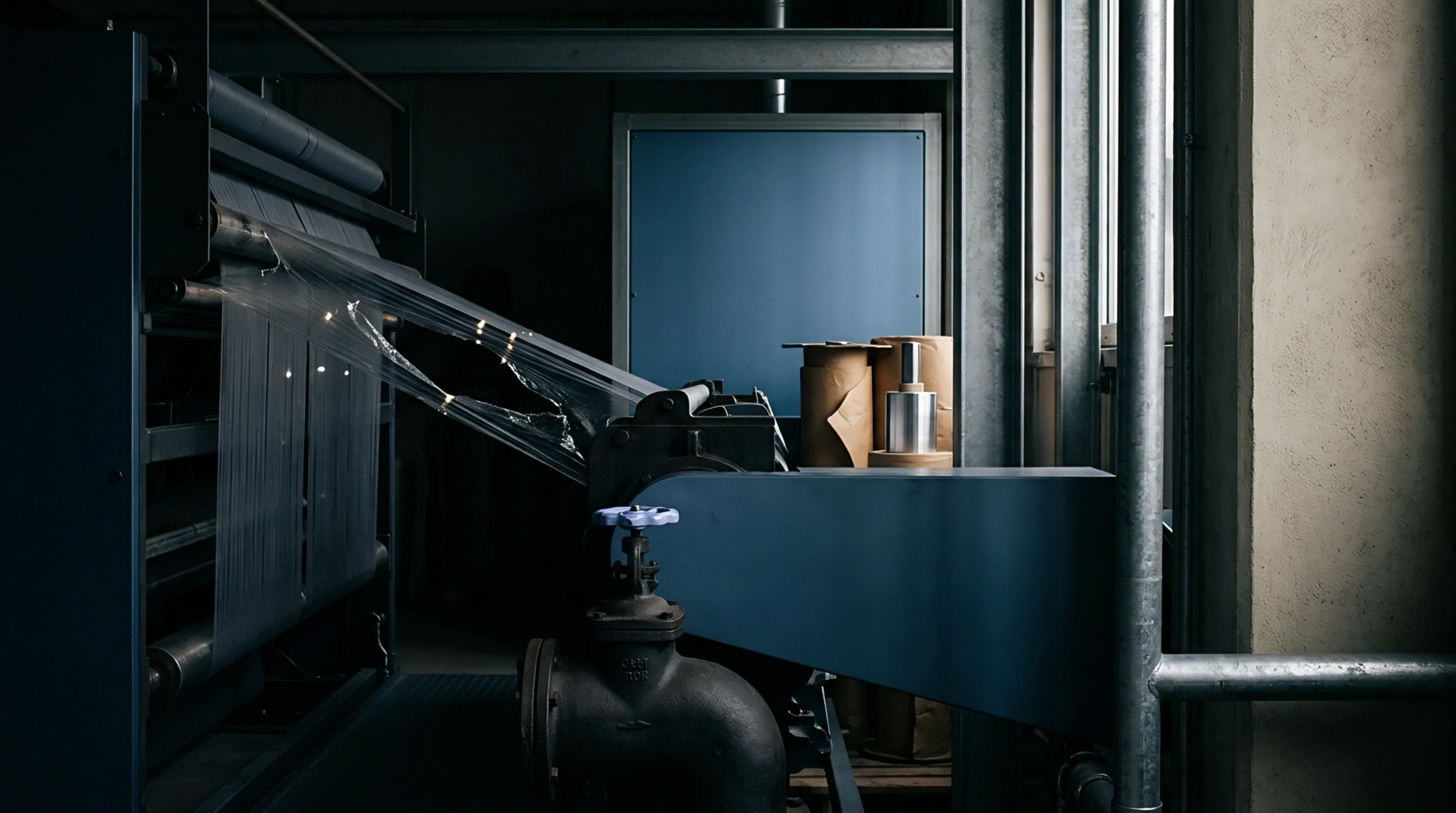
Fractionation Cylinder
Revolving segmented cylinders clothed with graded wire pins or saw-toothed alloy bars perform bottom tuft extraction in short-staple cotton and worsted combing machinery. Positioned beneath oscillating nipper jaws, the cylinder rotates intermittently or continuously to dress the projecting fringe of incoming lap. As the nippers grip and present a fibre beard, the circular comb penetrates the leading portion to extract short fibres, neps and seed-coat fragments.
Retained long fibres pass downstream to the detaching rollers while trapped waste transfers to a revolving brush. The boundary of its action stops at the bite of the nipper jaws, leaving the trailing ends of the tuft uncombed until a secondary linear comb engages them.
Needle Progression
Modern combing segments employ a progressive geometry along their circumferential arc. Leading rows feature coarse wire spacing and low tooth density to penetrate dense lap without snapping long staples. Subsequent rows increase in population density, terminating in fine needles spaced closely to catch microscopic neps.
Throughput relies on this graduation, which distributes combing resistance across the entire segment surface. In cotton combing, tooth density transitions from approximately six teeth per centimetre at the leading edge to twenty-eight teeth per centimetre at the trailing sector. Worn or bent comb points reduce waste extraction efficiency and release hook-ended fibres into the finished sliver.
Noil Separation
Combing action deposits separated short fibres, termed noil, between wire teeth along the rotating periphery. A high-speed under-cylinder brush revolving in the same direction strips these extracted fibres from the circular comb clothing. Pneumatic suction nozzles then draw the cleared noil away to waste collection chambers.
Clean clothing surfaces are restored before the segment completes its revolution to engage the next lap presentation. Insufficient brush penetration leads to cylinder loading, which causes nep carryover into the combed sliver. Mill technicians check brush bristle wear during scheduled mechanical maintenance stops to maintain constant extraction ratios.
Timing Synchronization
Combing quality depends on mechanical synchronization between cylinder rotation, nipper jaw closing and detaching roller reversal. The index wheel guides precise timing, measured in dial degrees relative to top dead centre. When the circular comb enters the fringe too early, nipper grip is incomplete and excessive long staple gets swept into the noil.
Late entry leaves the beard insufficiently opened, causing high breakage when the detaching rollers seize the front ends. Combing machines verify this timing mechanically to balance production rate with target noil extraction percentages. Proper clearance settings between the segment teeth and the lower cushion plate prevent metal-to-metal contact during cyclic oscillation.