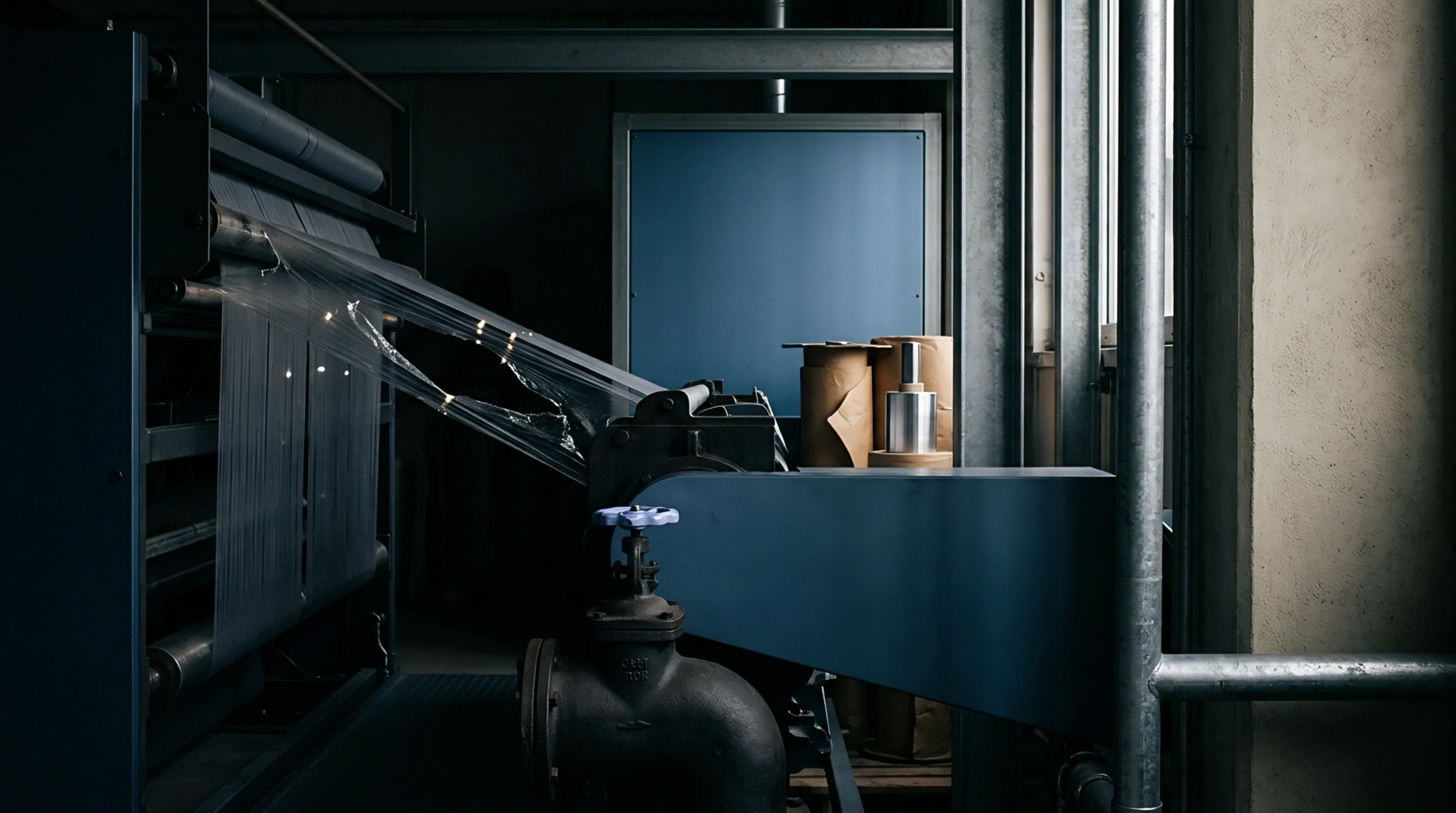
Extruded Barrier Layer
Continuous thermoplastic sheet extruded from polyethylene or polypropylene polymers acts as a liquid barrier, bonding membrane or packaging layer within laminated technical textiles and protective workwear. This extruded material, termed polyolefin film, provides absolute hydrostatic resistance while maintaining flexibility, chemical inertness and low specific gravity in industrial composites. Molten resin passes through blown-film dies or cast-film chill rolls, forming thin membranes that can be laminated to nonwoven or woven fabrics via thermal calendering, extrusion coating or adhesive bonding.
The term covers solid or microporous extruded polyolefin sheets, stopping short of woven tape textiles, wet-laid membranes and synthetic staple fibers.
Permeability Processing
Industrial production tailors breathability by incorporating mineral fillers like calcium carbonate before stretching the extruded sheet biaxially. Mechanical stretching pulls polymer chains away from filler particles, generating millions of microscopic pores that permit water vapor transmission while repelling liquid water droplets. The resulting microporous membrane functions inside viral-protection medical gowns, chemical suits and construction housewraps.
Monolithic variations skip the filler, offering airtight containment for food packaging and geotextile containment ponds.
Adhesion Dynamics
Surface energy remains naturally low across raw polyolefin substrates, requiring corona or plasma discharge treatment prior to downstream printing or laminating. Surface tension levels must rise above 38 dynes per centimeter to prevent delamination under mechanical flexing. Thermal lamination uses low-melting linear low-density resin layers to weld the film onto spunbond polypropylene backings without burning the carrier web.
Standard peel strength tests under ASTM D1876 confirm interfacial adhesion integrity across finished multi-layer composites.
Barrier Performance
Hydrostatic head testing per ISO 811 verifies that the non-porous structure withstands water columns exceeding five meters before mechanical failure. Puncture resistance tests evaluate durability against sharp garment trims, zippers or gravel surfaces in construction sites. Pinhole defects formed during thin cast extrusion ruin protective garment certification instantly.
Non-porous polyolefin film provides reliable liquid exclusion in protective barrier fabrics.