Boundary Lubricant Film Breakdown Thresholds in Polyester Elastane Jet Processing
Boundary lubricant film breakdown on polyester elastane occurs when venturi shear stress exceeds 420 Pascals above 120 degrees Celsius without bath replenishment.

Drag

Hydrodynamic Shear Forces within High-Velocity Venturi Nozzles
Liquor acceleration inside circular jet dyeing vessels generates severe hydraulic forces against moving fabric ropes. When synthetic knits containing elastane core yarns traverse the jet nozzle, fluid velocities reach 250 to 350 metres per minute. The restrictive throat geometry compresses the wet rope while rapidly accelerating surrounding fluid.
This velocity differential generates boundary-layer hydrodynamic shear stress directly across the yarn surface. Standard mineral oil and ester-based spin finishes applied during yarn spinning maintain a protective film thickness between 15 and 35 nanometres. As processing temperatures rise past 100 degrees Celsius, fluid viscosity drops sharply, degrading the hydrodynamic film strength.
Mechanical displacement occurs when kinetic energy from nozzle impingement exceeds the cohesive forces of the surface lubricant layer. The boundary film thins as high-shear liquor strips emulsified oils off protruding filaments. Polyester elastane circular knits running at tight nozzle clearances experience concentrated hydraulic impact every 45 to 60 seconds per loop turn.
Repeated mechanical scouring within the venturi chamber strips the protective barrier faster than static emulsion equilibrium can replenish it.
| Nozzle Diameter (mm) | Liquor Flow Rate (L/min) | Shear Stress (Pa) | Film Loss Rate (%/pass) | Boundary State |
|---|---|---|---|---|
| 120 | 850 | 210 | 1.2 | Hydrodynamic intact |
| 100 | 850 | 340 | 3.8 | Mixed lubrication regime |
| 80 | 850 | 480 | 8.5 | Boundary breakdown active |
| 60 | 850 | 670 | 14.2 | Film severe depletion |
| Data measured on 180 gsm polyester elastane single jersey at 130 degrees Celsius using ester-based spin finish. | ||||
The transition from hydrodynamic lubrication to direct boundary contact alters yarn surface energy. Stripped filaments collide against stainless steel transport tubes with diminished cushion. The resulting mechanical drag creates localized friction hotspots that deform fine elastane components.
Thermal Viscosity Shift in Synthetic Spin Finishes
Temperature elevation inside pressurized jet vessels alters the rheological profile of primary lubricants. Spin finish formulations rely on synthesized fatty esters, polyethers, and modified silicone fluids designed for room-temperature extrusion. At ambient conditions, these oils exhibit kinematic viscosities ranging from 25 to 45 centistokes.
Heating the liquor bath to standard polyester dyeing conditions of 130 degrees Celsius reduces lubricant kinematic viscosity below 3 centistokes.
Residual silicone oil concentrations below 0.15 percent by weight of fabric precipitate boundary lubrication failure at liquor velocities exceeding 280 metres per minute.
Thin lubricants flow away from point-contact zones under lower normal forces. Mechanical pressure squeezed out by fabric rope compaction pushes low-viscosity oils into internal yarn voids. This migration clears outer filament perimeters of protective boundary chemistry.
Outer polyethyleneterephthalate filaments make direct physical contact with metallic vessel linings.
Whether lubricant re-deposition can outpace hydrodynamic stripping under turbulent venturi flow remains an open tribological question.

Film
Chemical Degradation Pathways of Esters and Emulsifiers
Surfactant stability dictates film durability during high-temperature wet processing. Synthetic spin finishes contain ethoxylated alcohol emulsifiers combined with lipophilic base oils. Under jet dyeing conditions, high shear combines with elevated thermal energy to break emulsion droplets.
Alkaline pH conditions above 8.5 accelerate hydrolytic cleavage of ester-based lubricant molecules. Hydrolysis splits ester chains into free fatty acids and hydrophilic alcohols, eliminating film-forming properties.
Non-ionic emulsifiers exhibit a specific cloud point where solubility drops rapidly. Above this phase-inversion temperature, surfactant molecules detach from the oil-water interface. The desorbed base oil coalesces into free hydrophobic droplets that migrate away from the textile substrate.
Stripped of emulsifiers, the lubricant phase floats freely in the dye liquor, leaving yarn surfaces bare.
- Hydrolytic Ester Cleavage removes protective ester chains through hydroxyl ion attack under elevated processing temperatures.
- Phase Inversion Detachment causes non-ionic emulsifiers to lose solubility and strip off the filament surface above 90 degrees Celsius.
- Oligomer Co-Precipitation binds cyclic polyester oligomers directly to unlubricated yarn perimeters, creating abrasive micro-crystals.
- Elastane Core Extraction allows hot surfactant liquors to leach functional silicone lubricants out of polyurethane elastomeric filaments.
Cyclic polyester oligomers migrate to filament surfaces at temperatures above 115 degrees Celsius. Without a continuous boundary lubricant film, migrating oligomers form sharp, crystalline deposits on yarn perimeters. These micro-crystals increase surface roughness by 200 to 400 percent, accelerating physical micro-abrasion during fabric circulation.
Surface Tension Dynamics and Surfactant Desorption
Sustaining low interfacial tension between liquor and yarn prevents film rupture. Intact boundary lubricant layers maintain interfacial tension values below 5 millinewtons per metre. Thermomechanical action inside the jet vessel drives surfactant desorption into the bulk liquor.
Once surface tension rises above 18 millinewtons per metre, aqueous liquor displaces oil films completely.
ISO 105-C06 test conditions evaluate wash fastness but fail to capture mechanical film displacement occurring under high-shear liquor impingement.
Wetting agents added to disperse dye formulations compete with boundary lubricants for adsorption sites. Short-chain leveling agents desorb original spin finish components, replacing them with transient surfactant layers that lack film strength. Shear stress strips these replacement layers instantly.
Surfactants operating above their cloud point strip protective spin finishes without replacing necessary boundary film lubrication.
Friction

Fibre-to-Fibre and Fibre-to-Metal Coefficient Shifts
Surface lubrication loss triggers immediate jumps in friction coefficients across processed knits. Unlubricated polyester filaments exhibit a static fibre-to-metal friction coefficient of 0.45 to 0.55 against polished stainless steel. Effective boundary lubricant films suppress this value to 0.18.
When hydrodynamic shear and thermal hydrolysis strip the protective layer, friction rises past critical damage thresholds.
| Lubricant Dosage (% owg) | Temperature (C) | Fibre-to-Metal (f) | Fibre-to-Fibre (f) | Surface Damage State |
|---|---|---|---|---|
| 0.00 | 130 | 0.52 | 0.68 | Severe chafe marks |
| 0.50 | 130 | 0.34 | 0.45 | Moderate rope marks |
| 1.00 | 130 | 0.22 | 0.28 | Minor surface abrasion |
| 1.50 | 130 | 0.17 | 0.21 | No visual defect |
| Values recorded via capstan friction method on 40D elastane 75D polyester interlock fabric. | ||||
Fibre-to-fibre friction governs internal yarn movement within the compressed rope. Bare filaments catch against adjacent yarns instead of sliding smoothly during fabric opening in the chamber plaiter. Rigid contact causes localized tension peaks that stretch structural elastane components beyond elastic limits.
When Does Lubricant Breakdown Trigger Structural Elastane Damage?
Elastane core yarns rely on internal lubricity to preserve elasticity. Modern elastane filaments receive 3 to 7 percent silicone or mineral oil coating during extrusion. When boundary films break down during jet dyeing, hot aqueous liquor extracts internal silicone oils out of the polyurethane matrix.
Thermal stress combined with tensile cyclic loading causes structural degradation.
The polyurethane core undergoes stress cracking when surface friction restricts filament sliding. High friction forces elastane filaments to bear uneven tensile loads across the knit loop. Filaments snap under localized tension, producing broken elastane ends that recoil and protrude through outer polyester cover yarns.
The fabric surface loses dimensional recovery power and exhibits visible white elastane fuzz.
Permanent crease marks develop when high internal friction locks folded fabric ropes in position during thermal cooling phases. Unlubricated rope folds remain compressed under high pressure at temperatures above the polyester glass transition point. The set creases cannot be removed through post-stenter heat setting, rendering whole bulk dye lots unusable.
Ignored boundary lubrication failures lead directly to complete lot rejections, high scrap rates, and severe financial losses on premium stretch fabric orders.
Probe

Quantifying Residual Film Mass via Solvent Extraction
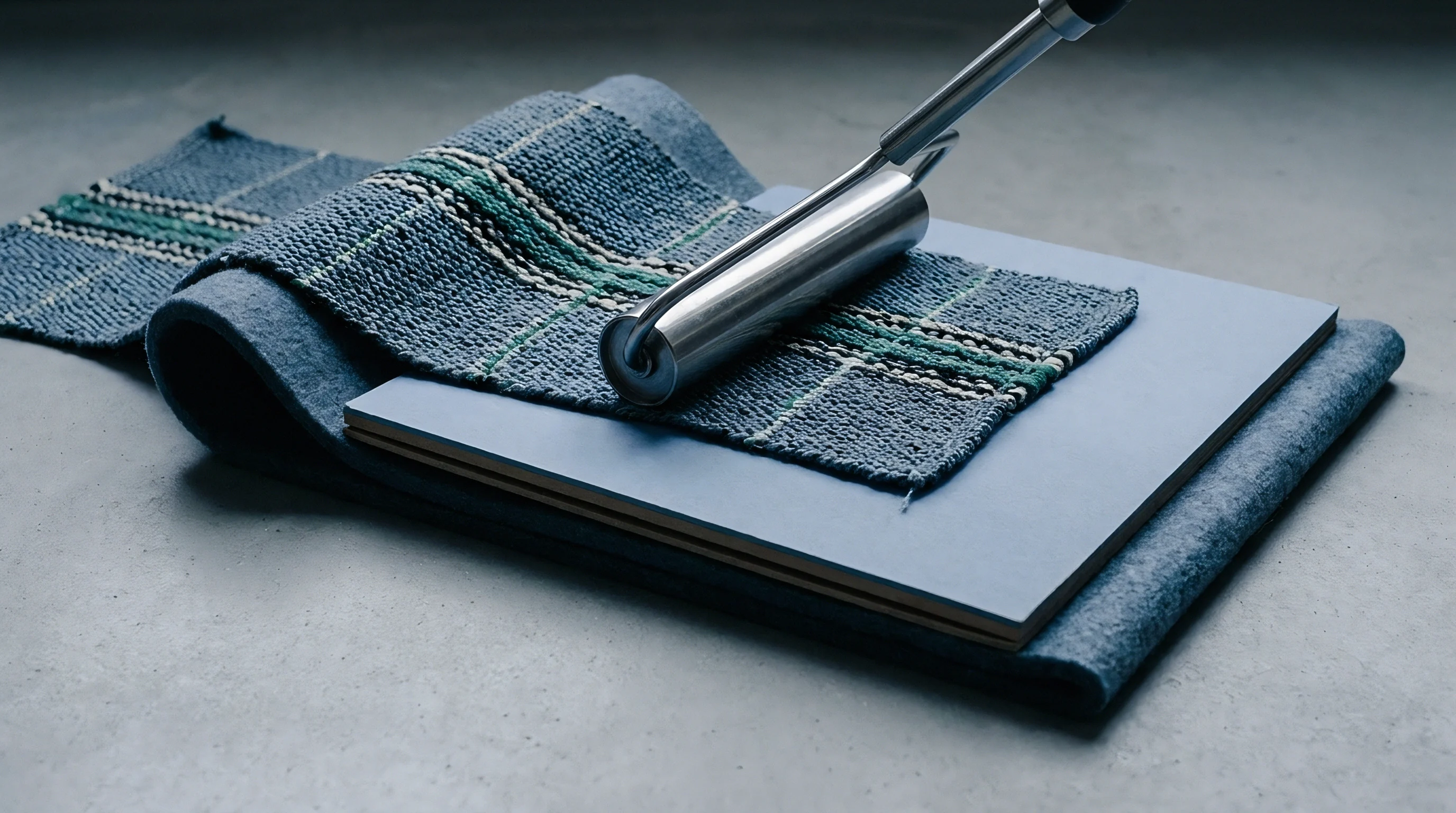
Accurate verification of surface lubricant levels prevents processing failures before bulk production runs. Analytical testing isolates remaining spin finish mass through quantitative chemical extraction. Technicians execute continuous solvent extraction using standardized hydrocarbon solvents to measure residual oil content on greige and scoured substrates.
- Dry fabric specimen weighing exactly 10.00 grams in a desiccator until mass stabilization occurs.
- Place the conditioned specimen into a glass Soxhlet extraction apparatus fitted with a water-cooled condenser.
- Extract surface lubricants using petroleum ether at 60 degrees Celsius for 24 distillation cycles over two hours.
- Evaporate solvent extract in a pre-weighed distillation flask using a rotary vacuum evaporator.
- Dry extracted residue at 105 degrees Celsius for 30 minutes, cool in a desiccator, and record final residue mass.
Low extraction values confirm complete spin finish removal during pre-scouring steps. When extraction reads below 0.20 percent by weight, the fabric lacks boundary protection for subsequent high-temperature dyeing. Polymer laboratories complement extraction testing with surface pressure tensiometry on bath liquor samples.
Friction Spectrum Analysis across Processing Stages
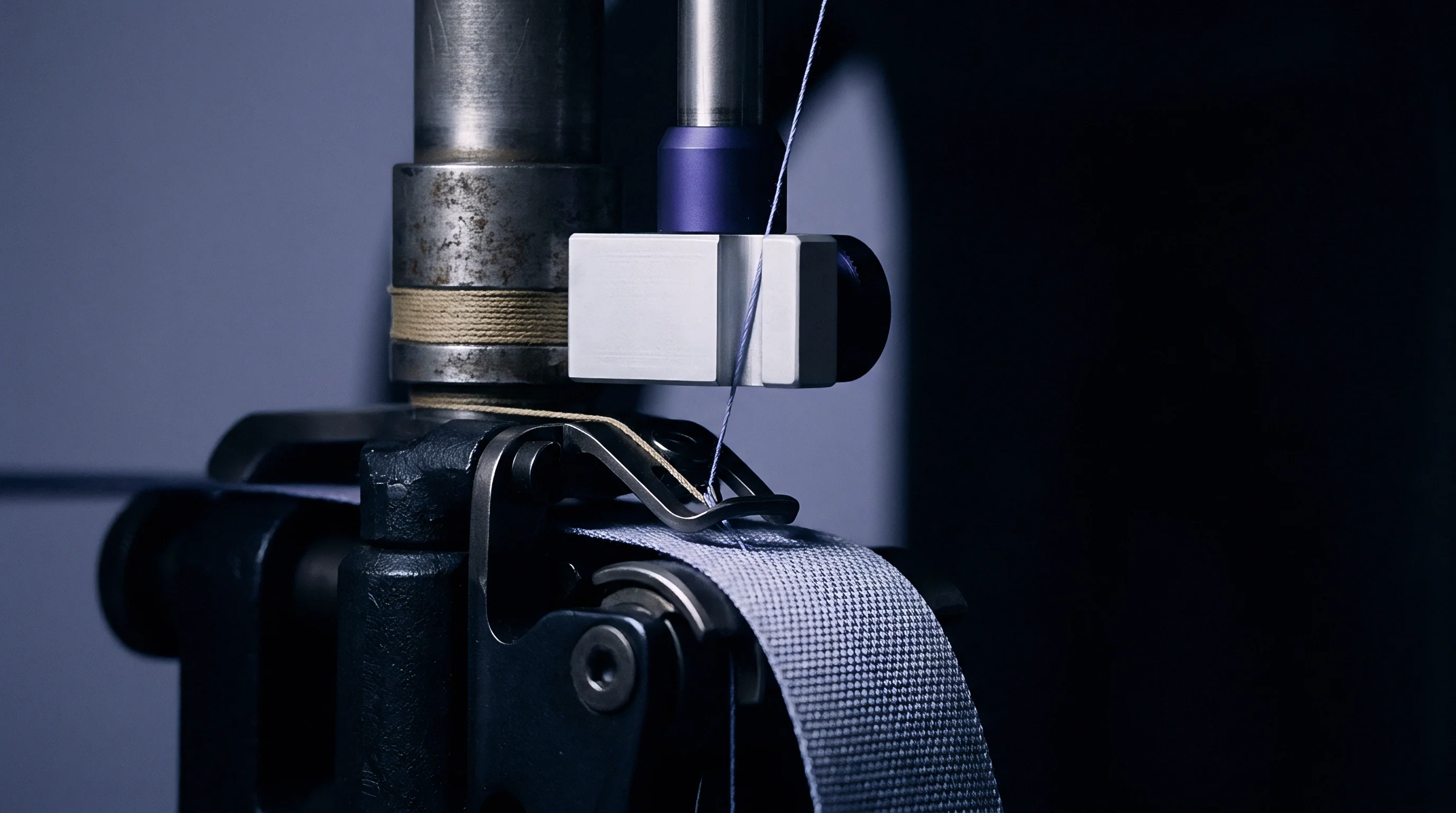
Sensing friction variations across wet processing stages establishes operational safety margins. Capstan friction meters pull yarn samples around polished steel mandrels maintained inside heated fluid chambers. Test parameters reproduce jet vessel conditions by matching linear speed, bath chemistry, and temperature profiles.
Elastane filaments lacking protective ester films develop transverse micro-cracks during high-temperature jet circulation.
Comparing pre-scoured and fully dyed fabric samples reveals boundary lubricant depletion rates. Sudden spikes in dynamic friction coefficients identify exact temperatures where film rupture occurs. Dyehouse managers track these breakdown points to calibrate chemical bath additions.
Chemical suppliers frequently state that spin finish formulations provide sufficient lubricity throughout the entire dye cycle without auxiliary bath lubricants, though floor processing data consistently demonstrates film depletion within thirty minutes of reaching top temperature.

Tariff
Process Optimization and In-Bath Lubricant Dosing Economics
Preventing boundary film failure requires controlled additions of polymeric auxiliary lubricants. Polyacrylate and fatty acid amide emulsions act as sacrificial boundary agents during high-temperature dye cycles. These specialized auxiliaries exhibit high affinity for synthetic fibers, forming secondary protective films that resist venturi shear stress.
Dosing rates depend on machine loading ratios, liquor ratios, and fabric surface area.
- High-Molecular Polyacrylates form synthetic hydrogels that increase liquor film thickness between fabric folds and vessel walls.
- Fatty Acid Amide Emulsions deposit heat-stable boundary layers that preserve low dynamic friction coefficients up to 135 degrees Celsius.
- Modified Ester Synthetics provide self-emulsifying lubricity that cleans oligomer deposits while maintaining fiber protection.
- Silicone Co-Emulsions supply high surface activity but require careful formulation to avoid oil-spotting defects under high shear.
Auxiliary costs represent a minor fraction of total wet processing expenditures. Standard anti-crease bath lubricants cost between 1.80 and 3.20 USD per kilogram. Applying a standard 1.5 percent dosage on fabric weight increases wet-processing costs by 0.03 to 0.06 USD per kilogram of dyed cloth.

Commercial Risk Mitigation and Standard Contract Clauses
Defects stemming from boundary film failure generate massive financial claims across supply chains. Re-dyeing fabric damaged by severe chafe marks or permanent rope creases requires additional scouring, chemical stripping, and re-labeling. Total re-dyeing costs frequently exceed 1.20 USD per metre, excluding capacity loss and delayed delivery penalties.
Severely abraded elastane knits cannot be salvaged and must be sold as scrap.
Technical purchasing agreements protect buyers by specifying strict mechanical processing conditions and auxiliary chemistry standards. Standard procurement contracts incorporate clear specifications covering lubricant performance and surface friction parameters.
According to standard commercial processing terms, if dynamic friction coefficients exceed 0.25 under ISO 2062 test conditions following jet processing, the dyehouse assumes total liability for resulting fabric rework or scrap losses.