Thermodynamic Loop Relaxation Dynamics under High Temperature Continuous Aqueous Jet Vessel Processing Conditions
Matching jet vessel hydraulic pressure to thermal loop relaxation rates prevents stitch distortion and controls dimensional shrinkage in knitted bulk runs.
Nozzle
Continuous aqueous jet processing subjects knitted substrates to cyclic mechanical stress and hydrothermal energy within closed pressurized vessels. High-velocity liquor injection accelerates the fabric rope through the transport tube, generating localized fluid drag that counteracts internal yarn stress. Circular and warp knits enter the wet process retaining structural tensions imparted during knitting, where sinker loops and needle loops hold non-equilibrium geometries.
Aqueous processing at elevated temperatures releases these frozen-in strains through controlled mechanical agitation and thermal swelling.
Hydrodynamic drag exerts tensile shear.
Liquor delivery systems determine the boundary layer friction between the moving fabric rope and the internal metallic surfaces of the transport channel. Variable throttle settings modulate vessel pressure differentials from 0.2 bar up to 2.5 bar, driving liquor velocities between 150 metres per minute and 500 metres per minute. Higher transport speeds increase mechanical turnover rates while shortening the dwell period in the unconstrained storage zone.
Hydrodynamic Drag and Hydraulic Energy Transfer
Knit structures suspended in high-temperature aqueous baths absorb kinetic energy directly from the circulating bath. The volumetric flow rate governs kinetic impact force against the passing fabric rope, dictating whether loop units elongate longitudinally or contract laterally. Pressurized jets utilizing narrow venturi geometry concentrate hydraulic forces along the outer perimeter of the fabric bundle, promoting fiber dispersion while preventing structural compaction.
High nozzle velocity increases rope tension.
Imbalanced hydraulic settings generate severe longitudinal stretching that opposes natural loop relaxation. When fluid acceleration exceeds fabric displacement speed, axial friction pulls courses apart and narrows wale spacing. Adjusting liquor volume relative to mechanical winch speed balances kinetic transfer, allowing needle loops to pull yarn from adjacent sinker loops under zero-tension conditions.
A liquor-to-cloth ratio of eight to one at one hundred thirty degrees Celsius yields three percent residual shrinkage on continuous polyester double knits.
Fluid Velocity Profiles across the Venturi Tube
Differential pressure distributions within jet constriction zones establish shear gradients across the fabric thickness. Fluid entering the narrow throat accelerates rapidly, creating a pressure drop that draws the fabric rope through without mechanical drive rolls. The cross-sectional convergence ratio dictates the peak wall shear stress experienced by outer yarn assemblies.
Fabric rope density drives liquor pickup.
Cross-sectional compression during tube transit causes temporary mechanical compaction. Open jet configurations lower hydrostatic impact while soft-flow variants utilize gravity-assisted liquor overflowing to protect delicate surface filaments. Selection of jet geometry establishes the boundary condition for initial relaxation before the fabric enters the basket accumulator.
| Vessel Configuration | Nozzle Pressure (bar) | Rope Velocity (m/min) | Liquor Ratio | Hydrodynamic Shear (N/m2) |
|---|---|---|---|---|
| High Temperature Pressure Jet | 1.5 – 2.5 | 350 – 500 | 1:5 – 1:8 | 45 – 70 |
| Soft-Flow Overflow Jet | 0.3 – 0.8 | 150 – 280 | 1:8 – 1:12 | 12 – 25 |
| Air-Jet Hybrid Vessel | 0.8 – 1.4 | 250 – 420 | 1:3 – 1:5 | 30 – 50 |
Excessive hydraulic energy creates unwanted surface alteration and loop mechanical damage. Processing sensitive micro-denier yarns requires careful monitoring of venturi impact forces to avoid filament breakage.
- Venturi cavitation breakdown introduces extreme mechanical friction that abrades spun yarn surfaces and disrupts course alignment.
- Hydrostatic imbalance ratios cause severe longitudinal distortion when nozzle pressure exceeds winch surface speed by twenty percent.
- Turbulent boundary boundary-layer shear strips loose fibers from spun assemblies, elevating liquor turbidity and loss of fabric mass.
- Choke tube velocity mismatch compresses the fabric rope against internal walls, forming longitudinal friction marks.
Machinery vendors attribute post-dyeing dimensional variance to initial knitting tension rather than internal hydraulic profile imbalances during high-temperature cycles.

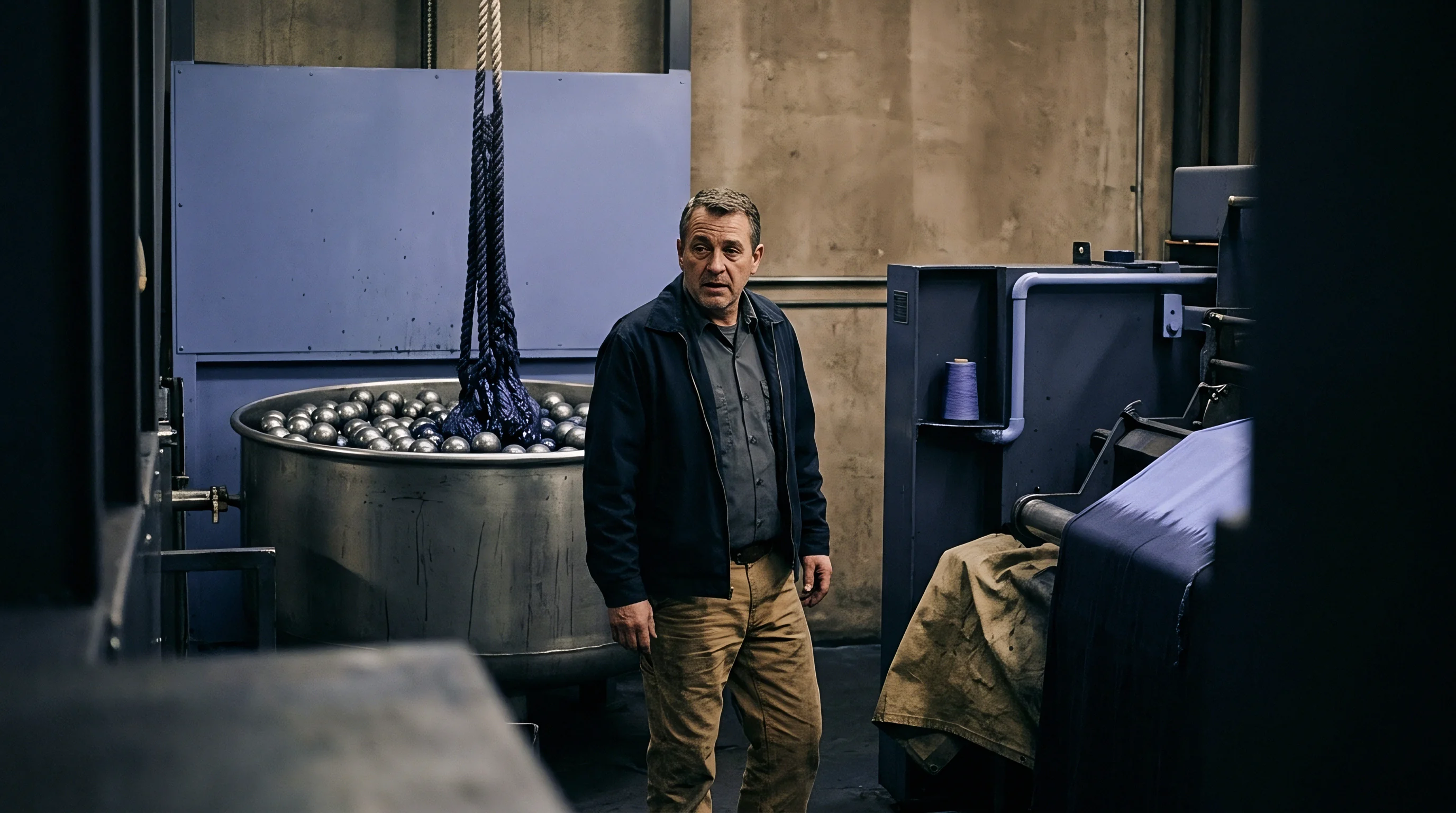
Plaiting
Submerged accumulation zones provide the physical volume where compressed fabric ropes experience unconstrained stress release. Transported fabric exits the delivery tube and drops onto inclined Teflon liquor slides or oscillating mechanical plaiters. The weight of the surrounding liquor bath supports the suspended knit structure, neutralizing gravitational pull and allowing multidirectional dimensional recovery.
Machine speed dictates dwell frequency.
Storage chamber geometry regulates the packing density of the folded fabric pile. Dwell time inside the accumulation basket varies between 45 seconds and 180 seconds per cycle, depending on total rope length and vessel mechanical speed. Prolonged rest periods under high thermal conditions allow yarn bending moments to re-equilibrate into low-energy loop configurations.

Mechanical Accumulation in Jet Storage Chambers
Mechanical oscillating arms distribute the continuous fabric rope across the full width of the storage basket in uniform, overlapping folds. Systematic layering prevents localized tangling and maintains even liquor interaction throughout the entire bulk charge. Proper plaiting action prevents fabric weight from concentrating on lower layers, which leads to permanent heat-set pressure creasing.
Unrelaxed loops store residual physical stress.
Chamber slope angles facilitate smooth forward movement toward the main winch reel under gravity. Perforated basket bottoms permit rapid liquor drainage, maintaining continuous hydrothermal circulation through the static fabric stack. Insufficient basket filling allows fabric folds to float chaotically, causing severe rope twisting and spirality shifts.

Cycle Time Dynamics and Rope Displacement
Cycle duration determines how many times a given fabric segment passes through the high-energy nozzle zone relative to its resting duration in the relaxation basket. Total vessel cycle counts range between 60 and 120 passes per dyeing batch. High pass frequencies ensure rapid dye exhaustion while lower frequencies reduce mechanical fatigue on delicate stitch constructions.
Uncontrolled heating permanently locks crease lines.
Accumulator dwell permits the internal molecular network of synthetic fibers to undergo structural reorganization while free from external tension. Thermal movement within the fiber core relaxes bending stresses at the loop heads and sinker curves, converting temporary knitting strain into permanent dimensional compaction.
Higher vessel transport speeds require proportional increases in chamber relaxation dwell to avoid longitudinal rope distortion.
- Load greige fabric rope into jet vessel while circulating low-temperature aqueous bath at thirty degrees Celsius.
- Inject processing auxiliaries and lubricity agents to lower inter-yarn friction coefficients before thermal ramp cycles.
- Ramp bath temperature at 1.5 degrees Celsius per minute until reaching peak hydrothermal dwelling thresholds.
- Maintain continuous circulation for forty-five minutes at maximum temperature to allow complete viscoelastic stress relaxation.
- Cool bath systematically at 1.0 degree Celsius per minute to stabilize relaxed loop dimensions before discharge.
Continuous circulation without localized tension buildup guarantees uniform loop geometric stabilization across the entire batch production run.
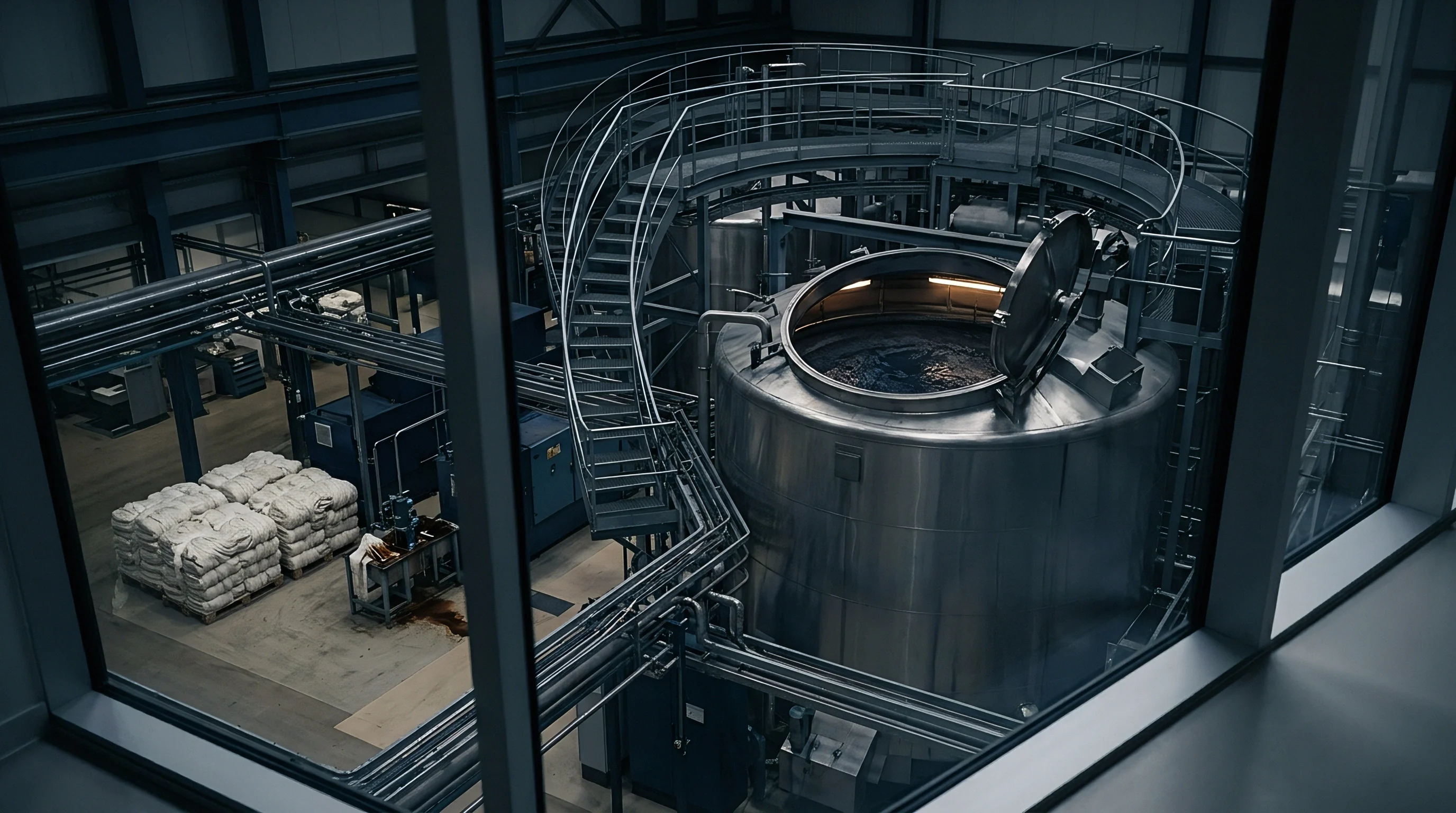

Contraction
Hydrothermal processing delivers thermal kinetic energy directly into the polymer matrix, disrupting intermolecular hydrogen bonds and secondary physical crosslinks. Fiber glass transition temperature (Tg) marks the operational threshold where molecular mobility rises dramatically. Water acts as a plasticizer in hydrophilic fibers like cotton and viscose, shifting transition thresholds down to room temperature conditions.
Thermal energy breaks internal hydrogen bonds.
Polyester and polyamide substrates require elevated bath temperatures between 110 degrees Celsius and 135 degrees Celsius under pressure to achieve rapid viscoelastic stress release. Synthetic filaments shrink along their longitudinal axis as frozen-in oriented polymer chains revert to random coiled configurations. This molecular contraction drives macroscopic yarn shrinkage, altering loop height, loop width, and fabric gsm weight.
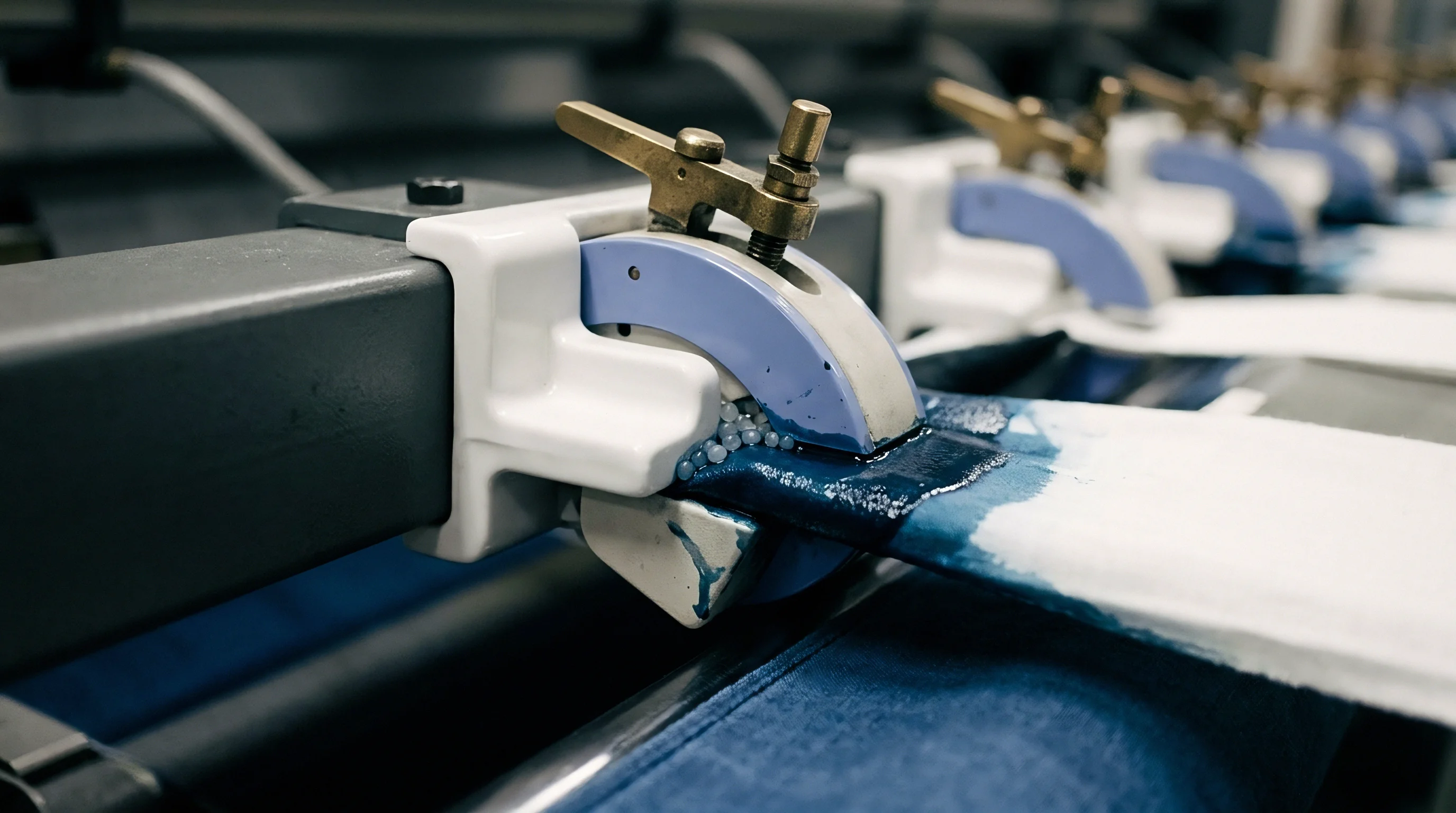
Why Do Hydrothermal Energy Thresholds Alter Loop Recovery Rates?
Thermal agitation weakens non-covalent interactions within amorphous polymer regions, enabling polymer chains to slide past one another under lower activation energy. Water molecules permeate amorphous domains, swelling the fiber cross-section and forcing yarn geometry to accommodate increased lateral volume. Increased yarn diameter forces loop heads to bend around adjacent courses, drawing wale lines closer together.
Crimp contraction reduces wale width.
Loop length remains constant during thermal exposure while spatial configuration shifts from an elongated ellipse toward a circular profile. Sinker loops contract laterally while needle loops expand, balancing internal bending forces. Thermal shrinkage rates peak within the first ten minutes of reaching target process temperature, after which dimensional changes follow asymptotic relaxation curves.
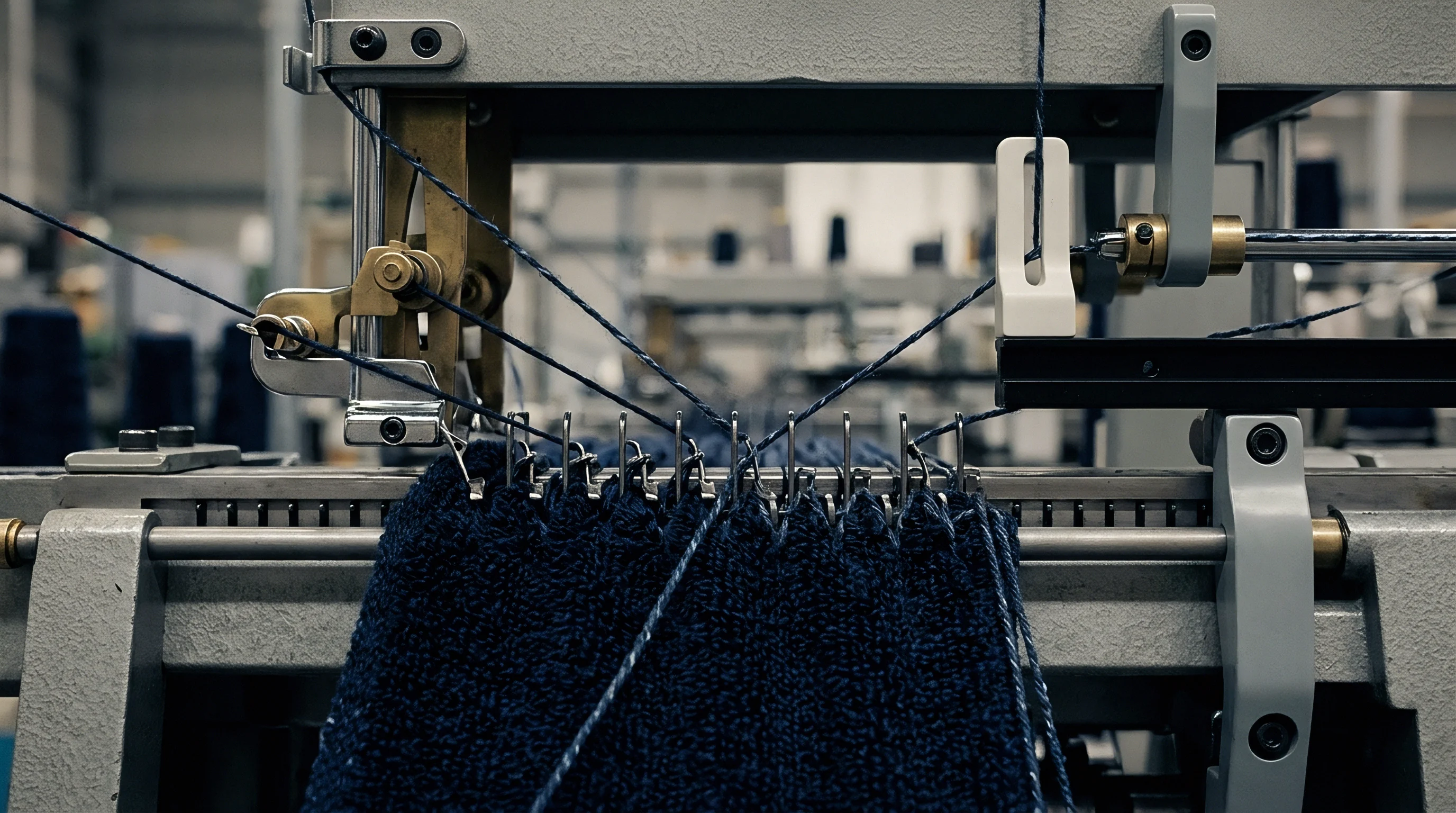
Viscoelastic Relaxation Kinetics above Fiber Glass Transition
Viscoelastic materials exhibit time-dependent deformation under constant thermal and mechanical stress profiles. Eyring rate theory models the movement of polymer segments over free-energy barriers during wet processing. Applied hydraulic forces lower these energy barriers, accelerating stress relaxation kinetics by orders of magnitude compared to dry atmospheric heating.
Sinker line alignment shifts under heat.
Continuous agitation inside the aqueous bath supplies mechanical excitation that overcomes static friction between adjacent yarns. Friction points at loop crossover locations unlock, allowing stored mechanical torque to dissipate completely. The combination of thermal molecular mobility and mechanical excitation produces maximum structural compaction prior to downstream stenter drying operations.
| Fiber Composition | Wet Glass Transition (°C) | Thermal Contraction (%) | Course Density Shift (%) | Wale Density Shift (%) |
|---|---|---|---|---|
| 100% Polyethylene Terephthalate | 65 – 75 | 8.5 – 12.0 | +14.0 – +18.0 | +8.0 – +12.0 |
| 100% Polyamide 6,6 | 35 – 45 | 6.0 – 9.5 | +10.0 – +14.0 | +6.0 – +9.0 |
| 100% Combed Cotton Ring Spun | < 20 (Swollen) | 4.0 – 7.0 | +12.0 – +16.0 | +10.0 – +15.0 |
| 95% Cotton / 5% Elastane Single Jersey | < 20 (Swollen) | 14.0 – 18.0 | +22.0 – +28.0 | +15.0 – +20.0 |
Structural change quantification relies on standard testing methods executed under controlled atmospheric conditioning. Finished fabric mass measurements change directly in response to course and wale compaction ratios.
Thermally induced loop recovery occurs within the first ten minutes of wet processing above the synthetic fiber transition point.
Evaluating bulk stability requires measuring structural changes after completing high-temperature continuous processing cycles.
- Verify wet relaxation potential by running ISO 5077 dimensional stability tests after three continuous washing cycles at sixty degrees Celsius.
- Audit yarn crimp variations using ISO 7211 methods to distinguish between real thermal fiber shrinkage and simple mechanical loop shape alteration.
- Monitor courses per centimetre across head, middle, and tail batch samples to confirm complete relaxation uniformity along the entire roll length.
- Measure burst strength changes under ISO 13934-1 criteria to ensure thermal loop compaction does not degrade structural mechanical resistance.
Standard purchase contracts enforce ISO 5077 dimensional stability compliance, rejecting any bulk fabric delivery showing greater than three percent longitudinal or lateral residual shrinkage after five standard domestic wash cycles.
Deformation
Inappropriate machine control parameters or uneven thermal dynamics induce severe physical defects during aqueous relaxation cycles. High jet pressures combined with rapid temperature changes force fabric loops into asymmetric configurations, locking structural flaws into the finished goods. Spirality, rope marks, pilling, and stitch distortions represent irreversible mechanical shifts that ruin fabric hand and appearance.
Overfeeding stabilizes course density.
Single jersey constructions exhibit inherent torsional instability due to unbalanced yarn torque imparted during ring spinning or open-end spinning. High-temperature jet processing releases stored yarn torque, causing courses to lean relative to wale lines. Uncontrolled spirality distorts garment side seams, forcing finished cut panels to twist after assembly and domestic laundering.
Spirality and Stitch Distortion under High Temperature Shear
Torsional forces within single-knit loops cause adjacent wale lines to tilt away from perpendicular alignment. Thermal energy reduces yarn flexural rigidity, allowing locked torsional stresses to rotate loop legs out of plane. Higher nozzle pressures intensify this rotational movement by pulling the fabric rope under axial shear.
Excess hydraulic pressure causes surface pilling.
Sinker loops subjected to localized mechanical drag shift sideways, creating visible diagonal banding across the fabric face. Plating knits incorporating elastomeric yarns show amplified spirality defects if elastomeric draft ratios vary across feeder positions. Maintaining strict tension symmetry during high-temperature relaxation limits torsional dislocation to acceptable commercial limits.

Permanent Creasing Mechanisms in Synthetic Knits
Crease mark formation occurs when continuous fabric ropes remain folded in static orientations while crossing fiber glass transition temperatures. Cool-down thermal ramps executed too quickly lock sharp mechanical bends into synthetic polymer networks before loops relax into flat profiles. These structural crease marks appear as dark, reflective longitudinal streaks along the finished roll.
Rapid cooling forms structural micro-creases.
Polyester and nylon goods processed in high-capacity vessels require controlled cooling rates not exceeding 1.0 degree Celsius per minute. Rapid thermal quenching freezes displaced polymer chains in high-energy bending states, establishing permanent molecular memory. Applying anti-crease chemical lubricants reduces fabric-to-fabric friction, allowing folds to slide continuously without forming sharp pressure lines.
| Defect Mode | Physical Root Cause | Hydraulic Parameter | Target Process Boundary |
|---|---|---|---|
| Rope Mark Streaks | Static folding above fiber transition point | Low pump volume, high winch speed | Cooling rate below 1.0 °C/min |
| Loop Spirality Shift | Unbalanced yarn torque release under shear | Excessive nozzle fluid velocity | Nozzle differential below 1.2 bar |
| Surface Filament Pilling | Abrasive boundary-layer impact on venturi wall | Cavitation inside transport tube | Liquor-to-cloth ratio above 1:8 |
| Width Fluctuation | Non-uniform longitudinal rope tension | Fluctuating vessel bath level | Constant basket filling height |
Preventing physical defects demands rigorous monitoring of machine operating states and auxiliary chemical dosing levels throughout the processing cycle.
ISO 5077 testing following four wash cycles at sixty degrees Celsius rejects fabric shipments exceeding three percent dimensional shift.
Cold water quenching locks distortion patterns.
- Thermal gradient logs capturing real-time heating and cooling rates across every individual batch charge.
- Nozzle pressure telemetry recording fluid pressure differentials continuously to prevent localized shear spikes.
- Auxiliary addition records confirming exact lubricity agent dosing per kilogram of dry fabric loaded.
- Batch relaxation metrics documenting greige versus finished wale and course counts per square centimetre.
Failure to control thermal ramp rates during cooling cycles creates permanent rope marks that render entire dyeing charges unmarketable at garment cutting facilities.
Freight
Dimensional instability in finished fabric rolls directly inflates landed garment costs through severe yield losses during marker planning and cutting operations. Fabric that shrinks unpredictably during post-dyeing stenter heat setting or garment washing reduces usable cut width, forcing apparel factories to alter pattern layouts. Uncontrolled loop relaxation during wet processing shifts finished mass per unit area outside contract specifications.
Wet relaxation alters finished fabric weight.
Fabric specified at 180 grams per square metre can compact up to 210 grams per square metre if loop relaxation proceeds unchecked without precise tension control on downstream stenter frames. This over-compaction increases total shipment weight, elevating air and ocean freight charges per finished garment unit. Buyers paying for fabric on a weight basis suffer direct commercial losses when loop geometry compacts excessively.
Landed Cost Penalties of Post Dyeing Shrinkage
Commercial purchase agreements establish strict tolerances for mass per unit area and dimensional stability, typically permitting plus or minus five percent variance from approved master specifications. Exceeding these boundaries forces cutting rooms to lay down fewer pattern pieces per linear metre, driving up total fabric consumption figures. A two percent unpredicted width contraction increases raw material consumption across bulk apparel orders by thousands of linear metres.
Stenter setting fixes final dimensions.
Off-spec dimensional performance generates severe secondary supply chain disruptions. Garments assembled from under-relaxed fabric shrink excessively during factory garment washing or domestic laundering, leading to wholesale chargebacks and customer returns. Freight desk logistics plans fail when roll weights exceed shipping container gross weight allowances due to unmanaged thermal loop compaction.
Contractual Specifications for Dimensional Stability Tolerances
Master mill purchase orders must clearly bind wet processing facilities to exact physical metrics recorded after full relaxation treatment. Specifying both ISO 5077 wash shrinkage thresholds and ISO 3801 mass per unit area targets prevents dyehouse facilities from stretching fabric longitudinally to achieve target roll yield metrics at the expense of stability.
Yield losses reduce total cutter output.
Establishing clear technical parameters ensures mills process knit goods through proper continuous relaxation steps rather than relying on aggressive mechanical overfeed during stenter drying alone. Stenter overfeed temporarily forces loops into compact configurations, but subsequent steam pressing or domestic washing releases these temporary strains, exposing the underlying structural defect.
Why do commercial dyehouses continue using high-speed transport settings when lower hydrodynamic shear consistently yields superior dimensional stability across complex knitted builds?