Shift from Continuous to Batch Wet Processing
Transitioning from continuous to batch wet processing trades uniform tension for fiber relaxation, increasing fabric density and lot variance below 4,000 meters.
Trough

Liquor Dynamics in Open Width Processing
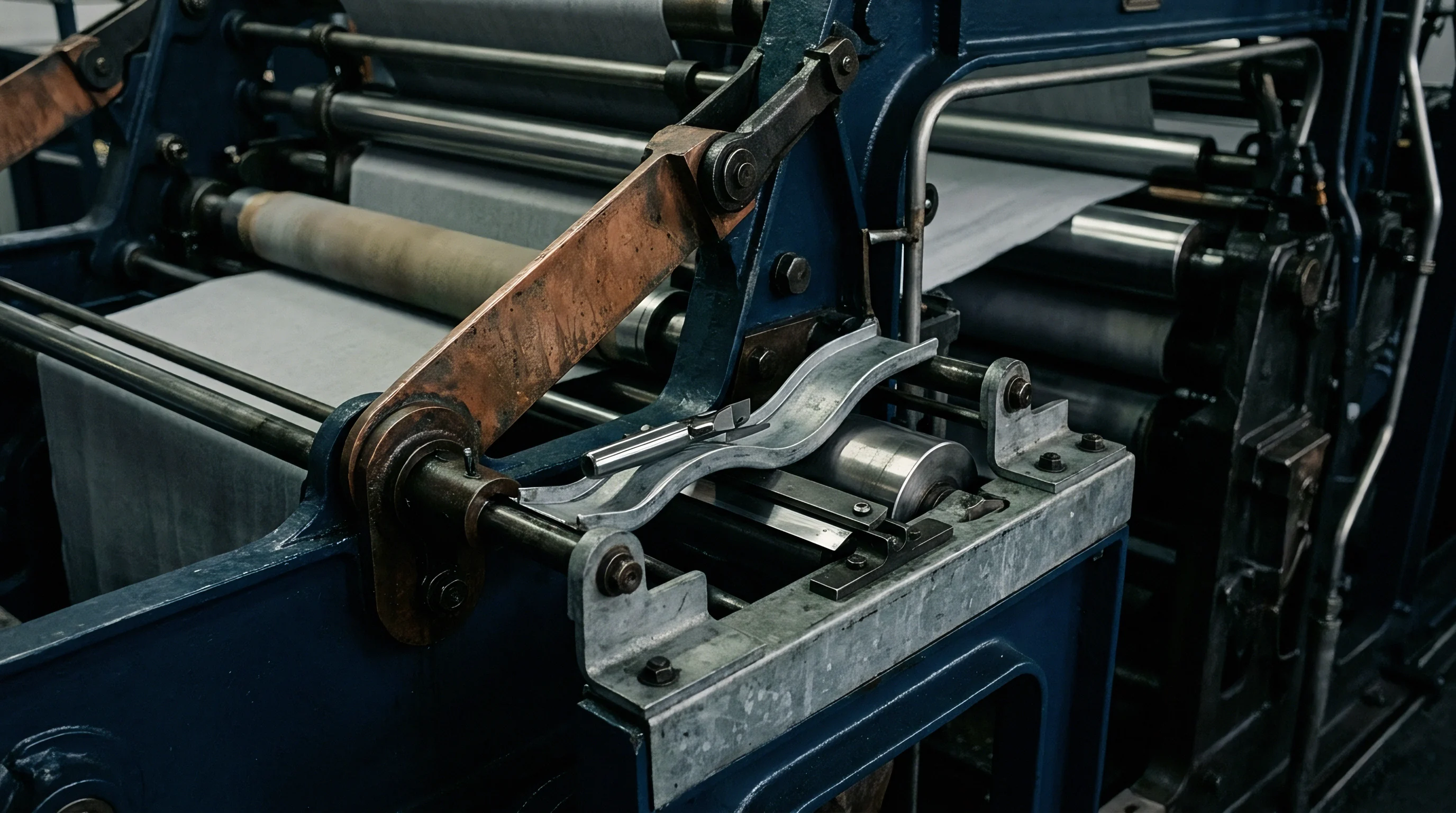
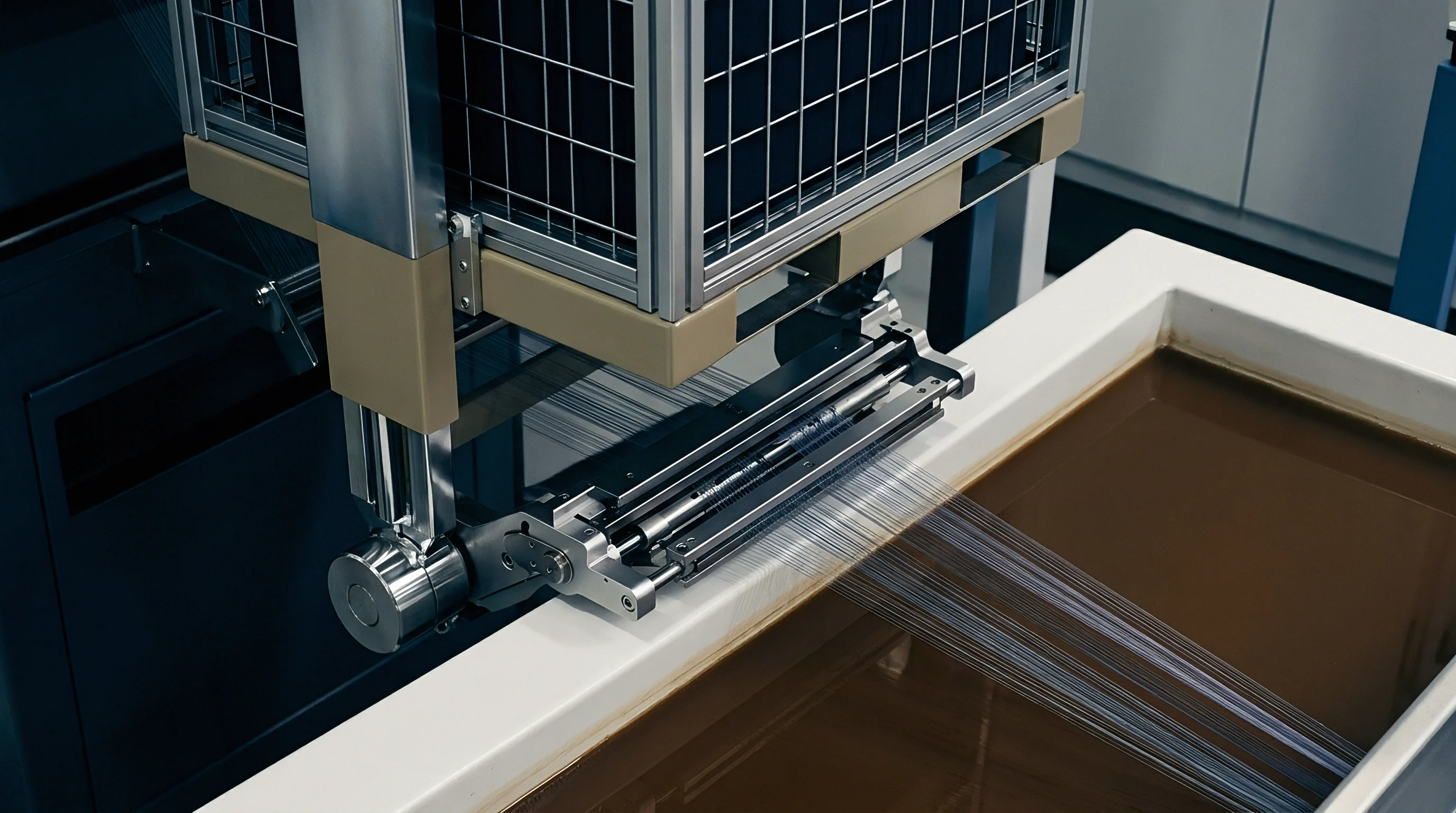
Continuous ranges apply chemistry through continuous immersion troughs, nip rolls, and high-velocity steam chambers. Batch operations submerge ropes or rolls into a sealed pressure vessel containing a discrete bath volume. The operational dividing line governs how liquor moves through the fibrous structure: continuous processing pushes liquor through open-width yardage via external hydraulic pressure, whereas batch processing circulates the bath through an untensioned structure over an extended time interval.
When an order moves from a continuous pad-steam or continuous pad-dry-thermofix range to batch jet machines, the fluid mechanical environment changes completely. A continuous trough holds roughly 80 to 250 litres of pad liquor, replenished continuously as the fabric absorbs dye, maintaining a constant liquor-to-goods ratio near 0.8:1 to 1.2:1. Jet and soft-flow machines maintain a bath volume between 4:1 and 10:1 relative to the total dry weight of the substrate.
The bath remains static in quantity while circulation pumps cycle the liquor across nozzle rings, exposing the fabric to thousands of hydrodynamic exchanges over two to six hours.
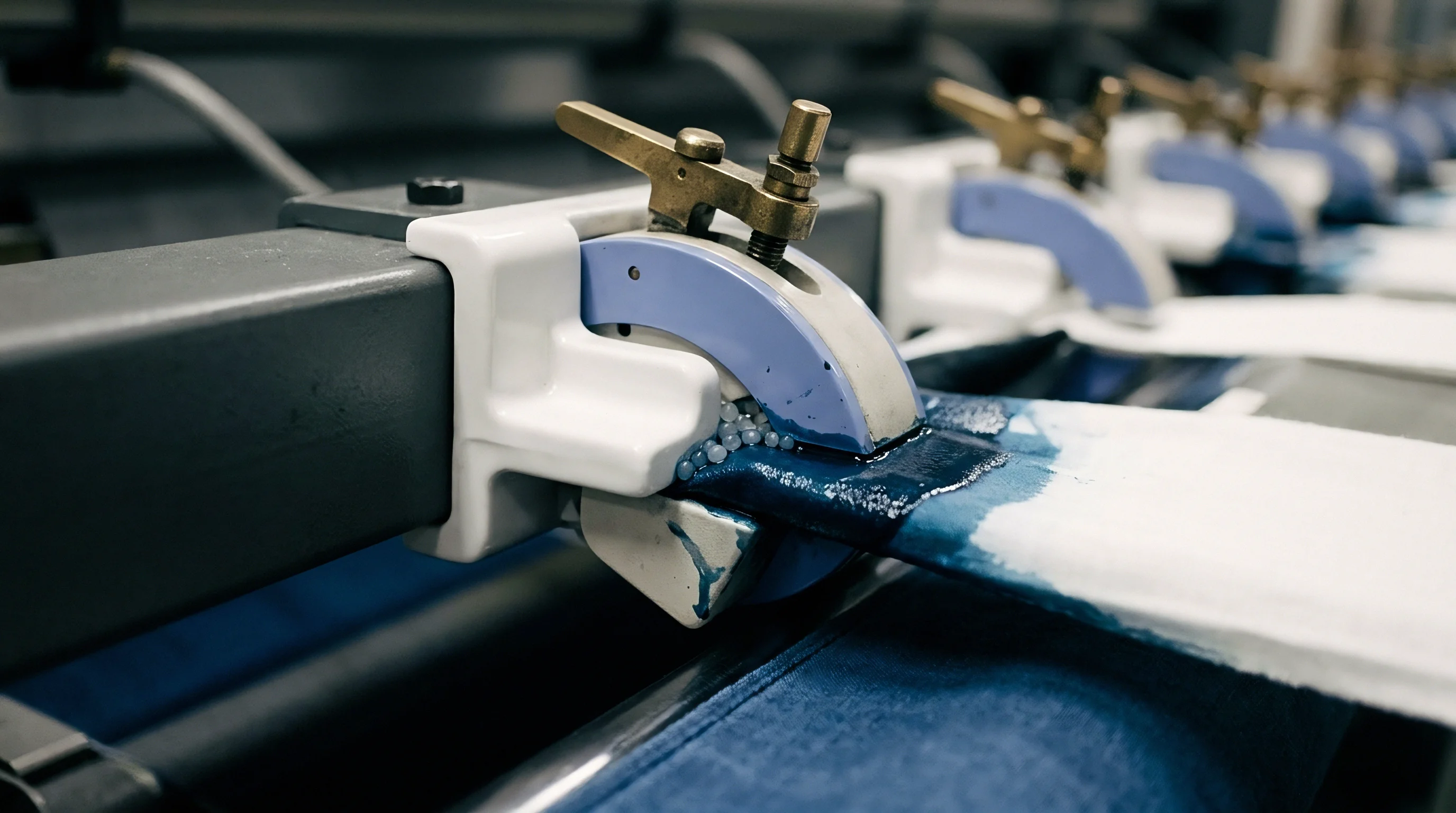
Mechanical displacement forces drop. Open-width pad mangles exert 15 to 45 bar nip pressure to achieve 60 to 75 percent wet pick-up on woven fabrics. Jet machines rely entirely on surface boundary disruption, relaxation, and thermal expansion to achieve liquor penetration across individual yarn bundles.
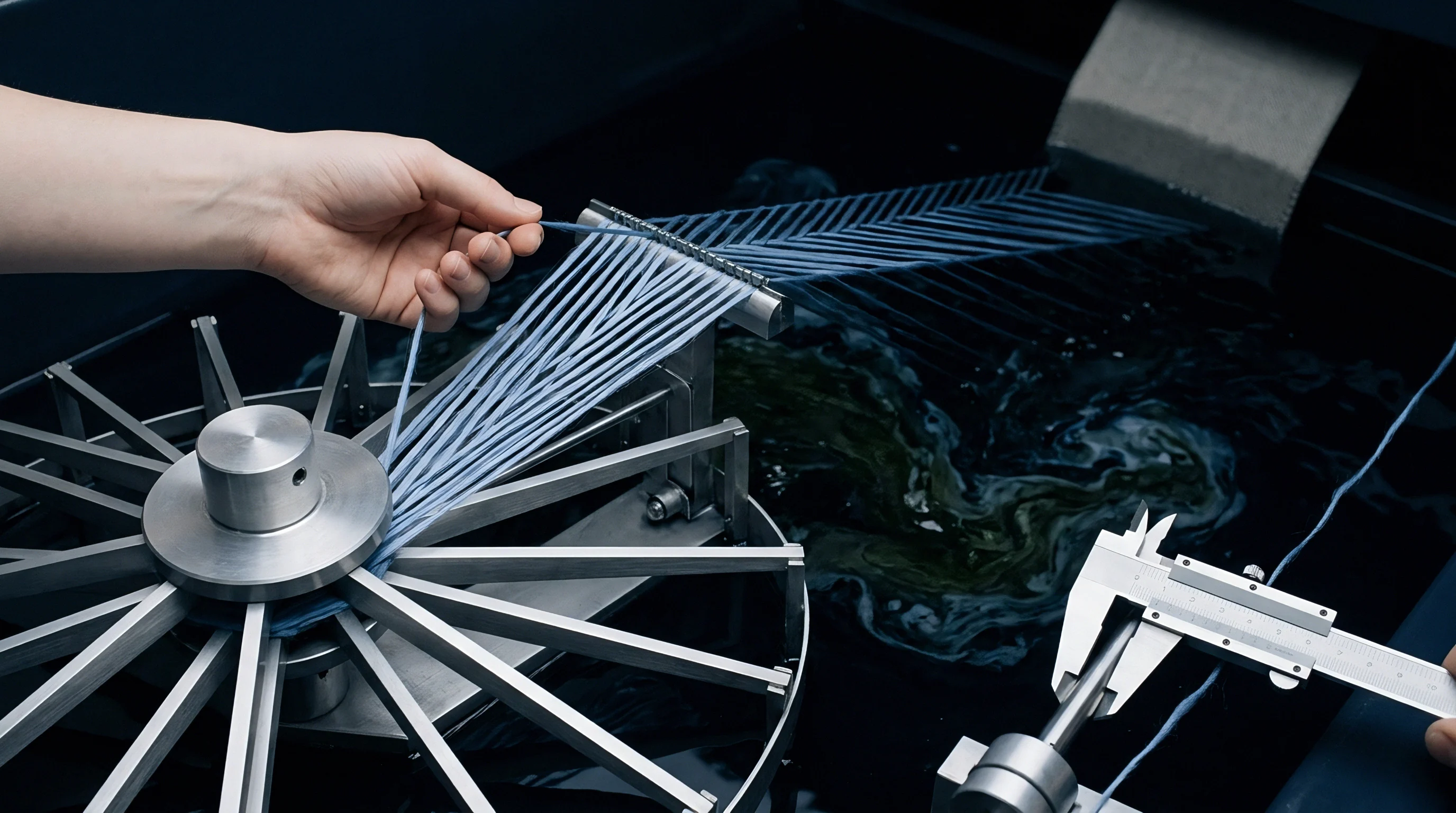
Tension changes follow instantly: continuous processing maintains warp tension between 300 and 1200 N to prevent creases across rollers, while batch jet vessels keep lengthwise tension below 100 N, encouraging pick crimp development and loop relaxation.
A pad-steam mangle delivers uniform cross-sectional wet pick-up only when squeegee durometer and crown deflections are calibrated against warp tension.
Shifting construction specifications to batch dyeing alters fabric width, areal weight, and residual torque. Continuous finishing stabilizes dimensions mechanically. Batch dyeing unleashes the greige state’s structural instability, requiring immediate downstream compensation.
Dwell
Equilibrium Exhaustion versus Forced Mechanical Penetration
Continuous ranges force dye into cellulose or synthetic polymers within three to sixty seconds. Fixation relies on thermodynamic shock: high-pressure saturated steam at 102 degrees Celsius for reactive dyes, dry superheated air at 210 degrees Celsius for disperse dyes on polyester, or rapid alkaline shock. Molecules do not achieve thermodynamic equilibrium with the bath; instead, every droplet applied in the nip settles into the nearest accessible pore before chemical crosslinking or entrapment occurs.
Batch processing relies on chemical affinity and slow diffusion gradients governed by Fickian transport laws. Exhaustion dyeing demands a prolonged residence period, known as dwell time, where dye molecules migrate repeatedly between the external liquor and the internal fiber core. Reactive dyes require 45 to 90 minutes of isothermal migration at 60 degrees Celsius in sodium sulfate concentrations of 30 to 80 grams per litre, followed by alkali dosing to establish covalent fixation.
Disperse dyes on polyester require 30 to 45 minutes at 130 degrees Celsius under 2.5 bar pressure to swell the crystalline regions of polyethylene terephthalate, permitting molecular diffusion into the polymer matrix.
The prolonged immersion cycle changes fiber morphology. Cellulosic yarns subjected to hours of wet mechanical action in batch vessels swell up to 30 percent in diameter, crushing micro-pores and displacing yarn crimp. Synthetic filaments experience heat setting alongside molecular relaxation, softening their hand while increasing surface fuzz.
Can Hydrodynamic Action Match Pad Uniformity?
Continuous ranges achieve surface uniformity through mechanical leveling across high-precision squeeze rollers. In batch operations, hydrodynamic uniformity depends on loop turnover rate. A jet dye machine cycling a 250-metre fabric rope at 300 metres per minute produces a turnover every 50 seconds.
Uniformity failure occurs if dyestuff exhausts faster than the rope cycles through the venturi nozzle; unlevelness sets into the cloth, creating shade bands across the piece.
Dyehouse controllers regulate dosing curves using exponential dosing profiles. Rather than adding soda ash or glauber salt in bulk, automated injection systems dose chemicals across 30 to 60 minutes, matching the strike rate of dyestuffs to the turnover speed of the rope. Fabric thickness and construction weight determine cycle speed: light voiles run at 400 metres per minute without friction, while dense bull denims restrict pump speeds to 180 metres per minute to prevent surface abrasions and internal fiber fracturing.
| Processing Parameter | Continuous Pad-Steam (Reactive) | Continuous Thermofix (Disperse) | Batch Soft-Flow Jet (Reactive) | Batch High-Temp Jet (Disperse) |
|---|---|---|---|---|
| Contact / Dwell Time | 45 to 75 seconds | 30 to 60 seconds | 180 to 360 minutes | 120 to 240 minutes |
| Operating Liquor Ratio | 0.8:1 to 1.1:1 | 0.7:1 to 0.9:1 | 5:1 to 8:1 | 4:1 to 6:1 |
| Fixation Temperature | 102 to 104 °C | 210 to 215 °C | 60 to 80 °C | 130 to 135 °C |
| Applied Warp Tension | 400 to 900 N | 600 to 1200 N | 20 to 80 N | 30 to 90 N |
| Water Volume per kg Goods | 12 to 20 L/kg | 10 to 18 L/kg | 45 to 85 L/kg | 35 to 65 L/kg |
Rope turn speed determines whether dyestuffs exhaust uniformly along the entire warp run.
Friction
Surface Abrasion and Filament Distortion under Rope Transport
In continuous ranges, fabric moves through rollers in open-width state, avoiding lateral compression, edge curled creasing, and internal yarn rubbing. Flat guide rollers and expander bars stabilize weft alignment, keeping face-to-face surface contact at zero. Moving that same order to a batch jet machine forces the flat textile into an irregular, twisted rope.
It travels through pressurized venturi nozzles at peripheral speeds exceeding 25 kilometers per hour, generating intense hydrodynamic and friction shear.
The friction mechanisms operating inside batch machinery present distinct risks for standard woven and knitted constructions:
- Running creases appear when tightly woven fabrics remain folded along identical longitudinal axes throughout repeated hot cycles, setting irreversible crease marks into the warp yarns.
- Pilling and surface fibrillation occur when staple-fiber yarns, especially lyocell, modal, or low-twist ring-spun cotton, shed surface fibers through nozzle turbulence, creating a fuzzy, aged surface appearance.
- Crack marks and crow’s feet develop during sudden thermal drops, locking mechanical twists into the thermoplastic polymer structure before the bath drains.
- Warp stretch and rope elongation degrade elasticity when elastomeric or low-tenacity knit loops stretch under hydraulic nozzle draft, distorting the finished stitch geometry permanently.
Preventing these mechanical defects requires lubricating agents and specialized processing chemistry. Dyers add polymeric anti-creasing polymers, fatty acid condensates, or polyacrylamide lubricants at 1 to 3 grams per litre. These additives coat yarns with a microscopic boundary layer, lowering fiber-to-metal and fiber-to-fiber dynamic friction coefficients.
Without these compounds, the internal kinetic energy inside a jet machine causes abrasion lines that no downstream stenter framing can iron out.
A contract line specifying ISO 12945 pilling resistance below grade 4 on batch-dyed staple wovens shifts financial liability for surface fuzzing entirely onto the converter.
Weave density directly controls the susceptibility of goods to creasing. Plain weaves and twills over 220 grams per square metre with warp cover factors exceeding 22 resist the folding forces inside a jet nozzle. When forced into a rope form, dense weaves buckle rather than compress softly, leaving sharp crease apexes where the dye liquor fails to exhaust at the same rate, resulting in permanent white streaks.
Yield
Relaxation Mechanics and Dimensional Transformations
Continuous ranges lock woven construction geometries in place. Heavy longitudinal drive motors and multi-cylinder drying stacks hold warp yarns straight, preventing relaxation while stretching the weft to designated pin widths. Continuous processing yields high yardage at the cost of elevated residual shrinkage, leaving finished cotton fabrics with 5 to 9 percent warp shrinkage under ISO 6330 washing programs.
Batch wet processing operates without longitudinal restraint, allowing greige fabrics to undergo spontaneous structural contraction. Cellulosic and synthetic yarns swell in water, while inter-yarn contact zones release the mechanical stresses induced during weaving or knitting. Warp threads absorb pick crimp, and weft threads contract toward the center.
The result is an immediate increase in fabric density, thickness, and mass per unit area.
A technical twill woven at 180 grams per square metre on the loom emerges from continuous pad-steam processing at 188 grams per square metre due to sizing extraction and basic finishing adjustments. That same greige twill routed through a batch jet dye machine undergoes complete relaxation shrinkage, emerging from the unload winch at 215 grams per square metre. Fabric mass per unit area, measured under ISO 3801, jumps 14 percent simply through machine selection, while structural width contracts from 152 centimeters down to 138 centimeters.
Knitted structures show even more dramatic dimensional shifts. Circular knits processed on continuous open-width ranges suffer severe edge curl and loop distortion under drive-roller tension. In soft-flow batch jet machines, loops rotate freely, achieving complete structural relaxation.
Wales and courses snap into equilibrium positions, cutting residual dimensional change under ISO 5077 from 8 percent down to less than 3 percent. However, this dimensional stabilization exacts a heavy toll in cuttable width, reducing linear finished yardage yields by 6 to 12 percent per metric ton of greige cloth.
Converters must recalculate linear greige requirements when switching routes. Sourcing departments calculating fabric costs based on continuous yields discover that batch processing consumes substantially more greige yardage to produce the identical cuttable linear meterage of finished fabric. When purchasing contracts do not account for this relaxation loss, yardage deficits propagate directly to the cutting room floor.

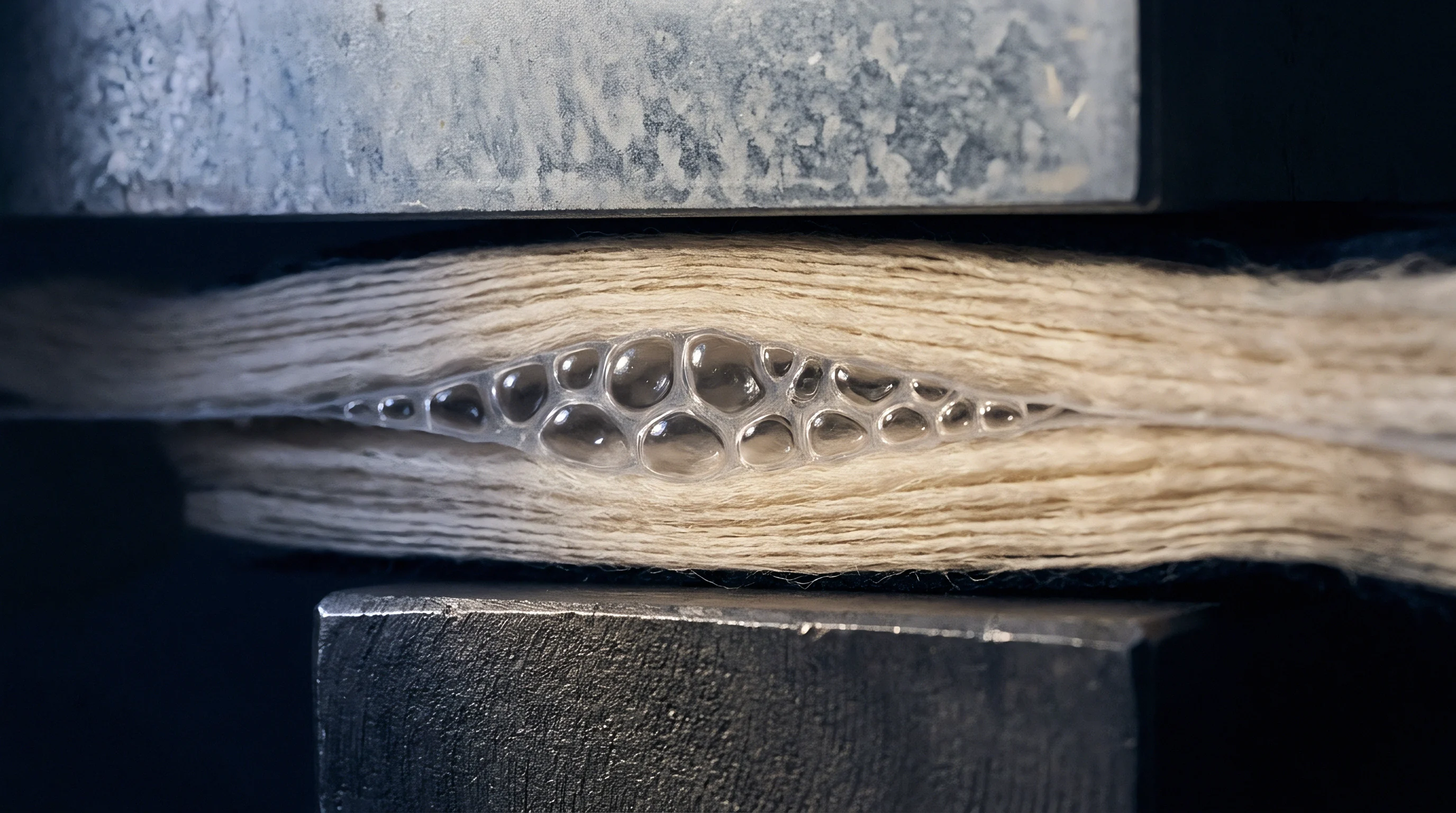
Drift
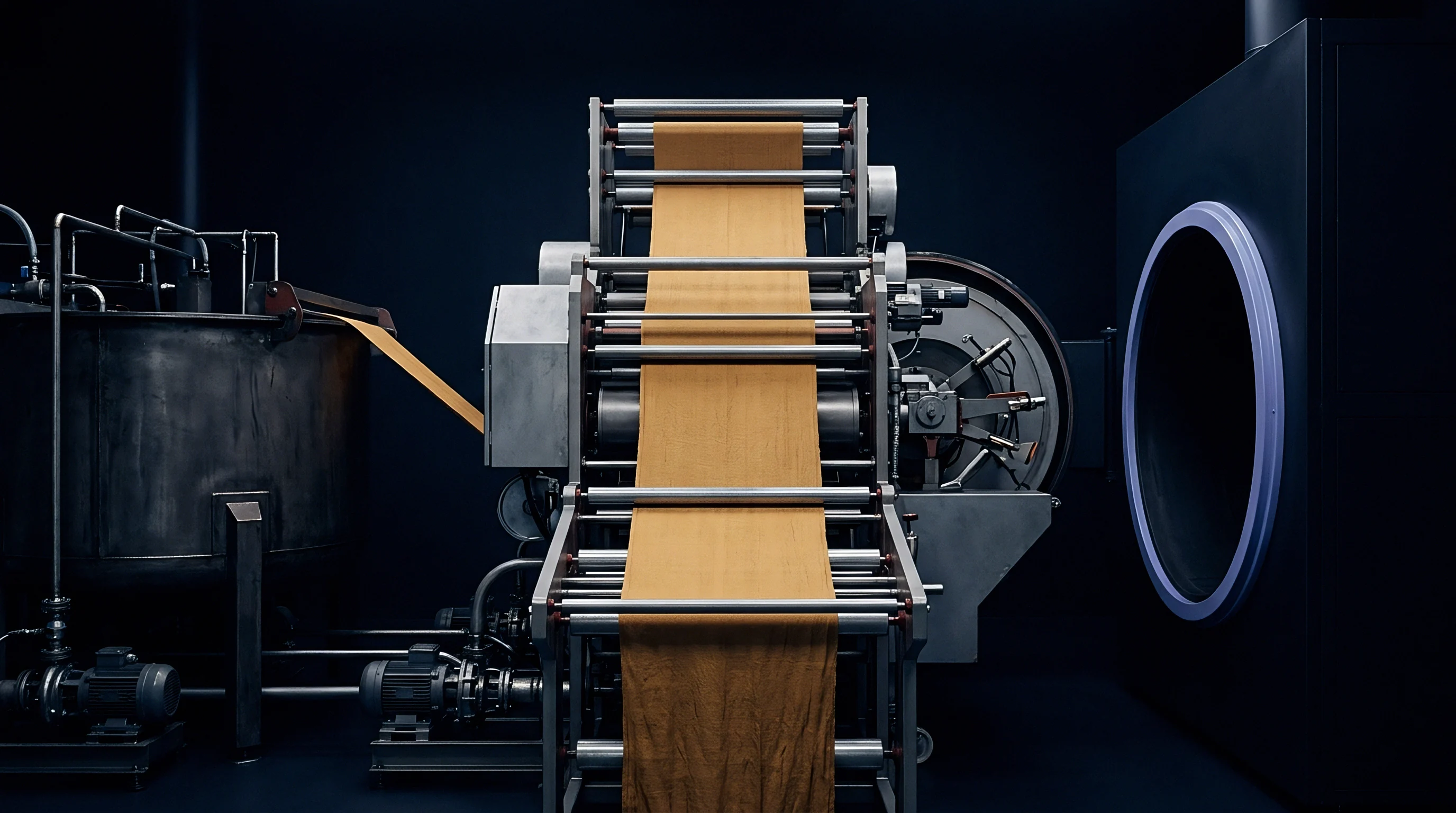
Batch-to-Batch Variance and Spectrophotometric Tolerance
Continuous ranges deliver exceptional end-to-end and piece-to-piece shade consistency across runs exceeding 10,000 metres. Once a continuous range reaches steady-state equilibrium, the liquor pick-up, dwell temperature, and chemical concentrations remain constant, holding spectrophotometric variance within CIELAB delta E values of 0.3 to 0.5. The process produces continuous uniform ribbons of colored substrate.
Batch dyeing introduces unavoidable lot-to-lot variance. A 10,000-metre production commitment splits into ten distinct 1,000-metre vessel cycles. Each batch represents an independent chemical and thermodynamic event influenced by subtle shifts in liquor ratio, weighing precision, ramp rates, steam pressure, water purity, and cooling water temperatures.
Even with automated dyestuff dispensing systems and closed-loop process controllers, shade drifts between consecutive vessels.
Shade variance manifests across three distinct dimensions during batch operations:
- Vessel-to-vessel drift stems from minute mechanical differences between machine chambers, pump delivery volumes, or heat exchanger efficiencies, generating delta E shifts of 0.6 to 1.2 across lots.
- Port-to-port shading occurs in multi-rope machines when one nozzle runs tighter than its neighbor, altering bath circulation rates and producing divergent depths of shade within the same cycle.
- Tail-to-head shading arises within a single long rope if dyestuff exhaust speeds exceed circulation velocity, leaving the first 50 metres darker than the interior folds.
Spectrophotometric evaluation across multiple illuminants becomes mandatory under batch production workflows. Colors formulated to match under standard D65 daylight often shift under store illuminants such as Point of Sale TL84 or incandescent Illuminant A. Batch dyers balancing combinations of three reactive or disperse dyestuffs frequently adjust formulations between runs to correct shade strikes, inadvertently introducing metamerism.
| Evaluation Metric | Continuous Range Run | Batch Jet Dyeing (Single Lot) | Batch Multi-Vessel Order |
|---|---|---|---|
| Delta E (CMC 2:1, D65 Daylight) | 0.20 to 0.45 | 0.30 to 0.60 | 0.70 to 1.40 |
| Delta E (CMC 2:1, Illuminant A) | 0.25 to 0.50 | 0.35 to 0.65 | 0.80 to 1.60 |
| End-to-End Tapering (Delta E) | Under 0.30 across 5000m | Under 0.40 within single rope | Not Applicable |
| Side-to-Center Shading (ISO 105-J03) | Grade 4-5 to 5 | Grade 4 to 4-5 | Grade 4 to 4-5 |
| Pass/Fail Threshold (Retail Standard) | Delta E under 0.60 | Delta E under 0.80 | Delta E under 1.00 |
A production run split across five vessels requires tight shade sorting protocols before shipping rolls to garment sewing lines. Failure to group rolls by dye lot forces garment factories to cut panels randomly, resulting in two-tone garments that fail final AQL inspections.
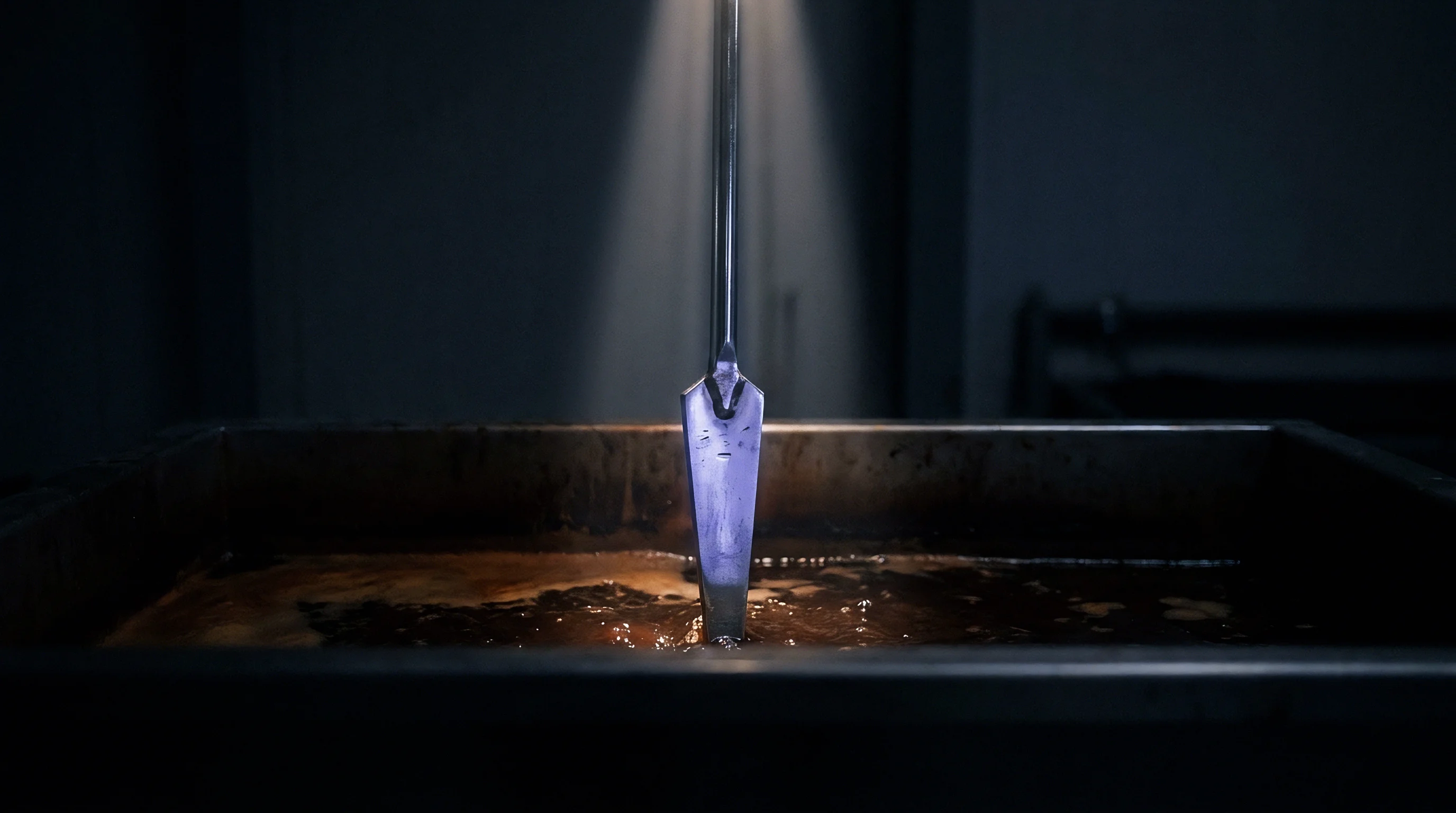
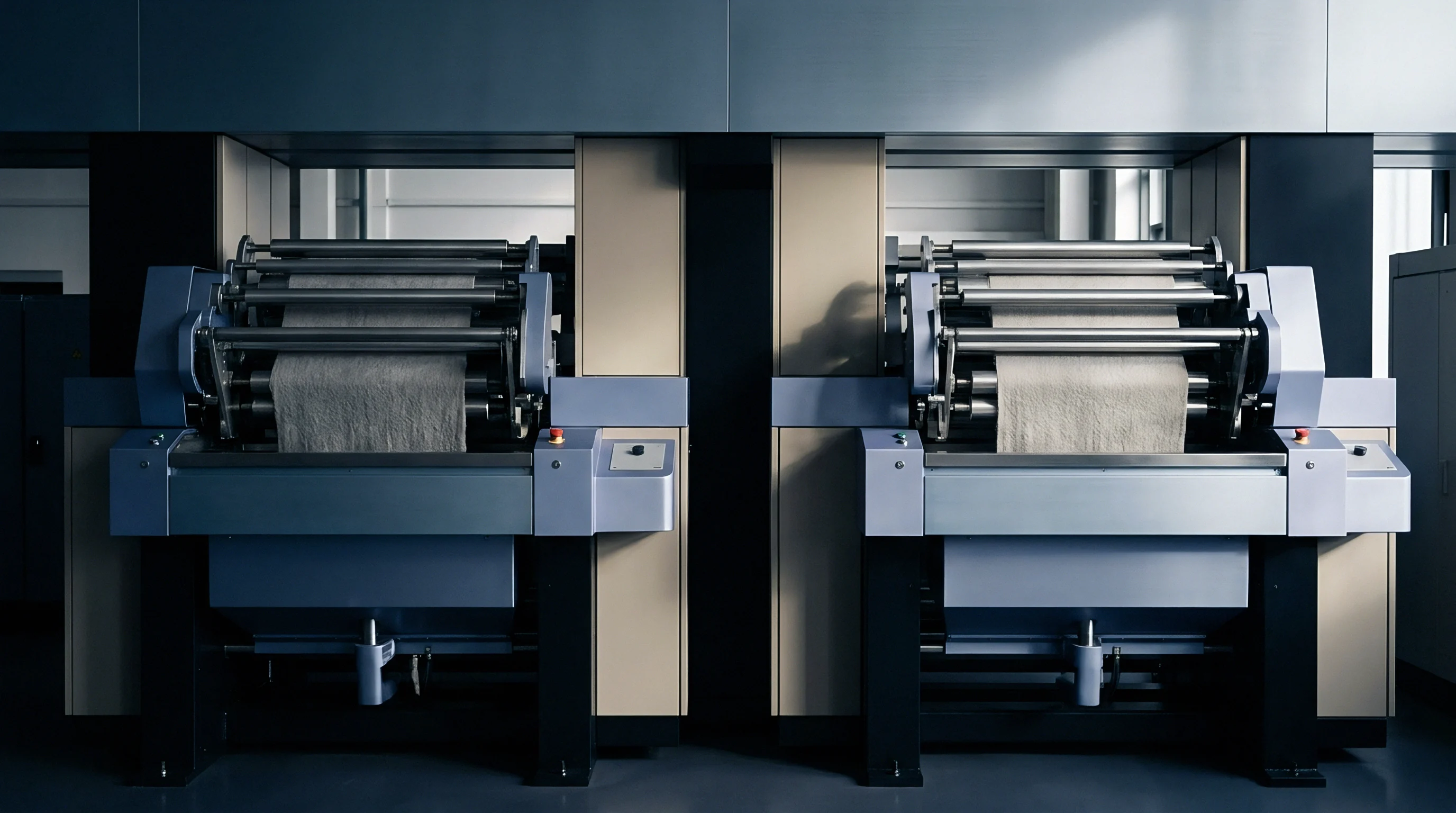
Tally
Financial Crossover Modeling and Capacity Calculations
Deciding between continuous and batch wet processing is an exercise in capital efficiency, order volume analysis, and machine changeover logistics. Continuous ranges represent immense capital investments with throughput capacities ranging from 30 to 90 metres per minute. Preparing a continuous pad-steam or thermosol range requires filling large chemical supply troughs, threading lead fabrics through hundreds of guide rollers, and synchronizing drying ovens, consuming hundreds of metres of greige goods purely for machine setup.
Batch processing relies on flexible, standalone machines with minimal setup waste. Loading a jet vessel requires no leader cloth, and chemical tanks are filled precisely to the volume demanded by the dry weight of the substrate. However, the operational throughput of batch machines is limited by long dwell times, low fabric velocities, and discrete cycle stages, including loading, heating, dyeing, rinsing, soaping, cooling, and unloading.
To establish the exact financial crossover volume, assume a standard 3/1 cotton twill woven at 240 grams per square metre, 150 centimeters finished width, dyed navy with reactive chemistry. Continuous pad-steam dyeing incurs a flat start-up waste penalty of 400 metres of leader fabric, alongside a high fixed changeover wash-box cost. Batch jet dyeing generates no leader scrap, but consumes substantially higher volumes of water, electrical power, and thermal energy per kilogram of fabric.
Review the calculated unit production costs across variable order sizes:
- Small run at 1,200 metres costs 2.45 USD per metre via continuous dyeing due to leader fabric scrap and machine setup amortization, while batch jet processing completes the lot at 1.15 USD per metre.
- Medium run at 3,500 metres costs 1.30 USD per metre on continuous equipment, aligning closely with the batch processing cost of 1.18 USD per metre.
- Volume run at 15,000 metres runs at 0.68 USD per metre on continuous lines, while batch processing costs plateau at 1.12 USD per metre due to fixed cycle times and energy requirements.
- Mass run at 50,000 metres drops continuous processing costs down to 0.52 USD per metre, leaving batch production entirely uncompetitive at 1.10 USD per metre.
The economic crossover point between batch jet vessels and continuous pad-steam ranges sits firmly between 3,500 and 4,500 metres per shade.
Orders falling below 3,500 metres run at a loss on continuous ranges due to setup waste and down-time costs. Conversely, orders exceeding 5,000 metres incur heavy financial penalties if routed through batch vessels, driven by elevated chemical consumption, higher water utility bills, and labor-intensive multi-lot sorting.
Handshake
Sourcing Contracts and Spec Governance under Processing Shifts
When supply chain disruptions or changing order volumes force a shift from continuous to batch processing, purchase specifications and vendor contracts require immediate revision. A greige specification engineered for continuous processing will consistently fail performance, dimensional, and aesthetic standards if dyed in batch machinery without structural and chemical adjustments.
Audit procedures at the wet processing plant confirm whether the designated facility operates machinery capable of matching original specifications. Converting woven orders to batch machinery requires jigger dyeing or soft-flow jet machines equipped with low-tension winches, internal anti-friction plating, and automated dosing pumps. Knitted goods require high-speed soft-flow or airflow machines to safeguard stitch symmetry.
Quality agreements must adjust specific performance parameters when transitioning between continuous and batch manufacturing routes:
- Tolerance bands for finished mass per unit area must widen by plus or minus 5 percent to accommodate batch relaxation.
- Dimensional stability clauses under ISO 5077 must account for improved knit shrinkage alongside increased woven pick crimp.
- Batch release protocols must establish acceptable delta E tolerances across dye lots, specifying individual shade groupings to prevent panel mixing during garment cutting.
- Laboratory dip matching procedures must replicate batch liquor ratios, thermal ramps, and alkali dosing sequences rather than relying on standardized continuous pad-dry hot air swatches.
The mill commonly claims that identical dyestuff formulas will deliver indistinguishable aesthetic hand and shade matching across different processing routes.