Resolving Detection Threshold Discrepancies between Composite Fiber Sampling and Finished Garment Wet Processing
Composite fiber testing dilutes localized chemical contamination while wet processing alters analyte extraction, demanding matrix-adjusted reporting thresholds.

Strand
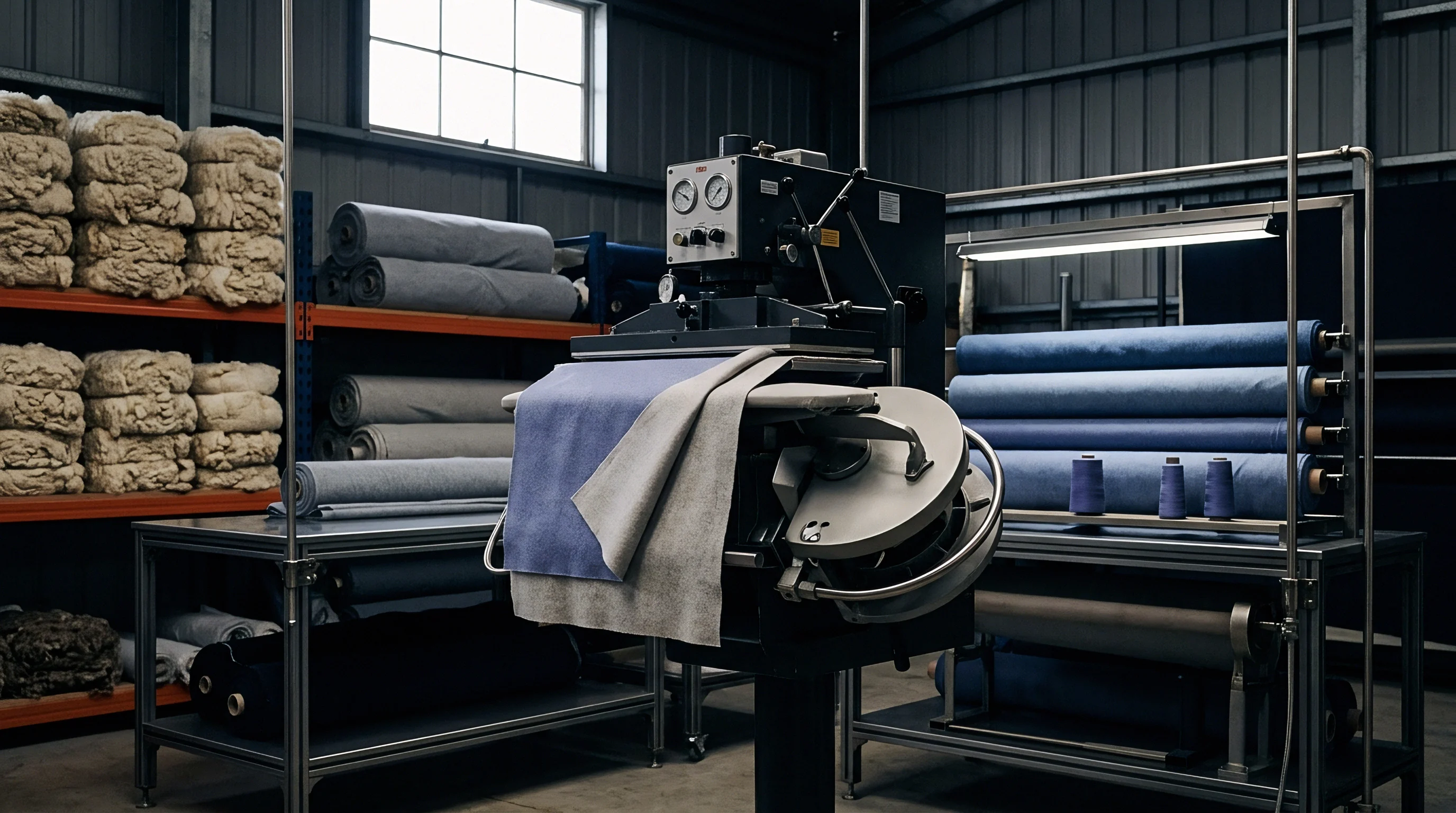
Pooling greige yarn obscures localized contamination when testing protocols combine multiple sources into a single specimen. Under ISO 14362-1 and EN ISO 14362-3 guidelines, laboratories may blend up to five distinct fiber or yarn components to cut testing costs. However, combining five yarn inputs mathematically dilutes any single contaminated component fivefold.
A restricted chemical present at 100 milligrams per kilogram on a single dyed strand drops to an extract concentration of 20 milligrams per kilogram when mixed with four clean strands. Because standard reporting limits for aromatic amines under REACH Regulation EC 1907/2006 Annex XVII sit at 30 milligrams per kilogram, the pooled specimen clears testing even though the individual component substantially exceeds European statutory limits.

Composite Fiber Pooling Mechanics
Combining up to five material lots into one analytical test vial lowers screening costs across production runs. Technicians cut equal mass portions from each submitted spool or swatch, milling the pooled mass into a homogeneous blend before solvent extraction. While mechanical pulverization distributes analytes throughout the sample, it also masks localized contamination.
When an arylamine dye component sits on a single filament in a heather yarn, the chemical load remains highly concentrated on that strand. Extracting the pooled sample draws the analyte across the total specimen mass, suppressing the chromatographic signal peak in direct proportion to the blend ratio.
Maintaining compliance integrity under composite protocols requires adjusting reporting thresholds downward. Standard regulatory limits must be divided by the number of pooled components. Evaluating a three-component composite against the 20 milligram per kilogram OEKO-TEX STANDARD 100 Class I threshold, for instance, requires an analytical detection limit of 6.67 milligrams per kilogram.
Standard gas chromatography-mass spectrometry equipment is often calibrated to reporting limits of 10 or 20 milligrams per kilogram, causing routine testing to miss concentrated contamination inside composite samples.
A three-to-one composite sample containing one component at 60 milligrams per kilogram yields a laboratory result of 20 milligrams per kilogram, landing precisely on standard reporting thresholds.

Sampling Errors in Greige Stock
Cross-sectional cuts from roll ends rarely capture chemical distribution across an entire dye lot. Sizing agents, spinning oils, and anti-static lubricants accumulate unevenly along yarn packages. High oil concentrations alter solvent absorption during sample preparation, impairing extraction efficiency for target analytes.
Variable tension during spinning further causes uneven oil pickup, generating localized spikes of restricted substances such as alkylphenol ethoxylates.
Undetected restricted substances in greige stock usually stem from flawed sampling protocols and mathematical dilution. Testing swatches taken only from outer package layers overlooks internal chemical accumulation caused by oil migration during storage.
- INSUFFICIENT SAMPLE HOMOGENISATION occurs when cut fibers are not thoroughly pulverized before solvent extraction, leaving concentrated pockets unexposed to the solvent bath.
- MATHEMATICAL DILUTION MASKING conceals restricted substance violations when contaminated swatches are blended with clean materials in composite testing vials.
- ASYMMETRICAL BATCH SAMPLING selects swatches exclusively from outer roll layers, missing internal chemical contamination caused by oil settling.
- VOLATILE CHEMICAL EVAPORATION alters analytical baselines when high-speed mechanical cutting heats samples prior to cold solvent extraction.
Combined testing conforms strictly to standard test protocols, even though individual yarn concentrations vary within the composite sample.


Bath
Dyeing and aqueous finishing alter the chemical profile of raw substrates through two main mechanisms. Washing, scouring, and reductive clearing remove water-soluble residues, unfixed dyes, and surface spinning oils. Conversely, thermal curing, acid washes, and synthetic resin cross-linking concentrate non-volatile compounds or cleave precursor molecules into restricted analytes.
Assessing compliance solely on greige composite data ignores these chemical shifts during wet processing.

Aqueous Extraction during Scouring
High-temperature alkaline scouring strips volatile spin finishes and residual monomers before dyeing. Baths running at 90 degrees Celsius with sodium hydroxide and non-ionic surfactants remove surface-bound alkylphenol ethoxylates and residual solvent carriers, while unfixed dyes wash out into the effluent. By reducing overall extractable chemical mass, scouring lowers measured concentrations of free formaldehyde and heavy metals relative to greige levels.
A yarn lot with 50 milligrams per kilogram of extractable chromium VI can drop below 5 milligrams per kilogram after aggressive scouring and acid rinsing.
Scouring efficiency varies by fiber type. Synthetic fibers retain lipophilic carrier chemicals within their crystalline matrix, whereas natural cellulose sheds surface impurities quickly. On polyester, reductive clearing strips surface-deposited azo dyes that failed to penetrate the core, reducing potential aromatic amine generation in subsequent laboratory tests.
Under OEKO-TEX STANDARD 100 Class I restrictions, arylamine concentrations exceeding 20 milligrams per kilogram trigger immediate certificate suspension regardless of composite test clearance.

Thermal Fixation and Chemical Splitting
Stenter temperatures exceeding 180 degrees Celsius degrade residual azo colorants and finishing auxiliaries. Thermal energy cleaves specific azo bonds, generating carcinogenic aromatic amines that were undetectable in raw greige fiber. Direct dyes with azo linkages split under heat stress, releasing free aniline or 4-aminobiphenyl directly onto finished fabric.
Durable press finishing with dimethyloldihydroxyethyleneurea resins introduces formaldehyde cross-linking networks. Unreacted free formaldehyde levels rise sharply after stenter drying, turning compliant raw cotton into a non-compliant finished article. Rapid water evaporation during drying also draws non-volatile metal salts and fluorinated stain repellents to the fabric surface, concentrating analytes in exterior fiber zones.
| Process Stage | Dominant Chemical Reaction | Restricted Substance Risk | Detection Threshold Shift |
|---|---|---|---|
| Alkaline Scouring | Aqueous surfactant extraction | Alkylphenol ethoxylates, free oils | Concentration decreases below reporting limit |
| Azo Dyeing | Dyestuff exhaust and fixation | Restricted aromatic amines | Concentration increases via dyestuff pickup |
| Stenter Drying | Thermal cleavage and evaporation | Free aniline, cleaved arylamines | Analyte generated via heat breakdown |
| Resin Finishing | DMDHEU acid-catalyzed cross-linking | Free and hydrolysable formaldehyde | Concentration increases 3-fold to 10-fold |
| Garment Wash | Mechanical rinsing and stripping | Unfixed dye, water-soluble metals | Concentration decreases via wash-off |
Because wet processing removes water-soluble impurities while thermal curing can generate new cleavage products, testing finished garments provides the only reliable measure of final regulatory compliance.


Matrix
Laboratory instruments process complex organic backgrounds where heavy silicone finishes can mask target analytes during chromatographic separation. Liquid chromatography-mass spectrometry and gas chromatography systems depend on efficient solvent extraction to isolate trace analytes from fiber matrices. Silicone softeners, fluorochemical repellents, and polyurethane coatings encapsulate target molecules, preventing solvents like methanol or dichloromethane from dissolving restricted residues.
In such cases, instruments report a clean result because the analyte remains trapped inside the polymer matrix, not because it is absent.

Why Do Analytical Thresholds Diverge after Industrial Finishing?
Surfactants and cross-linking polymers encapsulate residual trace chemicals, restricting solvent penetration during gas chromatography preparation. Durable water-repellent coatings form physical barriers that withstand standard ultrasonic bath extractions at 40 degrees Celsius. Solvent penetration rates drop by up to 80 percent on treated fabrics compared to unfinished greige stock.
As a result, analytes remain locked inside the hydrophobic film during standard extraction windows, driving reported concentrations below limits of quantitation.
Matrix suppression introduces further testing errors. When co-extracted finishing chemicals enter the chromatography column alongside target analytes, high background concentrations of silicone or fatty acid softeners suppress ionization in the mass spectrometer. This signal suppression lowers peak heights, causing software to report sub-threshold values for analytes present in substantial quantities on the fabric.
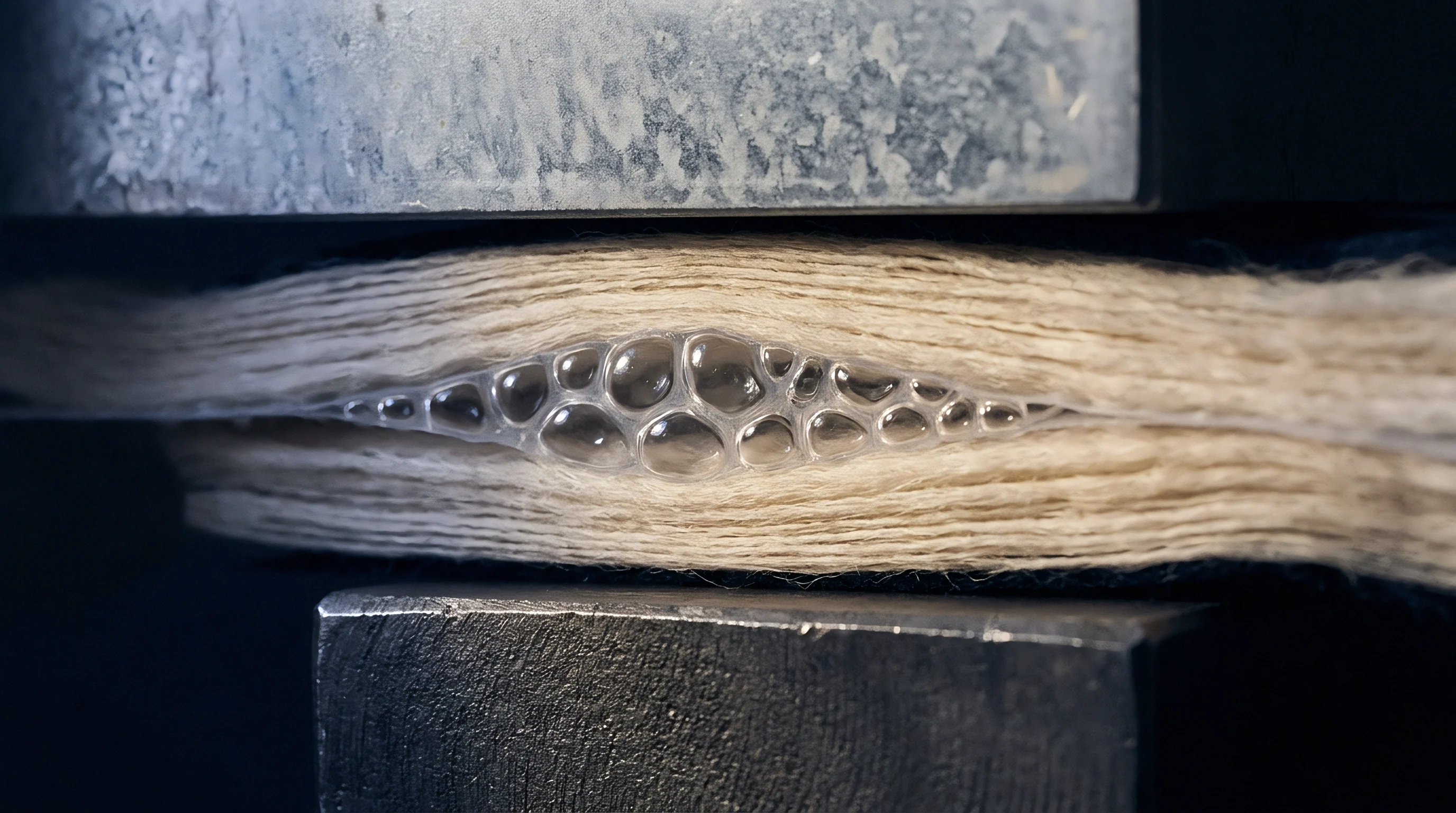
Hydrophobic surface finishes hide raw material contamination by blocking solvent extraction during standard chromatography screening.
Solvent Efficiency in Chromatography
Standard methanol extractions specified in ISO 14362-1 undercount bound amine concentrations when synthetic resins coat the material. Obtaining accurate results requires modified solvent systems or pre-extraction clean-up steps to strip surface polymers. Pre-swelling with tetrahydrofuran or xylene breaks down polyurethane and silicone barriers, exposing core fibers to analytical solvents.
Standard analytical methods yield lower recovery percentages on finished garments than on raw greige fiber. A raw fiber sample yielding 100 percent extraction recovery drops to 35 percent recovery once cross-linked resins are applied to the fabric.
- HYDROPHOBIC SILICONE COATINGS prevent polar solvents from penetrating core fibers, yielding artificially low extraction values during standard testing.
- POLYMERIC CROSS-LINKING NETWORKS trap free formaldehyde within cured DMDHEU matrices, requiring acidic hydrolysis to fully release bound compounds.
- CO-EXTRACTED DYESTUFF INTERFERENCE causes spectral overlaps in HPLC detection, masking aromatic amine peak signals during quantification.
- SOLVENT POLARITY MISMATCH leaves lipophilic carrier compounds unextracted when standard aqueous or methanol procedures are used without modification.
Whether advanced polar solvent extractions can consistently penetrate cured polyurethane water-repellent films without destroying the underlying polymer structure remains an unresolved question in commercial testing.

Arithmetic
Evaluating chemical risk requires accounting for concentration shifts and sample dilution across composite ratios. Mathematical modeling demonstrates how composite sampling hides contamination that later appears during garment audits. Assessing a three-component blend requires dividing standard action limits by three to avoid false-negative clearances.
If an individual yarn carries 75 milligrams per kilogram of an arylamine, a 3:1 composite sample reduces the measured extract concentration to 25 milligrams per kilogram.

Composite Dilution Mathematical Proof
Testing three distinct fabric components in a single vial reduces individual component sensitivity by two-thirds. Consider a statutory limit of 30 milligrams per kilogram for aromatic amines under REACH Annex XVII, with gas chromatography-mass spectrometry detection operating at a quantitation limit of 20 milligrams per kilogram. A composite sample made of three equal parts (Component A, Component B, Component C) undergoes analysis.
If Component A contains 60 milligrams per kilogram of 4-aminobiphenyl while Components B and C contain 0 milligrams per kilogram, the resulting composite concentration equals exactly 20 milligrams per kilogram. Depending on reporting protocols, the laboratory logs this 20 milligram per kilogram reading as compliant or borderline because it sits at or below standard reporting limits, even though Component A exceeds the statutory limit by 100 percent.

Wet Processing Concentration Factors
Evaporative drying concentrates non-volatile auxiliary chemicals along finished garment edges. For extractable heavy metals like chromium or nickel in dyestuffs, wet application distributes the chemical across the fabric; subsequent stenter drying evaporates surface moisture and leaves concentrated metal residues behind.
Mass balance calculations illustrate the effective concentration shift. Let M1 represent raw fiber mass and C1 the initial analyte concentration. During wet processing, chemical addition (m_add) occurs alongside mass loss (m_loss) from scouring.
The final concentration C2 on the finished fabric equals total analyte mass divided by final fabric mass.
Equation for final finished garment concentration: C2 = (C1 M1 – m_washed + m_added) / (M1 – m_loss). If wet processing strips 10 percent of fiber mass while adding non-volatile functional finishes, the final analyte concentration increases even without direct addition of the restricted chemical.
| Composite Ratio | Component Concentration (mg/kg) | Composite Specimen Result (mg/kg) | Standard Reporting Limit (mg/kg) | Compliance Determination |
|---|---|---|---|---|
| Single Component (1:1) | 45.0 | 45.0 | 20.0 | FAIL (Exceeds 30 mg/kg limit) |
| Two Composite (2:1) | 45.0 | 22.5 | 20.0 | PASS (False Negative Masking) |
| Three Composite (3:1) | 45.0 | 15.0 | 20.0 | PASS (Below Quantitation Limit) |
| Five Composite (5:1) | 45.0 | 9.0 | 20.0 | PASS (Undetected Signal Peak) |
| Assumes single contaminated component mixed with clean components. Statutory compliance threshold set at 30.0 mg/kg under REACH Annex XVII. Analytical Limit of Quantitation set at 20.0 mg/kg. | ||||
Including a composite dilution action limit in purchasing contracts shifts retesting costs to the mill whenever pooled results exceed the individual action threshold divided by the pooling factor.
Border
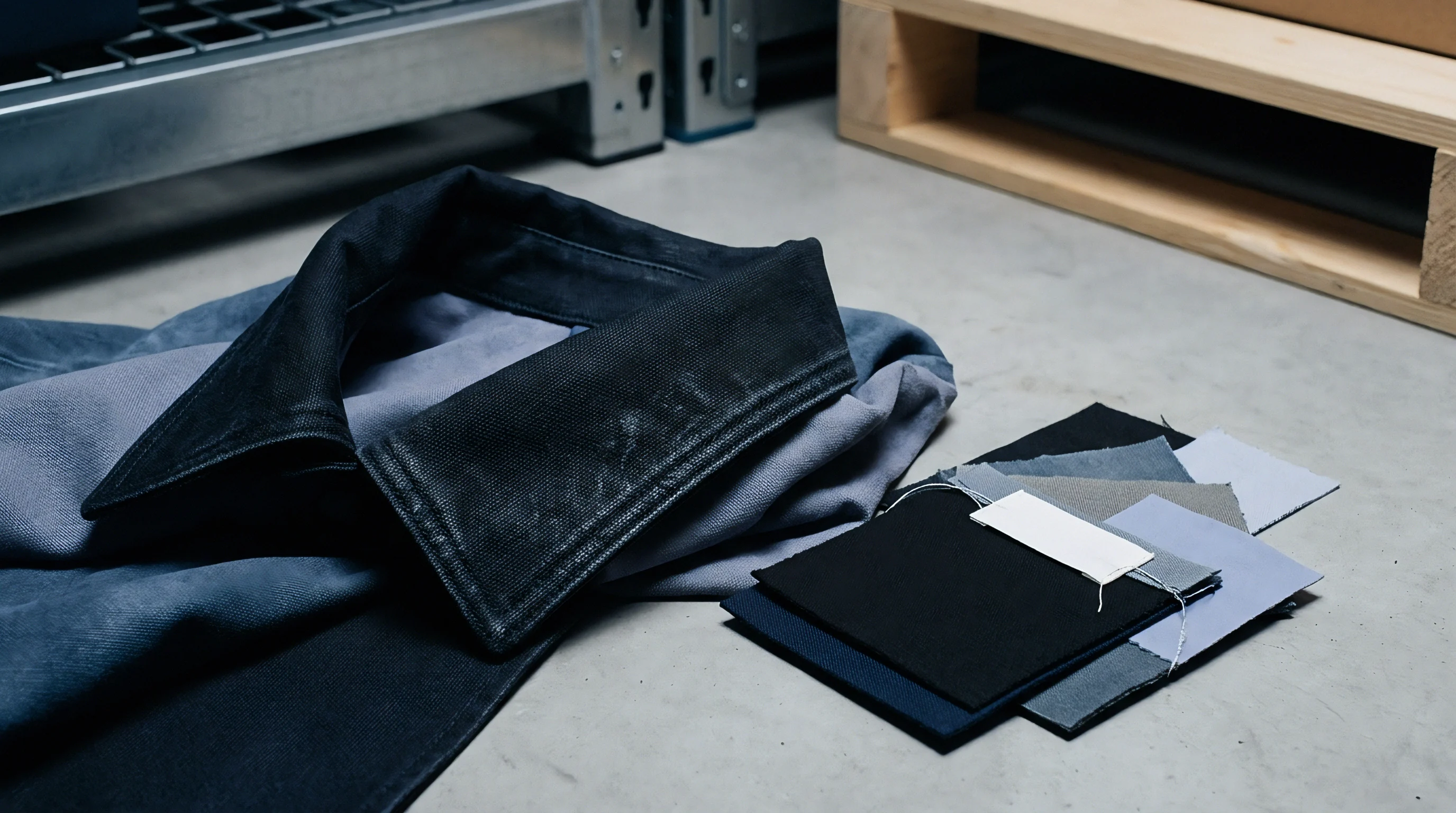
Customs authorities conduct verification testing using single-garment destructive extraction, disregarding upstream composite test reports. European market surveillance officers at entry ports cut swatches directly from individual panels, seams, and trims. Because import clearance depends on single-component compliance, a clean greige composite certificate offers no legal protection if a port laboratory finds 50 milligrams per kilogram of 4-benzidine in an isolated pocket lining.

Market Surveillance Testing Reality
Port laboratories test individual panels directly against statutory thresholds rather than pooling specimens. Market surveillance frameworks under Regulation EU 2019/1020 enforce strict single-component sampling, with inspectors testing contrasting pocket linings, printed care labels, zippers, and shell fabrics in separate analytical runs. Customs enforcement officers routinely reject importer composite documentation during re-inspection proceedings.
Detention costs accumulate daily during official re-testing. Port authorities hold entire retail shipments in bonded storage if a single component fails initial screening. Retesting turnaround times can stretch to four weeks, missing seasonal delivery windows and incurring heavy demurrage fees.
Customs authorities inspect individual garment panels rather than composite yarn blends during import clearance verification.

Traceability Dossier Deficits
Discrepancies between yarn test reports and finished garment audits lead directly to commercial detentions. Importers relying solely on greige composite records lack the panel-specific data needed to resolve border holds. A complete technical dossier maintains chemical traceability from dyehouse batch logs through post-wash finished garment testing.
- Request official sampling documentation and test methods from port authority customs officers immediately upon notification of container detention.
- Extract parallel retain swatches from identical production lots stored in secure warehouse archives for duplicate accredited testing.
- Submit retain specimens to an ISO 17025 accredited laboratory specifying individual component testing without composite pooling.
- Present verified single-component analytical reports alongside transaction certificates to demonstrate statutory compliance for released goods.
Ignoring composite masking risks border detentions, mandatory shipment destruction, and severe financial and reputational damage.


Remedy
Aligning raw material testing with post-finishing conditions prevents import rejections when supported by structured purchasing terms. Compliance frameworks require clear triggers that mandate single-component testing whenever composite results pass action limits by narrow margins. Establishing matrix-adjusted reporting thresholds closes the gap between raw yarn screening and finished garment compliance.
Purchase Order Threshold Adjustments
Buying terms should require component-level testing whenever composite dilution factors could mask non-compliance. Purchase orders ought to define action limits by dividing statutory requirements by the composite ratio. For a 3:1 composite test under REACH Annex XVII, the contract should trigger individual re-testing if the pooled extract exceeds 10 milligrams per kilogram.
Brand technical specifications should set distinct testing rules for high-risk chemical classes. Volatile solvents, free formaldehyde, and cleavage-prone azo dyes require mandatory testing on finished, fully washed garments rather than greige stock. Furthermore, dyehouses must certify that no thermal processing exceeding 160 degrees Celsius occurs after final chemical verification.

Split Sample Retention Protocols
Retaining untransformed greige swatches alongside finished garments enables clear root-cause analysis during regulatory disputes. Secure storage of split samples from every production lot allows importers to verify whether non-compliance originated during fiber spinning or downstream wet processing.
Contractual terms can allocate financial liability based on split-sample testing. If greige split samples pass individual testing while finished garments fail, commercial liability shifts to the wet processing dyehouse. Clear individual testing triggers based on wet process chemistry ensure compliance documentation withstands regulatory scrutiny.