Modeling Non-Linear Wet Processing Widthwise Contraction Mechanics across High-Density Cotton Twill Greige Warps
High warp cover factors restrict weft straightening, forcing non-linear widthwise contraction during wet relaxation, demanding engineered stenter overfeed.

Pad
Aqueous baths initiate immediate mechanical shifts when greige twill enters continuous wet processing lines. In high-density cotton twill warps, where the warp cover factor frequently exceeds 0.85, the physical space allocated to individual yarns inside the woven sheet is severely constrained. When raw cotton yarns encounter water, liquid enters porous yarn capillaries.
The primary cell wall and secondary lamellae absorb water molecules, triggering a volumetric expansion of the cotton cellulose. Fiber diameter expands by 14 to 22 percent during full hydration, while longitudinal swelling remains below 1.5 percent. This extreme anisotropy in fiber dimensional change drives the entire macro-contraction of the fabric width.
Because the warp ends are tightly packed alongside one another under weaving tension, radial expansion cannot occur without physical collision between adjacent warp threads. The increased yarn cross-section demands a longer sinusoidal path for the interlacing weft threads. High warp packing density prevents warp yarns from shifting laterally, leaving the weft thread as the primary flexible element in the system.
The weft thread bends around the expanding warp ends, increasing weft crimp and pulling the selvages inward. This initial contraction is non-linear because fluid absorption, hydrogen bond disruption, and capillary pressure changes occur simultaneously across different time scales during bath entry.

Aqueous Penetration and Cell Wall Expansion Dynamics
Water molecules enter the inter-fiber capillaries of cotton yarns within milliseconds of immersion. Hydrophobic natural waxes on greige fiber surfaces initially resist fluid intake, creating localized moisture gradients across the roll width. As surfactant-assisted desizing or scouring liquors displace trapped air, cell walls hydrate rapidly.
Hydrogen bonds within the amorphous regions of the native cellulose fiber network break and reform at wider intermolecular distances. This swelling forces individual fibers into a rounder cross-sectional profile. As thousands of fibers inside a spun yarn expand against each other, the overall yarn diameter increases proportionally to the square root of the fiber packing density.
Cotton fibers swell radially outward. Wet relaxation releases weaving strain.
Alkali Contact and Fiber Morphological Changes
Concentrated sodium hydroxide solutions disrupt the crystalline lattice of native cellulose. During mercerization, caustic soda at concentrations between 28 and 30 degrees Baumé penetrates the crystalline core, converting cellulose I into alkali cellulose. This structural shift causes massive swelling of the lumen and de-convolutes the natural ribbon-like twist of the cotton fiber.
The resulting fiber becomes almost perfectly cylindrical. When high-density warps pass through an unconstrained mercerizing pad bath, the transverse expansion of the warps generates immense lateral forces. If processing tension along the warp axis is held high to maximize luster, the fabric sheet responds by contracting aggressively in the widthwise direction.
Cellular cross-sectional expansion of mature cotton fibers reaches 14 percent in volume when submerged in aqueous baths at 60 degrees Celsius without tension.
Process control parameters in the initial wet bath determine the magnitude of width loss before mechanical stentering takes place. The following operational parameters govern wet contraction severity:
- Liquor Surface Tension High wetting agent concentrations accelerate liquor penetration, causing instantaneous yarn swelling and rapid widthwise snap-back at the pad nip.
- Submersion Bath Tension Elevated warp-way tension restricts longitudinal crimp interchange, forcing the entire volumetric swell to express as lateral fabric contraction.
- Caustic Concentration Gradient Sodium hydroxide concentrations above 26 degrees Baumé alter fiber morphology faster than the weft system can mechanically adjust, inducing irregular selvage curling.
- Temperature Dependent Viscosity Hotter desizing liquors penetrate dense yarn cores faster, accelerating early-stage width contraction within the first three meters of bath contact.
Inadequate bath control during swelling results in permanent density variations that downstream garment cutting operations cannot correct.

Crimp
Structural geometry governs how woven yarns reconfigure their paths when external tension drops during bath immersion. Greige twill woven with a 3/1 or 2/1 weave architecture possesses asymmetric float characteristics. Warp yarns float over multiple weft picks before interlacing, creating directional flexural rigidity.
On the loom, warp yarns are kept under high mechanical tension (often exceeding 200 grams per end), which pulls them nearly straight, keeping warp crimp low at 3 to 5 percent. Conversely, weft yarns are laid into the shed under minimal tension, forcing them to bend around the rigid warp ends, yielding a greige weft crimp of 8 to 14 percent. Wet processing releases the artificial loom tension, allowing internal yarn forces to seek energetic equilibrium.
Mathematical modeling of this equilibrium relies on modified Pierce fabric geometry equations. Classical Pierce models assume circular yarn cross-sections and flexible thread paths. In high-density twills, yarn flattening occurs at every interlace point due to high beat-up forces on the loom.
When wet swelling increases yarn diameter, the geometric limit of thread packing is exceeded. The warp cover factor (K1) and weft cover factor (K2) are defined by the ratio of yarn diameter to thread spacing:
K1 = n1 · d1
K2 = n2 · d2
where n1 and n2 represent ends per centimeter and picks per centimeter, while d1 and d2 represent yarn diameters in centimeters. When the combined cover factor (K1 + K2 – K1 · K2) approaches or exceeds 0.92, the weave enters jammed geometry. In a jammed state, warp crimp and weft crimp cannot adjust independently.
The warp ends cannot increase their crimp without pushing the weft picks further apart or forcing the weft thread to travel a longer path across the fabric width. Because the pick density is fixed by the loom beat-up, the fabric must contract in width to provide the necessary length for the weft thread to traverse the swollen warp ends. Twill floats allow rapid bending.
Dense warp threads resist movement. Weft yarns absorb lateral strain.
Pierce Geometry Adaptations for High Density Weaves
Classical fabric mechanics models treat yarn cross-sections as rigid circular cylinders. Real cotton yarns in high-density 3/1 twill fabrics flatten into elliptical or racetrack profiles at interlace points. During wet relaxation, the eccentric ratio of the elliptical cross-section changes dynamically as internal fiber pressure increases.
Modeling this non-linear transition requires incorporating yarn compressibility coefficients (c1, c2) and bending rigidity moduli (B1, B2). As water lubricates the inter-fiber contact surfaces, bending rigidity drops by 40 to 60 percent, allowing the weft yarn to wrap tighter around the warp ends. This structural deformation alters the fabric geometry from an unjammed state to a jammed state, driving rapid width reduction.
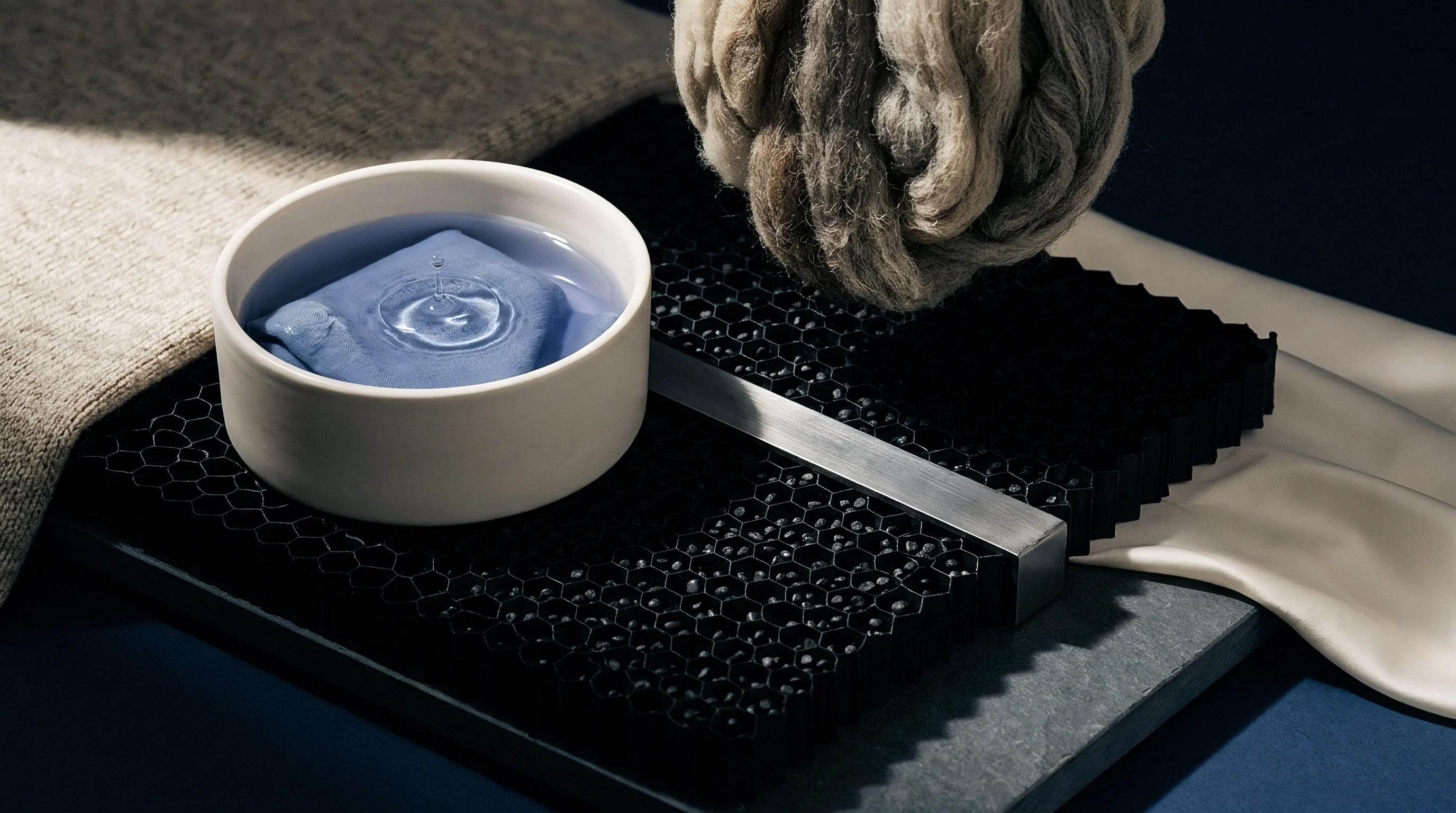
Warp Cover Factor and Lateral Packing Limits
High end counts per centimeter restrict the space available for transverse yarn movement. When the greige warp density exceeds 40 ends per centimeter with 20 tex (30s English cotton count) yarns, adjacent warp ends touch, creating a continuous sheet of cellulose. When wet swelling increases the diameter of these yarns, the warp ends exert lateral pressure on neighboring ends.
This lateral pressure creates a wedging effect that forces the weft thread into high-frequency wave configurations. The fabric width contracts non-linearly: small increases in yarn swell produce disproportionately large reductions in overall width once the lateral space between ends is completely exhausted.
| Processing Stage | Warp Density (ends/cm) | Weft Density (picks/cm) | Warp Crimp (%) | Weft Crimp (%) | Usable Fabric Width (cm) |
|---|---|---|---|---|---|
| Greige Off-Loom | 44.0 | 22.0 | 3.8 | 9.2 | 170.0 |
| Desized & Scoured | 46.2 | 22.5 | 6.1 | 12.4 | 161.8 |
| Caustic Mercerized (Tensioned) | 48.5 | 22.8 | 5.2 | 14.8 | 154.2 |
| Stenter Finished & Relaxed | 47.8 | 23.0 | 5.8 | 13.5 | 156.5 |
Evaluating a worked construction reveals the mathematical magnitude of this contraction. Consider a 3/1 heavy cotton twill targeted for workwear applications, woven with the following parameters: greige warp count of 36 tex (16s Ne), weft count of 42 tex (14s Ne), greige warp density of 42 ends/cm, and greige weft density of 20 picks/cm. The greige reed width is set at 172 cm to achieve a target finished cuttable width of 150 cm.
During continuous scouring and bleaching, unconstrained wet relaxation reduces the fabric width to 153.5 cm. The weft crimp (c2) increases from a greige baseline of 8.5 percent to 13.8 percent in the fully relaxed wet state. Using the structural relationship for width contraction ratio (Rw):
Rw = fracWwetWgreige = frac1 + c2,greige1 + c2,wet
Substituting the measured crimp values into the relationship:
Rw = frac1 + 0.0851 + 0.138 = frac1.0851.138 = 0.9534
This theoretical crimp interchange accounts for a width reduction to 172 × 0.9534 = 164.0 cm. However, the actual measured wet width is 153.5 cm. The remaining 10.5 cm of width loss results from yarn swelling and inter-fiber rearrangement within the dense twill weave.
The secondary contraction factor (Sswell) is calculated as:
Sswell = 1 – fracWactualWcalculated = 1 – frac153.5164.0 = 0.0640 (6.40%)
This secondary contraction is non-linear and depends heavily on yarn twist factor and fiber maturity. Splicing yarn lot data across multi-mill supply lines without adjusting reed width leads to severe cuttable width non-conformities.
Higher warp cover factors force greater structural deflection into the weft system during wet relaxation.
Structuring a technical qualification dossier for high-density twill weaves requires documenting structural limits prior to committing yarn lots. The decision checklist below highlights mandatory evaluation gates:
- Yarn Twist Multiplier Verification Higher warp twist increases yarn compactness, delaying fluid absorption while increasing the bending stiffness of warp ends during crimp interchange.
- Greige Reed Width Allocation Selecting a reed width without adding a 7 to 10 percent allowance for non-linear swelling results in finished rolls falling below garment marker requirements.
- Float Length Stability Analysis 3/1 twill floats buckle easily under wet axial compression, whereas 2/1 twill weaves distribute crimp interchange more uniformly across both yarn systems.
- Fiber Maturity Index Check Immature cotton fibers swell unpredictably in caustic liquor, shifting the jammed cover factor threshold mid-way through a continuous dyeing run.
Whether real-time warp tension adjustment during continuous desizing can fully compensate for yarn lot non-uniformity remains an active area of empirical mill testing.

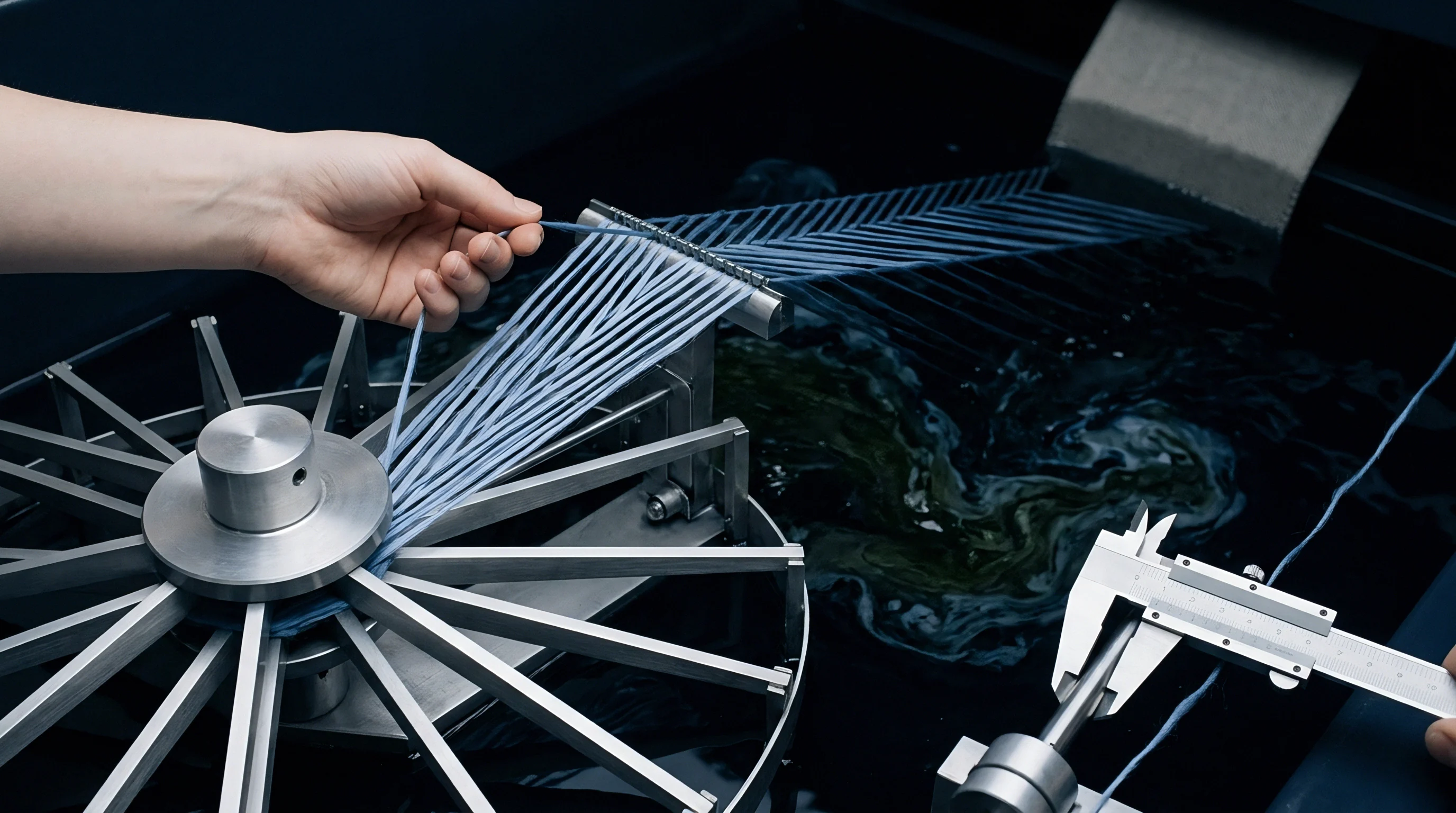
Rig
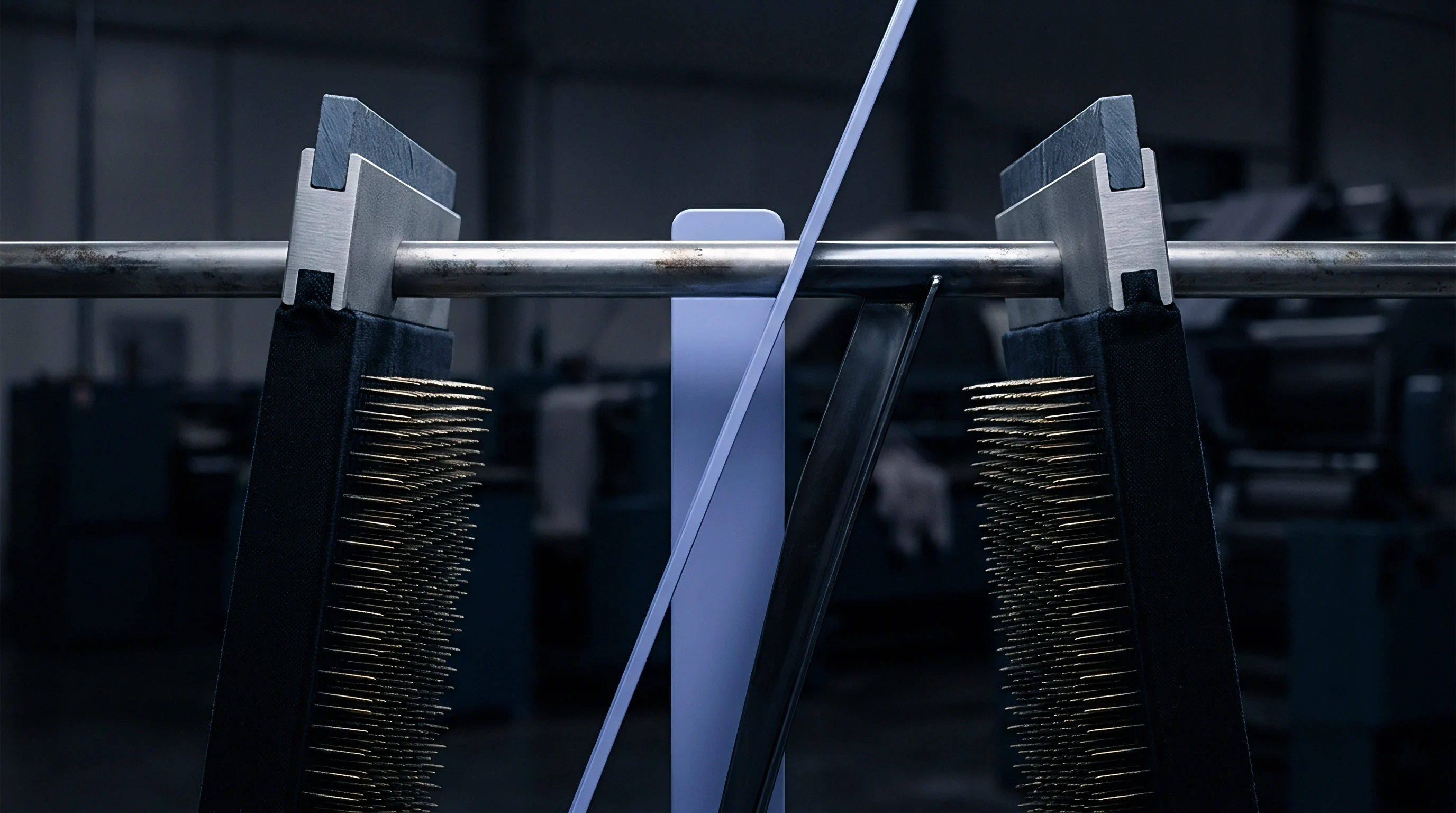
Continuous stenters and mechanical finishing ranges control widthwise contraction by applying controlled lateral tension and longitudinal overfeed. When dense twill fabrics emerge from wet processing, they enter the stenter frame in a swollen, structurally unstable state. The stenter uses a mechanical pin or clip chain to grip the selvages, pulling the fabric outward to a specified target width while conveying it through heated drying zones.
Loom tension maintains warp alignment. Stenter pins hold raw edges. Rubber belts compress longitudinal yarns.
Controlling widthwise mechanics requires precise management of the stenter overfeed ratio. If a fabric is pulled outward in width without supplying extra length via warp overfeed, massive internal warp tension develops. This mechanical strain locks the weft yarns in an unstable configuration.
Upon subsequent laundering, the stored stress releases, causing high residual wash shrinkage and fabric skewing. To prevent this failure, finishing engineers set the stenter overfeed between +2 percent and +8 percent, feeding fabric into the entry zone faster than the chain speed. This extra length allows the warp ends to crimp around the weft picks while the pin chains hold the width, setting the structure permanently as heat evaporates residual water.

Stenter Overfeed and Chain Width Control Mechanics
Mechanical pin chains pull fabric selvages outward to set the targeted finished dimension. The lateral force required to widen a dense, wet cotton twill rises exponentially as the fabric approaches its original greige reed width. In the first drying zone, water evaporation reduces fiber plasticity, freezing the yarn geometry.
If the pin chains pull the width beyond the natural jammed geometry limit, individual warp yarns slip relative to weft picks, causing selvage tears or pin-hole propagation. Adjusting the width profile progressively across stenter zones allows gradual stress relaxation, minimizing physical damage to the selvages.
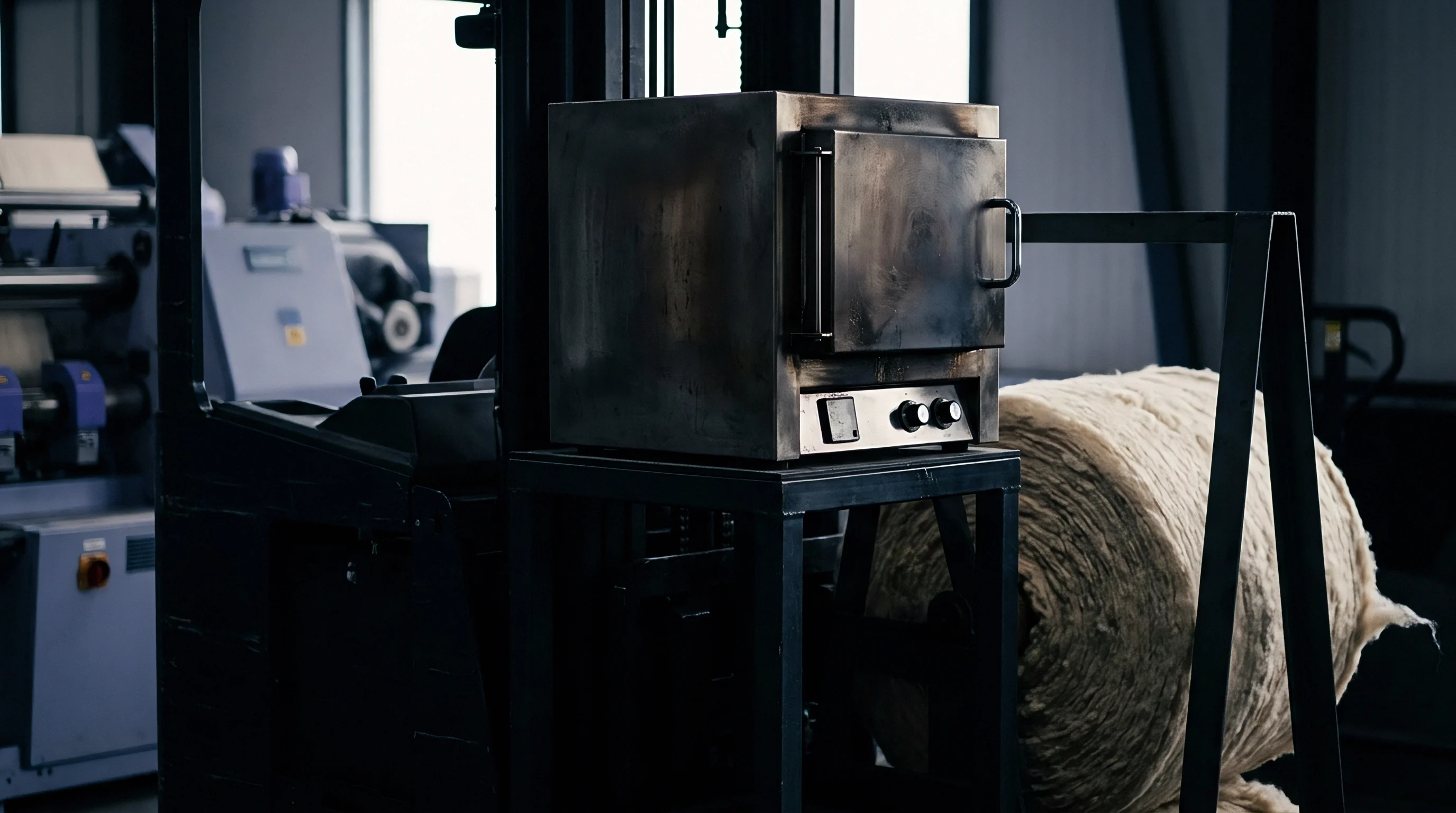
How Does Compressive Shrinkage Stabilize Widthwise Yield?
Rubber belt units force the warp structure to contract longitudinally before final drying. During Sanforizing, the wet fabric passes between a heated steel cylinder and a thick rubber belt under high lateral pressure. As the compressed rubber belt relaxes, it forces the warp ends closer together, driving warp crimp to its maximum physical limit.
This process impacts widthwise stability: as pick density increases in the rubber belt unit, the weft yarns are locked into their crimped geometry, preventing subsequent widthwise expansion or contraction during garment pressing.
| Machinery Unit | Mechanical Action Type | Typical Overfeed Range (%) | Width Adjustment Impact (cm) | Residual Shrinkage Impact |
|---|---|---|---|---|
| Pad Mangle Nip | Transverse Compression | 0.0 to +1.0 | -2.0 to -5.0 | Increases Weft Wash Shrinkage |
| Mercerizing Pin Tenter | Lateral Extension under Caustic | +1.0 to +3.0 | +5.0 to +8.0 | Fixes Usable Mercerized Width |
| Hot Flue Drier | Tensionless Air Suspension | 0.0 to +2.0 | -3.0 to -6.0 | Promotes Full Natural Relaxation |
| Stenter Frame (Drying) | Controlled Lateral Pinning | +2.0 to +8.0 | +2.0 to +10.0 | Controls Final Usable Cuttable Width |
| Sanforizer Rubber Belt | Longitudinal Compressive Shrinkage | +4.0 to +12.0 | -1.5 to -3.5 | Stabilizes Warp and Weft Dimensions |
Operating a continuous finishing line for heavy twill demands a strict sequence of adjustments to prevent width variation across long bulk runs. The procedure below details the physical execution sequence on the finishing floor:
- Measure incoming wet web width immediately prior to the stenter entry mangle.
- Set stenter entry width rails to match the natural unconstrained wet width of the fabric sheet.
- Apply +4.5 percent warp overfeed at the entry feed rollers to release longitudinal tension.
- Adjust zone-one rail width outward by 1.5 centimeters per zone, reaching final target width by zone three.
- Set drying zone air temperatures to 140 degrees Celsius to maintain steady-state steam release without yellowing cellulose.
- Doff fabric onto A-frames at a residual moisture content of 4 to 6 percent to prevent moisture regain distortion.
Compliance with ISO 3801 requires finished mass per unit area measurements to be executed following 24 hours of conditioning at 20 degrees Celsius and 65 percent relative humidity.
Higher warp density always demands greater overfeed to prevent downstream garment skewing.

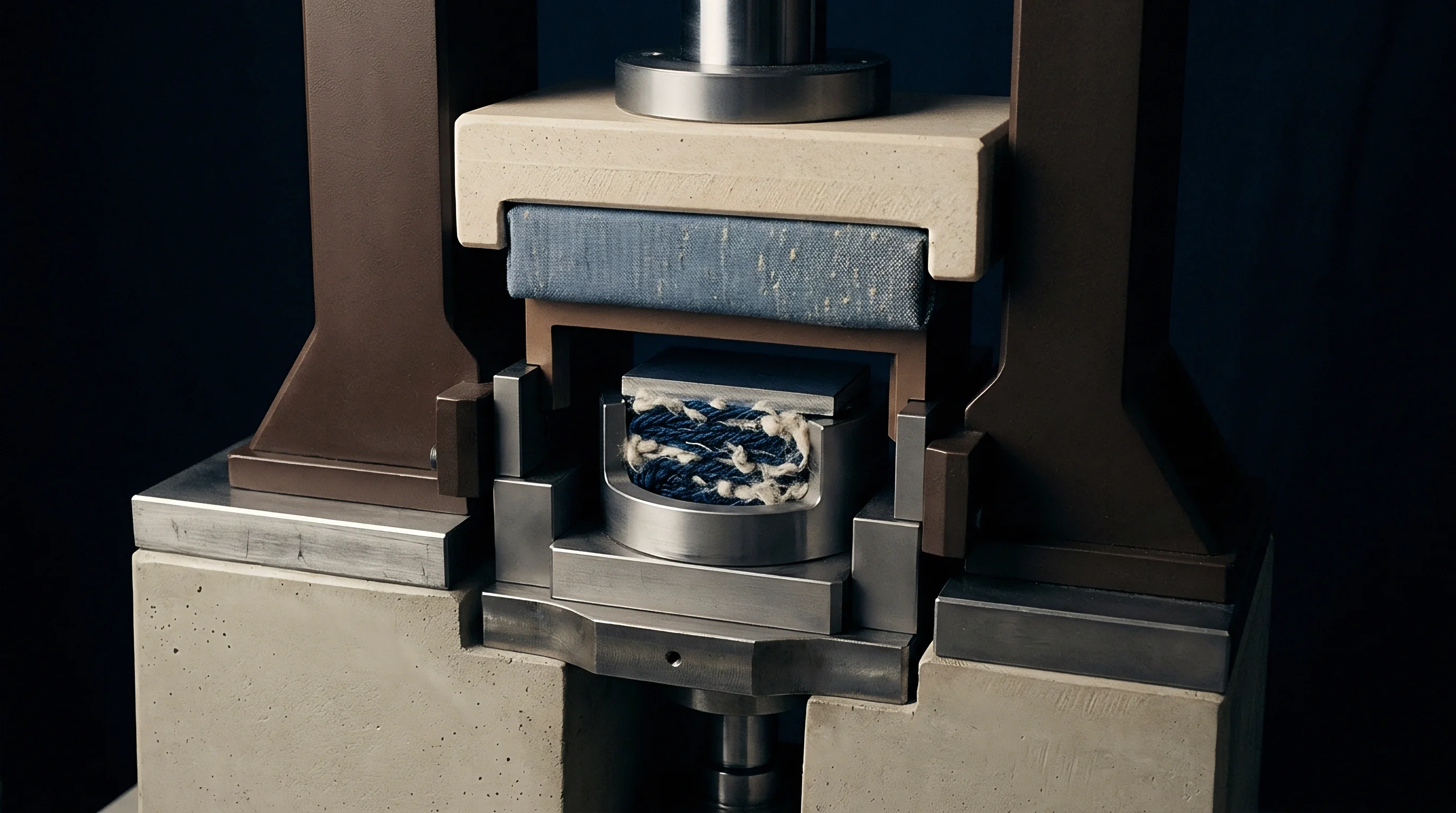
Tolerance
Engineers verify dimensional stability by subjecting laboratory samples to standardized wash regimes. Widthwise contraction does not conclude when fabric exits the finishing stenter. Residual internal stresses cause additional non-linear width shifts when end-users launder finished garments.
ISO 5077 defines the standard procedure for determining dimensional change after domestic washing and drying, using reference washing machines specified in ISO 6330. For high-density cotton twills, the widthwise dimensional change (Δ W) is calculated using the formula:
Δ W = fracWf – WiWi × 100
where Wi is the initial distance between benchmark marks marked on the fabric specimen in the roll state, and Wf is the measured distance after washing and flat drying. A negative value indicates shrinkage (contraction), while a positive value indicates extension. Yield loss alters landed costs.
Yarn counts shift after finishing. Mill tolerances determine final delivery.
Statistical distribution of width shrinkage across a 50,000-meter production run typically follows a normal curve, but high warp density introduces positive skewness. Batches woven from high-variability greige yarn lots show wider standard deviations in widthwise contraction. Sizing agent residue also introduces testing variance: if desizing removes only 80 percent of starch size during wet processing, residual starch acts as a temporary binder, masking potential width contraction until the consumer washes the garment multiple times.

Standard Testing Protocols and Dimensional Change Verification
Laboratory technicians measure benchmark marks drawn on unwashed specimens before conditioning. Standard testing procedures mandate conditioning specimens for at least 16 hours in standard atmosphere conditions (20 degrees Celsius, 65 percent relative humidity) prior to testing. When testing heavy twills under ISO 6330 Method 4M (60 degrees Celsius wash cycle followed by tumble drying), widthwise contraction figures are consistently 1.5 to 2.5 percentage points higher than those obtained under flat line-drying methods.
Tumble drying supplies mechanical action that releases residual crimp stress jammed inside the dense weave structure.
Analytical Contraction Prediction versus Mill Batch Variance
Empirical data collected from production runs frequently diverges from theoretical weave calculations. While analytical software models width contraction based on yarn linear density, twist, and weave float, real mill variance introduces uncontrollable variables. Sizing pick-up variations across the width of the warping beam cause the center ends to absorb less water during desizing than the selvage ends.
This differential swelling creates a parabolic widthwise contraction profile, where the fabric center contracts more aggressively than the edges, causing bow skew defects across the cuttable width.
| Fabric Build Identifier | Warp Cover Factor (K1) | Finished Weight (g/m2) | Mean Width Shrinkage (%) | Standard Deviation (σ) | 95% Confidence Window (%) |
|---|---|---|---|---|---|
| TW-301-Light | 0.78 | 210 | -1.8 | 0.35 | -1.1 to -2.5 |
| TW-302-Medium | 0.84 | 275 | -2.4 | 0.42 | -1.6 to -3.2 |
| TW-303-Heavy | 0.89 | 340 | -3.6 | 0.58 | -2.4 to -4.8 |
| TW-304-UltraDense | 0.93 | 410 | -4.9 | 0.81 | -3.3 to -6.5 |
| Data compiled across 120 production batches tested under ISO 6330 4M washing regime at 60 degrees Celsius followed by tumble drying. | |||||
Executing continuous quality audits requires explicit specification of compliance documentation in the converter’s technical dossier. The documentation package must contain the following verified records:
- Greige Warp Inspection Certificate Warp yarn count uniformity logs, single-end breaking tenacity, and sizing percentage data per loom beam.
- Wet Processing Temperature Logs Continuous sensor records confirming bath temperatures stayed within plus or minus 2 degrees Celsius during pad-batch operations.
- Stenter Zone Width Mapping Digital pin-rail position logs proving progressive width expansion was maintained without abrupt mechanical steps.
- Post-Finish Dimensional Audit Dossier ISO 5077 test reports covering five samples per 10,000 meters, representing head, middle, and tail roll cuts.
Continuous mercerization alters yarn cross-sectional roundness before stenter pins fix the final usable width.
Dyehouses frequently explain excessive width loss by citing natural greige yarn count variations across warp lots.

Invoice
Fabric buyers purchase woven goods based on usable linear meters at a defined cuttable width. Widthwise contraction directly alters the yield arithmetic of a sourcing contract. When greige fabric contracts from a 170-centimeter reed width down to a 148-centimeter finished cuttable width, total width loss equals 12.9 percent.
If the purchase order is structured around linear meters, the buyer receives less total surface area of fabric per linear meter delivered, while the mass per unit area (g/m2) increases proportionally. Finishing lines dictate finished width.
Calculating the true landed cost of finished fabric requires translating mass changes into usable garment markers. If a garment marker requires a minimum cuttable width of 150 centimeters, a roll delivered at 147 centimeters unusable width cannot be laid on automated cutting tables without losing 15 to 20 percent of marker efficiency. The buyer effectively pays for unusable selvage margins.
Sourcing contracts must bind the mill to strict width tolerances, typically setting acceptable variation at plus 2.0 centimeters and minus 0.0 centimeters relative to the purchase order specification.

Commercial Yield Metrics and Landed Cost Arithmetic
Width losses directly inflate the mass per unit area of finished fabric rolls. Consider a bulk procurement contract for 100,000 linear meters of heavy cotton twill priced at 3.40 USD per linear meter at a specified width of 150 cm. The total contract value is 340,000 USD, representing 150,000 square meters of usable fabric, yielding an effective area cost of 2.267 USD per square meter.
If wet processing contraction causes the delivered usable cuttable width to shrink to 144 cm without mill adjustment to greige reed width, the delivered surface area drops to 144,000 square meters. The true effective cost per square meter rises to:
Effective Area Cost = frac340,000 USD144,000 m2 = 2.361 USD/m2
This width non-conformity represents an effective price increase of 4.14 percent across the order. Furthermore, garment markers designed for a 150 cm fabric lay suffer panel cropping failures, forcing the garment factory to recalculate marker efficiency. The table below illustrates yield cost shifts resulting from width non-conformity across bulk orders.
Contractual Width Guarantees and Chargeback Structures
Master purchase agreements specify narrow physical windows for acceptable finished width delivery. When finished rolls fail to meet cuttable width parameters, standard commercial frameworks execute automated debit notes against the converter. Chargebacks cover lost marker yield, secondary stentering re-work expenses, and air-freight penalties for delayed garment shipping.
Defining cuttable width exclusive of selvages under ASTM D3774 prevents mills from counting un-dyed or pin-damaged edge strips toward commercial delivery metrics.
Incorporating an explicit cuttable width guarantee under ASTM D3774 shifts financial liability for width shrinkage directly back to the finishing converter.