
Calculating Weft Crimp and Loom Reed Width for Cotton Twills
Calculate loom reed width by dividing target finished width by wet contraction loss, then multiplying by the weft crimp factor.
Calculate loom reed width by dividing target finished width by wet contraction loss, then multiplying by the weft crimp factor.

Warp cover factor calculations require correcting direct yarn counts for polymer density and cross-sectional flattening to predict barrier performance accurately.

Fixing polyester cotton wovens at 215°C for 30–45 seconds maximizes high-energy disperse dye yield while avoiding cellulose depolymerization and tensile loss.

Predictive geometric loop length control synchronizes electronic beam let-off with elastomeric draft mechanics to ensure absolute structural consistency.

Plied yarns neutralize torsional spirality within the strand cross-section, while alternate feeds distribute opposed stresses across alternating courses.
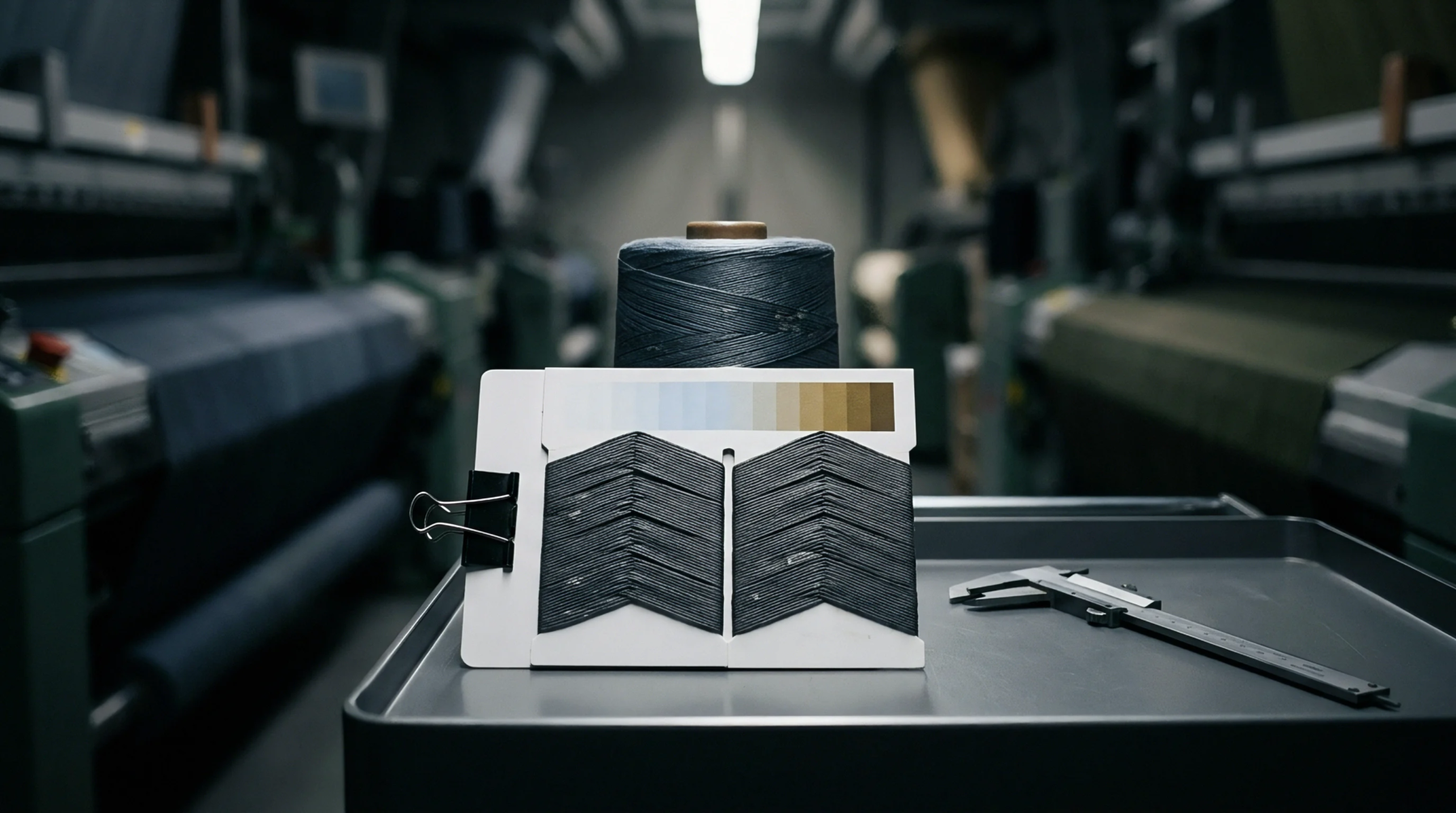
Enforce textile custody across commission finishing by combining physical selvage tracers, strict mass balance boundaries, and enforceable bailment terms.

Audit scopes must encompass spinning inputs through subcontract finishing lines to hold prime vendors liable for latent wet processing defects.

Dynamic yarn cross-sectional flattening expands major axis boundaries, defining absolute physical weaving limits and preventing bulk loom jamming failures.

Hydrothermal finishing minimizes woven biaxial strain energy by plasticizing fiber bonds, allowing tensionless crimp interchange to set stable dimensions.

Finished fabric density derives directly from loom reed spacing and total length shrinkage across wet processing.
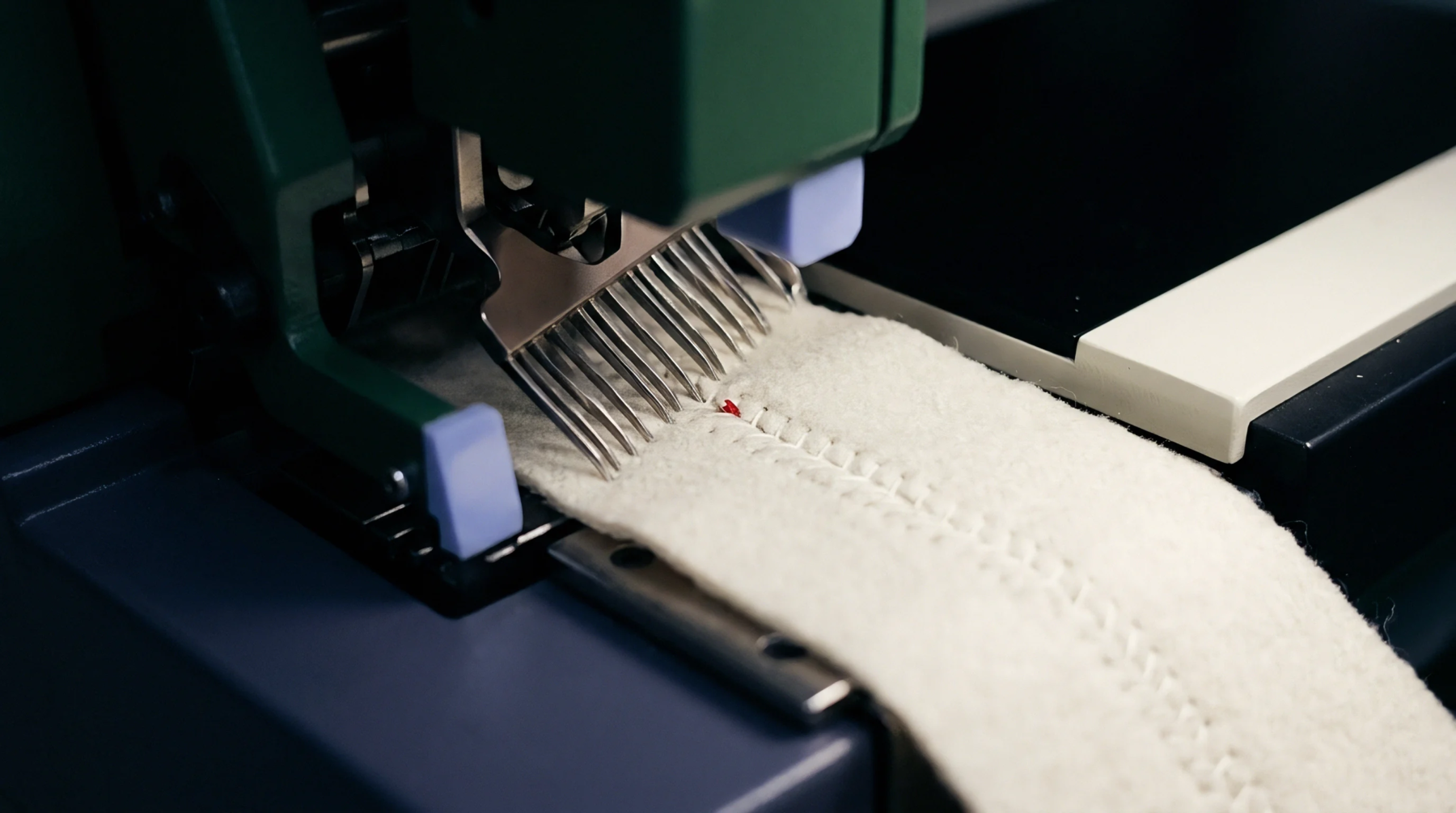
Nested two-stage variance decomposition isolates between-roll drift from within-roll position gradients to enforce contract sett tolerances in bulk fabric orders.

Variables acceptance sampling under ISO 3951-1 cuts greige sett verification roll swatches by sixty percent while mathematically securing downstream yields.

Verify woven fabric density on conditioned finished goods using ASTM D3775 or ISO 7211-2 to catch off-loom overfeed tricks and protect garment seam strength.

Matching radiative spectrum to polyelectrolyte thermal activation prevents premature surface gelation and ensures deep binder penetration in heavy cottons.

Predictive crimp exchange modeling calculates yarn path geometry shifts between weaving and finishing to secure finished pick count, yield, and width.

Predict finished mass by balancing oil extraction losses against planar compaction ratios derived from jet thermal relaxation and stenter overfeed settings.
Accurate greige specifications require defining relaxed loop length and conditioned thread counts rather than relying on unstable on-machine measurements.

Polycarboxylic ester crosslinks undergo accelerated cleavage in alkaline finishing liquors via mechanical tension that lowers ester carbonyl hydrolysis activation energy.

Finishing overfeed and widthwise stenter tension dynamically shift finished warp ends per inch, defining final fabric mass and commercial acceptance thresholds.
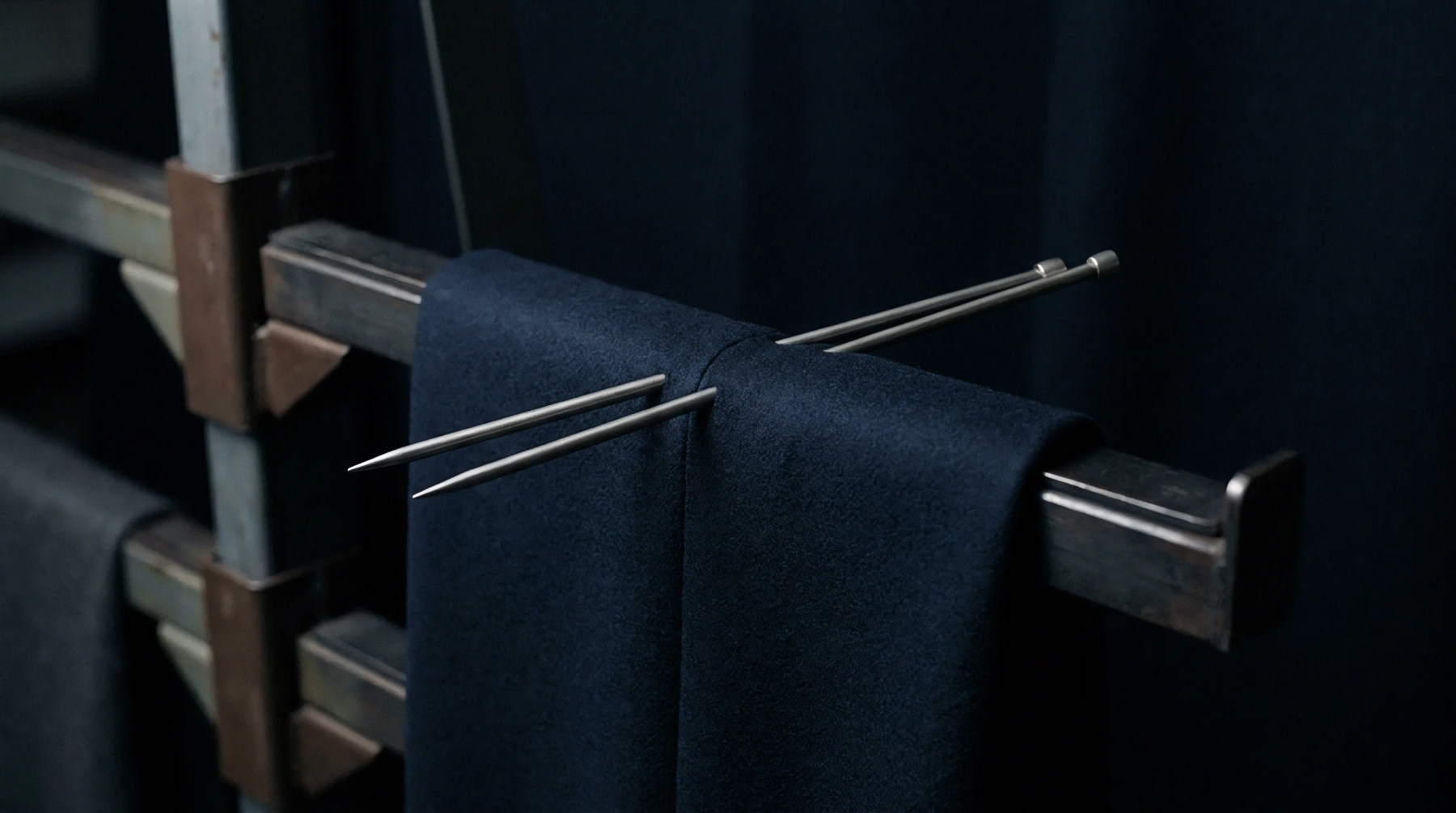
Cuttable width excludes defective margins, converting linear metres directly to true usable area and determining actionable garment output per bulk lot.

Specify conditioned mass under ISO 3801 and minimum cuttable width excluding selvedges to lock in garment yield and protect unit production economics.
Controlled stenter dwell at 185-195°C stabilizes polyurethane hard segments to minimize viscoelastic force decay and garment bagging in stretch wovens.
Expertise is a utility, not a secret. sentiention™ publishes its working knowledge as open reference: intelligence layer covering the materials it sources, the markets it enters, and the reference that serves both.