Calculating Continuous Stenter Overfeed Compression Forces for Dimensional Stability Control
Continuous stenter overfeed forces must balance longitudinal yarn buckling thresholds against friction to set finished course density without cloth corrugation.
Pin
Mechanics of Selvedge Penetration
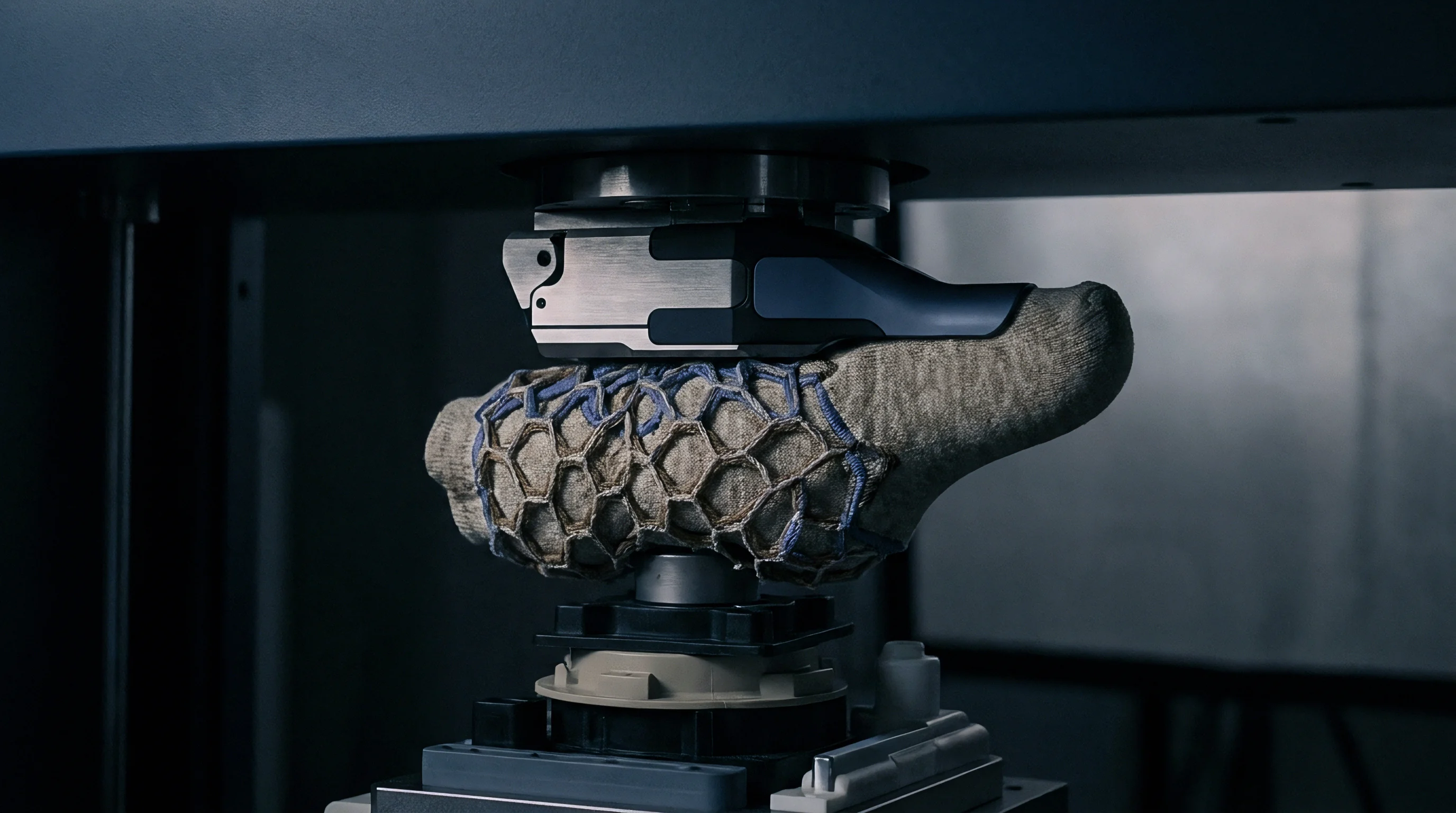
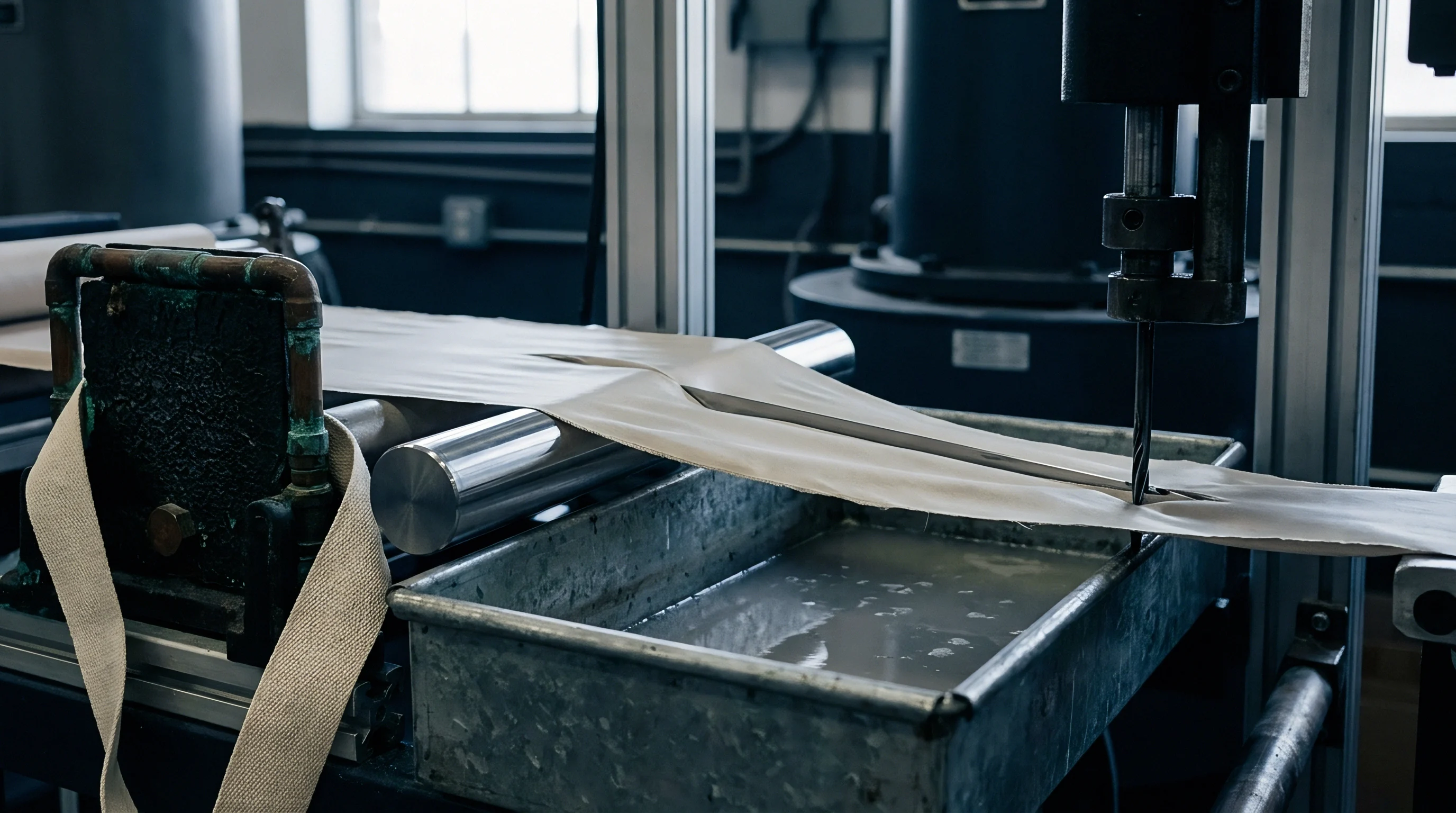
Pinning chains impinge on wet textile selvedges at speed differentials between 3% and 40% above chain velocity. Steel pins taper to points measuring 0.08 to 0.12 millimetres in tip radius, penetrating the boundary yarns under driven brush wheels. The entry nip passes continuous yardage to the pins while positive overfeed forces surplus length into each inter-pin gap.
Longitudinal compression acts parallel to the chain rails, driving individual warp crowns or knitted loop heads into compacted configurations before drying fixes the yarn geometry.
The mechanical force delivering this reduction originates at the differential drive between the draw roller and the pin chain. Surface friction between rubber-coated roll faces and wet textiles generates a forward thrust, while the pin line provides reactive shear resistance. Slippage under the pinning wheels dissipates energy.
Inadequate entry pressure permits the selvedges to pull backward off the pin points, dropping the delivered overfeed percentage below the console setting.
A brass brush wheel running 8 percent faster than the chain line prevents selvedge lift on 240 gram single jersey.
Tension transducers placed before the pinning gantry reveal continuous draw fluctuations. Greige packages vary in sizing pick-up and lubrication, producing localized drag variations as cloth unwinds. When entry tension spikes, the pin penetration angle shifts from perpendicularity by up to six degrees.
Bent pins tear the selvedge yarns during lateral expansion, creating edge bursts that propagate inward across the wet width.
Controlled pin entry stabilizes the textile web before hot air air-jets induce flutter. Overfeed rollers deliver the fabric slack onto the pin field, where mechanical fingers depress the borders below the pin tips. The cloth enters the initial drying chamber carrying compressive strain distributed across every pick or course.
Higher moisture content lowers the entry yarn friction coefficient, allowing easier displacement into the pin intervals.

Modulus
Axial Buckling in Continuous Compression
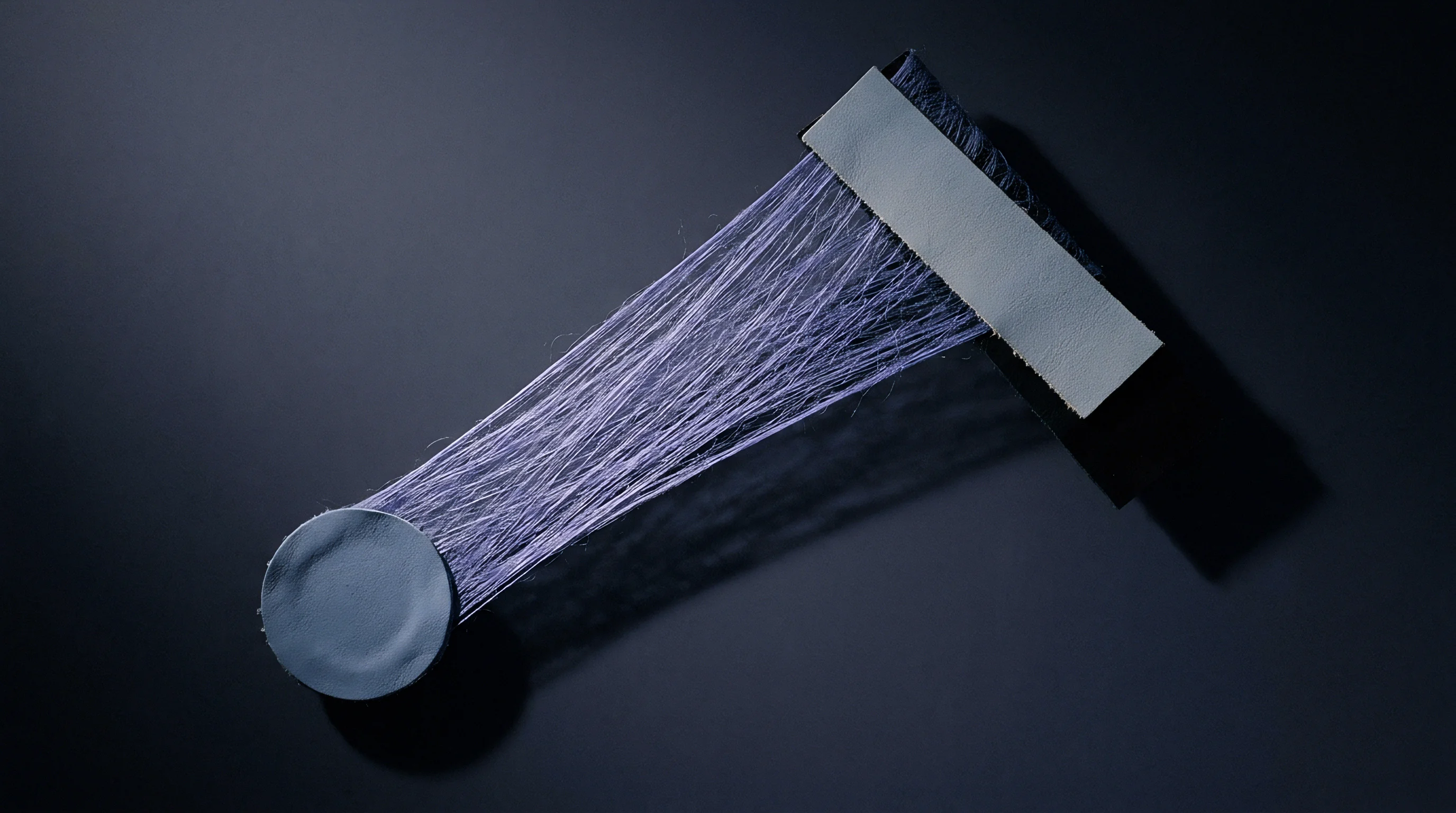
Predicting the compressive force sustained during continuous overfeed demands calculation of the longitudinal flexural rigidity of the yarn structure. Kawabata evaluation instruments yield bending rigidity values designated as B, expressed in Newton square metres per metre of fabric width. Yarns under positive stenter overfeed behave as micro-columns subjected to axial compression between lateral yarn intersections.
Euler column theory describes the critical buckling force per unit length of yarn. The relationship takes the form:
P_crit = (pi^2 E I) / (k L)^2
Here, E represents the elastic modulus of the fiber assembly, I defines the second moment of area of the yarn cross-section, L represents the free unsupported length between perpendicular interlacing points or adjacent loop contacts, and k denotes the effective length factor, taken as 0.7 for partially constrained textile joints. When the applied continuous compression force F_c remains below P_crit, the yarns compress purely through longitudinal crimp interchange or axial strain. Exceeding P_crit initiates out-of-plane buckling, producing corrugation, rippling, and localized puckering across the finished piece.

Compression Force Formula Derivation
Continuous stenter overfeed compression force F_c per metre of web width combines the viscoelastic resistance of the longitudinal yarns and the shear friction generated against the pinning field:
F_c = N_w + mu_p P_nip
The calculation relies on verifiable structural parameters:
- End or wale density N_w measures the total number of load-bearing longitudinal components across one metre of width under ISO 7211-2 counting methods.
- Yarn cross-sectional area A_y derives from nominal yarn decitex and polymer specific gravity, establishing the solid material plane resisting axial displacement.
- Compressive strain epsilon_c equates directly to the programmed stenter overfeed fraction, calculated as (V_in – V_chain) / V_chain.
- Yarn bending rigidity B_y quantifies the resistance to curvature modification measured in micro-Newton square metres via pure bending testers.
- Pin friction factor mu_p accounts for the interfacial drag coefficient between polished steel pins and wet fibrous selvedges.
- Applied entry nip pressure P_nip defines the normal force delivered by overfeed pneumatic cylinders against the main traction cylinder.
For a knitted 100% combed cotton jersey of 180 grams per square metre produced from 30/1 Ne yarn (19.7 tex) with 14 wales per centimetre, bending rigidity B_y measures approximately 4.8 micro-Newton square metres. With an overfeed setting of +22%, the calculated longitudinal compressive force reaches 18.4 Newtons per metre of fabric width. If the delivery roll tension drops, this compressive force collapses, transferring all stabilization duties to downstream thermal shrinkage.
| Construction Type | Yarn Count | Overfeed Setting | Critical Buckling Force | Measured Compressive Force | Surface Result |
|---|---|---|---|---|---|
| Single Jersey 100% Cotton | 30/1 Ne Ring | +18% | 22.4 N/m | 16.1 N/m | Stable Flat Geometry |
| Single Jersey 100% Cotton | 30/1 Ne Ring | +32% | 22.4 N/m | 28.7 N/m | Longitudinal Corrugation |
| Interlock 100% Cotton | 40/1 Ne Combed | +25% | 34.1 N/m | 29.2 N/m | Dense Stable Finish |
| Plain Woven Cotton Poplin | 50/1 x 50/1 Ne | +6% | 68.5 N/m | 44.0 N/m | Crimp Rebalanced |
| Plain Woven Cotton Poplin | 50/1 x 50/1 Ne | +12% | 68.5 N/m | 76.2 N/m | Weft Skew and Puckering |
| Twill 3/1 Cotton/Spandex | 20/1 Ne + 70D | +14% | 51.2 N/m | 47.8 N/m | Optimum Elastic Recovery |
Calculations using textbook moduli yield errors when water remains on the cloth. Water plasticizes cellulosic polymers, dropping the elastic modulus E by over 50% relative to dry states. Stenter operators who calculate overfeed forces using ambient raw yarn tensile data overestimate P_crit, driving wet fabric into severe out-of-plane corrugation before heat zones remove the moisture.
Can real-time entry vision systems detect the exact onset of yarn buckling before selvedges clear the pinning brushes?

Chamber

Thermal Fixation and Boundary Layer Heat Transfer
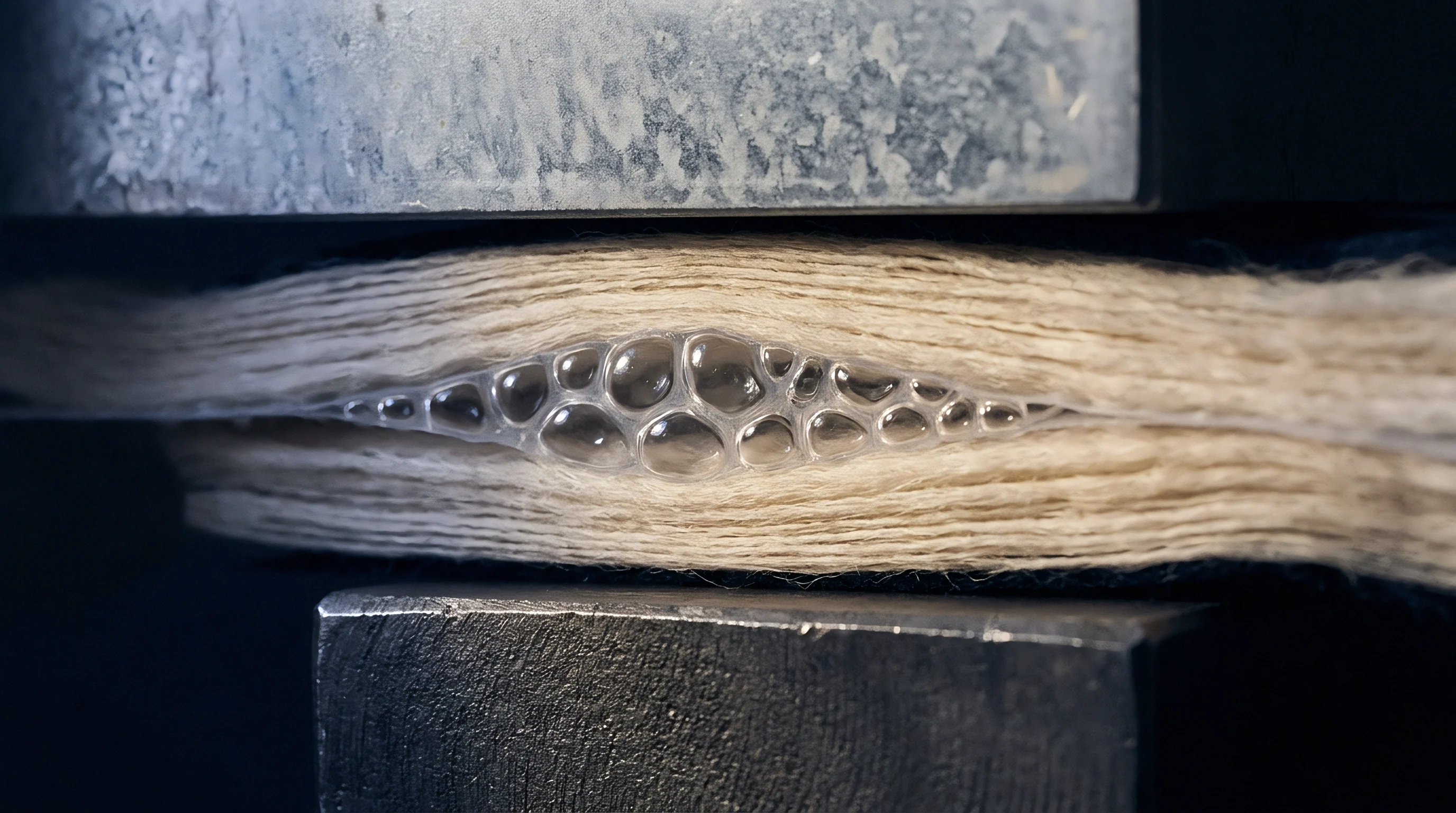
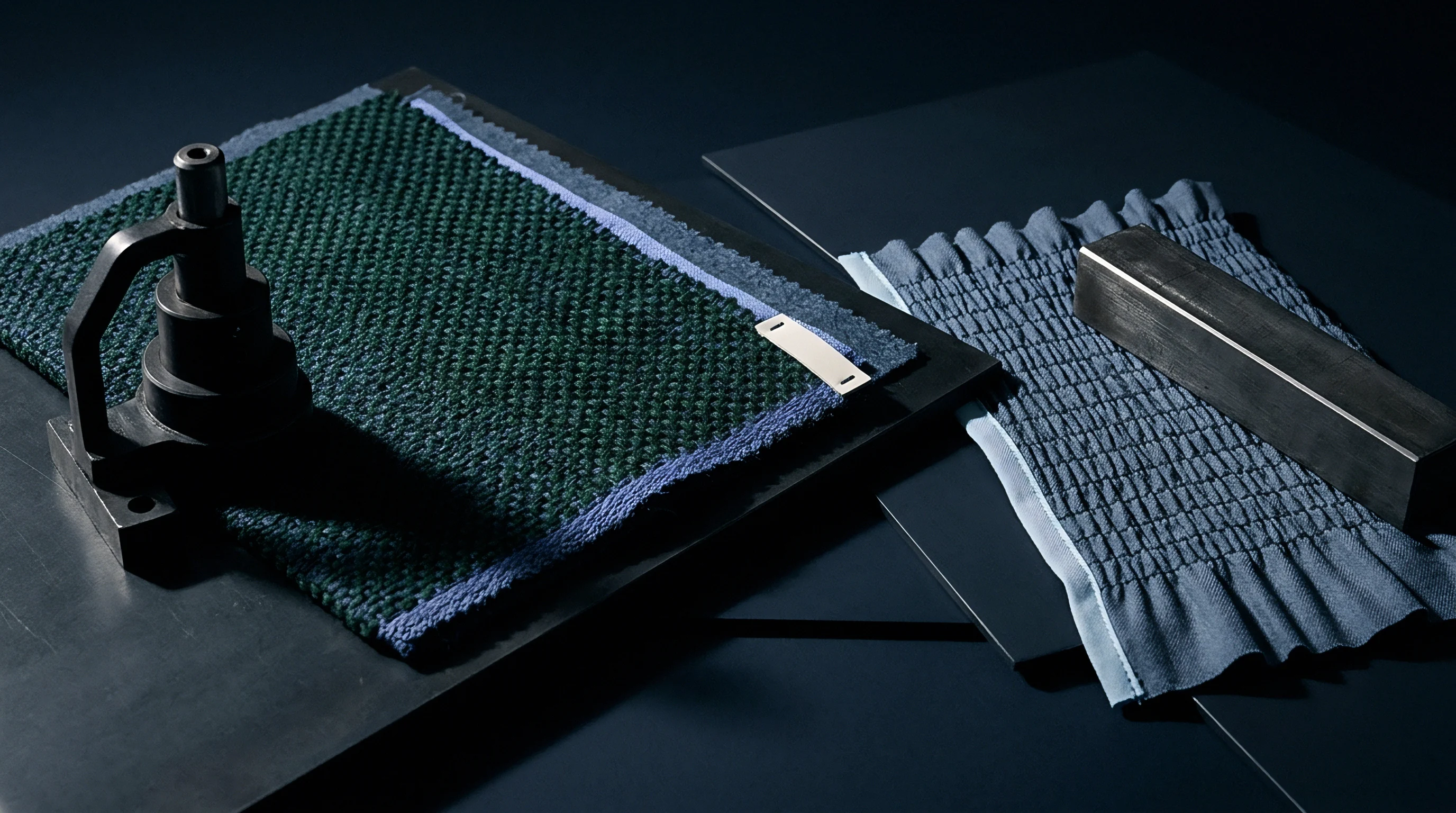
The enclosed stenter chambers expose the compacted cloth to opposing nozzle fields blowing heated air at velocities between 20 and 35 metres per second. Hot air impingement breaks the laminar boundary layer of water vapour surrounding wet yarns, transferring thermal energy via forced convection. As moisture evaporates, the temperature of the textile substrate remains at the wet-bulb temperature, typically 62 to 68 degrees Celsius, until moisture content falls below 8%.
At this transition point, the fabric temperature climbs rapidly toward chamber temperature. For synthetic polymers such as polyethylene terephthalate or polyamide 6,6, this thermal surge marks the onset of heatsetting. Polymer chains achieve mobility above their glass transition points, permitting the release of frozen draw stresses imparted during spinning, knitting, or texturing.
Setting synthetic yarn loops requires 195 degrees Celsius for 30 seconds to lock compressed geometries permanently against domestic wash cycles.
Continuous longitudinal compression forces applied at the pins must persist throughout this drying and heating cycle. If pins bend under mechanical resistance or selvedges slide along pin stems, the stored longitudinal compaction recoils before setting occurs. The fabric enters the cooling zone unstabilized, retaining latent shrinkage potential that manifests later during wet laundering.

Should Overfeed Calculations Compensate for Thermal Contraction?
Synthetic filaments experience thermal shrinkage when exposed to heatsetting temperatures without longitudinal constraint. A polyester warp yarn may shrink 6% to 9% freely at 195 degrees Celsius. If the mechanical overfeed is dialed to match this natural thermal shrinkage precisely, the internal tension during heatsetting remains neutral, avoiding both loop extension and uncontrolled buckling.
Natural fibers demonstrate the inverse behavior. Cellulose does not melt or reset through simple heat; it relies on moisture removal under compression to crosslink hydrogen bonds into temporary mechanical equilibria. Cotton loops forced together on the pin line dry into high-curvature configurations.
Mechanical overfeed values for cotton knits must exceed target shrinkage allowances by 4% to 8% to compensate for subsequent moisture regain and laundry swelling.
Air nozzle pressure balance influences web flatness. High lower-nozzle air velocity lifts the fabric off its pinned horizontal plane, introducing transverse wrinkles that thermal setting locks into the goods. Dampers must maintain equal pressure above and below the cloth, holding the compacted sheet planar until cooling fans freeze the physical state.
The machine operator commonly claims that increasing heatsetting temperature compensates for a shortfall in mechanical overfeed percentage.


Yield

Dimensional Change Evaluation under ISO 5077
Finishing verification occurs in conditioned testing environments maintaining 20 degrees Celsius and 65% relative humidity under ISO 139 atmosphere specifications. Finished fabric undergoes domestic laundering cycles governed by ISO 6330, typically using procedure 4N at 40 degrees Celsius followed by tumble drying under procedure F. Dimensional change calculations follow the ISO 5077 standard formula:
Delta L = 100
Here, Delta L is the percentage dimensional change, L_0 represents original conditioned bench gauge length, and L_t reflects measured distance across datum marks after laundering and reconditioning. A negative value denotes shrinkage; positive denotes growth. Continuous overfeed balances Delta L in the length direction against transverse width contraction controlled by rail divergence.
Structural Convergence of Course and Pick Counts
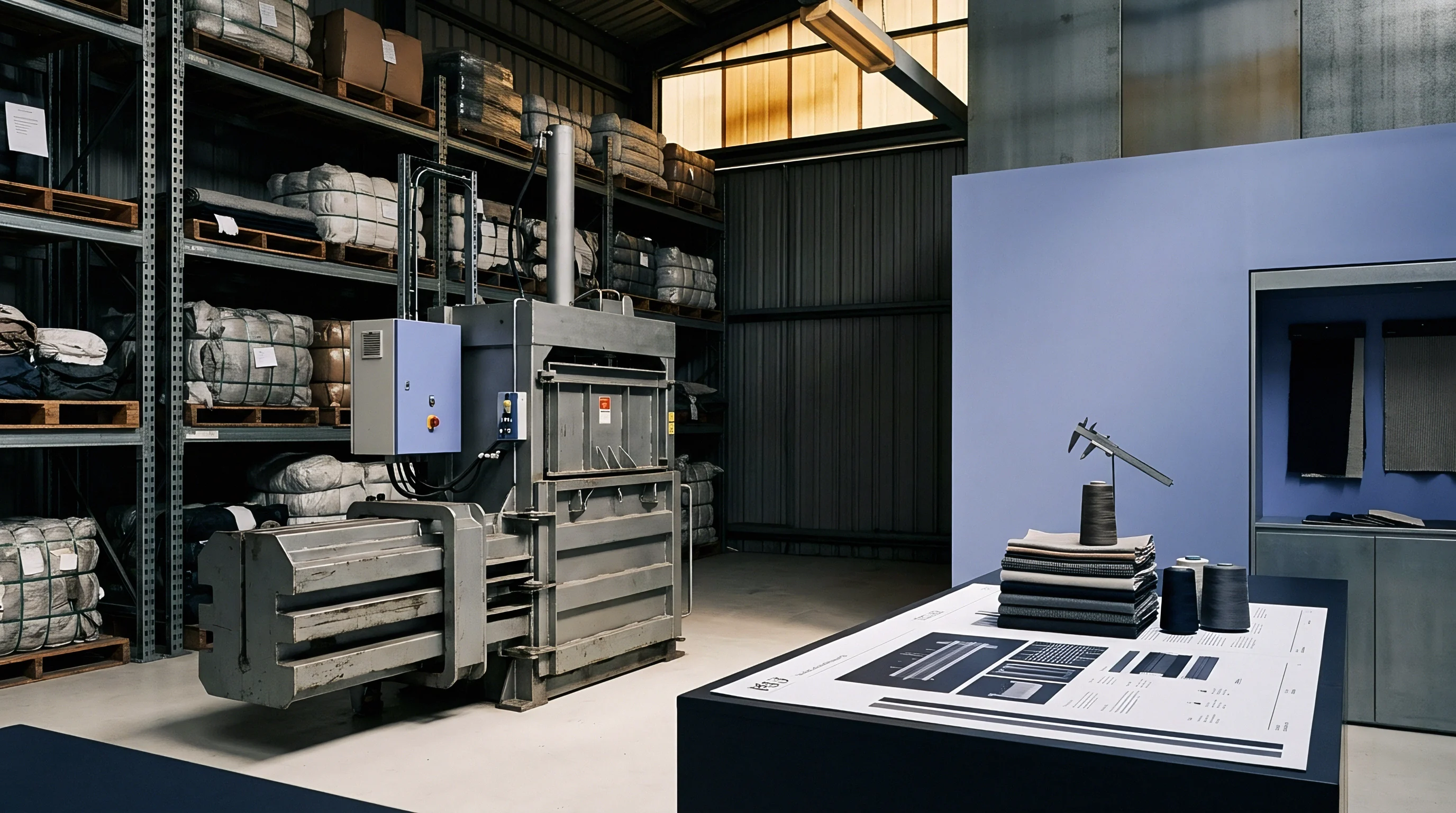
Applying longitudinal compression increases picking or course counts per unit length. A circular knitted single jersey with an off-machine greige density of 12 courses per centimetre expands laterally on stenter rails while compressing longitudinally to yield 16 to 18 courses per centimetre in the finished state. Mass per unit area follows this compaction directly, measured under ISO 3801 test methods in grams per square metre.
The interaction between overfeed percentage, areal weight, and residual wash stability follows precise mechanical pathways:
- Greige inspection determines incoming loop length and residual yarn torque, fixing the baseline relaxation potential of the raw roll.
- Differential overfeed entry forces additional yarn length into the pins, raising finished pick or course count to contract targets.
- Rail divergence profiling stretches or contracts fabric width, exchanging warp crimp for weft crimp through cross-thread mechanical coupling.
- Thermo-mechanical dwell fixes the displaced loop geometry inside heating chambers, establishing wash-resistant equilibrium dimensions.
Balancing these variables requires empirical tracking across finishing runs. The following data details the correlation between applied overfeed, resulting course count, finished mass, and residual shrinkage across common substrate types.
| Fabric Build | Stenter Overfeed | Finished Courses/Picks | Finished Areal Mass | Length Shrinkage | Width Shrinkage |
|---|---|---|---|---|---|
| Single Jersey 100% Cotton 30/1 Ne | +15% | 14.8 courses/cm | 168 g/m^2 | -8.5% | -2.0% |
| Single Jersey 100% Cotton 30/1 Ne | +25% | 16.5 courses/cm | 182 g/m^2 | -3.5% | -3.0% |
| Single Jersey 100% Cotton 30/1 Ne | +35% | 18.0 courses/cm | 196 g/m^2 | -0.5% | -5.5% |
| French Terry 100% Cotton 20/1 + 10/1 Ne | +18% | 11.2 courses/cm | 280 g/m^2 | -9.0% | -1.5% |
| French Terry 100% Cotton 20/1 + 10/1 Ne | +28% | 12.8 courses/cm | 315 g/m^2 | -2.5% | -3.5% |
| Polyester Interlock 75D/72F Microfiber | +8% | 18.5 courses/cm | 142 g/m^2 | -4.5% | -1.0% |
| Polyester Interlock 75D/72F Microfiber | +16% | 20.2 courses/cm | 155 g/m^2 | -1.0% | -1.5% |
| Cotton Twill 3/1 16/1 x 12/1 Ne | +4% | 22 picks/cm | 245 g/m^2 | -4.8% | -1.2% |
| Cotton Twill 3/1 16/1 x 12/1 Ne | +8% | 24 picks/cm | 258 g/m^2 | -1.8% | -2.1% |
Dimensional control remains coupled across axes. Forcing excessive longitudinal overfeed drives transverse shrinkage higher during subsequent washing if the stenter rails stretch the width past natural greige boundaries. When width rails pull outward excessively, warp yarns straighten through crimp interchange, neutralizing the very overfeed applied at the pin entry.
Purchase contracts stipulate that bulk lots displaying residual dimensional changes exceeding 4.0% under ISO 5077 after three wash cycles face immediate commercial rejection.

Exposure
Production Route Realities and Financial Yields
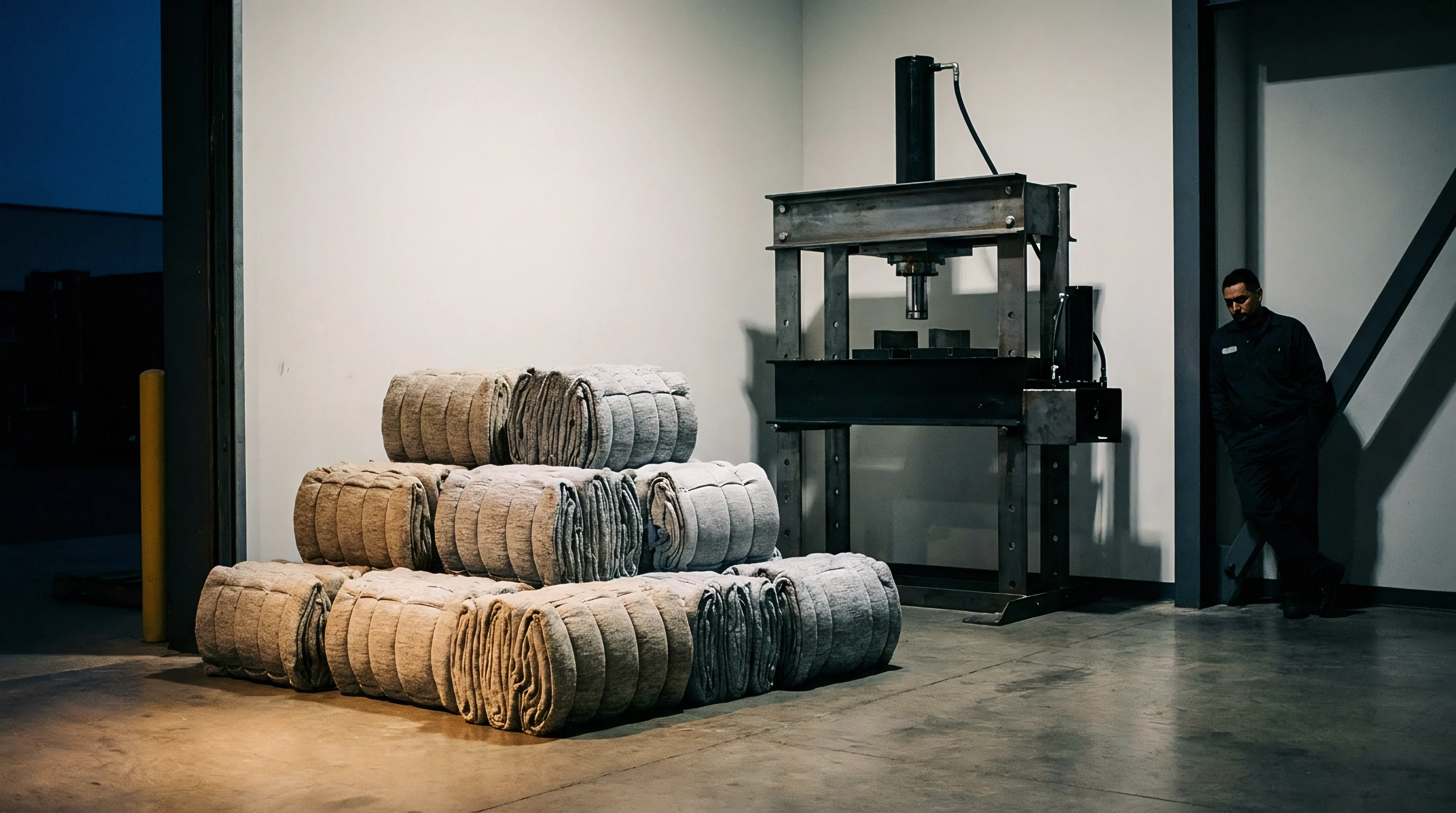
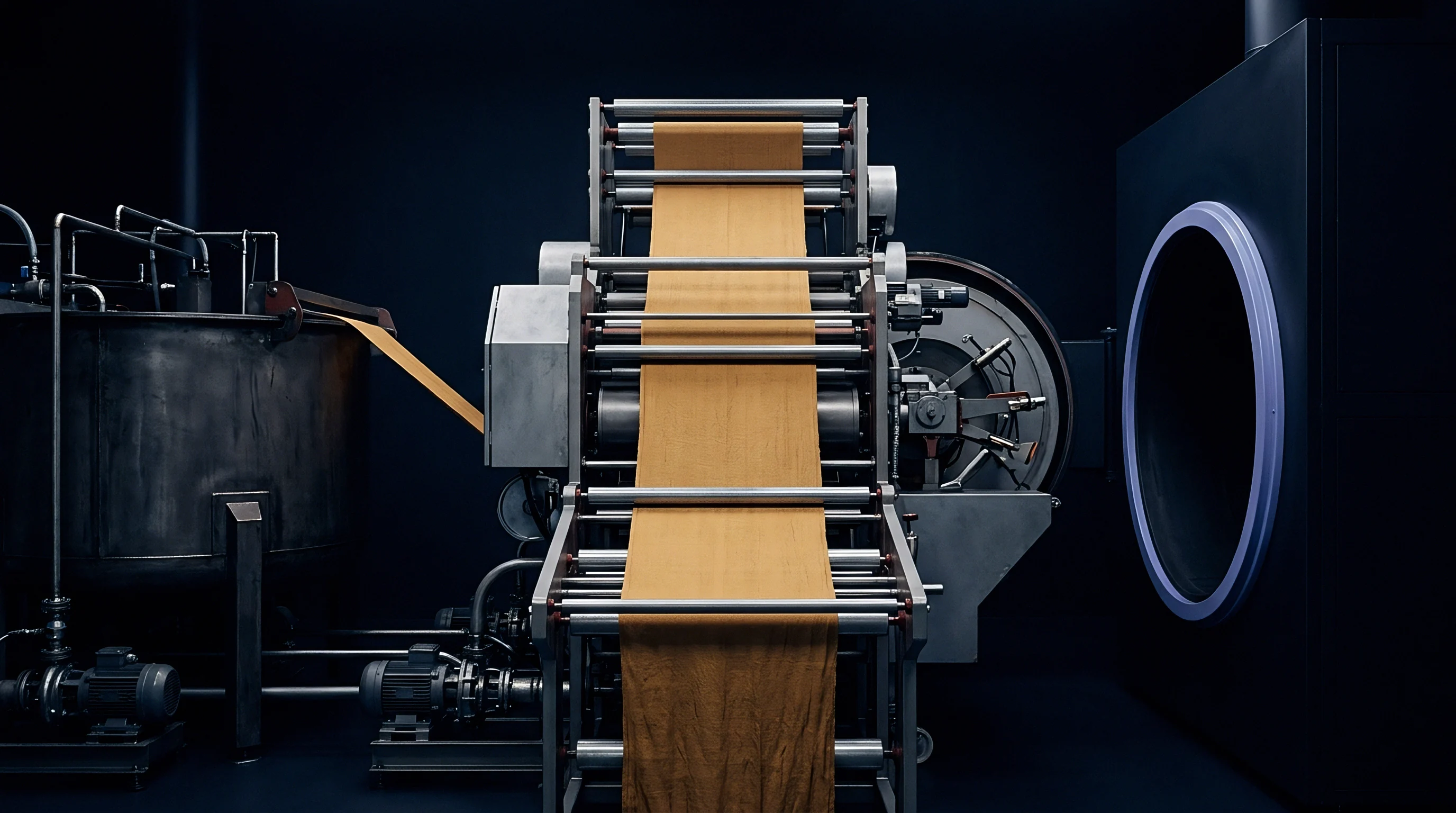
Stenter overfeed settings decide the final yield of commercial yardage per metric ton of greige yarn. In apparel production routes, converting 1,000 kilograms of greige single jersey into finished fabric yields length governed by finished grams per square metre. Underfeeding the stenter stretches length by 8%, producing more saleable linear metres from the same yarn input.
That decision creates severe retail return liabilities when consumers launder garments.
Commercial converters operate under conflicting economic incentives. Running a stenter at +30% overfeed shortens total output roll length, raising the cost per finished linear metre. Conversely, underfeeding fabric delivers extra yardage from the invoice, passing hidden shrinkage debt downstream to the cutting room.
A three percent loss in finished fabric length raises garment manufacturing unit costs across high-volume knitwear programs.
When cutting rooms receive underfed lots, patterns cut to standard markers distort immediately upon steaming or fusing. Longitudinal shrinkage of 10% translates to garment torso lengths shortening by five centimetres after the first home wash cycle. The financial burden shifts from the dyehouse to the brand through returned inventory, warranty disputes, and damaged retail relationships.
Setting stenter parameters demands verification of physical textile mechanics rather than machine tachometer readings alone. Overfeed values entered at digital panels remain theoretical until corroborated by pick counts, square metre weights, and dry relaxation testing on conditioned samples. Controlling longitudinal compression forces keeps yardage flat, dense, and commercially stable across international supply chains.
Miscalculating overfeed forces produces wavy selvedges, skewed weft lines, rejected bulk runs, and unrecoverable capital losses on the cutting floor.