Dispute Resolution Frameworks for Finished Fabric Dimensional Instability and Laundering Cover Losses
Dimensional and cover loss disputes require binding retain-swatch testing under ISO 5077 to isolate mill finishing strain from spreading room tension.

Drift
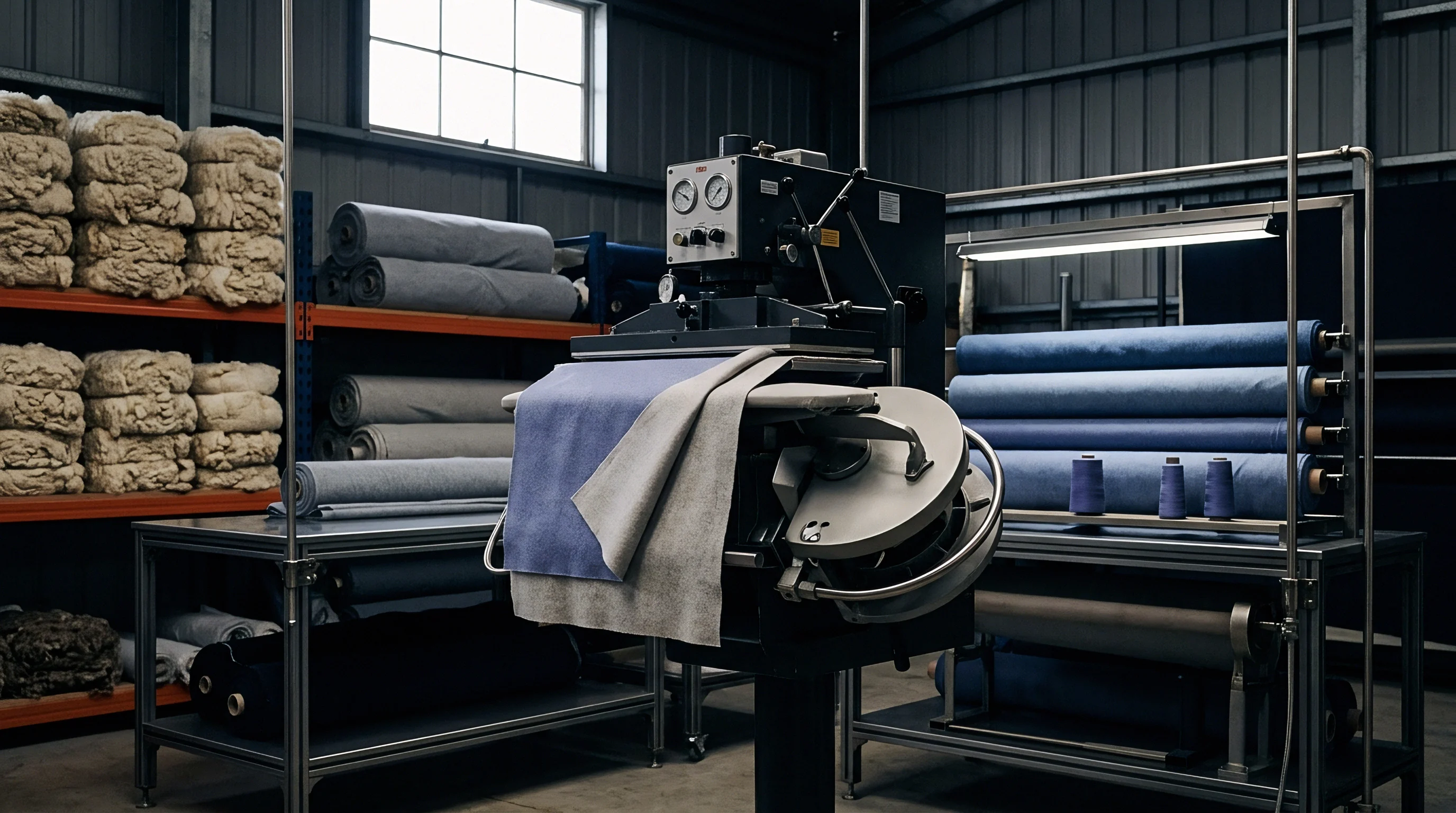
On the inspection frame, dimensional movement registers as a direct shortfall between invoiced yardage and cuttable yield. Once rolls reach the garment floor, warp and weft relaxation alters marker efficiency, skewing planned marker consumption and producing immediate unit deficits. The underlying issue is residual processing strain: machine drag during wet processing draws yarns past their equilibrium state, and subsequent immersion or laundering releases that stored tension, contracting the fabric along its primary axes.
Routine testing under ISO 5077 and AATCC 135 measures these movements after set wash cycles, checking length and width shifts against baseline bench marks. When certified mill figures diverge from post-wash cutting yields, commercial non-conformance claims follow almost immediately.
Cover loss after laundering occurs when yarn crossover points separate or knit loops loosen, dropping both optical opacity and mass per unit area. If contraction is uneven, yarn cross-sections distort and collapse the microscopic void volume between adjacent filaments. In plain wovens, yarn shifting reduces pick counts per centimetre, leaving distinct sheer bands visible under backlighting.
In circular single-jersey knits, loop skewing opens diamond-shaped gaps across stitch columns that degrade burst resistance under ISO 13938 testing. Beyond altering garment hand, these structural changes break down the opaque barrier required by target end-use specifications.
Under ISO 6330 wash cycle 4N with tumble drying at 60 degrees Celsius, relaxation shrinkage exceeding three percent reduces finished marker yield by thirty-two linear metres per thousand-metre lay.
Discrepancies between testing facilities often trace back to conditioning atmospheres that stray from ISO 139 specifications. Specimens conditioned below sixty-five percent relative humidity show deceptively low relaxation values, concealing latent shrinkage that surfaces during apparel steam pressing. Mill laboratories also tend to gauge length change after a single mild wash cycle, while brand technical manuals frequently mandate five cumulative launderings to reach true structural equilibrium.
That procedural gap inevitably produces conflicting compliance certificates for the identical dye lot.
Standard inspection procedures isolate three distinct metrics when assessing dimensional divergence:
- Differential Length Contraction across warp yarns distorts garment hemlines once panel shrinkage exceeds two percent along the grain line.
- Filling Skew and Torque pulls side seams out of alignment in assembled garments after standard domestic laundering cycles.
- Areal Density Depletion drops mass per square metre when knit stitches compact irregularly, exposing backing yarns in composite structures.
- Widthwise Narrowing Defects reduce cuttable width between the pins, forcing marker revisions that turn residual yardage into scrap.
Delivered rolls complied with agreed dimensional tolerances prior to dispatch, while post-cut contraction stemmed from excessive tension applied across the automated spreading table.

Basin
Aqueous finishing sets the permanent dimensional baseline for wovens and knits alike. Continuous open-width scouring, bleaching, and dyeing operations exert heavy longitudinal pull on the web, transferring warp crimp into the filling direction. Stenter frames equipped with overfeed mechanisms counter this by crowding wet goods onto the pins to restore balance.
If the overfeed ratio falls below twelve percent on circular knits, latent tensile strain remains trapped in the goods. Compressive shrinking ranges, including rubber-belt sanforizers, then push weft yarns together through mechanical compaction under high-pressure steam. Without sufficient moisture injection during sanforization, fibres never fully plasticize, and the compressed loops snap back during downstream wash cycles.
Wet relaxation processing with insufficient overfeed leaves latent mechanical strains that release upon the first commercial wash cycle.
Table 1 details the dimensional stability parameters and laundering tolerances across four production routes, highlighting the risk profiles associated with specific machinery sequences.
| Substrate Build | Finishing Machinery Train | Overfeed Setting | Warp Shrinkage | Weft Shrinkage | Cover Factor Loss |
|---|---|---|---|---|---|
| Single Jersey 30s Ne Cotton | Stenter with Compactor | +18% | -2.5% | -1.8% | 1.2% |
| Single Jersey 30s Ne Cotton | Open Stenter Only | +6% | -6.8% | +2.1% | 5.4% |
| 2/1 Twill 60/40 Cotton-Poly | Sanforizer with Steamer | +4% | -1.2% | -0.8% | 0.4% |
| 2/1 Twill 60/40 Cotton-Poly | Continuous Pad-Dry-Cure | 0% | -4.1% | -1.5% | 2.8% |
| Interlock 40s Ne Combed | Tubular Felt Calender | +14% | -3.1% | -2.0% | 1.9% |
Thermal fixation in synthetic blends introduces another layer of structural instability. In polyester-cotton blends, heat setting on the stenter at 195 degrees Celsius locks the polyester filament network into a rigid lattice that resists thermal shrinkage. If dwell times drop below three seconds per millimetre of cloth thickness, crystalline phase rearrangement remains incomplete.
The cotton fraction is then left free to shrink hydrothermally, resulting in heavy surface puckering and patchy cover depletion across the face of the goods.
Wetting out a dry structure relieves internal yarn stress through natural fibre swelling, which expands yarn diameters while pulling yarn paths short. Chemical crosslinking resins, including dimethyloldihydroxyethyleneurea, reduce the swelling capacity of cellulosic fibres by forming covalent bonds between adjacent hydroxyl chains. Application levels below four percent dry pick-up fail to suppress fiber swelling, leaving the finished goods vulnerable to water-induced collapse.
Curing temperatures below 150 degrees Celsius yield incomplete polymerization, allowing the protective finish to wash out during initial domestic laundering.
Achieving structural stability requires balancing mechanical overfeed against yarn relaxation limits without exceeding chemical saturation thresholds.
Matrix
Attributing dimensional failure requires determining whether the defect originated in the weaving shed, the wet processing facility, the spreading room, or the commercial laundry. Divergent international test protocols routinely complicate these disputes. ISO 5077 prescribes a gentle wash cycle at 40 degrees Celsius with line drying, while AATCC 135 specifies aggressive agitation with tumble drying at 65 degrees Celsius.
Testing the identical lot under both standards produces shrinkage spreads exceeding three full percentage points. When contract specifications omit the exact test method, drying procedure, and cycle count, compliance disputes become almost unavoidable.
Spreading tension in the cutting facility represents an independent source of dimensional distortion. Automated spreading machines operating without tension-free loop sensors pull piece goods taut across the cutting table. The fabric relaxes over several hours, but rapid automated knife cutting before full relaxation locks that elongation into individual panels.
When the assembled garment is subsequently laundered, the observed shrinkage reflects cutting-room pulling rather than mill-side finishing failure. Differentiating between these root causes demands retain-swatch testing from uncut rolls using standardized template markings.
A contract omitting the specific drying procedure under ISO 6330 invalidates third-party laboratory shrinkage compliance certificates.
Resolving root-cause attribution involves evaluating specific procedural metrics across the handling chain:
- Retain Swatch Isolation requires cutting a five-hundred-millimetre square sample from the inner third of master rolls prior to cutting-table spreading.
- Conditioning Chamber Benchmarking verifies baseline dimensions at twenty degrees Celsius and sixty-five percent relative humidity over twenty-four hours.
- Standard Laundering Execution runs three consecutive cycles under specified temperature and wash action parameters to measure irreversible relaxation.
- Spreading Tension Mapping measures lay length recovery over a four-hour dwell period prior to pattern cutting.
Table 2 provides the liability attribution matrix for dimensional non-conformance across processing stages.
| Failure Indicator | Laboratory Test Finding | Primary Fault Allocation | Secondary Contributing Cause |
|---|---|---|---|
| Length shrinkage over spec | Retain swatch fails ISO 5077 | Finishing Mill | Insufficient stenter overfeed |
| Length shrinkage over spec | Retain swatch passes ISO 5077 | Garment Factory | Excessive spreading table tension |
| Width shrinkage with skew | Differential wale-course angle | Dyehouse | Uneven pin chain tension on stenter |
| Cover loss with opacity drop | Mass loss under ISO 3801 | Yarn Spinner | Low yarn twist multiplier causing fibre shed |
| Differential panel shrinkage | Mixed dye lot consolidation | Apparel Cutter | Interlining shrinkage incompatibility |
| Test criteria established using ISO 5077:2020 and ISO 6330:2021 wash procedure 4N. | |||
Master Purchase Agreement Clause 14.2 specifies that retain sample testing conducted by an accredited third-party laboratory under standard atmospheric conditioning provides the final, binding determination of dimensional liability.
Ledger
Quantifying financial loss from dimensional instability requires combining raw yardage shortfalls with cut-and-sew disruption expenses. When piece goods shrink beyond agreed contractual tolerances, the apparel manufacturer experiences an immediate drop in marker efficiency. This deficit forces the cutting floor to order supplemental yardage, consume buffer stocks, or produce fewer finished units than planned.
If the dimensional variation surfaces after cutting, financial exposure escalates to include stranded labor, consumed trims, and dedicated thread costs.
Cover loss generates commercial rejections at retail distribution centers due to non-compliance with opacity and thermal standards. Garments exhibiting see-through panels or excessive surface fuzzing fail end-user quality inspections, resulting in returned purchase orders, chargebacks, and warehouse storage fees. Calculating these losses involves adding the landed cost of finished garments, overseas freight charges, and non-recoverable customs duties.
When re-finishing or compressive re-steaming is viable, the associated handling charges, local freight, and laboratory re-testing costs are debited to the responsible finishing mill.
A three percent dimensional deficit on a ten-thousand-metre lot eliminates three hundred finished garment units from cutting production.
The financial recovery calculation follows a structured financial formula:
- Direct Fabric Yardage Loss calculates the difference between invoiced yardage and actual usable yardage based on verified width and length shrinkage.
- Cutting Room Disruption Costs tally automated machine downtime, re-nesting software fees, and operator overtime required to process replacement markers.
- Scrapped Component Value debits non-recoverable fused interlinings, specialty zippers, and printed panels destroyed by post-cut panel distortion.
- Retail Chargeback Penalties cover customer non-delivery fines, air freight surcharges for replacement lots, and markdown allowances.
Table 3 outlines a financial damage calculation model for a typical bulk production dispute.
| Cost Component | Baseline Parameter | Observed Defect Metric | Financial Claim Amount |
|---|---|---|---|
| Unusable Yardage Deficit | 10,000 metres at $4.50/m | 5.2% verified shrinkage loss | $2,340.00 |
| Marker Re-Engineering Labor | 8 marker layouts | 6 hours engineering redesign | $450.00 |
| Destroyed Interlinings | 1,200 cut front panels | Fused components warped | $840.00 |
| Garment Assembly Downtime | 4 production sewing lines | 8 hours line stoppage | $1,920.00 |
| Air Freight for Replacements | 500 replacement units | Emergency transport surcharge | $3,150.00 |
Failing to establish verified pre-cut shrinkage baselines leaves the purchasing brand liable for all secondary manufacturing disruptions and air freight surcharges.

Recourse
Commercial contracts govern dispute resolution through explicit sample collection, third-party laboratory arbitration, and settlement protocols. When dimensional instability surfaces, the initiating party must issue a formal Non-Conformance Report within ten business days of delivery. This notification freezes payment schedules for the disputed roll sequence and triggers mandatory joint inspection at the garment manufacturing site.
Both parties draw representative rolls across the production range, isolating the head, middle, and tail sections to account for lengthwise finishing variance.
Third-party testing protocols rely on accredited testing facilities executing pre-agreed international test procedures. Standard dispute resolution frameworks designate an independent ISO 17025 accredited laboratory to perform referee testing. The laboratory receives sealed retain swatches alongside cut garment panels, testing both under identical atmospheric conditioning and wash cycles.
If laboratory findings confirm that finished fabric shrinkage exceeded the specification threshold by more than zero point five percentage points, the finishing mill absorbs all testing fees and accepts debit note processing.
Escalation frameworks incorporate binding expert determination before formal commercial arbitration is pursued. Expert determination avoids protracted legal proceedings by appointing an independent textile technologist whose technical findings on root causation are legally binding. The arbitrator reviews the spinning specifications, stenter process logs, moisture levels, and cutting room humidity charts to determine whether chemical compaction, fiber mechanics, or thermal handling caused the failure.
Settlement structures then execute automated offset deductions against pending open invoices, balancing account ledgers without interrupting unrelated production orders.
The industry leaves unresolved the legal allocation of liability when climate-induced humidity shifts cause fabric relaxation during multi-week ocean transit across divergent climate zones.