Continuous Dyeing Tension Dynamics in Jammed Greige Fabric Architecture
Continuous dyeing of jammed greige fabrics requires web draft below 0.5 percent to prevent capillary collapse and preserve liquor penetration across yarn cores.
Jamming
Geometric Boundaries of Greige Warp and Weft Packing
Continuous dye ranges receive woven fabric whose initial geometry is fixed by reed density, pick insertion rate, and yarn linear count. Jamming happens when yarn diameters touch along the fabric plane, stopping further lateral movement during weaving. In high-cover cotton and synthetic staple weaves, this locks the warp and weft yarns into fixed spatial positions.
F. T. Peirce’s geometry defines the threshold where cross-sectional crimp amplitude hits its physical limit. Constructions operating near this geometric boundary resist mechanical deformation, forcing incoming liquor to find pathways through compressed interstitial gaps rather than open spaces between threads.
Thread spacing in jammed greige controls how external longitudinal tension redistributes forces through the weave. High warp end counts per centimeter force the weft yarn into maximum crimp amplitude during loom shedding. As the greige fabric enters continuous wet processing under mechanical draw, applied warp tension tries to pull the longitudinal yarns straight.
That structural response pushes the weft threads into tighter packing arrangements. The mechanical system reaches equilibrium only when the cross-sectional geometry of the yarn deforms under lateral pressure. Linear density variations along spun yarns magnify this effect, creating localized regions of extreme structural resistance where dye liquor penetration drops significantly.
Yarn crimp differential determines how the fabric matrix reacts to applied line tension. Highly crimped warp yarns absorb initial mechanical extension by shifting structural geometry before the fiber bundle takes up direct tensile load. Weft yarns, already compressed at weave intersections, act as rigid cross-members.
Under continuous machine-direction tension on the dyeing range, warp crimp flattens, forcing the weft yarn to increase its crimp angle. This structural exchange alters the pore geometry of the greige substrate, shifting liquor transport pathways right before chemical impregnation.
Microstructural Pore Collapse under Axis Load
Inter-yarn void spaces contract quickly as longitudinal load increases along the continuous range. Air volume within the greige matrix drops in direct proportion to warp extension. Microscopic analysis of cotton twills and plain weaves under continuous axial tension shows that intra-yarn pores stay open while inter-yarn channels collapse under moderate loads.
Thread intersection zones experience localized compressive forces exceeding two megapascals during initial padder passage. This compression reduces the effective hydraulic diameter of surface capillaries, restricting fluid motion into the core of the yarn bundle.
Greige yarn spinning systems establish the baseline compressibility of the fiber matrix. Ring-spun yarns retain open internal structures that flatten under tension, whereas vortex and rotor yarns possess tight wrapper fibers that resist lateral squeezing. High-density greige fabrics constructed from open-end yarns maintain macro-porosity under tension, yet present tight surface barriers to fluid displacement.
When continuous tension pulls the warp straight, ring-spun yarns flatten into elliptical cross-sections, reducing total fabric thickness while closing off cross-flow channels between adjacent ends.
Dye liquor migration drops by 34 percent when warp crimp falls below 4.2 percent under 400 N longitudinal web tension.
Warp ends pulled under load push downward at every weft crossing. This physical contact creates mechanical friction points that restrict fiber movement during wet swelling. Cotton fibers expand up to fourteen percent in diameter upon hydration, requiring spatial clearance within the yarn architecture to accommodate this volumetric growth.
High structural jamming suppresses lateral expansion, generating internal radial stresses that block dye molecule diffusion into the secondary cell wall. Fabric arriving at the padder with tight construction parameters exhibits uneven wetting kinetics across its width when processing tensions vary by even minimal amounts.
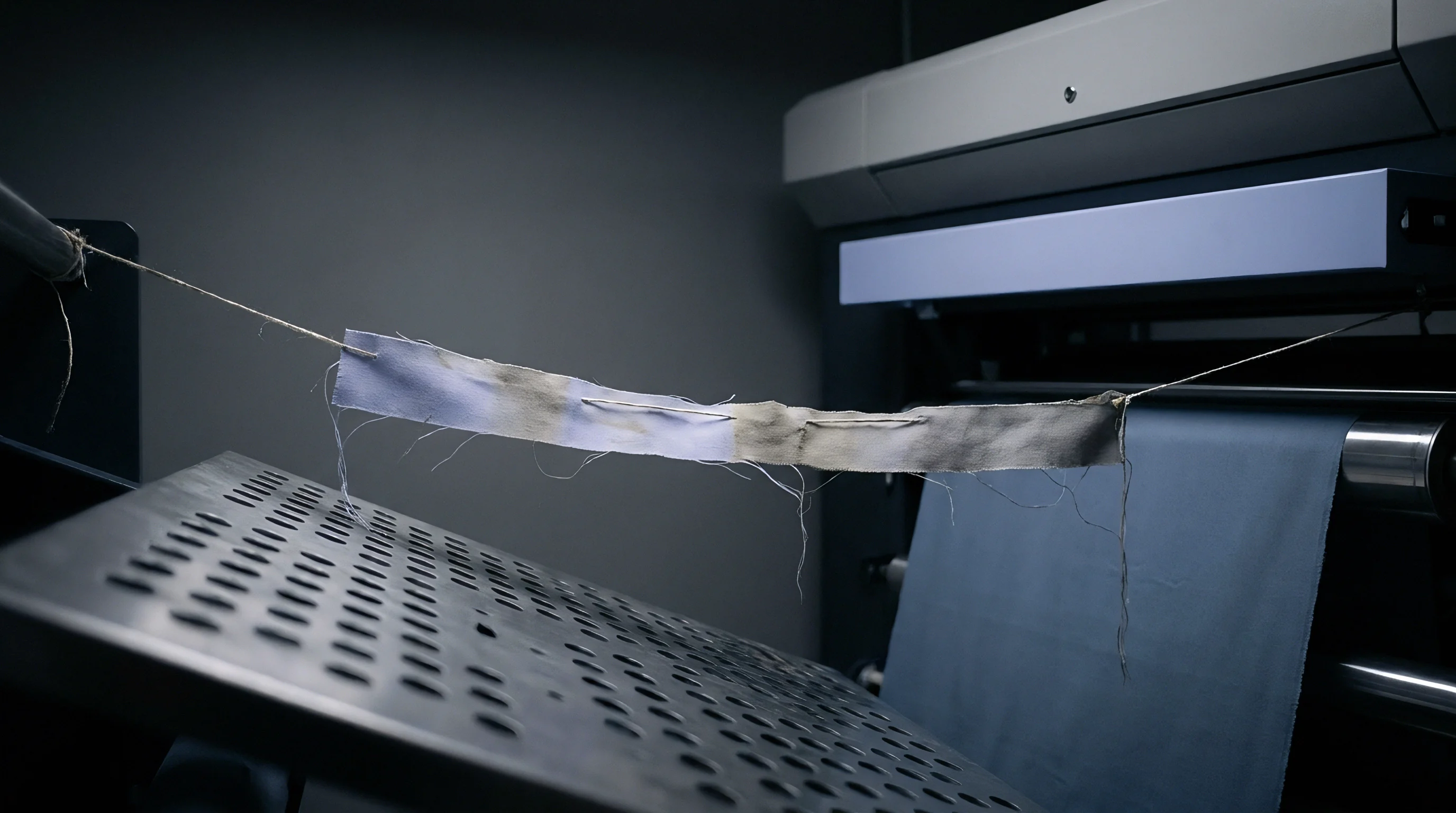
Yarn Crimp Exchange Dynamics across Wetting Media
Immersing greige fabric into aqueous bath solutions initiates immediate fiber swelling while simultaneous tension alters crimp distribution. Water acts as a plasticizing agent for hydrophilic fibers, lowering the modulus of cotton and regenerated cellulose. As the fiber bundle relaxes, line tension pulls the relaxed warp yarns straight with far lower resistance than in a dry state.
This hydro-mechanical response accelerates warp crimp loss, transferring structural distortion directly into the weft direction. The cross-wise width contracts rapidly, increasing greige pick density beyond its original loom-state jammed state.
Fabric width loss inside wet processing units correlates directly with warp tension settings. Excessive entry tension converts available warp crimp into weft crimp, driving the fabric toward absolute weft jamming. In this state, the picks become so tightly packed along the longitudinal axis that dye liquor cannot pass through the fabric plane under standard nip pressures.
Fluid is forced to flow along the fabric surface, generating shade double-face phenomena and structural streakiness. Controlling warp tension during initial contact with wetting agents maintains open liquor transport channels.
Mechanical restraint on continuous ranges prevents uniform relaxation of locked woven structures. Greige goods carrying high warp-to-weft cover ratios exhibit unequal internal energy distribution. Left unrestrained, the cloth relaxes into a balanced configuration; pulled through tight roller configurations, the cloth accumulates residual stress at yarn intersection points.
Tension variations across the roll width create localized zones of uneven cover. High-speed cameras capture edge curling and center-to-selvage density gradients caused by unrelaxed crimp exchange mechanisms operating under machine-direction draft.
Does the jammed greige matrix regain structural porosity once longitudinal tension relaxes inside the steamer?
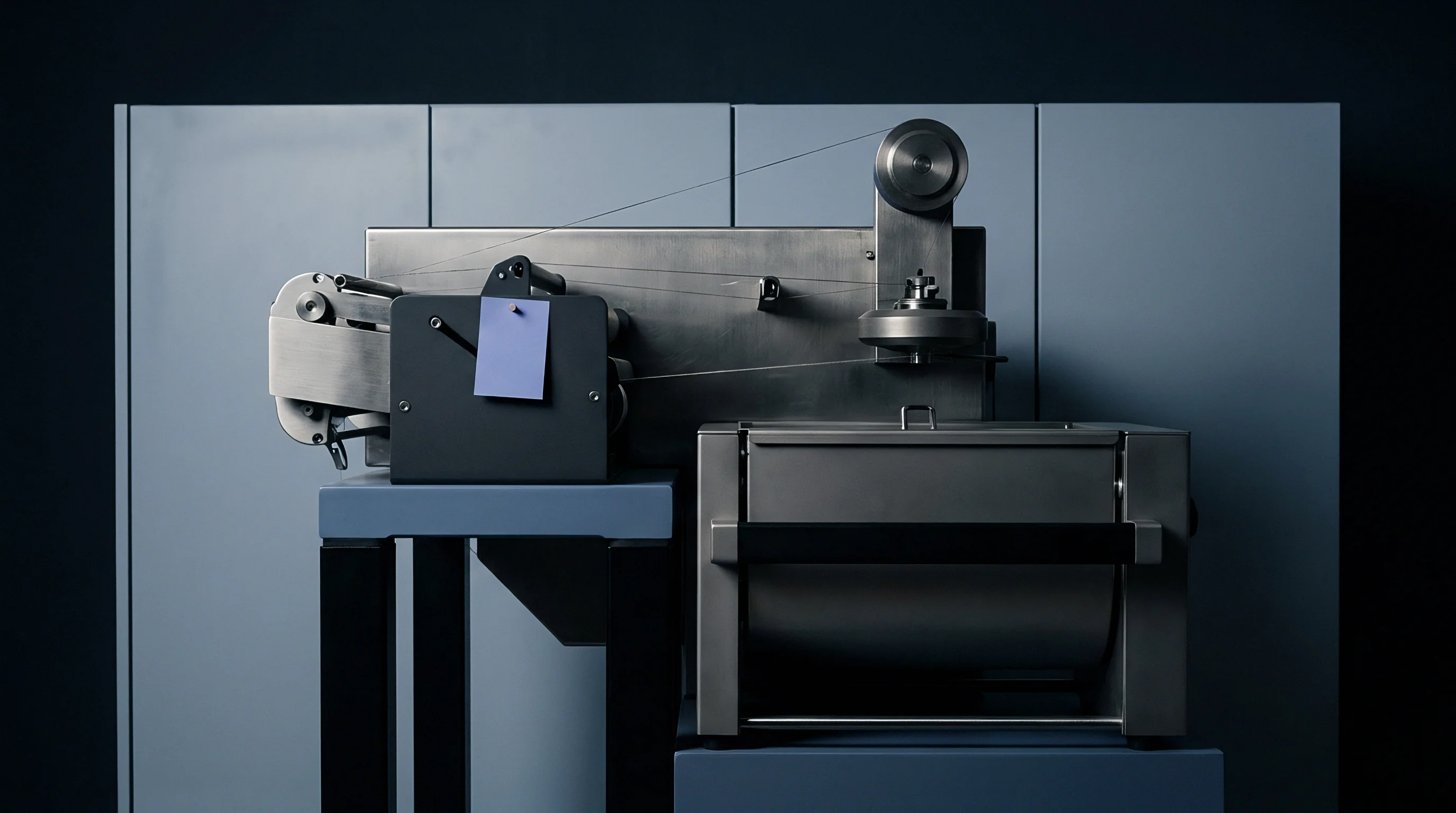
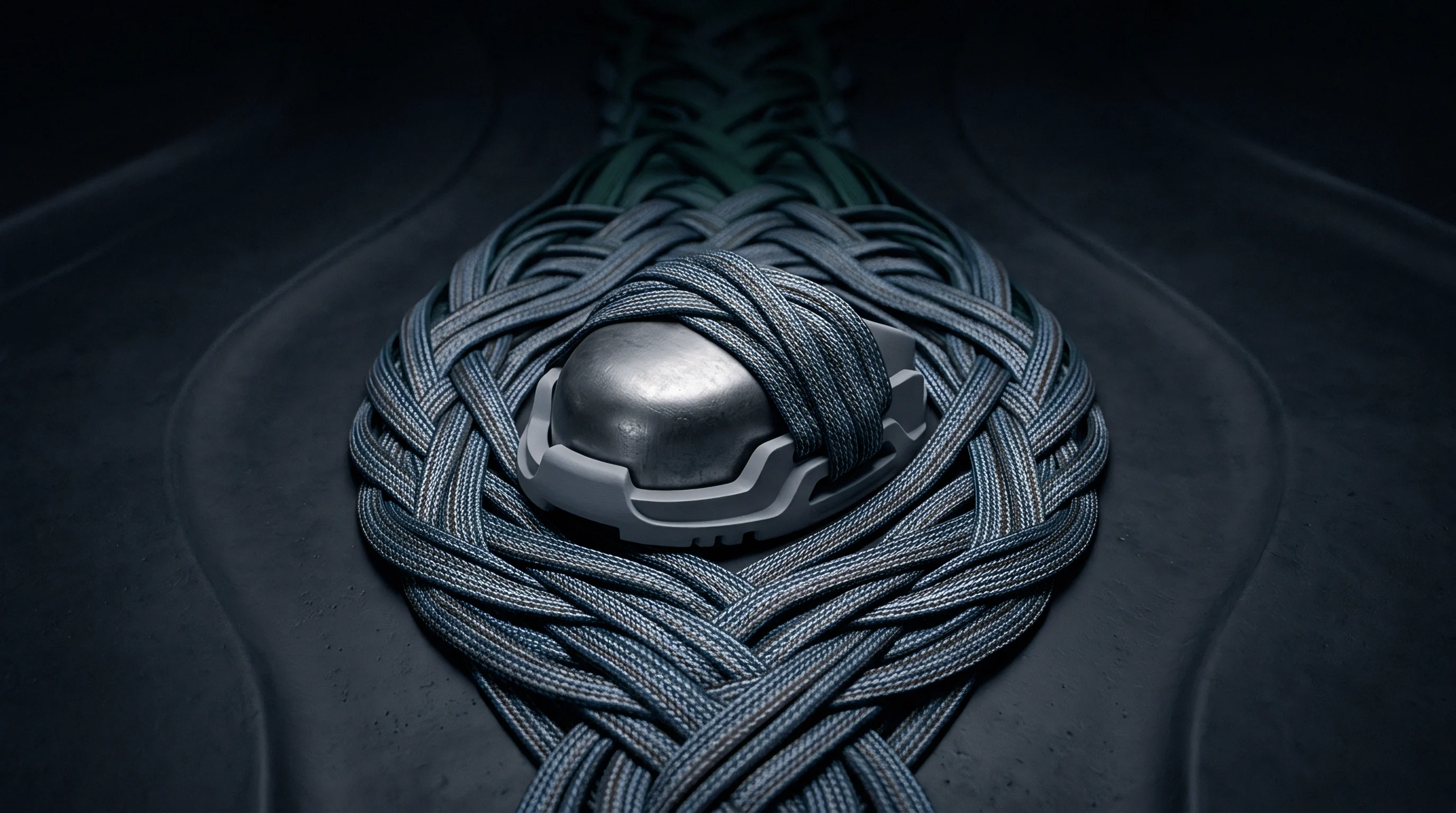
Pinch
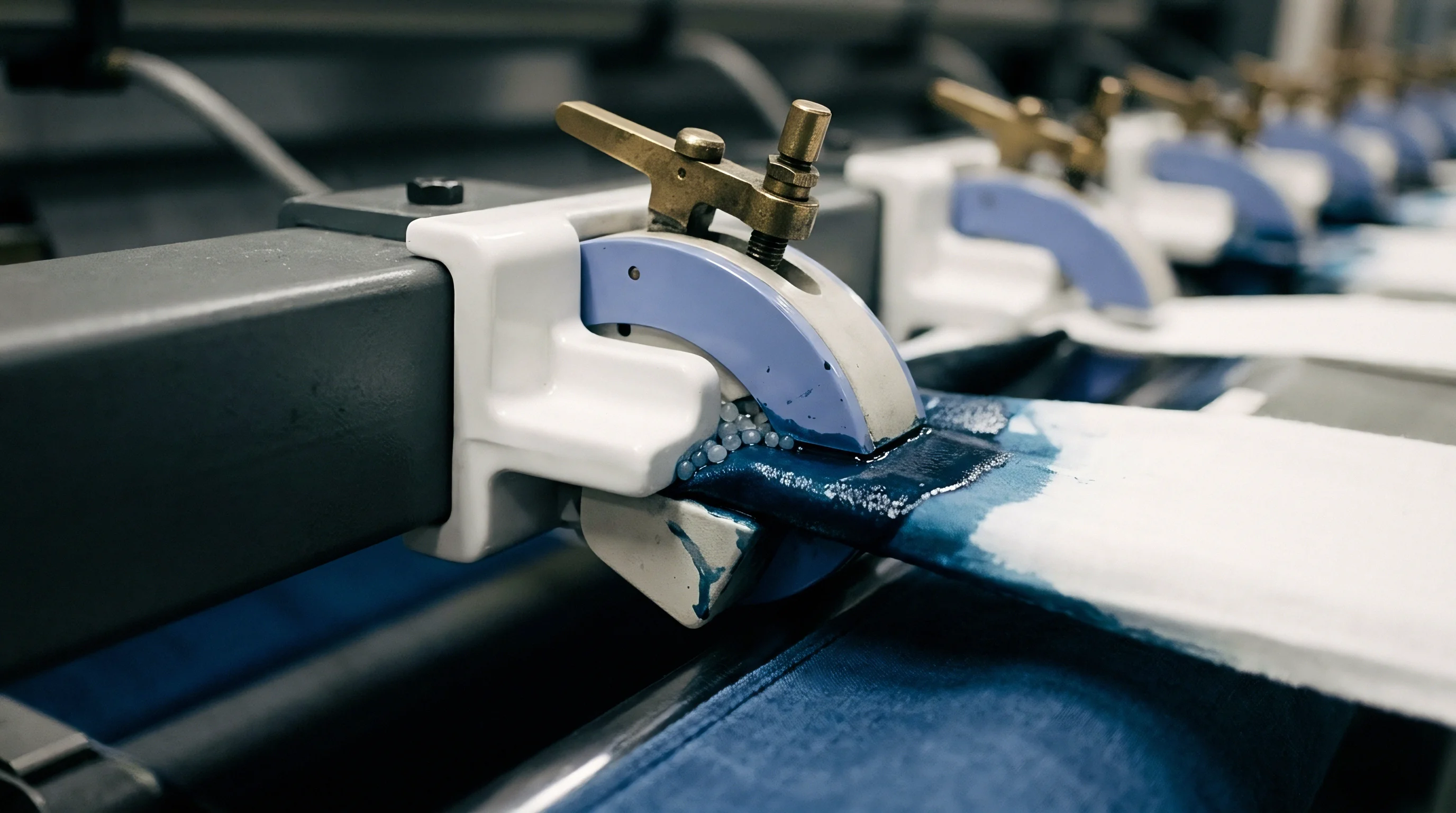
Mechanical Web Transport and Multi-Roll Speed Synchronization
Continuous dyeing ranges transport web materials across dozens of driven and passive rollers arranged in vertical or horizontal stacks. Mechanical drive systems utilize individual frequency-controlled motors synchronized through load cells or dancer arms to maintain uniform web tension. Small velocity mismatches between adjacent roll groups generate cumulative draft, pulling warp ends tight against the weft architecture.
When web speed at the chemical padder exceeds the feed rate from the entry accumulator, fabric tension spikes instantly, compressing the greige matrix right at the moment of liquid contact.
Accumulator towers at the entry of continuous ranges apply constant downward load on floating rolls to store fabric length during batch changes. This downward force establishes baseline machine tension before the fabric enters the de-sizing or padding units. Setting entry accumulator pressure too high stretches the greige web, forcing structural jamming prior to wetting.
Line speed fluctuations of less than zero-point-five percent cause tension surges up to one hundred and fifty newtons on heavy cotton twill continuous runs. These mechanical surges force instantaneous changes in liquor pickup rates across consecutive meters of production.
Dancer rolls modulate motor speeds through positional feedback loops, maintaining set tension levels across varying line speeds. Mechanical inertia within heavy dancer assemblies can cause system hysteresis, delaying corrective adjustments when fabric resistance changes suddenly. Greige fabrics with variable moisture content exhibit sudden changes in tensile modulus, triggering tension oscillations through the pad-dry-steam range.
Dynamic tension peaks squeeze the fabric web, altering the mechanical clearance between yarns and causing shade fluctuations along the length of the dye lot.
Nip Pressure Distribution and Elastic Deflection Mechanics
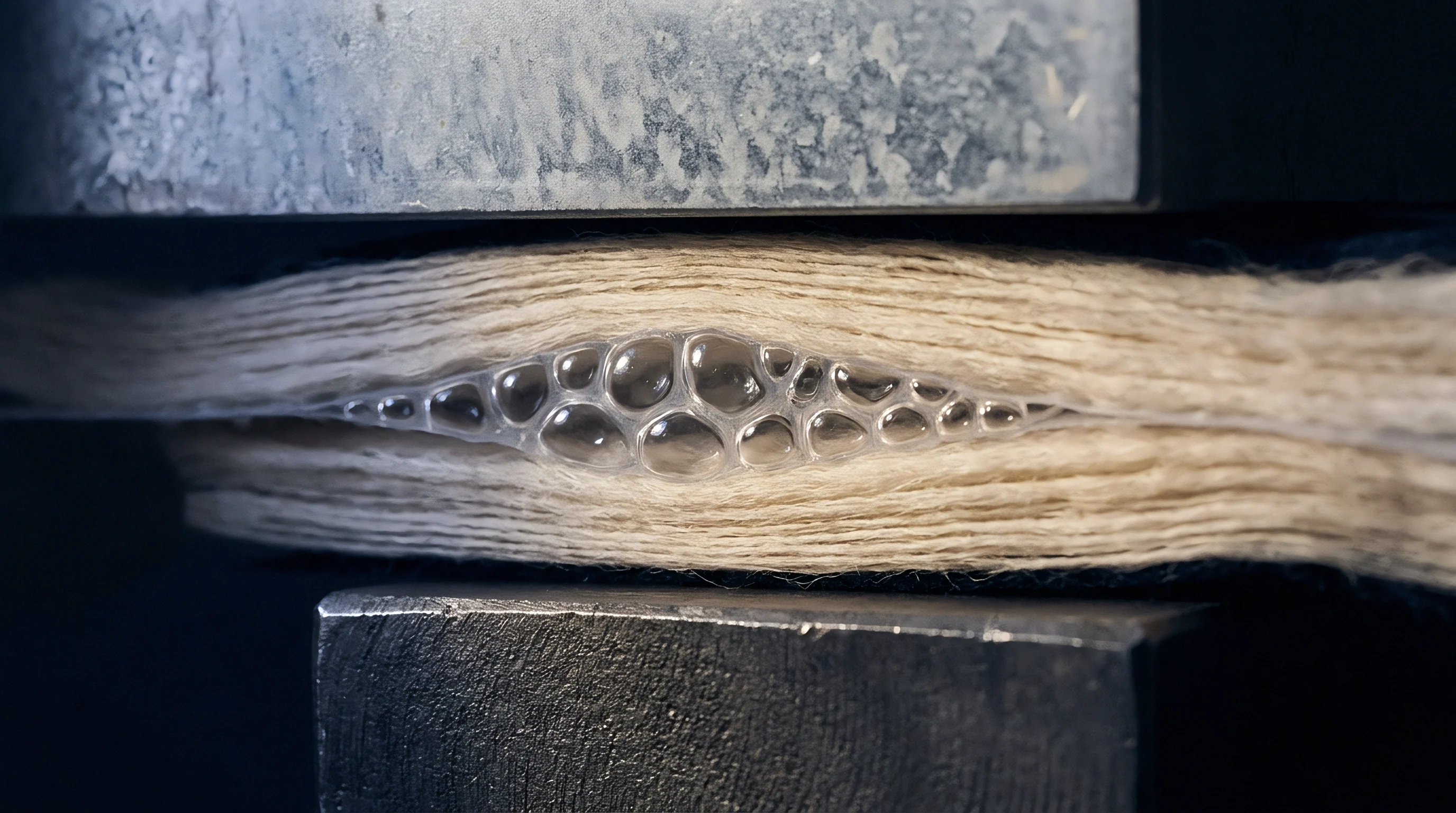
The padder nip applies high mechanical force to squeeze air from fabric void spaces and force dye liquor into yarn cores. Pervasive deflection of long padder rolls under high pneumatic pressure creates an uneven pressure profile across the working width. Rollers deflect outward at the center, resulting in higher nip pressure at the selvages than at the fabric midpoint.
Machine builders counter this deflection using crown-controlled rolls, variable swimming rolls, or cross-axis nip alignments. Incorrect deflection compensation leaves center-to-selvage pressure differentials that directly alter dye liquor wet pickup percentages.
| Web Draft Percentage | Nip Force (N/mm) | Wet Pickup (%) | L-value Center | L-value Edge | Delta E (CMC 2:1) |
|---|---|---|---|---|---|
| 0.2 | 20 | 78.5 | 42.10 | 42.15 | 0.12 |
| 0.8 | 20 | 74.2 | 42.85 | 42.20 | 0.78 |
| 1.5 | 20 | 69.1 | 43.50 | 42.10 | 1.65 |
| 0.2 | 35 | 68.0 | 43.60 | 43.55 | 0.09 |
| 0.8 | 35 | 63.5 | 44.20 | 43.40 | 0.94 |
| 1.5 | 35 | 58.2 | 45.10 | 43.30 | 2.10 |
Elastomer roll covers flatten under applied pressure, creating a contact zone known as the nip width. Higher hardness durometers produce narrow contact zones with extreme peak pressures, whereas softer covers deform to yield wider contact zones with lower peak forces. For jammed greige architectures, narrow high-pressure nips force dye liquor across the surface before intra-yarn air escapes, trapping dry air pockets within the core of locked yarn intersections.
Wider nips provide longer mechanical contact times, allowing displaced air to exit through the fluid film before the web exits the pressure zone.
Rubber durometer changes under thermal load during long production runs alter the physical pressure applied to the fabric web. Heat generated by internal hysteresis softens the roll cover, widening the nip footprint and lowering peak squeezing pressure. Lower peak pressure increases wet pickup, shifting the dye depth mid-run.
Dyehouses managing long continuous runs track roll temperature profiles to adjust pneumatic loading dynamically, maintaining uniform mechanical compression from start to finish.
Exceeding a 1.5 percent speed differential between steamer rolls invalidates ISO 105-J03 color consistency tolerances across 5000-meter runs.
Accumulator and Steamer Web Path Kinematics
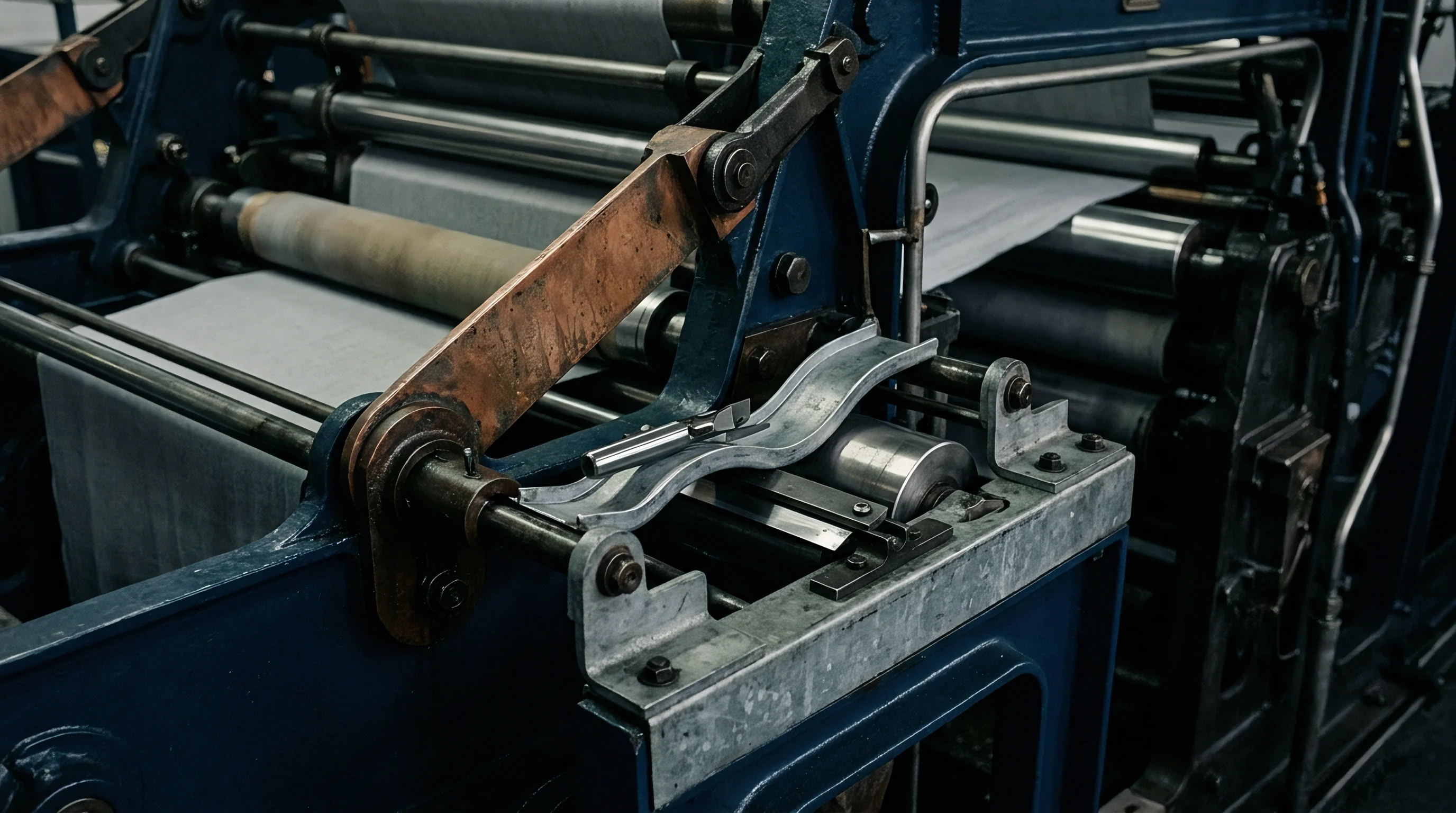
Atmospheric steamers subject wet, chemical-laden fabric to tension-free or low-tension thermal processing. Fabric routing through vertical festoon or multi-roll steamer paths relies on top-driven rolls to pull the fabric upward, while lower rolls guide the web through the steam environment. Improper torque control on steamer drives stretches hot, swollen cotton fibers, permanently setting warp elongation and driving weft density down.
Steamers running under high mechanical web tension produce stiff hand, reduced tear strength, and pronounced fabric skews.
Dryers positioned between padding and steam fixing units utilize intermediate web guides and tension zones to prevent dye migration. Infrared pre-dryers reduce fabric moisture down to critical migration thresholds without physical surface contact. If web tension inside the pre-dryer exceeds structural limits, the wet yarns flatten under tension, causing migration of dye particles to high-temperature surface zones.
This thermal-mechanical coupling alters color yield and creates streak patterns aligned with warp end spacing.
Drive systems must adjust for wet fabric weight variations resulting from variable liquor pickup. A fabric carrying eighty percent wet pickup weighs nearly double its dry greige mass, increasing gravitational drag on long vertical roll passes. Top guide rolls require precise speed synchronization to prevent fabric slippage over smooth stainless steel surfaces.
Slippage abrades wet yarn surfaces, raising fiber fuzz that alters light reflectance and shifts visual shade readings away from lab standards.

Web Transport Deflection Failure Patterns
Operational defects arising from mismanaged machine tension across continuous lines show up as distinct physical failure modes in finished fabric:
- Warp-way color streaking occurs when localized high-tension bands crush specific warp ends, reducing liquor absorption along continuous yarn lines.
- Center-to-selvage shade tailing results from roll deflection combined with edge-to-center web tension differentials, driving dye liquor toward loose web zones.
- Weft bowing distortion emerges when high longitudinal tension pulls the fabric center forward while selvage clamps or friction rolls retard the edges.
- Surface frostiness develops when incomplete liquor penetration leaves un-dyed core fibers exposed after abrasion or mechanical flexing.
- Listing defects display differential shade depth along fabric selvages due to improper roll crowning and uneven edge tensioning during padding.
Misaligning roll parallelism by fractions of a millimeter introduces asymmetric tension profiles across the web width. The fabric tracks toward the side of lower tension, causing wrinkles as the web enters the padder nip. Folded wrinkles flattened under high nip pressures produce permanent white creasing defects where dye liquor failed to reach folded surface areas.
Maintaining laser-aligned roll geometry prevents web tracking errors and preserves uniform mechanical loading across the entire processing width.
Running high-cover greige fabrics under uncalibrated web tension settings leads directly to severe shade variance, physical width loss, and unrecoverable commercial rejections.
Liquor

Capillary Fluid Transport in Compressed Fiber Networks
Fluid movement into greige cotton relies on capillary pressure generated by micro-voids between individual cellulose fibers. Washers and padders rely on initial wetting agents to displace hydrophobic natural waxes and spinning lubricants covering raw cotton yarns. When jammed greige architecture enters the bath under tension, the mechanical packing of fibers contracts capillary radii.
According to the Washburn equation, fluid penetration speed increases with larger capillary radii, while total capillary pressure rises with smaller radii. Squeezing greige fibers tight creates high capillary pressure but drastically reduces fluid transport velocity, delaying complete yarn core wet-out during brief padder immersion times.
Immersion times in continuous high-speed padders range from zero-point-two to zero-point-eight seconds. Within this short window, dye liquor must displace air from the fabric matrix and diffuse through the fiber network. When high web tension compresses the fabric, interstitial air becomes trapped within the locked weave structure.
Trapped air bubbles act as physical barriers to fluid flow, forcing dye liquor to bypass internal fiber bundles. The resulting dyed fabric appears dark on the exterior while retaining dry, un-dyed fiber cores inside the yarn intersections.
Surfactant chemistry lowers liquid surface tension, allowing liquor to penetrate tight fiber networks rapidly. Anionic and non-ionic wetting agents accelerate boundary layer displacement on hydrophobic greige surfaces. However, high mechanical web tension increases the hydrodynamic resistance of the fabric substrate, requiring higher surfactant concentrations to achieve equivalent wetting speeds.
Dynamic surface tension measurements demonstrate that fast-moving continuous lines need low-foaming wetting agents capable of reaching equilibrium surface tension within milliseconds of application.
Capillary Collapse under Longitudinal Web Strain
Applying longitudinal tension to jammed greige fabrics shifts internal void geometry from circular capillary channels to narrow slits. Radial pressure at yarn crossover points flattens individual fibers against each other, eliminating macro-pores entirely. Wetting fluid entering this compressed network encounters immense viscous drag resistance.
Capillary flow transitions from parabolic flow profiles to boundary-layer dominated motion, slowing fluid ingress into the center of warp and weft intersections.
Fiber swelling under hydration further complicates fluid transport in locked weaves. As cellulose fibers absorb water, their cross-sectional area increases by up to fourteen percent, driving internal void space down. If fabric tension prevents outward structural expansion, the swelling fibers press inward, self-sealing the yarn core against further liquor penetration.
Continuous pad-steam lines running jammed constructions must balance initial wetting chemistry and machine tension to ensure complete fluid saturation before self-sealing occurs.
A heavily jammed weave requires longer dwell time in the wet-out trough rather than higher nip pressure at the padder.
Viscosity alterations in dye bath formulations impact penetration dynamics into tight fabric architectures. Thickening agents added to pad liquors prevent dye migration during intermediate drying phases, yet high viscosity severely hinders fluid ingress into jammed greige structures. Temperature adjustments alter liquor viscosity; heating the dye bath from twenty to sixty degrees Celsius reduces liquid viscosity by half, accelerating capillary flow into high-cover weaves.
Chemical dosing systems must maintain strict temperature control to stabilize liquor penetration rates throughout production runs.
Hydromechanics of Squeeze-Out and Core Wetting
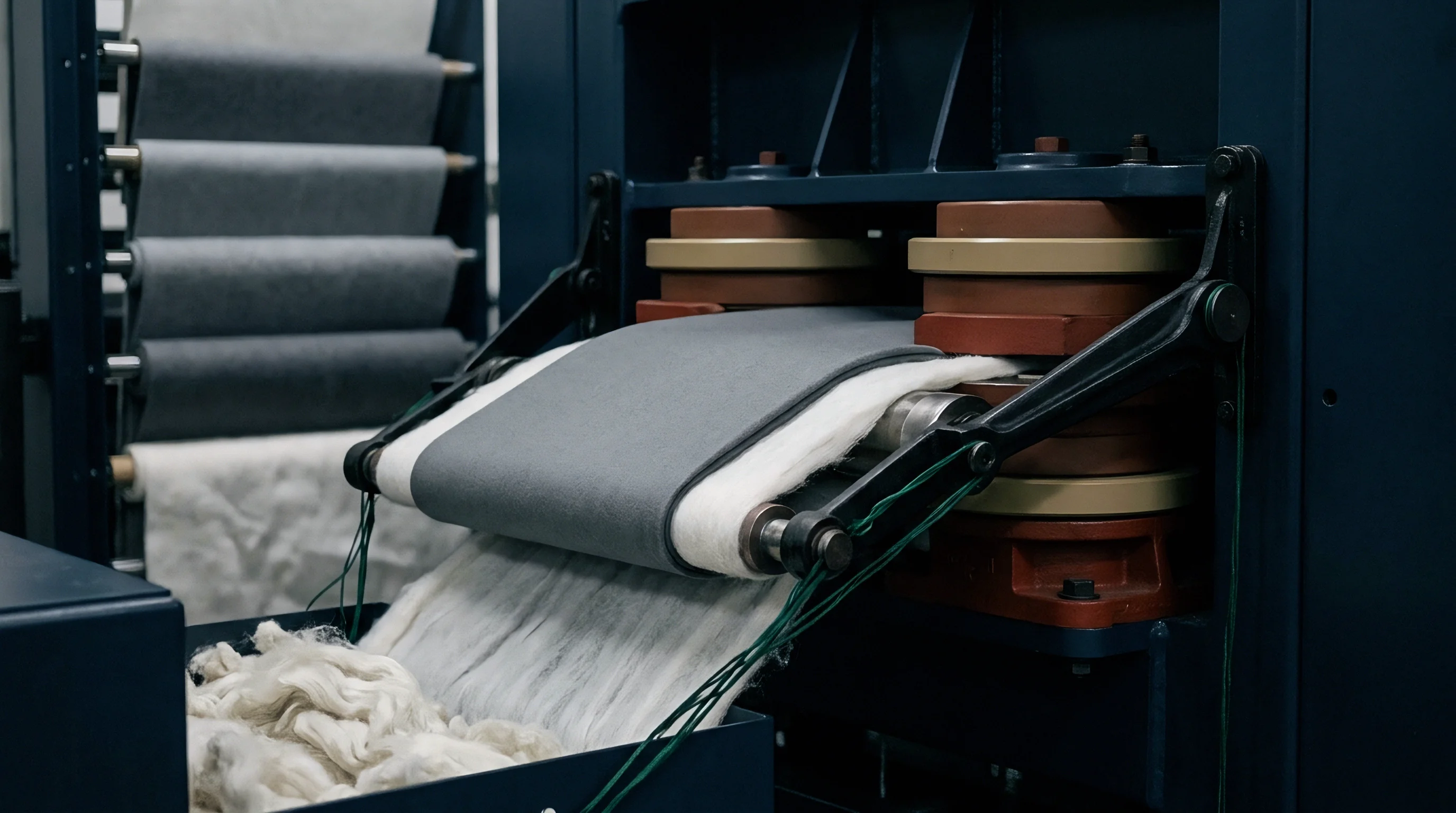
The boundary layer of liquid carried on the fabric surface enters the padder nip, where intense mechanical forces drive fluid transfer. Fluid dynamics within the nip entry bank involve a balance between hydrodynamic pressure pushing liquor into voids and mechanical resistance from squeezed air escaping outward. If web speed is too high, hydrodynamic pressure creates a surface liquid barrier that skips over compressed yarn valleys.
This boundary layer effect leaves micro-recesses along the weave pattern untreated by dye chemistry.
Liquor pickup efficiency depends directly on the ratio of interstitial void space to yarn fiber mass. Jammed fabrics present reduced total void volume, lowering theoretical maximum wet pickup. Forcing higher liquor volume into a compressed fabric through extreme nip pressure causes structural deformation rather than deep liquor placement.
The excess liquor pools at the nip entry, creating back-flow currents that wash away surface-applied pre-treatments and generate irregular dye deposit patterns.
Submerging compressed greige goods into multi-dip pad troughs allows mechanical relaxation between successive nip compressions. The first padder nip expels trapped air, creating a partial vacuum within yarn voids as the fabric exits the pressure zone. Immersing the web into a second trough immediately after this expansion phase pulls fresh dye liquor directly into the newly opened intra-yarn spaces.
Utilizing double-dip, double-nip pad configurations achieves complete core saturation in jammed fabric architectures that resist single-pass impregnation.
Raw cotton wax content contributes to poor shade penetration, but a seventy-kilogram line tension pulling jammed warp ends tight through the padder trough exerts a far greater effect on fluid ingress.
Strain
Bowing, Skewing, and Width Loss Mechanics
Continuous machine-direction tension induces orthogonal dimensional changes across jammed greige web structures. Applying force parallel to warp ends causes proportional lateral contraction, a phenomenon governed by the structural Poisson’s ratio of the woven weave. In high-cover fabrics, warp straightening pushes weft picks outward at the center while friction from guide rolls holds fabric edges back.
This differential displacement creates bowing, where weft lines curve across the width, forming parabolic arcs off true perpendicular alignment.
Weft skewing emerges when machine rollers are out of axial alignment or when cross-web tension profiles are uneven. One edge of the fabric moves faster than the other, tilting weft threads away from ninety degrees relative to warp ends. In jammed greige goods, skewed yarns lock into their off-angle positions under tension and wet swelling.
Once chemical fixation or intermediate drying occurs, this angular distortion sets permanently, rendering the fabric unsuited for automated cutting tables due to panel twisting in finished garments.
Width loss on continuous ranges scales directly with applied warp tension and wet relaxation levels. Heavy greige twills can lose up to five percent of their grey width when pulled through long wet processing lines under high tension settings. This width reduction increases pick density per centimeter, artificially inflating fabric weight per square meter while severely restricting liquor movement between threads.
Controlling width loss requires careful management of machine draft and strategic placement of expander rolls throughout the wet processing train.
Stress Redistribution and Center-to-Selvage Variations
Edge restrainers, pin chains, and curved expander rolls apply transverse force to maintain fabric width against longitudinal contraction forces. Expanding jammed fabric under tension concentrates mechanical stress near the selvages. Fiber bundles along the outer ten centimeters of the web experience higher tensile loads than center yarns, altering local pore geometry.
Consequently, dye liquor penetration rates differ between the fabric body and its edges, leading to persistent center-to-selvage shade variance (shading).
Center-to-selvage density profiles measured across jammed greige webs show significant structural variance after continuous processing under high tension. Warp ends per centimeter peak near the selvages when expander rolls pull against heavy machine-direction draft. This structural compaction alters light reflectance values across the finished cloth, creating apparent shade steps even when chemical dye uptake is perfectly uniform.
Dyehouses must evaluate structural density alongside colorimetric data to diagnose shade variation origins accurately.
Internal stress accumulation during continuous tension processing leads to residual shrinkage instability in finished goods. When high web tension prevents natural fabric relaxation during wet processing, internal yarn strain remains locked within the dried matrix. Subsequent laundering releases this trapped energy, causing severe dimensional changes in the finished product.
Sanforizing and mechanical compacting processes struggle to eliminate residual shrinkage when greige goods have been excessively stretched along continuous processing routes.
Deflection Mitigation and Mechanical Restraint Selection
To avoid unrecoverable fabric distortion and structural failure during continuous dyeing, wet-processing plants follow specific engineering practices when handling jammed greige architectures:
- Select curved rubber sleeve expanders ahead of every padder entry to distribute lateral tension uniformly across the web width.
- Calibrate electronic load cell feedback systems to maintain line draft below zero-point-five percent through wet processing zones.
- Employ driven spreader rolls inside steamer chambers to counter warp-tension-induced fabric width loss without introducing edge abrasion.
- Verify roller parallelism across all processing modules using optical alignment techniques to eliminate structural weft skewing.
- Set accumulator floating roll weights to the absolute minimum required to maintain web tracking without over-stretching dry greige.
High longitudinal tension applied to wet, jammed weaves permanently alters structural yarn crimp ratios beyond design thresholds.
Monitoring dynamic web tension across individual machine sections prevents compounding structural strain along the processing line. Installing tension transducers before and after critical units provides real-time data on fabric response, allowing automated drive controls to adjust motor speeds before warp strain exceeds elastic recovery limits. Maintaining structural equilibrium throughout wet processing operations ensures uniform fabric dimensions, consistent shade depth, and predictable physical performance in final end-use applications.
Metrics
Calculated Crimp-Tension Equations and Penetration Indexes
Quantifying structural jamming requires calculating the theoretical limit of yarn packing within a given weave geometry. F. T. Peirce defined the jamming boundary through mathematical relationships linking thread spacing, yarn diameter, and crimp angles. The maximum thread density for a plain weave occurs when the geometric clearance between adjacent parallel threads reaches zero.
Under longitudinal web tension T, the effective warp crimp Cw decreases according to an exponential decay relationship with applied stress, expressed as:
Cw(T) = C0 · e-k · T
where C0 is the un-tensioned greige warp crimp, k is the structural compliance factor of the specific yarn architecture, and T is the line tension per unit width measured in newtons per meter. As warp crimp decays under tension, weft crimp Cf increases non-linearly to maintain structural cross-sectional equilibrium within the locked weave matrix.
Liquor penetration index Pi evaluates fluid transport efficiency into compressed fiber bundles as a function of effective capillary radius re and dynamic contact angle thη. The hydraulic radius of interstitial pores inside jammed greige contracts under applied web tension. The mathematical formulation governing fluid ingress velocity v into the locked architecture derives from modified Washburn mechanics:
v = fracγ · re · costhη4 · η · x
where γ represents liquor surface tension, η is dynamic viscosity, x is penetration depth, and re is an empirical function of web tension T and structural packing density. High web tension reduces re, sharply lowering fluid ingress velocity during short padder immersion times.
Evaluating cover factor adjustments provides direct insight into fabric behavior under wet tension. Mathematical models compute warp cover factor Kw and weft cover factor Kf using end counts and yarn linear densities. The total fabric cover factor Kt dictates fluid flow resistance through the web plane:
Kt = Kw + Kf – fracKw · Kf100
When total cover factor Kt exceeds 28 in cotton woven constructions, the fabric enters the jammed regime, where continuous wet processing under tension causes extreme liquor penetration resistance and shade variation risks.
High web tension collapses interstitial capillary channels before dye molecules migrate into yarn cores.
Sensitivity Analysis of Web Tension Vs Color Consistency
A structured sensitivity study illustrates the direct relationship between machine line tension, structural compaction, liquor pickup, and final color variation on a 100% cotton jammed twill construction (3/1 twill, 42 ends/cm, 24 picks/cm, 30 Tex warp, 35 Tex weft, base dry mass 265 g/m²). The continuous dyeing line was operated at 40 meters per minute using reactive dye chemistry under pad-steam conditions. Line tension was increased systematically from 100 N/m to 600 N/m across six experimental test runs.
| Run Number | Line Tension (N/m) | Warp Crimp (%) | Fabric Width (cm) | Wet Pickup (%) | Core Penetration Index (%) | Delta E (CMC 2:1) vs Target |
|---|---|---|---|---|---|---|
| 1 | 100 | 7.2 | 162.5 | 76.4 | 94.2 | 0.15 |
| 2 | 200 | 5.8 | 161.0 | 72.1 | 88.5 | 0.38 |
| 3 | 300 | 4.3 | 159.2 | 67.8 | 79.1 | 0.82 |
| 4 | 400 | 3.1 | 157.5 | 63.2 | 68.4 | 1.45 |
| 5 | 500 | 2.2 | 156.0 | 59.0 | 57.2 | 2.10 |
| 6 | 600 | 1.5 | 154.8 | 55.3 | 46.8 | 2.85 |
Data from the sensitivity matrix confirms that increasing line tension from 100 N/m to 600 N/m reduces warp crimp from 7.2 percent down to 1.5 percent while driving total fabric width down by nearly eight centimeters. This structural contraction forces liquor wet pickup to fall from 76.4 percent to 55.3 percent, causing severe color deviation. The overall shade difference (Δ E CMC 2:1) scales past acceptable commercial thresholds.
Core penetration analysis shows a corresponding collapse in liquor ingress, dropping from 94.2 percent saturation down to 46.8 percent at maximum line strain. Microscopic cross-sections of dyed yarns from Run 6 reveal ring-dyed structures with un-colored white fiber centers. This ring-dyeing condition leads directly to poor fastness properties and severe color loss during downstream garment washing and abrasion testing.

Sequential Standard Protocol for Line Commissioning
To establish safe tension windows for processing jammed greige fabric constructions on continuous dyeing ranges, technicians execute a mandatory sequence of operational steps during mill qualification:
- Measure loom-state greige warp and weft crimp according to ISO 7211-3 methods under standard conditioning atmosphere.
- Determine absolute geometric jamming boundaries using Peirce theoretical calculations based on conditioned yarn diameters and reed parameters.
- Mount incoming greige rolls onto entry un-winders and calibrate load cell digital output signals to zero under zero-web-load conditions.
- Run a fifty-meter trials strip at five speed increments with minimum tension to establish base wet-relaxation width contraction profiles.
- Increase entry accumulator loading step-wise while measuring dynamic warp crimp loss using optical laser displacement sensors.
- Sample wet-padded cloth immediately after the first nip at each tension step and weigh instantly to calculate actual liquor pickup percentage.
- Cross-section padded sample yarns under brightfield microscopy using cross-sectional microtome cuts to verify internal core dye penetration.
- Set range automatic drive control units to lock maximum allowable line draft below the calculated core-collapse tension threshold.
The standard procurement agreement stipulates that shade variance exceeding Delta E zero-point-eight CMC two-to-one caused by unapproved machine draft adjustments grants the buyer absolute right to reject the entire dye lot without financial penalty.
Audit
Contractual Greige Parameters and Physical Specification Alignment
Buying jammed greige fabrics for continuous wet processing requires strict technical specifications written directly into supplier supply contracts. Sourcing teams must mandate precise tolerances for greige parameters that govern mechanical behavior under tension. Standard commercial trade descriptions like 100% cotton heavy twill are inadequate; purchase orders must define yarn linear density tolerances (± 2.5%), pick density count limits (± 1.5%), and maximum allowable greige warp crimp variation (± 0.5%).
Deviations in these fundamental parameters change structural jamming thresholds, rendering fixed dye range tension settings destructive to color consistency.
Greige fabric specifications must specify yarn manufacturing methods, since rotor, ring, and vortex-spun yarns exhibit completely different compressibility characteristics under tension. Sourcing contracts should state allowable yarn splice counts and maximum knot frequencies per thousand meters, as yarn joints create localized rigid spots that fail under continuous web strain. Including physical greige metrics alongside commercial terms ensures that mill converters work with standardized greige substrates that react predictably to continuous line tension.
Inspecting incoming greige lots before release to wet processing floors forms the second pillar of quality control. Auditing teams sample ten percent of incoming rolls, conducting four-point fabric inspection procedures (ASTM D5430) alongside physical laboratory testing for size content, wax percentage, and un-tensioned crimp balance. Sizing chemistry must be completely characterized; high polyvinyl alcohol (PVA) content hardens yarn intersections, accentuating structural jamming dynamics during initial wet-out.
Identifying greige variance before processing prevents costly batch rejections downstream.
RFQ Documentation Requirements for Continuous Dyeing
Request for Quotation (RFQ) packages sent to continuous dyehouses must explicitly state mechanical and structural limitations to ensure proper plant setup. Complete RFQ dossiers include the following technical clauses:
- Target finished width and density tolerances stating acceptable width variation ranges (± 1.0 cm) post-sanforizing.
- Maximum allowable continuous machine tension thresholds defined in newtons per meter of web width across all range modules.
- Mandatory double-dip double-nip padder requirements for greige constructions with total cover factors exceeding twenty-eight.
- Color consistency boundaries specifying maximum Δ E (CMC 2:1) allowable within rolls.
- Required surfactant penetration performance limits based on Draves wetting times under operational bath temperature conditions.
- Standard washing and lightfastness requirements referencing specific test protocols (ISO 105-C06, ISO 105-B02) with minimum pass ratings.
Dyehouses submitting tenders must provide complete machine calibration dossiers verifying roll crowning profile accuracy and drive motor synchronization logs. Buyers should reject quotes from mills unable to supply continuous load-cell tension tracking data for their dyeing ranges. Requiring verified equipment capabilities upfront protects buyers against mills attempting to dye high-density jammed fabrics on outdated, high-tension ranges unsuited for tight constructions.
Landed Cost Arithmetic and Dispute Resolution Frameworks
Managing financial exposure when continuous dyeing runs fail due to tension-induced structural defects requires clear landed cost calculations. When fabric suffers core-penetration failure or unrecoverable shade streaking, the financial loss extends beyond grey cloth purchase price. Total landed cost arithmetic incorporates greige material costs, international ocean freight, customs tariffs, dyehouse processing fees, inland transport, and administrative scrap handling charges.
Rejecting a ten-thousand-meter production lot of heavy cotton twill ($3.50/m greige cost, $1.20/m dye charge, $0.40/m freight and duties) represents a direct financial exposure of fifty-one thousand dollars.
Proving root cause failure in dye lot disputes requires isolating greige structural faults from dyehouse machine execution errors. If the mill allowed greige warp end density to exceed specification upper control limits by three percent, the fabric jammed prematurely, preventing fluid ingress even under low line tension. Conversely, if laboratory analysis confirms greige parameters matched specification while dyehouse tension records show line draft exceeded one-point-five percent, full liability shifts to the dyehouse converter.
Sourcing teams use independent third-party testing laboratories to execute cross-sectional microtome core analysis, establishing precise physical evidence for claims resolution.
Clear contract dispute clauses specify arbitration procedures, acceptable claim submission timeframes, and explicit financial remedy limits. Standard terms mandate that color rejections reported within thirty days of goods arrival at garment factories trigger immediate hold on converter invoices pending independent audit. Technical specifications, clear RFQ requirements, dynamic process logging, and rigorous financial frameworks together create an unassailable sourcing structure that guarantees high-cover jammed greige fabrics convert into consistent, high-performance finished textiles.