Alkali Dosing Profiles and Mass Transfer in Jet Dyeing
Controlled progressive alkali dosing matches jet fabric loop velocity to eliminate surface fixation spikes and secure level shade fixation on cellulosic cloth.

Kinetics
Boundary Layer Mass Transfer and Nucleophilic Fixation
Fixing reactive dyes on cellulose in a jet dyer turns on the balance between reaction rates and how quickly alkali can migrate into the yarn core. In the migration phase, salt drives exhaustion to the fiber surface while the bath stays neutral. Once alkali enters, the rising pH ionizes cellulose hydroxyls into cellulosate anions, which mount a nucleophilic attack on the dye’s reactive groups to form covalent ether linkages.
At the same time, dyebath hydroxide ions compete for those dye molecules, hydrolysing them into an inactive form that has no affinity for cellulose and stays suspended in liquor. The ratio of fixation to hydrolysis governs final yield and color depth. If local alkali pools around the outer sheath of a yarn package or fabric rope, hydrolysis outpaces alkali diffusion toward the center of the bundle.
A bath temperature of sixty degrees Celsius with soda ash dosing at two grams per litre generates a fixation efficiency drop of eight percent when boundary layer velocity falls below zero point two metres per second.
Alkali moves from bulk liquor to internal fiber sites through Fickian diffusion across a stagnant boundary film. Shear forces in the jet nozzle thin that film, steepening the concentration gradient at the fiber perimeter. When boundary resistance stays high, local pH skews: outer fibers hit fixation conditions while inner fibers linger in acid.
That gap in fixation rates yields ring-dyed yarns and visible rope unlevelness.
Cellulosic Ionization and Dye Hydrolysis Kinetics
Cellulose has a pKa near 13.5 at room temperature, shifting downward as the bath warms. Dosing sodium carbonate or sodium hydroxide lifts dyebath pH from 7.0 to an operating window of 10.5 to 11.8, directly setting the cellulosate anion concentration inside the cotton’s amorphous regions.
Fixation kinetics track a pseudo-first-order rate law relative to absorbed dye, provided cellulosate levels remain steady. Erratic alkali additions break that stability through sudden ionization surges. The sharp pH rise triggers rapid fixation across accessible yarn surfaces, while dye still in the liquor bath hydrolyses before convective flow can move it into the core of the bundle.
Sluggish mass transport during alkali dosing bakes shade variation permanently into the goods. Any non-covalently bound hydrolysed dye then demands aggressive hot-wash cycles to clear out; leaving it in the fabric lowers wet rubbing fastness under ISO 105-X12 and leaves wash fastness specimens prone to cross-staining under ISO 105-C06.

Pacing
Mathematical Geometries of Alkali Addition
Linear dosing meters alkali at a flat volumetric rate across the dosing window. But because dyebath pH responds logarithmically to alkali concentration, steady additions produce an early exponential jump in bath pH. That spike drives initial fixation faster than the machine’s liquor exchange can redistribute chemicals through the rope.
Progressive dosing manages that kinetic bottleneck by delivering alkali along a non-linear curve. The pump starts with a tiny fraction of the total charge and ramps up as the liquor nears its target alkalinity. This evens out the rate of pH change, which keeps fixation steady and prevents localized strike marks.
Stepwise dosing breaks delivery into discrete volumetric pulses separated by dwell times. Pausing between pulses gives the dyebath time to equalize across dense structures before the next pH jump initiates more fixation ~ an arrangement that suits heavy circular knits and tightly woven fabrics.
Dosing Profile Selection Parameters
Profile selection balances dyestuff reactivity, fabric density, and machine hydraulics. Plant engineers match dosing curves to substrate permeability and dyestuff chemistry:
- Progressive Exponential Profile suits high-reactivity vinyl sulfone dyes on fine-gauge knits, where controlling early strike prevents surface ring-dyeing.
- Linear Dosing Curve is reserved for low-reactivity bi-functional dyes on open mesh or light wovens with rapid liquor turnover.
- Stepwise Pulse Profile fits heavy cellulosics above three hundred grams per square metre that need prolonged diffusion periods between pH steps.
- Segmented Combination Profile pairs an early progressive curve for core fixation with a final linear ramp to hit terminal pH on deep shades.
Executing these profiles requires tight volumetric control. Jet machines rely on variable-speed diaphragm pumps tied to automated controllers, where onboard processors calculate instantaneous flow against the programmed curve and adjust stroke frequencies to hold the dosing slope.
A progressive dosing profile extending over forty-five minutes maintains fixation rate variance within a five percent band across a two-hundred-kilogram jet loop.
Adding alkali manually through gravity tanks or buckets consistently ruins shade levelness. Dosing unmetered chemical straight into the circulation loop generates violent concentration spikes, fixing dye instantaneously onto whichever rope segment hits the nozzle at that second and streaking the batch.
Shade blotchiness is often attributed to chemical lot variance or immature cotton fibers, though dyehouse audit logs regularly show the dosing pump running on a shortened twenty-minute linear cycle to turn lots faster.

Flow
Machine Hydraulics and Boundary Layer Mechanics
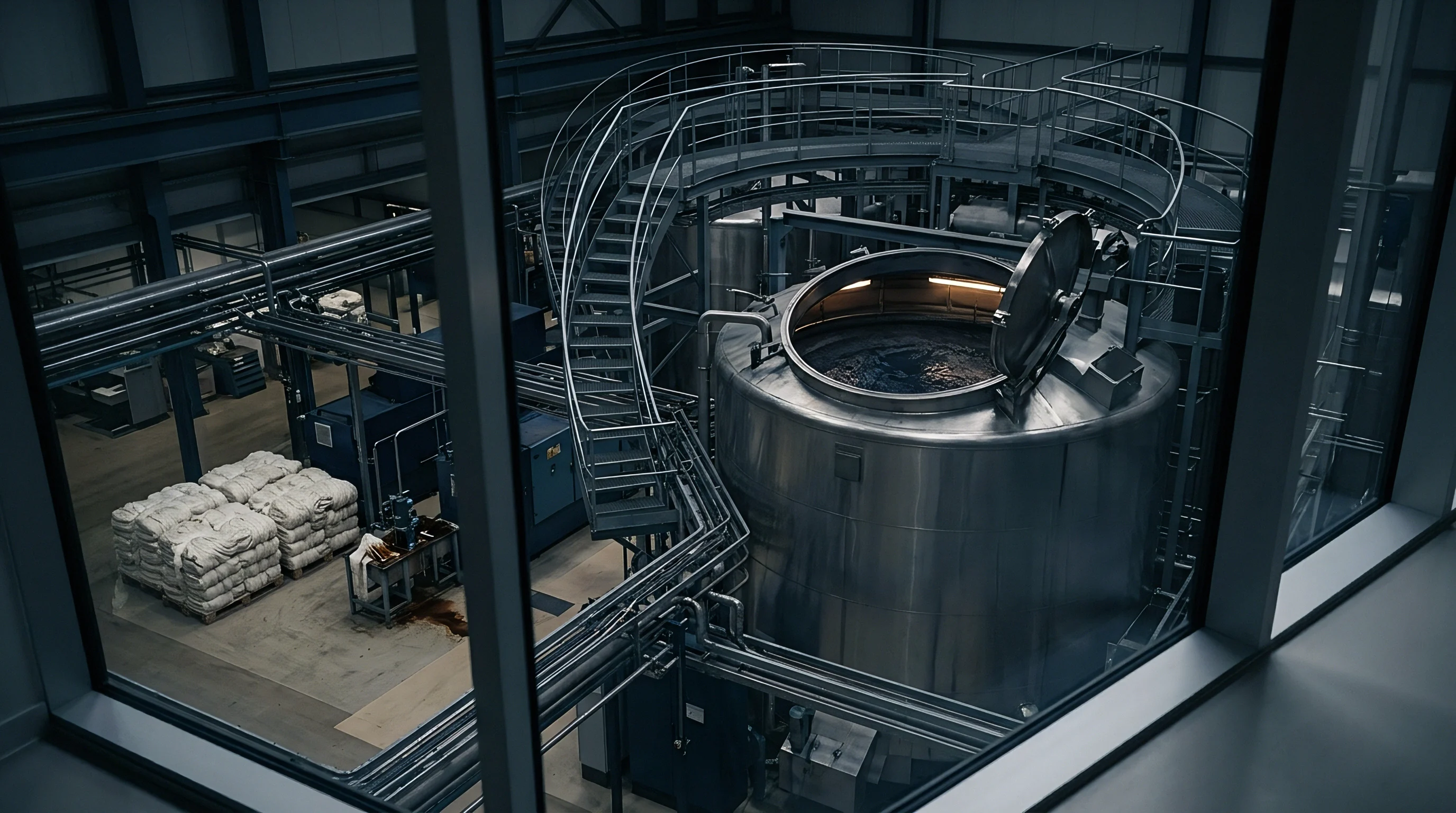
Jet dyeing vessels use high-velocity liquor flow through a venturi nozzle to drive fabric loops through the transport tube. The liquor stream moves the rope while refreshing chemical concentrations at the fiber surface; loop velocity relative to liquor flow sets the thickness of the hydrodynamic boundary layer wrapping each yarn.
Liquor ratio determines turnover speed inside the vessel. Modern short-liquor machines run between 1:4 and 1:6 for cotton knits and synthetic-cellulosic blends. Dropping the ratio cuts water and steam demand, but it concentrates chemicals in the bath ~ raising the mass transfer driving force while leaving little margin for error if circulation lags.
| Nozzle Diameter (mm) | Fabric Speed (m/min) | Liquor Ratio | Rope Turn Time (s) | Mass Transfer Coeff (m/s) |
|---|---|---|---|---|
| 140 | 200 | 1:8 | 120 | 1.2 x 10^-5 |
| 120 | 280 | 1:6 | 85 | 2.4 x 10^-5 |
| 100 | 350 | 1:5 | 65 | 4.1 x 10^-5 |
| 80 | 420 | 1:4 | 50 | 6.8 x 10^-5 |
Rope cycle time is the interval needed for one complete pass through the jet nozzle. Shorter cycles expose every meter of fabric to nozzle shear and fresh alkali at tighter intervals. If cycle times drag past ninety seconds, alkali introduced near the nozzle under linear dosing will exhaust locally before the rope can complete a lap, creating end-to-end shade variation.
Shear in the venturi nozzle strips back the stagnant liquor boundary surrounding the yarn. Increasing pump frequency lifts nozzle velocity, compressing that boundary layer from fifty micrometres down below ten micrometres. That reduction raises the mass transfer coefficient for hydroxide ions entering the yarn, securing even cellulosate formation across dense structures.
Rope construction sets liquor penetration resistance. Tightly twisted yarns and dense weaves choke fluid flow, requiring higher nozzle differential pressures to push bath liquor between fibers. Open single-jersey knits let liquor pass freely, running cleanly at lower nozzle pressures without sacrificing mass transfer.
Commercial dyeing agreements typically mandate automated logging of batch parameters ~ nozzle orifice size, pump pressure, and turnover times ~ with records archived for twelve months to prove process compliance on custom shades.

Disruption
Mechanisms of Dyeing Defects and Structural Damage
Mismatched dosing profiles create severe surface and structural defects. Ramping pH too quickly forces reactive dyes to fix the instant they hit fiber perimeters. That early surface strike depletes dye in the liquor before it reaches inner yarn layers, causing pronounced list-to-centre shading and batch drift.
Dumping concentrated alkalis like sodium hydroxide also prompts localized fiber swelling. Under jet tube tension, pockets of high caustic concentration induce uneven longitudinal shrinkage across the rope, producing permanent rope marks, crow’s feet, and surface chafing that cannot be pulled out on the stenter.

Taxonomy of Dosing-Induced Fabric Failure Modes
Systematic failures originating at the dosing station register specific physical manifestations across finished cloth:
- Channeling and Rope Streaks develop when dense alkali pulses fix dye along the outer folds of a fabric rope before loop rotation can redistribute liquor.
- Core Pale Shading occurs in high-twist yarns when surface fixation outstrips diffusion, leaving fiber cores starved of dyestuff.
- Hydrolyzed Dye Stain Inclusions stem from sudden pH jumps that cause bath dyestuff to aggregate and redeposit as dark, insoluble specks.
- Tensile Degradation and Loss of Bursting Strength follow localized caustic attack on cellulose chains whenever concentrated sodium hydroxide bypasses dilution lines.
High alkalinity paired with friction against the jet tube degrades surface fibers. At bath pH above 12.0 and high temperatures, cotton’s primary cell wall weakens and sloughs microfibrils under nozzle shear, leaving a cloudy, abraded face that fails Martindale testing under ISO 12947.
Inactivated dye generated by poor dosing profiles lingers in the bath liquor. Lacking reactive anchor points, these molecules still hold substantive affinity for cellulose, settling onto fiber surfaces through weak van der Waals bonds. Stripping this hydrolysed fraction requires successive boiling wash-offs with polymeric washing agents, driving up water use and cycle times.
Progressive dosing does not eliminate the risk of shade tailing on hundred-percent linen fabrics.

Verification
Instrumentation, Analytical Control, and Lab-to-Bulk Scaling
Controlling dyeing kinetics requires continuous readings for dyebath pH, temperature, and conductivity. Relying on manual dip sampling and benchtop pH meters introduces thermal lag and sampling delays, since liquor cooling shifts alkali dissociation constants and skews the apparent pH reading away from vessel conditions.
Modern vessels rely on closed-loop bypass lines equipped with temperature-compensated, pressurized pH electrodes and toroidal conductivity sensors. Feeding continuous data back to the controller avoids the drift common to glass membranes in high-electrolyte baths, where heavy salt loadings distort standard electrode potentials.
| Parameter | Measurement Method | Target Precision | Response Time | Control Action |
|---|---|---|---|---|
| Inline Bath pH | Glass Electrode Probe | +/- 0.1 pH units | < 5 seconds | Modulate Pump Stroke Rate |
| Bath Conductivity | Toroidal Inductive Sensor | +/- 0.5 mS/cm | < 2 seconds | Adjust Water Metering Valve |
| Alkali Flow Volume | Magnetic Flow Meter | +/- 0.05 L/min | Instantaneous | Recalibrate Dosing Valve |
| Fabric Loop Speed | Optical Shaft Encoder | +/- 2.0 m/min | Instantaneous | Adjust Main Drive Reel |

Is Conductivity Tracking Superior to Direct Ph Measurement?
Conductivity tracking performs reliably in harsh dyebath environments where glass electrodes foul, drift, or exhibit alkaline error. Toroidal sensors assess ionic strength inductively without wetted metal contacts, tracking total alkali dosing across high-temperature and high-salt cycles. Because conductivity cannot report absolute hydroxyl ion activity, pairing conductivity with direct pH measurement remains standard practice on high-spec machines.
Transferring lab formulations to bulk production is an easy place to lose control. Sample dyeing machines work under fluid dynamics that bear little resemblance to full-scale jet vessels: liquor turnover against small swatches is so high that boundary layer resistance practically vanishes. Copying a lab dosing curve straight into bulk production without hydraulic compensation almost always misses target shade.
Standardized Dosing Calibration Procedure
- Calculate true liquor ratio and vessel volume, factoring in pipework dead volume.
- Clock the fabric rope turnover time at normal production pump speeds.
- Record the laboratory pH curve under baseline recipe conditions using high-frequency sampling.
- Establish the volumetric scaling factor from bulk dosing pump output and manifold volume.
- Lengthen the initial dosing stage on the bulk controller so alkali additions stay below zero point zero five grams per kilogram of fabric per loop revolution.
- Run a pilot batch while taking inline pH and conductivity readings every two minutes.
- Verify bulk fixation yield and shade levelness against the lab standard under D65 and TL84 illuminants.
Dynamic scaling models expand the dosing window proportionally against fabric rope cycle length. A jet running a ninety-second cycle requires roughly twice the dosing duration of a lab unit cycling at fifteen seconds to achieve matching levelness.
A bulk jet machine scaled strictly by liquor volume without adjusting profile time for rope turnover duration exhibits a color variation index three times higher than the reference laboratory dip.
A steady conductivity trace with no sharp steps during alkali addition confirms that the dosing curve is functioning smoothly.

Penalty
Commercial Consequences of Mass Transfer Failures
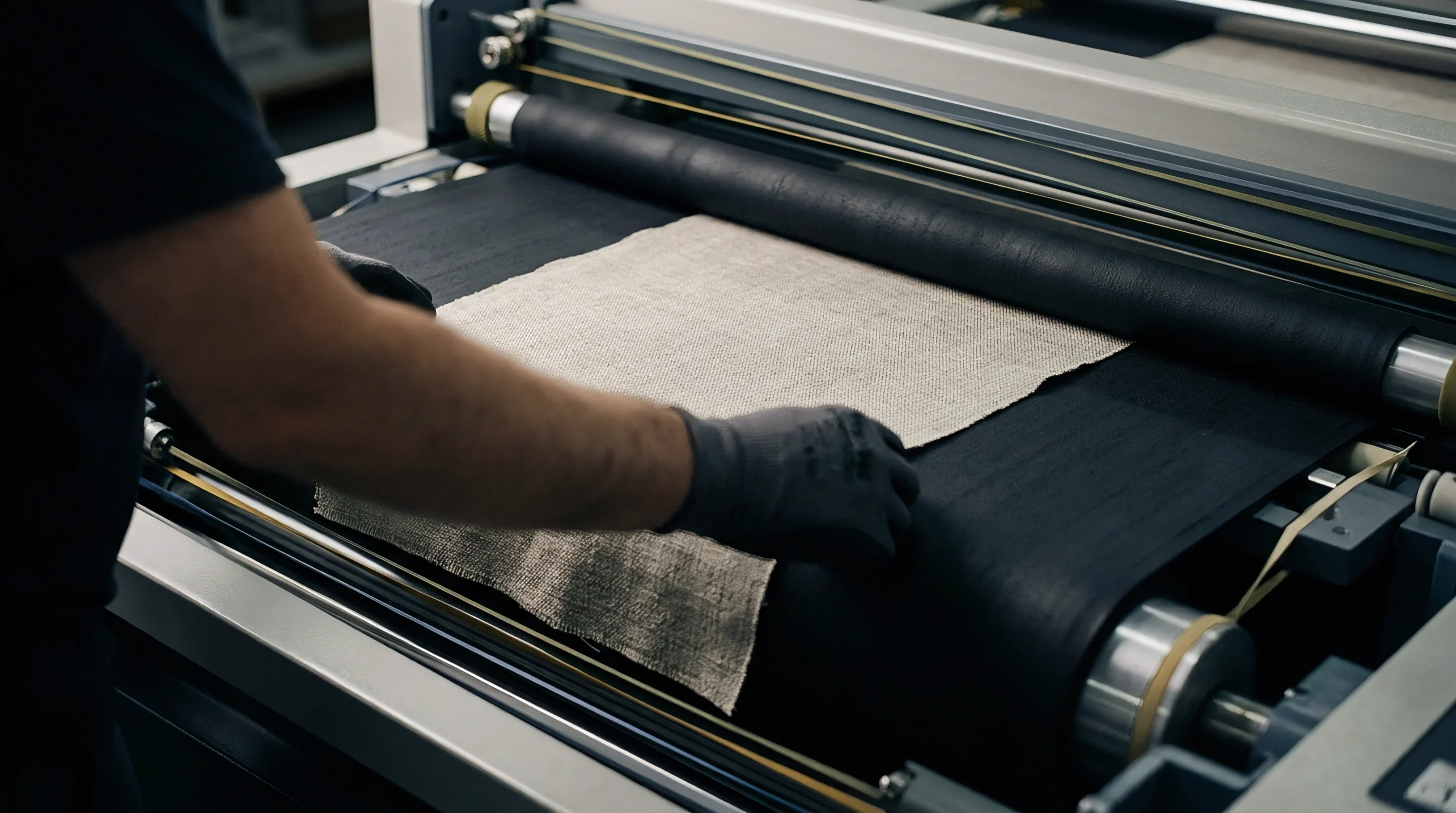
Uncalibrated dosing profiles trigger immediate losses on the dyehouse floor. Fixing off-shade lots means stripping and redyeing, which subjects cotton to boiling baths of sodium hydrosulfite and caustic soda. That chemical treatment cuts fiber tensile strength by up to twenty-five percent under ISO 13934-1 testing.
Stripped fabric comes out harsh, forcing heavy top-finishing with cationic softeners to rebuild a commercial hand. Those finishes compromise fabric absorbency, create needle drag in the sewing room, and scorch easily under garment presses. Between chemicals and utilities, a redye adds roughly zero point forty-five US dollars per kilogram while tying up vessels scheduled for new work.
High hydrolysis rates also lengthen the wash-off sequence, inflating fresh water consumption and surcharge volumes at the effluent plant. Incomplete fixation dumps hydrolyzed dyestuff straight down the drain, driving up chemical oxygen demand surcharges whenever fixation yield misses contract specs.
Right-First-Time performance drives wet-processing margins. Tailoring alkali dosing curves to jet hydraulics keeps Right-First-Time yields above ninety-five percent, avoiding rework, curbing energy use per kilogram of fabric, and protecting landed margins on program orders.