Quantifying Hysteresis Lag and Localized Condensation Mass Errors in Commercial Tariff Weight Audits for High-Regain Blends
Quantify commercial blend mass through oven desiccation and statutory regain allowances to eliminate hysteresis and condensation errors in customs audits.

Scale
Gross arrival weight on a forty-foot container of high-regain yarn frequently registers two to four percent above the commercial invoice mass. Marine transit across variable thermal zones forces raw fibre packages through unmonitored adsorption cycles. Customs authorities weigh sealed freight on platform weighbridges calibrated for gross tonnage rather than textile physics.
When containerized wool, viscose, or silk mixtures absorb ambient moisture, the recorded weight triggers immediate tariff audits for undeclared volume or undervalued unit pricing. Commercial mass calculations under ISO 6741 establish dry mass plus standard commercial moisture allowances, yet port authorities assess duties directly on physical weighbridge tickets.
Inbound customs declarations rely on declared net mass. When a customs officer records a physical weight higher than the shipping documents, the disparity initiates customs hold orders and administrative scrutiny. Laboratory verification requires core sampling and desiccation under ISO 6741-1 to determine actual oven-dry mass.
Commercial moisture allowances vary widely across fibre classifications: pure scoured wool carries an allowance of 17.00 percent, viscose filament carries 11.00 percent, modal holds 13.00 percent, and polyester remains fixed at 1.50 percent. Customs audits often bypass oven drying, assessing ad valorem tariffs on pure absorbed water.
Standard moisture allowances define legal commercial mass while platform weighbridges record atmospheric water.
Weighbridge load cells maintain calibration against static reference blocks at ambient port temperatures. Relative humidity at dockside discharge points routinely swings between 45 percent and 95 percent across twenty-four hours. High-regain yarn packages wound onto plastic or perforated dye cones exchange water vapor continuously through cardboard carton walls.
Commercial auditors inspecting sea containers assess penalty tiers when gross measured mass exceeds manifest declarations by more than 1.50 percent.
Settlement disputes escalate when physical weigh tickets enter legal customs records. The importing distributor faces two competing definitions of volume: commercial invoice mass derived from corrected conditioned weight, and physical arrival mass inflated by open-ocean humidity absorption. Port laboratories lack rapid desiccation ovens for full container lot testing.
Officers assess fines based on physical platform scales without calculating dry content.

Isotherm
Sorption behaviour in hygroscopic polymers follows distinct hysteresis loops between drying and wetting phases. A high-regain wool-viscose combination conditioned along the desorption path retains higher equilibrium moisture content than the identical lot brought to equilibrium from an arid state. At 65 percent relative humidity and 20 degrees Celsius, scoured wool exhibits a desorption regain near 18.50 percent, compared to an adsorption regain of 15.80 percent.
This 2.70 percent hysteresis gap represents pure physical history rather than structural composition.
How Do Border Weighing Environments Bias Blend Regain?
Equilibrium moisture content depends directly on ambient temperature and vapor pressure history. Fiber bundles conditioned during spinning in a humidified mill enter sea containers along the desorption boundary. If the container encounters tropical marine routes, relative humidity reaches 85 percent, driving moisture into accessible amorphous cellulose and keratin domains.
Upon discharge in dry winter climates, the yarn cannot shed moisture instantaneously due to tight package winding densities of 0.45 grams per cubic centimeter.
| Fibre Mixture Type | Adsorption Regain at 65 Percent RH | Desorption Regain at 65 Percent RH | Hysteresis Spread Percentage | Official Tariff Allowance |
|---|---|---|---|---|
| 100 Percent Combed Wool | 15.80% | 18.50% | 2.70% | 17.00% |
| 100 Percent Viscose Rayon | 11.20% | 13.80% | 2.60% | 11.00% |
| 60/40 Wool Modal Mixture | 14.10% | 16.60% | 2.50% | 15.40% |
| 50/50 Wool Polyester Mixture | 8.00% | 9.35% | 1.35% | 9.25% |
| 70/30 Lyocell Wool Mixture | 13.10% | 15.40% | 2.30% | 13.90% |
Desorption rates through dense yarn packages proceed slowly. Water molecules bind to hydroxyl groups in regenerated cellulose through primary and secondary hydrogen bonds. The energy barrier for water release exceeds the energy of condensation, producing stable mass retention even after containers move into dry port warehouses.
Rapid field audits fail to account for this lag.
Oven desiccation at 105 degrees Celsius under ISO 6741 eliminates hysteresis mass variance before customs tariff valuation.
Core samples taken from outer carton layers demonstrate higher moisture content than samples extracted from the interior pallet center. External yarn cones absorb atmospheric vapor within seventy-two hours of exposure. Pallet centers require up to twenty-one days to reach complete ambient equilibrium.
Audit technicians taking surface cuts miscalculate total shipment mass by up to three percent.
- Equilibrium moisture capacity determines baseline commercial yarn yield under standard laboratory conditioning.
- Accessible polar grouping governs the speed of atmospheric vapor attachment inside amorphous keratin and cellulose matrices.
- Package winding density retards the outward diffusion of vapor during rapid ambient desiccation cycles.
- Polymer crystallization ratio limits internal moisture retention sites across synthetic components within intimate mixtures.
Uncontrolled sorption lag leaves the exact thermodynamic state of containerized yarn unverified during routine port weighings.

Dewpoint
Container ceiling condensation creates localized liquid water pooling on top freight tiers during long ocean passages. When solar radiation warms container roof panels during equatorial daylight, internal trapped air reaches 45 degrees Celsius with 90 percent relative humidity. Nightfall over cold sea currents drops the outer steel skin temperature below the internal dewpoint threshold within ninety minutes.
Liquid water condenses on corrugated steel ceilings and drips directly onto top-tier cartons.

Condensation Dynamics inside Freight Containers
Drip patterns saturate corrugated packaging and penetrate polyethylene wrapping films. A single cardboard box absorbs up to 1.80 kilograms of liquid water without carton collapse. Top-tier yarn packages exposed to localized dripping develop liquid water pooling, raising localized yarn moisture content above 35 percent.
Inverted moisture gradients form across the stowage plan.
- Thermal loading occurs during daytime exposure when ambient solar radiation elevates internal freight temperatures.
- Marine cooling drops exterior corrugated steel temperatures rapidly upon transit through cold oceanic currents.
- Condensation run-off releases free liquid droplets across upper carton layers and perimeter bulkheads.
- Capillary uptake draws pooled water into wound yarn packages, bypassing normal vapor diffusion rates.
Auditors sampling top tiers encounter liquid-saturated packages alongside dry interior cartons. Evaluating freight mass based on perimeter package testing skews average container density calculations. Capillary water movement carries dissolved cardboard sizing, mineral salts, and packaging extractives directly into raw yarn cones.
This increases non-volatile residue mass upon laboratory drying.
A thirty-ton container lot loses legal customs alignment when cold wall condensation deposits two hundred kilograms of unevaporated water onto top pallets.
Moisture sensors placed at container doors fail to record localized saturation at container bulkheads. The microclimate inside a packed container functions as multiple isolated thermodynamic chambers. Air velocity between stacked pallets remains near zero, preventing natural evaporation.
Wet zones remain wet throughout four weeks of ocean transit.
Suppliers explain weight discrepancies by asserting that containers act as hermetic systems where total combined water mass remains constant.
Correction
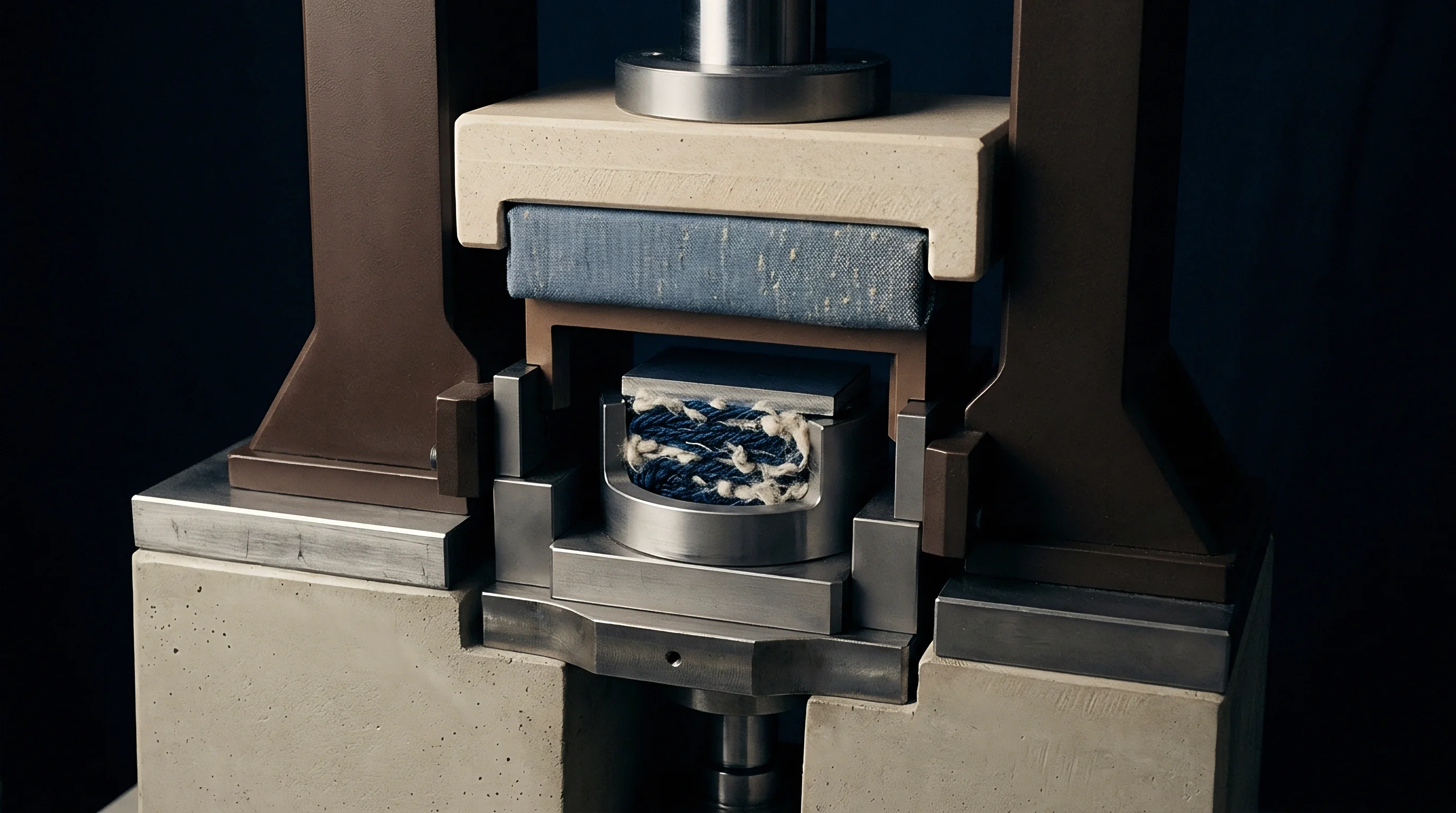
Reconciling tariff mass errors requires rigorous quantitative laboratory extraction and desiccation protocols. ISO 1833-1 outlines chemical separation methods for binary mixtures, establishing clean dry mass baselines. To calculate legal commercial mass, technicians apply standard commercial moisture regains to dry individual components.
Formula adjustments convert raw unconditioned arrival mass into legally binding customs declarations.

Whose Calculation Determines Final Landed Mass?
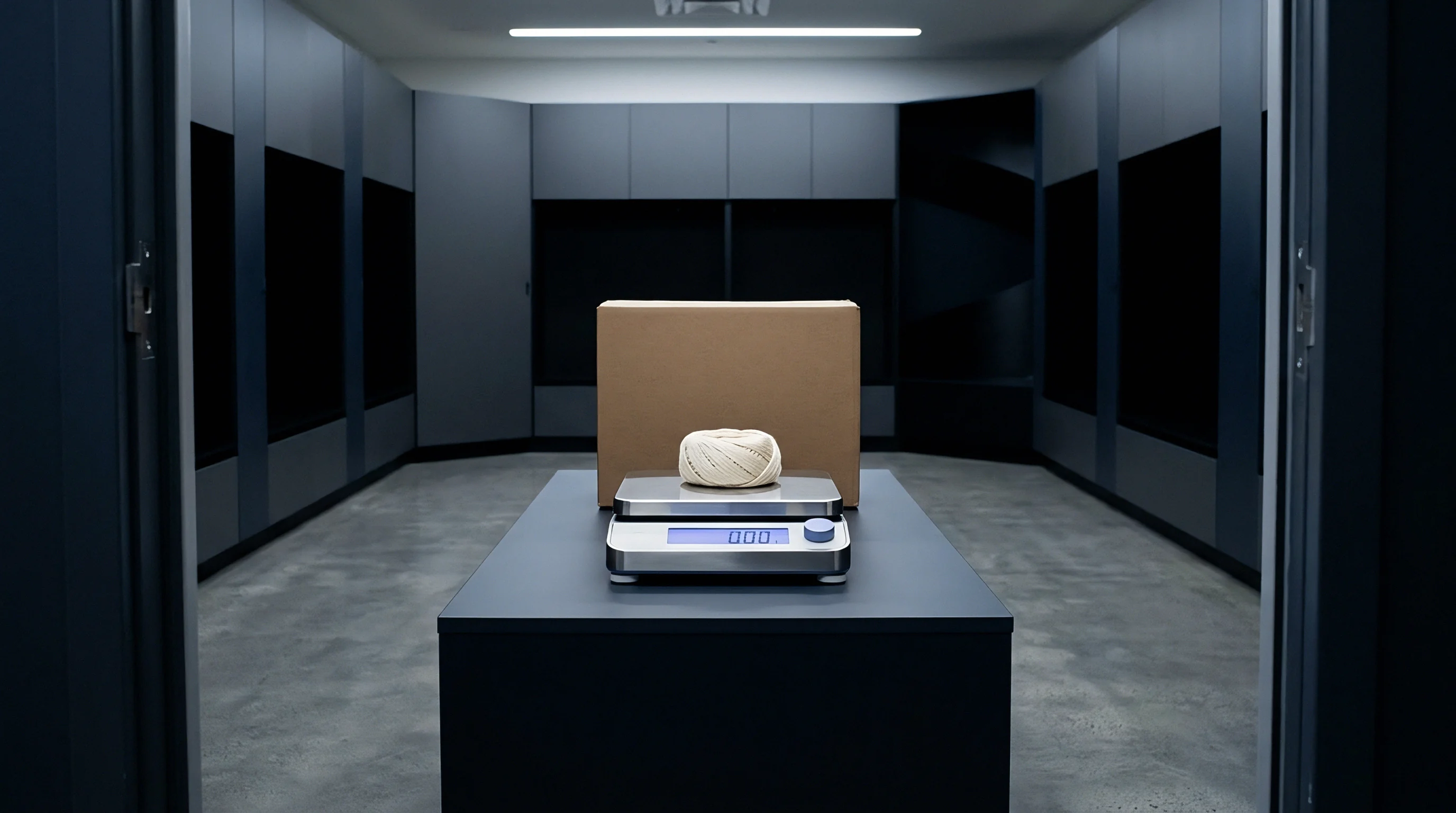
Commercial contracts specify whether billing rests on net arrival weight or invoice mass adjusted by official regain allowances. Under ASTM D1909 and international customs schedules, commercial allowance addition follows strict algebraic relationships. Consider a 20,000-kilogram container shipment of 60 percent wool and 40 percent viscose yarn with an arrival scale mass of 20,800 kilograms due to condensation and sorption hysteresis.
| Measurement Metric | Nominal Value | Port Audit Value | Adjusted Lab Value |
|---|---|---|---|
| Gross Physical Mass | 20,000 kg | 20,800 kg | 20,800 kg |
| Oven Dry Fibre Mass | 17,452 kg | 17,452 kg | 17,452 kg |
| Wool Content Dry (60%) | 10,471 kg | 10,471 kg | 10,471 kg |
| Viscose Content Dry (40%) | 6,981 kg | 6,981 kg | 6,981 kg |
| Wool Allowance (17.00%) | 1,780 kg | 1,780 kg | 1,780 kg |
| Viscose Allowance (11.00%) | 768 kg | 768 kg | 768 kg |
| Legal Commercial Mass | 20,000 kg | 20,000 kg | 20,000 kg |
| Phantom Water Mass | 0 kg | 800 kg | 0 kg |
Oven drying separates water mass from polymer substance. Port authorities demanding tariff payments on 20,800 kilograms charge duty on 800 kilograms of atmospheric water. When import tariffs sit at 12.00 percent, this uncorrected water mass adds significant unearned cost to the landed ledger.
Quantitative reconciliation protects the importer from false undervaluation penalties.
- Oven desiccation testing establishes clean dry substance mass under controlled 105-degree conditions.
- Chemical separation dissolution removes soluble synthetic fractions to isolate wool or cellulose residues.
- Commercial allowance addition applies statutory moisture percentages back to individual dry component masses.
- Non-fibrous extractive correction subtracts oils, sizing agents, and packaging contamination from final tariff weights.
Failure to document these adjustments in initial customs entries triggers immediate regulatory reclassification.

Penalty
Tariff classification shifts occur when moisture absorption distorts blend ratios near critical customs thresholds. Under the Harmonized System, Chapter 51 governs wool products, while Chapter 55 governs man-made staple fibres. A nominal 50/50 wool-polyester yarn lot classified under Chapter 51 faces reclassification under Chapter 55 if differential moisture absorption or faulty chemical extraction alters measured mass proportions.
Chapter 51 carries an ad valorem duty rate of 6.00 percent in many jurisdictions, whereas Chapter 55 carries 12.00 percent.
Differential water absorption alters physical blend ratios measured without oven drying. Polyester absorbs merely 0.40 percent moisture at ambient humidity, while scoured wool holds 16.00 percent. An unconditioned sample drawn from a humid container measures 53.8 percent wool by physical weight.
Customs laboratories lacking oven-dry extraction equipment classify the shipment under the higher-duty wool heading. If the declared entry listed Chapter 55 based on dry manufacturing batch records, the importer faces formal fraud investigations.
Commercial contracts protect buyers when clear testing protocols govern weight disputes. Incorporating standard reconciliation clauses into purchase specifications prevents port weighbridge figures from dictating final invoice totals. The buyer establishes invoice adjustments through independent third-party testing.
Contract clauses stipulate that invoice settlement mass derives strictly from commercial weight certificates issued by accredited conditioning laboratories under international test methods.