Liquid Junction Potential Errors in High-Alkali Reactive Dye Baths
Uncorrected reference junction potentials in high-alkali dye baths cause hidden pH offsets up to 0.4 units, driving dye hydrolysis and shade off-tones.
Liquor
Industrial reactive dyeing depends on tight control of hydrogen ion activity to drive covalent bonding between cellulose hydroxyls and reactive dye groups. In exhaust and continuous cotton processing, the bath sits in an active balance of colorant molecules, inorganic electrolytes, and alkaline fixatives. Once pH drifts outside the target window, reaction pathways diverge into primary fixation and unwanted hydrolysis.
Holding color yield and levelness requires keeping bath pH within narrow margins ~ typically pH 10.8 to 11.4 for vinylsulfone dyes, or pH 11.2 to 11.8 for monochlorotriazine chemistries. A shift of even 0.15 pH units alters the kinetic ratio of cellulosate nucleophilic addition to hydroxyl ion substitution enough to cause shade unlevelness, lower yield, or batch-to-batch variation across lots.
Dyehouses rely heavily on potentiometric glass electrodes installed directly in circulation lines or at benchtop testing stations. Automation systems and floor technicians treat the displayed meter value as an absolute physical measurement. In high-alkali dye liquor, however, that figure is often wrong.
The underlying issue is rarely instrument electronics or basic calibration loss. Instead, the error develops at the phase boundary where reference electrolyte contacts the concentrated, conductive dye bath ~ an interface known as the liquid junction, where diffusion potentials distort the sensor cell’s total electromotive force.
Fixation Kinetics and Alkaline Buffering
Adding sodium carbonate or sodium hydroxide raises bath pH to ionize cellulosic hydroxyl groups (-OH) into nucleophilic cellulosate anions (Cell-O⁻). In vinylsulfone dyes, precursor beta-sulfatoethylsulfone groups undergo base-catalyzed elimination to generate reactive vinylsulfone intermediates, which then react with fiber cellulosate anions to form stable ether linkages. At the same time, free hydroxyl ions (OH⁻) in the bath compete for those same dye sites, converting active dyestuff into hydrolysed byproduct that can no longer fix to the substrate.
Fixation efficiency comes down to the relative concentrations of cellulosate anions and aqueous hydroxyl ions. Cellulose hydroxyl groups have a pKa near 13.5 at dyehouse operating temperatures. Raising bath pH increases cellulosate formation and encourages dye-fiber bonding, but excessive alkalinity drives up free hydroxyl concentration until dye hydrolysis overtakes fixation.
The resulting hydrolysed dye sits trapped in the amorphous regions of the fiber, requiring lengthy high-temperature wash-off cycles to prevent wet-fastness failures. Effective alkali dosing profiles have to maximize cellulosate ionization while keeping dye hydrolysis under control.
| Dyeing System Class | Electrolyte Concentration (g/L) | Alkali Fixative System | Theoretical Bath pH | Measured Potentiometric pH | Uncorrected Offset (pH Units) |
|---|---|---|---|---|---|
| Vinylsulfone Monoreactive | 50 g/L Na2SO4 | 20 g/L Na2CO3 | 11.20 | 10.88 | +0.32 |
| Heterobifunctional (VS/MCT) | 60 g/L Na2SO4 | 15 g/L Na2CO3 + 2 g/L NaOH | 11.65 | 11.27 | +0.38 |
| Monochlorotriazine Direactive | 80 g/L NaCl | 20 g/L Na2CO3 + 3.5 g/L NaOH | 12.10 | 11.68 | +0.42 |
| High-Efficiency Trichromatic | 40 g/L Na2SO4 | 10 g/L Na2CO3 + 1.5 g/L NaOH | 11.40 | 11.09 | +0.31 |
| Data measured using standard sealed single-junction Ag/AgCl reference electrodes with 3 M KCl gel electrolyte calibrated in conventional low-ionic-strength IUPAC buffers. Offset values reflect combined liquid junction potential and glass sodium error. | |||||
Automated dosing systems feed alkali along programmed linear, progressive, or stepped curves on the assumption that measured pH reflects real thermodynamic hydrogen ion activity. If liquid junction potentials cause the sensor to under-report true pH, the controller will continue dosing sodium hydroxide past stoichiometric requirements. This surplus alkali accelerates dye hydrolysis, reducing color yield and discharging unfixed dye into wastewater streams.
A pH measurement error of 0.18 units in vinylsulfone reactive dye liquor accelerates dye hydrolysis by 24 percent at 60 degrees Celsius.
The Fallacy of Standard Calibration
Standard laboratory probes routinely miss true thermodynamic activity in dye baths by several tenths of a pH unit. Calibration typically relies on commercial reference buffers at pH 4.01, pH 7.00, and pH 10.01, which carry low ionic strengths between 0.01 M and 0.05 M. Industrial reactive dye baths, by comparison, carry 30 g/L to 80 g/L of inorganic salt alongside concentrated alkaline fixatives. Moving an electrode from a dilute buffer directly into this ionic matrix produces a steep potential shift across the reference junction.
Liquid junction potential develops when different ionic species diffuse across the porous ceramic diaphragm at different velocities. Standard reference half-cells use saturated or 3 M potassium chloride (KCl) filling solutions because potassium (K⁺) and chloride (Cl⁻) have nearly identical mobilities in dilute water, keeping diffusion potentials low under ordinary conditions. When the probe is placed in a reactive dye bath packed with sodium (Na⁺), hydroxyl (OH⁻), and sulfate (SO4²⁻) ions, this equitransferent balance breaks down.
Fast-moving hydroxyl ions enter the junction rapidly while potassium and chloride migrate outward at unequal rates.
This unequal charge movement produces a stationary potential difference across the ceramic plug. The transmitter cannot separate the potential produced by hydrogen ions at the glass membrane from the diffusion offset at the reference junction; it simply adds both voltages and calculates pH using the Nernstian slope from low-ionic-strength buffers. The reading looks stable on the display, but it masks a systematic error that skews dosing decisions.
Over-dosing alkali to correct a false low reading produces shade variation, unlevel dyeing across the fabric length, increased stripping and redyeing cycles, and higher acid costs for effluent neutralization prior to discharge.


Thermodynamics
Electrochemical pH measurement requires a complete circuit composed of an indicator membrane, the sample solution, and a reference half-cell. The measured electromotive force is the algebraic sum of several phase boundary potentials. In theory, the sensor output reflects only the potential across the hydrogen-selective glass bulb.
In practice, the liquid junction potential at the boundary between internal reference electrolyte and process liquor adds a variable voltage to that total. Quantifying this offset requires examining ion transport across liquid boundaries under non-ideal conditions.
Electrochemical Charge Migration across Junction Diaphragms
When two electrolyte solutions of differing composition meet at a porous boundary, individual ions diffuse at rates dictated by their mobilities. Because these ions carry charge, mobility differences separate positive and negative charges across the boundary layer, setting up an electric field that slows faster ions and accelerates slower ones until reaching steady-state diffusion. The Henderson equation, derived from Nernst-Planck electrodiffusion theory, describes this junction potential quantitatively.
Integrating ion transport numbers and chemical potentials across the diffusion layer yields the total liquid junction potential:
E_j = – (R T / F) integral( sum( (t_i / z_i) d(ln(a_i)) ) )
Here R is the universal gas constant, T is temperature in Kelvin, F is Faraday’s constant, t_i is the transference number of ion i, z_i is ionic valence, and a_i is thermodynamic activity. Assuming a linear concentration profile through the porous diaphragm simplifies the Henderson formulation to:
E_j = (R T / F) ln
Here u_i represents absolute ion mobility, while C_i_ref and C_i_bath are molar concentrations in the reference electrolyte and dye liquor. In dilute neutral solutions, a 3 M KCl filling electrolyte minimizes E_j because the limiting molar conductivities of K⁺ (73.5 S·cm²/mol at 25°C) and Cl⁻ (76.3 S·cm²/mol) are nearly identical. Transference numbers for K⁺ and Cl⁻ in concentrated KCl sit around 0.49 and 0.51, keeping junction potentials negligible during routine water testing.
Placing the probe into an alkaline dye bath breaks this symmetry. Hydroxyl ions exhibit an exceptionally high limiting molar conductivity of 198.3 S·cm²/mol at 25°C via Grotthuss proton hopping through the hydrogen-bonded water structure ~ nearly three times that of K⁺ or Cl⁻. As a result, bath hydroxyl ions penetrate the ceramic diaphragm far faster than potassium ions exit, building negative charge on the inner face of the junction and generating a positive liquid junction potential that skews the Nernstian output.
Henderson Derivations under Non-Ideal Ionic Strength
Standard electrochemical models assume dilute solutions where activity coefficients approach unity. Reactive dye baths operate well outside this regime. Total ionic strength regularly exceeds 1.5 mol/L due to the salt required to overcome the negative zeta potential of cotton fibers.
At these concentrations, ion pairing, hydration shell competition, and electrostatic interactions alter the activity coefficients of every species in both the bath and the diaphragm pores.
Thermodynamic activity (a_i) connects to concentration (C_i) through the single-ion activity coefficient (gamma_i):
a_i = gamma_i C_i
In baths containing mixtures of Na2SO4, Na2CO3, and NaOH, calculating single-ion activities requires extended Debye-Hückel equations or Pitzer specific interaction parameters. Divalent sulfate ions (SO4²⁻) have a limiting molar conductivity of 160.0 S·cm²/mol, whereas sodium cations (Na⁺), slowed by a bulky primary hydration shell, reach only 50.1 S·cm²/mol. This disparity, combined with outward KCl diffusion against a concentrated sodium background, invalidates simple linear gradient models across the diaphragm.
| Dye Bath Composition Model | Ionic Strength (mol/L) | Dominant Bath Anion | Dominant Bath Cation | Calculated E_j (mV) | Equivalent pH Error at 25°C |
|---|---|---|---|---|---|
| Standard Buffer (pH 10.01) | 0.05 | HCO3⁻ / CO3²⁻ | Na⁺ | +1.8 | +0.03 |
| Alkaline Bath (0.01 M NaOH) | 0.10 | OH⁻ | Na⁺ | +8.4 | +0.14 |
| Salted Bath (40 g/L Na2SO4, pH 11.0) | 0.95 | SO4²⁻ / OH⁻ | Na⁺ | +16.2 | +0.27 |
| High-Salt Bath (80 g/L Na2SO4, pH 11.8) | 1.80 | SO4²⁻ / OH⁻ | Na⁺ | +23.7 | +0.40 |
| Continuous Fixation (30 g/L NaOH + Salt) | 2.15 | OH⁻ | Na⁺ | +29.1 | +0.49 |
| Potentials calculated via modified Henderson integration incorporating Pitzer activity coefficients for highly concentrated multi-component electrolyte systems contacting a 3 M KCl liquid junction. | |||||
Bulky dye chromophores complicate diffusion further. Reactive dyes are poly-sulfonated organic anions carrying two to six negative charges. While present at modest concentrations (typically 1 to 10 g/L), their size hinders entry into the 0.5 to 3.0 micrometer pores of ceramic junctions.
This size exclusion allows smaller inorganic ions to diffuse preferentially, establishing an ion-sieving effect that diverges from theoretical Henderson approximations.
Disentangling Glass Alkaline Error from Reference Junction Potential
Potentiometric errors at high pH stem from two distinct physical sources in the combination probe: glass membrane alkaline error (sodium error) and reference junction potential. Separating them is necessary when troubleshooting sensor drift or designing measurement loops.
Alkaline error occurs at the hydrated gel layer on the glass bulb. Under ordinary conditions, hydrogen ions exchange with alkali cations in the glass matrix, generating a potential described by the Nernst equation. Above pH 10.5 in sodium-rich baths, hydrogen ion activity drops so low that sodium ions (Na⁺) compete directly for exchange sites in the silanol (Si-OH) network.
The glass begins responding to sodium rather than hydrogen, which always pulls the displayed pH below the true value.
Liquid junction potential originates at the reference diaphragm and is independent of glass composition. Unlike alkaline error, which is consistently negative, the sign and magnitude of junction potential depend on net ionic flux across the interface. In high-alkali, high-salt baths, rapid inward diffusion of OH⁻ and slower Na⁺ migration produce a positive offset (E_j > 0).
In the standard cell equation:
E_cell = E_indicator – E_reference + E_j
a positive junction potential alters the effective cell potential, typically leading Ag/AgCl combination probes in alkaline sodium baths to read falsely low and compounding the negative bias from glass sodium error.
Comparing twin-junction sleeve probes against sealed gel sensors shows electrode signal stabilization time dropping from four minutes to twelve seconds when liquid junction potential drift is mitigated through electrolyte pressure compensation.
Does Salt Concentration Distort Reference Junction Potential?
Heavy loading with sodium sulfate modifies diffusion dynamics across the reference junction. In an exhaust bath containing 60 g/L Na2SO4, sodium concentration reaches roughly 0.85 mol/L and sulfate reaches 0.42 mol/L. This background density tightens the hydration spheres of migrating ions inside the narrow diaphragm pores. Potassium and chloride mobilities exiting the 3 M KCl reservoir drop due to electrostatic drag from the external sodium sulfate.
Because potassium slows more than chloride, the phase boundary potential can shift by up to 15 millivolts ~ producing a 0.25 pH error on the meter before alkali dosing even begins.
How can process engineers definitively isolate phase boundary diffusion potentials from structural glass lattice sodium exchange when operating continuously in mixed-alkali bath matrices above forty degrees Celsius?
Fouling
Reference electrodes in dyehouses degrade largely through pore clogging in the ceramic junction. Between dye chromophores, inorganic salts, alkaline fixatives, oligomers, and bath auxiliaries, the chemical load is heavy. Standard reference probes rely on steady capillary outflow of internal electrolyte to maintain clean liquid-liquid contact.
When this flow stalls or contaminants enter the pores, junction resistance spikes, leading to potential instability and drift.

Pore Precipitation and Electrolyte Interdiffusion
Reactive dyes carry negatively charged sulfonic acid groups that keep them soluble in alkaline baths. The internal chamber of an Ag/AgCl reference electrode, however, holds 3 M potassium chloride adjusted to pH 5.5 to 7.0. When this acidic, high-chloride filling solution meets alkaline liquor inside the ceramic pores, solubility drops abruptly.
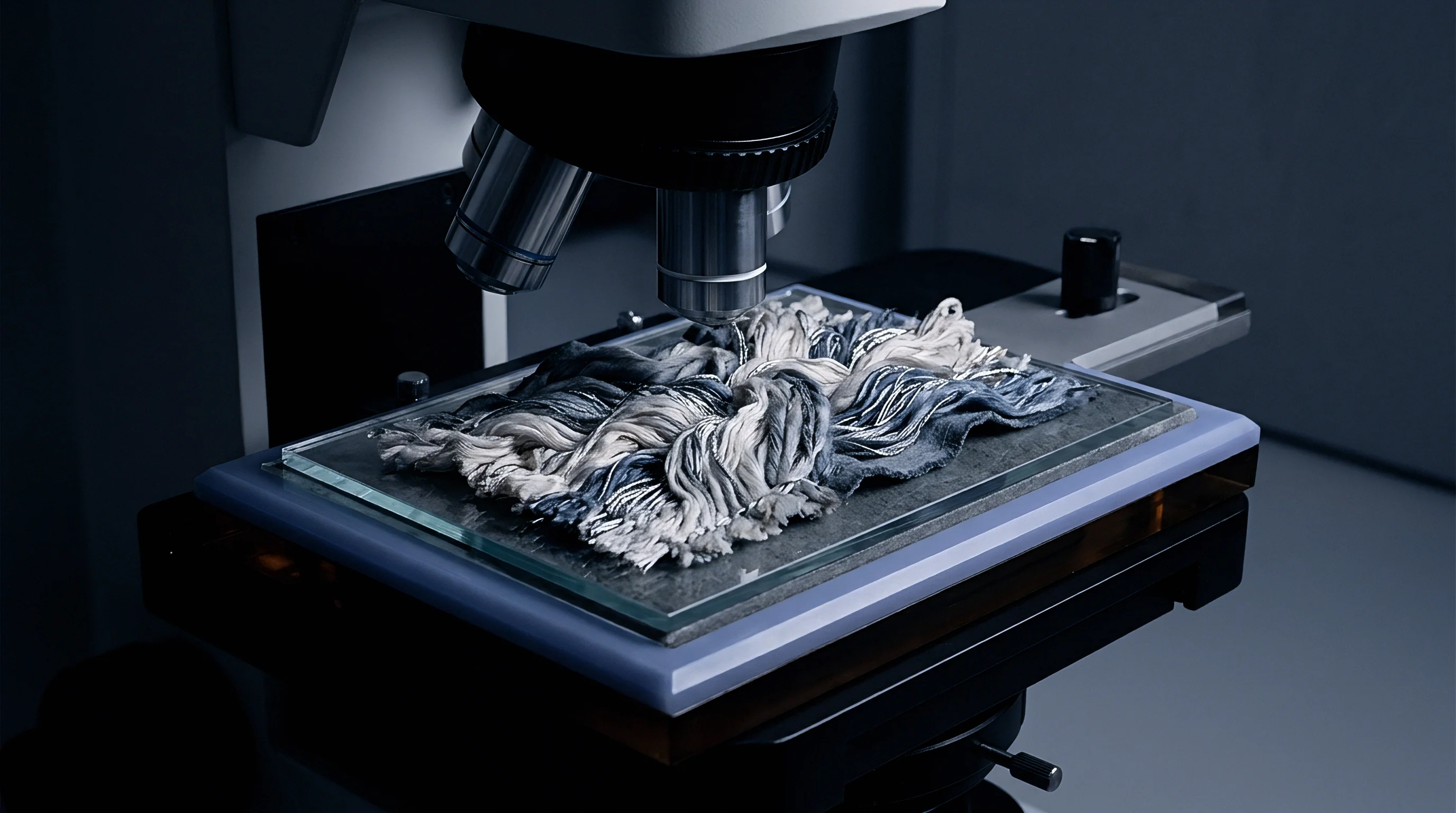
This localized pH transition precipitates sulfonated dyestuffs and hydrolysed aggregates directly within the 0.5 to 3.0 micrometer pores. At the same time, sulfate diffusing inward from the bath can exceed the solubility limit of potassium sulfate when contacting high concentrations of K⁺, forming crystalline deposits. The resulting buildup of dye solids and salt crystals chokes the effective flow channels, driving up junction resistance.
- Micro-Pore Dye Aggregation occurs when sulfonated reactive dye molecules undergo localized solubility reduction inside the acidic internal electrolyte zone of the ceramic diaphragm, creating permanent physical blockages.
- Potassium Sulfate Crystallization occurs when high concentrations of bath sulfate ions diffuse inward across the junction interface, exceeding the solubility product of potassium sulfate within the internal capillary pores.
- Silver Sulfide Precipitation occurs when trace sulfur compounds or hydrolysed dye auxiliaries react with silver ions leaching from internal Ag/AgCl element wires, depositing black silver sulfide crystals across the inner diaphragm face.
- Asymmetric Biofilm Accumulation occurs during low-temperature holding steps when synthetic sizing agents, lubricants, and cellulosic lint adhere to the outer ceramic surface, forming a dense boundary layer that alters local ion diffusion rates.
- Internal Electrolyte Dilution occurs when high external bath pressure forces raw dye liquor backward into the reference chamber, contaminating the 3 M KCl reservoir and destroying the reference element half-cell potential.
As junction resistance rises from a baseline of 2 to 5 kilohms to several hundred kilohms, the sensor picks up stray electrostatic noise and pressure pulses from circulation pumps. High resistance also slows response times, leaving displayed pH values trailing chemical additions by several minutes during automated dosing cycles.
Reference diaphragms showing visible coloration from dyestuff penetration produce millivolt drift rates that corrupt automatic alkali dosing loops.
Streaming Potentials and Hydrodynamic Disturbances
Liquor moving past the reference diaphragm introduces a streaming potential that superimposes onto the electrochemical reading. Silanol groups on ceramic diaphragms give the pore walls a fixed negative charge, attracting solution counter-ions into a double layer made of a fixed Stern layer and a mobile diffuse layer.
Turbulent flow in jet dyeing machines or inline loops strips the diffuse layer away from the outer pore opening, creating a flow-dependent potential gradient across the junction. Streaming potential magnitude scales with velocity, viscosity, dielectric constant, and junction resistance. On a partially fouled, high-resistance electrode, streaming potentials can reach 20 to 50 millivolts at normal pump speeds ~ an artifact that introduces an error of 0.3 to 0.8 pH units whenever circulation is active.
Standard sealed gel electrodes are rated for aqueous chemical environments up to pH 12, yet frequently experience premature failure and severe pH drift in high-alkali reactive dye applications.

Metrology
Preventing potential offsets in high-salt, alkaline media requires matching probe hardware to the process chemistry. Standard laboratory sensors need to be replaced with industrial assemblies built for high ionic strengths, and conventional two-point calibrations in standard aqueous buffers must give way to matrix-matched procedures that account for phase boundary potentials before production runs.
Reference Junction Geometry and Flowing Electrolyte Architecture
Ceramic diaphragms rely on capillary retention of KCl with minimal fluid exchange, making them prone to pore fouling, inward dye migration, and elevated junction potentials. Accurate measurement in reactive dye baths requires maintaining a continuous, positive outward flow of electrolyte to keep process ions out of the reference junction.
Ground-glass sleeve junctions offer a reliable mechanical solution. The assembly pairs a precision-ground glass cone with an outer glass collar, creating a thin liquid film that forms a continuous annular junction with low electrical resistance (typically under 1 kilohm). The wide surface area resists complete blockage by dye particles.
Connected to a pressurized reservoir, the sleeve delivers a steady outflow of 0.1 to 0.5 mL per hour, continuously sweeping the interface clear of dye and sulfate ions.
| Junction Architecture Class | Electrolyte Delivery Mechanism | Junction Resistance (kOhm) | Susceptibility to Dye Fouling | E_j Drift Rate in High Alkali (mV/hr) | Operational Service Life (Weeks) |
|---|---|---|---|---|---|
| Single Porous Ceramic Plug | Static Diffusion / Capillary | 5.0 – 15.0 | Severe | +4.2 to +12.0 | 2 – 4 |
| Double Ceramic Diaphragm | Static Gel Diffusion | 3.0 – 8.0 | Moderate | +2.5 to +6.5 | 4 – 8 |
| Porous PTFE Ring Junction | Restricted Capillary Flow | 2.0 – 5.0 | Moderate | +1.8 to +4.0 | 6 – 12 |
| Ground-Glass Sleeve Junction | Pressurized Liquid Flow (3M KCl) | 0.2 – 0.8 | Extremely Low | +0.1 to +0.5 | 26 – 52 |
| Open Liquid Polymer Interface | Direct Contact Solid Polymer | 1.0 – 3.0 | Low | +0.8 to +2.0 | 12 – 24 |
Double-junction probes place an intermediate salt bridge between the Ag/AgCl reference element and the bath liquor. The inner chamber holds 3 M KCl saturated with silver chloride, while the outer bridge can use alternative salts such as 1 M to 2 M potassium nitrate (KNO3) or 1 M lithium acetate (LiCH3COO). Using a nitrate or acetate bridge prevents silver and potassium ions from contacting bath sulfates and dyestuffs at the outer ceramic plug, eliminating silver sulfide and potassium sulfate precipitation.
Indicator glass composition is equally important. Standard sodium oxide (Na2O) formulations suffer severe sodium error above pH 10.5. High-alkali glass substitutes lithium oxide (Li2O) and adds modifiers like barium oxide (BaO) and lanthanum oxide (La2O3).
These lithium-based glasses maintain selectivity for hydrogen ions up to pH 13.5 at 90°C without interference from background sodium additions.

Ionic-Strength-Matched Calibration Workflows
Commercial buffers formulated to international standards carry very low ionic strength compared to dye baths. Calibrating at pH 7.00 (phosphate) and pH 10.01 (carbonate/bicarbonate) sets sensor slope and zero-point under dilute conditions. Submerging that probe into a liquor with 60 g/L sodium sulfate introduces an immediate 15 to 25 mV junction shift, causing an initial measurement error of 0.25 to 0.40 pH units.
Overcoming this bias requires ionic-strength-matched calibration. In plant laboratories, technicians prepare secondary buffers adjusted to match the background salt level of the target recipe.
- Prepare primary reference buffer solutions corresponding to pH 7.00 and pH 10.01 using analytical grade reagents and deionised water according to DIN 19266 specifications.
- Dose each primary buffer solution with an exact mass of sodium sulfate matching the precise salt concentration of the commercial dyeing recipe, typically 50.0 g/L Na2SO4.
- Thermostat the salt-matched buffer solutions in a circulating water bath to match the target dye bath sampling temperature, holding tolerance within plus or minus 0.2 degrees Celsius.
- Immerse the clean, flowing-junction reference electrode into the salt-matched pH 7.00 buffer and allow the potential signal to stabilize for a minimum of 180 seconds.
- Record the raw millivolt output of the electrode assembly in the salt-matched pH 7.00 buffer to establish the true matrix-compensated zero-point potential.
- Rinse the probe thoroughly with warm deionised water, blot dry with lint-free wipes, and immerse into the salt-matched pH 10.01 buffer solution.
- Execute two-point calibration calculation within the transmitter software, deriving the operational slope factor while absorbing the constant liquid junction potential offset directly into the calibration intercept term.
- Verify calibration validity by measuring a certified secondary alkali reference standard, confirming that residual measurement error remains under 0.03 pH units prior to batch sampling.
Incorporating the liquid junction potential into the calibration intercept aligns the transmitter calculation with the ionic environment of the dye bath. Because salt concentration remains fairly constant through the exhaust cycle, the junction potential established during calibration matches conditions during processing, removing up to 90 percent of phase-boundary bias.
Calibrating a pH probe in low-ionic-strength commercial buffers introduces an immediate junction bias when placed into a high-salt dye bath.
Sensors maintained under constant outward electrolyte flow through ground-glass sleeve interfaces reliably maintain calibration slopes above ninety-six percent across months of exposure to concentrated sodium carbonate liquors.
Exposure
Process instability from uncorrected pH sensor errors translates directly into financial losses. When sensors under-report bath pH during fixation, automated dosing feeds excess sodium hydroxide to reach the target setpoint. This overdosing disrupts the balance between fixation and hydrolysis, resulting in off-shade lots, fabric rejections, and audit non-conformities that cut into operating margins.

Commercial Rejection Thresholds and Dyehouse Cost Propagation
Shade matching requires tight colorimetric tolerances because minor pH shifts alter exhaustion and fixation kinetics. Retail supply chains evaluate consistency using CIELAB coordinates, specifying total color difference as Delta E (CMC 2:1) or Delta E 2000, often enforcing rejection thresholds below Delta E 0.80 against approved standards. A systematic pH error of 0.25 units during fixation changes final shade depth by 5 to 12 percent, pushing color differences to Delta E values of 1.40 to 2.20.
Once a lot falls out of tolerance, options are limited: color topping to darken the shade, full chemical stripping and redyeing, or downgrading to discount lots. Stripping reactive dyes demands sodium hydrosulfite and sodium hydroxide at 90°C followed by bleaching. This damages cotton tensile strength, increases fabric pilling, consumes significant steam and water, and roughly doubles chemical cost per kilogram.
Uncorrected junction potentials also create wastewater compliance issues. Over-dosing alkali increases chemical oxygen demand (COD) and total dissolved solids (TDS) in effluent streams. Unfixed hydrolysed dye passes into the discharge, and effluent treatment systems require extra sulfuric or hydrochloric acid dosing to neutralize high-alkali wastewater before biological processing or discharge.
Specification Clauses for Contractual Compliance
Quality agreements between apparel brands and commission dyehouses increasingly require explicit standards for sensor hardware and calibration procedures. ISO 9001 and ISO/IEC 17025 accreditations mandate traceable calibrations, but standard audits often overlook liquid junction errors because technicians verify certificates against dilute NIST buffers without assessing probe suitability for concentrated dye baths.
To address this gap, sourcing specifications can incorporate binding technical requirements directly into purchase orders and dyehouse standard operating procedures.
- Mandatory Sensor Architecture Clause specifies that all pH measurements conducted for recipe development, batch process control, and laboratory shade matching must utilize double-junction probes or ground-glass sleeve reference electrodes equipped with pressurised liquid electrolyte reservoirs.
- Matrix-Matched Calibration Protocol Clause obligates the dyehouse laboratory to perform daily two-point probe calibrations using secondary operational buffers containing inorganic salt additions matching the nominal electrolyte density of the production dye bath.
- Glass Membrane Composition Clause mandates the exclusive use of low-sodium-error, lithium-glass indicator membranes for all measurement points operating at or above pH 10.5 and temperatures exceeding 40 degrees Celsius.
- Logbook Traceability and Retest Clause requires continuous digital logging of raw millivolt values, electrode slope calculations, and response time metrics, stipulating that any batch processed using a sensor exhibiting a calibration slope below 95 percent is subject to mandatory quality hold and re-testing.
Adding these clauses to procurement contracts places financial responsibility for shade rejections on the mill if logs show failure to follow matrix-matched procedures. When an audit reveals uncalibrated single-junction probes in high-alkali lines, brands retain the right to reject production lots associated with that run.
Under international commercial purchase standards governed by ISO 105-Z11 guidelines for textile chemical testing evaluation, any laboratory test report documenting dye bath pH must explicitly state the sensor junction geometry, reference electrolyte composition, and ionic-strength buffer matching parameters used during measurement; failure to declare these operational parameters invalidates the test report during contractual dispute arbitrations.