Cotton Ply Twist Multipliers in Continuous Reactive Dyeing
Yarn ply twist multiplier controls intra-bundle pore radius; multipliers above 4.0 cause surface ring-dyeing frosting while values under 3.2 provoke migration.
Strand
The structural geometry of a plied cotton yarn dictates how fluid moves through it during high-speed wet processing. In continuous reactive dyeing, as fabric runs through a padding mangle at forty to eighty metres per minute, dye liquor hits a twisted assembly of staple fibers rather than an open substrate. Combining single ends into a plied structure establishes the inter-fiber voids that bath chemistry must penetrate during a dwell time that rarely exceeds six-tenths of a second.
Standard ring-spun single cotton yarns use a twist multiplier calculated in the English cotton count system as single twist per inch divided by the square root of yarn count. Plying two single yarns applies a folding twist multiplier to the composite strand, changing its packing density and surface angle.
In a 2-ply yarn, internal fiber arrangement stems from the twist ratio between folding and single spinning. A traditional Z-over-S configuration applies folding twist opposite to the single yarn’s twist direction. Increasing this folding twist untwists the single yarns slightly, aligning individual fibers more parallel to the strand’s longitudinal axis.
This shift directly changes the fiber volume fraction within the bundle. At a low ply twist multiplier of 2.8, fiber volume fraction stays around 0.42, preserving open inter-fiber capillary channels with radii over eighteen micrometers. Raising the ply twist multiplier to 4.4 pushes the fiber volume fraction above 0.65, pinching those internal void channels down to four micrometers or smaller.

Yarn Geometry and Fiber Density
Capillary transport in plied yarns hinges on internal pore geometry. Under the Washburn relationship for fluid movement through porous substrates, penetration velocity scales with effective pore radius and surface tension while varying inversely with fluid viscosity and contact angle. When a high ply twist multiplier tightens inter-fiber spacing, capillary radius drops sharply.
Narrow pores generate higher capillary pressure, but hydraulic permeability drops off exponentially per the Kozeny-Carman equation, as wall friction begins to dominate fluid flow inside tight bundles. Because continuous reactive padding depends on fast bulk liquid uptake during brief nip compression, small pore diameters restrict total volume throughput during that fraction of a second.
The surface geometry of a plied yarn also reshapes how liquor deposits. High ply twist multipliers produce steep spiral angles along the perimeter, often exceeding twenty-eight degrees relative to the yarn axis. On entering the pad trough, these tight outer spirals form a dense, hydrophobic barrier composed of natural cotton wax and compact primary cell walls.
While mercerization opens the fiber structure and converts cellulose I to cellulose II, physical yarn compaction from high twist works against these gains by blocking liquor ingress. Ultimately, fiber bundle density dictates whether reactive dye molecules penetrate into accessible amorphous regions or simply gather on the outer fiber walls.
Twist Ratios in Ring Spun Assemblies
Achieving a balanced twist structure requires a precise proportion between single yarn twist and plying twist. A standard single warp yarn of count Ne 40/1 spun at a twist multiplier of 4.0 has about twenty-five twists per inch. Plying two of these single yarns into a Ne 40/2 structure using a folding twist multiplier of 3.5 puts nineteen twists per inch in the opposite direction.
This yields a twist ratio of 0.76 and leaves residual torque close to neutral, which stops knitted fabrics from spiraling and woven goods from skewing. Dropping the ply twist multiplier to 3.0 cuts plying twist to sixteen turns per inch, yielding a loftier yarn with generous internal capillaries. Pushing it up to 4.5 applies twenty-four turns per inch, producing a hard, stiff strand.
Twist multipliers directly control how much fiber surface area is available to reactive dyestuffs. Lower multipliers leave a larger percentage of total fiber surface accessible to the padded liquor film, whereas higher multipliers hide inner fibers behind tightly wrapped outer spirals. In continuous reactive dyeing with vinyl sulfone or monochlorotriazine dyes, thorough core penetration is critical to avoid frosting when finished garments rub during wear.
When excessive twist concentrates dye on outer fibers, minor mechanical abrasion strips away the surface color to reveal undyed white cores beneath. Proper balance between single and ply twist multipliers creates the physical conditions needed for uniform shade penetration across the whole yarn cross-section.
Soft-twist plied yarns retain open inter-fiber spaces that take up pad liquor fast via macro-capillary action. Hard-twist yarns resist this process, holding onto entrapped air and demanding higher nip pressures plus targeted wetting agents to drive liquor into internal voids. Because yarn count, single twist multiplier, and ply twist multiplier act as an interconnected system, adjusting any one variable alters fluid behavior across the entire wet-processing line.
Yarns spun with a low folding twist multiplier stay highly absorbent, though they give up resistance to pilling and fuzzing under continuous dyehouse tension. On the flip side, yarns with high folding twist handle continuous range roller tensions without breaking, but they introduce serious shade levelness problems during fast fixation steps. Mill specifications have to balance these physical strength needs against dyehouse fluid transport limits.
Loose ply twist lets cotton fiber bundles swell without restriction when exposed to alkaline pad liquors. Alkali makes raw cotton fibers untwist and expand sideways by up to twenty percent. In low-twist yarns, this swelling shuts down remaining macro-pores during padding, locking in absorbed dye before intermediate drying starts.
In high-twist yarns, already dense fiber packing combined with alkaline swelling chokes off internal channels entirely, leaving a shallow ring of dye on the surface that fails commercial fastness standards.
S-on-Z plying creates a very different surface packing profile than a Z-on-Z arrangement. Z-on-Z configurations accumulate twist density, compounding fiber tightness and choking off liquor penetration across all standard twist multipliers. S-on-Z structures untwist the surface fibers slightly, generating an outer sheath of aligned fibers over a firm core.
Getting reliable continuous reactive dye results means tuning this S-on-Z geometry so surface absorption and internal capillary draw work together at continuous range speeds.
Soft-twisted plied yarns absorb padding liquor faster than hard-twisted assemblies across every commercial yarn count.
Wetting
Continuous padding ranges drive liquid chemistry into moving cloth using rubber-covered steel rolls under hydraulic load. As gray or prepared fabric enters the trough, dynamic contact angles determine how effectively liquid displaces air trapped between plied yarn filaments. At typical running speeds of 50 metres per minute, fabric remains in the trough for just 0.3 to 0.7 seconds.
Within that brief window, surfactants must drop bath surface tension from seventy-two millinewtons per metre to below thirty. At the same time, yarn ply twist multiplier determines physical resistance to entry ~ higher twist multipliers increase packing density, raising the capillary entry pressure incoming liquor has to clear.
Measuring wet pickup right after the padding nip shows that fabric made from low ply twist yarns (3.0 TM) hits eighty-two percent pickup at two bar nip pressure. That same fabric woven with a 4.2 ply twist multiplier yields just sixty-four percent pickup under identical conditions. While lower pickup cuts the water load that must be evaporated during intermediate drying, it also restricts the mass of reactive dye reaching the core of the yarn bundle.
Technicians who try to fix low pickup by boosting bath dye concentrations often end up making surface dye buildup and side-to-center listing worse.
Continuous Mangle Dynamics and Capillary Dwell
Hydraulic roll pressures in the mangle set up localized stress fields where yarns intersect. When compressed at these crossings, high-twist yarns resist flattening; their round cross-sections concentrate mechanical force onto tiny contact spots, driving pad liquor outward toward yarn crowns. Low-twist yarns deform more readily under nip pressure, flattening into oval shapes that expand contact area and encourage uniform fluid distribution.
That flattening also reduces the distance liquor must travel to reach the center of the bundle.
Dynamic wetting agents in reactive pad baths have to perform under high shear at the mangle nip. Non-ionic alcohol ethoxylates and anionic sulfosuccinates cut interfacial tension rapidly, but their performance drops off when dense yarn structure obstructs fluid movement. If incoming liquid fails to push out intra-ply air during trough immersion and nip entry, air pockets remain trapped in the core.
During later steaming or thermofixation, those trapped bubbles expand, driving dye outward toward the surface and creating severe microscopic ring dyeing.

Interfacial Tension in Alkaline Padding Solutions
Adding alkali to reactive pad baths alters wetting kinetics. Sodium carbonate, sodium silicate, and sodium hydroxide raise ionic strength, which can cause standard surfactants to cloud out or lose activity. High ionic strength also encourages dye molecules to aggregate into larger hydrodynamic structures that struggle to move through narrow intra-ply channels in high-twist yarns.
Keeping bath viscosity low and surfactant stability high is essential when running dense, high-twist constructions.
Wet pickup on 2-ply Ne 50/2 cotton broadcloth varies from seventy-eight percent at a ply twist multiplier of 3.2 down to sixty-one percent at a ply twist multiplier of 4.4 under a constant pad nip pressure of 2.5 bar at fifty metres per minute.
Preparation steps heavily shape dynamic wetting behavior. Mercerized yarns swell more readily and carry higher native moisture regain, which aids initial liquor uptake. But if mercerization takes place under high warp tension without full penetration, the outer ply layers contract tightly over the inner core.
This skin effect compounds fluid transport resistance in high-twist yarns, leading to uneven dye uptake between warp and weft faces in twills and satins.
In continuous Pad-Dry-Pad-Steam routes, the primary pad applies dye without alkali, relying on neutral wetting dynamics. By contrast, Pad-Dry-Thermofix or single-pad silicate systems include alkali in the initial bath, triggering immediate cross-sectional swelling of cotton fibers on contact. In low-twist yarns, this rapid swelling actually aids retention by trapping liquor in macro-voids.
In high-twist yarns, however, immediate swelling seals the yarn perimeter before dye molecules can reach the core, causing shade frostiness after laundering.
Mismatched yarn ply twist multipliers and wetting parameters lead to predictable continuous dyehouse defects:
- Core pale ring dyeing occurs when high ply twist multipliers restrict dye absorption during mangle dwell, leaving undyed white fibers at the center of the yarn.
- Intermediate drying migration develops when low ply twist multipliers generate excessive wet pickup, allowing free water to carry dissolved dye toward fabric surfaces during hot-air evaporation.
- Center-to-selvedge shade listing arises when variable nip deflection across wide rolls interacts with dense high-twist yarns that have non-uniform wetting thresholds across the loom width.
- Frostiness after abrasion surfaces when mechanical wear strips dyed outer fibers from high-twist yarns, exposing undyed fiber segments trapped under tight ply spirals.
- Loom-state moisture rejection happens when high ply twist combined with residual spinning oils stops surfactants from lowering dynamic contact angles during fractional-second dwell windows.
High pad nip pressure alone cannot overcome the liquor penetration resistance caused by elevated yarn twist multipliers during continuous dyeing runs.
Diffusion
Transferring dye from the padded liquid film into individual cotton fibers involves two distinct stages. First, bulk liquid flow carries dissolved reactive dye through macro-capillary voids between yarns during padding. Then, molecular diffusion drives dye through micro-capillary pores inside the swollen fiber cell walls during steaming or fixation.
Yarn ply twist multiplier acts as a physical gatekeeper between these phases: high twist limits the volume of bulk liquid retained in inter-fiber channels, reducing the concentration gradient that powers diffusion into the fiber matrix.
Reactive dyes vary significantly in molecular weight, reactive chemistry, and affinity. Vinyl sulfone dyes have moderate substantivity and high diffusion coefficients, moving quickly through swollen cellulose networks. Monochlorotriazine and dichlorotriazine types show higher substantivity but slower diffusion rates, while bis-monochlorotriazine structures carry large molecular dimensions.
When applied to yarns with a high ply twist multiplier of 4.2, these bulkier dye molecules run into physical resistance inside tight core channels, accumulating on the surface and lowering fixation yields.
How Does Ply Twist Multiplier Alter Core Penetration?
Cross-sectional analysis of dyed yarns highlights how twist alters dye distribution. Microtome cross-sections of Ne 30/2 cotton yarns dyed with reactive blue 19 show this directly: yarns spun at a ply twist multiplier of 3.0 show full dye penetration through every filament in both single strands. Pushing the twist multiplier to 3.8 concentrates eighty percent of the color mass within the outer two fiber layers of each strand.
At 4.4, dye penetration stops at the outer perimeter of the bundle, leaving the central cores completely uncolored.
This physical resistance skews apparent color yield readings. Apparent color strength (K/S measured via spectrophotometry) rises artificially on fabrics woven from high-twist yarns because trapped surface dye reduces light reflectance, generating a higher initial reading. But that surface buildup compromises fastness.
Repeated laundering or Martindale abrasion wears away those heavily dyed outer fibers, exposing undyed core fibers beneath and causing rapid color loss or surface graying.
Thermal Migration Dynamics during Intermediate Drying
After liquor impregnation, continuous processing routes send wet fabric through intermediate drying ~ typically infrared radiation zones followed by hot-air flues. This step removes water until residual moisture falls below twenty-five percent, freezing dye in place before chemical fixation. As water moves by capillary action toward the evaporation surface, it carries dissolved dye along with it.
Yarn twist multiplier exerts a dual influence on how this migration plays out.
Low-twist yarns hold large volumes of mobile capillary water. These high initial moisture levels demand precise infrared dryer settings to freeze liquid movement quickly; if drying energy falls short, water migrates freely to yarn crowns, causing face-to-back shade variations and speckiness. High-twist yarns carry less initial moisture, which reduces overall drying load.
But their dense packing creates uneven capillary pressure gradients: water evaporates quickly from loose outer loops while staying trapped in tight cores, sparking localized dye concentration spikes that show up as warp-wise streakiness.
High yarn packing density forces reactive dye chemistry to remain on outer fiber perimeters, raising surface color strength while compromising abrasion fastness.
Chemical anti-migrants like sodium alginate or synthetic polyacrylates are added to reactive pad baths to increase viscosity during drying. As water evaporates, these polymers build viscosity and lock dye molecules in place. In high-twist yarns, high molecular weight anti-migrants cannot penetrate tight intra-ply spaces; instead, they build up on the yarn exterior, forming a film that blocks steam penetration during fixation.
Low molecular weight anti-migrants work better for dense plied yarns, maintaining internal pore access while keeping surface migration under control.
Dye fixation kinetics during saturated steaming at 102 °C rely on water vapor condensing onto dried fabric. Condensation rehydrates cellulose fibers, dissolving solid dye and alkali deposits so substitution or addition reactions can take place. High-twist yarns resist fast steam condensation and hydration because of their tight packing.
Steam takes longer to heat internal yarn zones, cutting fixation efficiency within standard forty-five-second cycles. While extending steam dwell to ninety seconds improves core fixation on high-twist fabrics, it cuts into line productivity.
Selecting appropriate reactive dye chemistry for specific yarn ply twist configurations requires matching dye reactivity and molecular size to physical yarn porosity:
- Assess yarn twist multipliers by verifying single twist per inch, ply twist per inch, and resultant count to establish structural packing density.
- Calculate fiber volume fraction to determine whether inter-fiber voids allow high molecular weight dye entry or require low-affinity, fast-diffusing structures.
- Select dye reactive groups based on diffusion speed, pairing high-twist compact yarns with fast-diffusing vinyl sulfone chemistry and low-twist yarns with bi-functional reactive dyes.
- Adjust anti-migrant polymer selection to use low-viscosity, non-blocking synthetic polymers when internal pore radii drop below ten micrometers.
- Calibrate intermediate drying temperature profiles so infrared pre-dryers bring fabric moisture content below thirty percent before hot-air flue entry.
- Optimize saturated steam exposure duration to allow thorough moisture condensation and fiber rehydration throughout dense yarn cores.
The interaction between dye affinity and ply twist multiplier dictates final fixation yield. High-substantivity dyes bind rapidly to the first cellulose surfaces they touch. When applied to high-twist yarns, these dyes exhaust completely onto outer ply layers during padding, leaving no dissolved dye to reach internal pores.
Low-substantivity dyes stay dissolved in capillary liquid longer, moving deeper into yarn cores before fixation triggers. Combining low substantivity with high diffusion coefficients yields the best core levelness on dense plied substrates.
Will developing ultra-low molecular weight reactive dyes eliminate core ring dyeing in high-twist plied cottons without causing excessive migration during intermediate hot-air drying?
Pad
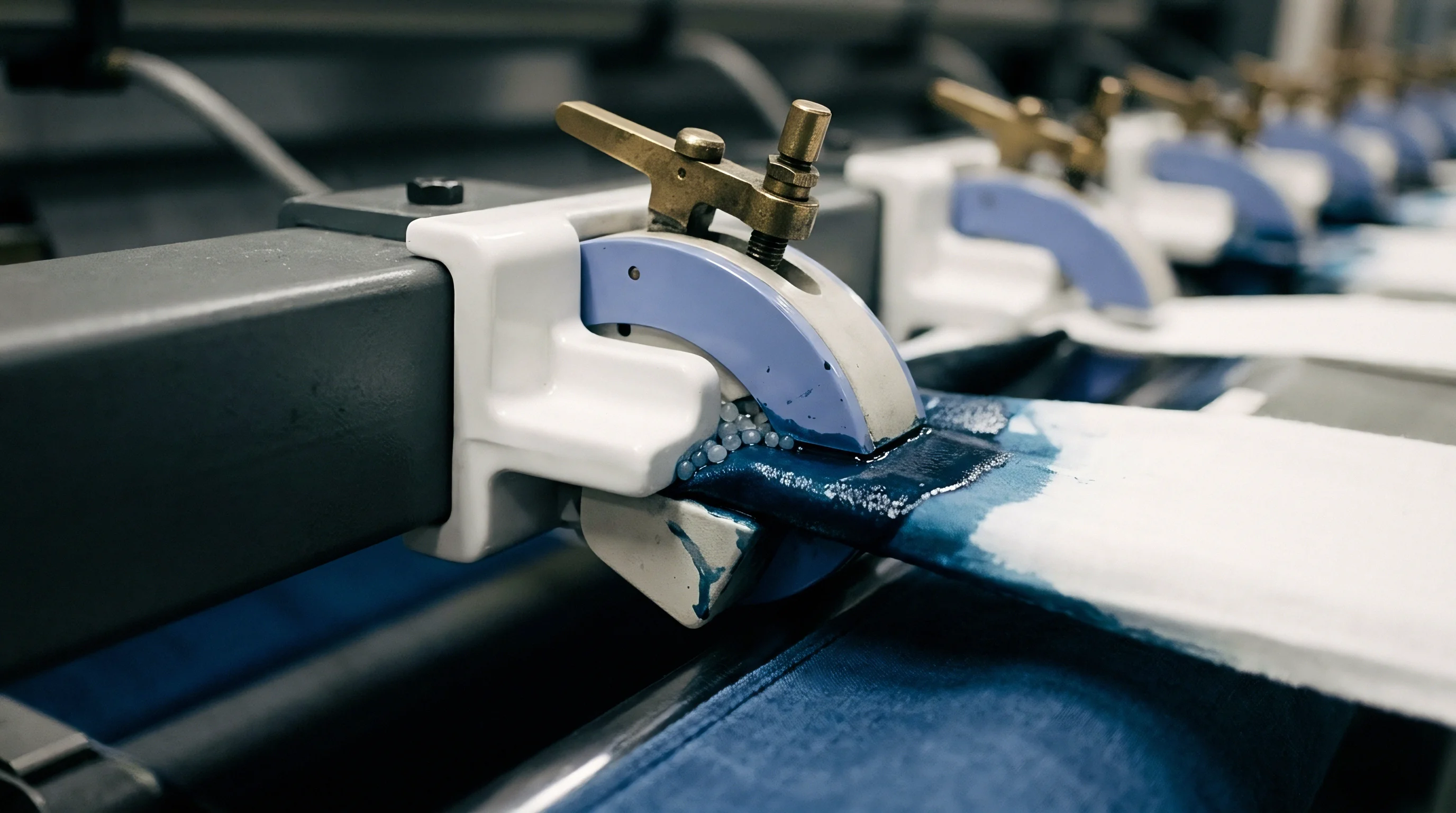
Continuous Pad-Dry-Pad-Steam (PDPS) lines run application and fixation in one uninterrupted sequence. Fabric passes through the dye padder, infrared pre-dryers, and hot-air flues, enters a chemical padder containing salt and alkali, feeds directly into a saturated steam chamber, and finishes through continuous open-width washing. Settings across the entire line must match the yarn’s physical response.
Processing 2-ply cotton poplins or twills means balancing pad nip pressure, drying speed, and chemical additions against twist parameters to maintain uniform shade across bulk production.
Continuous PDPS operational data across three ply twist multipliers in a Ne 40/2 woven cotton twill illustrates these processing relationships.
| Ply Twist Multiplier | Wet Pickup (%) | Core Penetration (%) | Surface K/S Value | Dry Crocking Fastness | Martindale Pilling (Grade) | Fabric Skew (%) |
|---|---|---|---|---|---|---|
| 2.8 (Soft Twist) | 84.2 | 96.5 | 14.2 | 4-5 | 3.0 | 4.2 |
| 3.6 (Standard Twist) | 73.5 | 82.0 | 15.8 | 4 | 4.0 | 1.8 |
| 4.4 (Hard Twist) | 61.8 | 48.5 | 17.6 | 3 | 4-5 | 0.5 |
| Test conditions: Pad-Dry-Pad-Steam range at 50 m/min; Dyeing: Reactive Blue 21 (30 g/L); Chemical pad: 250 g/L NaCl, 20 g/L Na2CO3, 5 g/L NaOH; Steaming: 102 °C for 60 s; Fastness per ISO 105-X12; Pilling per ISO 12945-2 at 2000 rubs. | ||||||
Range Calibration across Processing Stages
Line calibration begins at the initial padder, where nip pressure is adjusted for yarn twist. Dropping pad pressure from 3.0 bar to 1.8 bar increases wet pickup on hard-twist yarns, forcing liquor into intra-ply voids via liquid displacement. However, lower nip pressure leaves a thicker surface film, raising the risk of shade migration during intermediate drying.
Infrared pre-dryer output must scale up for low-twist yarns to handle the higher wet pickup ~ requiring seventy percent lamp capacity compared to forty-five percent for high-twist yarns.
The chemical padder step in PDPS processing requires precise electrolyte management. High concentrations of sodium chloride or sodium sulfate are applied alongside sodium carbonate and sodium hydroxide to fix the dye onto cellulose. As padded, dried fabric enters the chemical bath, salt prevents unfixed dye from bleeding back out into solution.
Because dense, high-twist yarns hold unfixed dye primarily on their surfaces, this surface dye bleeds rapidly into the bath if salt levels fall below 200 grams per litre, causing color loss and bath tailing.
Fixation Steaming and Hydrolysis Extraction
Steaming conditions have to match internal yarn diffusion rates. Saturated steam at 102 °C supplies the heat and moisture needed to swell fibers and drive dye-cellulose reactions. Soft-twist yarns fix completely within forty-five seconds as moisture diffuses quickly into open voids.
Hard-twist yarns, by contrast, take sixty to seventy-five seconds in the steamer to reach core temperature and complete reaction chemistry. Shortening steam time on hard-twist yarns leaves unreacted dye inside inner channels, which washes off during soaping and lowers final color yield.
Continuous washing ranges strip away hydrolyzed dye and residual alkali across a series of high-temperature wash boxes. Soaping efficiency comes down to water exchange within the yarn structure. Operating at 95 °C with high-efficiency squeeze rolls, four wash stages readily extract unfixed dye from open, soft-twist yarns.
Dense, hard-twist yarns slow down water exchange; dye trapped deep inside leaches out slowly, requiring six to eight stages to avoid poor wet fastness and storage staining.
Standard purchasing agreements specify that shade matching approvals must be evaluated under dual light sources following five commercial wash cycles to detect latent ring-dyeing frosting.
Dyehouse managers verifying bulk lot quality implement strict control protocols across continuous ranges:
- Cut full-width fabric strips immediately after the primary padder to measure wet pickup variation across left, center, and right positions.
- Perform rapid microwave drying on padded samples to establish true initial pickup before infrared exposure.
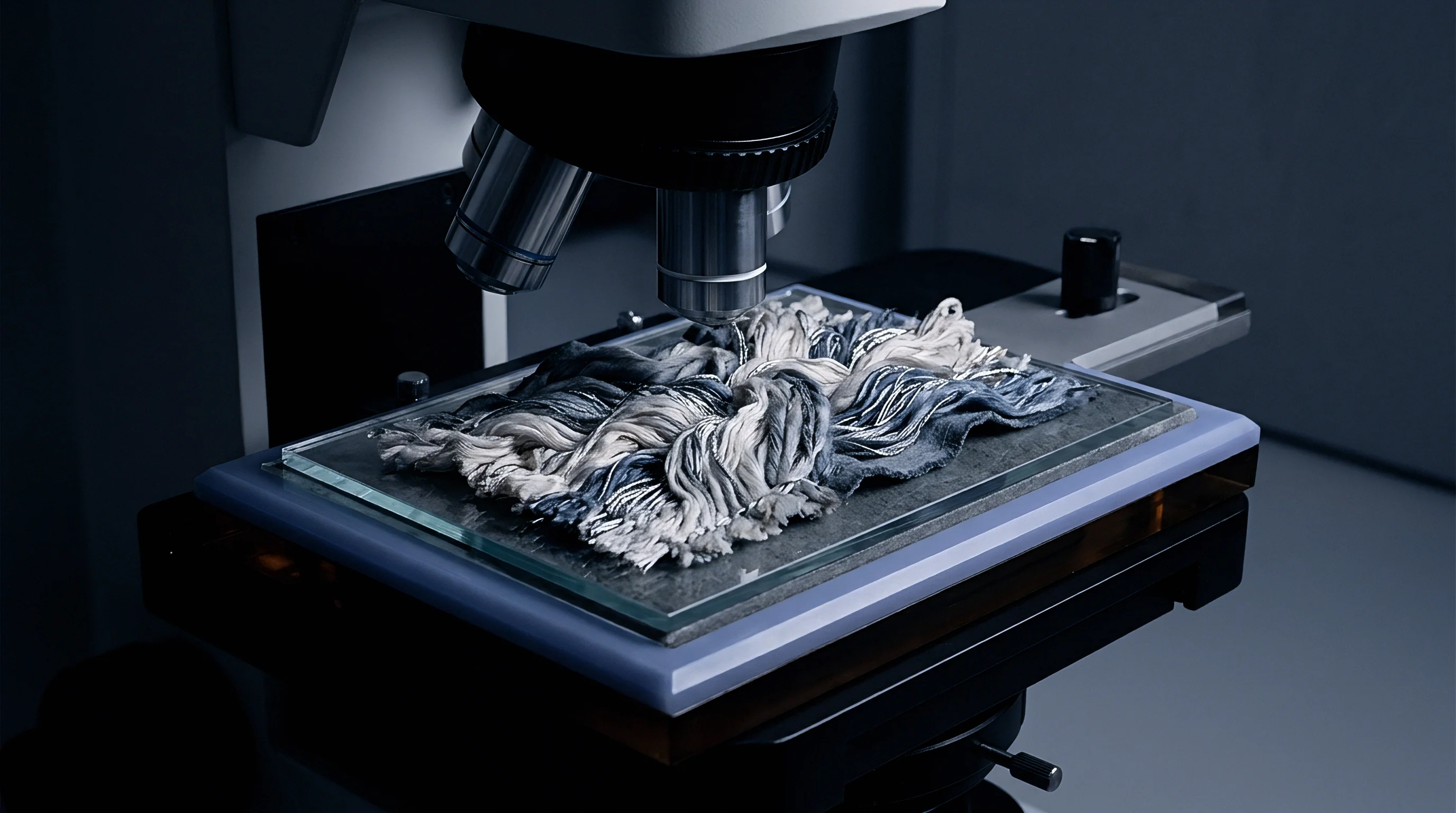
- Extract yarn strands from dried, unfixed fabric and cross-section them under optical magnification to check liquor penetration across warp and weft plies.
- Monitor chemical pad bath density with inline refractometers to maintain consistent electrolyte levels during production.
- Verify steam chamber wet-bulb temperature continuously to ensure saturated steam without superheating.
- Test residual surface dye levels on finished goods using cold water extraction and spectrophotometric absorption analysis.
Running continuous ranges with mismatched twist parameters risks generating massive scrap.
Mechanics
The physical performance of finished cotton fabric reflects how yarn structural parameters interact with continuous wet processing. Tensile strength, tear strength, pilling resistance, and dimensional stability move in opposing directions as ply twist increases. Alkaline reactive dyeing subjects yarns to heavy mechanical tension and chemical swelling, altering their native physical properties.
Balancing these trade-offs allows fabric engineers to design yarns that withstand continuous processing while meeting end-use specs.
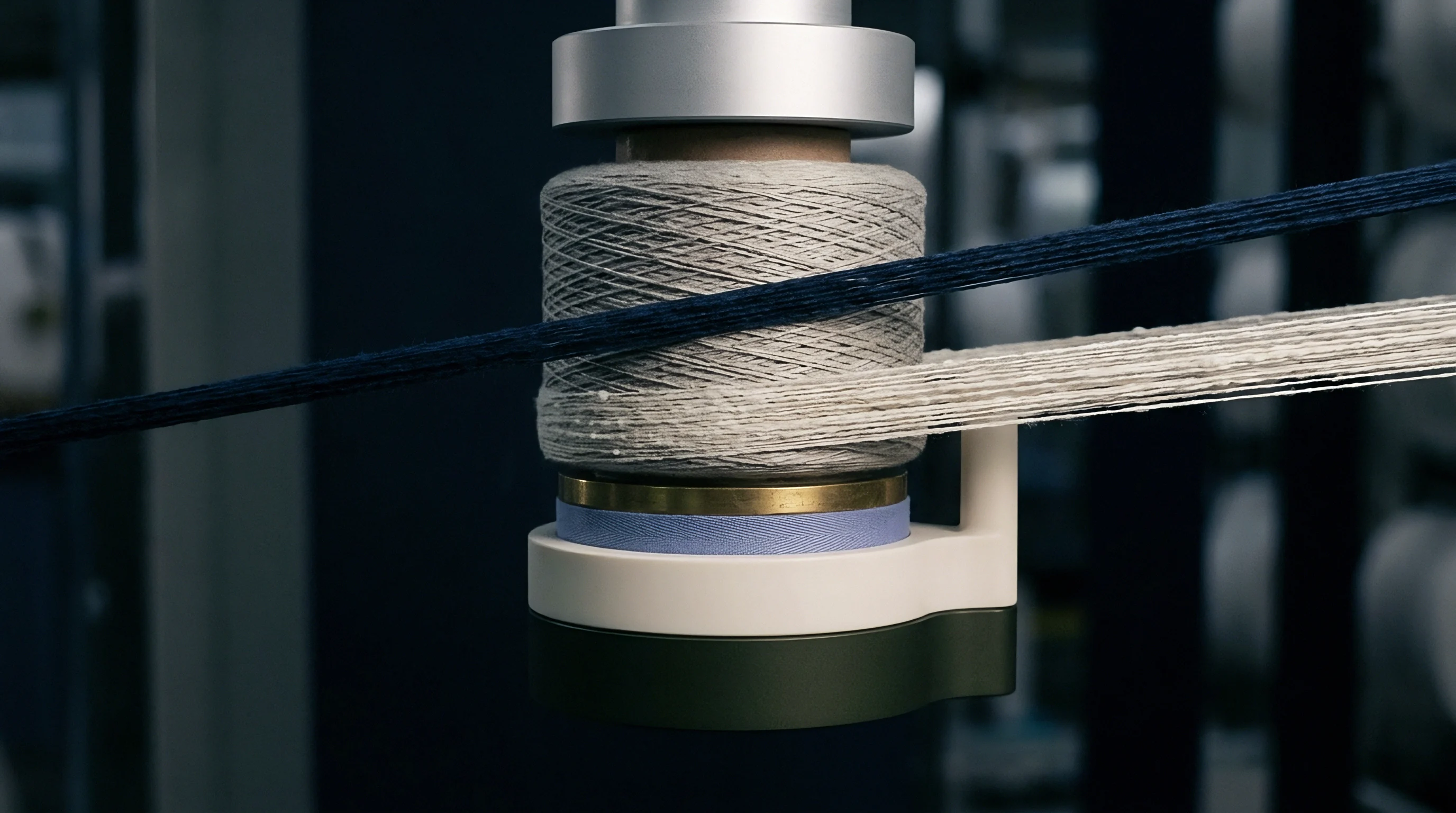
Tensile strength in plied cotton yarns rises with ply twist up to a peak limit, after which internal stress concentration causes it to fall off. Initial twist boosts fiber-to-fiber cohesion and friction, preventing slip under tensile load. For Ne 40/2 cotton, maximum tensile strength hits at a ply twist multiplier between 3.6 and 3.8.
Beyond TM 4.0, excessive twist puts individual fibers under permanent oblique stress, cutting their contribution to longitudinal load bearing. Alkaline swelling during reactive dyeing sets these internal stress states permanently.
Tensile and Tear Balance under Chemical Stress
Tear strength behaves quite differently than tensile strength. Resistance to tearing relies on yarn mobility inside the weave. When a tear starts, adjacent yarns need to stretch, bend, and slide together to form a load-sharing bundle at the tear delta.
High ply twist increases bending rigidity; more importantly, it yields a firm structure where warp and weft threads cannot slide easily, concentrating tear forces on single yarns one after another. As a result, tear strength drops steadily as ply twist multiplier increases.
Continuous reactive dyeing further degrades tear strength through chemical exposure and mechanical tension. High-temperature sodium hydroxide solutions used during scouring, mercerizing, and dyeing strip natural waxes and realign cellulose micro-fibrils. If range tension is too high, warp yarns stretch permanently, losing residual elongation.
Pairing high ply twist with excessive range tension yields fabric that meets tensile specs but fails Elmendorf tear testing under ISO 13937-2.
Spirality Control and Fabric Surface Pilling
Fabric skewing and spirality trace back to residual torque locked inside twisted yarns. Single yarns carry an inherent urge to untwist, causing knit loops to lean and woven fabric to skew when washed. Plying two single yarns in the opposite direction (Z-on-S) counteracts this torque.
When the folding twist multiplier is tuned correctly relative to single twist, net yarn torque drops to zero ~ a ratio of 0.60 to 0.66 achieves full torque balance in standard combed cotton.
If the ply twist multiplier is too low, single yarn torque dominates and skews the fabric along the warp after wet processing and washing. If ply twist is too high, reverse plying torque takes over, skewing fabric the opposite way. Hot aqueous processing and stenter drying under widthways tension temporarily mask unbalanced torque, but subsequent laundering under ISO 6330 releases it, creating fabric skew that exceeds commercial three-percent limits.
Physical property performance across different warp and weft ply twist configurations in a combed cotton fabric after continuous reactive dyeing and finishing reflects these structural constraints.
| Warp Ply TM / Weft Ply TM | Tensile Strength Warp/Weft (N) | Tear Strength Warp/Weft (N) | Martindale Pilling (Rub Count 5000) | Dimensional Stability Wash (%) | Fabric Skewness (%) | |
|---|---|---|---|---|---|---|
| 3.0 / 3.0 (Low/Low) | 480 / 420 | 28.5 / 24.0 | Grade 2-3 | -3.5 / -2.8 | 4.5 | |
| 3.6 / 3.6 (Balanced) | 560 / 510 | 22.0 / 19.5 | Grade 4 | -1.8 / -1.5 | 1.2 | |
| 4.4 / 4.4 (High/High) | 510 / 460 | 15.5 / 13.0 | Grade 4-5 | -1.0 / -0.8 | 2.8 | |
| 3.8 / 3.2 (Hybrid) | 575 / 440 | 20.5 / 23.5 | Grade 3-4 | -2.0 / -2.2 | 1.5 | |
| Test methods: Tensile per ISO 13934-1; Tear per ISO 13937-2; Pilling per ISO 12945-2; Wash dimensional change and skewness per ISO 5077 after 5 cycles at 60 °C with tumble drying. | ||||||
Martindale pilling resistance per ISO 12945-2 improves markedly at higher ply twist multipliers. Pilling happens when loose fiber ends migrate out of yarn cores under friction, tangle into balls, and remain anchored to the fabric by strong core fibers. High ply twist binds fibers tightly, restricting end migration under abrasion.
By contrast, fabrics made from soft-twist yarns fail pilling tests quickly, developing heavy fuzzing and pills by two thousand rubs.
Getting acceptable pilling performance out of soft-twist yarns requires aggressive singeing before dyeing, paired with cellulase biopolishing during finishing. But enzyme biopolishing removes surface mass, cutting fabric weight and further degrading tear strength. Setting an optimal native ply twist multiplier in the greige fabric avoids relying on chemical treatments that compromise strength.
Fabrics constructed with high-twist plied yarns resist pilling but exhibit lower tear strength and restricted dye penetration.
To lock in mechanical specifications, raw material purchase orders and mill technical agreements must contain specific structural mandates:
- Single and ply twist multiplier limits specifying target values with upper and lower tolerances bounded by plus or minus 0.15 TM units.
- Twist direction and balance ratios requiring Z-on-S folding structures with a single-to-ply twist ratio between 0.60 and 0.68.
- Minimum tear strength thresholds evaluated under ISO 13937-2 after continuous reactive dyeing and final sanforizing finishing.
- Maximum fabric skewness allowances capped at two percent following five standard laundering cycles under ISO 5077 conditions.
- Martindale pilling performance guarantees requiring minimum Grade 4 performance at five thousand abrasion cycles without cellulase enzyme application.
Purchasing agreements state that incoming greige fabric lots failing ply twist multiplier tolerances by more than zero point two units are subject to immediate commercial rejection prior to wet processing.
Freight
Choosing a yarn ply twist multiplier sets both the technical feasibility of continuous reactive dyeing and the supply chain structure for production. A decision made at the spinning mill dictates factory routing, minimum order quantities, lead times, and financial risk across the converter network. Specifying a custom twist multiplier outside standard mill stock programs adds supply chain complexity, shifting production from streamlined vertical routes to fragmented subcontracted networks.
Standard commodity 2-ply yarns like Ne 40/2 or Ne 50/2 (spun at standard ply twist multipliers of 3.6 to 3.8) benefit from high-volume production runs maintained continuously by tier-one spinners. Working within these standard parameters lets converters source yarn on short notice with minimum order quantities as low as five hundred kilograms per colorway. Continuous dyehouses can run standard constructions at line speeds near sixty metres per minute, keeping conversion costs low and shade yield risk minimal.
Ordering custom low-twist (TM 2.8) or high-twist (TM 4.4) yarns disrupts standard mill schedules. Spinning mills usually demand minimum orders of at least three metric tons per custom lot to justify ring frame resets and traveler changes. Plying equipment has to be recalibrated and spindle speeds adjusted to avoid yarn breaks on high-twist runs or slub formation on low-twist lots.
These adjustments add one to two weeks to spinning schedules, pushing raw material lead times from three weeks out to five or six.
Dyehouse economics directly reflect these yarn choices. Continuous reactive lines carry high fixed hourly costs for gas, water, power, and labor. Processing dense, high-twist fabrics forces managers to slow line speeds from sixty metres per minute down to thirty-five to give liquor and steam enough dwell time to penetrate the yarn core.
Cutting line speed nearly doubles conversion costs per linear metre, adding direct expense to the final invoice.
Mill Chain Sourcing Dynamics and Capacity Allocation
Quality risks compound when non-standard twist constructions move through fragmented subcontractor networks. If spinning, plying, weaving, and dyeing are split across separate facilities, assigning fault for shade defects becomes contentious. When a high-twist fabric exhibits severe frosting after reactive dyeing, the dyehouse points to excessive twist compaction, while the spinner blames poor wetting formulation or rushed steamer dwell.
Resolving claims across an un-integrated chain drains management time and stalls deliveries.
Vertical operations integrate spinning, weaving, dyeing, and finishing under one roof, providing tight control over twist parameters, sizing, pad nip profiles, and steamer dwell. However, vertical mills reserve continuous dye lines for large runs of standard fabrics, typically setting minimums at ten thousand metres per colorway. Buyers needing smaller custom dye lots have to rely on independent converters who piece together supply chains across separate spinners, commission weavers, and commission dyehouses.
Unit Cost Breakdown across Production Routes
Evaluating total landed cost means analyzing expenses across every stage of manufacturing. The choice of yarn ply twist multiplier impacts almost every line item ~ from spinning premiums and weaving efficiency surcharges to dyehouse conversion rates and quality risk reserves.
Cost structure, lead time, and minimum order dynamics vary substantially across three primary sourcing routes for a 2-ply cotton continuous reactive dyed fabric.
| Route Parameters | Vertical Integrated Mill | Independent Converter Route | Subcontracted Custom Route |
|---|---|---|---|
| Yarn Specification | Standard Twist (TM 3.6) | Standard Twist (TM 3.6) | Custom High Twist (TM 4.4) |
| Yarn Minimum Order (kg) | Standard Stock | 1,000 | 3,500 |
| Fabric Minimum Order (m) | 10,000 per color | 3,000 per color | 5,000 per color |
| Total Production Lead Time | 4-5 Weeks | 6-7 Weeks | 10-12 Weeks |
| Greige Fabric Cost ($/m) | 2.10 | 2.35 | 2.85 |
| Continuous Dyeing Cost ($/m) | 0.85 | 1.05 | 1.65 |
| Rejection Risk Allocation ($/m) | 0.05 | 0.12 | 0.45 |
| Total Landed Cost ($/m) | 3.00 | 3.52 | 4.95 |
High-twist constructions carry a total landed cost nearly sixty-five percent higher than standard-twist fabrics run through vertical mills. That cost gap reflects spinning setup charges, lower weaving efficiency from stiff greige yarns, reduced dyeing line speeds, heavier wetting agent usage, and higher rejection reserves. Buyers specifying non-standard twist multipliers need to ensure the physical surface benefits justify that financial premium.
Managing financial risk on custom-twist orders requires clear contractual checkpoints. Yarn twist testing under ISO 2061 should be documented and approved before authorizing weaving. Greige sample strips ought to undergo lab-scale padding trials to verify wet pickup and core penetration before bulk weaving begins.
Finally, retaining signed physical lab dips run on actual production greige fabric under documented pad-steam settings provides the only objective baseline for resolving bulk shade listing or frosting claims.
Sourcing strategies that balance technical needs against commercial realities often land on standard ply twist multipliers (TM 3.5 to 3.7) paired with targeted chemical finishing. Standard twist yarns preserve access to high-volume spinning capacity, maintain fast dye line speeds, keep color minimums low, and hold lead times within standard seven-week commercial windows. When an end-use application genuinely requires a non-standard twist structure, buyers need to build financial margins and time buffers into procurement contracts to absorb supply chain friction.
Managing international fabric procurement comes down to aligning yarn engineering parameters with continuous wet-processing capabilities. Understanding how ply twist multipliers govern liquor absorption, intra-ply diffusion, shade levelness, and tear strength turns fabric specification from an empirical guessing game into a precise engineering protocol. Product development teams that master these structural interactions protect bulk production investments, eliminate shade rejection claims, and deliver consistent quality to cutting tables worldwide.