Quantifying Longitudinal Dyeing Tailing Gradients in High Speed Continuous Finishing Lines
Dynamic replenishment dosing calibrated to dyestuff substantive affinity factors eliminates longitudinal tailing across high-speed continuous pad dye lines.
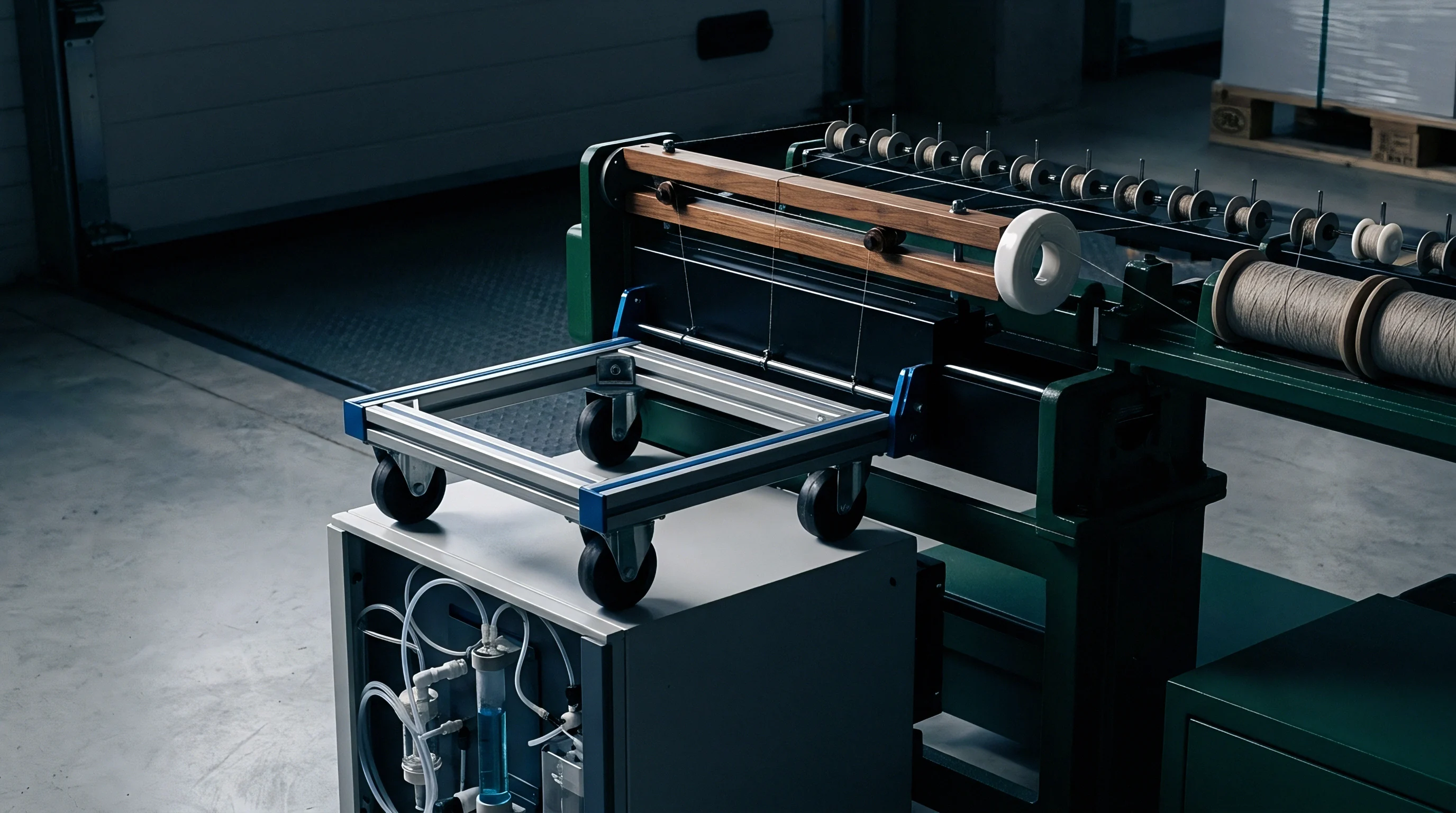

Sorption
Continuous pad-dyeing operations at speeds exceeding eighty meters per minute create an immediate chemical imbalance between the delivery liquor and the substrate. Dye molecules with high substantive affinity transfer onto cellulose or synthetic fibres faster than the carrier water enters the capillary spaces of the yarn. The pad trough loses active colorant concentration while maintaining its nominal liquid volume.
As successive kilometers of greige or pre-treated goods pass through the immersion zone, the trailing yards receive progressively lower dye concentrations than the leading yardage. This differential creates a measurable longitudinal shade variation from head to tail across continuous production runs.
The substantive affinity constant of each individual dyestuff in a combination recipe governs the rate of chemical stripping. In a ternary mixture containing yellow, red, and blue components, each molecule possesses a distinct strike rate. High-affinity components exhaust into the moving fiber matrix within the first two seconds of immersion, whereas lower-affinity components remain suspended in the trough volume.
The liquor volume within the trough turns over rapidly, yet the steady-state equilibrium shifts dynamically throughout a multi-thousand-meter run.
A tri-component reactive formulation with substantive affinity spread above twenty percent generates visible hue shifts within twelve hundred continuous meters.
Dye concentration depletion follows an exponential decay curve when bath replenishment exactly matches nominal liquor pickup without compensatory dye enrichment. The fundamental mathematical expression describing the instantaneous dye concentration in the pad trough at length interval L balances mass flow and fiber absorption:
C(L) = C_feed + (C_0 – C_feed) exp(- (K S L) / V)
In this mass-balance formulation, C_0 represents the initial bath concentration in grams per liter, C_feed defines the concentration of the incoming replenishment feed, K expresses the dimensionless fiber affinity coefficient, S denotes the fabric linear density in kilograms per meter, and V signifies the total liquor volume maintained in the trough in liters. When K exceeds unity, preferential dye exhaustion strips the bath faster than physical liquid consumption. Without real-time adjustments to C_feed, the equilibrium concentration C_infinity drops to C_0 divided by K, generating severe head-to-tail color gradients.

Liquor Turnover Dynamics
Trough geometry dictates the residence time of dyestuff molecules before mechanical expression at the nip rollers. Modern continuous ranges operate with trough capacities ranging between twelve and forty-five liters to accelerate turnover rates and minimize dead volume. High-speed running conditions compress liquid contact time to fractions of a second, shifting the rate-limiting step from bulk diffusion to boundary-layer displacement.
| Dyestuff Class | Affinity Factor (K) | Trough Residence Time (s) | Depletion Half-Life (m) | Equilibrium Delta E CMC |
|---|---|---|---|---|
| Reactive Vinyl Sulfone | 1.45 to 1.85 | 0.8 to 1.4 | 450 to 750 | 1.8 to 2.6 |
| Reactive Bi-Reactive Monochlorotriazine | 1.15 to 1.35 | 0.9 to 1.5 | 850 to 1400 | 0.9 to 1.4 |
| Low-Energy Disperse Azo | 0.95 to 1.10 | 0.6 to 1.1 | 2200 to 3800 | 0.3 to 0.6 |
| High-Energy Disperse Anthraquinone | 1.30 to 1.60 | 0.7 to 1.2 | 600 to 950 | 1.4 to 2.1 |
| Direct High Molecular Weight | 2.10 to 2.80 | 1.1 to 1.8 | 250 to 450 | 3.2 to 4.8 |
Process engineers frequently hear finishing mills claim that automated level controllers eliminate bath dilution across long runs.
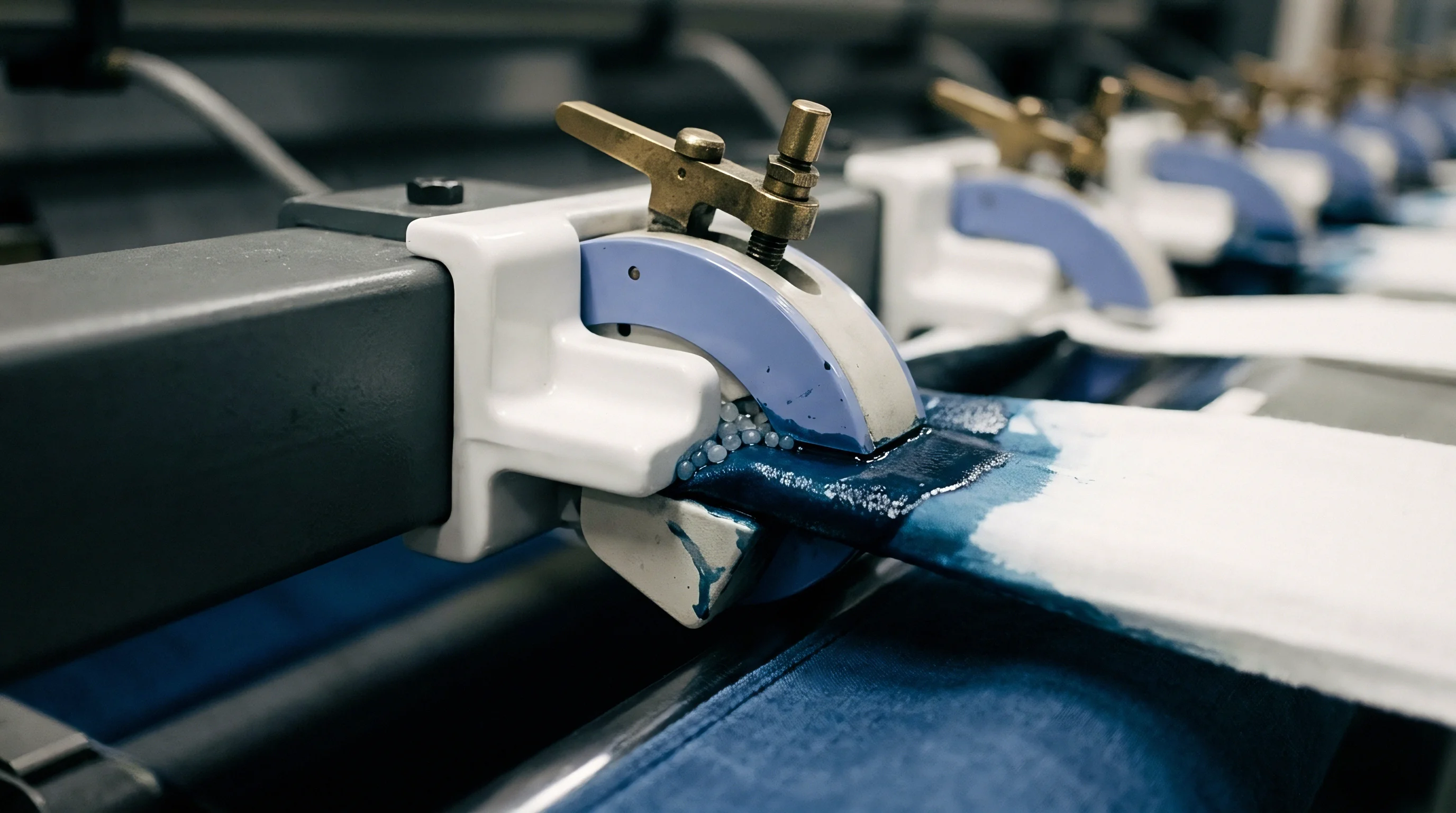

Web
Continuous fabric transit introduces physical and hydrodynamic variables that compound chemical affinity gradients. Moisture content variations in the incoming prepared fabric alter the instantaneous wet pickup percentage along the batch. Greige preparatory steps, including scouring, bleaching, and mercerization, leave fluctuating residual moisture and chemical alkalinity profiles along the length of a ten-thousand-meter production order.
Fabric passing into the padder with an incoming moisture variance of two percent creates an immediate swing of three to five percent in liquid expression efficiency at the squeeze rollers.

Which Replenishment Ratios Suppress Head to Tail Spread?
Calculating the exact ratio between the starting bath concentration and the continuous feed concentration prevents longitudinal tailing. The steady-state replenishment concentration formula accounts directly for the substantive affinity coefficient K and the wet pickup fraction P:
C_feed = C_0 (1 + (K – 1) (1 – P)) / K
Operating a continuous line where K equals 1.50 and wet pickup P equals 0.65 requires a feed concentration C_feed set precisely to 0.783 of C_0. Preparing the continuous dosing tank with this lower concentration balances the rapid initial absorption with constant chemical replenishment. Fabric speed adjustments directly influence these values.
Increasing the line velocity from sixty to one hundred twenty meters per minute shortens the liquor contact window, lowering the effective kinetic affinity factor K closer to unity. Process technicians recalibrate dosing ratios when changing line throughput speeds.
- Mechanical Expression Calibration requires setting pneumatic cylinder pressures across the padder face to maintain wet pickup tolerances inside a strict plus-or-minus one percent band.
- Preparatory Moisture Stabilization involves passing the pre-treated fabric through an infrared scanning moisture meter to confirm incoming dry-basis moisture sits below four percent.
- Trough Displacement Displacement Optimization utilizes displacement bodies inside the pad box to contract liquor volume below fifteen liters during continuous operations.
- Temperature Regulation Sequences maintain pad liquor between twenty and twenty-five degrees Celsius to prevent premature reactive hydrolysis and thermal affinity spikes.
Capillary action varies across the structural length of woven and knitted fabrics. Higher yarn twist factors impede liquor penetration during the sub-second immersion phase, leaving inner yarn cores undyed while over-saturating surface fibers. When the trailing fabric yardage experiences slightly higher nip temperatures caused by continuous roller friction, capillary draw accelerates.
This physical mechanism mimics chemical tailing by drawing more dissolved dye into the substrate per unit time.
The interaction between roller hardness, durometer deflection, and transit speed establishes the absolute liquor boundary layer thickness. Softer rubber roller covers with shore hardness ratings below seventy Shore A broaden the nip contact area, lengthening the mechanical expression time. Harder roller coverings above eighty-five Shore A concentrate mechanical pressure into a narrow line, producing sharp expression gradients.
This mechanical interaction modifies the physical retention of dye liquor independently of substantive chemical strike rates.
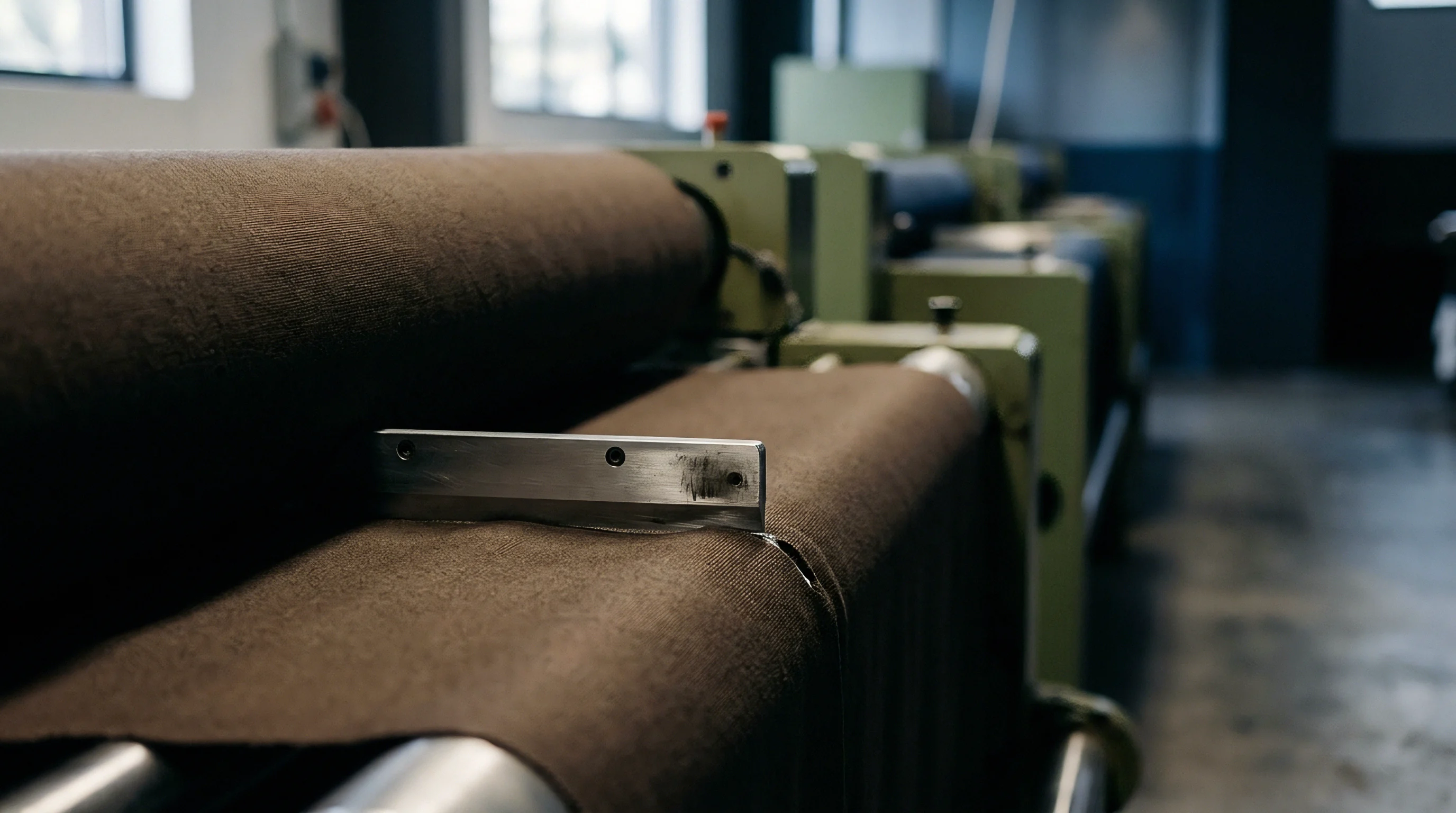
Dosing
Automated dosing systems on high-speed continuous dye ranges rely on continuous mass-flow metering coupled with real-time spectrophotometric concentration tracking. Volumetric dosing units inject concentrated stock dye solutions, water, and auxiliary chemicals into a static mixing manifold positioned immediately before the pad trough entry. Dual-feed and triple-feed injection systems separate substantive dyestuffs from alkali or reducing agents until moments before fabric immersion, suppressing premature chemical reaction in the delivery plumbing.
Electromagnetic flow meters measure chemical volume delivery with an analytical accuracy of plus-or-minus 0.2 percent across dynamic flow ranges. When web speed ramps up during roll changes or stenter acceleration, the dosing computer calculates the required milliliter-per-minute feed volume to match instantaneous fabric square-meter throughput. A failure to synchronize chemical dosing pump speeds with web line acceleration causes severe transient tailing bands spanning hundreds of meters.
| System Architecture | Response Time (s) | Trough Volume Range (L) | Maximum Run Length (m) | Longitudinal Delta E CMC |
|---|---|---|---|---|
| Single Tank Gravity Feed | 45 to 90 | 35 to 60 | 800 to 1200 | 1.8 to 3.2 |
| Dual Flow Proportional Injection | 8 to 15 | 18 to 30 | 2500 to 4500 | 0.8 to 1.3 |
| Dynamic Static-Mixer Injection | 1 to 3 | 8 to 15 | 8000 to 15000 | 0.3 to 0.7 |
| Closed-Loop Photometric Dosing | 0.5 to 1.2 | 6 to 12 | 15000 to 30000 | 0.2 to 0.5 |
Consider a practical operational example on a continuous pad-dry thermosol range running one hundred percent cotton twill at ninety meters per minute. The production run spans twenty-two thousand meters of fabric with a nominal fabric weight of 240 grams per square meter. The targeted wet pickup is precisely 65 percent, and the formulation consists of a ternary reactive mix with an aggregate affinity factor K of 1.42.
The initial bath volume in the trough is 18 liters with an initial dye concentration of 32.0 grams per liter.
Under uncompensated gravity-feed conditions, the active dye concentration in the trough drops from 32.0 grams per liter to 22.5 grams per liter within the first eighteen hundred meters. The resulting fabric exhibits a continuous shade fade resulting in an unacceptable longitudinal color difference. Implementing dynamic mass-flow injection fixes the incoming replenishment concentration C_feed at 27.2 grams per liter.
This calculated reduction counterbalances preferential affinity absorption, stabilizing the trough concentration at 32.0 grams per liter throughout the entire twenty-two thousand meters.
Controlled injection rates hold dye bath equilibrium constant across continuous yardages exceeding twenty thousand meters.
Secondary auxiliaries in the pad liquor influence the chemical activity coefficients of individual dyes. Antimigrant polymers, wetting agents, and dissolved salts alter the hydration sphere around dye molecules, modifying their striking velocity. Non-ionic wetting agents accelerate fabric penetration but can form hydrophobic complexes with disperse dyes at elevated temperatures, triggering liquor instability.
Balancing ionic strength across both starting and replenishment solutions avoids chemical precipitation inside high-shear static mixers.
A steady chemical flow into a small trough keeps the shade stable.
Metric
Longitudinal color consistency requires analytical evaluation using spectrophotometric instruments configured to industry-standard color difference geometries. Color difference formulas, specifically CMC(l:c) and CIE DE2000, quantify shade variation along the length of continuous dye lots. Testing protocols demand spectral reflectance measurements taken under D65 standard illuminant and 10-degree standard observer conditions across regular linear intervals along the production lot.

Can Online Spectrophotometers Isolate Rapid Affinity Drift?
Non-contact spectrophotometers mounted on traversers at the stenter exit record spectral data continuously across the moving web. These units capture reflectance values every five to ten meters, converting spectral curves into real-time color coordinates (L , a , b , C , h ). Real-time telemetry detects shade drift long before human visual inspection identifies tonal discrepancies.
The instrument isolates individual axis drift, separating lightness decay (Delta L ) caused by general bath depletion from chromatic shifts (Delta a , Delta b ) caused by preferential exhaustion of a single dye component in a combination recipe.
- ISO 105-J03 Color Difference Specification defines the mathematical calculation of total color difference DE2000 and tolerance ellipsoids for textile substrates.
- AATCC Evaluation Procedure 9 outlines visual and instrumental assessment protocols for evaluating longitudinal and lateral color transfers.
- ASTM D2244 Standard Practice establishes calculation methods for instrumental data conversion into CIELAB coordinates across industrial batches.
- AATCC Test Method 173 provides standard parameters for calculating CMC acceptance factors tailored to commercial apparel end-uses.
Quantifying longitudinal tailing relies on calculating the longitudinal gradient slope G_L over discrete length increments. The mathematical derivation calculates the change in total color difference relative to the reference master sample taken at meter zero:
G_L = (Delta E_CMC(L_2) – Delta E_CMC(L_1)) / (L_2 – L_1)
A production batch exhibiting a G_L value greater than 0.05 Delta E CMC per one thousand meters produces visible shade segregation when cut into adjacent garment panels. Premium apparel supply chains enforce absolute longitudinal limits, rejecting entire rolls when the total head-to-tail color difference exceeds 0.80 Delta E CMC across individual piece lengths or 1.20 Delta E CMC across entire multi-roll master batches.
| End-Use Category | Evaluation Method | Tolerated Delta E CMC (Roll Head-to-Tail) | Tolerated Delta E CMC (Lot Head-to-Tail) | Maximum Permissible G_L (per 1000m) |
|---|---|---|---|---|
| Automotive Seating Fabrics | CIE DE2000 (1:1:1) | 0.30 | 0.50 | 0.02 |
| High-Visibility Safety Workwear | CMC (2:1) | 0.60 | 0.90 | 0.04 |
| Performance Activewear | CMC (2:1) | 0.50 | 0.80 | 0.03 |
| Casual Cotton Shirting | CMC (2:1) | 0.70 | 1.20 | 0.05 |
| Industrial Protective Linings | CIELAB | 1.00 | 1.50 | 0.08 |
The core measurement problem remains whether online spectrophotometric sensors calibrated over moving, hot fabric can accurately match offline conditioning measurements taken after twenty-four hours of standard textile moisture regain.

Recourse
Commercial exposure following longitudinal tailing failures settles directly on the entity holding the contractual performance specification. Brand compliance protocols mandate strict batch-level conformity evidence before releasing container shipments from manufacturing facilities. When longitudinal tailing exceeds specified tolerances, garment manufacturing facilities discover shade separation only during cutting and sewing operations, multiplying the financial liability across cut panels, trims, and assembly labor.
Physical verification at the mill requires destructive end-to-end cut swatches from each dyed master roll. Verifiers map spectrophotometric values from the head, middle, and tail of every roll against the approved digital laboratory standard. If tailing trends correlate with specific dyestuff exhaustion rates, chemical stripping and re-dyeing operations remain the only mechanical salvage pathway.
Hydrolyzed reactive dyes on cellulosic goods cannot be leveled chemically; they necessitate destructive chemical reduction stripping using sodium hydrosulfite and sodium hydroxide at ninety-five degrees Celsius, degrading the tensile burst strength of the fabric by ten to fifteen percent.
Tensile strength losses from chemical reduction stripping frequently exceed fifteen percent on light-weight woven cottons.
Supply agreements protect buyers by embedding explicit technical clauses into purchase orders. Contractual provisions require mills to warrant longitudinal shade uniformity within a maximum threshold of 0.75 Delta E CMC(2:1) across any single roll and 1.10 Delta E CMC across entire continuous dye batches. The standard commercial remedy clause stipulates that delivery of non-conforming goods with documented longitudinal tailing exceeding these parameters obligates the supplier to credit the full invoiced yardage value and absorb all downstream cut-and-sew consequential manufacturing damages.