Optimizing Continuous Padding Liquor Absorption and Wet Pick-Up on Mercerized Heavy Twills
Optimizing continuous padding on mercerized heavy twills requires balancing 65% wet pick-up against dynamic surface tension to ensure complete core penetration.
Substrate
Structural Density and Yarn Morphology in Mercerized Twills
Heavy woven twills act as formidable fluid barriers during continuous wet processing. Mass per unit area constructions from 280 gsm to 450 gsm in 2/1 or 3/1 weaves pack dense warp threads tightly over heavy weft picks. The frequent interlacing creates narrow inter-yarn capillaries, while the high twist factors required to maintain yarn tenacity in heavy ring-spun yarns sharply limit void space within the yarn bundles.
Mercerization alters this structural porosity before the cloth reaches the dye padding mangle. Subjecting greige or scoured cotton twill to concentrated sodium hydroxide solution (28 to 30 degrees Baume) under tension converts Cellulose I to Cellulose II. The caustic swells the kidney-shaped cotton fibres into rounded cylinders, collapsing the inner lumen and smoothing the outer cuticle layer.
While this treatment increases the accessible surface area for dye molecules and liquor, it simultaneously reduces large inter-fibre void volume by expanding individual yarn diameters within the tightly constrained weave.
The degree of mercerization directly governs capillary suction velocity. When evaluated through the Barium Activity Number (BAN) under ISO 22960, fabric treated to an optimal BAN of 135 to 145 displays rapid initial swelling and accelerated surface wetting. Under-mercerized fabric (BAN below 120) retains flat, irregular fibre cross-sections that trap air pockets inside heavy yarn cores.
Over-mercerized cloth, or yardage mercerized without uniform tension, exhibits irregular cross-sectional swelling that causes localized variations in porosity across the width of the roll.
| Fabric Construction | Finished Weight (gsm) | Barium Activity Number | Inter-Yarn Porosity (%) | Capillary Wicking Speed (mm/10s) |
|---|---|---|---|---|
| 3/1 Twill 16s x 12s / 108 x 56 | 310 | 138 | 28.4 | 38 |
| 3/1 Twill 10s x 8s / 94 x 48 | 380 | 142 | 22.1 | 29 |
| 2/1 Twill 20/2s x 10s / 110 x 60 | 340 | 132 | 25.6 | 34 |
| 3/1 Heavy Twill 7s x 6s / 88 x 40 | 440 | 140 | 18.5 | 21 |

Capillary Dynamics and Fiber Swelling Mechanics
Fluid intake during continuous padding depends on the competition between capillary driving pressure and viscous drag. Under the Washburn equation, penetration distance is proportional to the square root of pore radius, liquid surface tension, and contact angle, divided by fluid viscosity. In heavy twills, that effective pore radius drops abruptly from broad inter-yarn channels down to sub-micron intra-yarn voids.
Excessive warp tension during mercerization lowers inter-yarn void fractions below twenty percent, forcing the padding mangle to rely entirely on mechanical nip pressure rather than spontaneous capillary attraction.
When mercerized heavy twills enter the padding trough at line speeds exceeding 40 metres per minute, immersion time drops below 1.5 seconds. Spontaneous capillary suction alone cannot evacuate air trapped within the core of coarse 7s or 10s ring-spun yarns in this brief window. The fabric must undergo forced mechanical displacement inside the bath, where externally applied squeeze pressure drives out atmospheric air and forces padding solution into the yarn bundles.
Ignoring yarn structural density leads to core starvation, where liquor coats only the surface filaments of the twill diagonal. Subsequent drying pulls dye molecules outward, leaving the core under-dyed. A buyer testing abrasion performance under ISO 12947 will observe rapid shade loss as surface fibres wear away, exposing pale unpenetrated yarn cores.
Processing inadequately neutralized or unevaporated mercerized cloth shifts padding bath pH above 10.5, degrading wetting agent efficiency and causing uncontrolled variations in wet pick-up.
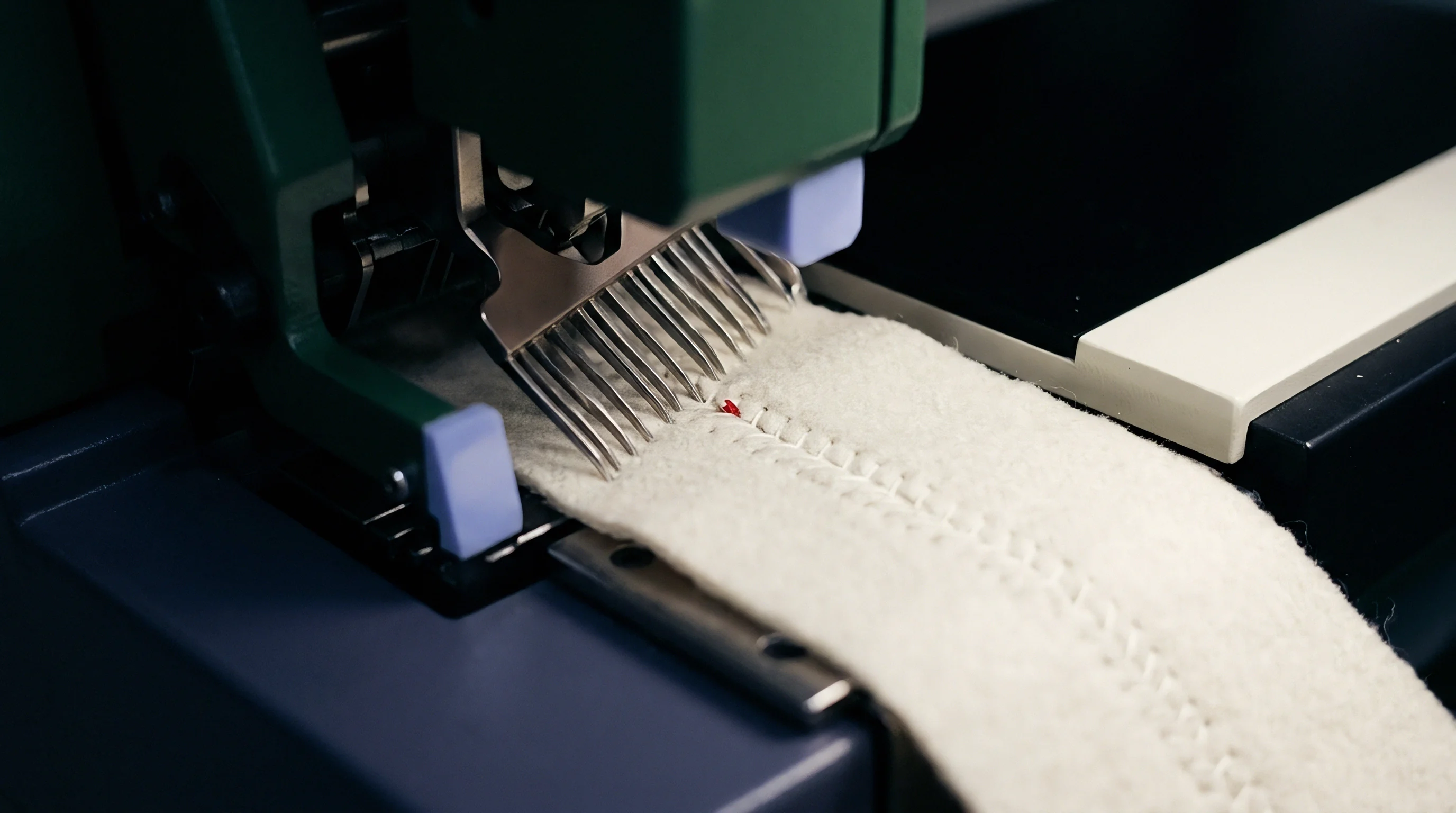
Squeeze
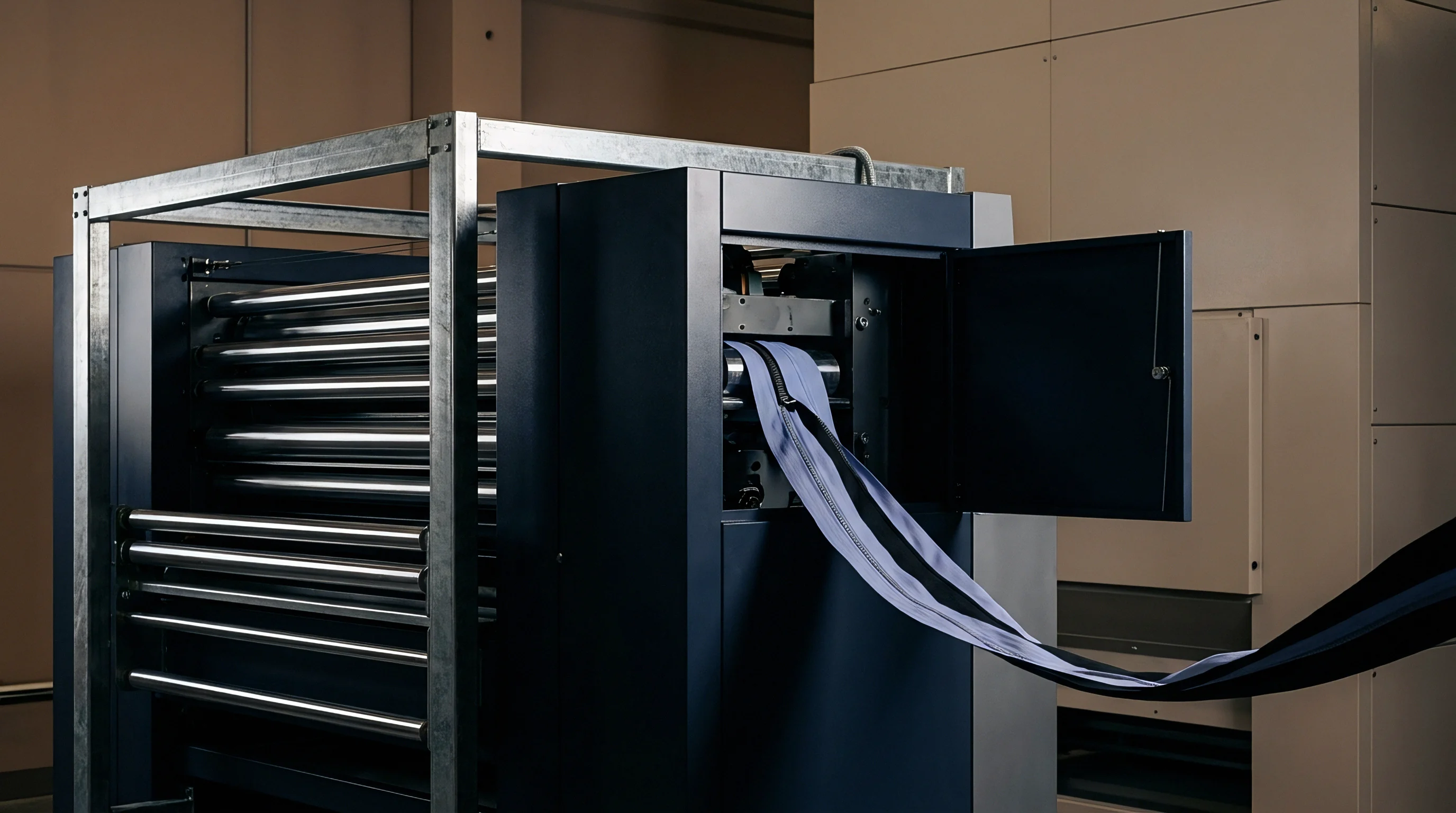
Pad-Mangle Hydrodynamics and Roll Geometry
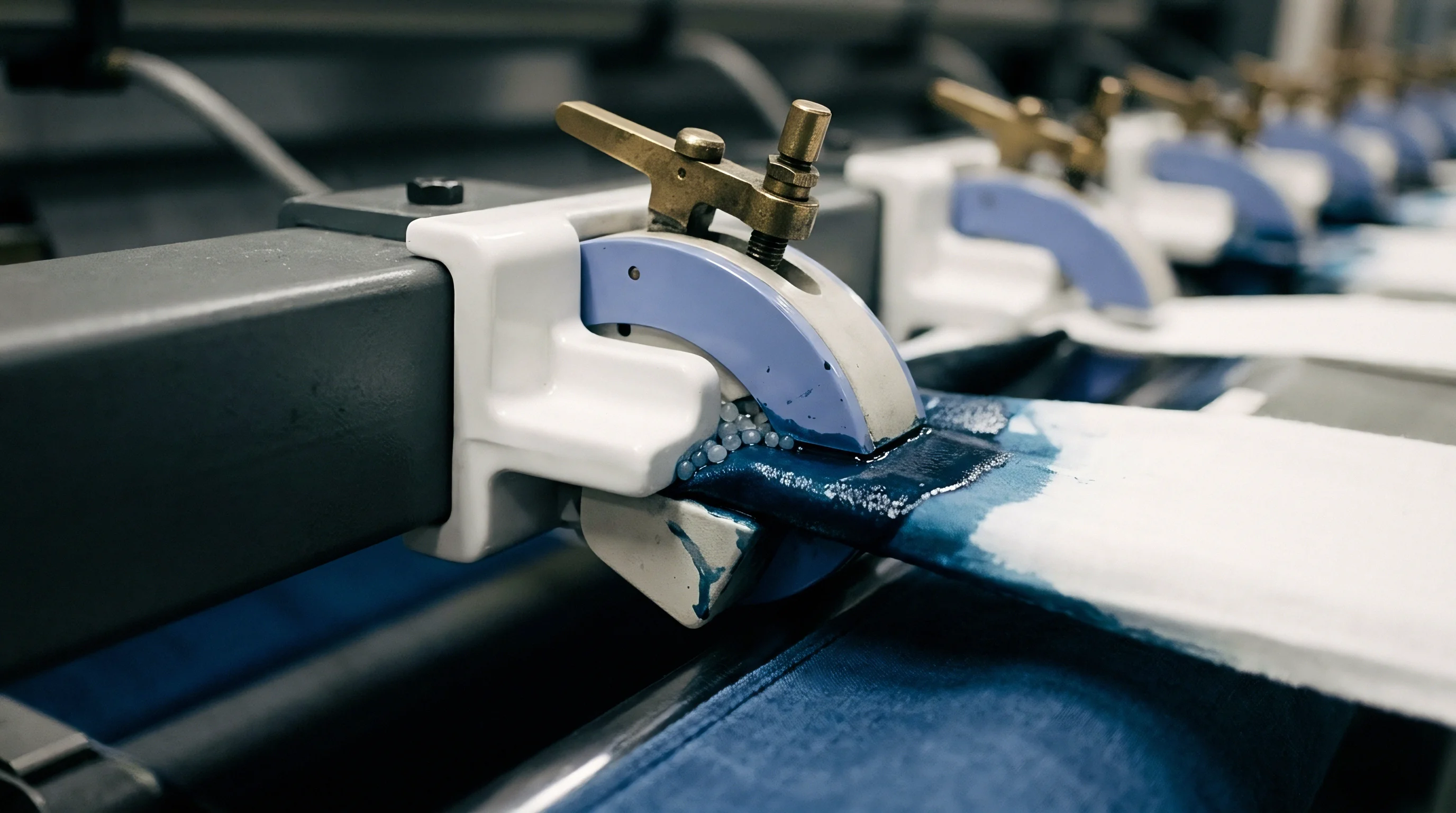
Mechanical liquor application on heavy mercerized twills requires precise force distribution across the squeeze nip. The pad-mangle converts hydrostatic liquid presence into forced hydrodynamic displacement. When fabric passes between two counter-rotating squeeze rolls, the entrance zone creates a converging fluid wedge that drives padding liquor deep into the inner voids of the twill weave under extreme pressure gradients.
Squeeze roll cover elasticity determines both nip width and peak hydraulic pressure. Roll coverings rated between 70 and 80 Shore A hardness yield an elongated nip width of 12 to 18 millimetres under standard operating loads. This wider nip extends contact time under load, giving heavy 380 gsm twills the exposure necessary for complete air displacement.
Harder rolls (above 85 Shore A) produce narrow nips with sharp pressure spikes that crush surface yarns without allowing adequate time for fluid migration into thick yarn centers.
| Roll Covering Hardness (Shore A) | Specific Line Pressure (N/mm) | Line Speed (m/min) | Effective Nip Width (mm) | Achievable Wet Pick-Up (%) |
|---|---|---|---|---|
| 70 | 25 | 30 | 18 | 72 to 76 |
| 75 | 35 | 45 | 15 | 65 to 68 |
| 80 | 45 | 50 | 12 | 58 to 62 |
| 85 | 50 | 60 | 9 | 52 to 55 |

Nip Deflection and Widthwise Uniformity Controls
Deflection along the length of the squeeze rolls causes significant variation in wet pick-up across the fabric width. Standard steel-core rolls flex under heavy pneumatic or hydraulic loading, creating lower pressure at the center of the roll than at the ends. On a 2400 mm face-width mangle, a deflection of just 0.05 millimetres at mid-span increases local wet pick-up by 6 to 9 percent on a heavy twill, resulting in center-to-selvedge shade variation during dyeing or uneven chemical application during finishing.
Correction of deflection requires specialized roll engineering. Deflection-controlled rolls, such as swimming rolls with internal hydraulic pressure zones or crowned rolls ground with a parabolic center swell, compensate for mechanical bending across specific load ranges. Adjusting internal hydraulic oil pressures allows real-time tuning of the pressure profile across the fabric width, matching the exact resistance profile of dense mercerized twill selvedges.
Operating line speed alters the hydrodynamic force balance inside the nip. As speed increases, fluid drag draws more liquor into the nip entrance than the squeeze force can reject, increasing wet pick-up unless specific line pressure scales upward proportionally. Line speed increases must match proportional pneumatic pressure boosts to keep pick-up targets stable across speed changes.
Soft roll covers under heavy linear loads generate excessive internal heat, altering shore hardness across long runs.

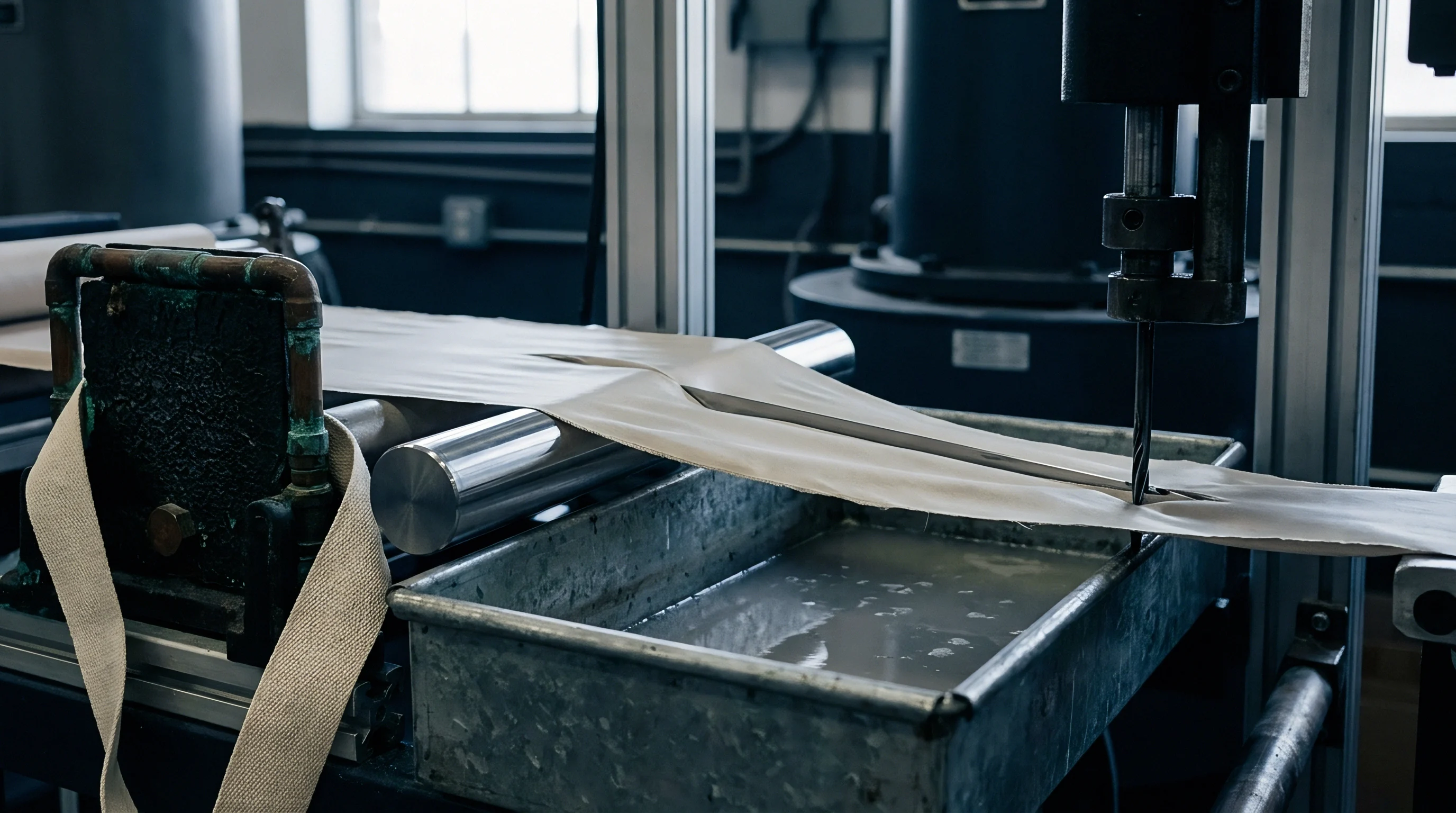
Hydraulics
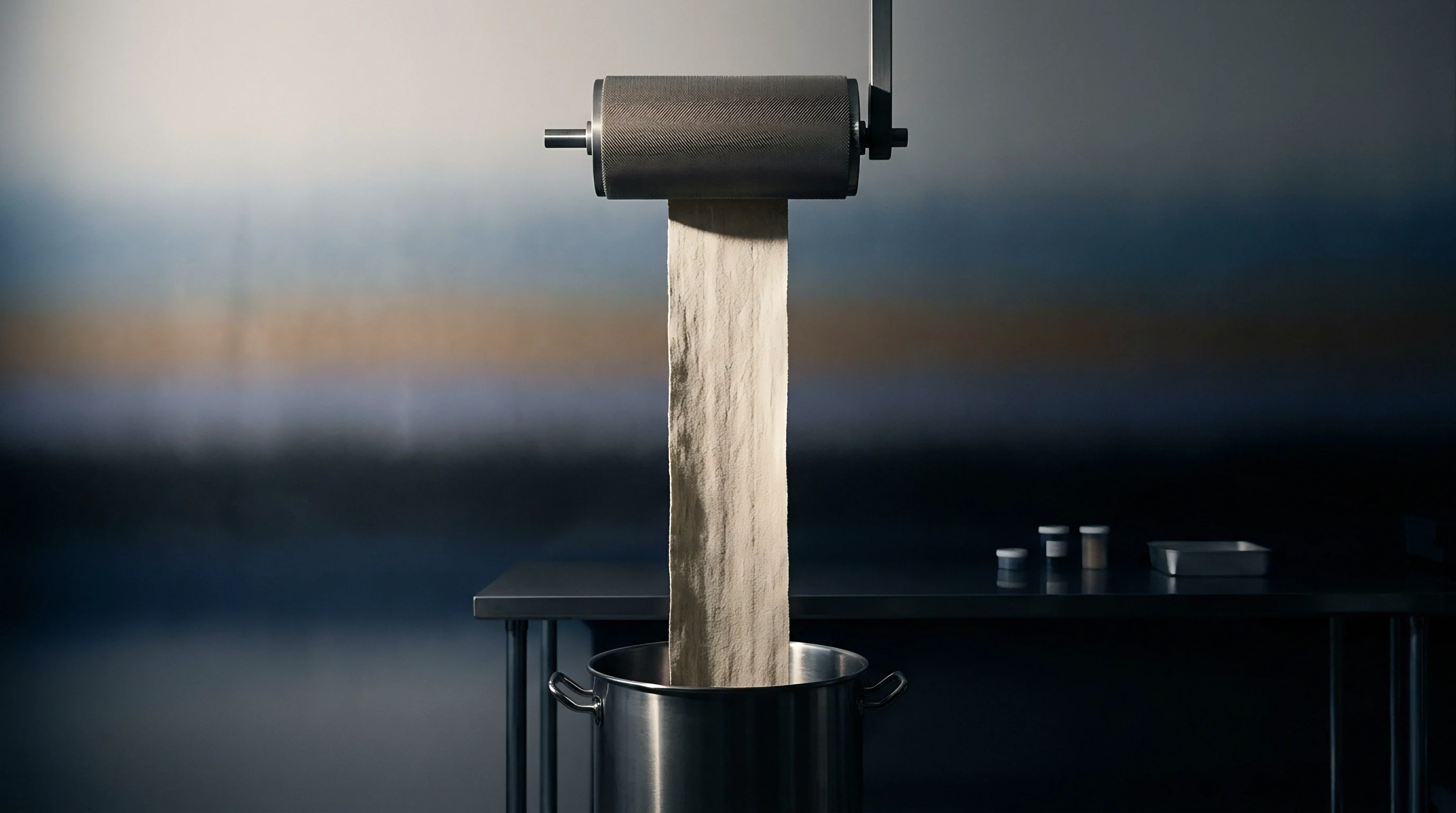
Chemical Wetting Dynamics and Rheology
Liquor formulation physics determines how quickly an aqueous bath breaches the hydrophobic barrier of mercerized twill. Raw cotton cuticles carry natural waxes, and even scoured and mercerized yarns retain trace lipophilic compounds. The dynamic surface tension of pure water (72.8 mN/m at 20 degrees Celsius) prevents rapid fluid entry into sub-micron capillaries.
Surfactants must reduce dynamic surface tension below 30 mN/m within milliseconds of contact.
The choice of wetting chemistry directly influences penetration performance in continuous padding troughs. Non-ionic ethoxylated alcohols offer superior static surface tension reduction, but they generate foam under high-speed immersion and display high dynamic surface tension at short bubble lifetimes. Anionic sulfated esters and alkyl phosphate formulations deliver low dynamic surface tension under high shear conditions while maintaining low-foaming properties in turbulent padding troughs.
Liquor viscosity governs both flow resistance through narrow inter-yarn pores and the film thickness retained on the fabric surface after exiting the nip. Padding baths operated cold at 20 degrees Celsius present high fluid viscosity that slows capillary uptake in heavy twills. Elevating liquor temperature to 40-50 degrees Celsius reduces fluid viscosity, accelerating capillary flow velocity per the Washburn equation while lowering dynamic surface tension.
Pathologies of Inadequate Hydrodynamics
Incorrect bath chemistry and fluid physics produce recurring bulk production defects on heavy mercerized twills, primarily because sub-optimal wetting mechanics prevent liquor from displacing air trapped in dense yarn cores.
- Frostiness and Skitteriness appears on 3/1 twill faces when surface yarns absorb dye liquor while protected cross-over points remain dry, yielding a speckled, washed-out appearance under light box illumination.
- Center to Selvedge Tailing occurs when slow wetting kinetics force the fabric to absorb liquor faster than the dosing system replenishes depleted active chemicals in the center channel.
- Listing and Edge Striping develops when dynamic surface tension spikes along fabric selvedges due to local liquor turbulence and localized surfactant foaming.
- Foam Migration Marks form when non-ionic surfactants create unstable surface foam that gets crushed into the twill structure inside the squeeze nip.
A minimum dynamic surface tension threshold below thirty-two millinewtons per metre at twenty milliseconds lifetime is required to eliminate core frostiness on three-hundred-and-eighty gsm twills.
Elevated liquor temperatures introduce secondary operational limits that prevent unchecked heating on production lines.
While elevating bath temperature reduces fluid viscosity and accelerates initial penetration, temperatures exceeding 50 degrees Celsius degrade the stability of heat-sensitive wetting agents and cause premature bath exhaustion. High bath temperatures also accelerate surface evaporation, shifting dye or chemical concentrations across long continuous runs. Thermal balance requires precise bath temperature control, typically maintained between 35 and 42 degrees Celsius for reactive dye formulations and continuous pad-batch lines.
Penetration
Core Uptake versus Surface Deposition
Achieving absolute core penetration while maintaining controlled wet pick-up represents the central processing balance on heavy twills. Wet pick-up (WPU) measures the mass of wet liquor retained by dry fabric, expressed as a percentage of dry fabric mass. For heavy mercerized twills, typical targeted wet pick-up spans 60% to 70%.
Below 60%, yarn core starvation occurs. Above 75%, excessive surface water creates liquor migration during infrared pre-drying, causing shade banding and face-to-back tone shifts.
The distribution of liquor within the fabric cross-section dictates final physical and visual fastness properties. Cross-sectional microtome evaluations under optical microscopy reveal whether dye liquor resides within the intra-yarn core or rests within outer inter-yarn spaces. Capillary forces draw liquor into small intra-yarn voids, while mechanical expression squeeze forces liquor out of large inter-yarn spaces.
Balancing these two mechanisms requires controlling fabric moisture history, trough dwell time, and squeeze roll nip pressure profile.
Why Does Core Starvation Persist in Mercerized Heavy Twills?
Dense yarn packing in heavy twills creates high hydraulic resistance that resists fluid entry during brief trough immersion times. Ring-spun warp yarns carrying high twist multipliers act as solid structural barriers. When fabric passes through the nip, air trapped inside these tightly twisted core zones compresses under squeeze pressure.
As the cloth leaves the nip pressure zone, the air expands outward, repelling incoming surface liquor before complete core saturation occurs. Pre-wetting fabric on a steam-assisted bowling unit or utilizing high-pressure immersion sprays inside the pad trough eliminates trapped air prior to final nip squeeze.
Contractual specifications under ISO 105-X12 requiring class four dry and wet crocking fastness cannot be met if wet pick-up falls below sixty-two percent on three-hundred-and-fifty gsm mercerized twills.
To optimize core penetration without increasing gross wet pick-up beyond drying limits, plants utilize a structured evaluation and tuning sequence for heavy twill lines.
- Pre-padding Moisture Equalization adjusts incoming fabric moisture content to a uniform 4% to 6% range using steam bars, preventing spotty wetting on over-dried mercerized cloth.
- Trough Volume Minimization lowers total bath volume to under 15 litres, ensuring liquor turnover occurs within two minutes to maintain active surfactant concentration.
- Dual-Dip Dual-Nip Processing routes heavy twill through an initial dip and light squeeze pass to evacuate trapped air, followed immediately by a second dip and final precision squeeze.
- Controlled Rest Time provides a 1.5 to 2.5 second open air travel path between the nip exit and the infrared pre-dryer entrance, granting time for surface liquor to wick into inner yarn capillaries.
Increasing wetting agent concentration beyond 8 grams per litre is often proposed to fix core penetration on heavy cloth, yet pushing surfactant past the critical micelle concentration merely increases bath foaming and promotes dye migration during subsequent drying cycles without improving dynamic penetration rates.
Dosing
Continuous Wet Pick-Up Metrology and Closed-Loop Control
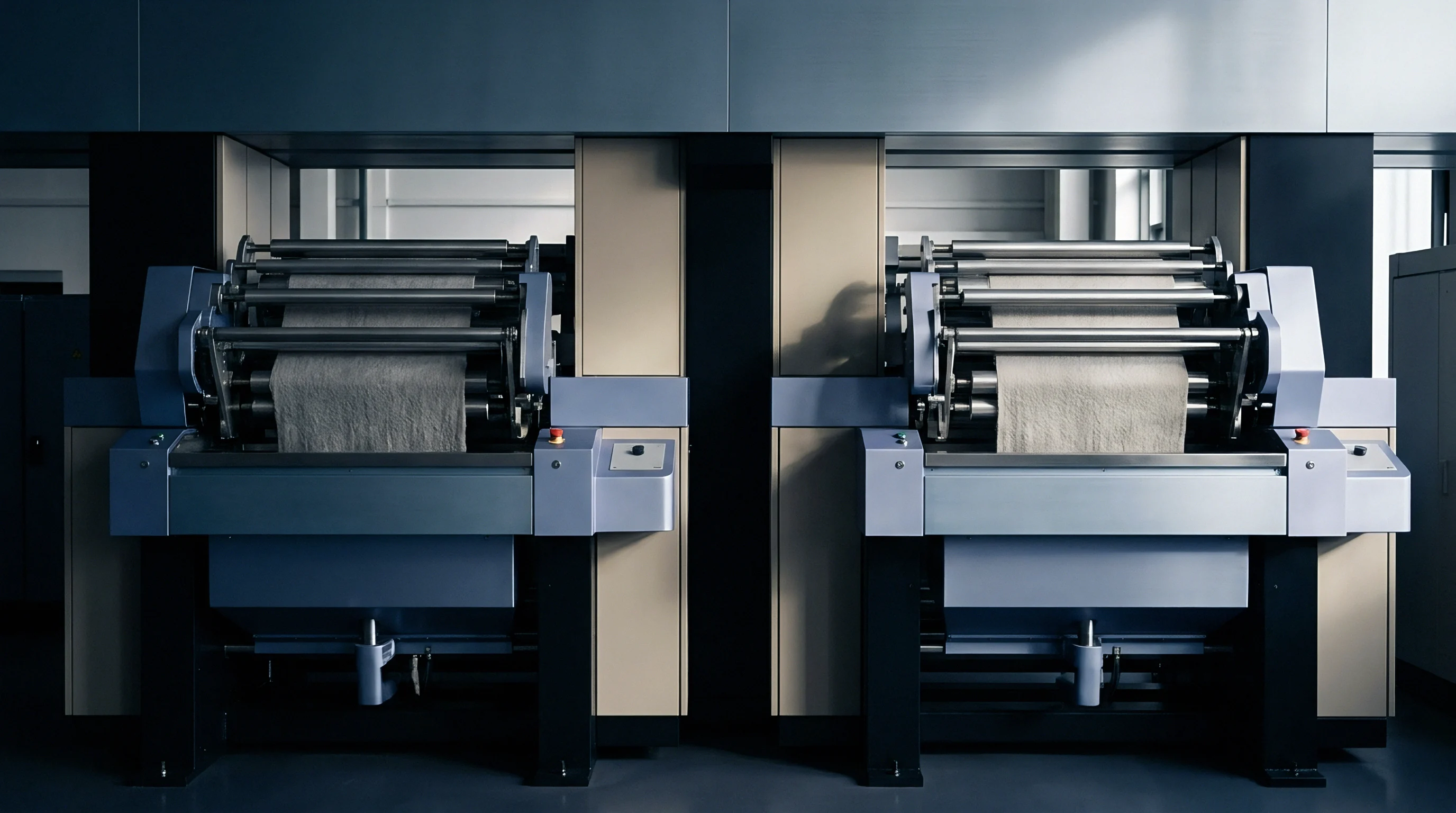
Maintaining uniform wet pick-up across thousands of metres of continuous heavy twill production requires online radiometric or microwave mass measurement systems. High-precision gauge frames positioned immediately after the pad-mangle squeeze rolls continuously scan the wet fabric width. Comparing incoming greige fabric dry mass with post-squeeze wet mass yields real-time wet pick-up percentages across selvedges and center channels.
Radiometric beta-gauge or microwave absorption sensors feed data directly to automated pneumatic squeeze roll controls. When the online monitoring system detects a drop in wet pick-up below the target 65% setpoint, pneumatic pressure actuators automatically reduce squeeze roll loading. If wet pick-up spikes toward 75%, indicating potential drying migration risks, the closed-loop controller increases specific nip pressure in increments down to 0.1 bar adjustments.
Continuous liquor delivery systems prevent chemical concentration shifts caused by differential absorption rates between water and chemicals. Heavy mercerized twills exhibit high water absorption rates due to swelling, which can cause tailing if the bath is replenished with static bulk formulations. Automated dosing units meter dye stock solutions and water separately using magnetic flow meters, maintaining constant chemical concentrations based on real-time fabric mass throughput.
Calibrating continuous liquor delivery systems on heavy mercerized twill lines follows an exact operational protocol.
- Calculate the baseline dry fabric mass per linear metre using conditioned sample swatches tested under ISO 3801 standards.
- Set target wet pick-up percentage based on fabric weight, yarn twist factor, and BAN values established during pre-production lab trials.
- Zero the online traversing moisture sensors against dry fabric at line operating speed to establish the mass tare baseline.
- Fill the padding trough to minimum operating level using automated liquid level probes tied to fast-acting pneumatic feed valves.
- Engage fabric feed at baseline line speed and apply initial calculated squeeze pressure, monitoring real-time wet pick-up display output.
- Adjust side-to-side differential pressure cylinders until pick-up values across left, center, and right channels match within a 1.5% tolerance band.
- Lock closed-loop control feedback between the online radiometric sensor array and pneumatic squeeze regulators before commencing bulk run dosing.
Standard supply agreements require wet pick-up variance across a ten-thousand-metre continuous dye lot to remain within a plus or minus two percent absolute bandwidth.
If the online monitoring system fails, manual wet pick-up verification must be executed using gravimetric cut-and-weigh sampling at every roll changeover.
Ledger

Thermal and Financial Yield Dynamics
Optimizing wet pick-up directly determines the financial performance of continuous wet processing lines. The latent heat of vaporization for water requires 2260 kilojoules per kilogram of water evaporated. Running a 380 gsm mercerized heavy twill line at 80% wet pick-up instead of an optimized 65% pick-up adds 0.057 kilograms of water per square metre that stenters or steam cans must evaporate during drying.
Consider a 30,000-metre production run of 1.6-metre wide 380 gsm mercerized cotton twill processed on a continuous dyeing line. At 80% wet pick-up, total liquid mass retained by the cloth equals 14,592 kilograms. At an optimized 65% wet pick-up, total liquid mass retained drops to 11,856 kilograms.
Reducing wet pick-up by 15% eliminates 2,736 kilograms of water evaporation requirements over the run.
| Wet Pick-Up Setting (%) | Total Water Retained (kg) | Evaporation Energy Required (MJ) | Natural Gas Consumed (m³) | Maximum Stenter Speed (m/min) | Thermal Cost per Metre (USD) |
|---|---|---|---|---|---|
| 80 | 14,592 | 32,978 | 880 | 28 | 0.038 |
| 72 | 13,133 | 29,681 | 792 | 33 | 0.034 |
| 65 | 11,856 | 26,795 | 715 | 42 | 0.029 |
| 58 (Unsafe Core Penetration) | 10,579 | 23,909 | 638 | 48 | 0.026 |
In addition to direct energy savings, lowering wet pick-up allows significant increases in stenter line speed. Lower moisture mass loading prevents the drying chamber from becoming thermal-capacity bottlenecked, increasing line speed from 28 metres per minute to 42 metres per minute. This 50% throughput increase reduces machine hourly overhead allocation per finished metre, increasing total plant margin.
Reducing wet pick-up on heavy twill from eighty to sixty-five percent increases stenter throughput speed by fifty percent while lowering thermal energy costs per metre below three cents.
Squeezing too aggressively to reach low wet pick-up values introduces significant commercial risks. Wet pick-up set below 60% on heavy twills produces core shade starvation and poor crocking fastness, causing bulk lot rejections that eliminate all drying energy savings. Unprocessed chemical migration caused by overly high initial pick-up produces shade listiness, requiring strip-and-redye sequences that triple total wet-processing unit costs per metre.
Correct balance optimizes moisture retention at the lowest level that guarantees complete yarn core penetration.