Accounting for Wet Finishing Mass Additions in Commercial Mill Procurement
Accounting for wet finishing mass additions separates greige fiber weight from chemical solids to prevent yield overbilling and structural fabric downgrades.
Scale
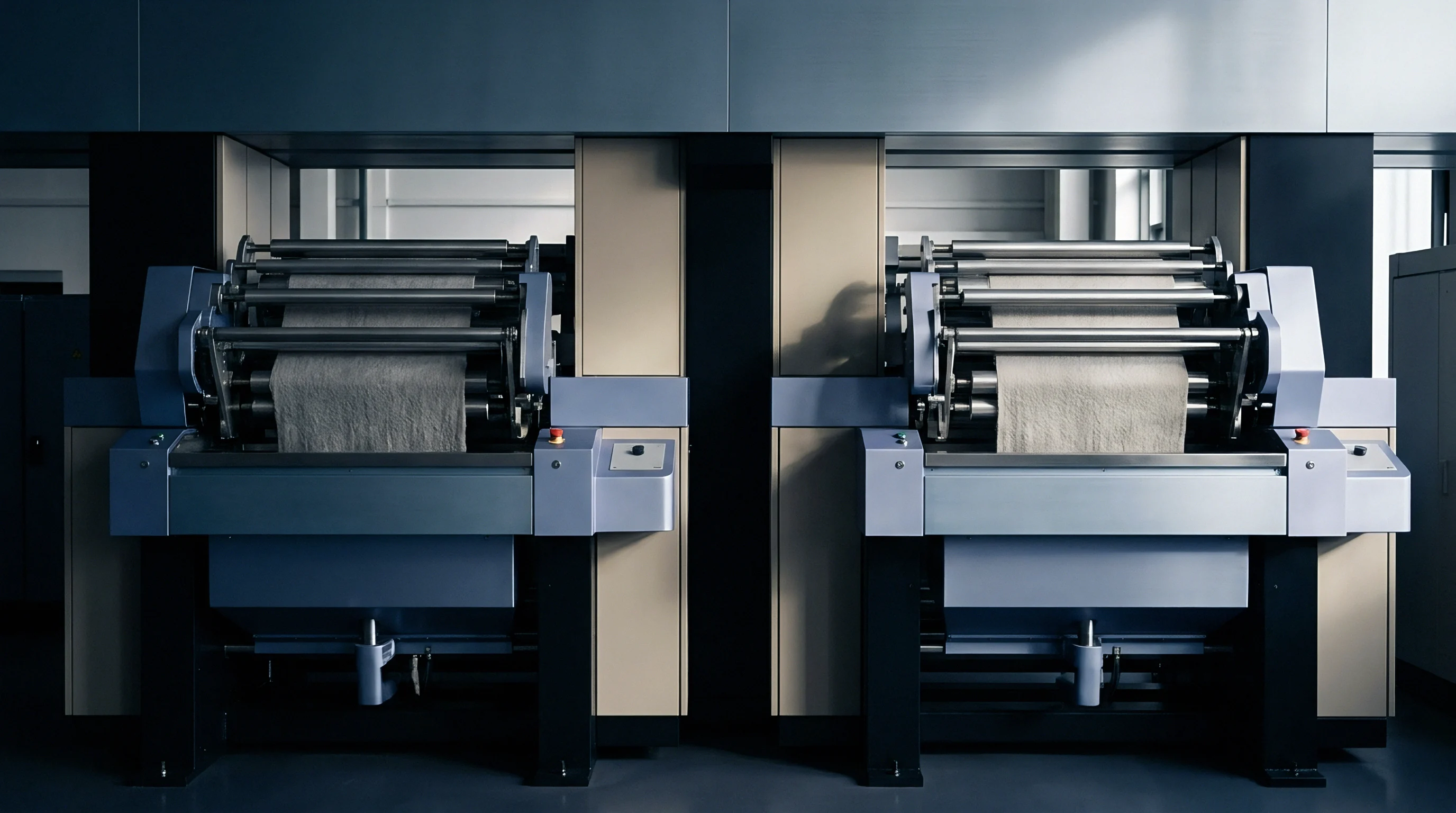
Continuous wet processing subjects greige textile substrates to chemical bath immersions that alter finished mass. During pad-dry-cure finishing, aqueous emulsions containing water repellents, softeners, flame retardants, or cross-linking resins penetrate yarn bundles and coat individual filaments. As the liquid carrier evaporates inside the stenter housing, non-volatile chemical solids remain permanently or semi-permanently bound to the fibers.
This mass accumulation creates a divergence between the greige fabric weight off the loom or knitting frame and the final commercial roll weight documented on factory invoices.
Commercial mill transactions frequently price finished cloth by mass per unit area or total roll weight. When chemical finishes contribute between 2 percent and 15 percent of the total finished fabric weight, purchasing fabric based solely on finished mass inflates the effective price paid per kilogram of real fiber. Squeegee pressure changes wet pickup.
Bath concentration shifts over time. Without detailed accounting of wet finishing mass additions, procurement teams risk paying raw material rates for chemical additives that cost a fraction of the primary fiber substrate.
Physical Mechanics of Wet Chemical Additions
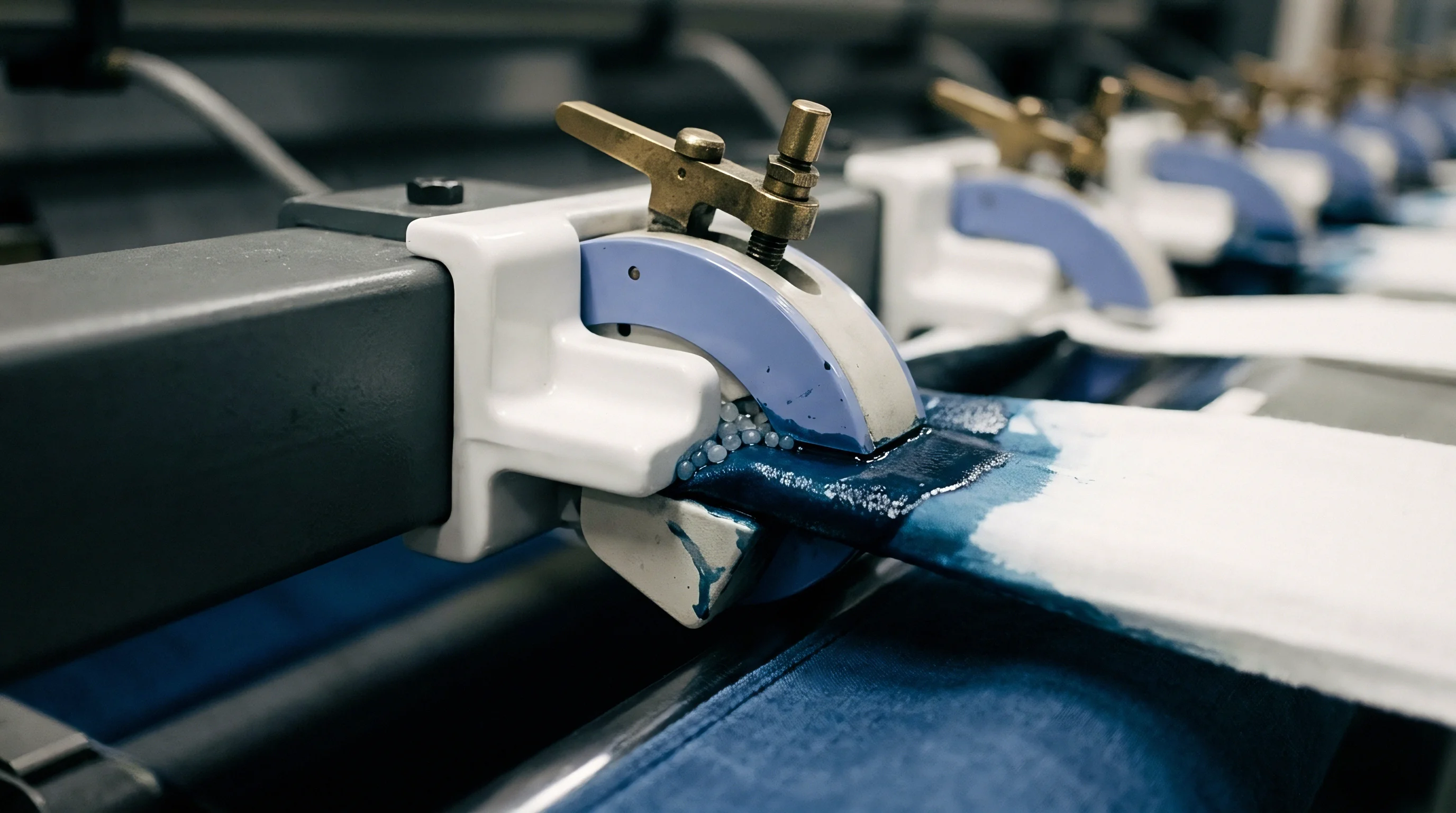
Padding mangles force aqueous finishing formulations into the interstitial voids between woven or knitted yarns. Squeegee rollers exert mechanical pressure across the fabric width to strip excess liquid, leaving a controlled quantity of wet liquor within the structure. Hydrophobic polymers resist wet penetration.
The mass of wet chemical solution retained by the fabric relative to its dry greige mass defines the wet pickup percentage. High wet pickup ensures thorough chemical penetration but demands substantial thermal energy to evaporate the water carrier during stenter passage.
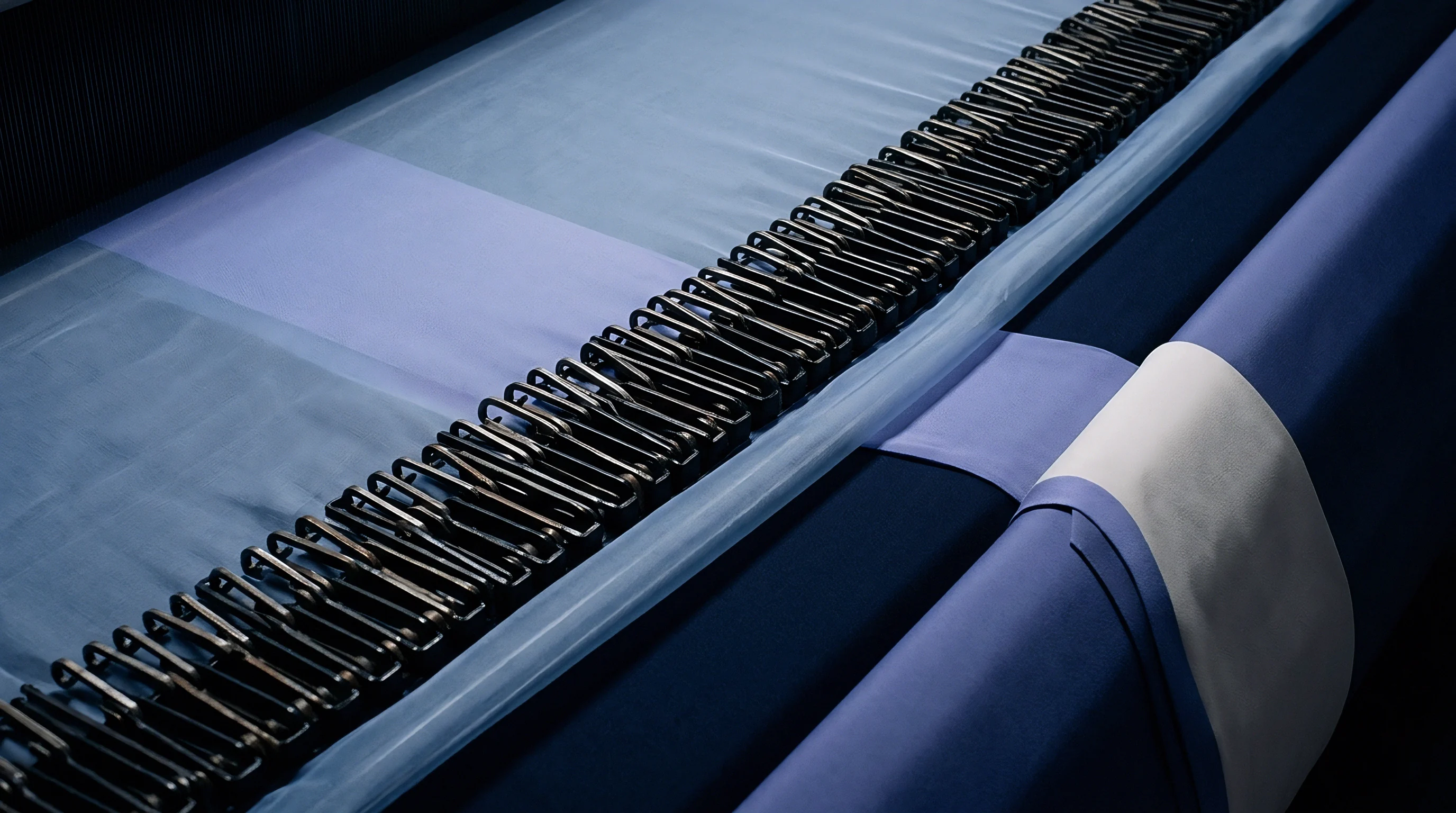
Drying and curing phases convert the liquid film into solid surface deposits or cross-linked polymeric networks. Water evaporates on stenter pins. As steam exits the dryer exhaust, dissolved and emulsified active ingredients settle onto fiber surfaces and within cell walls.
Binder solids accumulate on stenter clips. The dry mass addition represents the actual weight of active chemical solids deposited per square metre of cloth. Chemical bath solids vary.
Variations in wet pickup across the width of a pad mangle directly create broad-to-selvedge weight gradients that compromise downstream garment cutting accuracy.
- Non-Uniform Liquor Squeezing occurs when pad roller shore hardness degrades or pneumatic pressure cylinders drift, causing asymmetrical chemical deposition across the usable fabric width.
- Thermomigration During Drying drives active chemistry toward fabric surfaces when stenter temperature profiles heat the wet sheet too aggressively before initial moisture loss completes.
- Differential Fiber Swelling alters wet pickup between core cellulosic fibers and synthetics, yielding variable active solids pickup in blended yarn constructions.
- Bath Concentration Drift develops during continuous runs as selective fiber absorption depletes active chemical molecules faster than the liquid carrier replenished from storage tanks.
Distinguishing Wet Pickup from Dry Mass Addition
Liquid retention ratios measure the weight of chemical solution absorbed by fabric prior to stenter evaporation. Squeezing nip pressure, fabric speed, immersion time, and greige absorbency govern this value. A 100 percent cotton woven fabric typically exhibits a wet pickup between 65 percent and 80 percent on a standard two-roll pad mangle.
Synthetic fabrics like polyester or nylon absorb less liquid internally, yielding wet pickup values between 30 percent and 50 percent under identical mechanical pressure.
Dry mass addition measures the solid chemical residue remaining on the fabric after complete moisture elimination. Calculating dry add-on requires multiplying the wet pickup percentage by the concentration of non-volatile solids suspended in the pad liquor. A fabric exhibiting 70 percent wet pickup immersed in a bath with 10 percent active solids receives a nominal dry mass addition of 7 percent relative to its dry greige mass.
Fiber density remains unchanged.
Commercial mill invoices calculated on finished roll weight convert low-cost padding chemistry into fiber-rate purchase charges.
Mill technicians routinely adjust wet pickup rates to compensate for worn mangle rollers or to accelerate drying speeds on overloaded stenters. If a dyehouse increases bath solids concentration to maintain performance while reducing wet pickup, the dry add-on percentage remains stable despite operational shifts. Conversely, if a mill increases wet pickup without diluting the pad liquor, the fabric absorbs excess active chemical mass.
This unaccounted weight gain inflates finished mass per square metre while potentially degrading fabric hand feel, seam slippage performance, and tear strength. How does an auditor determine whether a 10 GSM weight increase stems from denser yarn insertion or from excessive chemical bath loading?
Liquor
Calculating chemical solids deposition requires establishing strict mathematical relationships between bath dilution and roll weight. Finishing liquor consists of active functional agents, emulsifiers, wetting agents, and solvent or water carriers. Precision dosing systems supply these components into mixing vats to maintain precise concentration targets during bulk continuous finishing runs.
The total weight of finished fabric combines the dry greige fiber mass, the non-volatile chemical add-on mass, and the equilibrium moisture regain. Standard ambient humidity alters measured weight continuous fabric rolls absorb from atmospheric air. Accounting procedures separate moisture adjustments from permanent chemical add-ons to prevent environmental humidity changes from obscuring chemical bath variations.
Mathematical Formulation of Dry Add-On Yields
Mill technicians determine final chemical weight gains through double-weighing protocols before padding and after stenter curing. The formula for wet pickup percentage evaluates the mass difference between the wet padded fabric and the oven-dry greige substrate:
Wet Pick-Up Percentage = ((Mass of Wet Padded Fabric – Mass of Dry Greige Fabric) / Mass of Dry Greige Fabric) 100
Determining the final dry chemical add-on percentage requires incorporating the bath solids fraction into the wet pickup result:
Dry Add-On Percentage = Wet Pick-Up Percentage (Bath Active Solids Percentage / 100)
Take a bulk procurement order involving 10,000 linear metres of a 200 GSM woven polyester-cotton blend fabric at a finished width of 1.5 metres. The total finished surface area equals 15,000 square metres. The contract target weight equals 200 grams per square metre, yielding an expected total order mass of 3,000 kilograms.
The dyehouse applies a fluorocarbon water-repellent finish combined with a polyurethane binder. The pad bath contains 12 percent active solids, and the pad mangle operates at a 65 percent wet pickup rate. The resulting dry add-on percentage equals 7.8 percent of the greige fiber mass.
Under these operating parameters, every square metre of finished cloth contains 185.53 grams of conditioned fiber and 14.47 grams of dry chemical residue. The 10,000-metre production lot delivers 2,783 kilograms of clean textile fiber and 217 kilograms of solid chemical finish. If the procurement contract prices fabric at 8.50 USD per kilogram based on total finished weight, the buyer pays 1,844.50 USD solely for the chemical add-on mass.
If the raw active chemical bath costs the finishing mill 2.20 USD per kilogram of dry solids, the chemical component of the lot costs the mill 477.40 USD. The spread yields an unearned margin of 1,367.10 USD for the supplier if chemical weight is billed as fiber weight.
Conditioned dry add-on for fluorocarbon repellents on 100 percent cotton twill ranges between 1.5 percent and 2.2 percent of greige weight.
Impact of Solute Concentration on Mass Deposition
Increasing active chemical solids in continuous baths elevates total mass retention proportionally. High-density functional finishes like organophosphorus flame retardants or heavy back-coatings deposit substantial mass onto light woven fabrics. Wet pickup drops at higher speeds.
The table below outlines typical wet pickup rates, bath concentrations, and final dry add-on percentages across primary commercial finishing categories.
| Chemical Application Class | Application Method | Typical Wet Pick-Up Range % | Dry Solids Concentration % | Finished Mass Addition Range % | Standard Test Reference |
|---|---|---|---|---|---|
| Pad-Dry-Cure | 55 – 75 | 3.0 – 6.0 | 1.6 – 4.5 | AATCC 22 / ISO 4920 | |
| Pad-Dry-Cure | 60 – 80 | 8.0 – 15.0 | 4.8 – 12.0 | AATCC 124 / ISO 7768 | |
| Pad-Dry-Cure | 65 – 85 | 15.0 – 30.0 | 9.8 – 25.5 | ISO 6941 / ASTM D1230 | |
| Knife-Over-Roll | N/A (Direct Solvated) | 25.0 – 45.0 | 8.0 – 20.0 | ISO 1421 / ASTM D751 | |
| Exhaust / Pad | 50 – 70 | 2.0 – 5.0 | 1.0 – 3.5 | ASTM D1388 / ISO 9073-7 | |
| Data normalized to ISO 139 standard atmosphere conditioning (20°C, 65% RH). Mass addition calculated as percentage of oven-dry greige fabric mass. | |||||
Executing accurate mass balance accounting across bulk finishing production follows a structured sequence on the dyehouse floor.
- Cut a one-square-metre swatch from the un-padded greige fabric roll, seal it immediately in a vapor-tight bag, and weigh it to establish initial greige wet mass.
- Dry the swatch in a ventilated laboratory oven at 105°C until reaching constant weight to calculate initial moisture content and dry greige mass.
- Pass the greige swatch through the production pad mangle containing the prepared chemical formulation under standard nip pressure and line speed.
- Weigh the wet padded swatch immediately upon exiting the mangle to determine the wet padded mass before moisture loss occurs.
- Calculate wet pickup percentage using the difference between wet padded mass and oven-dry greige mass.
- Pass the padded fabric through the stenter drying and curing zones under specified temperature profiles.
- Condition the cured fabric swatch in an ISO 139 atmosphere for 24 hours prior to taking final conditioned mass readings.
- Perform solvent extraction on the cured swatch to verify active solids mass gain against calculated theoretical addition.
Failing to account for liquor concentration shifts during continuous finishing runs leads to severe billing disputes when mills bill buyers for target fabric weights achieved through chemical overloading rather than structural yarn density.
Substitution
Commercial fabric transactions frequently penalize buyers who specify finished fabric mass without locking greige density parameters. When purchase orders set a target finished weight of 250 GSM without detailing minimum warp ends, weft picks, or yarn counts, converting mills obtain an opportunity for structural substitution. Greige mass dictates structural strength.
The mill reduces the structural fiber content on the loom and compensates for the missing mass by applying heavy cross-linking resins, softeners, or weighting agents on the stenter.
This structural substitution preserves nominal roll weight while reducing the raw material cost of the fabric. Polyester and cotton spun yarns represent a far higher cost per kilogram than industrial cross-linking resins or starch-based backfillers. Resins alter structural weight calculations.
When low-cost chemistry replaces structural fiber, the finished fabric meets nominal mass targets on the scale but fails mechanical durability tests after repeated laundering cycles.
Why Do Chemical Add-Ons Skew Commercial Yield Calculations?
Procurement managers negotiating fabric contracts on a price-per-kilogram basis pay top-tier textile prices for low-cost finishing agents. A 10 percent chemical mass addition on a 300 GSM workwear twill replaces 30 grams of structural fiber per square metre with chemical solids. Over a 50,000-metre procurement order at 1.5 metres width, this substitution converts 2,250 kilograms of real load-bearing yarn into synthetic resin solids.
The dry margin holds. The financial losses accumulate across cut-and-sew operations, where chemical coatings lower fabric tear resistance, increase needle heating, and accelerate seam slippage during garment assembly.
Yield calculations based on finished mass create false purchasing comparisons between competing suppliers. Mill A offers a 200 GSM finished twill constructed from 190 GSM greige cloth with a 10 GSM functional finish. Mill B offers a 200 GSM finished twill built from 170 GSM greige cloth loaded with a 30 GSM low-cost stiffening resin.
Mill B produces the fabric at substantially lower yarn cost while quoting an identical finished weight. Without analyzing the breakdown between structural fiber mass and chemical add-on mass, procurement managers misidentify Mill B as the more efficient producer.
Heavier chemical add-ons lower yarn sliding friction while masking structural deficits in greige pick density.

Greige Construction Downgrades under Finished Weight Targets
Unscrupulous weavers deliberately reduce warp end counts or weft pick density when downstream resin padding adds substantial solids. A standard 3/1 heavy twill specification requiring 42 ends per centimetre and 24 picks per centimetre can be reduced to 38 ends and 20 picks. The resulting greige weight drops by roughly 8 percent.
By increasing the bath concentration of a durable press glyoxal resin from 5 percent to 12 percent, the finishing plant restores the total roll weight to the target specification. Desizing extracts starch binders.
Mechanical performance suffers immediately when chemical solids substitute for structural yarns. While resin additions increase fabric stiffness and initial bursting strength, they reduce yarn mobility within the weave structure. Lower yarn mobility focuses tensile stresses on individual threads rather than distributing loads across adjacent yarns, drastically reducing Elmendorf tear strength.
Once the end user launders the garment, non-durable chemical fillers wash away, exposing the sparse greige construction. The garment loses dimensional stability, suffers severe pilling, and drops below minimum bursting strength limits. Suppliers defend these finished weight variations by stating that overall roll weight matches the purchase order specification and that chemical processing parameters remain proprietary factory assets.
Assay
Quantifying true structural yarn content demands rigorous chemical stripping of all organic and inorganic finishes. Analytical laboratories separate chemical add-on mass from raw fiber mass using standardized solvent extraction and chemical digestion methods. Performing these tests protects commercial buyers from paying fiber-rate prices for non-fibrous additives.
Standard mass determination protocols dictate that fabric swatches undergo complete conditioning in controlled atmospheres prior to weighing. ISO 3801 defines standardized procedures for measuring mass per unit area, but full compliance requires stripping non-durable and durable chemical finishes when assessing structural compliance. Solvents strip unfixed active solids.
Combining quantitative chemical extraction with ISO 139 conditioning isolates pure, dry fiber mass from fugitive moisture and applied chemistry.

Solvent Extraction Procedures for Chemical Removal
Continuous Soxhlet washing isolates applied finishes by dissolving active polymer films without degrading core textile fibers. Swatches undergo sequential extraction using polar and non-polar solvents. Organic solvents like dichloromethane extract waxes, oils, silicone softeners, and fluorocarbon polymers.
Water extraction removes water-soluble binders, starches, and unfixed dye salts.
Chemical digestion techniques remove cross-linked thermosetting resins that resist physical solvent dissolution. Acid hydrolysis breaks down formaldehyde-based durable press resins and urea-formaldehyde weighting agents. By weighing the clean, dried specimen after chemical stripping and comparing it to the initial conditioned mass, laboratory technicians determine the exact chemical add-on percentage to within 0.1 percent accuracy.
| Target Chemical Finish | Primary Extraction Solvent | ISO / AATCC Standard | Extraction Temp / Time | Residual Correction Factor |
|---|---|---|---|---|
| Dichloromethane (CH2Cl2) | ISO 3071 / AATCC 97 | 40°C / 4 Hours Soxhlet | 1.00 (No fiber loss) | |
| Tetrahydrofuran (THF) | ISO 1833-1 / AATCC 20A | 60°C / 6 Hours Soxhlet | 1.01 (Minor synthetic swell) | |
| 0.1M Hydrochloric Acid | ISO 1833-3 | 80°C / 45 Mins Digestion | 1.02 (Cellulosic mass shift) | |
| Petroleum Ether (40-60°C) | ISO 5079 / AATCC 97 | 50°C / 3 Hours Soxhlet | 1.00 (No fiber loss) | |
| Toluene / Acetone (1:1) | ISO 17881 / ASTM D2724 | 56°C / 5 Hours Soxhlet | 1.01 (Polyester swell) |
Standard Conditioning and Moisture Regain Corrections
Atmospheric humidity drastically fluctuates textile mass measurements unless specimens achieve equilibrium in controlled environments. ISO 139 mandates testing conditions of 20°C (± 2°C) temperature and 65 percent (± 4 percent) relative humidity. Fibers absorb environmental water vapor based on their specific regain values.
Cotton exhibits a standard moisture regain of roughly 8.5 percent, whereas polyester retains only 0.4 percent under identical atmospheric conditions.
Moisture conditioning resets standard mass. When auditing incoming bulk fabric rolls, laboratory staff must oven-dry swatches at 105°C to obtain the absolute dry mass. The commercial mass is then calculated by applying the official standard moisture regain allowance to the dry fiber mass, completely excluding chemical finish mass additions.
Moisture regain calculation uses the following formula:
Commercial Mass = Oven Dry Fiber Mass (1 + (Standard Moisture Regain Percentage / 100))
ISO 3801 testing without prior chemical extraction credits active resin mass toward nominal fabric weight specifications.
Auditing procedures must isolate applied chemical mass from natural fiber regain. Verifying compliance against a commercial contract demands an unannounced extraction dossier for incoming lots.
- Soxhlet Extraction Dossiers quantify total non-fibrous mass through continuous solvent washing across four distinct boiling cycles.
- Desized Greige Verification provides the true baseline fiber mass per square metre prior to stenter padding and chemical deposition.
- Conditioned Mass Standardization eliminates ambient relative humidity distortions by holding test swatches in climate-controlled chambers for 24 hours.
- Infrared Spectroscopic Profiles establish chemical compound signatures to detect unapproved inorganic weightings or heavy starch fillers.
Unextracted laboratory weight tests reliably favor the selling mill when chemical mass additions remain hidden inside total roll weights.

Valuation
Financial terms in commercial purchase contracts account for mass variations introduced on finishing stenters. Procurement practices that fail to separate fiber costs from chemical finishing expenses expose buyers to structural cost inflation and unearned supplier margins. Mill yield calculations shift profits.
Establishing landed yield pricing models protects commercial operations against weight inflation schemes.
Contract specifications must enforce dual-weight accounting. Dual-weight accounting defines a target greige mass per square metre alongside an explicit, bounded tolerance for chemical add-on mass. By establishing independent metrics for structural fiber weight and functional chemical additions, buyers ensure that finished fabric weight targets reflect true yarn insertion density rather than heavy chemical loading.
Structuring Commercial Fabric Invoices by Fiber Mass
Invoicing fabric based on greige mass plus verified dry add-on protects buyers from paying fiber prices for heavy padding resins. When procuring high-value technical textiles, modern supply contracts utilize a unbundled pricing structure. The contract specifies a fixed price per kilogram for the raw greige fabric, linked directly to verified end and pick construction counts.
The chemical finish application is billed as a separate flat processing fee per linear metre based on verified active chemical solids consumption.
This unbundled pricing methodology eliminates the mill’s financial incentive to over-apply chemical finishes or replace greige fiber with cheap resins. If the finishing line consumes additional chemical solids due to process inefficiency, the mill absorbs the chemical cost without receiving additional fabric weight revenue. Conversely, if the mill optimizes wet pickup and reduces chemical consumption while maintaining performance, the financial savings pass transparently to the buyer.

Contractual Tolerances for Chemical Additions
Commercial agreements establish upper and lower limits on allowable mass gains from chemical finishing operations. A robust fabric purchase specification mandates a maximum chemical add-on ceiling, typically set between 2.0 percent and 5.0 percent for standard functional finishes like fluorocarbon repellents or softeners. Heavy functional finishes like flame retardants or back-coatings carry explicit individual add-on ranges detailed in the master purchase contract.
Contracts enforce financial penalties when chemical add-on percentages breach agreed boundaries. If chemical extraction testing reveals that finish solids exceed the contractual ceiling, the invoice mass is automatically adjusted downward to match the maximum allowed chemical weight. If chemical add-on falls below the contractual floor, the lot faces immediate rejection due to compromised functional performance.
The standard contract clause specifies that finished mass calculations for payment purposes shall be based exclusively on the oven-dry extracted fiber mass plus standard moisture regain, plus the contractually capped chemical add-on percentage, rejecting any excess chemical mass from invoice weight totals.