Quantifying Hydraulic Nozzle Shear Limits in Micro Denier Elastomeric Warp Knit Wet Processing
Exceeding 0.35 bar nozzle pressure in micro-denier elastomeric knits ruptures filaments and bare elastane; cap differential pressure to 0.22 bar on overflow jets.
Velocity
High-temperature jet dyeing exposes micro-denier polyamide 6.6 and micro-polyester warp knits to substantial fluid dynamic stress. Filaments below 1.0 dpf have minimal flexural rigidity and high specific surface area. When knit alongside bare or covered elastane in fine gauges, the resulting rope degrades quickly under mechanical agitation.
Dye liquor pumped through the jet nozzle transfers the kinetic energy needed to circulate the fabric rope through the chamber entirely via hydrodynamic drag. If liquor velocity through the nozzle throat rises too high, steep velocity gradients form across the boundary layer against the moving fabric face. High shear rates in this boundary layer exert direct tensile and abrasive forces on individual micro-filaments and bare elastane cores.
Fluid shear stress inside a circular venturi nozzle scales quadratically with liquor flow velocity. In standard pipe flow, higher pump impeller speeds produce exponential spikes in wall shear stress. For micro-denier warp knits, differential nozzle pressure (Δ P) serves as the primary index of mechanical energy delivered to the bath.
Exceeding 0.45 bar differential pressure creates turbulent flow inside the nozzle chamber. Turbulent eddies strip away boundary lubrication, forcing filaments into direct contact with internal nozzle walls and adjacent rope loops. The resulting shear frequently surpasses the wet yield strength of fine micro-filaments, causing scuffing and micro-fibrillation before shade leveling is complete.
Hydrodynamic Forces inside Jet Dyeing Venturi Nozzles
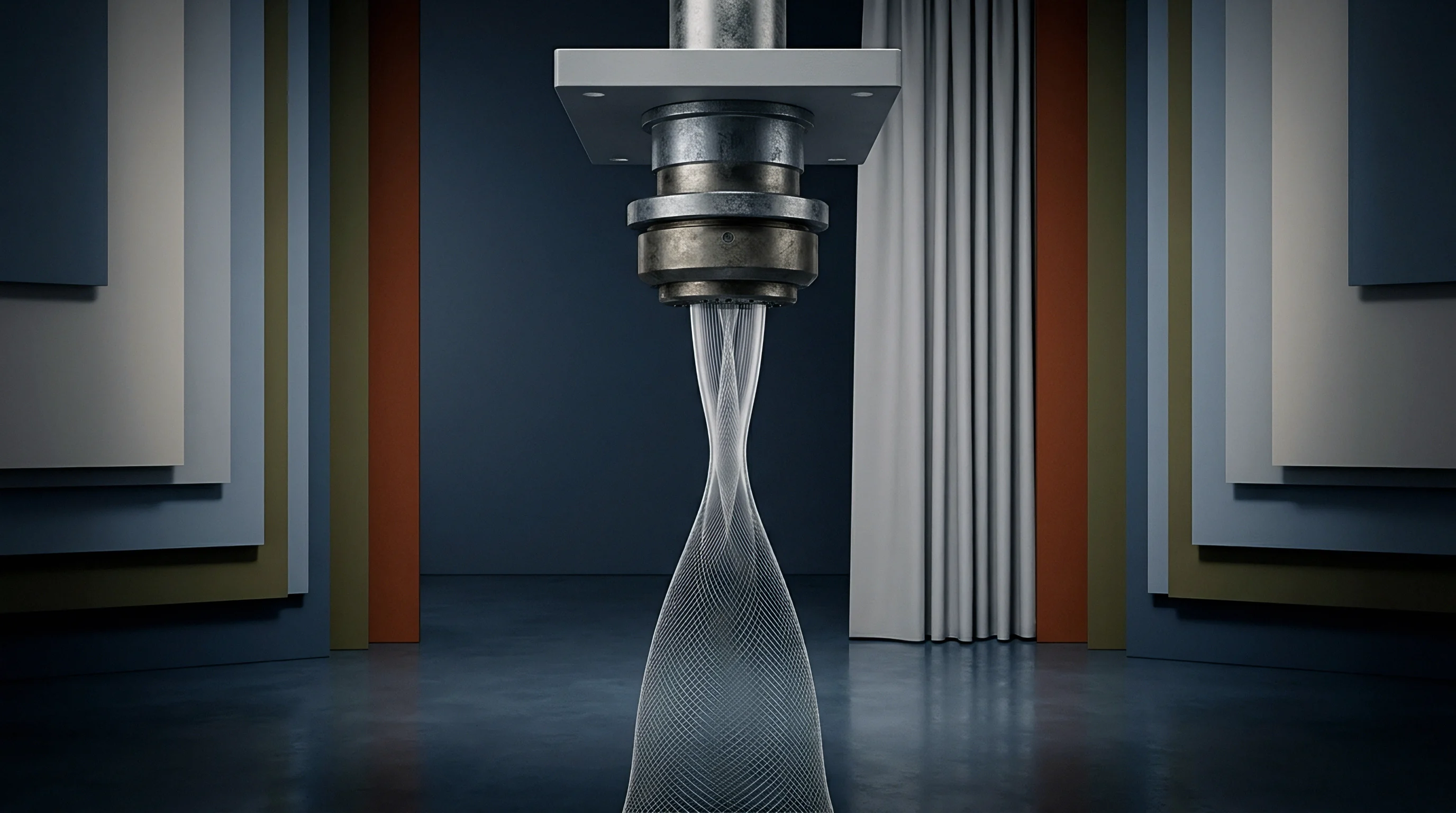
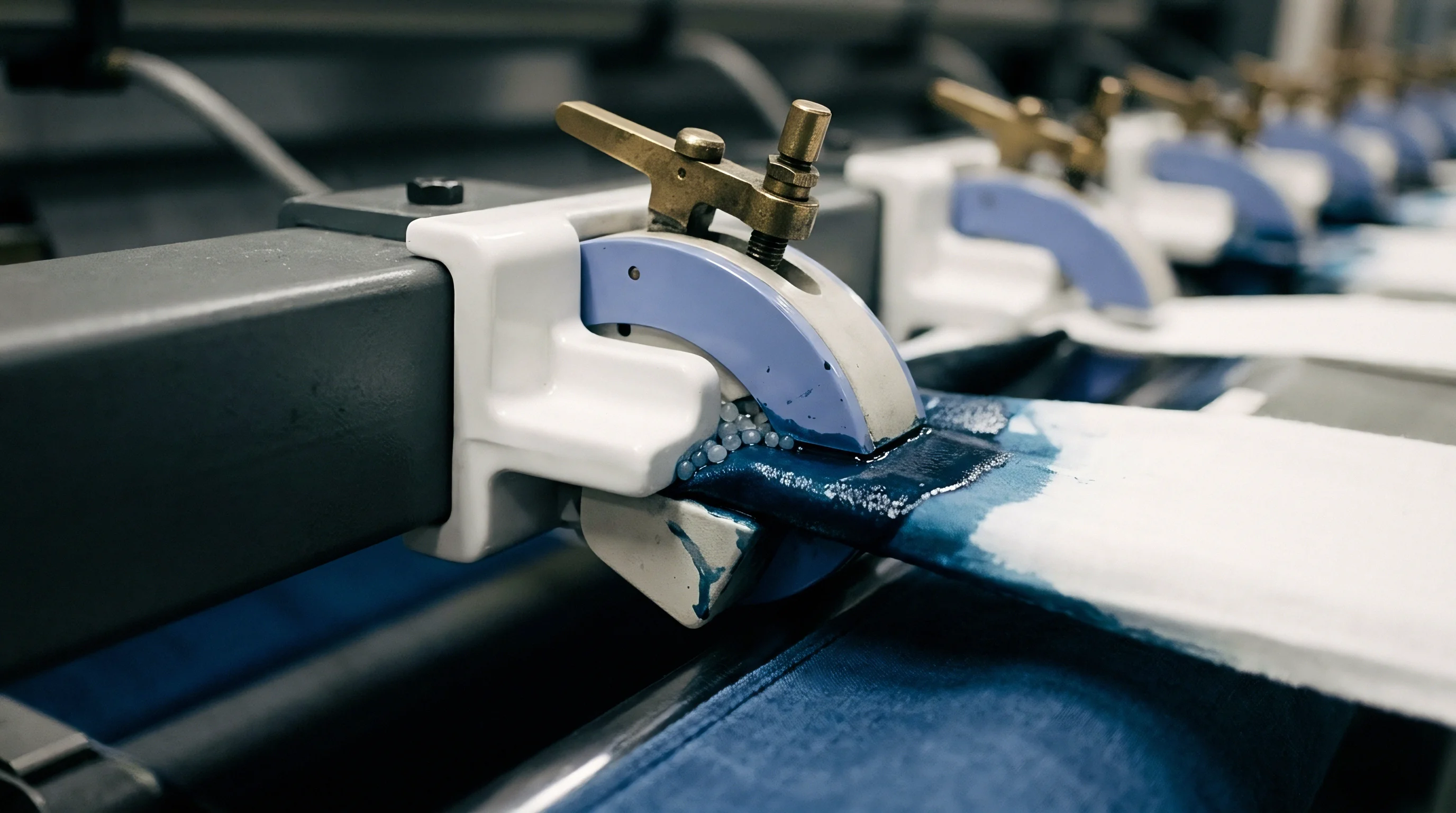
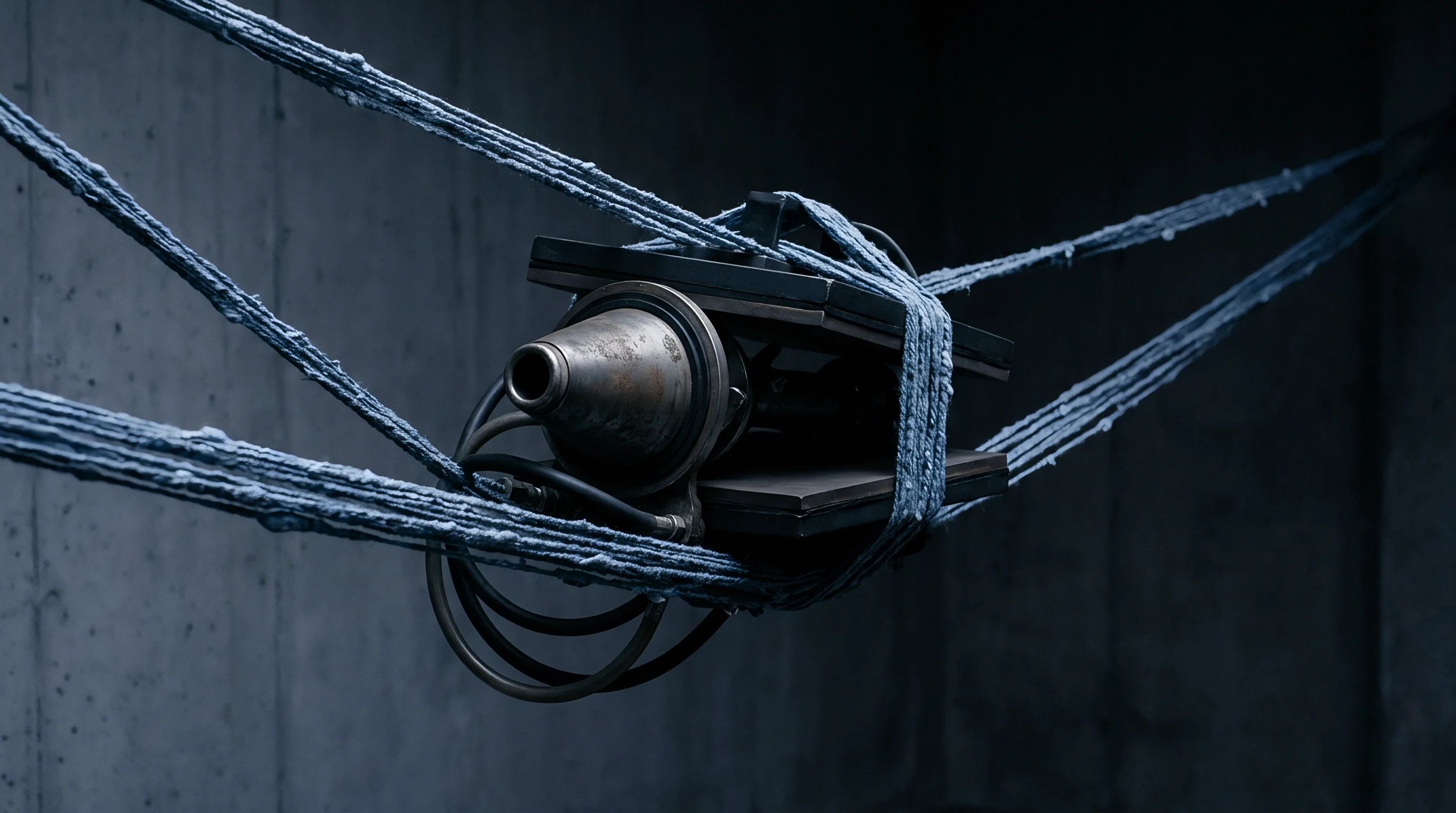
Venturi nozzles accelerate dye liquor by constricting cross-sectional area to build kinetic energy. As liquor enters the converging cone, fluid velocity climbs while static pressure falls, drawing the fabric rope through the throat. Shear stress peaks along the perimeter where surface yarns meet the high-speed liquid stream.
Because micro-denier filaments often measure under 10 micrometres in diameter, they offer little resistance to lateral hydrodynamic deformation. Fluid forces push outer filaments outward from the yarn core, exposing them directly to local velocity vectors, increasing the rope’s effective drag coefficient, and concentrating mechanical load across the knit structure.
Hydrodynamic drag depends on fluid density, projected surface area, and the square of relative velocity between liquor and fabric. Micro-denier warp knits present up to four times the surface area of standard-denier fabrics of equivalent weight. Consequently, liquor drag on a micro-denier rope at a given nozzle velocity is significantly higher than on conventional knits.
That elevated drag creates heavy axial tension along the length of the fabric rope. Under hot wet processing conditions, high axial tension pulls elastomeric yarns past their linear elastic limit, inducing permanent structural elongation, elastane core slippage, and altered fabric density across the finished roll.
| Nozzle Diameter (mm) | Liquor Flow Rate (L/min) | Mean Fluid Velocity (m/s) | Differential Pressure (bar) | Calculated Wall Shear Stress (Pa) | Observed Surface Fibrillation Status |
|---|---|---|---|---|---|
| 140 | 850 | 0.92 | 0.20 | 14.2 | Zero Fibrillation Observed |
| 120 | 850 | 1.25 | 0.32 | 24.8 | Trace Micro-Scuffing |
| 100 | 850 | 1.80 | 0.48 | 48.5 | Moderate Fibrillation Approved Boundary |
| 80 | 850 | 2.82 | 0.75 | 112.0 | Severe Filament Failure Rejected |
| 60 | 850 | 5.01 | 1.35 | 310.4 | Structural Destruction Rejected |

Critical Flow Velocity Thresholds for Micro-Filaments
Setting an upper fluid velocity limit protects fiber structure while maintaining liquor circulation. Micro-denier yarns of 0.5 dpf polyamide 6.6 lose structural coherence when localized fluid shear stress exceeds 50 Pa at processing temperatures above 110 degrees Celsius. In standard circular nozzle geometries, this critical shear threshold corresponds to a maximum fluid velocity of roughly 1.85 metres per second relative to fabric rope speed.
Exceeding this limit causes individual micro-filaments to buckle and fracture under combined drag and bending stresses. Once micro-filament fracture begins on outer warp knit loops, tensile strength drops off quickly.
At a nozzle differential pressure of 0.50 bar and a liquor ratio of 1:6, fluid shear stress acting on a 0.5 dpf yarn bundle exceeds the tensile limit of individual micro-filaments, producing surface fibrillation within 20 minutes of dyeing at 130 degrees Celsius.
Fabric transport speed must stay matched to liquor flow rate to minimize velocity differentials in the nozzle throat. When fabric rope speed lags significantly behind fluid velocity, the relative speed difference maximizes wall shear stress against the slow-moving fabric boundary. This operational imbalance causes localized frictional heating and severe hydrodynamic scraping along the fabric surface.
Synchronizing fabric transport speed to within 10 percent of mean liquor velocity reduces hydrodynamic shear stress by over 60 percent. Modern jet dyeing machines use electronic circulation monitoring to adjust pump inverter frequencies in real time, preventing fluid velocity spikes during rapid heating phases.
Viscosity shifts during high-temperature dyeing cycles further complicate shear management. As bath temperatures rise from 40 degrees Celsius to 130 degrees Celsius, water viscosity drops by nearly 70 percent. This drop in dynamic viscosity raises the Reynolds number of the flow stream, prompting full turbulence at lower velocities.
Lower fluid viscosity also impairs the formation of a protective liquid film between the fabric rope and internal machine surfaces. Dyers must reduce pump speed as bath temperature approaches maximum dyeing limits to offset higher turbulence and thinner lubricating films.
Maintaining liquor volume near maximum pump capacity while dampening rope speed keeps transport smooth and protects vulnerable micro-denier bundles from mechanical abrasion.
Friction
Structural yarn parameters determine how elastomeric warp knits respond to hydrodynamic stresses inside wet processing machinery. Tricot and Raschel knits produced on 28 to 44 gauge machinery feature complex loop geometries under substantial internal tension. When these fabrics combine ultra-fine micro-denier synthetic yarns with bare elastane filaments, their mechanical performance during wet processing is governed by inter-fiber contact mechanics.
High-density knitting constructions restrict yarn movement within the stitch structure. Liquid dye liquor attempting to penetrate this dense lattice builds up high hydraulic backpressure inside the fabric rope, forcing circulating liquor around the rope perimeter rather than through its core and focusing fluid drag along exposed outer loops.
Inter-filament friction inside micro-denier yarn bundles changes dramatically upon liquid immersion. Dry micro-polyester or micro-polyamide yarns rely on spin finishes for filament cohesion and static control during knitting. Wet processing chemicals, including scouring detergents and wetting agents, strip these protective spin finishes during the initial pre-wash phase.
Without surface lubrication, the coefficient of friction between raw synthetic micro-filaments increases by a factor of three. Hydrodynamic shear forces applied to unlubricated micro-filament bundles force individual filaments to scrape against neighboring fibers within the same yarn structure, producing surface scuffing, lint generation, and severe fabric hairiness.
Warp Knit Structural Resistance to Fluid Shear
Loop length, runner length, and stitch density directly dictate the mechanical stability of warp knitted fabrics exposed to hydraulic forces. Tight tricot constructions with short loop lengths offer higher resistance to hydrodynamic shear than loose, open structures. Short loops constrain individual yarns, preventing fluid forces from pulling micro-filaments out of the fabric body.
However, tight constructions also restrict liquor flow through the fabric thickness, increasing overall hydrodynamic drag during transport through venturi nozzles. This elevated drag force pulls on the length of the fabric rope, inducing structural deformation along the warp direction while causing severe widthwise necking.
Machine gauge plays a decisive role in shear-induced fabric failure across high-stretch elastomeric knits. Under identical jet dyeing conditions using a 100 mm venturi nozzle at 0.40 bar differential pressure, 40-gauge tricot knitted with 0.5 dpf micro-denier yarn develops localized filament scuffing across 18 percent of its surface area, whereas 32-gauge fabric processed under the same hydrodynamic conditions shows zero visual scuffing. The tighter stitch density and higher specific surface area of the 40-gauge knit amplify localized fluid shear beyond the damage threshold of fine micro-filaments.
Micro-Denier Filament Fuzzing and Filament Rupture
Fibrillation and micro-denier filament rupture follow a distinct physical sequence during high-shear wet processing. Mechanical damage initiates when hydrodynamic drag forces exceed the axial tensile strength of surface micro-filaments weakened by thermal wet conditions. Filaments do not snap all at once across the yarn bundle; outer fibers fail sequentially as shear stress concentrates on exposed loop apexes.
Once an individual micro-filament breaks, fluid turbulence sweeps its loose ends outward to form tiny surface fibrils. These loose fibril ends catch against adjacent machine surfaces and neighboring fabric folds, accelerating further filament stripping and creating visible fabric fuzzing.
Surface scuffing degrades both physical performance and color appearance. Fractured micro-filaments scatter light differently than intact parallel filaments, creating localized shade lightening, frosting, and streakiness across dyed goods. In dark shades such as navy, black, and deep burgundy, micro-filament fuzzing manifests as a pale, chalky surface haze that cannot be corrected by dye leveling additions.
Scuffed areas also show diminished pilling resistance during end-use testing, as loose micro-filament ends readily roll into dense surface pills under light frictional rubbing.
- Filament Fibrillation Individual micro-denier filaments snap under localized hydraulic drag forces, generating fine surface hairiness and chalky shade appearance across dark dyeings.
- Bare Elastane Cleavage Core elastane filaments rupture due to combined thermal degradation and hydrodynamic tension, causing pinhole formation, localized loss of elasticity, and visible elastane grin-through.
- Stitch Distortion Asymmetrical fluid pressure across the fabric rope displaces warp loops, resulting in irregular stitch density, skewed wale lines, and permanent fabric width variance.
- Chafe Marks High friction between unlubricated fabric ropes and internal nozzle walls creates linear abrasion bands running parallel to the warp direction.
Bare Elastane Core Slippage Mechanics
Incorporating bare elastane into micro-denier warp knits introduces structural vulnerabilities under wet processing conditions. Bare elastane filaments lack protective cover yarns, exposing their polyurethane elastomeric polymer directly to hot dye liquor, auxiliary chemicals, and mechanical shear. During jet transport, hydrodynamic forces pull on the fabric rope, stretching bare elastane yarns to high elongation levels.
At dyeing temperatures exceeding 100 degrees Celsius, the glass transition temperature of elastane soft segments is surpassed, reducing polymer modulus and lowering tensile recovery force. When fluid shear forces draft heated elastane filaments past their yield point, permanent set occurs.
Fabric ropes running through dry nozzle zones lose surface lubrication immediately, escalating abrasive fiber damage regardless of pump pressure adjustments.
Elastane core slippage occurs when hydrodynamic draft forces overcome mechanical friction holding elastane filaments inside the knitted stitch matrix. As the fabric rope accelerates through the venturi nozzle, fluid drag pulls exposed elastane yarns through adjacent synthetic loops. If elastane anchors slip, the elastic filament retracts back into the fabric structure upon stress relaxation, leaving unreinforced knit loops behind.
This structural displacement creates pinholes, fabric puckering, and severe elastane grin-through, where retracted elastane ends protrude through the technical face of the fabric.
Filament breakage can result from insufficient yarn spinning lubricant applied during greige knitting or from excess fluid shear within the venturi chamber.
Orifice
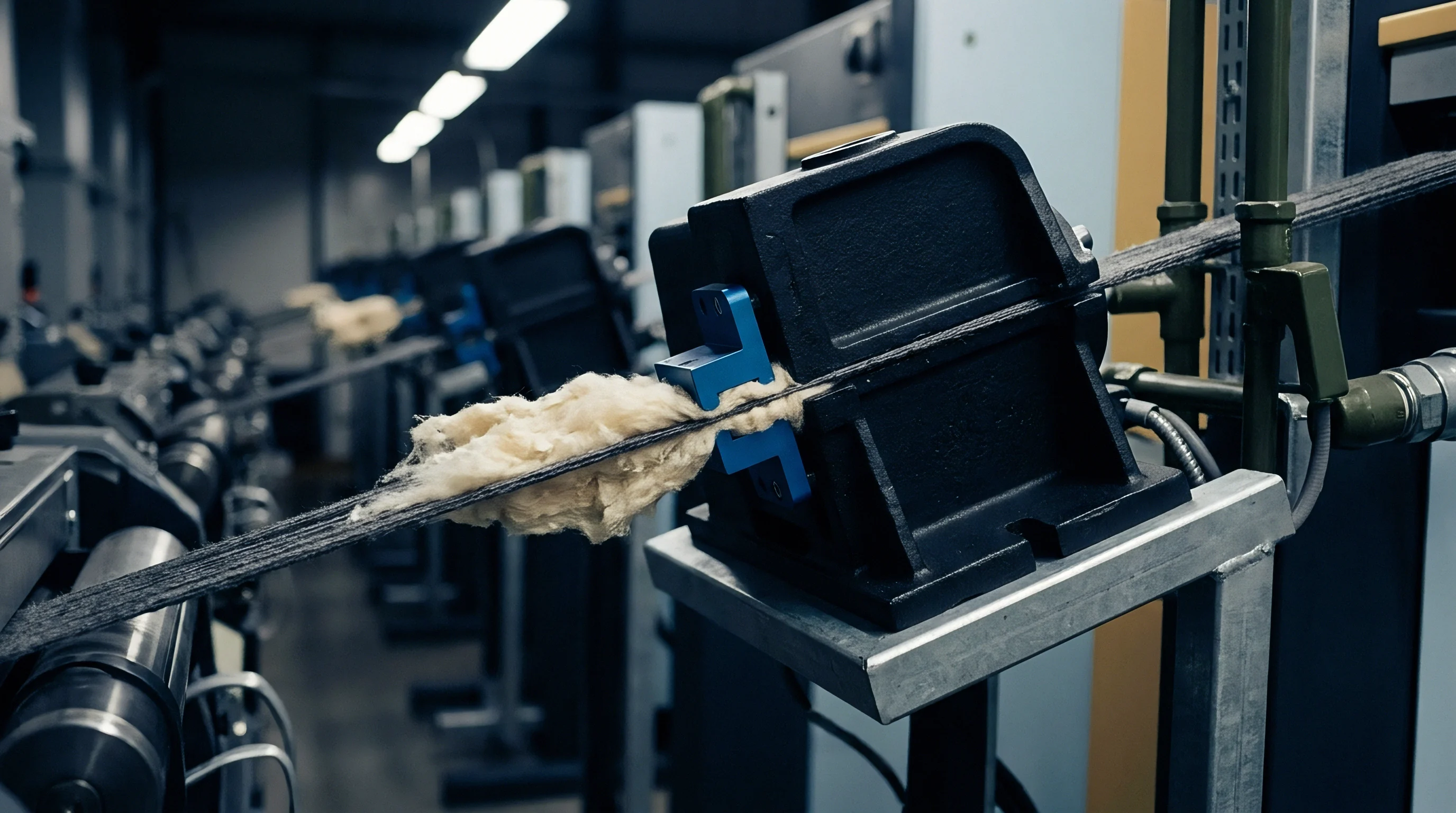
Mechanical nozzle selection governs the distribution of hydraulic forces, liquid velocity, and fabric transport behavior inside jet dyeing machinery. Selecting an improper nozzle throat geometry guarantees fabric degradation when processing delicate micro-denier elastomeric warp knits. Nozzles must be sized to match the physical volume and linear weight of the wet fabric rope.
An oversized nozzle throat permits fluid bypass, where dye liquor flows around the fabric rope without generating sufficient lifting force or hydrodynamic transport. This fluid bypass forces the operator to increase pump speed, driving up liquor velocity and generating localized turbulence that abrades the fabric face. Conversely, an undersized nozzle throat severely compresses the fabric rope, causing high mechanical friction against internal metal surfaces and intensifying fluid shear through the restricted gap.
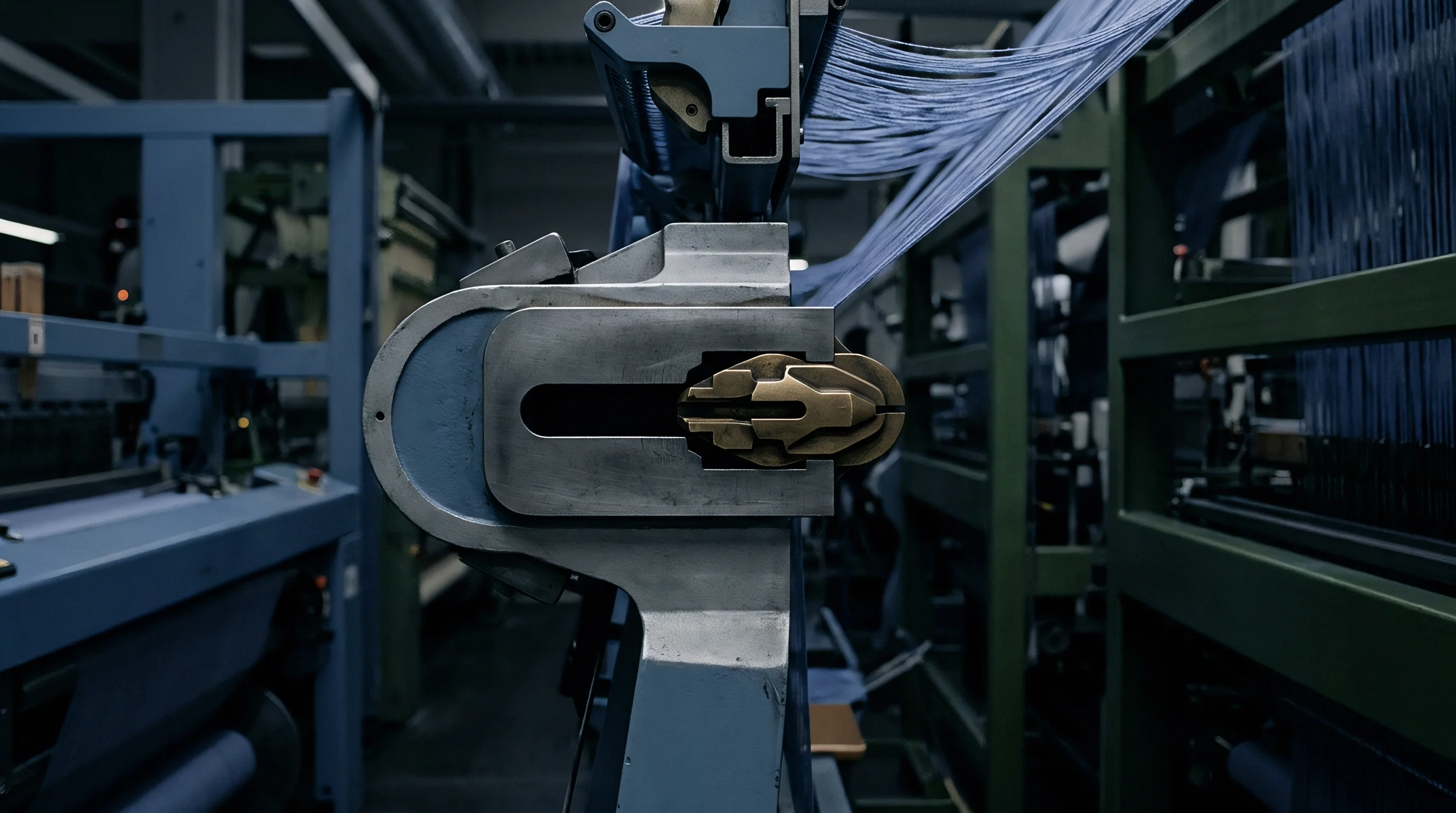
Nozzle options extend beyond simple circular diameters to include specialized rectangular, oval, and adjustable throat designs. Round venturi nozzles generate uniform radial pressure around the fabric rope, creating high hydraulic shear along peripheral contact zones. Circular geometries suit dense, low-stretch wovens but pose extreme risks for elastomeric warp knits.
Rectangular and wide-mouth overflow nozzles spread the fabric rope flat during transport, distributing fluid pressure over a broader contact area. Spreading the rope reduces localized shear stress concentrations, lowers peak differential pressure requirements, and minimizes bare elastane drafting during high-temperature dyeing cycles.
Nozzle Geometry Selection for High-Gauge Elastic Fabrics
Matching nozzle dimensions to fabric rope volume requires calculating wet fabric rope density under fully saturated conditions. Micro-denier elastomeric knits absorb substantial water volume within their micro-filament matrix, increasing linear rope mass by up to 250 percent upon immersion. A fabric with a dry weight of 180 grams per square metre can expand to an effective wet rope weight of over 450 grams per linear metre inside the dye vessel.
Machine operators must select nozzle throat clearances that provide at least 20 percent volumetric clearance above the saturated fabric rope volume to prevent mechanical pinching and hydraulic shear spikes.
Variable-gap nozzles permit inline adjustments of throat cross-sectional area without requiring machine shutdown or manual nozzle changes. These systems utilize motor-driven or pneumatic actuators to adjust internal throat clearance during processing. During initial heating and scouring phases, operators widen the nozzle gap to minimize friction while spin finishes and lubricants are removed.
Once uniform bath lubrication and temperature stabilization are achieved, the nozzle gap is narrowed precisely to maintain stable fabric transport speed without exceeding critical fluid velocity limits.
- Inspect internal nozzle surfaces for mechanical burrs, micro-pitting, or chemical scale buildup using a high-resolution bore camera before loading micro-denier lots.
- Calculate saturated wet fabric rope volume using greige weight, elastane percentage, and total water pickup coefficients.
- Select a nozzle throat geometry providing between 20 percent and 30 percent volumetric clearance around the fully saturated fabric rope.
- Calibrate differential pressure transducers by zeroing sensors under full bath circulation with zero fabric load at ambient temperature.
- Set pump inverter acceleration ramps to limit instantaneous differential pressure spikes during fabric speed adjustments.
- Verify fabric speed synchronization against liquor flow velocity using external magnetic rope rotation sensors.
Differential Pressure Control across Differential Nozzle Gaps
Differential nozzle pressure represents the net static pressure drop across the venturi throat, serving as the primary operational metric for managing hydraulic shear. Maintaining differential pressure within tight tolerances prevents mechanical damage to fine-filament yarns. For micro-denier warp knits containing bare elastane, differential pressure should be maintained between 0.18 bar and 0.35 bar.
Operating below 0.18 bar risks rope stoppage and uneven dyeing, while exceeding 0.35 bar introduces destructive fluid shear velocities. Modern dyeing vessels employ closed-loop feedback control systems that continuously adjust pump impeller speed to hold differential pressure at target setpoints despite variations in fabric rope packing density.
| Fabric Gauge (gg) | Yarn Structure (dpf) | Recommended Nozzle Type | Nozzle Clearance (mm) | Target Delta P (bar) | Max Rope Speed (m/min) |
|---|---|---|---|---|---|
| 28 | 0.8 to 1.0 PES / Covered EA | Standard Circular Venturi | 120 | 0.35 to 0.42 | 350 |
| 32 | 0.6 to 0.8 PA66 / Bare EA | Wide-Mouth Rectangular | 100 | 0.25 to 0.32 | 280 |
| 36 | 0.4 to 0.6 PES / Bare EA | Overflow Soft-Stream | 110 | 0.20 to 0.28 | 220 |
| 40 | 0.3 to 0.5 PA66 / Bare EA | Variable-Gap Rectangular | 90 | 0.18 to 0.24 | 180 |
| 44 | 0.3 dpf Micro-PA66 / Bare EA | Low-Pressure Overflow | 90 | 0.15 to 0.20 | 150 |
| Data compiled across 120 bulk dye cycles on 100 percent polyester and polyamide 6.6 warp knits incorporating 15 to 28 percent bare elastane under closed-loop pressure monitoring. | |||||
Liquor ratio management directly influences nozzle hydraulic mechanics. Low liquor ratios (1:4 to 1:5) reduce water and energy consumption but concentrate mechanical forces within the nozzle throat. At low liquor ratios, fabric rope packing density inside the nozzle increases, elevating mechanical friction and narrowing the effective fluid passage gap.
This localized narrowing accelerates fluid velocity through unblocked gaps, creating high-shear micro-jets that scour the fabric rope face. Elevating the liquor ratio to 1:7 or 1:8 increases hydraulic cushioning, expands fluid passage gaps, and lowers fluid shear stress across delicate micro-filament surfaces.
Excessive nozzle pressure damaging three thousand metres of 40-gauge micro-polyester elastane warp knit resulted in a twelve thousand dollar credit note before throat clearances were correctly recalibrated.

Pluck
Microscopic diagnostic techniques provide clear structural evidence of shear-induced degradation in dyed elastomeric warp knits. Physical damage resulting from excessive hydraulic nozzle shear manifests in distinct patterns under optical light microscopy and scanning electron microscopy (SEM). Distinguishing mechanical shear failure from chemical degradation or yarn defects is essential for root-cause analysis and placing commercial liability.
Micro-filament scuffing caused by fluid shear appears as localized surface abrasion with fractured, curled, and mushroomed filament tips concentrated exclusively on exposed loop crowns. Chemical damage or thermal degradation presents uniform polymer degradation across both internal and external filament fibers within the yarn bundle.
Scanning electron microscopy reveals the exact failure modes of broken micro-filaments and elastane cores. Micro-denier filaments fractured by hydraulic shear exhibit classic axial tensile-friction failure profiles, characterized by severe longitudinal splitting, fibrillar peeling, and flattened impact deformation. Bare elastane filaments severed by excessive fluid drag display distinct necking down at the break site, followed by recoil distortion where the elastomer core snaps back into a compressed ball within the knitted stitch matrix.
These microscopic signatures confirm that damage occurred due to mechanical over-drafting and fluid shear inside the dyeing machine rather than pre-existing greige knitting defects.
Microscopic Failure Analysis of Shear Damaged Knits
Image analysis tools allow quantitative measurement of surface fibrillation and filament damage density across dyed fabric samples. By measuring the total surface area covered by loose, broken micro-filaments per square millimetre of fabric, laboratory technicians compute a Fibrillation Index (FI). Unprocessed greige knits typically exhibit an FI below 0.05.
High-shear jet dyeing can drive the FI above 0.45 in severely damaged fabrics. Fabrics demonstrating an FI above 0.20 display noticeable visual chalkiness, reduced color depth, and poor resistance to pilling during abrasion testing.
Evaluating bare elastane damage requires specialized cross-sectional microscopy. Intact elastomeric knits show uniform elastane core positioning nested within adjacent synthetic ground loops. In shear-damaged knits, cross-sectional views reveal empty stitch voids where elastane cores have pulled out or snapped, alongside localized clusters of bunched, recoiled elastane.
Quantifying empty stitch voids per unit area provides an objective metric for evaluating elastane core breakage and predicting localized loss of fabric elastic recovery force.

Can Overflow Jet Nozzles Prevent Elastane Core Rupture?
Overflow and soft-stream jet dyeing machines offer alternative fluid transport mechanics that significantly reduce mechanical shear stress on elastic warp knits. Unlike traditional high-pressure venturi jets that force fluid through narrow throats under static pressures exceeding 0.60 bar, overflow vessels utilize gravity and low-pressure liquor cascades to transport fabric ropes. Liquid dye liquor spills over a widened weir into a large-diameter transport tube, gently carrying the fabric rope without high velocity fluid impinging on its surface.
Operating differential pressures in overflow machines remain below 0.12 bar, virtually eliminating high-shear velocity gradients across the boundary layer.
Incorporating ISO 13934 bursting strength retention standards into greige purchasing contracts binds the converter to replace fabric lots showing more than a fifteen percent loss in wet burst resistance after jet dyeing.
Comparative trials demonstrate that processing 40-gauge micro-denier elastomeric knits on overflow machinery prevents bare elastane core rupture entirely. In a controlled test, a 44 dtex bare elastane warp knit dyed on a conventional high-shear jet machine exhibited 14 core breakages per square centimetre and an elastomeric recovery loss of 12.4 percent under DIN 53835 testing. The same greige fabric lot processed on an overflow vessel using a 1:8 liquor ratio and 0.10 bar differential pressure showed zero core breakages and an elastomeric recovery loss below 1.5 percent.
The low fluid shear environment preserved elastane core integrity, maintained fabric stitch geometry, and eliminated surface pinholing.
Transitioning to overflow machinery requires accepting operational trade-offs in processing speed and bath consumption. Overflow machines run at lower fabric rope speeds (typically 120 to 200 metres per minute) compared to rapid jet vessels (which operate at 300 to 500 metres per minute), extending total cycle times by up to 25 percent. Furthermore, overflow designs generally require higher liquor ratios (1:8 to 1:12) to ensure smooth fabric flotation, driving up water, steam, and chemical consumption per kilogram of dyed fabric.
Dyers must balance the higher operational costs of overflow processing against the severe financial risks of fabric rejection caused by shear damage in high-speed jet machines.
The remaining technical uncertainty is whether specialized anti-friction bath lubricants can fully buffer high-denier elastane cores against shear rupture when liquor ratios are compressed below four to one in short-ratio dyeing machines.

Metrics
Standardized physical laboratory testing protocols establish objective quality limits for micro-denier elastomeric warp knits after wet processing. Incoming inspection protocols based on visual light-box checks routinely fail to detect latent micro-filament damage. Micro-filaments scuffed by fluid shear inside the dyeing machine may lay flat following stenter frame drying, heat-setting, and surface finishing.
However, subsequent mechanical stress during laundering, garment assembly, or consumer wear causes these weakened, scuffed micro-filaments to fracture completely, leading to rapid fabric surface degradation. Comprehensive lab testing protocols must be conducted immediately after dyeing to qualify fabric lots before shipment to garment cutting floors.
Pilling resistance testing serves as the primary diagnostic tool for identifying latent hydraulic shear damage. ISO 12945-2 (Modified Martindale Method) evaluates fabric pilling, fuzzing, and matting under controlled abrasive pressure. When evaluating micro-denier synthetic knits, standard test protocols using 2,000 rub cycles are insufficient to reveal latent damage.
Test parameters must be extended to 5,000 and 7,000 rub cycles. Hydrodynamically scuffed fabrics that appear pristine post-dyeing show severe surface fuzzing and dense pill formation under extended rub cycles, dropping from an initial visual rating of Grade 4-5 down to Grade 2 or Grade 1-2.
Laboratory Qualification Protocols for Jet-Processed Knits
Evaluating elastomeric integrity requires assessing tensile performance, elastic recovery, and permanent set under standardized wet and dry conditions. DIN 53835-1 (Testing of Textiles: Cyclic Tensile Test for Elastic Fabrics) quantifies changes in elastomeric stretch recovery following wet processing. Fabric specimens are subjected to repeated cyclic elongation up to 80 percent of their maximum stretch limit.
Fabrics damaged by excessive nozzle shear exhibit reduced modulus, higher permanent set (unrecovered stretch), and delayed elastic recovery profiles due to microscopic elastane core rupture and slippage.
Hydrostatic pneumatic bursting strength testing (ISO 13938-2) measures the overall structural integrity of knitted fabrics. High hydraulic shear forces that sever outer micro-filaments reduce total burst resistance by compromising yarn cross-sectional strength. A baseline strength loss exceeding 10 percent between greige fabric and finished dyed fabric indicates excessive mechanical stress during wet processing.
Bursting strength losses exceeding 15 percent strongly correlate with severe in-service garment tearing and seam slippage failure.
Parallel Martindale pilling and pneumatic bursting strength testing on 36-gauge micro-polyamide elastane warp knit across three nozzle differential pressure regimes demonstrates a direct mathematical relationship between jet processing shear stress and physical performance loss.
| Test Standard | Property Measured | Standard Conditions | Acceptable Limit (Pass) | Marginal Limit (Warning) | Rejection Limit (Fail) |
|---|---|---|---|---|---|
| ISO 12945-2 | Martindale Pilling Resistance | 5,000 Rubs / 9 kPa Pressure | Grade 4 to 5 | Grade 3 to 4 | Below Grade 3 |
| DIN 53835-1 | Cyclic Permanent Set | 5 Cycles at 80% Elongation | Less than 4.0% | 4.0% to 6.5% | Greater than 6.5% |
| ISO 13938-2 | Pneumatic Burst Strength Loss | 50 cm² Test Area / 5 sec Rate | Less than 8.0% | 8.0% to 12.0% | Greater than 12.0% |
| ISO 6330 / 5077 | Dimensional Stability | 3 Wash Cycles at 40°C Flat Dry | Within ±3.0% | ±3.1% to ±5.0% | Exceeds ±5.0% |
| ISO 105-X12 | Color Fastness to Rubbing | Wet Rubbing 10 Cycles / 9 N | Grade 4 | Grade 3 to 4 | Below Grade 3 |
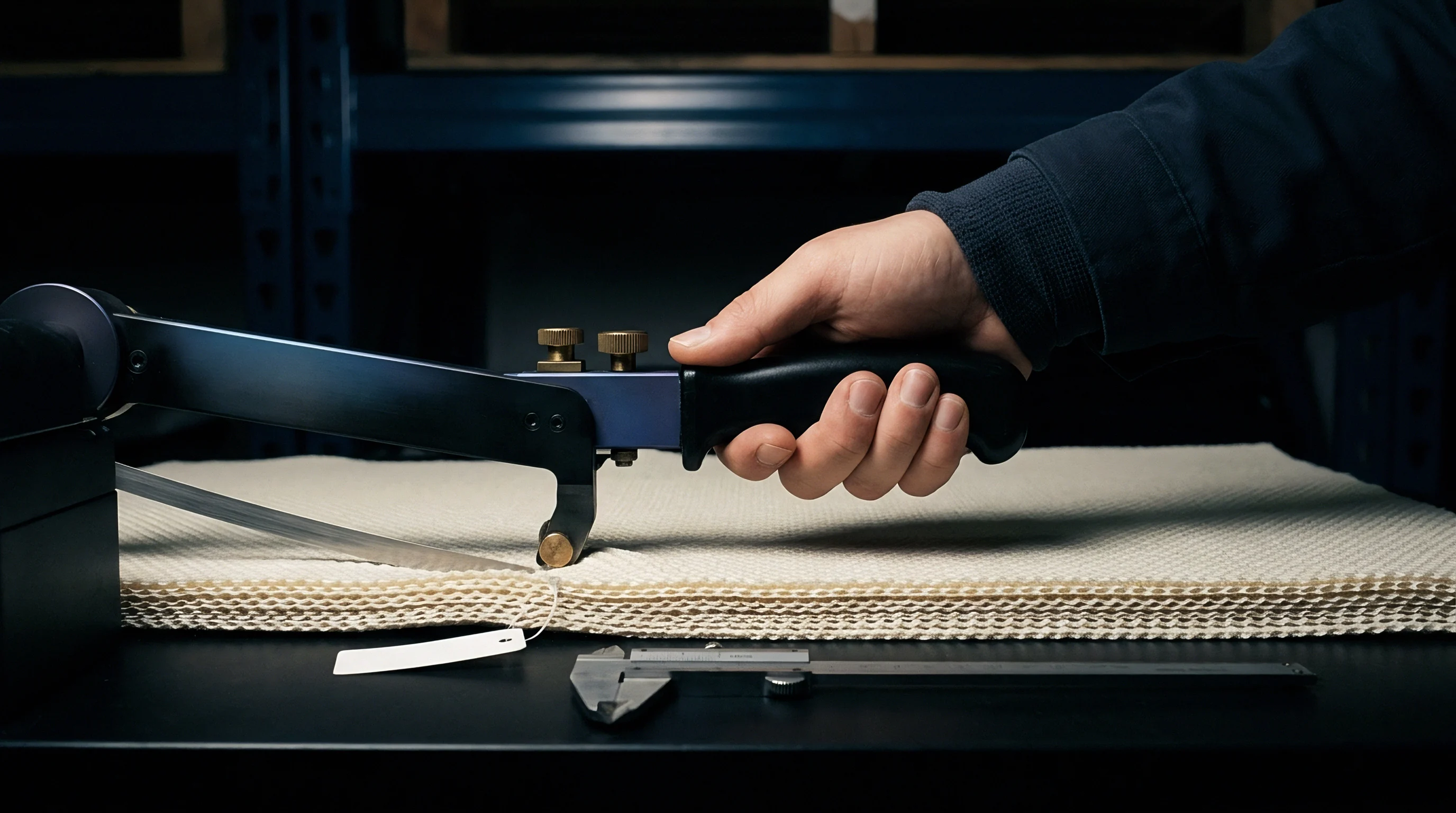
Standardized Testing Methods and Quality Thresholds
Developing robust quality assurance criteria requires establishing clear pass-fail limits anchored to specific international test methods. Dyers and converters must sign off on these technical thresholds prior to initiating bulk dyeing orders. Laboratory protocols must require sample conditioning under ISO 139 standard atmospheres (20 degrees Celsius, 65 percent relative humidity) for 24 hours prior to physical testing to ensure consistent moisture regain across micro-denier synthetic fibers.
- Sampling Frequency Select one full-width fabric swatch from the lead end and tail end of every dyed batch roll, discarding the outer two metres of fabric to prevent sampling tail-end distortion.
- Pilling Verification Perform ISO 12945-2 Martindale pilling evaluations at 2,000, 5,000, and 7,000 cycles under 9 kPa load, requiring a minimum Grade 4 score at 5,000 cycles for bulk lot release.
- Elastic Recovery Testing Conduct cyclic extension testing per DIN 53835-1 across both warp and weft directions, rejecting lots displaying a permanent set higher than 6.0 percent.
- Microscopic Inspection Examine five distinct 10x magnification surface fields using stereomicroscopy, logging micro-filament scuffing and bare elastane protrusion density per square centimetre.
Latent micro-filament damage from excessive nozzle velocity frequently escapes visual light-box inspection only to trigger severe pilling failures during consumer wash cycles.
Writing clause 4.2 into the dyehouse quality contract shifts financial liability for latent filament fibrillation directly to the wet processing mill whenever post-dyeing Martindale pilling scores drop below grade 4 after 5,000 cycles.
Dossier
Translating hydrodynamic shear limits into clear, enforceable commercial purchase specifications protects brands and converters against costly bulk fabric rejections. Technical specifications must extend beyond superficial criteria such as color shade, fabric weight, and finished width to define strict machine processing parameters. Purchase orders for micro-denier elastomeric warp knits must explicitly state the allowed dyeing vessel classifications, maximum nozzle differential pressures, permitted nozzle throat geometries, and required bath lubrication chemistry.
Omitting processing parameters from contract documentation leaves buyers legally exposed when mills process delicate fabrics on high-shear rapid jet machinery to maximize daily throughput.
Machinery speed trade-offs present an operational conflict between dyehouse efficiency and fabric structural integrity. Dyehouse managers naturally seek to maximize fabric rope speed and minimize cycle times to optimize machine utilization and lower direct processing costs per kilogram. Running a 300 kg jet dyeing vessel at a rope speed of 400 metres per minute completes a dye cycle in 4.5 hours.
However, driving micro-denier knits at this velocity requires nozzle differential pressures above 0.50 bar, inducing severe surface scuffing and elastane breakage. Restricting differential pressure to 0.22 bar lowers fabric speed to 200 metres per minute, extending total dye cycle duration to 6.2 hours and increasing direct machine processing costs by approximately 18 percent per metre.
Processing Speed Economics and Machine Capacity Tradeoffs
Commercial cost modeling demonstrates that the financial penalty of extended cycle times is far lower than the landed cost of rejected bulk fabric. A high-gauge micro-denier elastomeric warp knit carries substantial greige material value due to expensive fine-denier synthetic yarns and high elastane content. The greige fabric cost represents over 60 percent of the total finished fabric value.
Scrapping a 1,000 kilogram dye lot due to shear-induced fibrillation results in direct material losses exceeding fifteen thousand dollars. Spending an additional thirty cents per kilogram in extended machine run time to process fabric safely on low-shear overflow equipment represents an economical insurance policy against bulk scrap losses.
Contractual agreements with commission dyehouses must incorporate clear machine qualification schedules. Dyeing facilities must demonstrate that their vessels are equipped with functional pump inverter controls, calibrated differential pressure transducers, and variable-gap overflow nozzles. Furthermore, contracts should mandate inline recording of differential pressure profiles throughout every dye batch cycle.
Digital logs providing continuous pressure, temperature, and pump speed data must be attached to the quality dossier delivered with each production lot, ensuring full traceability and proof of protocol compliance.
Commercial Contract Language for Technical Fabric Sourcing
Legal documentation must define precise operational boundaries and allocate financial liability for shear-induced defects. Standard commercial boilerplate clauses referencing merchantable quality or general freedom from defects are insufficient when disputing latent micro-filament damage or elastane core degradation. Technical specifications must incorporate precise numeric thresholds tied directly to standard laboratory test methods.
Establishing clear boundary conditions on nozzle differential pressure, machine selection, and bath lubrication parameters aligns dyehouse operational practice with fabric structural limits. Buyers who codify these hydrodynamic constraints directly within technical purchase contracts achieve predictable bulk quality, eliminate shade-to-shade structural variance, and protect high-value elastomeric warp knits against costly wet processing damage.