Modeling Long Term Micro Cavitation Wear Dynamics in Recirculating Single Pass Ink Jet Arrays
Micro cavitation in recirculating printheads erodes channel passivation via cyclic shockwaves, causing drop deflection, wash fastness drops, and array failure.


Shock
Micro cavitation wear inside high-frequency recirculating printheads originates from localized acoustic pressure transients that drop below the saturated vapor pressure of liquid textile formulations. Single-pass arrays jet continuous reactive, disperse, or pigment colorant suspensions at line speeds exceeding 70 metres per minute. Fluid recirculation across the rear of the nozzle plate stabilizes thermal gradients and purges entrained micro-air bubbles.
The interaction of piezoelectric pressure waveforms with geometric cross-flow junctions creates localized acoustic reflections. These reflections generate transient negative pressure excursions below negative 180 kilopascals within the ink manifold channels.
Transient tension produces micro-voids inside the carrier phase. These micro-voids expand and undergo violent asymmetric collapse against chamber wall interfaces as the acoustic wave reverses into positive pressure. Liquid micro-jets form during collapse, striking silicon or electroformed nickel-cobalt channel boundaries at velocities between 120 and 450 metres per second.
Repeated impact produces water hammer pressures exceeding 1.2 gigapascals over sub-micron impact diameters.
Acoustic reflection amplitudes at recirculation return ports determine the initiation threshold for sub-surface micro-jet spalling.
Wear initiates as local pit formation, followed by sub-surface shear dislocation and mechanical grain ejection. In textile single-pass architectures running continuous eight-hour shifts, these micro-implosions degrade channel geometries, strip passivation coatings, and deform the internal boundary of the nozzle entry orifice. This structural distortion alters fluidic resistance across the nozzle plate, causing droplet velocity starvation, volume drop variance, and angular trajectory deflection that ruins color registration across wide fabric webs.
An operator calculating printhead replacement intervals monitors the relationship between pulse drive frequency, cross-flow velocity, and the bulk acoustic modulus of the working fluid. When pigment particle loading exceeds 12 percent by weight, dispersed metal-oxide particles act as heterogeneous nucleation sites, lowering the cavitation inception threshold and accelerating acoustic erosion rates.


Acoustics
Chamber acoustics govern fluid resonance in recirculating arrays. Modern piezoelectric drop-on-demand architectures rely on push-pull acoustic waves generated by lead zirconate titanate actuators. Wave propagation inside narrow microfluidic channels follows the classical one-dimensional wave equation adjusted for viscous dissipation and structural compliance of the channel walls.
Acoustic Reflection Mechanics
Actuator displacement launches a positive acoustic pressure pulse traveling outward toward the nozzle meniscus and inward toward the recirculation cross-flow bypass. Impedance mismatches between the primary firing chamber and the broader fluid supply channel determine the amplitude of the reflected pressure wave. Reflection coefficients vary from negative 0.35 to negative 0.78 depending on manifold geometry and acoustic cross-talk dampening.
When the actuator contracts during the drive pulse recovery phase, the resulting rarefaction wave combines with negative acoustic reflections returned from open fluid boundaries. Superposition pulls absolute fluid pressure into deep negative states. The fluid breaks into cavitating micro-bubbles whenever localized acoustic pressure drops below the cavitation threshold pressure of the ink carrier.
| Ink Chemistry Type | Speed of Sound (m/s) | Dynamic Viscosity (mPa.s) | Inception Pressure (kPa) | Micro-Jet Velocity (m/s) |
|---|---|---|---|---|
| Aqueous Reactive Dye | 1485 | 4.2 | -195 | 210 |
| Disperse Sublimation | 1440 | 5.8 | -165 | 265 |
| Organic Pigment (14% solids) | 1390 | 7.4 | -110 | 380 |
| Inorganic Pigment (Titanium Dioxide) | 1320 | 9.1 | -75 | 440 |
| Acid Dye (Polyamide Build) | 1510 | 3.9 | -220 | 185 |
The Rayleigh-Plesset equation describes the radial dynamics of an isolated spherical micro-void surrounded by liquid:
R times the second derivative of R with respect to time plus 1.5 times the square of the first derivative of R with respect to time equals 1 divided by fluid density multiplied by the pressure differential across the bubble interface minus four times kinematic viscosity divided by R times the first derivative of R with respect to time minus two times surface tension divided by fluid density times R.
Fluid density, surface tension, and kinematic shear viscosity define bubble growth limits. During acoustic rarefaction, the bubble diameter expands from an initial sub-micron particulate seed to a maximum radius between 12 and 35 micrometres. As the wave phase transitions to peak compression, ambient pressure crushes the void, triggering rapid radius shrinkage.
Waveform Tuning Strategies
Mitigating cavitational onset requires precise tailoring of multi-segment electrical drive pulses. Square pulse profiles with unmitigated falling edges induce severe acoustic ringing, generating high negative pressure spikes during the dwell period. Trapezoidal and W-shaped drive waveforms smooth transition phases, allowing fluid dampening to dissipate mechanical resonance before trailing edge reflections coalesce.
Applying an active cancellation pulse at an interval equal to twice the acoustic channel length divided by the speed of sound counteracts internal pressure overshoot. Acoustic resonance dampening dampens residual kinetic energy within the fluid column, protecting channel walls while maintaining drop break-off velocity at 7.5 metres per second.
Channel geometry alterations also mitigate micro-cavitation. Asymmetric tapers at the fluid feed and recirculation exhaust ports eliminate right-angle flow corners that concentrate shear and acoustic reflections. Controlled wall compliance, achieved via polyimide acoustic dampening membranes positioned parallel to the actuation chamber, reduces peak rarefaction amplitude by absorbing reflected acoustic energy.


Shear
Recirculating printheads circulate fluid behind the nozzle plate at flow rates between 15 and 85 millilitres per minute per channel strip. This movement sweeps through continuous bypass micro-channels at bulk shear rates exceeding 80,000 reciprocal seconds. Hydrodynamic shear interacts with high-frequency acoustic pressure fluctuations to shift bubble collapse mechanics.

Cross Flow Drag Distortion
Fluid moving parallel to the nozzle substrate exerts an asymmetric drag force on expanding cavitation bubbles. The pressure gradient across the bubble shell distorts spherical geometry into prolate and oblate spheroids before collapse commences. Drag tilts the collapse vector toward the downstream wall boundary.
This directional tilt concentrates micro-jet impacts against structural fillet joints and passivation steps. Symmetrical collapses in static fluid dissipate energy radially into the bulk liquid; flow-distorted collapses drive the entire kinetic potential directly into substrate boundaries. Acoustic boundary layers thin dramatically under elevated cross-flow velocities, bringing void implosion zones closer to solid material interfaces.
A bypass velocity exceeding 0.4 metres per second shifts the micro-jet impingement angle by up to thirty-four degrees downstream.
Fluid boundary layer thickness scales inversely with the square root of the cross-flow Reynolds number. At higher recirculation pump speeds, the protective viscous cushion over microfluidic channel surfaces diminishes, leaving exposed silicon dioxide coatings vulnerable to undampened impact shocks.

Viscoelastic Ink Influences
Textile inks formulated with high-molecular-weight polymeric dispersants, humectants, and binders exhibit pronounced shear-thinning and viscoelastic characteristics. Under quiescent storage, ink dynamic viscosity rests near 15 millipascal-seconds. Under intense shear inside recirculation manifolds, apparent viscosity plunges toward 3.5 millipascal-seconds.
Shear thinning lowers viscous dampening around contracting bubble walls, accelerating collapse velocities and increasing peak wall stress. Viscoelastic extensional viscosity acts conversely, generating elastic stress fields that resist rapid fluid filament deformation. As high-speed micro-jets form, extensional polymer stretching dissipates kinetic energy, buffering impact severity against the micro-channel boundaries.
Pigment milling quality dictates local wear rate distributions. Aggregate clusters larger than 250 nanometres disrupt uniform fluid streamlines, generating localized wake zones with depressed static pressure. These hydrodynamic wakes function as perpetual cavitation seeds.
Ink filtration across 0.5-micron absolute-rated polypropylene depth membranes limits nucleation seeds, extending operational nozzle lifespan.
Erosion
Mechanical wear from cyclic micro-jet bombardment follows distinct metallurgical and structural degradation phases. Industrial printhead channels constructed from anisotropic etched monocrystalline silicon, electroformed nickel, or polyimide experience cumulative surface fatigue under continuous acoustic pulsing.

Passivation Layer Stripping
Chemical barrier layers protect micro-machined silicon from alkaline or acidic degradation. Common protective barriers include atomic layer deposited tantalum oxide, silicon nitride, and amorphous silicon carbide at layer thicknesses ranging from 40 to 120 nanometres. Cyclic water hammer impacts induce high biaxial tensile stress across these thin films.
Acoustic fatigue causes microscopic delamination blisters along the film-substrate interface. Micro-cracks initiate at structural pinhole sites and propagate outward under shear stress fields generated by collapsing bubbles. Liquid colorant enters these sub-surface fractures, exerting hydraulic wedging forces during positive acoustic pressure peaks.
Stripping the protective coating exposes bare silicon to corrosive attack from dye solvents, chelating agents, and wetting surfactants. Alkaline reactive inks running at pH 8.8 to 9.5 dissolve exposed silicon through galvanic oxidation, carving microscopic pits into critical channel tolerances.
| Substrate Material | Vickers Hardness (HV) | Elastic Modulus (GPa) | Wear Threshold (MPa) | Pit Volume Growth Rate (cubic um/hr) |
|---|---|---|---|---|
| Monocrystalline Silicon (100) | 1050 | 130 | 410 | 14.2 |
| Tantalum Passivated Silicon | 1400 | 185 | 680 | 2.1 |
| Electroformed Nickel-Cobalt | 480 | 210 | 320 | 8.6 |
| Silicon Nitride Coated Polyimide | 320 | 8.5 | 145 | 28.4 |
| Silicon Carbide (PECVD) | 2200 | 380 | 950 | 0.4 |
Material loss follows an incubation period where micro-structural strain hardens the metallic matrix or accumulates bond dislocations in covalent lattices. Pitting commences once cumulative localized plastic deformation exceeds the ultimate shear strain of the material.
Nozzle Plate Geometric Distortion
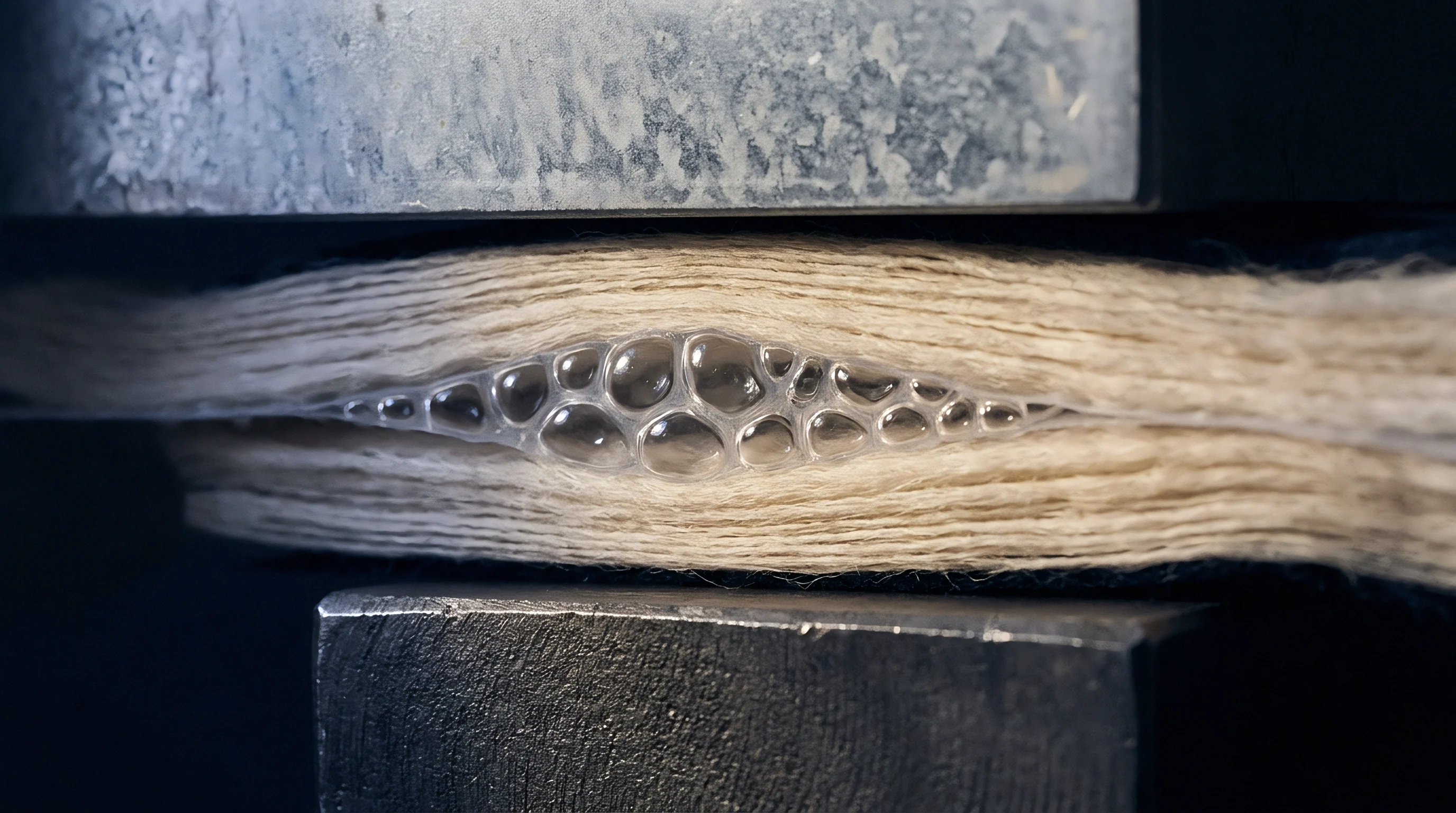
Wear concentrated at the internal entry lip of the nozzle orifice ruins droplet formation mechanics. Micro-jet spalling rounds the sharp interior chamfer, expanding the effective nozzle cross-section and reducing flow resistance. Actuation energy escapes through unintended bypass paths, causing drop ejection velocity to fall below target operational thresholds.
Erosion creates irregular, non-axisymmetric cross-sections at nozzle entrances. Drop trajectory deviates from perpendicular alignment, producing angular drop errors exceeding 8 milliradians. On moving fabric, trajectory errors manifest as print streaking, density banding, and white-line defects between parallel single-pass array modules.
Silicon grain ejection introduces particulate debris into recirculating fluid channels. Dislodged sub-micron flakes travel with cross-flow current until becoming trapped inside adjacent nozzle entries. This debris causes nozzle dropouts, forcing mid-run line stoppages, ultrasonic wash sequences, and purge fluid consumption that inflates overall operational production overhead.

Modeling
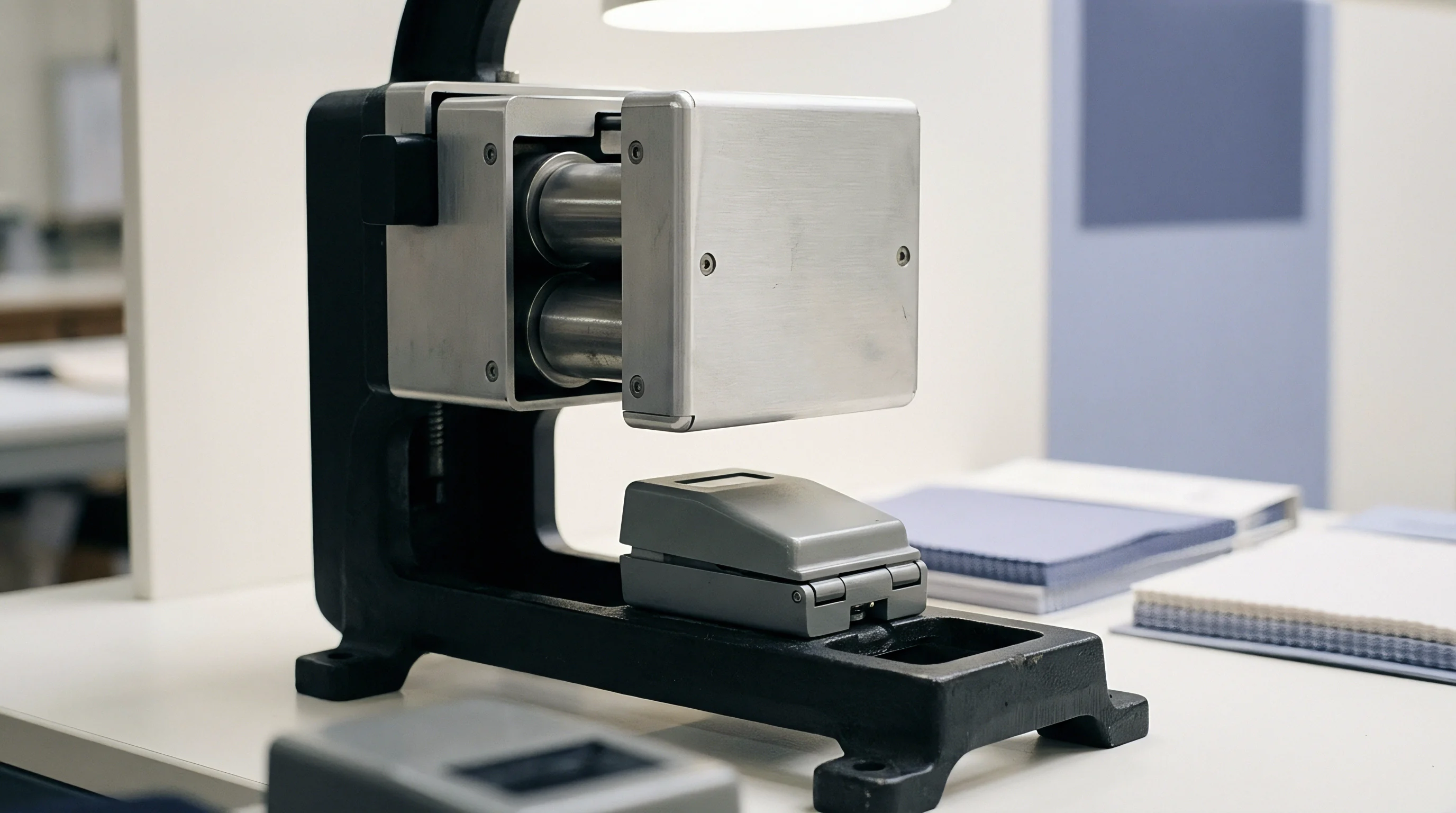
Predicting cavitation wear requires coupled multi-physics numerical simulations. Computational frameworks resolve interactions between unsteady Navier-Stokes equations, acoustic wave propagation, dynamic multiphase bubble growth, and structural mechanical fatigue.
Coupled Volume-of-Fluid Methods
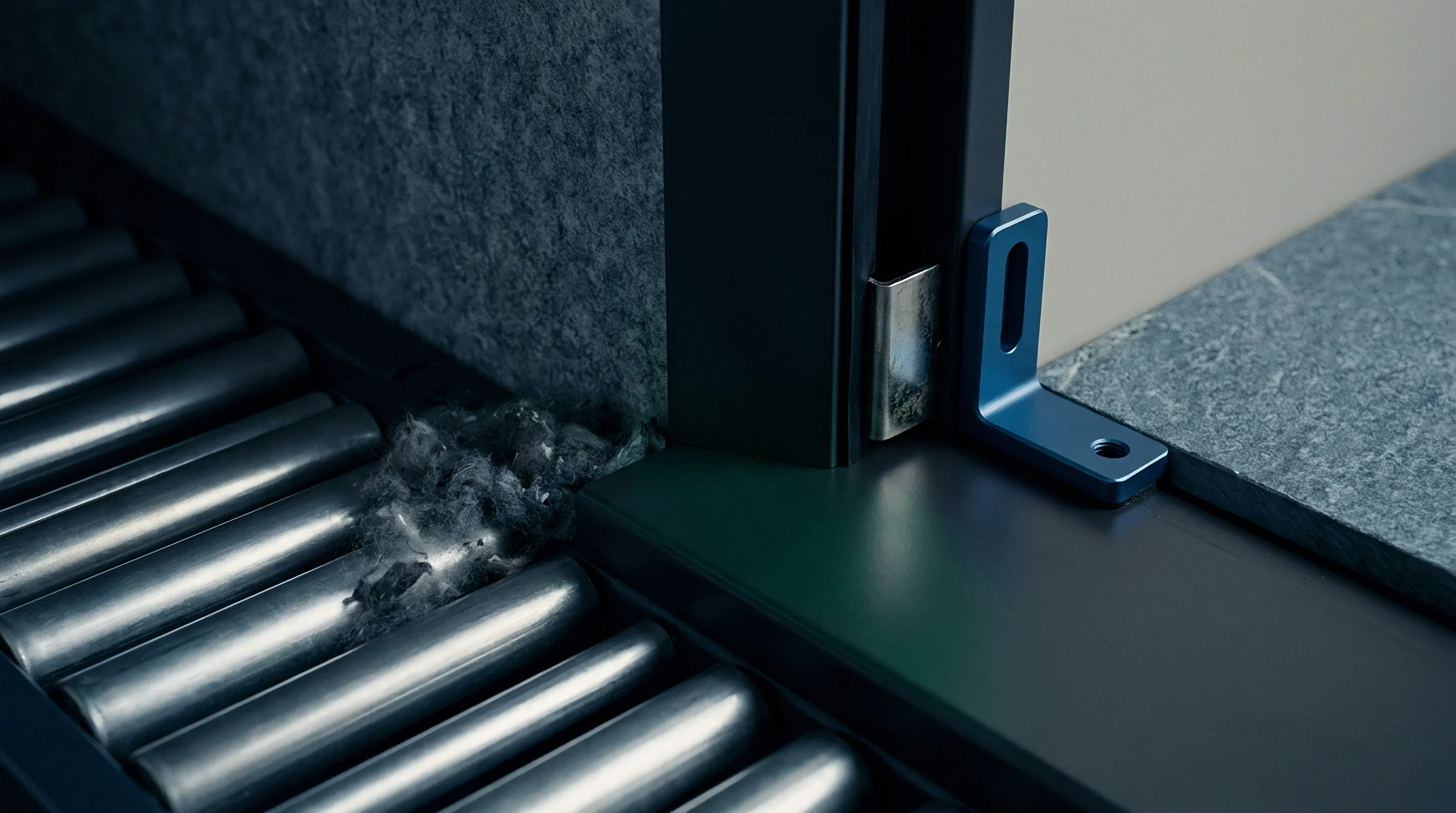
The Volume-of-Fluid method tracks interfaces between vapor bubbles and liquid ink inside complex micro-channel domains. Incompressible Eulerian frameworks model bulk liquid flow, while the Schnerr-Sauer or Zwart-Gerber-Belamri mass transfer models govern phase transition rates between liquid and vapor phases.
Phase change dynamics depend directly on local pressure divergence:
Mass transfer source rate equals fluid density of vapor multiplied by fluid density of liquid divided by fluid mixture density times three times volume fraction of vapor times 1 minus volume fraction of vapor divided by bubble radius multiplied by the square root of two thirds dynamic differential between localized pressure and saturated vapor pressure divided by liquid density.
Simulating micro-scale bubble collapse requires adaptive mesh refinement. Grid cell sizing scales down below 50 nanometres near channel surfaces to resolve high-speed fluid micro-jets and resultant impact shock waves hitting the substrate interface.

Fatigue Life and Damage Accumulation
Predicting mechanical substrate degradation uses Manson-Coffin strain-life equations coupled with Miner’s linear damage rule. Each acoustic firing cycle constitutes an individual stress-strain event. Local strain excursions result from the combined impact of micro-jets and high-pressure acoustic shock waves radiated during bubble rebound.
Cumulative mechanical damage accumulates per cycle:
Damage increment equals the reciprocal of the total cycles to failure at the applied plastic strain amplitude. Failure occurs when the cumulative sum of damage increments reaches unity.
Model execution reveals that localized structural wear concentrates within twenty micrometres of geometry changes inside the recirculation loop. Array layout designers optimize fillet radii, chamfer taper angles, and actuation chamber wall thickness to suppress localized strain peaks and prolong operational component longevity.
Cumulative fatigue modeling predicts passivation layer breach within two thousand continuous operating hours when peak acoustic rarefaction drops below negative two hundred kilopascals.
Empirical laboratory validation uses multi-channel acoustic emission sensors mounted directly to printhead manifold blocks. High-frequency piezoelectric transducers record acoustic emissions between 500 kilohertz and 3 megahertz. Transient acoustic bursts register individual bubble collapse events, enabling real-time validation of numerical cavitation erosion models.


Impact
Cavitation wear inside single-pass arrays degrades textile printing quality, shifts production metrics, and alters operational profitability on the dyehouse floor. Continuous production operations expose equipment weaknesses rapidly. A single pass array utilizing seventy individual printhead modules operates millions of nozzles simultaneously, where localized failure across a handful of channels degrades entire finished textile lots.

How Does Cavitation Shift Color Fastness?
Deflected drop trajectories, reduced droplet mass, and satellite drop mist alter how dye penetrates textile substrates. Reactive ink drops striking woven cotton or rayon outside target pixel locations sit shallowly on protruding warp yarns instead of penetrating the fabric core. When dye rests unevenly across surface fibers, post-print processing fails to bind dye molecules efficiently into the cellulose matrix.
Wash fastness testing conducted under ISO 105-C06 protocol shows noticeable color degradation when fabric printed with cavitated heads undergoes laundering. Punctured or distorted ink droplets yield loose, surface-bound dye clusters that break free during soaping stages, lowering fastness ratings from Grade 4-5 down to Grade 3. Wet rubbing fastness evaluated via ISO 105-X12 similarly exhibits extensive staining on white test cloths due to poor binder consolidation on pigment jobs.
Trapped micro-foam generated by internal cavitation dampens kinetic drop transfer. Low velocity drops cause severe color variance across wide fabric panels. Operators struggle to maintain side-to-side color uniformity, resulting in rejected fabric rolls, contested delivery batches, and non-conformance penalties levied by downstream garment makers.
Substrate Build and Weave Interaction
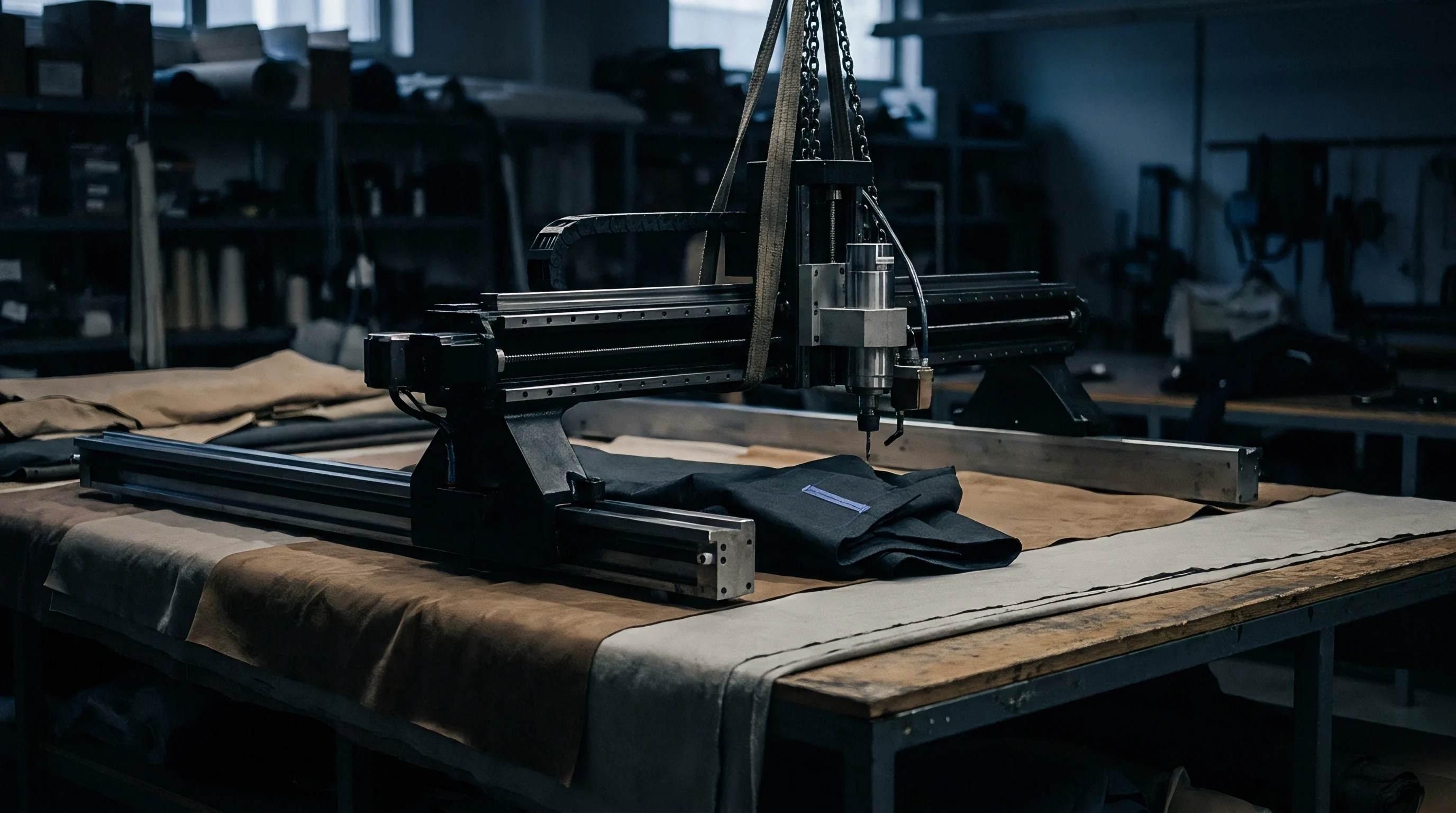
Fabric construction influences visible manifestation of printhead cavitation defects. Tightly woven cotton poplin, high-sett polyester microfiber taffeta, and smooth silk habotai display missing nozzles and directional deflection instantly. The flat, uniform geometry of high-cover woven grounds highlights micro-streaks and color drift.
Pique knits, heavy fleece, and high-pile terry toweling partially mask trajectory defects within their fibrous three-dimensional yarn architecture. However, fluid misting from worn printheads settles on exposed knit loop crowns, generating diffuse color halos around sharp graphic boundaries. Mechanical ink volume variations shift shade depth across single-pass spans, compromising color matching across continuous yardage.
- Filtration Protocol Failures generate elevated particulate counts that initiate cavitation events at channel boundaries, demanding multi-stage absolute cartridge filters on main header supply lines.
- Recirculation Rate Imbalances starve trailing firing chambers of proper dynamic backpressure, causing severe negative pressure excursions during high-frequency firing bursts.
- Sub-Optimal Waveform Geometry accelerates acoustic fatigue along silicon channel boundaries, requiring customized drive waveforms matched to ink dynamic viscosity.
- Chemical Cleaning Overages strip cavitated passivation layers prematurely, requiring controlled flushing using compatible organic solvent mixtures at lowered system pressures.
A plant buying high-capacity digital textile printers evaluates array life alongside line speed and ink consumption. Premature printhead degradation raises capital amortization expenses, erodes production margins, and creates friction throughout international fabric supply agreements.
The operational dispute shifts to printhead warranty accountability: manufacturers attribute internal cavitation wear to abrasive, off-spec ink particulates, while textile printing houses claim fluid acoustic modeling flaws caused premature mechanical failure inside the recirculation manifold.