Apportioning Financial Liability for Preexisting Greige Pesticide Residues Surviving Downstream Wet Processing
Preexisting greige pesticide liability rests on incoming lot verification; unverified greige waives processor fault unless intake water contamination is proven.
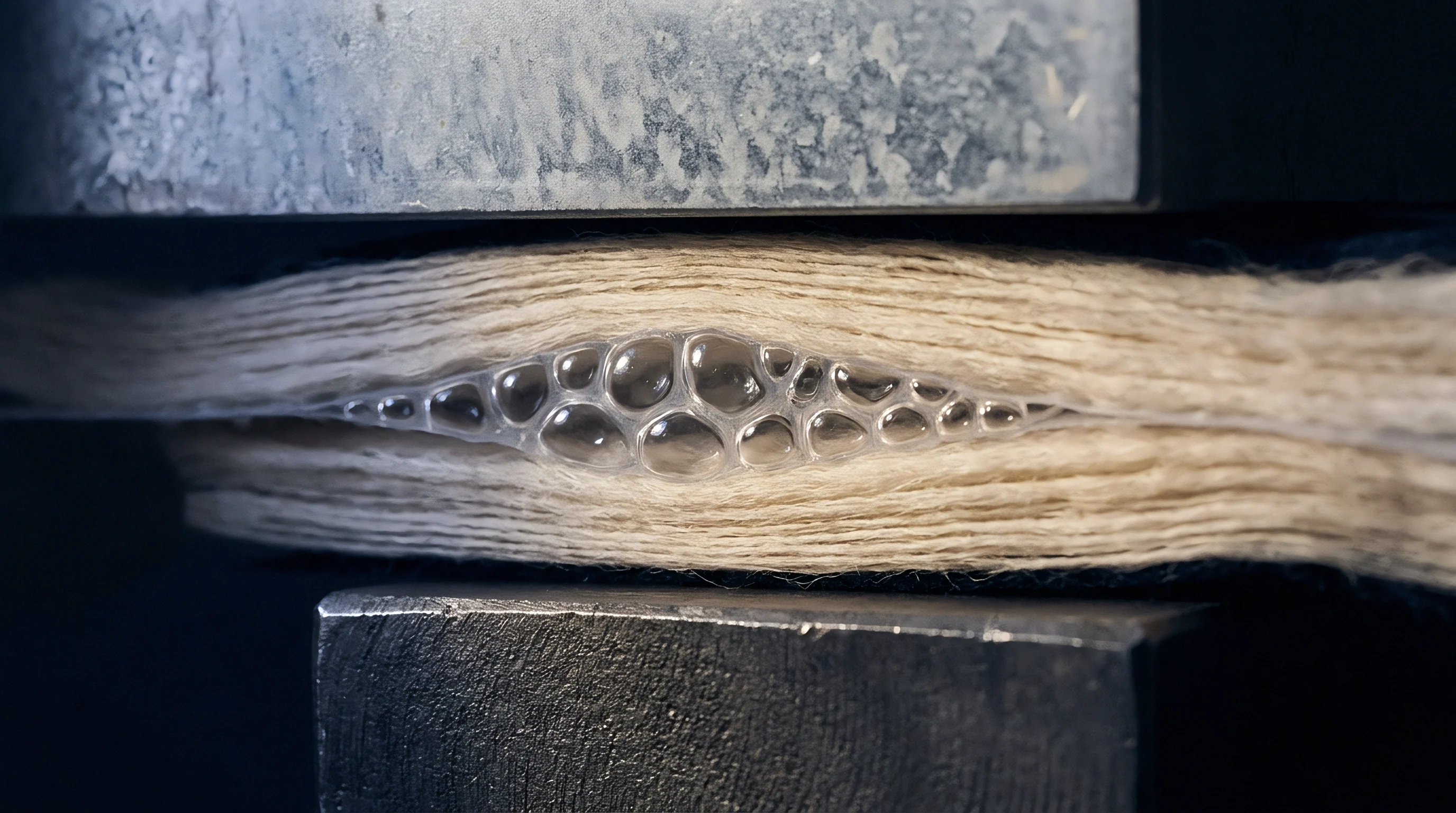

Skein
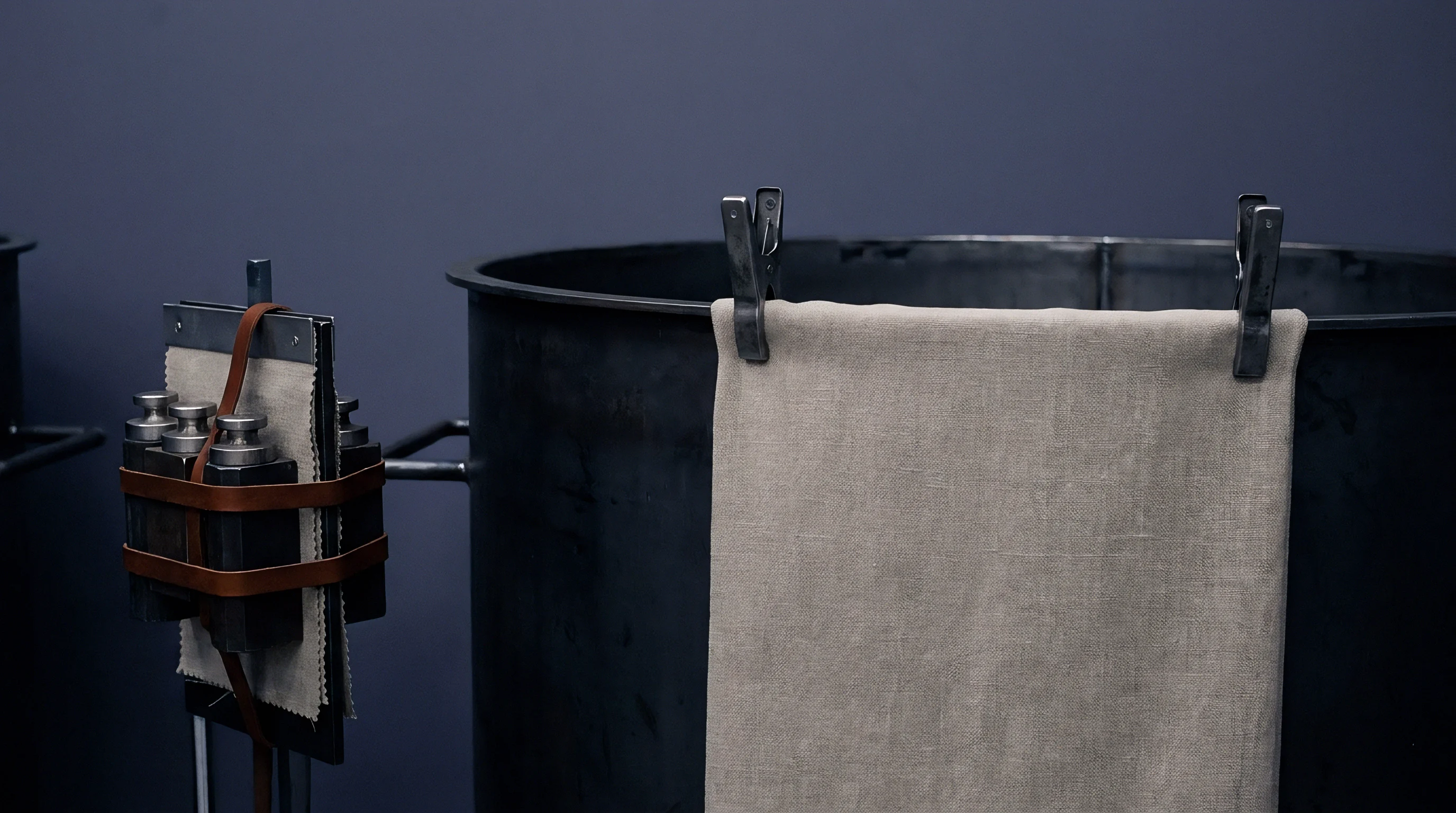
Greige Contamination Profiles and Persistent Residues
Raw cotton fibers enter spinning mills carrying pesticide residues applied during cultivation. Agricultural regimes rely on organochlorine compounds, organophosphorous esters, synthetic pyrethroids, and systemic herbicides to maintain crop yields. While regulatory frameworks like OEKO-TEX Standard 100 Annex 4 and the Global Organic Textile Standard set strict maximum residue limits for finished articles, unrefined greige yarn or fabric frequently contains pesticide loads that exceed these thresholds.
Greige yarn spun from non-organic seed cotton often exhibits combined pesticide concentrations ranging between 0.8 milligrams per kilogram and 4.2 milligrams per kilogram. Cotton holds hydrophobic molecules tight.
Organochlorine pesticides such as hexachlorocyclohexane isomers, endosulfan, dieldrin, and DDT metabolites present severe persistence challenges. These lipophilic molecules bind strongly to the natural waxy layer located on the primary cell wall of the cotton fiber. During ginning and mechanical spinning, these substances remain embedded within the fiber matrix.
When greige fabric arrives at a wet processing facility, the buyer often assumes that subsequent scouring, bleaching, and dyeing operations will strip these agricultural contaminants completely from the substrate.
Greige cotton loaded with organochlorine residues above 0.5 mg/kg fails OEKO-TEX Standard 100 Class I thresholds even after undergoing a standard 95-degree hot alkaline scour.
Chemical persistence varies across active compound classes. Organophosphates like chlorpyrifos and profenofos demonstrate moderate susceptibility to alkaline hydrolysis during hot scouring. Lipophilic organochlorines remain largely impervious to aqueous processing baths.
Unverified yarn creates exponential financial exposure.
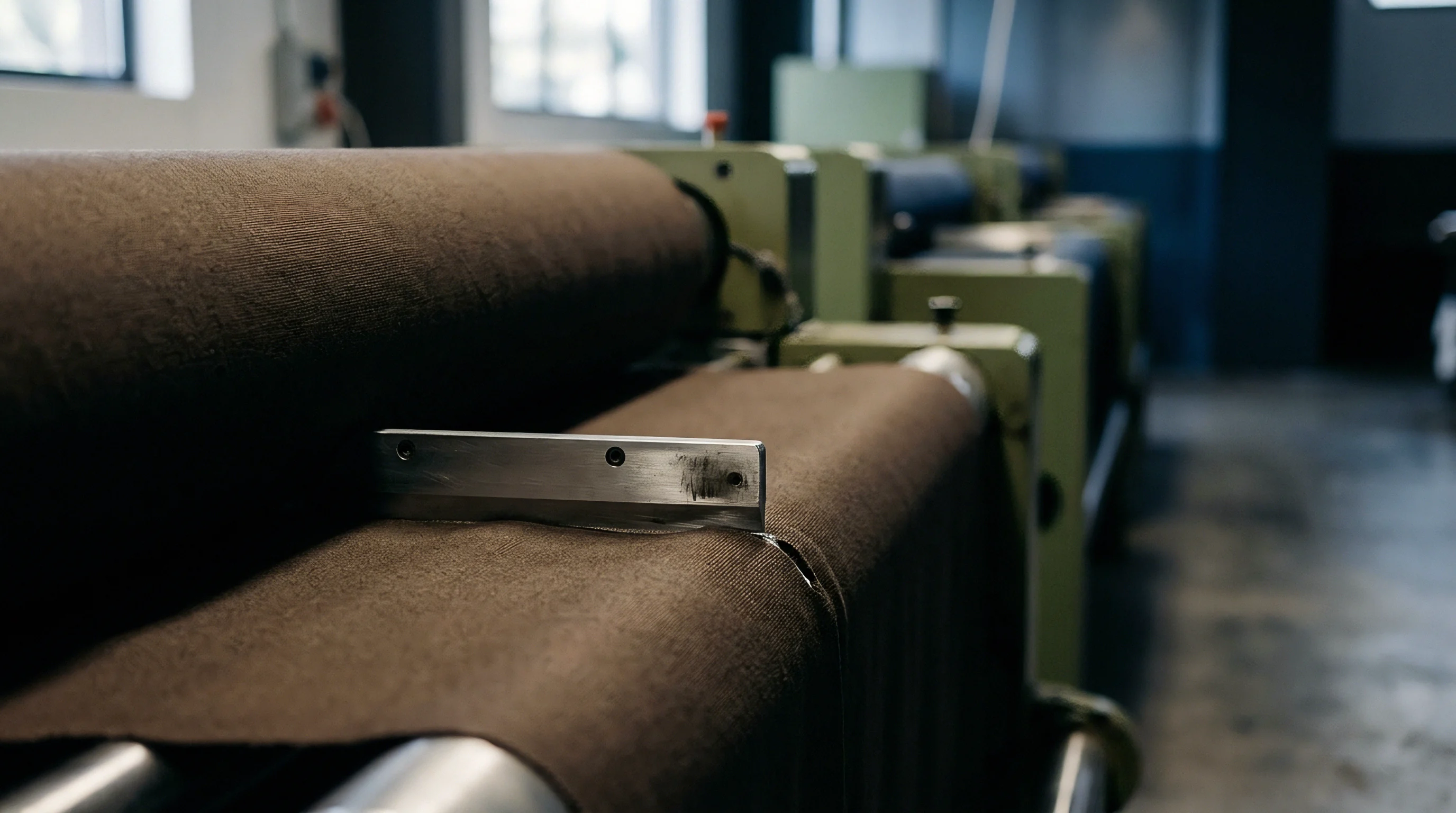
Fiber Waxes and Pesticide Retention Mechanics
The outer layer of raw cotton comprises lipids, pectins, and natural plant waxes that account for roughly 0.6 percent to 1.2 percent of total dry fiber weight. Lipophilic pesticides dissolve into this non-polar lipid film during crop spraying. As raw cotton dries and undergoes baling pressure reaching 200 bars, pesticides migrate into micro-fibrillar crevices within the secondary cell wall.
Solvent extraction reveals hidden residues.
When greige yarn undergoes warping and weaving, mechanical friction generates heat that can localizedly melt fiber waxes, trapping active pesticide chemistries deeper within the cellulosic architecture. Consequently, surface-level washing or quick cold rinses fail to remove embedded active agents. Certification documents covering greige fiber frequently reflect type-testing conducted on raw lint rather than spun yarn, creating a compliance disconnect before wet processing even starts.
A certificate claiming compliance for raw cotton lint offers no guarantee that spun greige fabric will meet finished product restricted substance thresholds. Skimming over incoming greige baseline contamination risk leaves the buyer fully vulnerable to total batch rejection at the finished garment stage.


Liquor
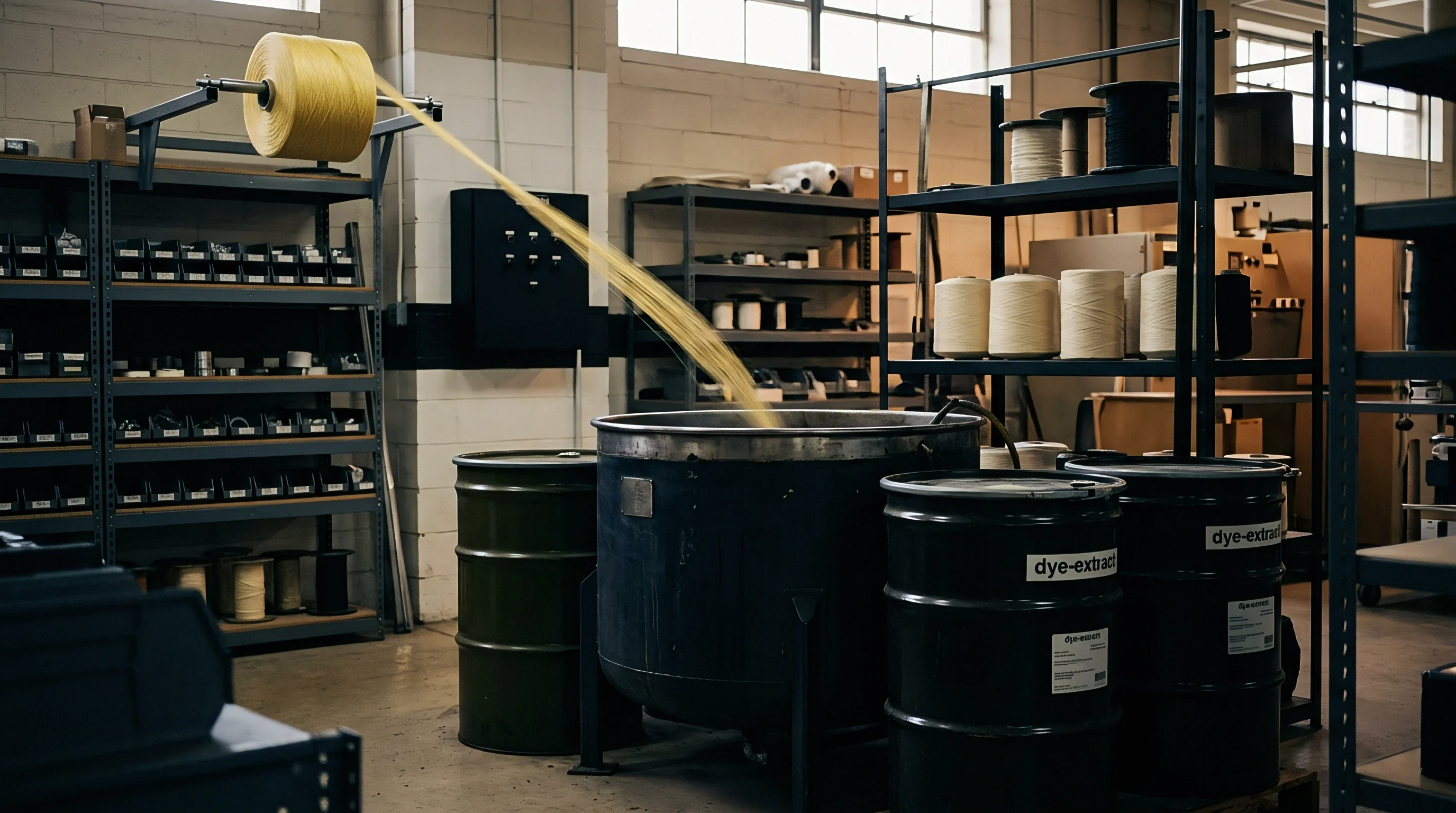
Aqueous Extraction and Hydrolysis Efficiency during Scouring
Wet processing begins with desizing and scouring, where greige fabric encounters aqueous solutions at elevated temperatures and extreme pH levels. Alkaline scouring employs sodium hydroxide concentrations between 20 and 40 grams per liter at temperatures ranging from 95 to 110 degrees Celsius, often supplemented with chelating agents and non-ionic surfactants. This aggressive chemical environment saponifies natural waxes and hydrolyzes ester bonds present in specific pesticide structures.
Hot alkaline baths break ester linkages.
The rate of chemical degradation depends upon the chemical structure of the active substance. Synthetic pyrethroids like cypermethrin and deltamethrin possess ester linkages that undergo partial alkaline hydrolysis under caustic conditions. Organochlorine compounds, including lindane, hexachlorobenzene, and dieldrin, exhibit high thermal and chemical stability, resisting alkaline breakdown completely during standard 60-minute scouring cycles.
Dyes baths do not erase organochlorines.
| Pesticide Class | Greige Level (mg/kg) | Wet Processing Step | Surviving Residue % | OEKO-TEX Class I Limit (mg/kg) |
|---|---|---|---|---|
| Organochlorine (Lindane, DDT) | 1.20 | Caustic Scour (pH 12, 95C) | 82% | 0.50 (Total) |
| Organophosphate (Chlorpyrifos) | 0.85 | Peroxide Bleach (pH 11, 98C) | 34% | 0.50 (Total) |
| Synthetic Pyrethroid (Cypermethrin) | 1.50 | High-Temp Dyeing (pH 5.5, 130C) | 45% | 0.50 (Total) |
| Herbicides (Glyphosate, Atrazine) | 0.40 | Continuous Wash (pH 7, 80C) | 15% | 0.50 (Total) |

Mass Loss and the Concentration Effect
A critical, often overlooked physical dynamic during wet processing is the concentration effect driven by fabric weight loss. Raw cotton loses between 4 percent and 8 percent of its total mass during scouring and hydrogen peroxide bleaching as waxes, pectins, and sizing agents remove from the yarn. When wet processing successfully extracts a portion of a persistent pesticide, but fabric weight decreases at a higher proportional rate, the residual concentration per kilogram of finished fabric can actually increase.
Pesticides concentrate as fabric shrinks.
Dimensional contraction during finishing amplifies this concentration phenomenon. Compaction, sanforizing, and elastane recovery wash steps increase fabric mass per square meter while reducing surface area. If a lipophilic pesticide residue resists extraction during dyeing and rinsing, the analyte count expressed in milligrams per kilogram of final dry cloth rises.
Caustic scouring alters active molecule structures.
- Organochlorine Residues demonstrate high structural stability under thermal stress, retaining over 80 percent of original concentration after high-temperature jet dyeing.
- Organophosphorous Contaminants undergo moderate decomposition during hot alkaline baths, but leave trace toxic breakdown products within effluent and fiber matrixes.
- Synthetic Pyrethroids break down partially during boiling hydrogen peroxide bleaching, but residual isomers persist above infant product thresholds.
- Substituted Phenoxy Herbicides exhibit water solubility and remove efficiently during continuous hot water washing stages when rinse ratios exceed 15 liters per kilogram.
Converters routinely defend unexpected wet processing failures by stating that standard wash liquors and high-temperature dye baths inevitably remove all field-applied crop chemicals. This excuse ignores basic thermodynamic solubility limits and lipid-partitioning coefficients.

Assay
Analytical Extraction Techniques and Quantification Thresholds
Determining whether pesticide residues originated in raw greige material or entered through contaminated processing chemicals demands rigorous laboratory testing protocols. Standard analytical methodologies rely on solvent extraction using acetone, acetonitrile, or ethyl acetate, followed by clean-up procedures such as solid-phase extraction or dispersive gel-based methods like EN 15662. The choice of solvent directly impacts extraction yield; non-polar solvents recover lipophilic compounds embedded inside fiber walls, whereas polar mixtures extract surface contaminants.
Clean water remains a mandatory baseline.
Subsequent identification and quantification employ Gas Chromatography coupled with Tandem Mass Spectrometry (GC-MS/MS) and Liquid Chromatography with Tandem Mass Spectrometry (LC-MS/MS). These dual platforms enable quantification down to limits of detection reaching 0.01 milligrams per kilogram. Triple quadrupole detectors eliminate background matrix interferences generated by residual sizing starches, synthetic lubricants, and reactive dyestuffs.
OEKO-TEX Standard 100 Annex 4 limits total pesticide content in infant textiles to 0.5 milligram per kilogram, invalidating commercial lots where greige testing was skipped.

Analytical Workflow for Contamination Origin Isolation
Isolation of chemical contamination requires testing retained control samples across every manufacturing interface. Testing finished fabric alone cannot prove liability when a batch fails Restricted Substance List requirements. The sequence below outlines the step-by-step verification process needed to isolate the source of pesticide residues.
- Sample retained greige fabric specimens preserved from original yarn lots prior to any wet processing exposure.
- Extract greige specimens using accelerated solvent extraction with a hexane-acetone mixture at 100 degrees Celsius and 1500 psi.
- Screen raw processing intake water and auxiliary chemical inputs for background agricultural chemical presence.
- Analyze wet processing wash bath discharge water collected prior to fabric immersion to rule out equipment contamination.
- Extract finished fabric specimens using identical solvent parameters applied to original greige controls.
- Calculate mass balance ratios comparing total contaminant mass in incoming greige against total mass found in finished goods and process wash liquors.
Matrix effects pose continuous challenges when testing dyed or finished textiles. Dyes containing aromatic rings can produce fragment ions that overlap with specific pesticide target transitions. Does specialized enzyme washing or bio-polishing alter the chemical structure of residual organochlorines sufficiently to yield false negative screen results?


Clause

Contractual Warranties and Greige Acceptance Specifications
Commercial relationships between greige suppliers, wet processing mills, and brands depend heavily on clear contract design. Conventional purchase orders frequently rely on vague standard clauses requiring goods to comply with all applicable environmental regulations. General statements fail to protect parties when low-level pesticide residues survive wet processing and trigger finished product failures.
A robust supply agreement incorporates explicit maximum residue limits applied directly to incoming greige cloth, backed by hold-point testing protocols before wet processing commences. Testing greige saves downstream dyeing costs.
Greige purchase orders lacking explicit raw-fiber RSL warranties shift the entire downstream contamination burden to the wet processing mill upon fabric entry into the dye bath.
Standard warranty terms must explicitly address the physical and chemical realities of wet finishing. If a greige supplier delivers cloth containing 0.4 milligrams per kilogram of endosulfan, and fabric weight loss during scouring concentrates that residue to 0.52 milligrams per kilogram in finished form, the contract must define which party carries liability. Specific purchase order language fixes whether compliance is judged on an as-received dry weight basis or calculated via corrected mass-balance algorithms.
Where Does Liability Shift in Multi-Stage Processing?
Liability boundaries transition at defined physical interfaces along the manufacturing chain. Clear contract structures establish concrete verification gates to prevent disputes after expensive wet processing conversions take place.
- Greige Receipt Hold Points require mandatory sampling and rapid chemical screening before rolls enter desizing or scouring ranges.
- Auxiliary Chemical Indemnities protect wet processing facilities by requiring chemical vendors to certify that dyes, softeners, and wetting agents carry zero agricultural contamination.
- Processing Conversion Guarantees obligate dyehouses to follow agreed washing ratios and temperature profiles designed to maximize residue extraction.
- Split-Sampling Protocols mandate that sealed control swatches stay preserved at ambient conditions for independent third-party laboratory verification during commercial disputes.
Contracts using standardized standard language shift liability decisively by incorporating text stating: The supplier warrants that greige fabric supplied under this agreement contains total combined pesticide residues not exceeding 0.20 mg/kg under GC-MS/MS test method EN 15662, and accepts full financial liability for downstream processing costs and finished goods rejections should pre-existing residues exceed this limit upon delivery.
Ledger

Worked Financial Liability Model and Contamination Arithmetic
Financial liability calculations require mapping material mass balances alongside raw material purchases, processing tariffs, retest fees, and container detention costs. Consider a commercial lot of 20,000 kilograms of greige cotton fabric purchased at 4.50 USD per kilogram, yielding a total raw material input cost of 90,000 USD. The wet processing contract specifies a converting cost of 2.80 USD per kilogram for scouring, bleaching, reactive jet dyeing, and soft-finishing.
Converting expenses total 56,000 USD, bringing total invested landed cost to 146,000 USD before garment cutting.
Assume the incoming greige fabric contains an unverified baseline chlorpyrifos concentration of 0.90 milligrams per kilogram. Standard wet processing achieves a 60 percent extraction rate for chlorpyrifos, leaving 40 percent of the contaminant bound to the fiber. Fabric mass loss during scouring and bleaching drops total batch weight by 6 percent, reducing total fabric mass from 20,000 kilograms to 18,800 kilograms.
Mass balance proves the primary origin.
Initial total chlorpyrifos mass within the 20,000 kilogram greige lot equals 18,000 milligrams. Following 60 percent extraction, 7,200 milligrams of active chlorpyrifos remain on the finished fabric. Expressed across the finished mass of 18,800 kilograms, the residual pesticide concentration equals 0.383 milligrams per kilogram.
If the target brand specification enforces an individual pesticide limit of 0.20 milligrams per kilogram, the finished lot fails compliance despite wet processing eliminating over half of the original residue load.
| Dispute Scenario | Greige Status | Wet Process Status | Finished Result | Greige Supplier Share | Wet Processor Share |
|---|---|---|---|---|---|
| Unverified Greige / Standard Scour | 0.90 mg/kg | Standard Extraction (60%) | 0.38 mg/kg (FAIL) | 100% Direct Goods Value | 0% (Hold-Point Waived) |
| Warranted Low-Pesticide Greige | 0.15 mg/kg | Contaminated Water Input | 0.65 mg/kg (FAIL) | 0% | 100% Goods + Dye Cost |
| Greige Exceeding Limit / Substandard Scour | 1.40 mg/kg | Inadequate Washing (20%) | 1.06 mg/kg (FAIL) | 65% Pro-Rata Split | 35% Pro-Rata Split |
| Clean Greige / Contaminated Auxiliary | 0.00 mg/kg | Dye Auxiliary Residue | 0.45 mg/kg (FAIL) | 0% | 100% Full Indemnity |
Apportionment Arithmetic and Retest Penalties
When finished fabric fails compliance testing, direct financial losses extend beyond raw material and processing expenses. Third-party analytical testing charges, port container demurrage, freight redirect penalties, and legally enforced brand recall fees rapidly escalate total exposure.
An allocation model assigns financial liability based on proven initial greige loadings relative to agreed contract threshold limits. If greige testing demonstrates pre-existing contamination exceeding purchase order specifications, the greige mill absorbs the full landed cost of the failed lot plus secondary handling expenses.
Process shrinkage increases measured pesticide concentration per unit weight when wet finishing reduces overall fabric area without leaching lipophilic active compounds.
When incoming greige testing was skipped, liability apportionment relies on comparative testing of retained control swatches against wash liquor balance data. If the greige supplier proves that incoming contamination was within contractual limits but the wet processor used intake water containing agricultural runoff, liability shifts entirely to the finishing mill. Exclusions destroy insurance indemnity claims.
Unverified greige entry waives downstream dyehouse processing liability unless gross processing negligence occurs.
Dossier

Constructing an Audit-Proof Verification File
Defending commercial shipments against customs detentions or brand compliance rejections demands a unified trace file compiled across every production phase. Regulatory authorities and international brand auditors reject generalized assertions of quality; they examine specific batch transaction certificates linked to accredited test reports. A complete compliance dossier establishes absolute traceability between raw cotton bales, greige yarn lots, dyehouse chemical inputs, and finished fabric rolls.
Chain of custody governs legal recovery.
Traceability records rely on Scope Certificates issued to manufacturing facilities, paired with Transaction Certificates covering individual fabric consignments. A Scope Certificate confirms that a spinning or weaving mill possesses technical capabilities and management systems required to produce compliant goods. It does not prove that a specific shipment meets Restricted Substance List parameters.
Only a valid Transaction Certificate referencing specific batch numbers and tied directly to ISO 17025 accredited laboratory test reports proves lot-level compliance.
Step-by-Step Dossier Assembly Protocol
Building a dossier capable of releasing held containers at regulatory borders follows a strict documentation sequence. Every document must align logically across date, lot identifier, and quantitative volume metrics.
- Collect original ginning and bale identification records linking raw fiber purchases to specific agricultural regions.
- Attach ISO 17025 accredited analytical test reports covering incoming greige yarn lots, specifically testing for organochlorine and organophosphorus pesticides via GC-MS/MS.
- Include Scope Certificates and Transaction Certificates covering all intermediate spinning, weaving, and wet processing operations.
- Log intake water chemical testing reports verified during the exact calendar window of fabric dyeing and finishing.
- Compile chemical safety data sheets and RSL compliance declarations for all auxiliaries, dyes, and softeners used in the dyehouse bath.
- Secure third-party finished fabric test reports dated after final drying and packing, matching line-item roll numbers listed on the commercial invoice.
Retaining physical swatches cut directly from the head and tail ends of inspected fabric rolls provides the ultimate defense during commercial arbitration. These swatches, stored in inert aluminum-lined bags at controlled temperatures, allow immediate independent retesting when split-sample disputes emerge between buyers, mills, and converters.