Unextracted Spinning Oil Residues Distorting Mass Calculations in Cotton Viscose Blend Customs Verification
Unextracted spinning oils distort oven-dry fiber mass ratios, triggering false chief-weight customs reclassifications between cotton and viscose tariffs.

Residue
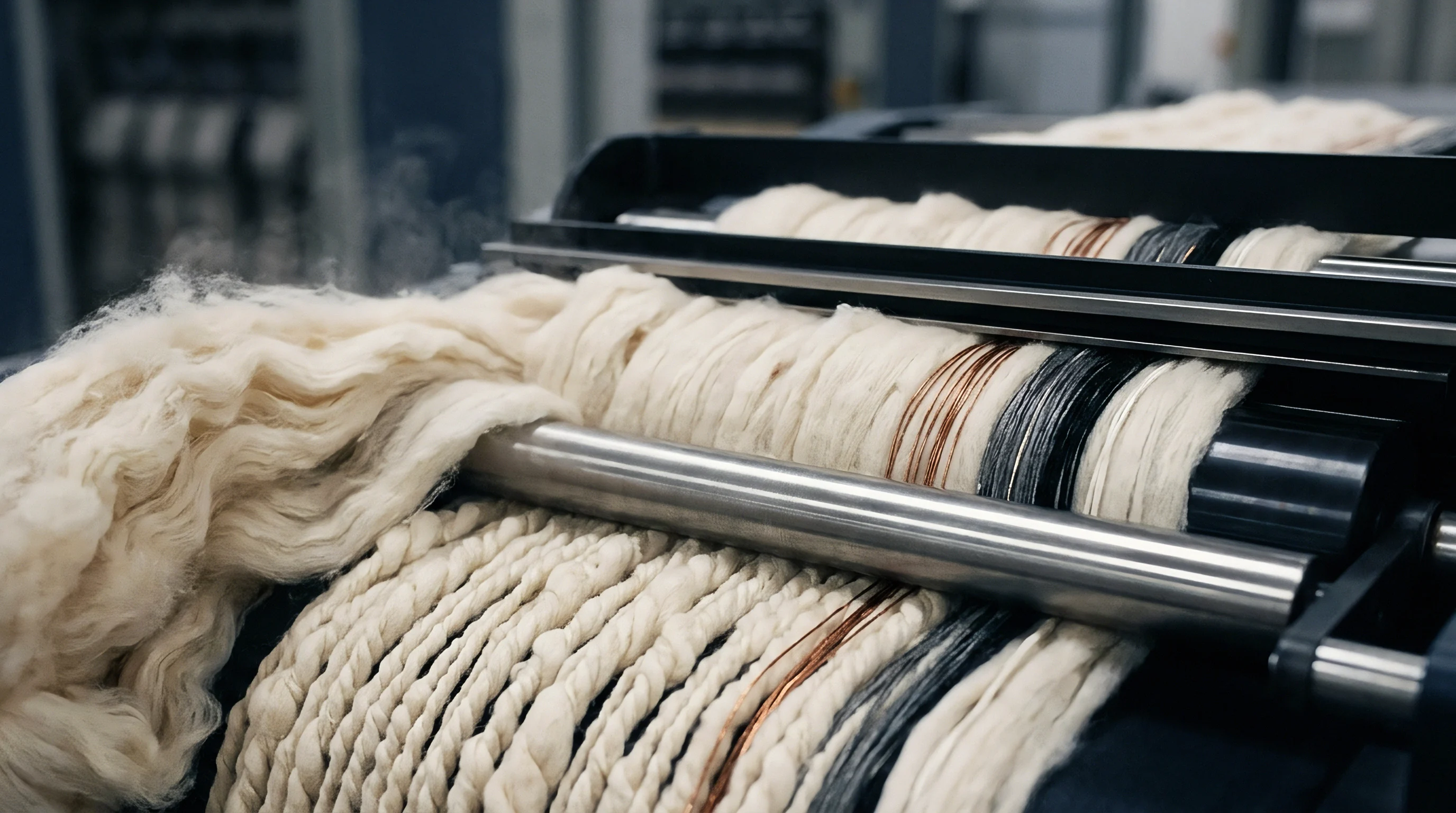
Spinning lubricants applied during yarn manufacturing remain inside the cellulose matrix unless extracted before chemical testing. High-speed ring and rotor frames require these agents to reduce fiber friction, prevent breaks, and control static through carding and drafting. In blends of natural cotton and regenerated viscose staple, spin finishes interact differently with each fiber structure due to their underlying chemistry.
Cotton staple carries a hydrophobic cuticle wax composed of long-chain fatty alcohols, esterified fatty acids, and high-molecular-weight hydrocarbons. Viscose staple, manufactured from dissolving pulp, begins as pure cellulose without natural waxes, but receives synthetic coning oils, polyethylene glycol esters, and fatty acid ethoxylates during spinning to enable mechanical processing.
In cotton-viscose yarns, processing oils account for 0.8 percent to 2.5 percent of total dry yarn mass. These formulations contain non-volatile compounds designed to withstand elevated processing temperatures. Typical coning oils combine mineral base oils with synthetic ester emulsifiers, antistatic salts, and polymeric tackifiers.
Paraffinic and naphthenic hydrocarbons provide surface lubrication, while ethoxylated fatty alcohols enable water emulsification during subsequent scouring and dyeing. Because these compounds do not evaporate during oven drying at 105 degrees Celsius, their mass remains included in the initial sample weight during quantitative fiber testing.

Lubricant Formulations across Yarn Spinning Operations
Different stages of mechanical yarn processing rely on specific chemical formulations. Open-end rotor spinning uses low-viscosity mineral oils with non-ionic surfactants to minimize wear on rotors operating above 100,000 revolutions per minute. Ring spinning requires higher-viscosity lubricity additives and cationic antistatic agents to control fiber movement during drafting, while surface lubricants dissipate traveler heat.
Winding operations apply heavy paraffin waxes or emulsified synthetic wax compositions directly to the moving yarn, reducing yarn-to-metal friction during high-speed knitting or weaving preparation.
- Mineral Oil Paraffins consist of straight-chain saturated hydrocarbons that coat fiber cuticles and resist standard aqueous washing without dedicated solvent extraction.
- Ethoxylated Fatty Esters act as emulsifiers with dual affinity, anchoring hydrophobic oil droplets to the hydrophilic hydroxyl groups on viscose.
- Polyethylene Glycol Fatty Acid Condensates function as antistatic lubricity modifiers, forming dense molecular layers along regenerated cellulose filaments.
- Alkyl Phosphate Amine Salts suppress electrostatic buildup during carding while remaining tightly bound within the fiber matrix under dry heat.
- Microcrystalline Wax Emulsions applied during yarn package winding alter overall yarn surface mass and resist low-temperature aqueous baths.
Accumulated finish components distort the baseline mass of test specimens. Standard quantitative analysis isolates pure fiber weight by selectively dissolving one component while leaving the other intact. When non-fibrous lipid residues coat the yarn, aqueous reagents cannot penetrate the polymer matrix uniformly.
The oil forms a barrier film that impedes reagent contact with the target cellulose while adding non-fibrous mass to the unextracted fiber.
Chemical Affinities of Oils for Cellulose Structures
Cellulose chemistry dictates how spinning oils partition into each fiber type. Cotton features a convoluted primary wall containing hydrophobic cuticle waxes, pectins, and protein residues. These natural waxes dissolve synthetic mineral oils and aliphatic hydrocarbons, trapping applied lubricants within the outer fibrillar network.
The hydrophobic cuticle drives thermodynamic equilibrium with lipophilic coning oils, drawing a portion of the applied lubricant inward toward the lumen.
Commercial spinning lubricants applied during yarn spinning resist volatilization under standard laboratory oven drying at 105 degrees Celsius.
Viscose rayon consists of amorphous regenerated cellulose rich in free hydroxyl groups. Although untreated viscose is strongly hydrophilic, applied fatty acid esters and ethoxylated surfactants align their polar heads toward these surface hydroxyls, orienting hydrophobic hydrocarbon tails outward. This alignment alters the filament’s surface energy to create a lipid barrier similar to natural cotton wax.
Unextracted coning oils thus remain bound to viscose fibers through hydrogen bonding and dispersion forces, resisting mild solvent washes and distorting dry mass measurements.

Non-Volatile Organic Compound Content in Yarns
Non-volatile matter remaining on cotton-viscose yarns alters mass balance calculations and reaction kinetics during laboratory testing. Commercial specifications allow up to 1.5 percent total oil on greige ring-spun yarns and up to 2.2 percent on waxed rotor-spun knitting yarns. When quantitative fiber analysis is performed without removing these organic compounds, the recorded sample mass includes the lubricant alongside the pure cellulose.
Unextracted lipids introduce two distinct errors into laboratory analysis. First, the initial dry sample mass is inflated by the weight of the oil residue. Second, during selective dissolution, the oil layer either shields the soluble fiber from complete reagent penetration or dissolves into the reagent, causing unpredictable mass shifts.
In either case, the calculated composition ratios diverge from actual fiber proportions. Although coning oils are sometimes assumed to evaporate during yarn conditioning, pre-extraction remains essential for trade declarations.

Scour
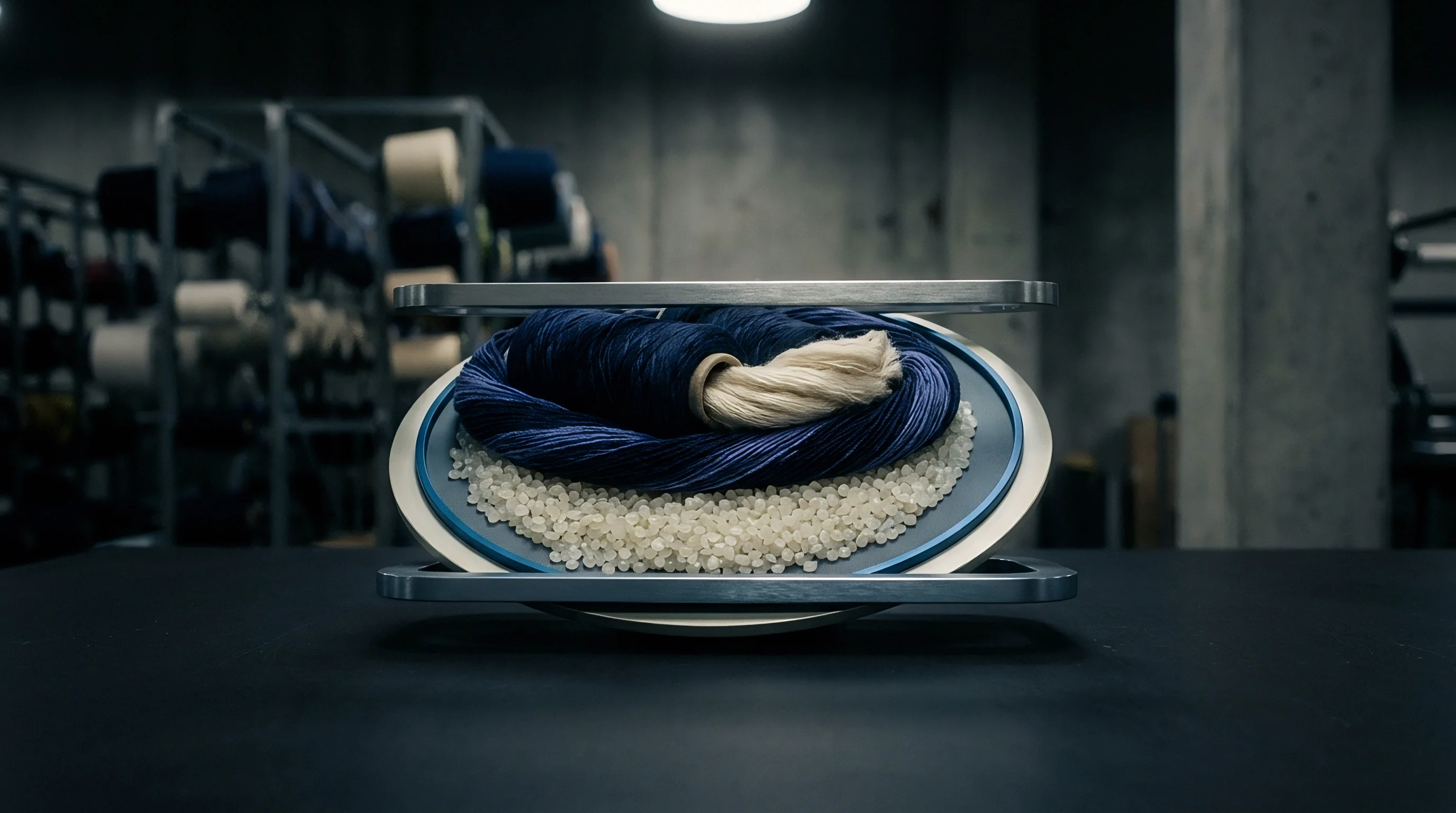
International standard ISO 1833-1 defines the solvent washing procedures required to isolate pure fiber mass. Quantitative analysis of binary mixtures requires the complete removal of non-fibrous matter, including natural waxes, spinning oils, coning lubricants, and synthetic finishes. Skipping or shortening solvent pre-treatment carries non-fibrous mass directly into chemical dissolution, invalidating subsequent mass loss calculations.
Selecting an appropriate solvent depends on the chemical makeup of the lubricants present on the yarn. Petroleum ether boiling between 40 degrees Celsius and 60 degrees Celsius serves as the primary extraction solvent under ISO 1833, dissolving non-polar aliphatic hydrocarbons, mineral oils, and straight-chain paraffin waxes. However, petroleum ether fails to remove polar emulsifiers, ethoxylated fatty acid esters, and polyethylene glycol surfactants common in modern viscose finishes.

Solvent Selectivity and Extraction Thermodynamics
Dichloromethane (methylene chloride) possesses a higher dielectric constant and dipole moment than petroleum ether, making it significantly more effective at dissolving polar antistatic agents and ethoxylated additives. Using dichloromethane in a Soxhlet extractor removes complex synthetic lubricants that resist light aliphatic solvents. Its lower boiling point of 39.8 degrees Celsius avoids thermal degradation of cellulose during extended reflux cycles.
Extraction comparisons demonstrate this difference: petroleum ether alone leaves 0.42 percent residual fatty acid ethoxylates on viscose filaments, whereas dichloromethane reduces residual organic matter to 0.04 percent.
| Lubricant Chemical Class | Petroleum Ether Yield (%) | Dichloromethane Yield (%) | Residual Mass Variance (%) | Extraction Efficiency Rating |
|---|---|---|---|---|
| Straight Mineral Paraffin Oil | 99.2 | 99.6 | 0.04 | Optimal with both solvents |
| Ethoxylated Fatty Alcohol Emulsifier | 76.4 | 98.9 | 0.25 | Requires Dichloromethane |
| Polyethylene Glycol Monooleate | 68.1 | 97.5 | 0.29 | Requires Dichloromethane |
| Alkyl Phosphate Antistatic Agent | 52.3 | 94.1 | 0.42 | Requires Polar Wash Step |
| Microcrystalline Winding Wax | 91.5 | 99.1 | 0.08 | Requires Extended Reflux |
Temperature control during solvent pre-treatment governs extraction efficiency. Cold solvent washes or brief immersions fail to remove lubricants bound within internal fiber pores and lumens. Continuous extraction in a Soxhlet apparatus bathes the yarn specimen in fresh, condensed solvent at elevated temperatures, driving thermodynamic equilibrium toward complete dissolution of lipid residues.
Siphon cycles should repeat 12 to 15 times per hour to sustain extraction drive.
Reflux Cycles and Temperature Range Controls
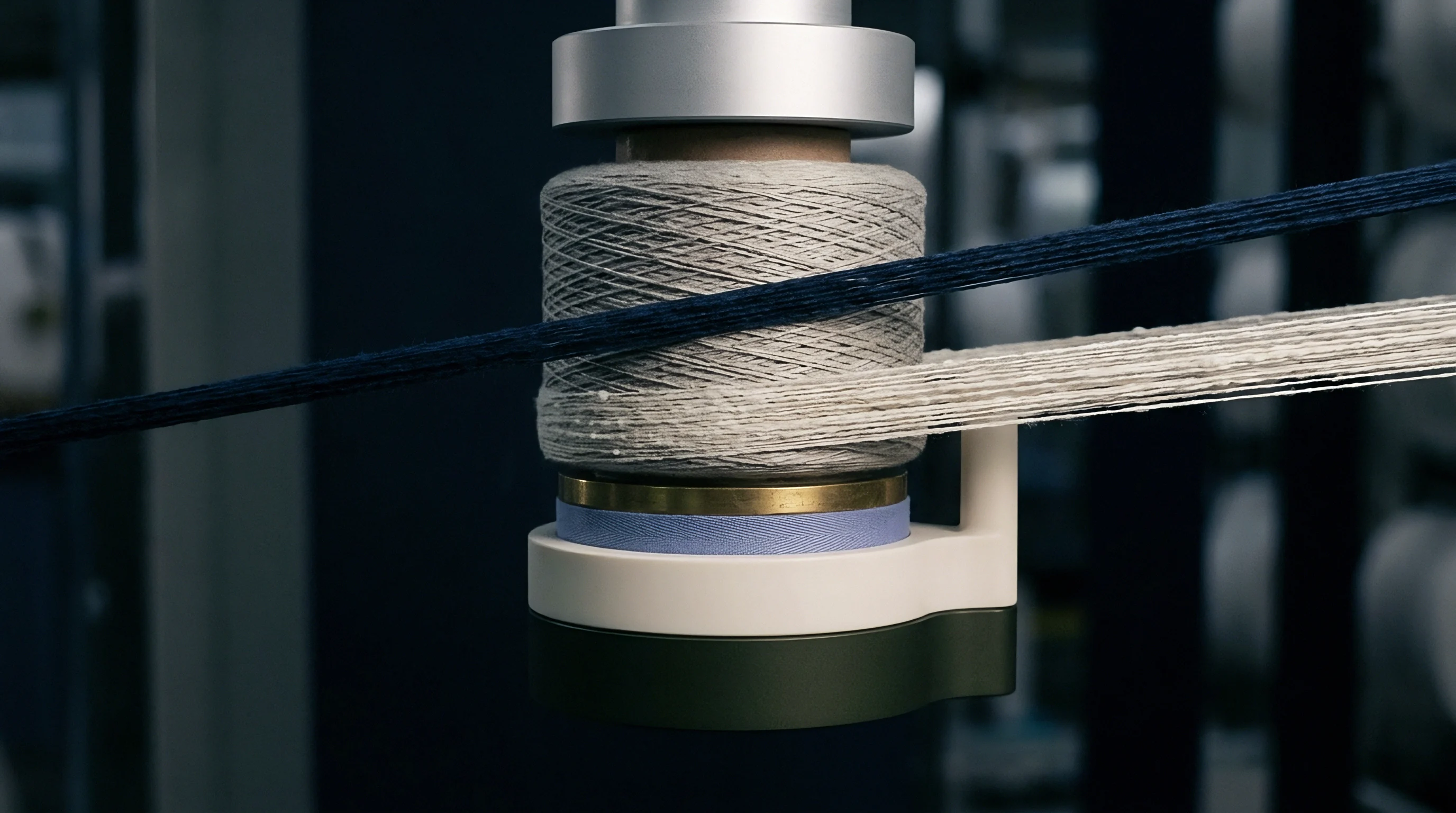
Standard Soxhlet extraction requires strict control over reflux timing and heating limits. Complete extraction calls for continuous refluxing for at least one hour following the initial siphon cycle, or until at least 20 cycles pass through the thimble. Water baths must maintain steady distillation without overheating the solvent, which could decompose heat-sensitive finish compounds or alter cellulose crystallinity.
- Weigh the test specimen in a glass weighing bottle to determine initial mass after drying at 105 degrees Celsius.
- Place the dried specimen inside a cellulose extraction thimble and insert it into the Soxhlet extraction chamber.
- Fill the extraction flask with dichloromethane to roughly two-thirds capacity and attach the water-cooled condenser.
- Apply heat to maintain a reflux rate of at least 15 siphon cycles per hour for two continuous hours.
- Remove the specimen, evaporate residual solvent under a ventilated fume hood, and submerge it in a cold distilled water wash.
- Dry the scoured specimen in a forced-draft oven at 105 degrees Celsius to constant mass to determine dry, oil-free weight.
Incomplete solvent drying leaves residual organic solvent in the specimen. After extraction, samples must be aerated thoroughly under a hood to clear solvent vapors before exposure to oven heat. Placing solvent-soaked yarn directly into a hot oven creates auto-ignition risks and can trigger localized polymer degradation via acid-catalyzed reactions driven by trace impurities.
Dichloromethane extraction superiorly removes polar ethoxylated coning oil additives that resist light aliphatic petroleum ether solvents.
When water-soluble antistatic finishes are present, a secondary aqueous wash must follow organic solvent extraction. Polyvinyl alcohol sizes, salt-based antistatic agents, and polyglycol lubricants dissolve readily in distilled water at 50 degrees Celsius but resist aliphatic solvents like petroleum ether. Executing a dual-stage pre-treatment ~ organic solvent extraction followed by a warm water wash ~ ensures complete removal of non-fibrous mass before chemical separation.
Any solvent step that leaves emulsifiers behind artificially inflates the weight of the insoluble fiber fraction.


Dissolution
Selective reagent digestion isolates the insoluble component in a binary mixture by chemically degrading one fiber species while leaving the other intact. For cotton-viscose blends, quantitative chemical separation relies on standards such as ISO 1833-3 (formic acid and zinc chloride) or ISO 1833-6 (sodium zincate), while some national methods specify concentrated sulfuric acid solutions under controlled temperatures. Cotton remains as the insoluble residue, while viscose dissolves completely into the reagent solution under proper test conditions.
Unextracted oil residues directly impair selective dissolution chemistry. Hydrophobic lipid films coating viscose filaments prevent aqueous reagents from wetting the fiber surface. Acidic and alkaline reagents require rapid, uniform penetration into the amorphous regions of regenerated cellulose to cleave glycosidic bonds.
When mineral oils or paraffin waxes coat the filament surface, reagent contact is delayed or restricted to isolated patches, leaving viscose incompletely dissolved within the specified contact time.

How Does Petroleum Ether Miss Polyethylene Glycol Lubricants?
Petroleum ether consists of non-polar alkanes, primarily pentane and hexane isomers. These non-polar molecules readily dissolve non-polar hydrocarbon chains such as mineral oils and paraffin waxes via dispersion forces. Modern spinning lubricants, however, incorporate hydrophilic polyethylene glycol chains and ethoxylated fatty acid surfactants so the finishes wash out easily during fabric processing.
These polar polyether and hydroxyl groups resist interaction with non-polar alkane solvents. Consequently, petroleum ether leaves up to 40 percent of the total spin finish on the yarn matrix before chemical dissolution testing begins.
Unextracted polar lubricants remain bound to viscose fibers through dipole-dipole interactions and hydrogen bonding. During chemical dissolution with formic acid and zinc chloride, these residual polyglycols create an interfacial barrier. The zinc chloride reagent fails to swell the viscose filaments uniformly, slowing polymer breakdown.
Undissolved viscose fragments are then caught on the fritted glass filter alongside insoluble cotton fibers, inflating the measured cotton weight and distorting the calculated blend ratio.

Reagent Penetration Barrier Mechanisms in Unwashed Filaments
Reagent diffusion kinetics govern the accuracy of fiber separation. The reaction mechanism of formic acid and zinc chloride forms a soluble zinc-cellulose complex, followed by acid hydrolysis of beta-1,4-glycosidic linkages. Zinc chloride acts as a swelling agent, disrupting inter-chain hydrogen bonds in viscose filaments so formic acid can reach the polymer chains.
Lipid residues disrupt this swelling phase by repelling the aqueous zinc chloride solution.
| Method Standard | Reagent Composition | Target Viscose Mass (g) | Unwashed Residual Mass (g) | Scoured Residual Mass (g) | Dissolution Error (%) |
|---|---|---|---|---|---|
| ISO 1833-3 | Formic Acid / Zinc Chloride | 1.0000 | 1.0245 | 1.0002 | +2.43 |
| ISO 1833-6 | Sodium Zincate Solution | 1.0000 | 1.0312 | 1.0004 | +3.08 |
| ISO 1833-11 | 70% Sulfuric Acid (w/w) | 1.0000 | 1.0188 | 1.0001 | +1.87 |
| AATCC 20A | 60% Sulfuric Acid (w/w) | 1.0000 | 1.0210 | 1.0003 | +2.07 |
Incomplete dissolution leaves uncleaved cellulose aggregates behind. Filter crucibles with porosity grade P16 (pore size 10 to 16 micrometers) collect these undissolved fragments during vacuum filtration, which are then weighed as cotton. Consequently, an unwashed 50 percent cotton and 50 percent viscose yarn yields a measured residue of 52 or 53 percent insoluble mass, shifting the apparent chief weight of the yarn.

Interference Factors in Sulfuric Acid Separations
Sulfuric acid methods operate by rapidly hydrolyzing cellulose into soluble glucose units. Standard testing uses 60 percent or 70 percent mass fraction sulfuric acid at controlled temperatures between 15 degrees Celsius and 20 degrees Celsius. Unextracted spinning lubricants undergo side reactions with concentrated sulfuric acid, including sulfonation and oxidation.
Mineral oils and unsaturated fatty acid esters form dark, insoluble tarry residues that deposit onto the remaining cotton fibers in the reaction flask.
These sulfonation products resist removal by water or dilute acid rinses. During filtration, tarry organic compounds clog the porous sinter disc, slowing flow and trapping acid solution within the residue bed. Extended washing to clear trapped acid risks mild chemical attack on the cotton fiber, while the tarry residue adds mass to the crucible.
Non-ionic emulsifiers remaining bound to regenerated cellulose after petroleum ether extraction generate a false positive mass increase of 1.6 percent on the cotton residue following sulfuric acid digestion.
Unextracted spinning finishes create steric oxidation barriers that impede zinc chloride reagent penetration into regenerated cellulose.
Mass loss correction factors, known as d-values, compensate for slight solubility losses in the insoluble fiber component during chemical digestion. Standard ISO 1833 methods assign a d-value of 1.02 for clean, scoured cotton treated with formic acid and zinc chloride, reflecting an expected 2.0 percent loss of natural cotton wax and short-chain pectins. When cotton retains natural cuticle waxes alongside unextracted synthetic spinning oils, the reagent cannot access the underlying cellulose to remove that 2.0 percent non-cellulosic fraction.
Applying the 1.02 correction factor to an unextracted, incompletely dissolved cotton residue overcorrects the calculated dry mass, further distorting customs declarations. An unextracted glycol binder causing a sodium zincate test to misclassify a sixty-forty yarn shipment brings significant costs for re-testing dossiers and demurrage.


Correction
Mathematical adjustments convert raw laboratory measurements into official invoice percentages by applying standardized moisture values. Verifying fiber composition requires translating oven-dry mass into commercial mass totals. Raw laboratory weights recorded immediately after chemical separation represent a dry, unconditioned state, whereas customs authorities require composition figures expressed on a commercial mass basis that incorporates official moisture regain allowances defined by trade regulations.
Commercial moisture regain percentages differ significantly between cotton and viscose. International trade rules assign an official moisture regain factor of 8.5 percent to combed and carded cotton, whereas regenerated viscose rayon carries an official regain factor of 13.0 percent owing to its amorphous structure and accessible hydroxyl groups. These regain values are applied to the calculated dry mass of each fiber before calculating final commercial blend percentages.

Oven-Dry Mass Calculations and Regain Factors
Calculating the commercial percentage of cotton and viscose requires adjusting each component’s oven-dry mass by its commercial moisture regain factor. The standard equation converting oven-dry mass to commercial mass is:
Commercial Mass of Cotton = Dry Cotton Mass multiplied by (1 + 0.085)
Commercial Mass of Viscose = Dry Viscose Mass multiplied by (1 + 0.130)
Final composition percentages represent each component’s commercial mass divided by total commercial mass. Because the regain factor for viscose (13.0 percent) exceeds that of cotton (8.5 percent), raw mass errors from chemical separation are amplified when commercial regain factors are applied.
Mathematical Derivation of Oil Distortion Factors
When unextracted spinning oils contaminate the test sample, the initial dry weight includes the oil’s weight. Assuming an initial yarn sample has a true dry mass composed of pure cotton, pure viscose, and oil residue, the oil distorts the mass balance equation:
Total Measured Dry Mass = Dry Cotton Mass + Dry Viscose Mass + Oil Mass
During selective dissolution of viscose, if oil residue remains on the insoluble cotton, recorded dry cotton mass becomes true cotton mass plus total oil weight. Conversely, if the oil dissolves alongside viscose into the reagent, initial sample weight remains inflated while measured cotton appears correct ~ forcing the calculated viscose mass (derived by subtracting cotton mass from total sample mass) to absorb the entire weight of the oil residue.
| Actual Blend Ratio (Cotton/Viscose) | Unextracted Oil Content (%) | Oil Fate During Separation | Calculated Dry Cotton (%) | Commercial Adjusted Cotton (%) | Customs Classification Outcome |
|---|---|---|---|---|---|
| 50.0 / 50.0 | 0.00 | None (Fully Scoured) | 50.00 | 49.00 | Viscose Majority (HS 5516) |
| 50.0 / 50.0 | 1.20 | Retained on Cotton | 51.20 | 50.20 | Cotton Majority (HS 5205) |
| 50.0 / 50.0 | 1.80 | Retained on Cotton | 51.80 | 50.81 | Cotton Majority (HS 5205) |
| 50.0 / 50.0 | 1.80 | Dissolved with Viscose | 48.20 | 47.19 | Viscose Majority (HS 5516) |
| 52.0 / 48.0 | 1.50 | Dissolved with Viscose | 50.50 | 49.50 | Threshold Jump to Viscose Majority |
The mathematical impact of this distortion is critical around the 50 percent chief weight threshold. Harmonized tariff schedules classify blended textiles according to the fiber that predominates by weight. A yarn containing 50.5 percent cotton by commercial mass falls under Harmonized System Chapter 52 as cotton yarn, whereas a yarn containing 49.5 percent cotton and 50.5 percent viscose falls under Chapter 55 as artificial staple fiber yarn.
An unextracted oil residue of just 1.2 percent can flip a true 49.5/50.5 viscose-majority yarn into a calculated 50.2/49.8 cotton-majority yarn, causing misclassification. An unextracted residue of 1.4 percent is sufficient to shift a declared cotton majority to a viscose majority during a formal border audit.

Worked Mass Balance Sensitivity Model
Consider a commercial yarn lot declared as an intimate mixture of 50.0 percent cotton and 50.0 percent viscose by weight. A lab receives a sample with an oven-dry mass of 2.0000 grams containing 1.80 percent unextracted coning oil (0.0360 grams of oil residue). The true breakdown of dry matter is 0.9820 grams cotton cellulose, 0.9820 grams viscose cellulose, and 0.0360 grams synthetic oil finish.
The lab technician skips solvent pre-treatment and performs ISO 1833-3 formic acid and zinc chloride dissolution directly. Non-polar coning oil coats the cotton fibers and remains insoluble in the aqueous zinc chloride solution. After filtration, drying, and weighing, the analyst records an insoluble residue mass of 1.0180 grams (0.9820 grams cotton + 0.0360 grams oil).
Applying the standard 1.02 d-value correction factor for cotton yields a calculated oven-dry cotton mass:
Calculated Dry Cotton = 1.0180 grams multiplied by 1.02 = 1.0384 grams
The lab derives viscose oven-dry mass by subtracting calculated dry cotton mass from the initial sample dry mass (2.0000 grams):
Calculated Dry Viscose = 2.0000 grams minus 1.0384 grams = 0.9616 grams
Next, the analyst calculates commercial mass for both components by multiplying dry weights by official regain factors:
Commercial Cotton Mass = 1.0384 grams multiplied by 1.085 = 1.1267 grams
Commercial Viscose Mass = 0.9616 grams multiplied by 1.130 = 1.0866 grams
Total Commercial Mass = 1.1267 grams + 1.0866 grams = 2.2133 grams
Finally, the analyst derives commercial mass percentages for the test report:
Calculated Cotton Percentage = (1.1267 divided by 2.2133) multiplied by 100 = 50.91 percent
Calculated Viscose Percentage = (1.0866 divided by 2.2133) multiplied by 100 = 49.09 percent
Applying d-factor corrections to oil-contaminated insoluble residues amplifies dry mass errors during commercial regain adjustments.
The unextracted 1.80 percent coning oil shifts the test result from a true 49.50/50.50 viscose-majority blend to a reported 50.91/49.09 cotton-majority blend, distorting applicable duties. ISO 6741-1 Annex B mandates that commercial mass determinations adjust for non-extractable matter before applying standard moisture regain values.

Audit
Customs authorities sample imported yarn shipments for quantitative composition testing to verify tariff declarations against physical goods. Verification relies on auditing protocols set by government laboratory networks. When customs laboratories draw skeins from entry containers, technicians run quantitative analyses to confirm that declared Harmonized System codes match actual fiber proportions.
Discrepancies between declared composition and test results trigger administrative holds, financial penalties, or seizure of goods.
Customs workflows vary by jurisdiction. Certain national customs laboratories strictly enforce pre-extraction protocols using dichloromethane under ISO 1833 guidelines, whereas other regional facilities utilize rapid test methods that skip organic solvent extraction to accelerate clearances. When a customs laboratory omits solvent pre-treatment on yarn carrying 2.0 percent coning oil, its report will show a cotton-majority yarn, directly conflicting with origin certificates produced from scoured mill testing.

Customs Laboratory Verification Pathways and Discrepancies
Customs verification audits follow strict chains of custody. Official sampling agents select representative packages from shipments according to statistical sampling rules such as ISO 2859-1. Sampled packages travel in sealed bags to government testing centers, where technicians record sample weight, condition the material, and perform chemical testing.
Customs enforcement actions often turn on whether testing procedures include solvent pre-treatment. If official testing omits Soxhlet extraction, residual finish oils corrupt baseline measurements and yield erroneous composition results. Importers facing misclassification notices must challenge the government testing method by demonstrating that residual spinning lubricants altered the analytical outcome.

Tariff Classification Jumps at Chief Weight Thresholds
The Harmonized Commodity Description and Coding System places binary fiber mixtures under the tariff heading of whichever fiber predominates by weight. A shift of just 0.5 percent in recorded blend composition can alter the four-digit or six-digit HS heading, triggering significant duty rate changes.
- Tariff Line Shift occurs when yarn moves from HS 5205 (cotton yarn containing 85 percent or more cotton) to HS 5206 (cotton yarn containing less than 85 percent cotton by weight).
- Chapter Threshold Reclassification moves goods from Chapter 52 (Cotton) to Chapter 55 (Man-made Staple Fibers) when viscose content crosses 50.0 percent by commercial weight.
- Duty Rate Jump applies when chief weight shifts from a lower-rated natural fiber heading to a higher-rated synthetic or artificial tariff line carrying protective rates.
- Preferential Origin Invalidation occurs when rules of origin specify exact weight thresholds, revoking duty-free access under regional trade agreements.
Consider a ring-spun yarn declared as 51.0 percent combed cotton and 49.0 percent viscose staple, entered under tariff code 5205.12.00 at a 3.5 percent ad valorem import duty. If a customs laboratory tests the yarn without solvent scouring and encounters an unextracted finish that dissolves alongside viscose, the calculated cotton ratio drops to 49.2 percent. Customs then reclassifies the shipment under tariff code 5516.11.00 at an 8.0 percent ad valorem duty, assessing penalties and back-taxes against the importer.
Dispute Resolution and Retesting Technical Dossiers
Rebutting a customs reclassification requires assembling a technical dossier supported by certified counter-testing evidence. Importers must request formal re-testing through independent laboratories holding ISO/IEC 17025 accreditation, documenting specific analytical flaws in the original customs test report.
Establishing a valid technical defense requires clear analytical proof of lubricant interference. The dossier should present comparative Soxhlet extraction data demonstrating percentage losses of non-volatile organic matter, accompanied by gas chromatography-mass spectrometry (GC-MS) identification of specific hydrocarbon or glycol species in the solvent extract. Dual-testing reports comparing identical yarn specimens analyzed with and without dichloromethane pre-treatment demonstrate that solvent extraction restores calculated composition to the declared chief weight category.
Whether customs laboratories will adopt standardized multi-solvent pre-treatment protocols to address modern synthetic wax formulations in future enforcement cycles remains open.

Exposure
Financial losses from customs delays and duty adjustments fall directly on the importer of record when yarn composition fails verification. Commercial vulnerability extends well beyond duty differentials. Misclassification findings trigger mandatory administrative fines, container demurrage charges during ongoing disputes, and elevated compliance risk scores that prompt physical inspections on future import entries for up to three years.
Landed cost calculations must absorb the cumulative penalties linked to oil-related distortions. Container demurrage fees at major ports range from 150 to 450 dollars per day per container. When an entry hold extends six to eight weeks while independent laboratories perform Soxhlet re-testing and legal counsel submits petitions, port storage and detention charges rapidly erode profit margins on the yarn order.

Landed Cost Impact of Tariff Reclassification
The true landed cost of imported cotton-viscose yarn includes purchase price, ocean freight, marine insurance, customs duties, port handling fees, and broker clearance charges. A tariff reclassification driven by unextracted oil alters the landed cost formula instantly:
Landed Cost = Purchase Price + Freight + Insurance + Corrected Duty Rate + Penalty Fines + Demurrage
When an unextracted oil distortion triggers a 5.0 percent duty rate increase alongside a 20 percent administrative penalty assessed on total shipment value, landed cost per kilogram rises by 25 percent to 35 percent. This cost surge undermines margins and turns an otherwise profitable sourcing program into a commercial loss.

Contractual Solvent Pre-Treatment Guarantees
Sourcing practices should mitigate commercial risk by embedding mandatory chemical testing standards directly into supply contracts. Purchase orders issued to spinning mills ought to stipulate maximum permitted non-volatile oil content and specify the exact testing methodologies required for pre-shipment origin dossiers.
Contracts should mandate that all mill composition certificates rely on ISO 1833-1 dichloromethane Soxhlet pre-treatment prior to chemical dissolution. Specifying exact laboratory pre-treatment methods prevents suppliers from issuing certificates based on unscoured yarn tests. The contract ought to assign full financial liability to the mill for customs fines, duty adjustments, demurrage charges, or legal fees arising from composition discrepancies caused by excessive spin finish or unextracted lubricants.

Supply Chain Risk Mitigation in Mill Contracts
Preventing border verification disputes requires a quality assurance framework that bridges mill production lines and customs clearance desks. Sourcing practices must enforce a qualification protocol for all cotton-viscose yarn suppliers:
Spinning mills must disclose complete safety data sheets for all coning oils, antistatic agents, and winding wax emulsions used on their production lines. Third-party accredited inspection agencies should draw random package samples from finished yarn lots prior to container loading at the export port. Pre-shipment testing must execute dual-stage solvent extraction, incorporating dichloromethane and warm water washes before chemical digestion.
Commercial invoices ought to state both scoured dry fiber mass ratios and total non-solvent extractable matter percentages.
Rigorous pre-shipment qualification workflows eliminate composition ambiguity before goods reach international borders. Enforcing Soxhlet extraction standards at origin protects landed cost calculations, maintains regulatory compliance, and ensures smooth clearances across global trade lanes. Establishing verified solvent-scoured baseline testing in spinner contracts helps prevent border disputes before yarn leaves the port of origin.