Arbitrating Transboundary Cashmere Blend Discrepancies under ISO 17025 Multi Lab Protocols
Resolving transboundary cashmere discrepancies requires ISO 17025 accredited SEM cuticle height analysis combined with ISO 6741 commercial moisture regain mass corrections.
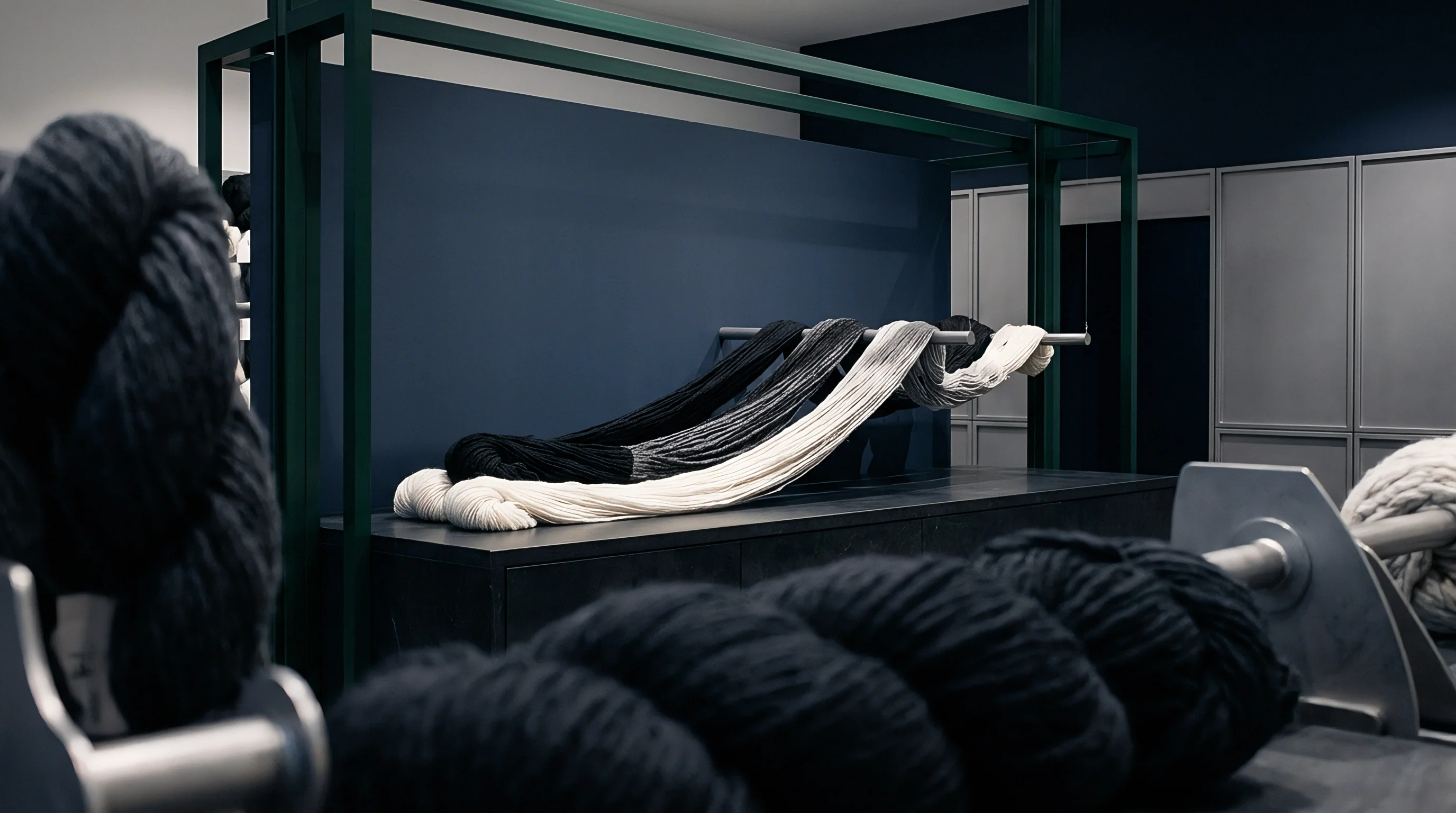
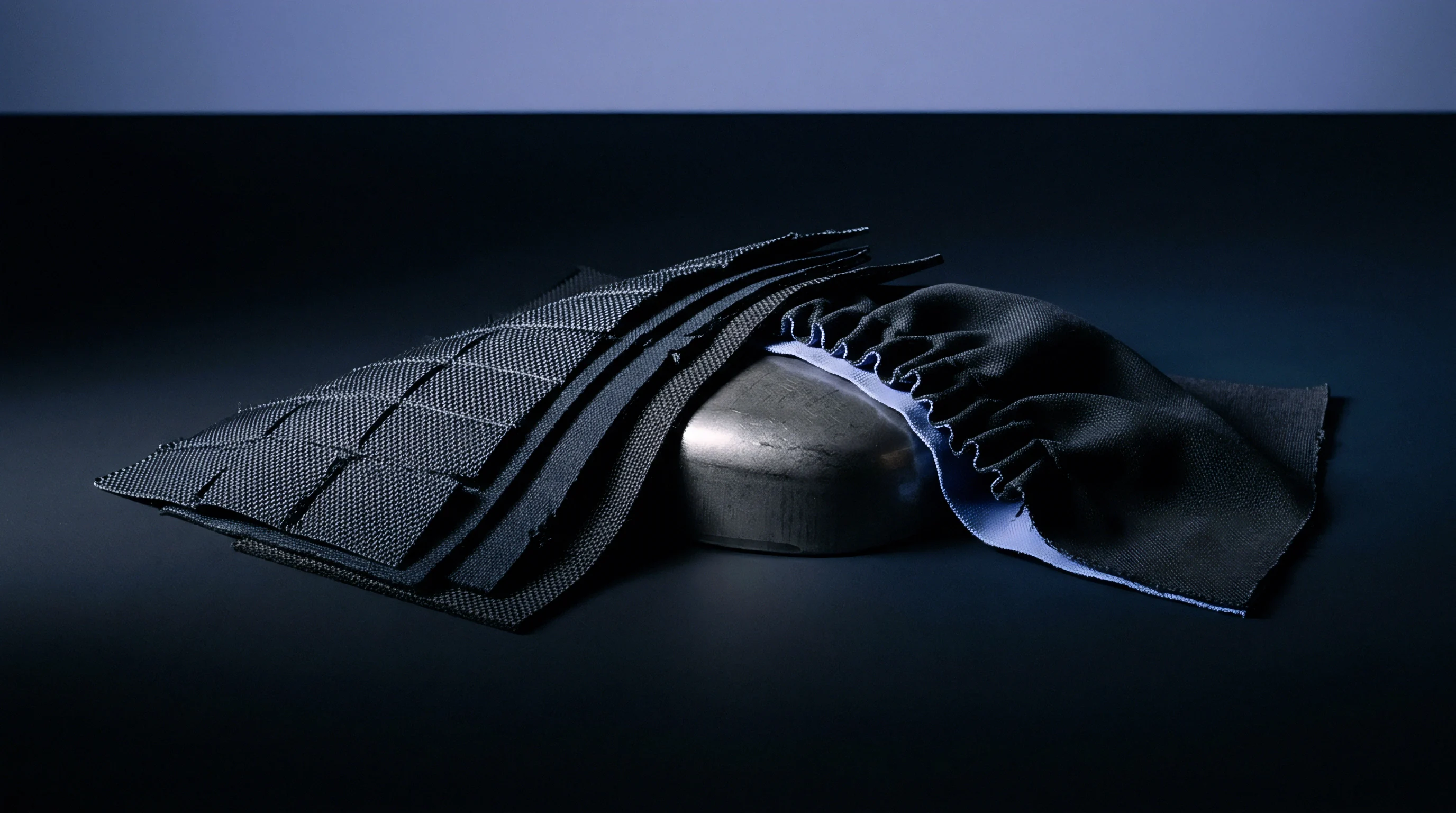
Specimen
Cross-border cashmere blend disputes usually start with how representative material was drawn from a raw bale or fabric shipment. When fiber or woven cloth moves between countries, counterparties depend on small extracted specimens to verify declared fiber ratios. Discrepancies between international labs rarely come down to microtome technique or optics; more often, they trace back to systematic errors in primary sampling.
During hydraulic baling, raw cashmere and fine wool stratify spatially: heavy coarse hair sinks toward the bottom corners, while fine undercoat gathers near the center. Sampling swatches from accessible outer folds of a fabric roll creates a similar bias if finish chemicals or moisture levels vary across the width of the bolt.
Selecting the right sampling standard underpins the validity of every test that follows. ISO 5089 covers laboratory test specimen preparation, requiring cuts distributed systematically across the full shipment matrix. For raw fiber bales, IWTO-33 sets core sampling procedures and specifies a minimum number of pressure-core penetrations to capture internal variation.
Fiber analysts and bale-room classers have to agree on whether testing applies to raw grease fiber, scoured tops, or finished dyed yarn. Testing un-scoured fleece chemically produces misleading weight ratios because suint, dirt, and residual wool grease settle unevenly across different fibers. Clean scoured yield must therefore be calculated before applying ISO 1833 or ISO 17751 protocols.
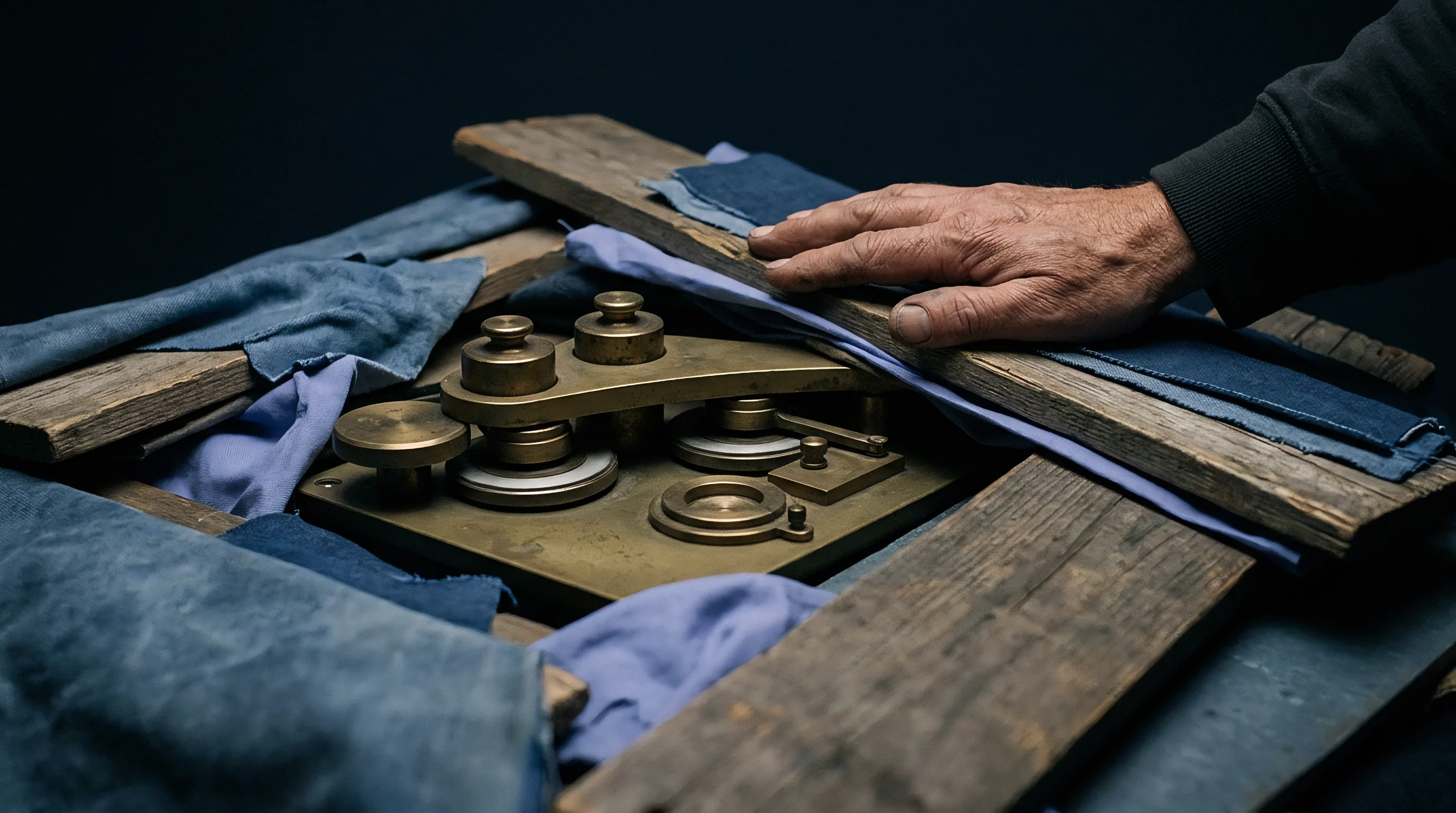
Bale Core Sampling versus Fabric Swatch Selection
Pressure core sampling of raw bales relies on standardized tube penetrations through the full depth of the package. Steel-tipped core tubes pull continuous fiber columns through varying density zones across the bale. Under IWTO-33, sampling plans call for twenty distinct penetration points per lot to gather a valid composite sample of at least one hundred grams.
Fabric swatch selection under ISO 5089 works differently, requiring cuts to stay at least one hundred millimeters clear of the selvedge edge. Keeping that distance avoids the tension distortions and uneven dye or finish pick-up typical of fabric margins.
Technicians combine the drawn cores or swatch pieces into a single master sample before dividing it into analytical aliquots. Standard microtome preparation then splits fiber bundles into longitudinal sections or transverse slices of fixed thickness. With fabric swatches, unraveling warp and weft yarns separately prevents overrepresenting one directional yarn system.
If a garment uses a pure cashmere warp and a fine merino wool weft, cutting a square swatch without separating the yarns will skew the calculated ratio whenever yarn counts or thread densities differ between warp and weft.
| Sampling Method | Standard Protocol | Target Material State | Primary Variance Source | Typical Variance Range (%) |
|---|---|---|---|---|
| Bale Core Penetration | IWTO-33 / ISO 1973 | Raw Scoured Fiber Bales | Internal bale stratification | 0.12 to 0.45 |
| Selvedge Swatch Cut | ISO 5089 | Finished Woven Rolls | Tension variations and edge finish | 0.30 to 0.85 |
| Garment Panel Extraction | ISO 5089 | Confected Apparel | Pattern seam tension differences | 0.50 to 1.20 |
| Yarn Package Unwinding | ISO 2060 | Cones and Spools | Outer layer moisture absorption | 0.20 to 0.60 |

Chain of Custody and Environmental Conditioning Controls
Protecting sample integrity in transit requires tamper-evident packaging and steady climate control. As fiber specimens cross different climate zones, they absorb or lose atmospheric moisture, which alters calculated dry weight ratios. ISO 139 specifies a standard conditioning environment of twenty degrees Celsius (plus or minus two degrees) and sixty-five percent relative humidity (plus or minus four percent).
Samples need to reach moisture equilibrium in these conditions for twenty-four hours before initial weighing or cutting.
Differences between exporting and importing labs often trace back to microtome sectioning performed before samples reach moisture equilibrium. A dry sample cut in an arid facility packs differently into a microtome slide than a hydrated specimen prepared in humid conditions. Shipping documentation needs sealed control tags, relative humidity data loggers, and explicit instructions for intake teams.
Failure to log intake environmental conditions invalidates cross-border laboratory comparison audits during commercial arbitration proceedings.
Bale core sampling at twenty core positions yields a sampling variance of zero point twelve percentage points when conditioned at twenty degrees Celsius and sixty-five percent relative humidity.
When customs officials and buyers face conflicting blend figures, they often find that sample preparation diverged before microscopic work even started. The exporter may have pulled swatches from outer bale layers, while the destination lab analyzed composite cores taken through the center. Alignment between counterparties starts with a unified sampling protocol signed before shipment departure.
When discrepancies arise, local maritime moisture absorption can alter the physical dimensions of the specimen, rendering destination core measurements unrepresentative of the shipped lot.
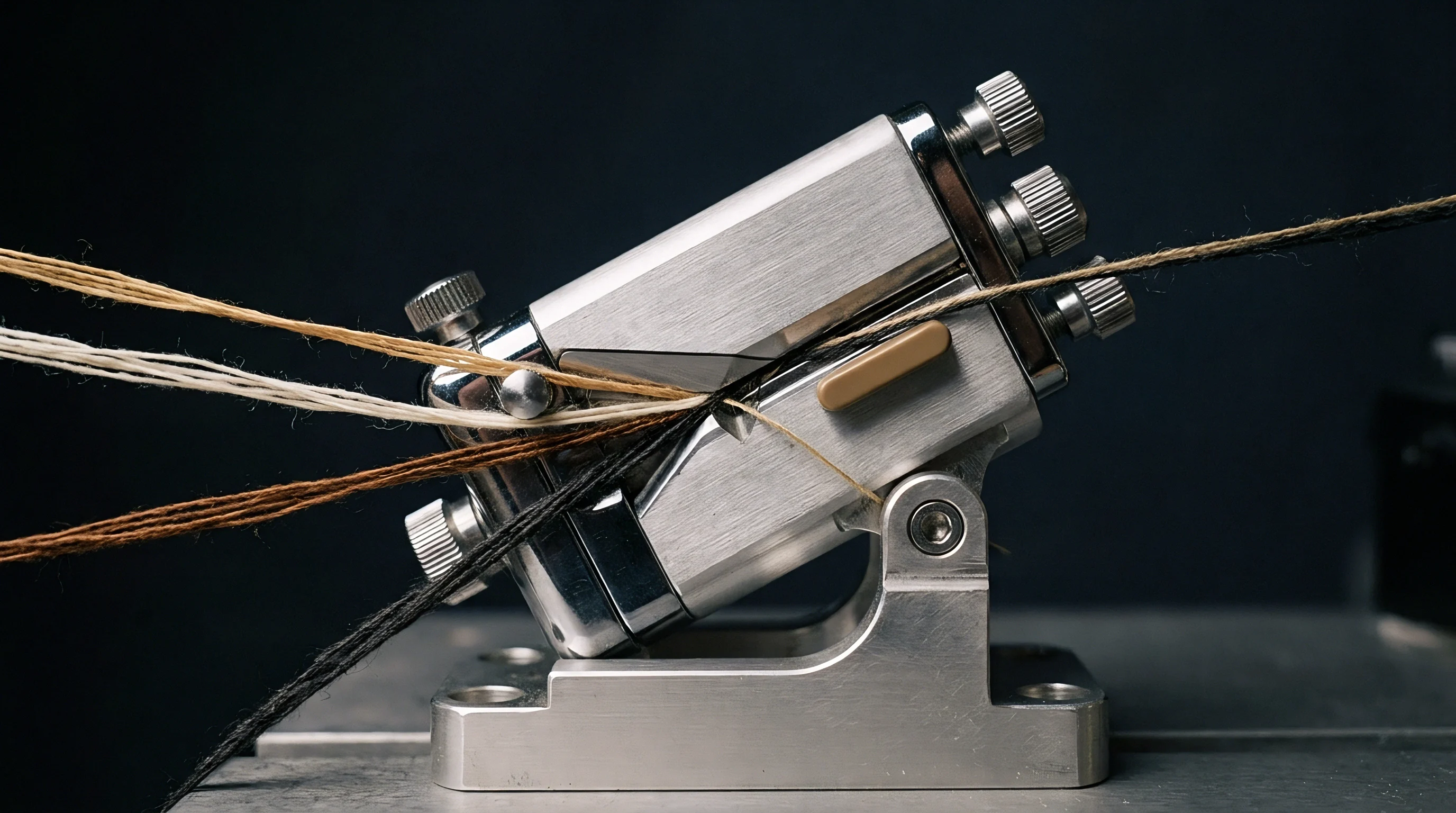

Microscopy
Quantifying cashmere blended with sheep wool, yak hair, or technical synthetic fibers relies mainly on microscopy. Because cashmere and sheep wool are both keratinous animal fibers, chemical separation under ISO 1833 cannot divide them. Laboratories rely on optical microscopy under ISO 17751-1 or scanning electron microscopy under ISO 17751-2 to separate fibers by surface morphology.
Cashmere fibers feature long, smooth cuticle scales with low scale heights, whereas fine sheep wool shows frequent, prominent scale edges with thicker cuticles.
Scanning electron microscopy offers the resolution needed to measure cuticle scale thickness and surface structure. Under high magnification, technicians measure scale height at the visible edges of overlapping cuticles. Cashmere cuticle scale thickness stays consistently below zero point fifty-five micrometers, while fine merino wool scales exceed zero point sixty micrometers.
De-scaled wool ~ treated chemically with chlorine or enzymes to strip scale margins and mimic cashmere hand ~ is harder to spot. SEM analysis detects it by looking for scale edge regularity, residual scale fragments near root ends, and uneven surface erosion along the shaft.

Morphological Differentiation via ISO 17751 Protocols
Optical microscopy under ISO 17751-1 requires counting at least one thousand fiber fragments per sample at four hundred times magnification. Technicians classify each fragment by scale frequency, margin shape, longitudinal appearance, and the presence of a medulla. Cashmere scale frequency averages five to six scale margins per one hundred micrometers of fiber length, against nine to eleven for fine merino wool.
Under transmitted light, cashmere scale margins appear distant, smooth, and diagonal, giving the fiber a streamlined profile.
Scanning electron microscopy under ISO 17751-2 avoids the depth-of-field limits of light microscopes. High-resolution electron imaging brings out subtle surface structures like micro-grooves and fine cuticular details. Yak hair, which overlaps with coarse cashmere in average fiber diameter, displays distinct scale patterns and heavy pigment distribution.
Automated image analysis software linked to SEM systems speeds up diameter measurement, but expert human validation is still required to resolve ambiguous fiber profiles in high-value luxury blends.
- Scale Cuticle Thickness values below zero point fifty-five micrometers confirm raw cashmere, while readings above zero point sixty-five micrometers point to fine sheep wool.
- Scale Frequency Count measuring five to seven scale margins per hundred micrometers identifies cashmere fiber structure under electron magnification.
- Surface Margin Morphology showing smooth, wavy, distant scale edges distinguishes specialty goat fibers from sharp, serrated wool scales.
- Medullation Index Profiles highlighting continuous or interrupted central cavities identify coarse guard hair contamination in refined de-haired lots.

Cuticle Height Measurement and De-Scaled Wool Artifacts
Chemical processing designed to shrink-proof wool or soften its hand alters surface scale profiles and complicates analysis. Chlorine-Hercosett treatments and enzymatic stripping shave off scale edges, dropping measured cuticle height to levels that match genuine cashmere. SEM operators need to inspect fiber shafts along their full length rather than relying on isolated points.
Stripped wool fibers reveal localized chemical etching, exposed cortical cells, and abrupt scale height shifts near undamaged root segments.
Laboratories accredited under ISO 17025 use statistical cutoff thresholds to identify modified wool. If over five percent of measured fibers show irregular scale stripping artifacts alongside baseline wool scale heights, the lab reports the presence of de-scaled wool. Automated image recognition systems trained only on raw fibers frequently misclassify de-scaled wool as pure cashmere.
Manual verification by an experienced microscopy analyst remains the primary safeguard against commercial fraud in processed wool blends.
Under ISO 17751-2 clause 7.3, non-conforming scale height measurements exceeding 0.55 micrometers convert the fiber classification from cashmere to fine sheep wool, nullifying premium price adjustments.
Microscopic identification forms the core evidence in any cross-border arbitration file. Combining optical counts with electron microscope cuticle height measurements provides dual-spectrum validation that holds up under legal scrutiny in commercial courts. Precision drops sharply when samples contain less than ten percent of a minority fiber, requiring expanded sample sizes of two thousand counted fibers.
Misclassifying chemically de-scaled fine wool as pure cashmere invalidates official customs declarations, triggering immediate import reclassifications, tariff adjustments, and severe monetary penalties for mislabeled goods.

Regain
Textile fiber transactions are settled by mass, but raw fiber weight shifts constantly with ambient atmospheric conditions. Cashmere, wool, silk, and regenerated cellulosic fibers each have distinct moisture regain capacities determined by their chemical structures. Moisture regain represents the percentage of water weight absorbed by clean fiber relative to its dry mass under standard conditions.
When counterparties trade blended yarn or fabric consignments, accounts are settled on official invoice trade weights calculated under ISO 6741 standards.
Discrepancies crop up when lab reports state blend percentages on an oven-dry basis without applying official commercial moisture regains. International trade regulations give cashmere an official commercial moisture regain allowance of thirteen point zero percent. Fine sheep wool carries an allowance of18 point twenty-five percent for scoured yarn, while silk carries eleven point zero percent and viscose thirteen point zero percent.
Skipping the conversion from dry lab figures to a commercial regain mass basis changes the billable composition of the shipment.
Commercial Mass Determination under ISO 6741 Standards
Determining commercial mass requires drying specimens in a ventilated oven at one hundred and five degrees Celsius until they reach constant mass. This step drives off all volatile moisture to establish clean dry sample weight. Non-fibrous additions like spinning oils, wax, and finishing chemicals must be extracted with petroleum ether or alcohol under ISO 1833-1 before final dry mass is determined.
The clean oven-dry mass is then adjusted using standard commercial regain percentages assigned to each fiber in the blend.
The conversion formula applies the official regain rate to each dry fiber fraction separately. Take a yarn sample containing eighty grams of dry cashmere and twenty grams of dry fine wool. Applying thirteen percent regain to the cashmere yields ninety-point-four grams of commercial mass.
Applying eighteen point twenty-five percent regain to the wool gives twenty-three point sixty-five grams. The commercial blend proportion shifts to seventy-nine point two percent cashmere and twenty-point-eight percent wool. That half-percent shift in declared ratio can alter contract compliance thresholds and customs tariff brackets.
| Fiber Category | Standard Code | Official Moisture Regain (%) | Non-Fibrous Allowance (%) | Combined Trade Factor |
|---|---|---|---|---|
| Pure Cashmere (De-haired) | ISO 6741-1 | 13.00 | 1.50 | 1.1470 |
| Scoured Fine Merino Wool | IWTO-33 | 18.25 | 1.00 | 1.1943 |
| Cultivated Mulberry Silk | ISO 6741-2 | 11.00 | 1.00 | 1.1211 |
| Viscose Rayon Staple | ISO 6741-3 | 13.00 | 2.00 | 1.1526 |
| Polyamide 6,6 Filament | ISO 6741-3 | 6.25 | 0.50 | 1.0678 |

Non-Fibrous Extraction Impact on Landed Weight Calculations
Raw and processed textiles carry non-fibrous additives applied during carding, spinning, or weaving. Spinning lubricants, paraffin wax, sizing starches, and anti-static agents add physical weight without contributing to genuine fiber content. ISO 1833-1 mandates solvent extraction using Soxhlet apparatus to remove non-fibrous material prior to quantitative analysis.
If a lab skips solvent extraction, heavy spinning lubricants get counted as fiber mass, skewing the final composition percentage.
Financial settlements need to adjust net invoice weights by deducting non-fibrous matter above contractually agreed limits. If a consignment contains three percent spin-finish oil, the buyer effectively pays fiber prices for liquid hydrocarbon additives unless extraction adjustments are applied. Combining moisture regain adjustments with non-fibrous extraction deductions establishes true commercial trade weight for delivered cloth.
Ignoring non-fibrous extractions on high-volume yarn orders shifts delivered costs by thousands of dollars per container load.
Calculating landed blend percentages on dry laboratory mass without correcting for official commercial moisture regain shifts the invoice baseline in favor of the higher regain fiber.
Shipping documents must explicitly state whether reported composition figures stem from dry mass, conditioned mass, or commercial mass with official regains applied. Ambiguity in trade papers creates immediate vulnerabilities during legal disputes or customs audits. Standardized purchase contracts require ISO 6741 commercial mass compliance for all quantitative certificates of analysis.
Never accept a laboratory test report for commercial settlement unless the mass basis explicitly states whether figures represent clean oven-dry weight or official trade weight with commercial regain.
Tolerance
Natural fiber testing carries inherent statistical variability. No laboratory produces identical percentage figures across repeated tests of the same blended sample. ISO/IEC 17025 accredited facilities must quantify this variation by establishing measurement uncertainty parameters for every accredited test method.
When arbitrating disputes, buyers and suppliers need to separate natural test variation from actual commercial non-compliance. Regulatory bodies set legally permissible tolerance margins to absorb this statistical noise.
International regulations set specific tolerance boundaries for textile labeling. European Union Regulation 1007/2011 allows a manufacturing tolerance of two percent for multi-fiber blends containing natural animal hairs, provided no single declared fiber component is omitted. The United States Textile Fiber Products Identification Act permits a three percent weight tolerance for residual accidental fibers introduced during manufacturing.
In contrast, the Cashmere and Camel Hair Manufacturers Institute enforces a strict zero-tolerance rule for claims of pure one-hundred-percent cashmere, classifying any undeclared sheep wool contamination above residual analytical background as a label violation.

Measurement Uncertainty and ISO 5725 Repeatability Metrics
Interlaboratory comparison studies rely on ISO 5725 guidelines to establish repeatability and reproducibility values. Repeatability, denoted as r, is the maximum acceptable difference between two test results on identical material obtained by the same operator using the same equipment in one lab. Reproducibility, denoted as R, is the maximum acceptable difference between test results from two different laboratories using identical test methods.
For microscopic cashmere quantification under ISO 17751-2, the interlaboratory reproducibility limit R typically ranges from two point five to three point eight percentage points.
When Laboratory A reports ninety-two percent cashmere and Laboratory B reports eighty-nine percent cashmere on split samples from the same lot, the results fall within the statistical reproducibility limit R of three point5 percentage points. Neither lab is wrong ~ both results sit within expected Gaussian error distributions for microscopic particle counting. Commercial contracts should incorporate ISO 5725 reproducibility limits to avoid unnecessary litigation when lab figures differ within normal statistical bounds.
- Verify that both testing facilities hold current ISO/IEC 17025 accreditation scopes covering ISO 17751 microscopic fiber quantification.
- Calculate the absolute numerical difference between the primary laboratory composition percentage and the destination entry laboratory result.
- Compare the observed absolute difference against the standardized interlaboratory reproducibility limit R established under ISO 5725 protocols.
- Execute a third referee laboratory test only when the observed difference exceeds the combined expanded uncertainty interval at ninety-five percent confidence limits.
When Do Interlaboratory Z-Scores Indicate Systemic Bias?
Proficiency testing programs run multi-laboratory round-robin trials to evaluate technical capability across global facilities. Program organizers compute Z-scores for each participating lab using the formula Z = (x – X) / σ, where x represents the laboratory test result, X represents the assigned consensus mean, and σ represents the standard deviation of the proficiency scheme. A Z-score between minus two and plus two indicates satisfactory performance within acceptable statistical boundaries.
A lab producing Z-scores outside the plus or minus two threshold demonstrates systemic measurement bias. A positive Z-score above two point zero indicates systematic overestimation of cashmere fiber fractions ~ often caused by undercounting fine merino wool or misidentifying de-scaled wool scales. A negative Z-score below minus two indicates systematic underestimation.
In arbitration, a laboratory with unsatisfactory Z-scores in recent proficiency trials loses technical credibility, giving counterparties grounds to dismiss its test findings.
Interlaboratory reproducibility limits for cashmere fiber diameter measurements widen significantly when fiber blending occurs prior to carding rather than at the top stage.
Understanding measurement uncertainty protects buyers from rejecting compliant shipments over minor analytical noise. Building statistical decision rules into purchase agreements establishes clear criteria for resolving multi-lab discrepancies without canceling contracts. Parties should agree on precision criteria before issuing letters of credit or submitting customs entry documentation.
ISO/IEC 17025 clause 7.8.4 requires explicit reporting of decision rules and measurement uncertainty estimates, binding both counterparties to agreed confidence intervals prior to mandatory re-testing.
Protocol
When counterparties reach an impasse over conflicting ISO 17025 test reports, a formal arbitration sequence resolves the discrepancy. Random re-testing without strict sampling controls compounds analytical confusion and inflates legal costs. A structured protocol sets clear procedural steps for split sampling, referee lab selection, blind testing, and final binding adjudication, isolating physical fiber non-compliance from lab testing error.
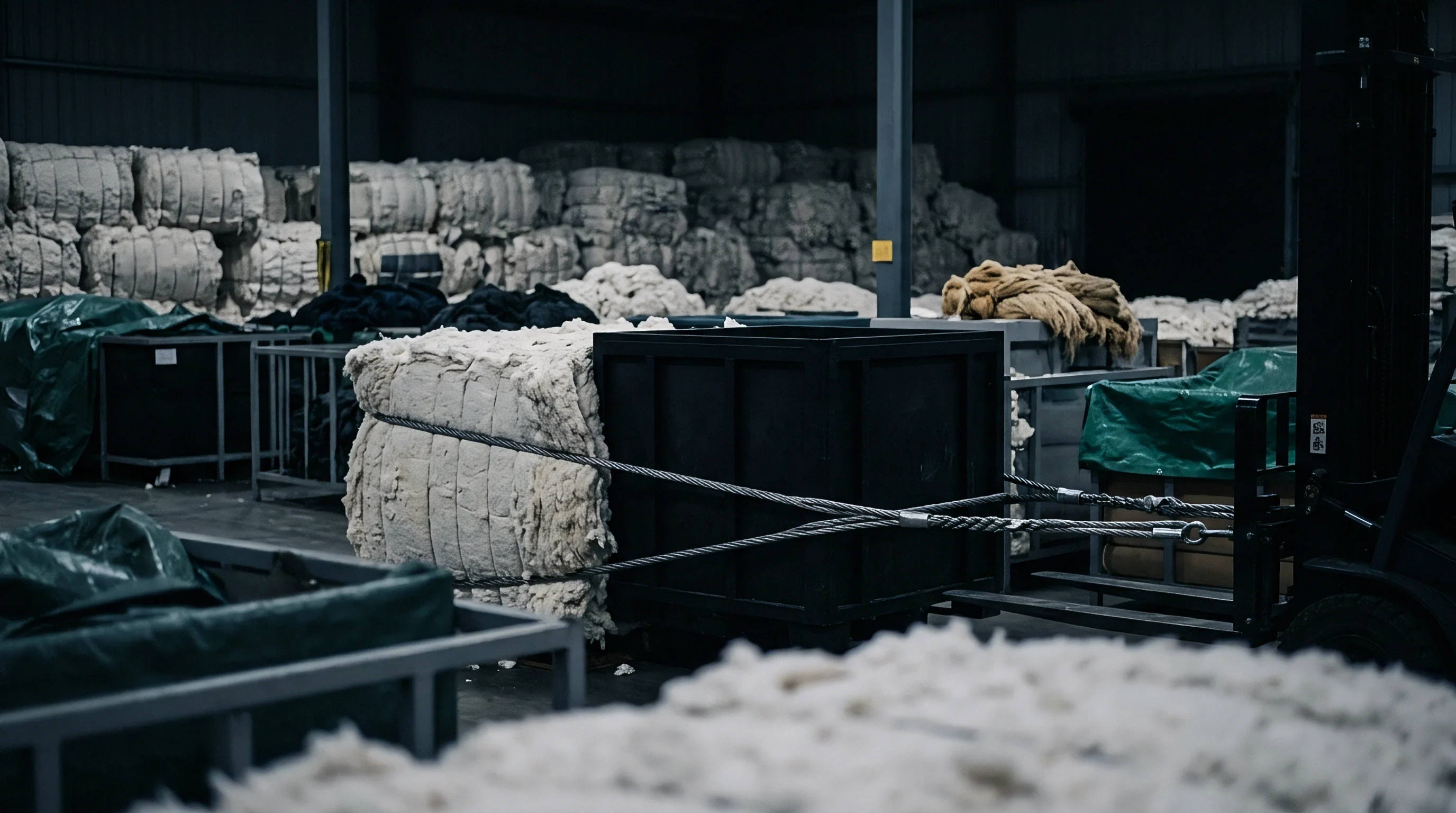
The arbitration workflow begins by securing the shipment and drawing fresh physical samples under joint supervision. Independent neutral inspectors pull master samples from undisturbed bales or fabric rolls, dividing the material into three identical sealed portions. One split sample goes to the buyer’s laboratory, the second to the supplier’s laboratory, and the third remains in secure storage as the official reserve referee sample.
Both primary labs then re-test their split samples using identical extraction and microscopic counting protocols.

Blind Split-Sample Execution and Referee Lab Designation
Blind split-sample testing removes confirmation bias during arbitration re-tests. Samples sent to facilities carry encrypted identification numbers that hide sample origin, declared composition, and party identities. The lab receives only the fiber material and a mandatory test request specifying the exact standard method (ISO 17751-2 SEM analysis).
Encrypted coding prevents technicians from tweaking particle counts to match historical trade documents or client expectations.
Designating a qualified referee laboratory requires mutual agreement before sending samples. The chosen referee facility must hold active ISO/IEC 17025 accreditation for microscopic fiber identification, participate in recognized proficiency schemes, and operate independently of both commercial parties. In cross-border contracts, parties frequently select neutral third-country labs in established textile research hubs.
The referee lab’s results serve as final binding evidence, overruling previous test reports provided procedural rules were met.
| Discrepancy Condition | Statistical Test | Mandatory Action Step | Cost Allocation Rule | Commercial Outcome |
|---|---|---|---|---|
| Difference < Reproducibility Limit (R) | ISO 5725 Comparison | Accept original declaration | Costs shared equally | Shipment accepted without penalty |
| Difference > R; Referee confirms Buyer | Expanded Uncertainty U | Reject original declaration | Supplier pays referee fees | Contract price renegotiated or return |
| Difference > R; Referee confirms Supplier | Expanded Uncertainty U | Uphold original declaration | Buyer pays referee fees | Shipment accepted at contract price |
| Systemic Bias in Primary Lab (Z > 2) | Proficiency Z-Score | Invalidate biased lab report | Biased lab client pays costs | Referee result replaces primary report |
Audit Trails and Reserve Sample Verification Rules
Arbitration protocols demand complete audit trails covering sample chain of custody, instrument calibration logs, and raw optical image files. ISO 17025 accreditation requires labs to preserve primary analytical data, including SEM photomicrographs, microtome calibration records, and individual operator tally sheets. During formal arbitration, technical auditors inspect these raw records to verify that fiber counts followed standard grid sampling patterns across the full specimen area.
Opening the sealed reserve sample occurs only when primary lab re-tests fail to resolve the statistical discrepancy. A joint audit committee ~ comprising technical representatives from both parties and an independent auditor ~ inspects tamper-evident seals on the reserve sample box before transferring it to the referee lab. Any evidence of damaged packaging, broken security tape, or improper atmospheric exposure during storage invalidates the reserve sample, requiring fresh sampling of the shipment.
- Tamper-Evident Seal Verification confirming intact security tape, unique serial numbers, and undamaged outer packaging before referee sample processing.
- Identical Standard Execution requiring the referee facility to apply the exact test method version specified in the original purchase contract.
- Raw SEM Photomicrograph Archives providing high-resolution image proof of counted fiber fields for technical audit review by counterparty experts.
- Binding Arbitral Decision Rules establishing that the referee laboratory result dictates financial settlement without further appeal rights.
Establishing clear multi-laboratory protocols turns subjective trade disputes into structured statistical evaluations. Commercial contracts specifying referee selection mechanisms and cost-allocation rules minimize inventory holding times and eliminate prolonged legal delays at destination ports. Technical transparency forms the foundation of sustainable international fiber trading operations.
Whether rapid DNA barcoding methods will gain regulatory accreditation under ISO 17025 fast enough to supplant SEM analysis in transboundary customs disputes remains an open question for global trade bodies.

Ledger
The ultimate resolution of any fiber composition dispute lands on the commercial ledger. Physical measurements, microscopic scale height determinations, and moisture regain adjustments dictate final landed costs, tariff classifications, and invoice settlements. When analytical results push a blend ratio across regulatory thresholds, financial exposure expands far beyond simple yarn price differentials.
Sourcing directors, product developers, and compliance teams must model landed financial consequences when negotiating cross-border cashmere purchasing agreements.
Customs tariff classification under the World Customs Organization Harmonized System depends strictly on chief weight fiber composition. HS Code 5102 governs fine animal hair, including pure cashmere, carrying specific duty rates. HS Code 5105 covers carded or combed fine animal hair, while HS Code 5515 covers woven fabrics of synthetic staple fibers blended with wool or fine hair.
A shift from eighty-five percent cashmere and fifteen percent wool to seventy-nine percent cashmere and twenty-one percent wool can trigger tariff reclassification depending on trade agreements, origin rules, and threshold duty rates.

Tariff Classification Risk and Customs Duty Adjustment Mechanics
Customs authorities routinely audit incoming textile shipments using accredited state laboratories. If a customs lab returns a fiber analysis contradicting the entry summary declaration, border agencies initiate misdeclaration enforcement proceedings. Beyond paying duty differentials, importers face retroactive assessments on past shipments, administrative fines, and mandatory physical inspections on future imports.
Ensuring declared composition figures reflect ISO 17025 multi-lab testing protects supply chains from border seizures.
Calculating financial risk requires mapping tariff rate steps against blend percentage ranges. In many jurisdictions, fabrics containing eighty-five percent or more fine animal hair by weight enter under preferential lower tariff lines under bilateral trade treaties. Falling below that eighty-five percent threshold shifts the product into general textile categories carrying significantly higher base duty rates.
Sourcing programs must build safety margins into target spinning specifications so bulk shipments stay comfortably above critical tariff thresholds despite natural testing variance.
- Chief Weight Tariff Boundaries defining tax bracket transitions when natural hair content crosses specific percentage thresholds in regional customs schedules.
- Retroactive Duty Assessment Exposure calculating potential back-tax liabilities across historical import entries following entry declaration adjustments.
- Commercial Price Penalty Clauses applying contractual dollar deductions per kilogram for every percentage point drop below specified cashmere content limits.
- Arbitration Fee Allocation Provisions assigning all ISO 17025 testing costs, inspection fees, and legal expenses to the party whose analytical position is disproven.
Commercial Chargebacks and Landed Cost Re-Balancing
Contractual remedies for composition non-compliance extend to direct financial chargebacks against exporting mills. Purchase agreements need explicit price-adjustment formulas linked to certified lab reports. If a buyer orders a ninety percent cashmere and ten percent silk blend at one hundred dollars per kilogram, but destination testing establishes an eighty-five percent cashmere and fifteen percent silk ratio, the contract formula recalculates delivered lot value using current fiber market indexes.
The difference is deducted automatically from outstanding invoice balances or letter of credit draws.
Severe deviations entitle the buyer to reject the entire shipment and demand full reimbursement of prepaid freight, customs clearance fees, warehousing expenses, and lab testing charges. Sourcing agencies avoid costly litigation by embedding automated price adjustment matrices into standard purchasing terms. Contracts containing pre-agreed chargeback schedules settle multi-lab discrepancies within days, whereas contracts lacking clear financial formulas languish in arbitration for months.
A three percent deviation in declared cashmere content across a fifty thousand kilo consignment triggers a forty-two thousand dollar customs duty re-assessment under Chapter 51 preferential rules.
Financial re-balancing formulas must also account for garment performance liabilities when non-conforming blends reach retail distribution. A drop in cashmere percentage paired with an unannounced increase in coarse sheep wool alters garment hand, pilling performance, and customer satisfaction. Retail returns and brand erosion generate indirect costs far exceeding raw fiber price differentials.
Rigorous laboratory arbitration protocols protect brand equity alongside commercial balance sheets.
Integrating ISO 17025 test protocols, statistical tolerance rules, moisture regain adjustments, and clear tariff chargeback terms into international purchase contracts creates a solid operational framework. Sourcing organizations that enforce these integrated controls eliminate analytical ambiguity, protect landed margins, and maintain strict regulatory compliance across global textile supply chains.