Verification Protocols for Alkylphenol Ethoxylates in Wet Processing Supply Chains
Verify APEO compliance by testing input chemical formulations via ISO 18218-1 LC-MS/MS at the mill kitchen rather than relying solely on fabric certificates.


Bath
Textile wet processing relies heavily on surface-active agents to reduce interfacial tension between aqueous baths and hydrophobic fibers. For decades, nonylphenol ethoxylates and octylphenol ethoxylates ~ the primary compounds in the alkylphenol ethoxylate family ~ were the industry’s default non-ionic surfactants, favored for their low cost, strong emulsification, and versatile hydrophilic-lipophilic balance. Mills routinely blend them into scouring mixes, wetting agents, spinning oil emulsifiers, print paste thickeners, and dye leveling auxiliaries.
Their hydrophobic alkylphenyl tails lock into oils and synthetic sizes while polyoxyethylene chains stretch into the water phase, stripping impurities from raw fiber during preparation.
Because surfactants lower surface tension so effectively, their residues tend to cling to cotton and equipment walls. Internal pipework, heat exchangers, and soft-flow jet circulation loops easily hold onto chemistry if a mill runs rapid shade changes without full rinse cycles. Alkylphenol ethoxylates adsorb readily onto stainless steel surfaces coated with residual grease or spinning lubricants.
If the mill switches from a heavily lubricated synthetic run to an organic cotton lot certified to zero-APEO standards, unscrubbed vessel walls will leach residual ethoxylates straight into the fresh bath. The migrating chains redeposit onto the clean fabric web at trace levels high enough to trigger brand restricted-substance failures.
Washing steps after reactive or disperse dyeing rely on non-ionic detergents to clear unfixed dye from fiber pores. Alternative formulations like alcohol ethoxylates or secondary alkane sulfonates have to match the original temperature profiles and liquor ratios to maintain color fastness. Surfactants with nine to ten ethoxylate units work best for solubilizing unfixed disperse dyes at high temperatures.
Under tight production schedules, mill operators faced with severe washing or leveling defects occasionally quiet down problems by introducing legacy scouring agents made with nonylphenol ethoxylates, introducing undocumented contamination into finished lots.
A single unscrubbed dye vat containing residual emulsifiers contaminates up to four subsequent wet processing batches above detectable reporting thresholds.
The initial state of the fiber dictates how surfactants are chosen and retained. Raw cotton arrives loaded with natural fats, waxes, and pectins that demand aggressive alkaline scouring at ninety to one hundred degrees Celsius, so mills handling greige stock rely on strong wetting agents to drive the liquor through that hydrophobic outer layer. Synthetics carry a different risk.
High-speed spinning and knitting apply spin finishes full of emulsified paraffinic or silicone oils, which often rely on alkylphenol ethoxylates as their primary emulsifiers for easy wash-out later. If that preliminary wash misses any residual finish, the high temperatures of heat-setting will lock those ethoxylates permanently into the synthetic fiber matrix.
High-risk wet processing auxiliaries where nonylphenol ethoxylates persist include:
- Heavy-Duty Scouring Agents used in raw cotton preparation to emulsify natural waxes and remove processing lubricants before bleaching.
- High-Temperature Dye Leveling Compounds added to polyester dye baths to maintain uniform dispersion of disperse dyes under pressure.
- Emulsifiers for Machine Oils incorporated into spin finish and knitting lubricants to facilitate water washability during preparation.
- Pigment Printing Paste Binders formulated with non-ionic surfactants to prevent emulsion breakdown under high-shear printing rollers.
- Water and Oil Repellent Emulsion Concentrates utilizing ethoxylated alkylphenols to stabilize fluorocarbon or silicone polymer suspensions.
In regions with weak regulatory oversight, chemical suppliers sometimes market formulations as ethoxylate-free while using low-grade raw materials that carry alkylphenol impurities. Technical data sheets from regional compounders frequently list generic surfactant names instead of full CAS numbers. A mixture sold as an ethoxylated fatty alcohol can contain up to fifteen percent nonylphenol ethoxylate if the manufacturer used unrefined petrochemical feedstocks during synthesis.
Buyers cannot rely on safety data sheets alone; verification requires direct testing of incoming drums.
Residual alkylphenols in surfactant blends are sometimes framed as unavoidable impurities from upstream raw materials that fall outside voluntary product safety declarations.

Spectrum
Identifying alkylphenol ethoxylates in processed textiles requires analytical techniques precise enough to separate complex oligomer distributions. These surfactants are never single, discrete chemical structures. Commercial products are mixtures with varied alkyl chain branching and polyoxyethylene lengths anywhere from one to over fifty units.
Standard testing measures short-chain ethoxylates ~ mainly mono- and di-ethoxylates ~ along with degraded parent alkylphenols like nonylphenol and octylphenol. Protocols also track total ethoxylate content to check compliance against global regulations and brand restricted-substance lists.
Testing labs rely on two main standards to measure ethoxylates in textiles: ISO 18218-1 and ISO 18218-2. ISO 18218-1 extracts the fabric sample with methanol in an ultrasonic bath at sixty degrees Celsius, then analyzes the liquid using LC-MS/MS. Methanol dissolves the target molecules, allowing the LC-MS system to separate and quantify individual ethoxylate oligomers directly without needing chemical cleavage.
ISO 18218-2 takes the opposite approach, using enzymatic or chemical cleavage to strip ethoxylate chains from the alkylphenol core before measuring the freed nonylphenol and octylphenol molecules by GC-MS. Liquid chromatography gives better accuracy across broad oligomer chains, while gas chromatography works best for quantifying total parent alkylphenols.
Extraction solvent choice directly dictates recovery rates from dense wovens or water-repellent synthetics. Standard methanol extraction recovers medium and long-chain ethoxylates well, but struggles with highly hydrophobic mono-ethoxylates trapped inside synthetic polymer matrices. Tetrahydrofuran or a methanol-dichloromethane mix improves recovery on fluorocarbon-treated fabrics, yet lab certifications under ISO 18218-1 often mandate pure methanol.
These solvent differences explain why origin mills and destination port labs often report conflicting numbers for the same fabric lot.
| Standard Designation | Primary Target Analytes | Extraction Solvent / Temperature | Analytical Instrumentation | Limit of Quantification (LOQ) |
|---|---|---|---|---|
| ISO 18218-1 | NPEO and OPEO oligomers (n = 2 to 16) | Methanol / 60°C ultrasonic bath | LC-MS/MS | 5.0 mg/kg combined sum |
| ISO 18218-2 | Cleaved NP and OP parent compounds | Acetonitrile / enzymatic cleavage | GC-MS (electron impact) | 1.0 mg/kg parent alkylphenol |
| EN 15819 | Free Nonylphenol and Octylphenol | Dichloromethane / Soxhlet extractions | GC-MS with derivatization | 0.5 mg/kg individual compound |
| GB/T 23322 | Total APEO and free AP sum | Methanol / high-pressure extraction | LC-MS/MS or HPLC-FLD | 10.0 mg/kg total preparation |
Interpreting LC-MS data requires spectral deconvolution across multiple mass-to-charge ratios to capture the full oligomer profile. Industrial nonylphenol synthesis uses propylene polymerization, leaving behind complex networks of branched isomers. Under reverse-phase liquid chromatography, these branched nonylphenols show up as a series of unresolved peaks between thirteen and fifteen minutes.
Integrating only the central peak underestimates total nonylphenol content by up to forty percent. Accredited labs have to calibrate response factors against certified reference materials with fully quantified isomer distributions, not simple linear standards.
Liquid chromatography-mass spectrometry analysis under ISO 18218-1 protocol requires full integration of branched isomer peak clusters between mass-to-charge ratios 311 and 839 to avoid systematic underreporting.
Regulatory thresholds vary widely by destination, complicating global supply chain compliance. In the European Union, REACH Annex XVII Entry 46a limits nonylphenol ethoxylates in washable textile articles to one hundred milligrams per kilogram (0.01 percent by weight), a rule active since February 2021. Voluntary industry standards go further: the ZDHC MRSL version 3.1 caps total APEOs in incoming chemical auxiliaries at two hundred and fifty milligrams per kilogram, with individual alkylphenols restricted to five milligrams per kilogram.
OEKO-TEX Standard 100 Class I for baby items sets a total APEO ceiling of one hundred milligrams per kilogram and caps free nonylphenol and octylphenol combined at ten milligrams per kilogram.
The gap between raw chemical limits and finished product standards creates a hidden trap for sourcing teams. An input auxiliary that complies with the two hundred and fifty milligram per kilogram chemical limit can still push finished fabric past brand limits if processing involves heavy bath evaporation or multiple applications without thorough rinsing. Drying and stenter curing drive off water while leaving non-volatile surfactant residues concentrated on the fiber, multiplying final levels well beyond initial wet pick-up estimates.
Because analytical scope dictates compliance, purchase contracts must state explicitly whether testing measures total ethoxylate oligomers or parent alkylphenols. A fabric carrying ninety milligrams per kilogram of long-chain ethoxylates complies with the European REACH Annex XVII Entry 46a limit, but fails brand-level zero-intentional-use rules that set actionable limits at twenty milligrams per kilogram combined sum.

Discipline
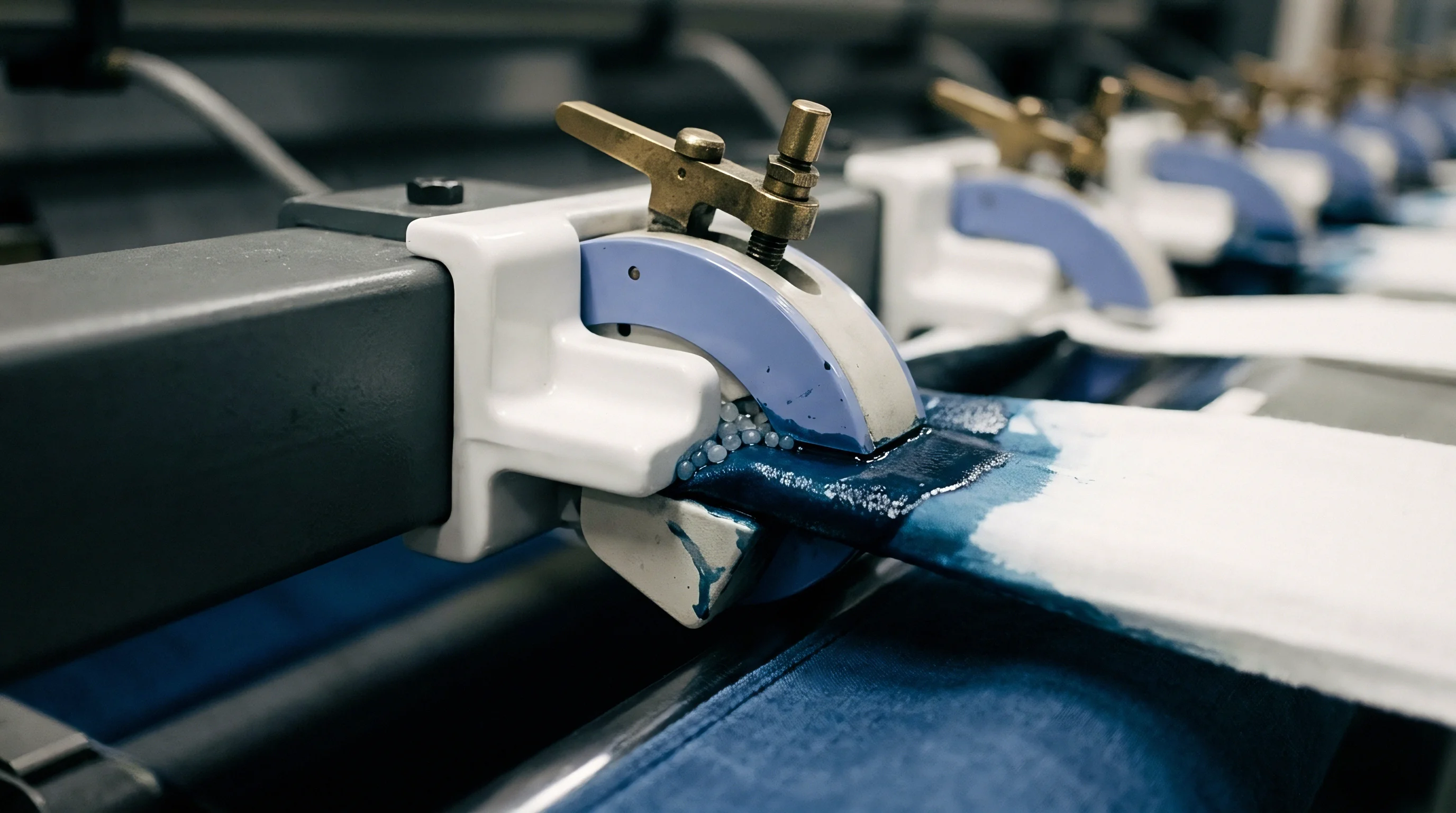
Verifying chemical inputs requires systematic sampling on the floor, not reliance on paper certificates. Dyehouses stock hundreds of auxiliaries across bulk tanks, IBCs, and fifty-kilogram drums. Cross-contamination happens easily during dispensing when workers share unwashed buckets, hand pumps, or transfer hoses between vats.
Proper chemical gatekeeping means drawing physical samples right in the dispense kitchen just before products enter the dye vessel.
Testing finished fabric creates a delayed feedback loop, uncovering contamination only after thousands of meters have already run through the line. Screening incoming chemical inventory catches problems at the door. Quality assurance teams pull fifty-milliliter liquid samples from freshly opened containers using disposable glass pipettes, transferring them to amber glass vials with PTFE-lined caps.
Plastic sampling gear is avoided entirely because plasticizers and container additives leach alkylphenols or absorb analytes, throwing off trace mass spectrometry results.
Because equipment holds residual oils, verifying machine cleanliness between batch runs depends on wash-water samples and rinse-swatch extractions.
- Isolate the target wet processing vessel and execute a high-temperature rinse cycle using deionized water at eighty degrees Celsius for fifteen minutes without fabric loaded.
- Extract a two-hundred-milliliter wash-water sample directly from the main circulation pump sampling valve into a glass laboratory container.
- Load a verified clean control fabric swatch weighing exactly ten grams into the vessel and run a mock scouring cycle at ninety degrees Celsius for twenty minutes.
- Extract the control swatch, wring out excess liquor using a clean hand mangle, and dry the sample in a dedicated clean oven at one hundred degrees Celsius.
- Package the dried control swatch into a sealed aluminum foil envelope to prevent atmospheric contamination during transfer to the laboratory.
- Submit both the wash-water liquid sample and the extracted control swatch to an ISO 17025 accredited testing facility for ISO 18218-1 analysis.
How Do Chemical Traces Survive Machinery Rinses?
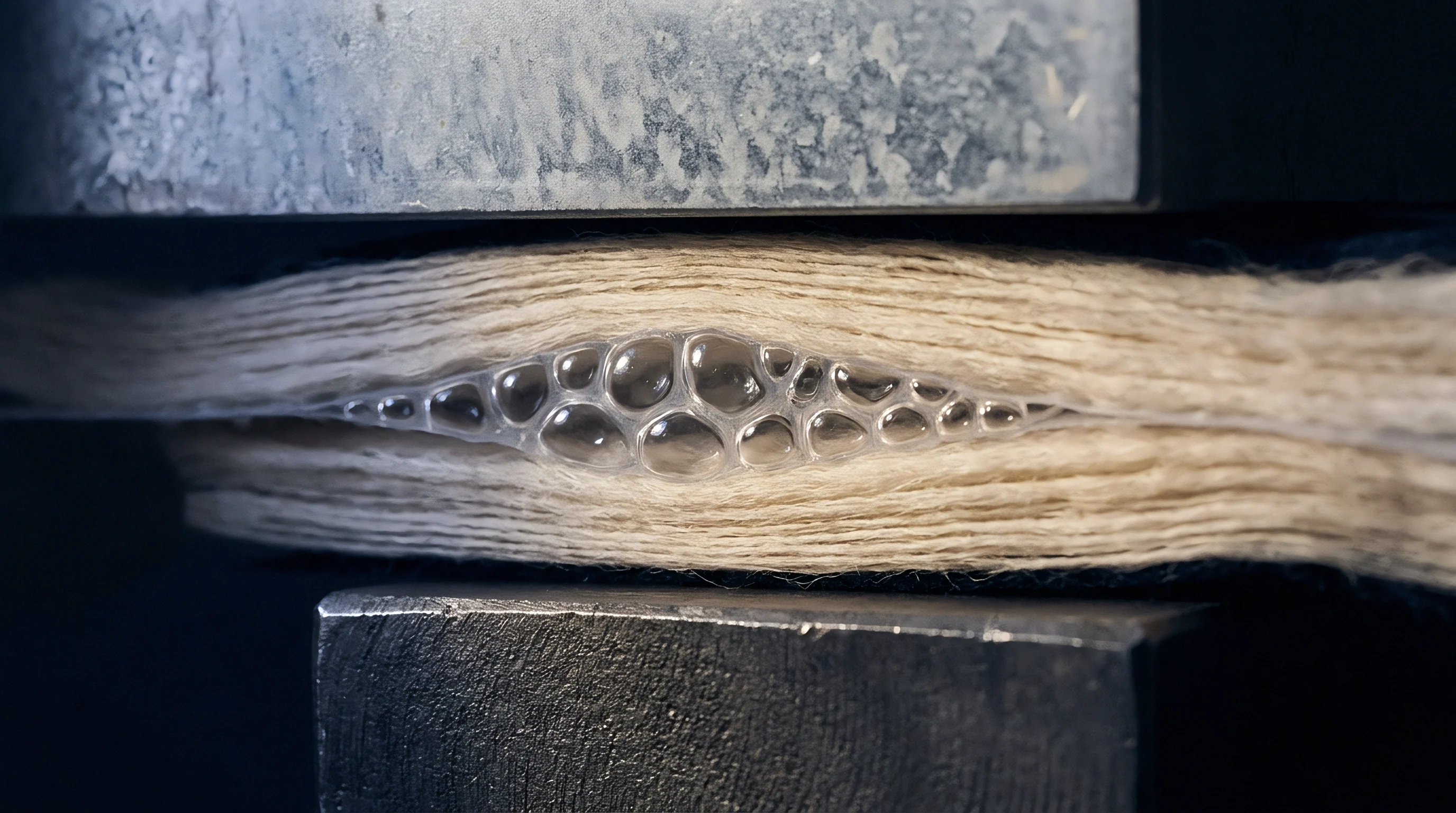
Surfactants adsorb strongly onto scale, rust, and polymer linings inside aging machinery. When a high-temperature scouring bath containing sodium hydroxide and sequestering agents runs, it strips those bound ethoxylates off the metal and transfers them right into the fabric. Cold water rinses fail to reach the cloud point of non-ionic surfactants, leaving hydrophobic films stuck to vessel walls.
Decontaminating equipment requires hot alkaline boil-outs coupled with secondary alcohol ethoxylate stripping agents formulated to solubilize heavy alkylphenol deposits.
Mill engineers use mass balance calculations to track washing efficiency across continuous ranges. The residual surfactant left on a fabric web comes down to the initial pad bath concentration, fabric wet pick-up percentage, and dilution ratios across washing boxes. High-speed lines running heavy fabrics need aggressive counter-flow water volumes to bring residual surfactant down below target thresholds before fabric reaches the stenter dryers.
In analytical reports from commercial dyehouses, calculation errors frequently turn up in conversions between liquid bath concentration and final weight-of-fabric figures in milligrams per kilogram. A liquid scouring auxiliary with two hundred milligrams per kilogram of nonylphenol ethoxylate applied at two percent on weight of fabric puts four milligrams per kilogram on the unwashed fiber. If washing efficiency drops below fifty percent because wash water flow was throttled, residual surfactants build up to levels that trigger brand restricted-substance flags during testing.
Processing equipment carrying internal scale deposits requires hot alkaline boil-out procedures combined with certified ethoxylate-free emulsifiers to fully remove adsorbed alkylphenol residues.
Maintaining chemical assurance requires routine inventory audits backed by lot-level transaction certificates. Mills have to strictly segregate certified auxiliaries for zero-APEO lines from conventional commercial chemicals. Approved storage drums carry color-coded labels, while automated dosing systems rely on dedicated lines to prevent cross-contamination through shared manifold valves.
Chemical verification is only as reliable as the sampling discipline at the dyehouse kitchen door.

Exposure
Compliance failures translate into customs detentions, brand rejections, destroyed lots, and heavy contractual penalties. Import authorities in major destination markets run random surveillance tests on finished apparel and textiles. The EU Safety Gate system regularly flags consumer goods exceeding the one hundred milligram per kilogram limit under REACH Annex XVII Entry 46a.
Catching non-compliant goods at port leads to immediate import blocks, mandatory recalls, and supervised incineration.
When customs detains a container for chemical non-compliance, the importer of record takes an immediate hit on storage fees, demurrage, re-testing costs, and hazardous disposal. Marine insurance policies exclude regulatory actions, compliance seizures, and contamination failures. Sourcing teams need purchase orders structured to push financial liability directly back to the mill through explicit indemnification clauses.
| Contamination Scenario | Detection Stage | Direct Retest & Sorting Cost | Remediation / Cleaning Cost | Total Landed Exposure per 20,000m Batch |
|---|---|---|---|---|
| Trace bath cross-contamination (120 mg/kg) | Pre-shipment origin lab screening | $1,200 (re-sampling & LC-MS) | $3,500 (re-scouring & re-dyeing) | $4,700 (absorbed by mill) |
| Undocumented input surfactant (850 mg/kg) | Brand destination warehouse audit | $4,500 (3x third-party labs) | Fabric unusable (100% loss) | $145,000 (full batch scrap + air freight) |
| REACH Annex XVII violation (>1000 mg/kg) | EU Port Customs Surveillance | $8,000 (official sampling fees) | Hazardous waste incineration | $210,000 (scrap, fines & port demurrage) |
| Low-level spin finish residue (45 mg/kg) | Brand RSL screening (Limit: 20 mg/kg) | $2,200 (oligomer distribution profile) | $6,000 (specialty stripping wash) | $8,200 (delay charges & reprocessing) |
A batch of 18,000 meters was rejected after laboratory extraction confirmed 340 milligrams per kilogram of nonylphenol ethoxylate in finished dyed twill. Handling re-tests requires clear ground rules established before commercial disputes surface. When port screening turns up a failure, suppliers almost always request secondary testing at another lab.
Differences in solvent extraction yields, mass spec calibration, and moisture adjustments routinely produce conflicting numbers. Contracts should specify that testing by an ISO 17025 accredited lab chosen by the buyer acts as final binding referee evidence, overriding origin mill self-certifications.
Commercial failure modes and contract risk points during border testing include:
- Uncertified Chemical Substitutions executed by mill managers during high-volume production runs to lower processing costs without buyer authorization.
- Shared Processing Equipment Contamination resulting from inadequate machine cleaning sequences between conventional and zero-APEO product lines.
- Discrepancies in Laboratory Solvent Extraction Efficiency causing origin test certificates to underreport ethoxylate concentrations relative to border surveillance findings.
- Omission of Parent Alkylphenol Testing where laboratories measure only long-chain ethoxylates while ignoring degraded nonylphenol residues on finished fabric.
- Failure of Subcontracted Finishing Facilities to adhere to brand restricted-substance rules when fabric is sent out for specialty coating or washing.
Risk allocation clauses need to spell out financial remedies when chemical failures trigger delivery delays or cancellations. Brands running on tight seasonal schedules enforce steep late penalties, often two percent of invoice value per week, up to outright cancellation if replacements miss the retail window. If non-compliant fabric has to be re-scoured and re-dyed, the delay frequently forces brands to fly garments instead of shipping them by sea, multiplying freight costs six- to eight-fold.
Purchase order terms stating that buyer-designated laboratory test results serve as final referee evidence prevent extended legal disputes over origin mill self-certifications.
Remediating contaminated fabric presents tough technical and financial hurdles. Ethoxylates bound in hydrophobic synthetics like polyester or nylon will not wash out with standard water rinses. Stripping non-compliant surfactants takes repeated hot solvent scouring or specialized alkaline reduction treatments, both of which risk compromising tensile strength, shifting shades, or causing severe bleeding.
In many cases, the cost of stripping, re-matching shades, and re-testing exceeds the value of the raw greige goods.
A detained synthetic lining shipment generated twelve thousand dollars in logistics losses when full destination re-testing and specialized port-side warehouse re-handling were required to resolve a disputed border laboratory report.

Remedy
Eliminating alkylphenol ethoxylates from supply chains requires both machine decontamination and complete chemical substitution. Cleaning equipment starts with a thorough physical scrub of preparation tanks, dye vats, feed lines, and stenter applicators. Continuous ranges need a full flush with high-strength alkaline solutions ~ five to ten grams per liter of sodium hydroxide paired with ethoxylate-free stripping surfactants ~ run at ninety degrees Celsius for at least two hours.
Pumps and internal heat exchangers have to be pulled apart and cleared manually of grease and scale that harbor residual nonylphenols.
Substitution means replacing legacy ethoxylates with high-performance, fully biodegradable alternatives. Branched alcohol ethoxylates derived from synthetic secondary alcohols or natural fatty alcohols deliver matching surface tension reduction and emulsification without leaving persistent, bioaccumulative residues. Alkyl polyglucosides sourced from plant sugars provide strong wetting and alkali stability for heavy cotton scouring, while secondary alkane sulfonates handle high-temperature washing-off cycles.
| Surfactant Class | Chemical Structure Origin | Primary Application Area | Biodegradability Profile | Relative Cost Multiple |
|---|---|---|---|---|
| Alcohol Ethoxylates (C12-C15) | Synthetic or natural fatty alcohols | General scouring, wetting, leveling | Readily biodegradable (OECD 301) | 1.15x to 1.25x |
| Secondary Alkane Sulfonates | Paraffinic petrochemical feedstocks | High-alkali scouring & washing off | Inherently biodegradable | 1.30x to 1.40x |
| Alkyl Polyglucosides (APG) | Plant glucose and fatty alcohols | Mercerizing, heavy-duty scouring | Excellently biodegradable | 1.45x to 1.60x |
| Sorbitan Ester Ethoxylates | Esterified sorbitol and fatty acids | Emulsifiers for spin finishes | Readily biodegradable | 1.35x to 1.50x |
Switching chemistries requires careful lab trials to confirm that alternative surfactants do not compromise dye yield, fabric hand-feel, or bath foaming. Alcohol ethoxylates generally have lower cloud points than nonylphenol ethoxylates, demanding tighter temperature control in jet dyeing to avoid surfactant precipitation and spot staining on delicate shades.
Because scope certificates expire after twelve months, chain-of-custody verification requires tracing approved chemicals down to specific production lots using scope and transaction certificates under established standards. Scope certificates confirm that every auxiliary on the mill’s active bill of materials holds valid Third-Party MRSL Level 1, Level 2, or Level 3 certification. Transaction certificates must connect chemical delivery invoices to finished fabric batches, creating an auditable paper trail proving no uncertified products entered the mixing kitchen during production.
Thorough verification pairs chemical batch tracking with physical production logs. An active scope certificate shows a mill has the capability and compliant stock on hand, but it does not guarantee every single batch ran exclusively with certified auxiliaries. Robust protocols combine annual facility audits with unannounced, lot-level swathing and mass spec testing of finished goods taken straight from containers on the loading dock.
Whether regional supply chains can completely eliminate trace alkylphenol contamination while legacy equipment remains in service without enforced machine-cleaning standards remains an open question across the trade.