
Non Fluorinated Durable Water Repellent Wet Processing Specifications
Non-fluorinated DWR wet processing requires bath pH 4.0-5.5, WPU control, and core cure temperatures of 150-170°C with crosslinkers to pass 10 ppm fluorine limits.
Non-fluorinated DWR wet processing requires bath pH 4.0-5.5, WPU control, and core cure temperatures of 150-170°C with crosslinkers to pass 10 ppm fluorine limits.

Forensic audit mechanics reconcile digital SCADA dosing logs with mass balance inventory calculations to detect uncertified chemical inputs during scope lapses.

A test report guarantees compliance only when the laboratory accreditation schedule lists the specific test method, analyte family, and exact substrate matrix.

LC-MS/MS testing under ISO 18254-1 quantifies alkylphenol ethoxylates down to 1 mg/kg, requiring ammonium adduct control to prevent matrix suppression.

Pass-through indemnity clauses require un-capped liability carve-outs and mandatory flow-down terms to bridge privity gaps across dyehouses and garment vendors.

Standardized chemical limit verification in primary dyeing requires lot-level analytical testing linked to transaction certificates rather than factory scope documents.

Empirical laboratory testing of raw liquid chemical auxiliaries prior to vat injection is mandatory to prevent subcontracted dyehouse contamination.

Subcontracted dyehouse chemical compliance depends on lot-level testing schedules aligned with substrate risk and auxiliary flowdown.

Subcontracted dyehouse chemical risk requires binding PO flowdown clauses, batch-level ISO 17025 testing, and strict financial retainage mechanisms.

Polyurethane residual solvent quantitation requires ultrasonic liquid extraction with methanol and GC-MS SIM analysis to verify REACH and OEKO-TEX batch limits.
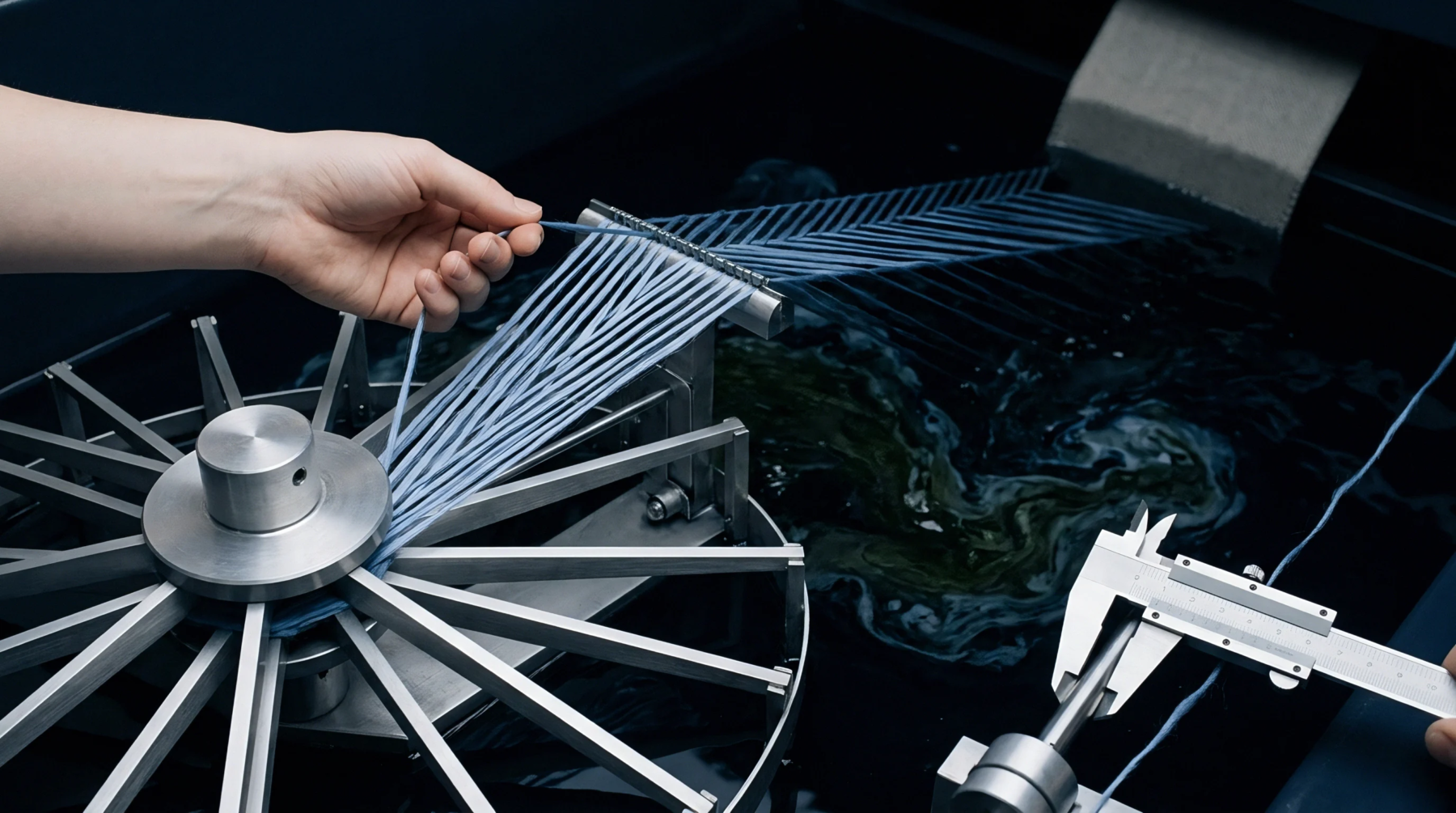
Verify APEO compliance by testing input chemical formulations via ISO 18218-1 LC-MS/MS at the mill kitchen rather than relying solely on fabric certificates.
Expertise is a utility, not a secret. sentiention™ publishes its working knowledge as open reference: intelligence layer covering the materials it sources, the markets it enters, and the reference that serves both.