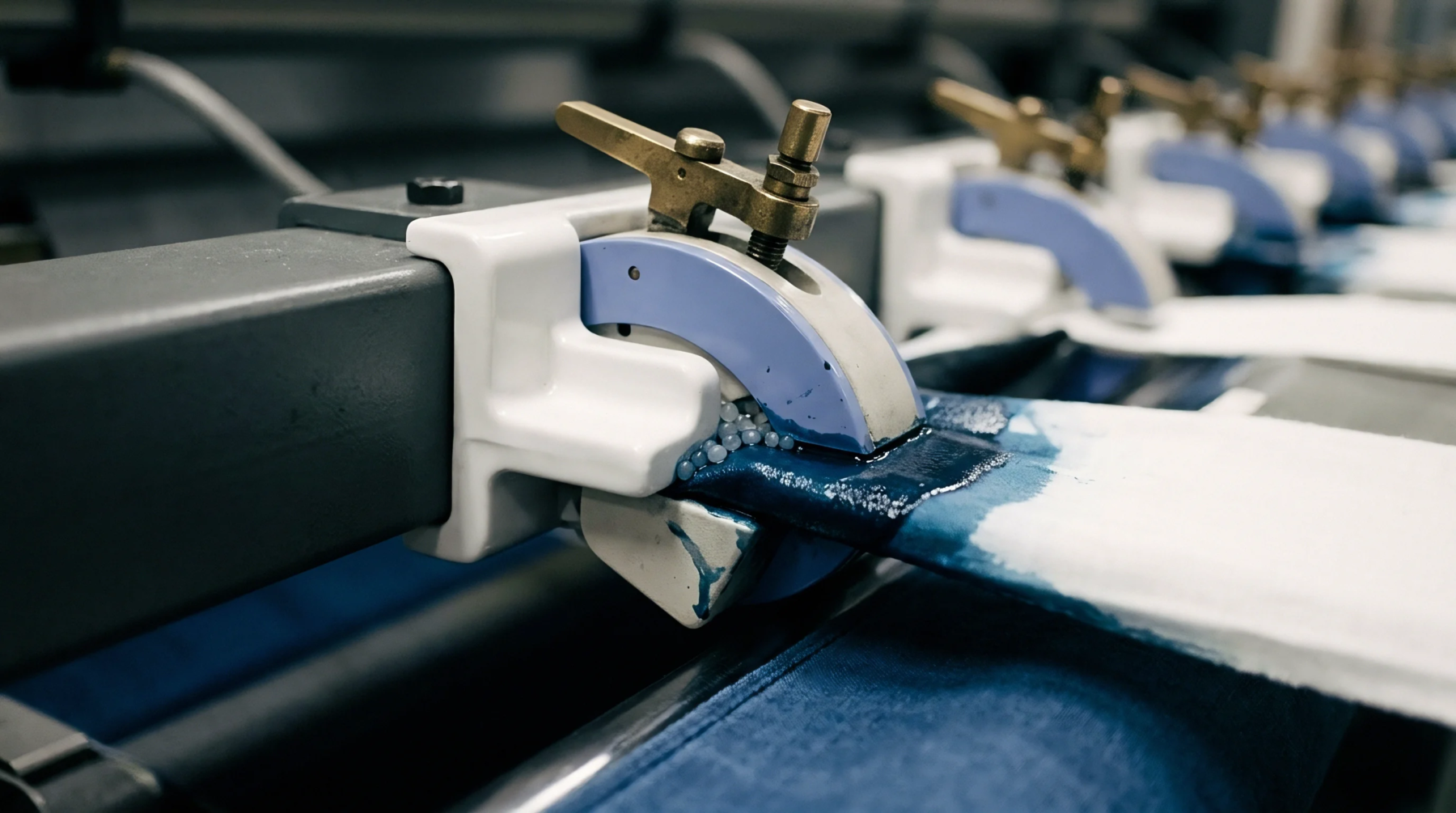
Chemical Processing Agent
Surfactants and emulsifiers constitute wet auxiliaries, which facilitate the penetration of dyes or finishing chemicals into textile fibres during liquid stage treatments. These substances lower surface tension to ensure uniformity across the bath and promote consistent chemical exhaustion onto the substrate. Aqueous media require these additives to overcome the natural hydrophobicity of raw natural or synthetic fibres.
Application Mechanism
Precise dosing of wet auxiliaries controls the rate of strike during the dyeing cycle to prevent mottled or uneven colouration. An excessive concentration leads to foam formation that obstructs the mechanical action of pumps and nozzles in jet dyeing machines. Mill operators balance the active content of the formulation against the total liquor ratio to maintain stability throughout the process.
Production Variance
Variation in bath hardness or the presence of residual processing oils from previous preparation steps influences the performance of the chemical. Salts or metal ions in the water supply often destabilize the suspension, requiring the addition of sequestering agents alongside the primary auxiliaries. High temperature conditions shift the solubility point, forcing the chemistry to partition away from the fibre surface and into the bulk liquor.
Quality Verification
Analytical monitoring of the residual chemical concentration confirms that the auxiliary successfully performed its function without leaving non-reactive deposits on the final product. Laboratory testing methods measure the cloud point of the formulation to predict its behaviour under industrial heating profiles. Strict adherence to calculated usage rates minimizes the risk of handle degradation in the finished garment.