Polymer Crosslink Degradation in Cellulosic Fabric Wet Processing
Polymer crosslinks in cellulosic fabric wet processing degrade via acid-catalyzed glycosidic cleavage during high-temp baking and wet post-reprocessing cycles.

Bond
Covalent Etherification of Anhydroglucose Units
Cellulosic fabric finishing relies on forming chemical bridges between adjacent elementary fibrils within the cotton fiber architecture. Copolymers and crosslinking reagents target the hydroxyl groups located at the C2, C3, and C6 positions of the anhydroglucose units that constitute the cellulose polymer chain. Dimethyloldihydroxyethyleneurea functions as the predominant bifunctional reagent in classical durable press finishing.
Under elevated thermal conditions and acid catalysis, this agent undergoes condensation to yield stable ether linkages with cellulosic hydroxyls. The secondary hydroxyl groups at C2 and C3 exhibit distinct reactivity kinetics compared to the primary hydroxyl at C6, dictating the spatial distribution of crosslinks across crystalline and amorphous regions. Crosslinks restrict inter-molecular chain mobility under wet conditions.
This restriction delivers dimensional stability and wrinkle recovery, preventing the hydrogen bond slippage that produces creasing during laundering.
Network formation occurs primarily within the accessible, lower-density amorphous domains of the cellulose fiber. Crystalline regions remain largely impermeable to larger chemical monomers due to dense inter-chain hydrogen packing. The spatial frequency of crosslink formation determines the physical behavior of the finished cloth.
Low crosslink density permits structural relaxation under mechanical tension, yielding unsatisfactory wrinkle recovery angles. High crosslink density locks the cellulosic network into a rigid conformation, restricting internal stress distribution when the yarn experiences tension or torsion.
Polycarboxylic Acid Alternatives and Esterification
Non-formaldehyde crosslinking regimes utilize polycarboxylic acids, specifically 1,2,3,4-butanetetracarboxylic acid and citric acid, to form ester bridges with cellulosic hydroxyl groups. Esterification proceeds through an intermediate cyclic anhydride mechanism, requiring alkali metal salt catalysts such as sodium hypophosphite. The resulting ester linkages exhibit structural differences from the methylol-ether bonds generated by dihydroxyethyleneurea derivatives.
Ester crosslinks show higher susceptibility to alkaline hydrolysis during subsequent wet processing stages, particularly during garment washing, scouring, or shade correction stripping cycles. The chemical equilibrium of the ester bond shifts toward dissociation when exposed to elevated pH at temperatures exceeding 60°C.
Reaction kinetics during ester crosslinking demand precise stoichiometry and thermal control. Excess polycarboxylic acid residue retained inside the fiber matrix acts as an autocatalytic agent for secondary cellulose degradation if neutralization steps are omitted. The cyclic anhydride intermediate forms rapidly at temperatures above 160°C. Unreacted carboxyl groups remaining after the initial cure step reduce the hydrophobic character of the crosslinked matrix, absorbing ambient moisture and weakening the localized dry-wrinkle recovery network over continuous wear cycles.

Cure
Catalytic Acid Generation and Glycosidic Depolymerization
Thermal activation converts applied monomeric padding liquors into permanent crosslinked networks, yet this same heat activates acid depolymerization of the cellulosic backbone. Lewis acid catalysts, including hydrated magnesium chloride and zinc nitrate, dissociate at elevated temperatures to yield free hydronium ions. These protons attack the oxygen atom of the beta-1,4-glycosidic bond connecting the glucose rings within the cellulose polymer.
Glycosidic cleavage reduces the degree of polymerization of the cellulosic chain, shortening the structural load-bearing polymer lengths. Heat drives depolymerization.
Cellulose chain cleavage occurs simultaneously with crosslink formation inside the stenter chamber. High baking temperatures accelerate reactant diffusion, but excessive thermal exposure causes extensive acid hydrolysis of the primary chain structure. Micro-voids and chain-end defects form within the crystalline-amorphous transition zones.
When the finished fabric encounters mechanical stress, these cleavage points act as localized sites of stress concentration, accelerating material failure long before the crosslinked network itself breaks down.
The loss of cellulosic degree of polymerization accelerates exponentially when stenter bake temperatures exceed 175°C under Lewis acid catalysis at pH levels below 2.8.

Pad Dry Bake Parameter Windows
Finishing plants configure pad-dry-bake lines to balance crosslinking efficiency against hydrolytic chain damage. Impregnation via high-expression padding mangles delivers uniform chemical pick-up across the fabric width, targeting a wet pick-up of 60 to 70 percent on pure cotton constructions. Premature crosslinking during the drying phase must be prevented.
Rapid drying at high air velocities causes resin migration toward the fabric surfaces, concentrating crosslinks in outer yarn margins while leaving core fibers uncrosslinked and prone to uneven core hydrolysis.
Baking duration determines the balance between crease recovery performance and residual tensile retention. Standard industrial cure cycles specify temperatures between 150°C and 170°C for durations ranging from 45 to 180 seconds, dependent upon fabric mass and construction density. Variations in moisture content entering the cure zone cause thermal lag, altering the effective reaction time and producing crosslink density variations across bulk production lots.
- Surface Resin Migration creates brittle fiber outer shells around uncrosslinked core fibers, driving surface micro-cracking during flexing and lowering abrasion resistance.
- Localized Temperature Spikes within stenter zones trigger severe localized glycosidic cleavage, generating widthwise tensile strength variations exceeding twenty percent.
- Incomplete Drying Moisture retards chemical crosslink condensation, causing low wrinkle recovery angles despite high thermal exposure times.
- Catalyst Over-Concentration depresses the reaction activation energy excessively, inducing cold crosslinking in storage rolls prior to thermal processing.
Technical managers at commission finishing mills frequently attribute post-cure fabric tenderization to inherent greige yarn defects rather than improper acid-catalyst stoichiometry in the pad bath. They contend that baseline cotton yarn quality variations dictate the observed strength drops following thermal processing.
Hydrolysis
Does Acid Residue Accelerate Cellulosic Hydrolysis during Curing?
Residual acid retained within the cellulosic fiber matrix after the baking stage accelerates degradation during storage and subsequent wet processing. Free hydronium ions trapped within amorphous zones continue to cleave glycosidic bonds in ambient humidity. Ether linkages formed by methylol chemistry also undergo slow, acid-catalyzed reverse hydrolysis in warm, humid storage conditions.
Moisture breaks crosslinks.
The stability of the crosslinked network varies significantly according to the specific chemical bridge formed and the environmental conditions during wet post-treatment. Alkaline garment washing, shade stripping, and wet tumbling attack the crosslink network through distinct chemical mechanisms.
| Reagent Class | Linkage Type | Catalyst System | Acid Stability Range | Alkaline Stability Range |
|---|---|---|---|---|
| DMDHEU (Standard) | N-Methylol Ether | Magnesium Chloride | pH 3.0 to 8.0 | pH 8.0 to 10.0 |
| Modified DMDHEU (Glycolated) | Ether / Ether-Ester | Mixed Metal Salt | pH 2.5 to 9.0 | pH 8.0 to 11.0 |
| BTCA (Polycarboxylic) | Ester | Sodium Hypophosphite | pH 2.0 to 6.0 | pH 6.0 to 9.0 (Unstable) |
| Citric Acid System | Ester | Sodium Phosphate | pH 3.0 to 5.5 | pH 6.0 to 8.5 (Unstable) |
| Methods note: Stability ranges define the pH limits within which less than five percent crosslink loss occurs over a sixty-minute exposure at 60°C, evaluated according to ISO 105-E01 extraction criteria. | ||||
Mechanisms of Reversible Bond Cleavage
Wet post-processing exposes crosslinked cellulosic goods to elevated temperatures, mechanical action, and variable chemical pH. Stripping off-shade resin-treated goods requires acid baths operating at pH 1.5 to 2.0 at temperatures exceeding 80°C. This aggressive treatment hydrolyzes the crosslink network to regain dyeability, but it inflicts secondary depolymerization on the cellulose backbone. Tensile strength drops rapidly.
- Sample three representative swatches from the affected bulk batch across the left, center, and right cut widths.
- Condition specimens at 20°C and 65 percent relative humidity for four hours according to ISO 139 standards.
- Execute strip tensile testing under ISO 13934-1 to establish baseline warp and weft breaking force.
- Subject swatches to a standardized alkaline wet wash cycle at pH 10.5 for forty-five minutes at 60°C.
- Rinse, dry, recondition, and re-test tensile properties to calculate strength loss caused by crosslink dissociation versus cellulose depolymerization.
When crosslinked cellulosic fabrics undergo post-dyeing or shade adjustments, chemical stripping breaks both the synthetic crosslink bridges and the natural cellulosic chains. The cumulative loss of mechanical performance leaves the fabric susceptible to tearing during high-speed garment manufacturing or subsequent laundering cycles. Is the primary driver of strength reduction during post-wash operations the rupture of the crosslink bridges or the irrecoverable degradation of the underlying cellulose polymer chain length?

Loss
Cellulose Chain Embrittlement and Stress Concentration
Mechanical performance loss in crosslinked cellulosic fabrics stems from two distinct phenomena working in tandem: structural embrittlement and acid depolymerization. Crosslinking fixes the relative position of cellulose chains, preventing them from shifting or realigning under applied tensile load. In an untreated cotton fiber, applied load causes internal amorphous networks to align, distributing stress evenly across all load-bearing elements.
Crosslinking eliminates this load-sharing capacity. Stress concentrates instantly at localized nodes, causing premature fiber fracture at loads well below the intrinsic breaking strength of the raw cotton fiber.
Tear strength suffers a greater percentage drop than tensile strength following resin application. Tear propagation relies on yarn mobility within the weave structure. As the tear tongue moves, adjacent yarns group together to form a bundle that collectively resists the applied force.
Resin crosslinks restrict yarn-on-yarn sliding and flex rights. The yarns remain locked in their woven geometry, forcing the tearing force to snap individual yarns sequentially rather than loading a composite bundle. Tear resistance collapses.
Tight woven constructions with high cover factors experience greater relative tear strength loss post-crosslinking than loose constructions due to structural yarn restriction.
Mechanical Retainments across Woven Constructions
The magnitude of mechanical strength loss correlates with fabric construction variables, including sett density, yarn twist multiplier, and weave geometry. A 3/1 twill weave retains a higher percentage of its initial tear strength compared to a plain weave poplin of equivalent mass per unit area. The longer floats of the twill construction permit greater local yarn displacement before crosslink stiffness forces structural failure.
| Construction Metric | Unfinished Greige | DMDHEU Standard (150 g/l) | DMDHEU Low-Formaldehyde (120 g/l) | BTCA Non-Formaldehyde (80 g/l) |
|---|---|---|---|---|
| Warp Tensile Strength (N) | 580 | 330 (-43%) | 375 (-35%) | 410 (-29%) |
| Weft Tensile Strength (N) | 340 | 190 (-44%) | 215 (-37%) | 240 (-29%) |
| Warp Trouser Tear (N) | 22.5 | 11.2 (-50%) | 13.5 (-40%) | 14.8 (-34%) |
| Weft Trouser Tear (N) | 16.8 | 7.9 (-53%) | 9.8 (-42%) | 10.9 (-35%) |
| Wrinkle Recovery Angle (W+F) | 185° | 295° | 280° | 270° |
| Summary: Data reflects average results across 10 test specimens per ISO 13934-1 (tensile) and ISO 13937-2 (tear) on 125 gsm 100% combed cotton poplin conditioned at standard atmosphere. | ||||
A technical manager balancing fabric performance targets uses a simple rule of thumb: every ten-degree increase in combined wrinkle recovery angle costs approximately six percent of baseline tear strength.
Evaluating bulk orders demands a systematic verification procedure to catch over-catalyzed or hyper-degraded lots before shipment.
- Greige Target Baselines must specify minimum unfinished strength thresholds that accommodate the anticipated thirty to fifty percent post-finish strength drop.
- Yarn Twist Multipliers require reduction down to the lowest level compatible with spinning efficiency to allow resin penetration without creating hyper-brittle yarn cores.
- Softener Addition Limits must be monitored because high elastomeric silicone concentrations mask severe crosslink depolymerization during initial tear testing while washing permanently removes the temporary lubricant.
- Widthwise Sampling Protocols need to capture specimens across the left, center, and right stenter paths to detect localized temperature imbalances.
A continuous high crosslink density creates extreme fabric brittleness that no topical surface lubricant or elastomeric softener can permanently offset.

Rinse
Alkaline Neutralization and Scavenger Washing
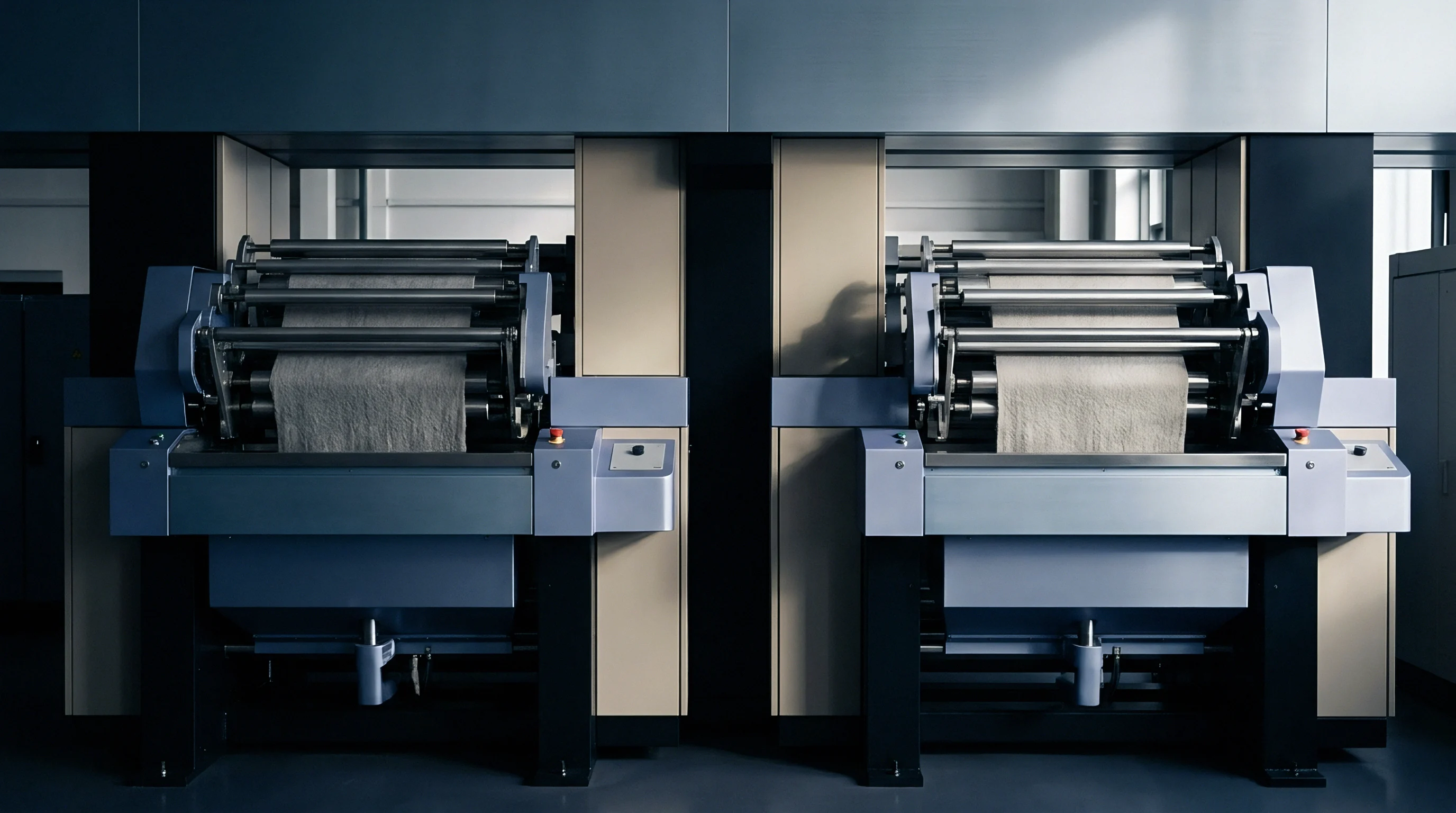
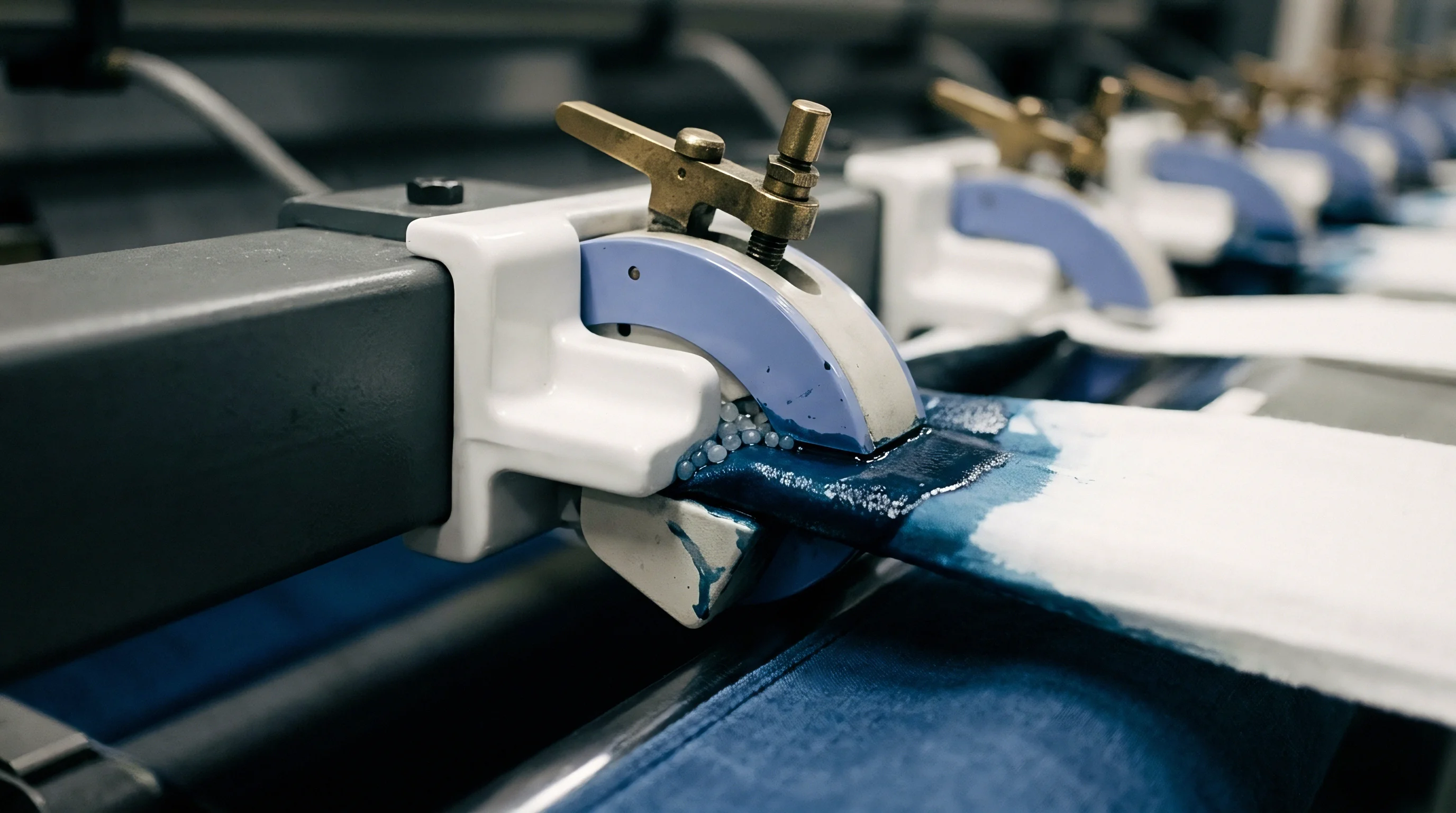
Post-cure washing plays a defensive role in stopping ongoing polymer degradation. Unreacted methylol groups, catalyst residues, and surface-deposited acid salts must be cleared from the internal fiber structure immediately after exiting the baking chamber. Passing the hot fabric through an alkaline neutralization bath containing sodium carbonate or sodium bicarbonate at pH 8.0 to 8.5 neutralizes residual protons, terminating acid hydrolysis of the cellulosic glycosidic linkages.
Alkali strips residue.
Incomplete washing allows free formaldehyde and acidic fragments to remain within the package. During storage in sealed polyethylene transit wraps, moisture and elevated ambient temperatures convert residual free formaldehyde and unreacted monomer back into acid byproducts. The pH inside the cloth drops, initiating secondary degradation that degrades tensile properties while the goods sit in transit containers or warehouse racks.
Contractual specifications require post-cure wash liquors to maintain a minimum pH of 7.5 to prevent post-finishing storage degradation and formaldehyde regeneration.
Wet Reprocessing Limits for Off-Shade Resinated Batches
Dyehouse operations face financial exposure when resin-treated goods fail shade specifications or exhibit uneven appearance across the batch width. Stripping the crosslinked resin requires acid hydrolysis under aggressive thermal and chemical conditions. The bath must operate at pH 1.5 using non-oxidizing organic or inorganic acids at 85°C to 95°C for sixty minutes.
This process cleaves the methylol ether bonds, restoring dye site accessibility to permit corrective re-dyeing.
The structural consequences of resin stripping are permanent and cumulative. While acid stripping removes the crosslink network, it inflicts secondary depolymerization upon the cellulose polymer chains. When the stripped fabric is subsequently re-dyed and re-crosslinked to meet the performance specification, the double exposure to acid-catalyzed baking reduces mechanical properties below usable garment thresholds.
Scrap rates rise rapidly.
- Residual Formaldehyde Levels must comply with ISO 14184-1 water extraction methods, setting maximum allowable limits at 75 mg/kg for direct skin contact items.
- pH Measurement of Extract according to ISO 3071 must land within the 5.5 to 7.5 range to confirm thorough neutralization of all post-cure catalytic species.
- Shrinkage Control Limits demand dimensional stability testing under ISO 5077 after three standard domestic washing cycles at 40°C.
- Absorbency Retainments per AATCC Test Method 39 verify that post-cure rinsing has effectively removed hydrophobic catalyst carrier residue.
Under ISO 105-X12, wet and dry crocking performance must achieve grade 4.0 or higher; failure indicates excess surface resin breakdown during final neutralization rinsing.

Yield
Landed Cost Arithmetic across Defective Bulk Lots
Crosslink degradation converts high-value finished cloth into non-compliant waste or heavily discounted second-quality stock. Consider a worked example of a 30,000-metre production lot of 140 gsm combed cotton poplin destined for high-spec shirting. The base greige fabric cost stands at 1.85 USD per metre.
Dyeing, wet processing, and durable press resin finishing add 0.95 USD per metre, resulting in a total converting investment of 2.80 USD per landed metre prior to final quality control clearance.
If an over-catalyzed baking run degrades tear strength below the 10-Newton contract specification threshold across twenty percent of the lot, that 6,000-metre segment cannot enter automated garment cutting lines. Liquidated as off-spec flat goods at 0.90 USD per metre, the mill recovers 5,400 USD against a total conversion and substrate expenditure of 16,800 USD on that non-compliant volume. The resulting direct loss of 11,400 USD erodes the total operating margin for the entire 30,000-metre run, pushing the landed yield cost of the remaining compliant goods to 3.28 USD per metre.
| Failure Mode | Root Cause Chemistry | Affected Lot Percentage | Recoverable Value (USD/m) | Net Landed Margin Loss (%) |
|---|---|---|---|---|
| Hyper-Depolymerization | Excess Lewis acid catalyst or over-baking | 15% to 25% | 0.85 to 1.10 | -18.4% |
| Formaldehyde Regeneration | Omitted post-cure wash / un-neutralized acid | 100% (Requires Re-Wash) | 2.45 (Post Reprocessing) | -7.2% |
| Shade Stripping Damage | Acid-stripping off-shade resin batches | 10% to 15% | 0.60 to 0.75 | -22.1% |
| Uneven Widthwise Cure | Stenter temperature profile imbalance | 8% to 12% (Selvedge Scrap) | 0.40 (Rag Value) | -9.5% |
Mill Qualification and Tolerance Margins
Buyer technical dossiers must incorporate precise physical tolerance windows rather than single-point targets. Specifying a durable press rating of 3.5 under AATCC 124 without setting a mandatory lower limit on trouser tear strength invites mills to over-crosslink the fabric to hit the smooth appearance target. Sourcing contracts must bind the supplier to a paired-metric performance matrix: achieving a specific wrinkle recovery angle while simultaneously maintaining a minimum percentage of baseline greige tensile and tear properties.
Converter selection requires verifying that the wet-processing facility operates active stenter exhaust monitoring, automated pad bath pH control, and continuous widthwise temperature logging. Commission dyers operating lines without real-time alkali dosage systems on their post-cure wash boxes routinely fail to neutralize acid residues fully. The buyer who accepts bulk shipments based solely on unwashed lab dips assumes full commercial exposure for post-transit strength loss and formaldehyde compliance failures discovered on the cutting table.
When tensile or tear values fall below contract specifications due to post-crosslinking glycosidic degradation, the entire financial loss falls upon the party holding title to the goods at the point of final testing.