Optimizing Dyeing Vessel Liquor Ratios for Fabric Quality
Optimizing liquor ratios requires balancing steam and salt savings against pump turnover rates to prevent severe shade unlevelness and mechanical creasing.

Vat
Industrial wet processing relies on mechanical vessels engineered to transport fabric through aqueous chemical baths under controlled temperature profiles. The fundamental parameter governing this interaction is the liquor ratio: the mass ratio of dyebath liquid to dry substrate. A ratio of 1:10 translates to ten litres of water for every one kilogram of dry fabric.
Over the past three decades, machinery manufacturing has driven liquor ratios down from historical levels of 1:15 or 1:20 to ultra-low ratios of 1:3.5 to 1:5. That shift alters the underlying physics of fluid transport, chemical concentration gradients, and fabric shear stresses inside the dyeing chamber.
Dyeing vessels fall into distinct architectural categories based on how kinetic energy is imparted to the cloth and the liquor. Conventional atmospheric and high-temperature jet dyeing machines combine a driven winch roll with a hydraulic liquid nozzle. The liquid jet provides both the transport force moving the fabric rope through the venturi tube and the primary medium for chemical exchange.
In airflow dyeing vessels, by contrast, a high-velocity air stream replaces the hydraulic liquid jet. Water is injected directly into the gas phase at the nozzle throat, atomizing the dye liquor onto the fiber surface. Beam dyeing and package dyeing vessels invert the concept: the substrate remains stationary while high-capacity centrifugal pumps force the liquor through wrapped fabric beams or wound yarn packages.
Reducing liquid volume inside a vessel directly alters the hydrodynamic buoyancy supporting the fabric rope. In high liquor ratio vessels, such as traditional winch becks, fabric floats freely with little mechanical compression and minimal surface-to-surface abrasion. As bath volume shrinks in low-liquor jet designs, fabric ropes collapse into denser configurations within the storage chamber.
Machine builders offset this lost buoyancy with Teflon-lined chamber floors, internal displacement tubes, and mechanical plaiting arms designed to fold the compressed rope evenly across the vessel width.

Mechanical Vessel Architecture and Fluid Transport
The transition from winch becks to modern soft-flow jets altered the spatial relationship between dyebath chemistry and textile substrates. Soft-flow machines use overflow nozzles running at hydraulic pressures between 0.2 and 0.8 bar, drastically reducing kinetic surface impact compared to early high-pressure jets operating above 1.5 bar. This gentler action protects delicate constructions ~ micro-denier filament synthetics or spun rayon knits, for instance ~ while maintaining fabric transport speeds up to 400 metres per minute.
Operating soft-flow vessels at ultra-low liquor ratios leaves very little room for fluid delivery errors, however. If the liquid volume drops below the level needed to flood the pump suction port, cavitation sets in, causing erratic fabric transport, speed fluctuations, and uneven shade deposition.
Airflow vessels isolate the transport mechanism from the chemical bath. Compressed air propels the fabric rope, while an independent dosing pump delivers concentrated liquor into the airstream. This layout permits processing at liquor ratios down to 1:3 for synthetic fibers and 1:4.5 for cellulosics.
Because the fabric rope never sits submerged in a standing bath, liquor accumulates only within the fiber structure itself and inside the chamber sump. Vessel selection depends on the physical relationship between liquor volume and fabric velocity: for dense, heavy-weight wovens or high-gauge knits, vessel geometry determines whether the available liquid can provide adequate mechanical separation between adjacent fabric folds.

Displacing Bath Volume across Jet and Airflow Systems
Displacing internal vessel volume is a central engineering strategy for low liquor ratio performance. Designers place internal displacement bodies inside the lower storage J-box to restrict the cross-sectional area available for standing liquor. This physical displacement forces the bath to concentrate within the active circulation loop: the suction pipe, pump housing, delivery pipe, nozzle, and plaiting tube.
A smaller total mass of liquid can therefore deliver the volumetric flow rate required to fill the transport nozzle and sustain uninterrupted fabric movement.
The interaction between vessel geometry, nominal loading weight, and liquor volume is outlined below. Optimal operational ranges reflect fabric quality protection over raw utility savings.
| Vessel Type | Transport Mechanism | Nominal L:R Range | Minimum Safe L:R | Primary Substrate Suitability |
|---|---|---|---|---|
| Atmospheric Winch Beck | Mechanical winch, standing bath | 1:15 ~ 1:20 | 1:12.0 | Heavy woolens, delicate tubular knits |
| Conventional HT Overflow Jet | Hydraulic nozzle with winch reel | 1:8 ~ 1:12 | 1:6.5 | Standard cotton knits, polyester wovens |
| Modern Low-Impact Soft-Flow | Low-pressure hydraulic overflow | 1:5 ~ 1:8 | 1:4.5 | Cellulosic blends, elastomeric knits |
| Aerodynamic Air-Jet Vessel | High-velocity air stream with atomized liquor | 1:3.5 ~ 1:5 | 1:3.0 | 100% Polyester, poly-cotton wovens |
| Reversible Beam Machine | Forced liquor pump through stationary roll | 1:6 ~ 1:10 | 1:5.0 | High-density woven warp knits, filament nylon |
Running reliably at the minimum safe liquor ratio requires strict control over batch loading. Loading a vessel below 70 percent of its rated payload distorts the bath-to-fabric proportion whenever an operator sets fluid levels by fixed volume markers rather than actual dry substrate mass. Overloading, on the other hand, slows rope circulation through the storage chamber, lengthening the cycle time needed for complete bath turnover.
Unlevelness at 1:4 ratios is often blamed on dosing practice, though structural limits in bath circulation are frequently the underlying cause.
Dynamics
Fluid circulation rate determines how many chemical exposures a given segment of yarn receives during the heating cycle. In exhaust dyeing, shade uniformity relies on continuous mass transfer between the liquid bulk phase and the fiber boundary layer. Shrinking total dyebath volume without adjusting pump turnover capacity increases chemical concentration while altering fluid kinetic energy.
Maintaining levelness at low liquor volumes requires balancing pump flow rate, fabric linear velocity, and cycle dwell time.
Bath turnover frequency depends on total liquid volume relative to pump discharge capacity. A dyebath volume of 1,000 litres on a circulation pump discharging 250 litres per minute yields a turnover time of four minutes. Over a 40-minute exhaustion phase, the dyebath turns over ten times.
Cut the volume to 500 litres while holding pump output at 250 litres per minute, and turnover time drops to two minutes, doubling exposures to twenty cycles. Pump turnover frequency directly dictates the uniformity of dye uptake.
Pump Turnover Frequency and Fabric Circulation Speed
Fabric movement through the vessel must synchronize with pump turnover frequency to prevent localized shade banding. Rope circulation time is calculated by dividing total fabric loop length by linear machine speed: a 200-metre rope moving at 200 metres per minute completes one full revolution every sixty seconds. For optimal dye leveling, liquor turnover time needs to match or undercut fabric loop turnover time.
If the loop takes 60 seconds, the main pump has to circulate the full bath volume within that same 60-second window.
Maintaining that synchronicity gets difficult as liquor ratios fall. A lower bath volume drops the liquid head inside the nozzle pump suction pipe, increasing the chance of vortexing and air entrainment. Air bubbles in the circulation stream disrupt hydraulic pressure and drag actual pump throughput below calibrated rates.
Operators balance pump frequency against fabric velocity by tuning variable-frequency pump drives alongside variable-nozzle gap settings.
Consider a bulk dyeing run on a 250 kg batch of 200 GSM cotton single jersey fabric in a single-rope jet vessel, with a loop length of 300 metres. At a conventional 1:10 liquor ratio, the dyebath contains 2,500 litres. A circulation pump operating at 500 litres per minute turns over the bath every 5.0 minutes (300 seconds).
Matching that 300-second bath cycle requires a fabric rope speed of at least 60 metres per minute. Under those baseline conditions, hydrodynamic lubrication remains generous and nozzle pressure stays low at 0.3 bar.
If the dyehouse drops the liquor ratio to 1:5 to save energy, bath volume falls to 1,250 litres. With the pump still running at 500 litres per minute, turnover accelerates to 2.5 minutes (150 seconds). To preserve a 1:1 synchronization between rope revolutions and bath turnover, fabric speed must double to 120 metres per minute.
That higher speed increases mechanical tension on the knitted loops, raising the risk of structural distortion. If the operator instead throttles the pump to 250 litres per minute to protect the fabric, the reduced flow drops hydraulic pressure in the nozzle, causing fabric transport to stall inside the venturi.
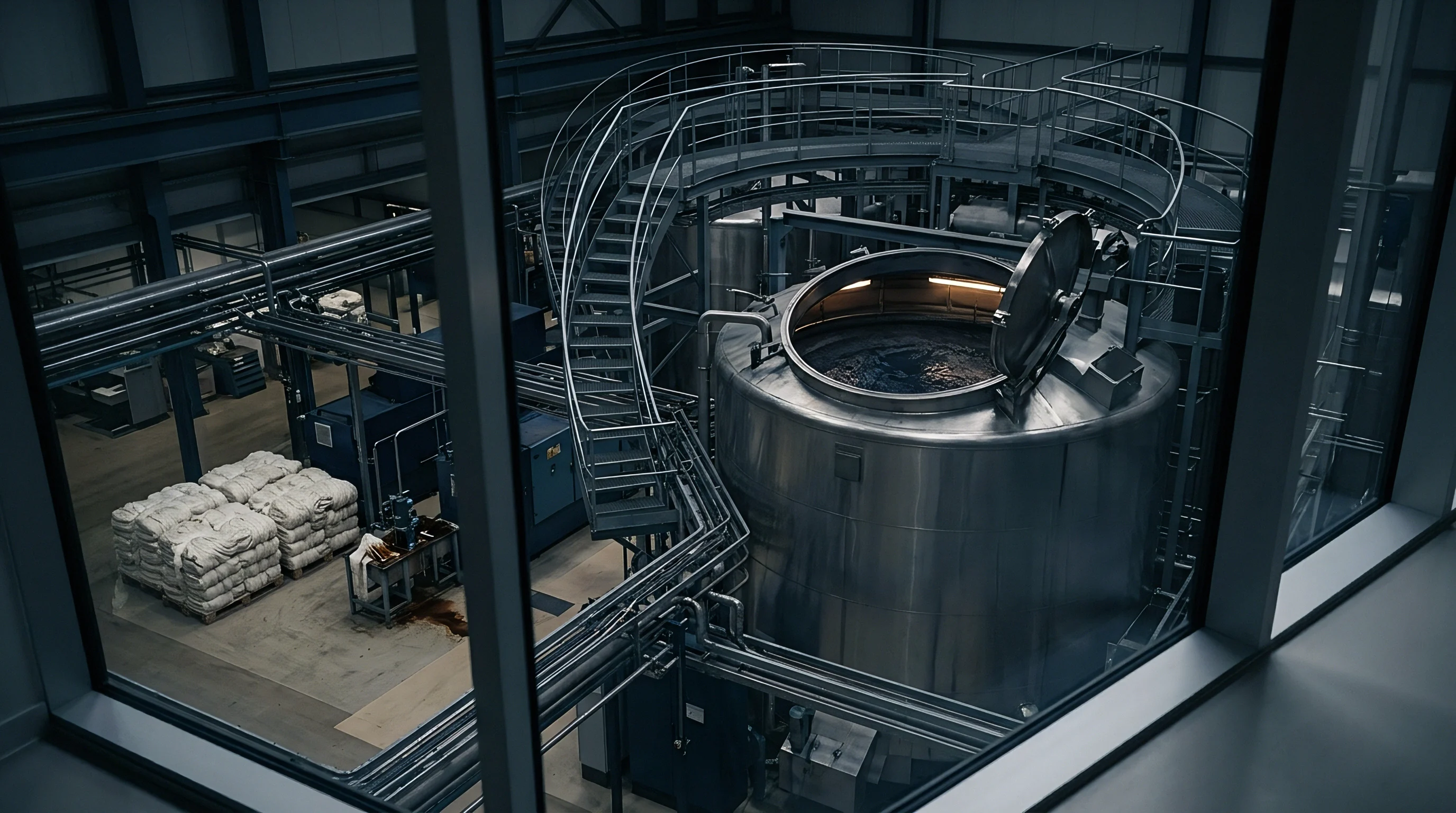
Hydrodynamic Shear and Nozzle Differential Pressure
Nozzle differential pressure represents the kinetic energy gradient driving liquid through the venturi throat around the fabric rope. Higher differential pressure raises liquid velocity relative to fabric movement, generating hydrodynamic shear forces that strip away the stagnant boundary layer around individual fibers and accelerate dye diffusion into the polymer matrix. Excessive hydraulic shear will damage fragile surfaces, however ~ inducing pilling on spun-staple yarns and breaking filaments on continuous-microfiber synthetics.
At ultra-low liquor ratios, dyebath viscosity climbs because of heavier concentrations of dissolved salts, leveling auxiliaries, and unfixed dye molecules. That increased viscosity adds resistance in the circulation piping and alters pump head curves. As fluid resistance rises, nozzle differential pressure drops unless pump speed is increased.
Yet accelerating the pump elevates mechanical shear across the impeller, generating frictional heat that can destabilize temperature-sensitive dye dispersions. Keeping rope velocity above three hundred metres per minute helps avoid structural creasing when running at the absolute floor of liquid volume.
Deposition
Dyebath chemical concentration dictates the thermodynamic drive forcing dye molecules out of solution and into the amorphous regions of the polymer chain. In exhaust dyeing, distribution equilibrium between the liquor and fiber phases follows established sorption isotherms. When dyebath volume drops, the concentrations of dyestuffs and auxiliary chemicals rise proportionally for any given percentage-on-weight-of-fiber (% owf) recipe.
That shift alters exhaustion kinetics, strike rates, and chemical solubility boundaries.
Electrolyte requirements in reactive dyeing demonstrate the effect clearly. Reactive dyes rely on neutral salts, like sodium sulfate or sodium chloride, to suppress the negative electrical charge (zeta potential) on cellulosic fiber surfaces so anionic dye molecules can approach and form covalent bonds. Dosing recommendations set in grams per litre (g/L) require far less absolute salt at a 1:5 liquor ratio than at 1:10.
If a recipe calls for 60 g/L of sodium sulfate, a 1:10 bath of 1,000 litres needs 60 kg of salt. At a 1:5 ratio with 500 litres, achieving 60 g/L takes only 30 kg, cutting salt consumption in half. High salt concentrations in low-volume baths frequently alter dye solubility limits.
Exhaustion rates accelerate sharply at lower liquor volumes. Under Nernst and Langmuir adsorption models, initial strike rate is directly proportional to concentration in the external liquid phase. At a 1:4 ratio, dyestuff concentration per unit volume is twice that of a 1:8 ratio for the same shade depth.
Without adjustments to dosing curves or temperature ramps, early dye uptake proceeds too fast, causing localized unlevelness along the fabric rope.

Concentration Gradients and Exhaustion Kinetics
Controlling strike rates at low liquor ratios requires non-linear chemical dosing. Linear dosing ~ adding equal amounts of alkali over equal intervals ~ creates severe exhaustion spikes in concentrated baths. Dyehouses instead rely on progressive exponential dosing, starting alkali or salt additions at low delivery rates (such as 5 percent of total mass over the first 15 minutes) and ramping up as exhaustion proceeds.
This gradual approach flattens the concentration gradient between bath and fiber surface, supporting uniform migration.
Dye migration acts as a natural corrective against unlevelness. Dyes with high migration indices move readily from high-concentration areas on the fiber to lower-concentration areas before fixation takes place. At low liquor ratios, migration efficiency falls because there is simply less free liquid available to re-dissolve and carry dye molecules between adjacent fabric folds.
Leveling agents ~ typically lipophilic amphoteric or non-ionic surfactants ~ are introduced to complex temporarily with dye molecules and slow initial strike rates. Heavy additions of leveling agents in low-liquor baths, however, risk holding too much dye in solution, compromising final exhaustion yield.
ISO 105-C06 test protocols dictate that wash fastness evaluation requires identical chemical mass ratios regardless of vessel volume reduction.
Electrolyte Solubility and Alkali Dosing Rates
High electrolyte concentrations in low liquor baths risk exceeding the solubility limits of specific reactive dye classes. When salt levels approach saturation ~ often above 80 g/L at room temperature ~ salting-out occurs. Dyestuff molecules aggregate into larger particulates, lose solubility, and precipitate out.
These microscopic aggregates become mechanically trapped in the yarn interstices, producing dark shade specks and severe rubbing fastness failures that standard post-scouring cycles cannot clear.
Alkali dosing protocols for covalent fixation require adjustment for the higher chemical activity present in low bath volumes. Alkali sources such as sodium carbonate (soda ash) and sodium hydroxide (caustic soda) raise dyebath pH to activate hydroxyl groups on cellulose molecules. At a 1:4 liquor ratio, hydroxyl ion activity rises and accelerates fixation.
If fixation occurs before the dye distributes evenly throughout the fabric cross-section, outer ring dyeing results: surface fibers take up heavy dye fixation while core fibers remain under-dyed, compromising cross-sectional penetration and rubbing fastness.
Which Liquor Ratio Prevents Rope Marks in High-Density Viscose Knits?
Viscose, lyocell, and modal knits are particularly susceptible to mechanical crease marks and surface fibrillation because regenerated cellulosic fibers swell rapidly in aqueous baths. On immersion, these fibers swell up to 50 percent in cross-sectional area, driving up yarn-to-yarn friction and stiffening the fabric structure. In a tight 1:4 or 1:5 bath, the compacted rope lacks the buoyancy needed to shift its fold geometry through the storage J-box.
Folds remain trapped in fixed positions under the weight of the rope mass, setting into permanent structural fold lines known as running creases.
Preventing crease marks on high-density viscose knits requires widening the liquor ratio to at least 1:8 or 1:10 and dosing high-performance polymeric crease-inhibiting lubricants. These lubricants form a thin gel layer over swollen fiber surfaces, reducing friction between adjacent folds. Lowering the post-fixation cooling rate from a standard 2.0 degrees Celsius per minute down to 0.8 degrees Celsius per minute also prevents thermal shock, giving swollen fibers time to relax without locking mechanical creases into the fabric.
The precise boundary where local chemical oversaturation forces reactive dye hydrolysis before exhaustion finishes remains an ongoing debate among dyehouse chemists.
Friction
Physical contact between adjacent fabric loops creates mechanical surface damage when liquid lubrication layers drop below critical thickness. In wet processing vessels, fabric moves continuously against polished stainless steel surfaces, chamber walls, transport rollers, venturi nozzles, and against its own folded surfaces. Water acts as both a thermodynamic carrier and a mechanical lubricant.
Decreasing the liquor ratio thins the hydrodynamic lubricating barrier separating adjacent fiber assemblies, increasing coefficient of friction and mechanical shear loading.
Mechanical surface damage manifests in specific structural failure modes: rope creasing, pilling, fiber fibrillation, surface chafing, and edge wear on tubular knits. Running creases occur when fabric ropes are compacted under physical pressure inside storage channels without sufficient fluid movement to shift fold locations. Under low liquor conditions, rope density inside the storage chamber rises from a typical 150 kg/m³ up to 300 kg/m³.
This high packing density forces yarn systems into tight mechanical bends. Repeated passage through the transport nozzle under high compression sets these bends into permanent crease lines that persist through stenter drying and finishing operations.
Rope Compaction and Running Crease Formation
Synthetics and blends containing elastomeric yarns (spandex/elastane) suffer accelerated crease formation under low liquor volume conditions. Heat-set elastomeric knits possess high elastic recovery forces that draw fabric folds tight during wet relaxation steps. If the liquid volume is insufficient to float the rope, thermal energy applied during high-temperature dyeing (130 degrees Celsius for polyester) thermally sets compressed folds into permanent crack marks.
Preventing crack marks demands matching loading weight to vessel volume, ensuring the rope cycles through the nozzle every 45 to 60 seconds.
Surface chafing occurs when fabric velocity differs from transport reel surface speed or when hydrodynamic flow through the nozzle fails to cushion fabric movement. Friction between yarn surface fibers and metal surfaces creates localized abrasion zones, visible as pale patches or fuzzy streaks on finished cloth. Fiber fibrillation is particularly severe in regenerated cellulosics like lyocell.
Under mechanical friction, wet lyocell fibers split longitudinally into fine micro-fibrils. Left uncontrolled, these micro-fibrils scatter light unevenly, giving dark shades a washed-out, frosty appearance.
Surface Chafing and Filament Fibrillation
Polymeric bath lubricants represent essential chemical interventions when operating jet equipment near minimal fluid thresholds. Lubricants fall into two primary chemical categories: synthetic polymers based on polyacrylamide derivatives, and fatty acid ester emulsions. Polyacrylamide lubricants build fluid viscosity specifically at the fiber boundary layer, creating a sliding hydraulic cushion that reduces fabric-to-fabric friction.
Fatty acid esters adsorb directly onto yarn surfaces, lowering boundary friction coefficients. Dosing levels must scale with substrate weight and construction density rather than liquor volume, ensuring adequate fiber coverage.
The impact of liquor ratio adjustments across distinct fabric constructions is detailed below, documenting specific structural failure modes and operational limitations.
| Substrate Construction | Fiber Composition | Tested L:R Range | Primary Mechanical Defect | Standard Test Method | Critical L:R Threshold |
|---|---|---|---|---|---|
| Single Jersey Knit (160 GSM) | 100% Combed Cotton | 1:4 ~ 1:10 | Surface Pilling & Fibrillation | ISO 12945-2 (Martindale) | 1:5.5 |
| Interlock Structure (240 GSM) | 95% Viscose / 5% Elastane | 1:4 ~ 1:12 | Running Creases / Crack Marks | Visual Grade (AATCC TM179) | 1:8.0 |
| Micro-Denier Warp Knit | 100% Polyester (0.8 dpf) | 1:3 ~ 1:8 | Filament Abrasion / Chafing | ISO 12947-2 (Abrasion Break) | 1:4.0 |
| Heavy Plain Weave (300 GSM) | 100% Tencel (Lyocell) | 1:5 ~ 1:12 | Uncontrolled Fibrillation | ISO 12945-2 (Frosting Grade) | 1:8.5 |
| Fine Poplin Weave (110 GSM) | 65% Poly / 35% Cotton | 1:4 ~ 1:8 | Edge Abrasion on Selvedges | ISO 13937-2 (Tear Strength Reduction) | 1:4.5 |
| Test conditions: All samples processed in high-temperature jet vessel with 60-minute retention at peak temperature; cooling rate 1.5°C/min; evaluation performed after standard stenter drying at 160°C without topical silicone softeners. | |||||
Quantitative Abrasion Analysis under Variable Bath Volumes
Quantifying surface abrasion degradation requires testing physical performance metrics before and after wet processing under controlled bath ratios. Martindale pilling evaluations per ISO 12945-2 reveal significant degradation when liquor ratios drop below critical thresholds. For a 200 GSM cotton single jersey, decreasing liquor ratio from 1:8 to 1:4.5 reduces 2,000-rub Martindale pilling resistance by up to one full visual grade on a 1-to-5 scale.
Increased mechanical friction damages outer staple fiber wraps, raising loose fiber ends that entangle into pills during subsequent domestic laundering.
Fabric rope compression inside low-liquor jet nozzles accelerates mechanical chafing when loop circulation time exceeds the bath turnover cycle.
Tensile and tear strength parameters measured via ISO 13934-1 and ISO 13937-2 demonstrate structural degradation when low liquor processing is combined with excessive pump speeds. High mechanical friction strips surface fibers from spun yarns, reducing overall yarn mass cross-section. In lightweight woven cotton poplins, operating jet nozzles at high differential pressures (above 1.2 bar) to force rope movement at a 1:4 ratio results in tear strength reductions reaching 12 percent compared to processing at 1:8.
This loss reflects structural fiber damage induced by physical chafing inside the venturi tube.
Managing surface friction requires implementing systematic physical controls during the production cycle. Key interventions for protecting fabric integrity include:
- Hydrodynamic Lubricant Dosing requires adding high-molecular-weight polyacrylamide agents at 1.0 to 2.0 percent on weight of fabric prior to bath heating to establish an intact protective surface boundary layer.
- Nozzle Gap Calibration demands matching venturi diameter precisely to rope mass per linear metre, preventing physical pinching of compressed fabric folds inside the transport tube.
- Rope Cycle Optimization dictates regulating fabric linear speed between 250 and 350 metres per minute, ensuring total loop circulation time remains below 60 seconds.
- Controlled Cooling Gradients mandates reducing dyebath temperature at rates strictly not exceeding 1.0 degree Celsius per minute to avoid thermal setting of mechanical creases.
Because crease marks destroy commercial value, operating a jet vessel below its hydrodynamic lubrication threshold generates unrecoverable fabric surface abrasion that forces the rejection of entire dye lots at the garment cutting room.
Verification
Laboratory dipping units operate under static or oscillating tube configurations that fail to replicate the hydrodynamic shear of production jet nozzles. A standard laboratory beaker machine processes five to ten grams of fabric in sealed stainless steel tubes submerged in a heated fluid bath. While these units control temperature and liquor ratio accurately, they lack mechanical rope transport, nozzle venturi shear, and dynamic pump turnover systems.
Consequently, recipes optimized in lab beaker units show shade divergence, levelness shifts, and fastness variance when scaled directly to bulk production jet vessels operating at different liquor ratios.
Scale-up divergence stems primarily from differences in bath exhaustion dynamics between laboratory beakers and production vessels. In lab beaker units, liquor ratio is maintained by adding exact volumes of liquid per gram of fabric sample (e.g. 100 mL for a 10 g sample = 1:10 ratio).
However, lab machines feature high surface-area-to-fabric ratios and lack active liquid flow through venturi nozzles. Dye uptake occurs predominantly via static thermal agitation rather than forced hydraulic penetration. When translating a beaker recipe to a 1:4 low-liquor bulk jet vessel, high bath concentration accelerates exhaustion beyond rates observed in the lab, causing shade depth variations exceeding commercial tolerances.
Translating Laboratory Dips to Production Scale
Spectrophotometric color measurement provides objective quantification of shade translation errors. Color differences are calculated using the CIELAB and CMC (l:c) equations under standard illuminants D65 (daylight), TL84 (store lighting), and Illuminant A (incandescent). The CMC (2:1) formula establishes an ellipsoidal tolerance space around target coordinates, matching human visual perception more accurately than standard Cartesian Delta E. A batch-to-batch or lab-to-bulk variance exceeding 0.6 Delta E CMC (2:1) indicates commercially unacceptable shade drift, necessitating costly dyebath shading corrections.
A shade divergence exceeding 0.8 Delta E CMC under D65 illuminant occurs when dyebath exhaustion shifts by more than four percent between sampling phases.
Correcting lab-to-bulk scale-up errors requires applying mathematical compensation factors to laboratory recipe formulations. Advanced dyehouses utilize computer color matching systems integrated with empirical scale-up algorithms. These algorithms adjust salt, alkali, and dyestuff percentage values based on known historical shifts between lab beaker ratios (typically fixed at 1:10) and bulk jet production ratios (1:4 to 1:6).
If historical data shows a specific reactive blue dye exhibits 8 percent higher exhaustion at 1:4 bulk conditions than at 1:10 lab conditions, the formulation software automatically scales down primary dye dosing in the bulk recipe to hit target color coordinates on the first attempt.
Fastness Testing and Shade Metamerism Controls
Fastness properties must be systematically evaluated across varying liquor ratio bulk runs to verify performance compliance against international retail buyer standards. Colorfastness to washing is assessed via ISO 105-C06 (Test Condition C2S: 60 degrees Celsius with sodium perborate). Fastness to rubbing is verified using ISO 105-X12 crockmeter procedures under wet and dry states.
Low liquor ratio processing directly impacts rubbing fastness: if concentrated dye bath conditions cause surface aggregation or incomplete unfixed dye removal during post-scouring, wet crocking fastness drops from a satisfactory Grade 4 down to an unacceptable Grade 2.5.
The standard verification sequence for auditing shade levelness, fastness performance, and physical property retention on bulk fabric rolls dyed under reduced liquor ratios is detailed below.
- Extract swatch samples from head, middle, and tail sections of the bulk roll immediately after stenter drying.
- Condition specimens at twenty degrees Celsius and sixty-five percent relative humidity for four hours under ISO 139 standards.
- Measure colorimetric values across three illuminants using a spectrophotometer set to ten-degree observer mode.
- Subject specimens to ISO 105-C06 commercial laundering tests alongside multi-fiber adjacent fabrics to quantify staining.
- Evaluate rubbing fastness under dry and wet conditions using ISO 105-X12 crockmeter protocols.
Because lab dips reflect static conditions, standard purchase agreements mandate that bulk shade approval requires a Delta E CMC value below 0.6 under D65 primary illuminant, calculated against the agreed lab dip measured at equivalent liquor density.

Economics
Water consumption drives direct utility bills, effluent treatment surcharges, and the thermal energy needed to raise bath temperatures to fixation thresholds. Thermal energy calculations demonstrate the cost savings achieved by reducing liquor ratios. Raising one kilogram of water by one degree Celsius requires 4.184 kilojoules of energy.
In a bulk dyehouse processing a 500 kg batch of fabric from 20 to 130 degrees Celsius (a 110-degree temperature rise), thermal input scales directly with liquid mass.
At a 1:10 liquor ratio, a 500 kg fabric batch requires 5,000 litres (5,000 kg) of water. Thermal energy required equals: 5,000 kg × 4.184 kJ/kg°C × 110°C = 2,301,200 kJ (approx. 639 kWh).
Reducing the liquor ratio to 1:4 drops water mass to 2,000 litres (2,000 kg). Thermal energy required drops to: 2,000 kg × 4.184 kJ/kg°C × 110°C = 920,480 kJ (approx. 255 kWh).
Reducing liquor ratios from 1:10 to 1:4 cuts thermal energy consumption by fifty-eight percent under standard steam pricing, because energy costs scale with bath mass.
Thermal and Chemical Savings at Reduced Ratios
Chemical consumption savings represent a secondary direct financial benefit. While dye requirements (% owf) remain constant for a given shade depth, auxiliary chemicals dosed on bath volume (g/L) ~ including electrolytes, alkali, wetting agents, and sequestering agents ~ drop proportionally with water volume reductions. In reactive dyeing, salt reduction accounts for major cost savings: reducing water volume from 10,000 litres to 4,000 litres across a 1,000 kg batch cuts sodium sulfate consumption from 600 kg to 240 kg, saving 360 kg of salt per batch alongside corresponding reductions in effluent total dissolved solids (TDS) discharge fees.
Financial parameters, utility consumption, and re-dye risk profiles across varying liquor ratio operating points are detailed below for a continuous dyehouse running 10,000 metric tonnes annually.
| Operating Liquor Ratio | Water Use (L/kg Fabric) | Steam Energy Cost ($/1,000m) | Chemical Auxiliary Cost ($/1,000m) | Re-Dye Rate Risk (%) | Net Landed Cost ($/Finished Metre) |
|---|---|---|---|---|---|
| 1:12.0 (High Ratio) | 12.0 | 48.50 | 32.10 | 1.2% | 1.84 |
| 1:8.0 (Standard Jet) | 8.0 | 32.30 | 21.40 | 1.8% | 1.76 |
| 1:5.5 (Optimized Soft-Flow) | 5.5 | 22.20 | 14.70 | 2.4% | 1.71 |
| 1:4.0 (Ultra-Low Air-Jet) | 4.0 | 16.10 | 10.70 | 5.8% | 1.78 |
| 1:3.2 (Sub-Critical Limit) | 3.2 | 12.90 | 8.60 | 14.5% | 1.96 |
Re-Dye Risk and Commercial Yield Balances
Reducing liquor ratios yields clear utility savings, but operating below a substrate’s hydrodynamic threshold creates significant re-dye risk. If an ultra-low ratio causes shade unlevelness, strip-and-redye operations double direct labor, utility, and chemical costs while extending lead times by 48 to 72 hours per batch. Furthermore, stripping reactive dyes requires harsh sodium hydrosulfite and caustic soda treatments that degrade tensile strength by 10 to 15 percent, risking total batch rejection if physical strength drops below buyer spec minimums.
Lowering water volume increases chemical concentration per litre while maintaining identical percentage-on-weight dosing.
Financial optimization requires balancing utility cost reductions against the statistical probability of shade correction cycles. As shown in the data model above, pushing liquor ratios down from 1:5.5 to 1:4.0 cuts direct steam and chemical costs by $9.60 per 1,000 metres. However, the re-dye rate risk jumps from 2.4 percent to 5.8 percent due to exhaustion strike rate instability and local concentration gradients.
Re-dyeing a failed batch costs approximately $0.45 per metre in additional processing costs, labor, and substrate strength loss. When amortized across total production volume, the higher re-dye rate increases net landed cost per finished metre from $1.71 up to $1.78, eliminating all energy savings.
When issuing Request for Quotations (RFQs) and negotiating converter contracts, technical buyers should require specific operational guarantees regarding wet processing machinery and bath parameters. RFQ specification requirements must include:
- Nominal Vessel Capacity specifies requiring converters to declare exact vessel brand, model, and loading limits to prevent batch overloading.
- Minimum Hydrodynamic Ratio demands setting mandatory lower limits on liquor ratios based on specific substrate construction and fiber type.
- Pump Flow Calibration Certificate requires verifying annual main pump flow rate calibration and nozzle pressure differential logging records.
- Auxiliary Lubricant Dosing Protocol mandates defining mandatory crease-inhibiting lubricant additions for sensitive cellulosic and synthetic knits.
Calculations of landed cost must balance the immediate reduction in steam consumption against the statistical probability of shade correction cycles. When a converter drops liquor volume past the mechanical limits of the substrate, the cost of single re-dye cycle exceeds total water savings accumulated across twenty successful production batches.