Tearing Evaluation
Physical testing standard measuring the force required to propagate a single-rip tear in a trouser-shaped fabric specimen defines the analytical purpose of iso 13937-2. This international standard provides a consistent method for evaluating the tear resistance of textile materials, which is a critical indicator of the durability of finished garments. The test is applicable to most woven fabrics and is particularly useful for assessing the quality of apparel, upholstery and technical textiles.
It measures the force needed to continue a tear that has already been started, which simulates the real-world scenario of a garment catching on a sharp object. The standard specifies the dimensions of the test specimen, the rate of extension and the method for calculating the average tear force from the resulting data peaks.
Specimen Preparation
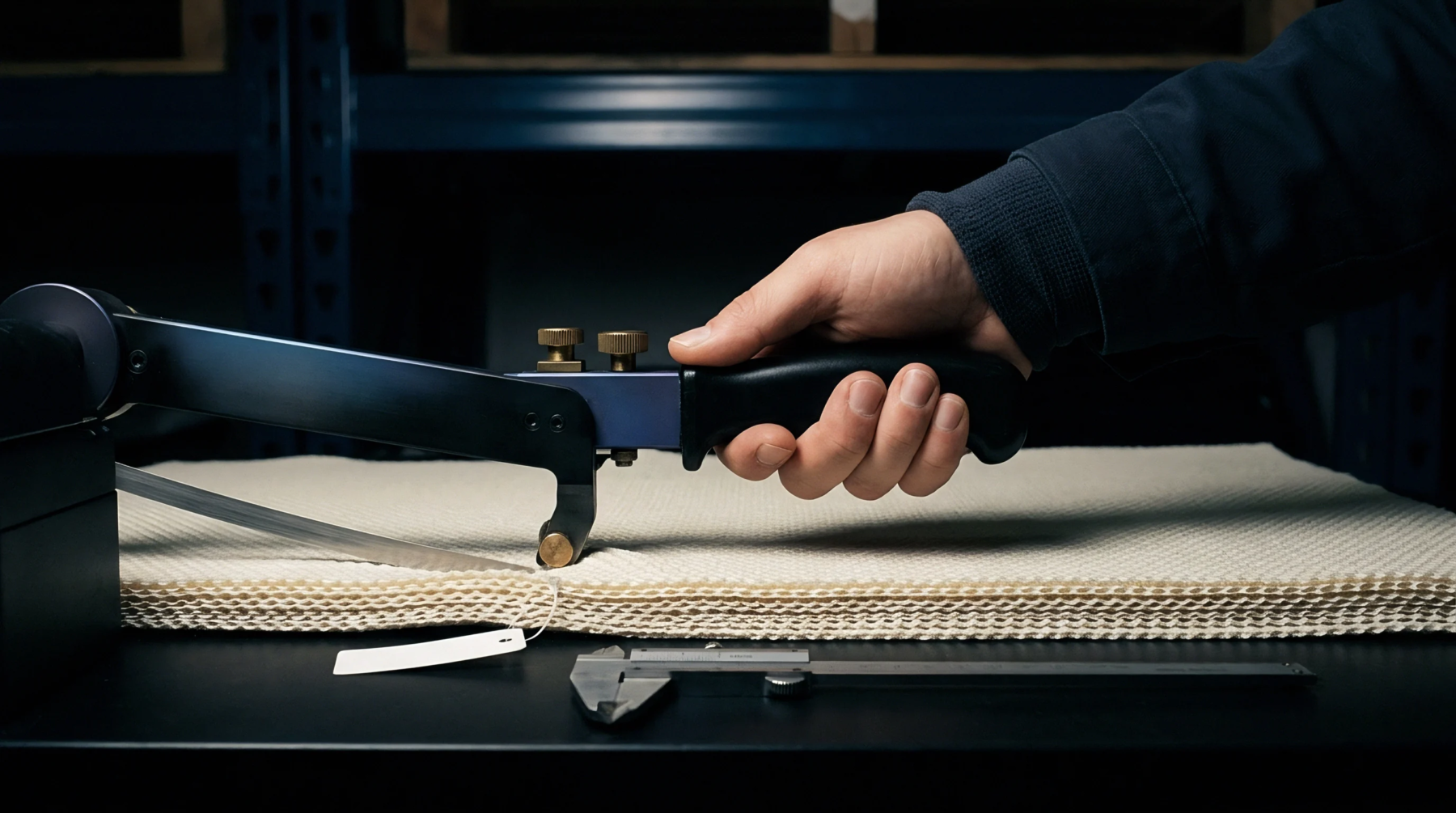
Accuracy of the results depends on the precise cutting and conditioning of the fabric samples before the test begins. Under the rules of iso 13937-2, five specimens must be cut in both the warp and weft directions to account for the different strengths of the yarn systems. Each specimen is shaped like a pair of trousers, with a central longitudinal slit that creates two legs for the testing machine to grip.
The fabric must be conditioned in a standard atmosphere to ensure that the moisture content does not vary between different test runs. The mechanism of the test involves pulling the two legs in opposite directions, which causes the tear to travel along the length of the specimen. If the specimens are not cut parallel to the yarns, the tear may deviate from the intended path, which leads to an inaccurate reading of the fabric’s strength.
Force Measurement
Testing is conducted using a constant-rate-of-extension tensile testing machine equipped with electronic force sensors. As the machine pulls the specimen apart, the force required to continue the tear is recorded as a series of peaks and troughs on a graph. According to iso 13937-2, the average tear force is calculated by analyzing these peaks, typically ignoring the first and last portions of the tear where the force may be unstable.
This calculation provides a single numerical value in Newtons that represents the fabric’s resistance to tearing. The standard allows for different methods of peak selection, such as the electronic mean or the manual calculation of the highest peaks. Technicians must ensure that the grips are properly aligned to avoid any twisting of the specimen, which could cause a premature failure of the fabric.
The boundary of the test is reached when the tear has traveled the full length of the specimen or when the fabric begins to fray rather than tear.
Durability Rating
Garment manufacturers and retailers use the results of this test to set quality benchmarks for their products and to select the most appropriate fabrics for different applications. A high tearing force measured by iso 13937-2 indicates a robust fabric that will survive heavy wear and frequent washing without failing. In contrast, a low tearing force suggests that the fabric may be too delicate for certain types of clothing, such as workwear or children’s apparel.
This information is also used to evaluate the impact of different finishing treatments, such as bleaching or resin coating, which can significantly weaken the fabric. Buyers often include a minimum tearing strength requirement in their technical specifications to ensure that the finished goods meet the expectations of the consumer. Regular testing of production samples helps to maintain consistency and to identify any deviations from the approved quality standard.