Subcontracted Finishing Steps Appearing after the Audit Scope Closes
Subcontracted finishing steps executed outside audited mill boundaries alter fabric fastness, strength, and chemical safety without triggering primary quality controls.

Gate
A facility audit checks operational compliance only within the physical walls of the inspected mill. When a buyer audits a primary weaving or knitting facility onsite, that qualification covers only the equipment, chemical inventory, and environmental management systems inside that perimeter. Any subcontracted finishing done after the audit scope closes introduces unverified variables that bypass that qualification entirely.
Primary mills regularly ship dyed or greige fabric off site to independent converters for specialized mechanical or chemical treatments before final packing and delivery. An audit scope stops at the mill gate.
Boundary Limits of Environmental and Chemical Qualification
Primary facility assessments look at effluent treatment systems, worker exposure controls, and raw chemical storage on site. Environmental management systems certified under ISO 14001 or zero-discharge frameworks monitor wastewater directly at the main factory outfall. When a fabric order calls for secondary processing elsewhere, the chemical inputs and water treatment standards at the subcontracted converter remain unmonitored unless explicitly included in an expanded audit mandate.
These secondary facilities often run smaller batch equipment, older stenter frames, and manual chemical dosing stations that lack the automated controls found in tier-one mills.
Unmonitored converting sites expose buyers to restricted substance risks. Manufacturing Restricted Substances Lists limit compounds used in production, including alkylphenol ethoxylates, heavy metal catalysts, and organotin compounds. Primary mills pass initial audits by keeping clean chemical inventories in their main storage rooms.
Subcontracted facilities working under separate purchase orders, however, often buy cheaper auxiliaries, wetting agents, and cross-linking catalysts from local formulators. These unvetted chemicals can leave prohibited residues on finished fabric rolls without triggering alerts in the primary mill’s internal monitoring system.
| Process Node | Audited Tier-1 Facility | Subcontracted Converter Unit | Testing Standard / Failure Risk |
|---|---|---|---|
| Chemical Softening | Automated Dosing System | Manual Tank Addition | ISO 14184-1 Formaldehyde Shift |
| Mechanical Raising | Monitored Metal Detectors | Uncalibrated Shearing Cylinder | ISO 13937-2 Tear Strength Loss |
| Water Repellent Finish | PFAS-Free Certified Chemistry | Legacy Fluorocarbon Formulation | OEKO-TEX RSL Non-Compliance |
| Compressive Shrinking | Closed-Loop Steam Control | Variable Belt Pressure Frame | ISO 5077 Dimensional Skewing |

Offsite Processing Routes for Specialty Wet Operations
Converters step into the supply chain when primary mills lack specialized equipment like continuous calenders or pad-cure resin lines. A standard production route starts with yarn spinning, greige knitting or weaving, and primary dyeing inside an audited vertical mill. Once primary wet processing finishes, the fabric is dewatered, dried, and inspected before leaving the gate.
If the specification calls for specialized functional traits like durable press performance, flame retardancy, or a brushed fleece texture, the mill sends the semi-finished goods to a secondary converter, where unvetted operations can easily breach chemical rules.
Moving semi-finished fabric between facilities exposes it to environmental hazards. Greige or dyed rolls waiting for transport sit on open wooden pallets or inside unsealed plastic wrapping. Shifting ambient humidity during transit alters moisture regain across different zones of the roll.
These moisture variations cause uneven chemical pick-up in secondary pad-bath applications, where outer layers absorb excess finishing liquor while damp roll cores receive too little, creating performance variances across the finished lot.
Secondary finishing often happens off site because external facilities house specialized equipment a primary plant cannot economically justify keeping in-house.


Converter
Subcontracted processing houses operate on their own commercial schedules and localized recipes. They handle fabric lots from multiple primary mills, mixing different fiber blends, yarn structures, and dye classes across shared machine lines. Clean-down protocols between continuous runs vary widely between audited primary plants and independent converting workshops, so residual silicone softeners, acidic catalysts, or optical brighteners left in pad boxes from previous runs often contaminate subsequent orders.
Thermal and Mechanical Alterations in Secondary Stenter Runs
Running dyed fabric through an extra drying pass shifts internal yarn tensions and alters dye fixation. Secondary treatments need heat to dry moisture, cure cross-linking resins, or heat-set dimensional changes. Stenter chambers operating between 160 and 190 degrees Celsius place heavy physical stress on dyed fibers.
Synthetic fibers like polyester and nylon reach glass transition temperatures during heat exposure, releasing stress built up during primary weaving or knitting. Unmonitored thermal cycles cause yarn relaxation that alters fabric weight, construction density, and final width.
Heat applied during secondary converting alters how dye molecules sit inside synthetic fibers. Disperse dyes on polyester rely on physical entrapment within the amorphous zones of the polymer chain. High temperatures in secondary processing re-open these polymer structures, letting dye molecules migrate toward the surface.
Non-ionic surfactants added to secondary pad baths speed up this migration, degrading both wet fastness and rub fastness.
Secondary thermal pass at 180 degrees Celsius for forty seconds reduces disperse dye rub fastness by one full grade on textured polyester.
Secondary thermal history requires evaluation during routine fabric specification reviews. Consider a 100 percent polyester 150-denier textured interlock knit fabric dyed deep navy with high-energy disperse dyes. At the audited primary dyehouse, the fabric achieves an ISO 105-X12 dry crocking rating of Grade 4-5 and a wet crocking rating of Grade 4.
After primary inspection, the mill ships the batch to a secondary converter for a hydrophilic moisture-wicking finish. The converter runs the fabric through a continuous pad-stenter line at 185 degrees Celsius with a forty-second dwell time to cure the coating.
Additives in the secondary pad bath include ethoxylated alcohol surfactants that lower surface tension to ensure uniform application. During the 185-degree thermal pass, high heat combined with surfactant action pulls disperse dye molecules out of the fiber core onto the outer cuticle. Testing after this subcontracted step shows the ISO 105-X12 dry crocking score dropped to Grade 3, while wet crocking fell to Grade 2-3.
The fabric fails buyer fastness specifications despite having valid test certificates issued at the primary gate.

Can Heat History Distort Pre-Approved Fastness Ratings?
Temperatures above 175 degrees Celsius trigger disperse dye thermomigration in synthetic fibers, with dwell times in stenter heating zones determining the extent of chemical degradation and dye movement. Primary mill quality control labs measure color fastness immediately after bulk dyeing and primary drying. When secondary converting happens off site, the primary certificate only reflects fabric properties before that final heat exposure.
Color shifts also happen when reactive dyes on cellulosic substrates undergo secondary thermal curing in acidic baths. Cellulosic fibers padded with acidic resins for wrinkle resistance suffer partial hydrolysis of the dye-fiber covalent bond at temperatures above 160 degrees Celsius. Cleaved dye molecules sit on the surface as unfixed colorants, degrading ISO 105-C06 wash fastness ratings.
Converters without spectrophotometric shade verification tools process fabric lots without checking for color drift, delivering rolls that breach the shade tolerances agreed with the primary vendor.
The main unresolved question is whether mill compliance teams can reliably catch downstream thermal fastness loss before finished rolls reach the cutting floor.


Resin
Chemical cross-linking treatments applied during secondary finishing modify the physical performance of woven and knitted substrates. Pad-cure applications of thermosetting resins give cotton, rayon, and linen fabrics easy-care, crease-recovery, or dimensional stabilization properties ~ but at the expense of mechanical fiber strength. Primary mills that present test reports based on unfinished greige or dyed fabric overstate the actual structural capacity of the delivered bulk goods.
Cross-Linking Chemistries and Tensile Strength Degradation
Dimethyloldihydroxyethyleneurea bath formulations create rigid chemical bonds within the amorphous regions of cellulosic fibers. These cross-links restrict the natural movement of cellulose polymer chains under tension. When loaded mechanically, forces concentrate at these rigid nodes rather than spreading across the fiber, leading to early fiber fracture.
Tensile strength loss correlates directly with cross-linking density and curing temperatures inside secondary stenter frames.
Cross-linking resins curing above 160 degrees Celsius cause an average ten percent strength drop, and unmonitored resin treatments degrade tear strength even further. Tear strength loss measured under ISO 13937-2 standard methods often exceeds tensile strength degradation because cross-linked fibers can no longer group together inside yarn structures under tearing shear. Individual fibers snap sequentially rather than shifting collectively to resist the load, causing tear strength drops of twenty to forty percent after resin application.
ISO 14184-1 testing on finished rolls invalidates mill certificates issued prior to subcontracted resin bath immersion.
Secondary resin finishing operations introduce distinct structural and compliance failure modes that alter bulk fabric performance:
- DMDHEU Cross-Linking Degradation reduces cotton tear strength under ISO 13937-2 by converting flexible amorphous cellulose regions into rigid structures that cannot distribute localized tearing forces.
- Fluorocarbon DWR Application alters fabric air permeability measured via ISO 9237 by forming continuous fluoropolymers over micro-voids between intersecting warp and weft yarns.
- Organosilicon Softener Over-Dosing lowers seam slippage resistance tested under ISO 13936-2 by reducing inter-yarn friction coefficients below structural thresholds.
- Melamine Formaldehyde Curing releases free formaldehyde vapors detected through ISO 14184-1 analysis when secondary baking ovens operate below recommended air extraction rates.
Formaldehyde Release and Restricted Substance Thresholds
Unreacted chemical residues left on fabric rolls lead to compliance failures against international safety standards. Thermosetting resins use formaldehyde-based precursors to cross-link hydroxyl groups in cotton fibers. Complete chemical conversion requires exact catalyst ratios, controlled pH between 4.5 and 5.5, and uniform thermal curing times.
Subcontracted finishing shops working without automated metering units frequently miscalculate acid catalyst proportions or cut oven dwell times to boost machine throughput.
Incomplete curing leaves free, unreacted formaldehyde trapped inside the fabric matrix. When bulk rolls sit inside sealed shipping containers during ocean transit, ambient heat and trapped moisture cause this free formaldehyde to hydrolyze out of the yarn core onto the surface. Standard laboratory testing under ISO 14184-1 water extraction methods then reveals free formaldehyde concentrations above brand limits ~ which often cap levels at 16 parts per million for infant wear and 75 parts per million for direct-to-skin garments ~ triggering customs holds.
| Finish Type | Chemical Base | Tensile Retained ISO 13934-1 | Tear Retained ISO 13937-2 | Wash Durability ISO 6330 |
|---|---|---|---|---|
| Easy-Care Durable Press | DMDHEU Low Formaldehyde | 72% | 61% | 30 Domestic Cycles |
| Water Repellent Finish | Short-Chain C6 Fluorocarbon | 96% | 94% | 20 Domestic Cycles |
| Flame Retardant Treatment | Organophosphorus Compound | 81% | 74% | 50 Commercial Cycles |
| Elastomeric Softening | Macro-Emulsion Silicone | 98% | 104% | 10 Domestic Cycles |
Executing subcontracted chemical additions without re-testing leads directly to customs holds, garment rejections, and unrecoverable material scrap costs.
Shear
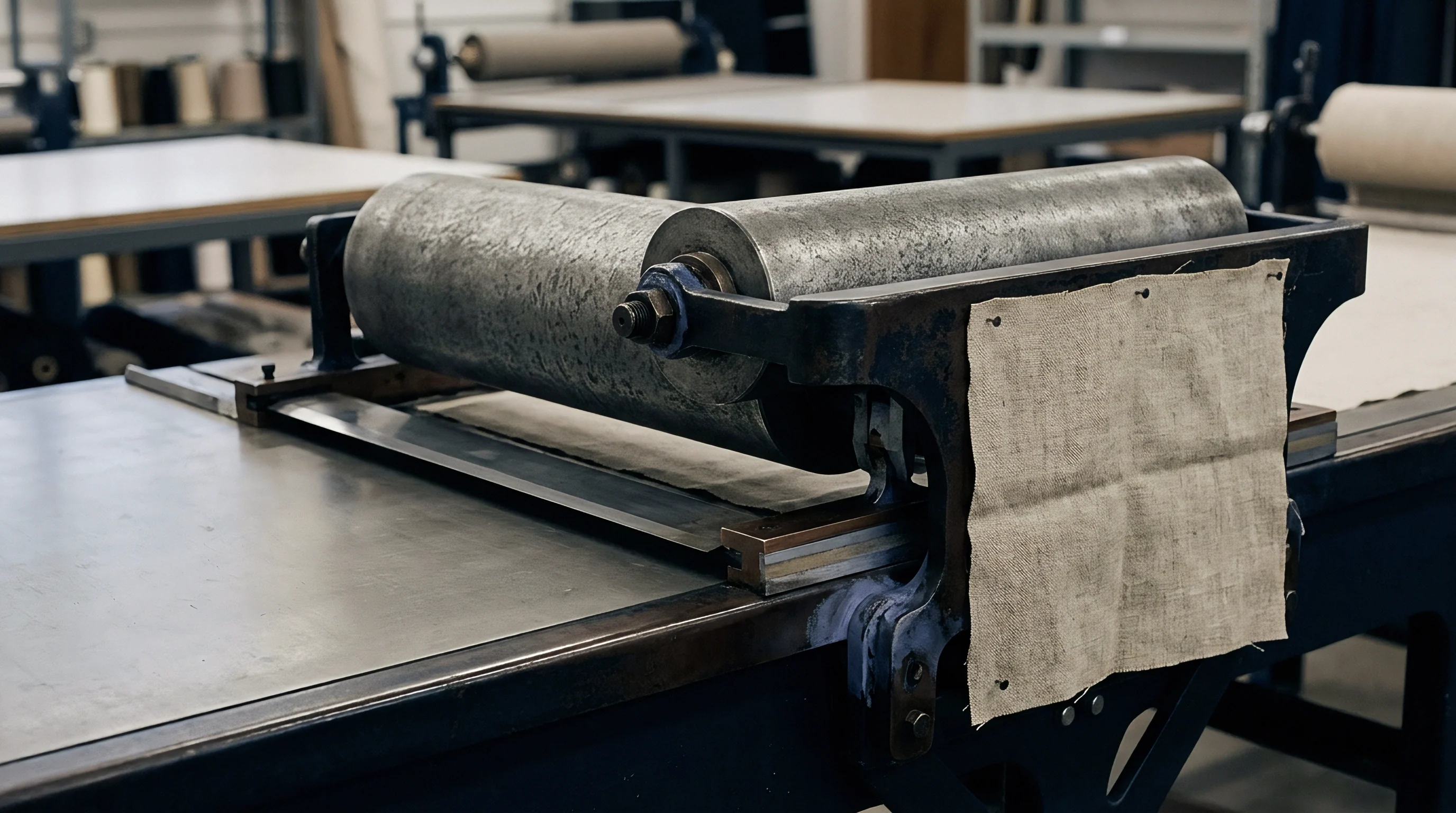
Mechanical surface processing done outside the audited facility alters yarn structure and fabric weight. Physical finishing steps like napping, sueding, shearing, and compacting rely on mechanical action rather than bath chemistry. Primary mills frequently subcontract raising operations to specialized plants with rotary card-wire cylinders and precision spiral shearing knives.
These processes physically alter the surface geometry of woven and knitted fabrics, shifting dimensions away from greige specifications.

Physical Surface Modification outside Factory Inspection
Rotary blades cut exposed fiber loops to create a uniform face pile on raised fabrics. Sueding uses abrasive emery rollers rotating at high speed against fabric web tension to rupture outer yarn fibers, producing a soft hand. This fiber rupture reduces overall yarn cross-sectional area and thins load-bearing core filaments.
Consequently, bursting strength measured under ISO 13938-1 on knitted fleece drops significantly after aggressive sueding or napping by secondary converters ~ a defect routinely checked for at finished roll ends.
Shearing removes surface lint and excess pile height to produce a clean surface appearance. However, misaligned shearing cylinders or worn blade edges cut deep into structural ground yarns on lightweight fabrics, leaving invisible micro-cuts along the web. This damage goes unnoticed during low-speed manual roll inspection at the secondary mill, only to manifest as full-width fabric tearing during garment spreading and high-tension automated cutting.
Paper production calendering lines use mechanical pressure rolls to alter web density in much the same way textile converters alter structural thickness when compressing woven substrates under uncalibrated calenders.
Compacting and Shrinkage Control Discrepancies
Compressive shrinking machines adjust longitudinal fabric dimensions to reach target stability figures. Tubular knit compacting and woven sanforizing lines rely on rubber belts and heated steam cylinders to force warp yarns or knitted courses closer together. Process settings dictate final mass per unit area under ISO 3801, as well as residual dimensional changes after domestic washing under ISO 5077 and ISO 6330.
Compacting executed off site without standardized tension controls generates severe weight and shrinkage variations across a single production lot.
Over-compacting fabric offers temporary dimensional stability that masks poor structural construction. Subcontracted converters pressed to meet tight shrinkage specs frequently over-feed fabric into rubber-belt compactors, jamming yarns together beyond their natural equilibrium state. This artificial compaction holds during initial roll inspection, but collapses upon exposure to steam during garment pressing or initial consumer washing, causing the fabric to expand or distort back to its natural state and creating severe sizing errors across retail production runs.
Offsite finishing execution following an inspection procedure unfolds through clear operational steps:
- The primary mill issues dispatch documentation and transfers unfinished dyed rolls to an unaudited secondary converting unit.
- The secondary converter receives the material web, loads rolls onto continuous feeding frames, and sets processing parameters based on internal habit rather than buyer specification sheets.
- Mechanical raising or chemical padding alters fiber alignment, mass per unit area, and structural yarn strength across the lot.
- The secondary unit packs finished rolls into unsealed poly-wraps and returns the lot to the primary mill for shipping.
- Primary shipping departments attach original factory gate test certificates to downstream bill-of-lading dossiers without conducting re-verification testing on the secondary goods.
Offsite mechanical finishing alters fabric weight and stability well beyond the control of primary mill quality records.

Custody
Moving unfinished fabric between independent physical sites breaks the traceability chain established during facility audits. Traceability relies on unbroken documentation matching raw material lot numbers, dye batch codes, and finishing processing logs. When fabric leaves an audited gate for secondary converting, physical roll tracking often reverts to manual paper dockets or local mill barcodes that fail to integrate with buyer supply chain tracking platforms.

Chain of Custody Breaks between Primary and Secondary Mills
Material handoffs across factory gates open the door to batch mixing and unrecorded processing variance. Offsite converters frequently consolidate partial lots from different primary mills to fill continuous stenter or dyeing machine runs. Mixing fabric woven from different yarn lots or spun by different fiber suppliers creates intra-lot performance variations, while using different finishing auxiliaries across consolidated lots leads to color metamerism under standard illuminants (D65, TL84, CWF).
This batch mixing creates shade variance. Subcontracted converting environments rarely maintain cleanroom protocols or dedicated machinery lanes for organic or recycled certified fabrics. Certified Global Organic Textile Standard or Global Recycled Standard fabrics passing through secondary finishing lines risk cross-contamination from non-certified chemical residues, silicone oils, or conventional fiber lint left on machine rollers.
In effect, the integrity of organic or recycled chain-of-custody documentation vanishes when physical tracking stops at the secondary factory entrance.
Every wet operation performed across an unverified threshold turns a single-mill fabric specification into a multi-tier commercial liability.

Landed Cost Escalation across Split Converting Routes
Inter-mill transit fees and secondary converter margins add unbudgeted line items to the base fabric price. Routes requiring secondary transport incur local freight charges, loading fees, temporary warehouse storage, and extra transit insurance coverage. Secondary converters also apply their own minimum order quantities and surcharge tiers for specialized wet processing, quickly pushing the effective cost per finished metre above initial purchase order targets.
Yield loss during secondary converting further inflates landed fabric costs. Mechanical raising, shearing, and stenter edge trimming strip usable mass and width from the web; stenter pin-hole margins alone require edge trimming that reduces usable width by two to five centimeters. Secondary scrap rates average between three and seven percent of total yardage due to machine lead-in tails, seam-joining losses between rolls, and end-of-run stop marks.
Primary mills often absorb these losses by quietly adjusting final invoice lengths or billing buyers for input yardage rather than net usable output.
| Operation | Transit Days | Yield Loss Percent | Additional Surcharge USD per Metre | Audit Risk Level |
|---|---|---|---|---|
| Offsite Mechanical Sueding | 2 to 4 Days | 3.5% to 5.0% | 0.35 to 0.60 | Medium Risk |
| Subcontracted DWR Application | 3 to 5 Days | 2.0% to 3.5% | 0.45 to 0.85 | High Risk |
| Secondary Calender Embossing | 1 to 3 Days | 1.5% to 2.5% | 0.25 to 0.40 | Low Risk |
| Offsite Flame Retardant Padding | 4 to 7 Days | 4.0% to 6.5% | 0.80 to 1.40 | High Risk |
Buyers specify total chain-of-custody disclosure across all subcontracted processing nodes. Qualifying subcontracted routes requires structured verification steps across commercial and technical domains:
- Facility Mapping Declarations identify all third-party converting units, physical addresses, and processing steps planned for execution outside the primary facility gate.
- Chemical Inventory Verification collects safety data sheets and chemical compliance certificates for every auxiliary compound introduced into secondary pad baths.
- Chain of Custody Lot Tracking binds primary dye batch identification numbers to secondary converter production logs, preventing lot mixing across external runs.
- Re-Testing Compliance Gates enforce mandatory physical and chemical re-testing on post-finish samples before authorizing final shipment release.
Standard purchase contract line item 14B reassigns all secondary processing liabilities directly to the primary vendor of record.

Clause
Enforceable commercial contracts bridge the compliance gaps left by point-in-time mill audits. A facility audit provides an operational snapshot of a single location on a specific day, whereas contractual clauses translate technical fabric specifications into legally binding commitments that govern the entire production route ~ regardless of how many independent mills handle the material.

Contractual Integration of Post-Audit Wet Processing Gates
Legal purchase specifications bind suppliers to full disclosure of all offsite processing facilities. A well-constructed purchase agreement specifies that any unannounced movement of fabric to third-party converting sites constitutes a breach of contract. Primary vendors must obtain written authorization from the buyer before transferring semi-finished goods to subcontracted finishing houses, submitting documentation that details the subcontractor’s business name, facility location, machinery types used, and exact chemical formulations applied.
Contractual terms mandate that secondary converters comply fully with the buyer’s restricted substance list and environmental standards. The primary vendor assumes total financial liability for non-compliant chemical residues or physical performance failures introduced by subcontracted mills. Including explicit indemnification provisions ensures buyers retain legal recourse to debit primary vendors for garment rejections, customs delays, or recall expenses caused by unvetted secondary operations.
Fabric specification sheets that omit downstream converting steps fail to protect buyers when off-site chemical additions alter physical performance.

Verification Protocols for Secondary Dyehouse Deliveries
Receiving roll testing verifies physical and chemical compliance before batches enter garment production lines. Relying on quality certificates issued at the primary gate prior to secondary converting leaves buyers exposed to undetected bulk defects. Standard receiving protocols require taking fabric swatches from the head and tail ends of incoming secondary rolls for independent laboratory verification.
Mandatory testing covers dimensional stability under ISO 5077, tear strength under ISO 13937-2, color fastness to rubbing under ISO 105-X12, and formaldehyde content under ISO 14184-1.
Testing frequencies must reflect the risk profile of the subcontracted operation to catch chemical drift. High-risk wet processes like resin cross-linking or durable water repellent padding require sample extraction from every production lot, whereas lower-risk mechanical processes like compacting warrant testing every third lot. Automated fabric inspection frames at garment plants must measure total usable width, check for edge-to-edge shade variance under standard illuminants, and flag physical defects created during secondary mechanical shearing or napping.
Establishing explicit contractual control over subcontracted converting steps aligns physical fabric performance with buyer compliance targets.