Dynamic Warp Density Shifts during Finishing and Commercial Acceptance Limits
Finishing overfeed and widthwise stenter tension dynamically shift finished warp ends per inch, defining final fabric mass and commercial acceptance thresholds.

Frame
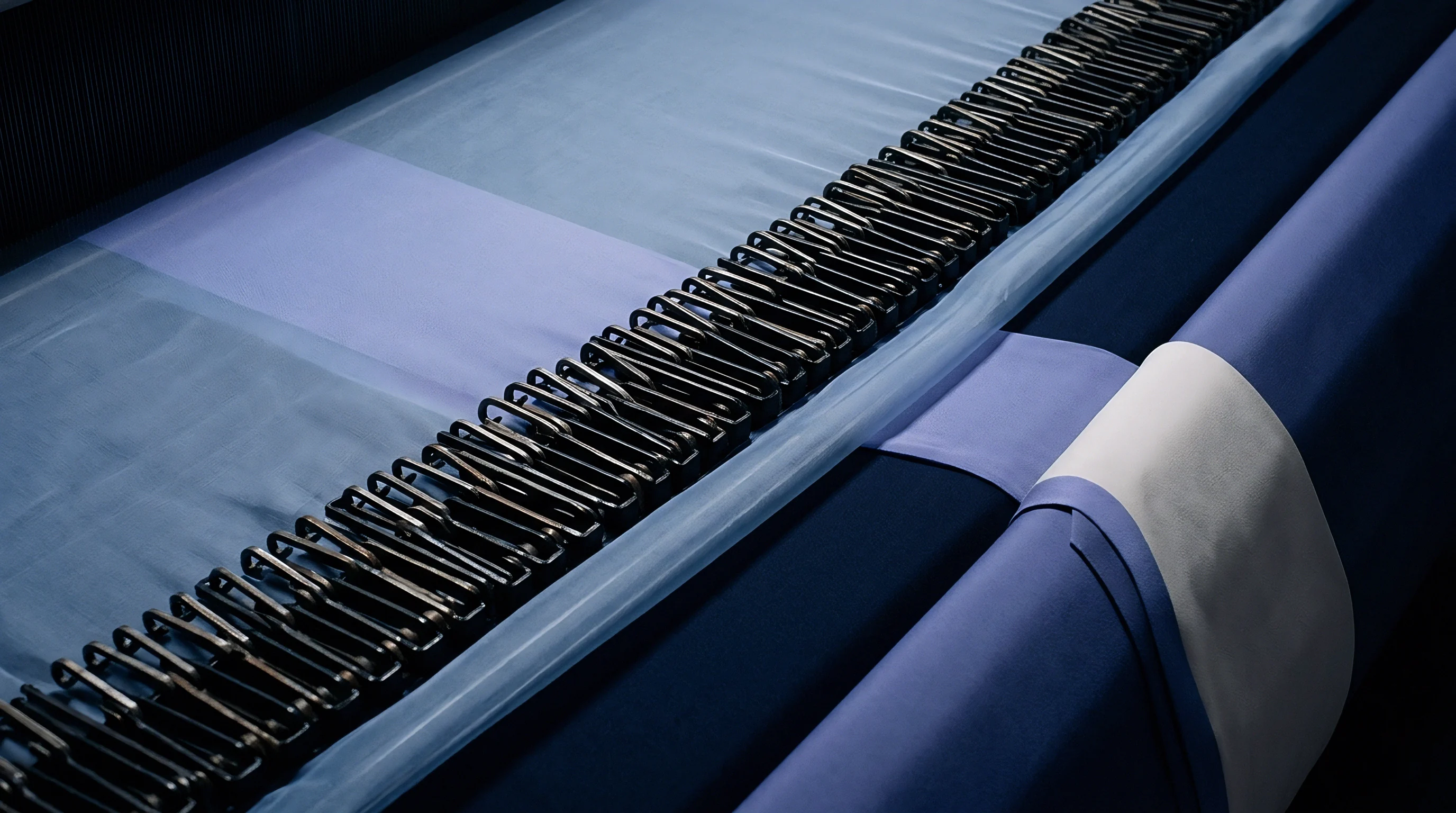
Pin Stenters and Widthwise Mechanical Strain
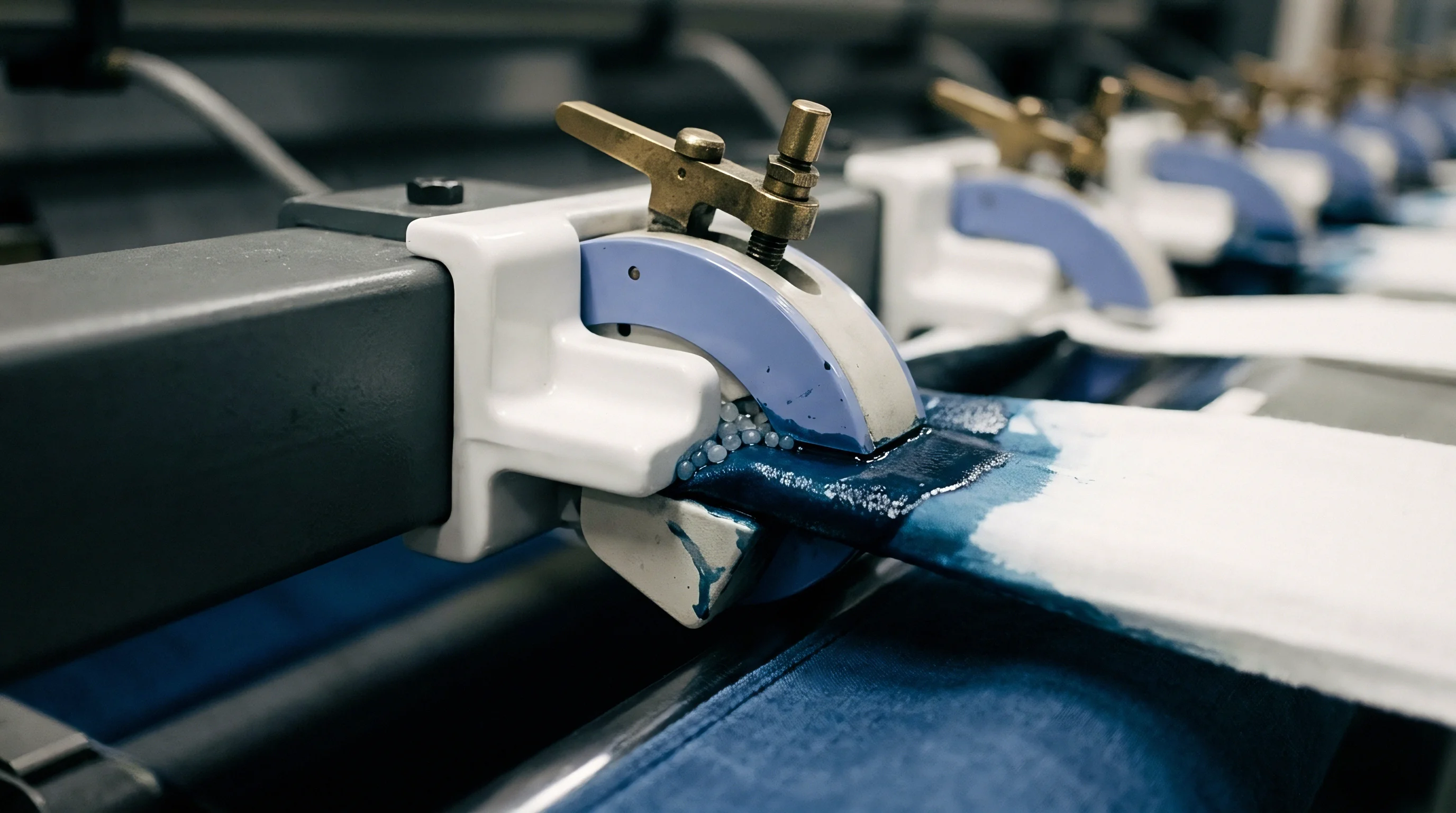
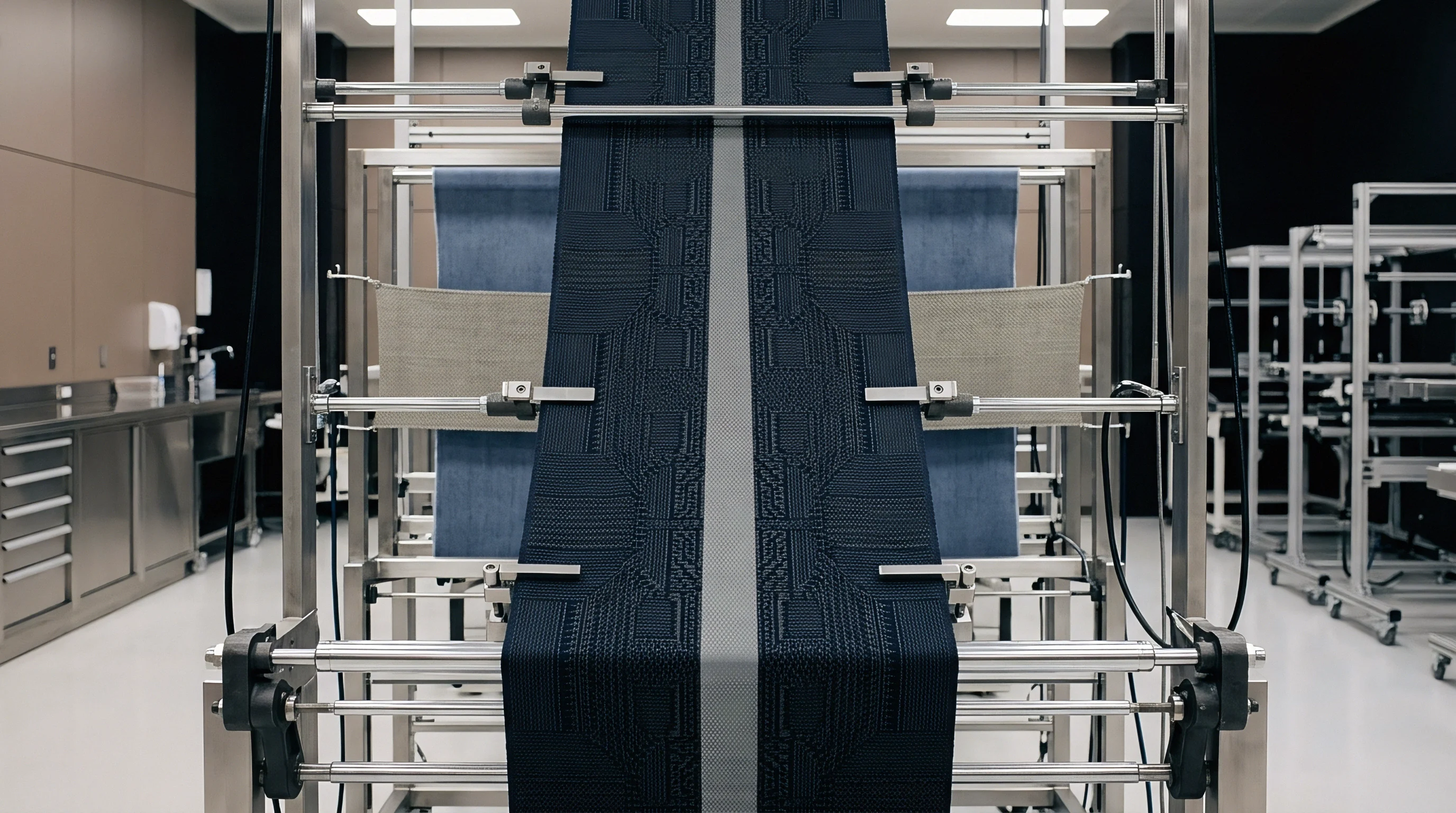
Tension applied along the continuous edges of woven greige goods establishes the initial geometric boundary during wet finishing. When wet fabric enters the entry zone of a pin stenter, mechanical clips or pin plates grip the selvedges to control finished width. As the driving chains pull the cloth through heated drying zones, cross-machine tension forces the warp threads closer together or further apart depending on the pin distance setting relative to the reed width used on the weaving loom.
Loom tension holds the structure flat.
Lateral extension reduces warp density by expanding the space between adjacent ends. If a mill weaves a 3/1 heavy cotton twill at a reed width of 168 centimeters with 48 ends per centimeter, stretching that cloth to a pinned width of 172 centimeters reduces the finished warp density down to 46.8 ends per centimeter. The resulting open structure changes fabric permeability, hand feel, and structural stability under load.
Uncontrolled tension drives width loss.
Overfeeding warp yarn onto pin chains beyond six percent creates mechanical rippling that prevents uniform heat transfer across the fabric bed.
Thermal Fixation and Dimensional Stabilization
Heat transfer within the stenter chambers softens thermoplastic fibers or sets hydrogen bonding networks in cellulosic materials. Setting the physical dimensions under tension locks the structural positions of the warp threads into place. When moisture evaporates from the substrate, molecular crosslinks form within the fiber amorphous zones, fixing the modified warp end count.
Water swells the hydrophilic fibers.
If tension control across the drying zones fluctuates due to worn chain drives or unequal air nozzle velocity, the spacing between warp ends becomes irregular across the length of the roll. A failure to balance entry tension against thermal fixation parameters yields variable fabric weight, inconsistent drape, and unpredictable seam slippage during garment manufacturing.
Distortion
Structural Crimp Interchange during Wet Relaxation
Yarn rearrangement inside the woven lattice occurs when water disrupts inter-fiber friction during aqueous scouring. In the greige state, warp yarns carry high tension from the loom beam, leaving the warp in a extended path with low crimp percentage while the weft yarn bends around it. Immersion in aqueous bath chemistry relaxes these internal stresses.
Wet processing releases stored strain. As the warp yarns relax and absorb moisture, they assume a higher crimp amplitude, pulling adjacent pick yarns closer together and causing longitudinal fabric contraction.
- Selvedge restriction band occurs when tight selvedge threads prevent full widthwise contraction, causing high local warp density along the outer edges while the center bed relaxes freely.
- Center bow distortion develops when middle sections of the fabric slip forward under air blower impact, shifting warp alignment into an arc and varying end spacing from edge to center.
- Overfeed crowding arises when excessive lengthwise feeding packs picks together, forcing warp yarns to bend sharply and increasing measured ends per centimeter after drying.
- Skewed thread displacement results from uneven mechanical pull on driving rollers, turning straight warp paths into diagonal lines that alter perceived density under optical counters.

Edge-to-Center Density Gradients
Mechanical forces across the width of finishing equipment are rarely uniform. Air pressure from upper and lower jet nozzles pushes the middle of the fabric roll, while edge pins hold the selvedges rigid. This mechanical differential creates localized variance in thread counts.
Crimp interchange alters thread spacing. Measuring warp end density across three points on a roll typically reveals higher density near the selvedges where lateral shrinkage accumulates during desizing and bleaching operations.
| Weave Structure | Loom Warp Count (ends/cm) | Finished Warp Count (ends/cm) | Dynamic Shift (%) | Residual Warp Shrinkage (%) |
|---|---|---|---|---|
| Plain Weave (1/1 Poplin) | 52.0 | 55.2 | +6.15 | 1.2 |
| Twill (2/1 Drill) | 44.0 | 47.5 | +7.95 | 1.8 |
| Twill (3/1 Denim) | 28.0 | 30.8 | +10.00 | 2.5 |
| Satin (5/1 Heavy Duty) | 68.0 | 72.1 | +6.03 | 2.1 |
Finishing technicians frequently attribute unexpected warp count gains to inherent yarn elasticity rather than improper stenter overfeed configuration. This operational explanation ignores the mechanical reality of length contraction during open-width washing.
Audit
Direct Optical Counting versus Digital Image Analysis
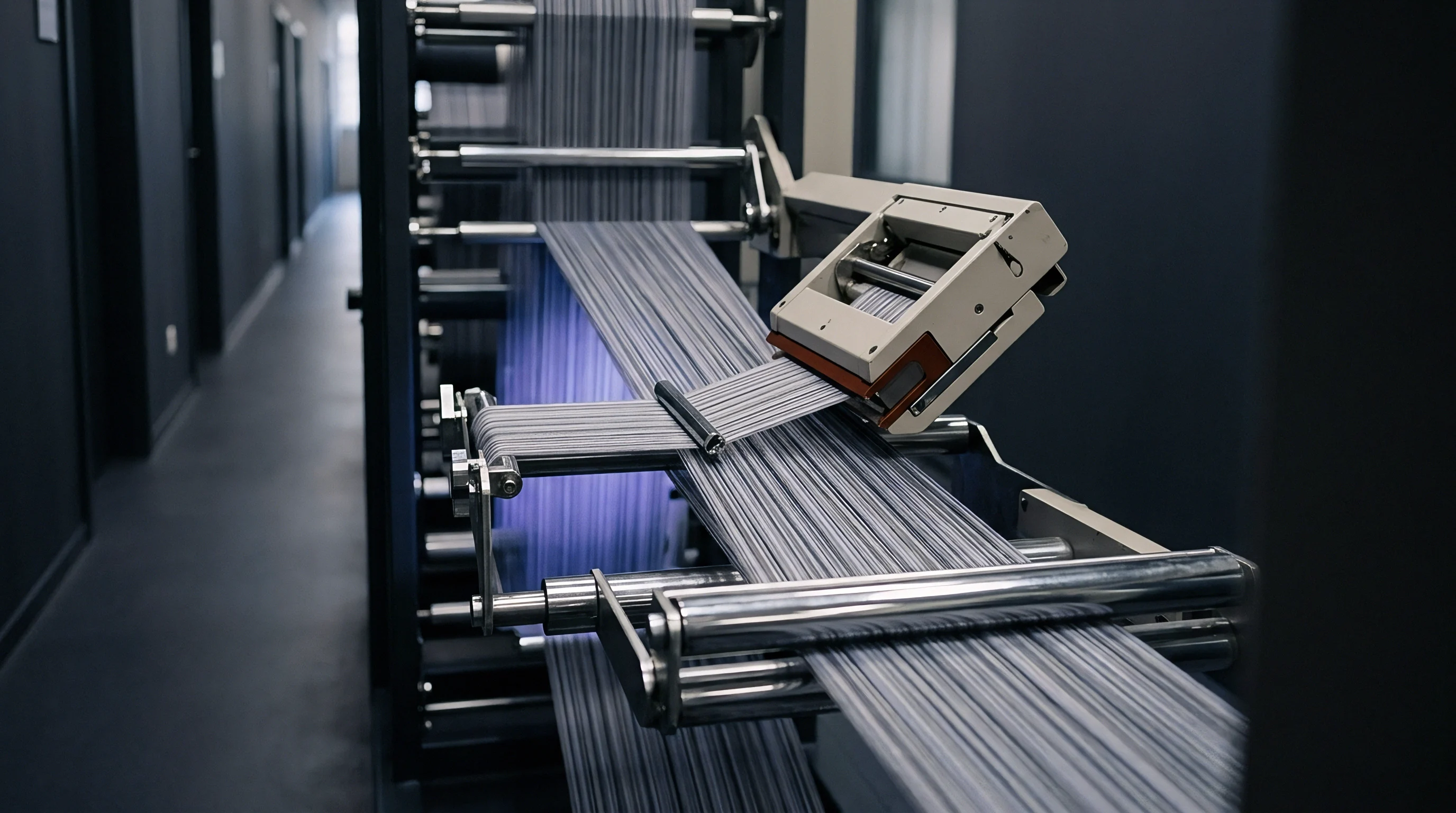
Verification of thread counts across production rolls relies on calibrated glass pick glasses or high-resolution line-scan cameras. Manual inspection under a standard counting glass over a 25.4 millimeter field remains the default referee method defined in ISO 7211-2 and ASTM D3775. Automated online inspection systems employ fast Fourier transform algorithms to process optical images of moving fabric webs in real time, detecting density shifts instantly.
Off-loom density varies across runs.
Discrepancies between manual and automated count methods surface when fabric surface hairiness obscures individual yarn boundaries. On brushed or milled surfaces, manual operators miscount obscured warp ends, whereas digital sensors utilizing transmitted backlighting penetrate fuzzy fiber layers to detect true yarn cores accurately. Standardizing inspection conditions eliminates false non-conformance claims between buyers and mills.
Buyers inspect incoming mill rolls.
A five-point average count taken across thirty continuous yards provides the baseline statistical mean needed to qualify incoming roll lots under ISO 7211 rules.
What Causes Localized Warp Density Skew across Roll Widths?
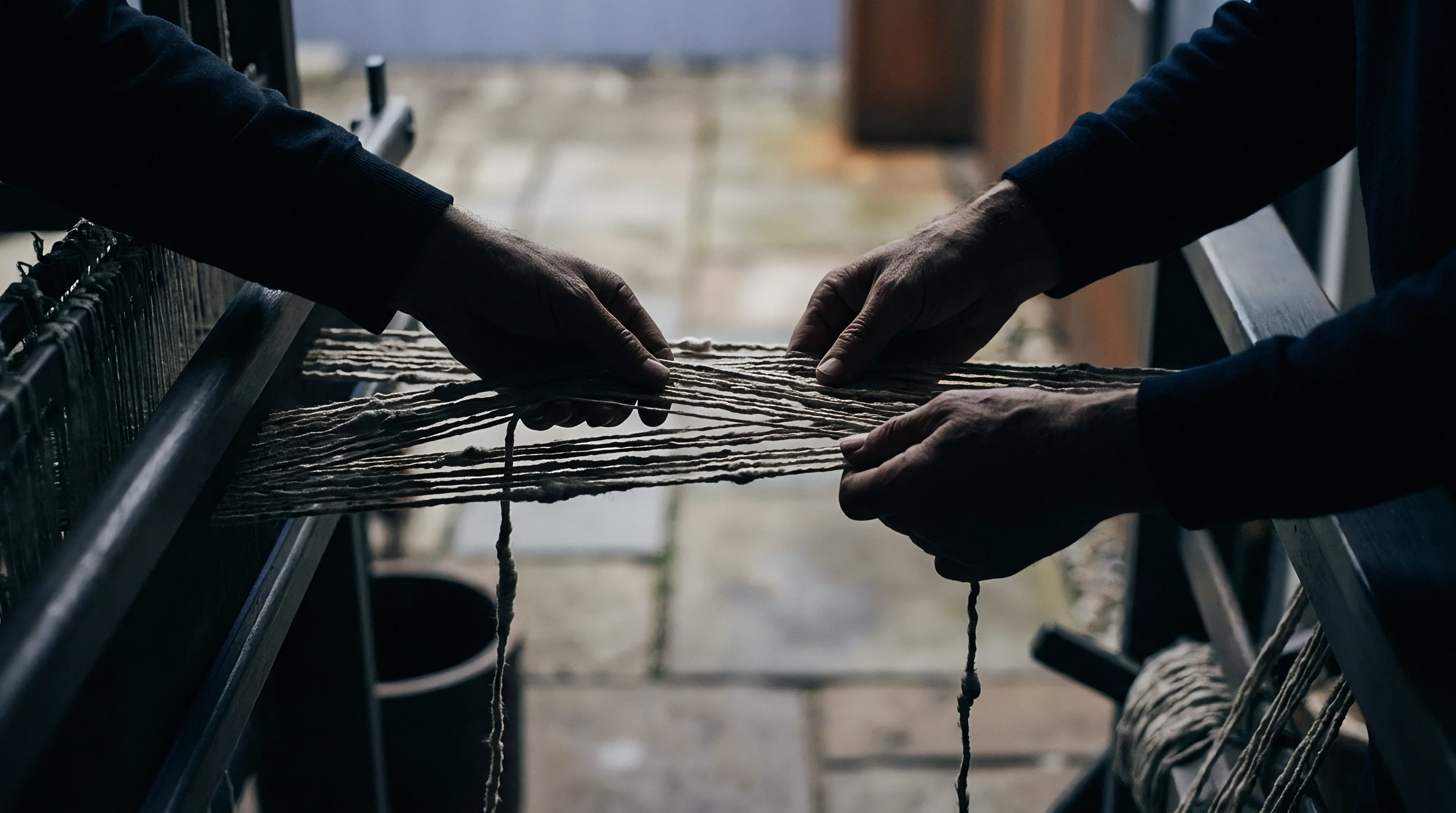
Differential drying rates across the width of the heating chamber force uneven lateral shrinkage between selvedges. Damp center zones contract further as they exit the final drying bay, pulling warp yarns inward toward the center line. This moisture gradient distorts the parallel alignment of warp threads across the roll width, creating localized bands of elevated thread density that trigger cutting-room yield loss.
Whether online optical sensors measuring high-speed moving webs can replace offline manual pick-glass counting as the legally binding reference in international trade contracts remains an unsettled point in commercial arbitration.


Sizing
Polyvinyl Alcohol and Starch Encapsulation Mechanics
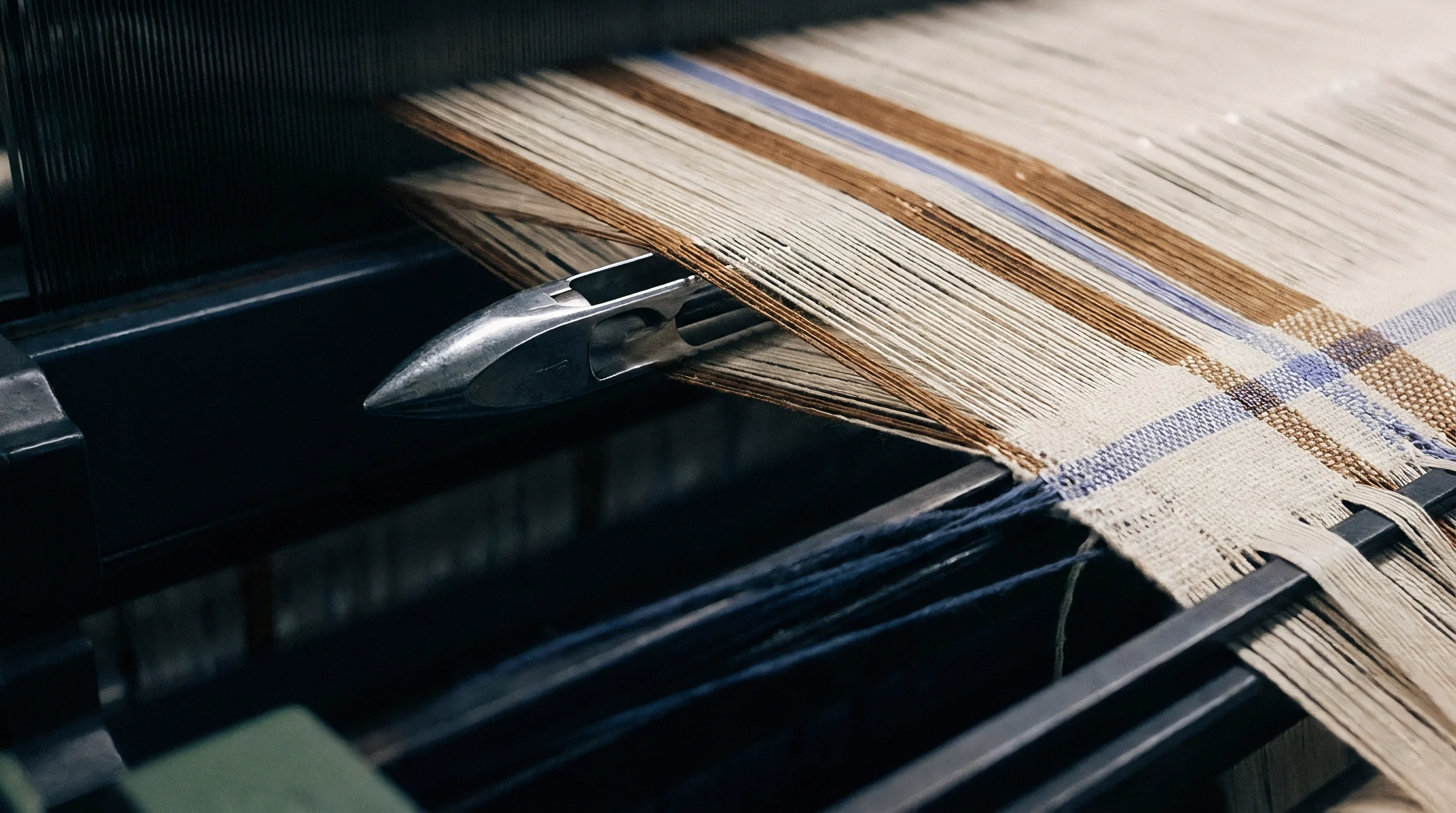
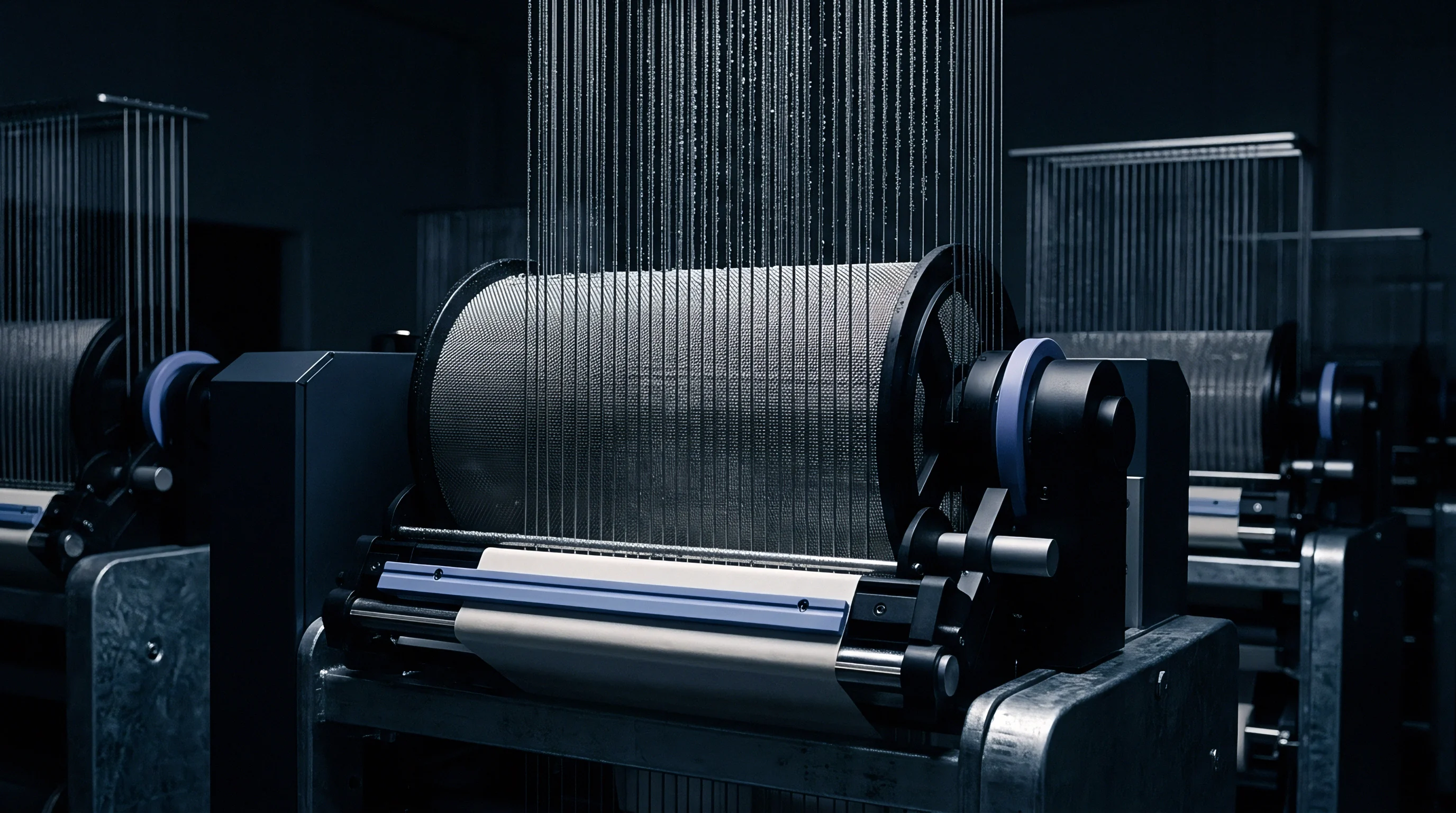
Protective chemical films applied to spun yarns during warp preparation restrict structural movement on the weaving loom. Starches, polyvinyl alcohol, and carboxymethyl cellulose binders coat the exterior filaments, increasing tensile strength and gluing loose fibers to the yarn core. Sizing starch locks the yarns.
This rigid coating holds the warp ends at fixed distances during high-speed shedding cycles on air-jet and rapier looms.
So long as the size film remains intact, the fabric cannot undergo natural relaxation. Thread spacing remains artificially locked to reed distribution. Removing this protective chemical sheath during initial wet preparation steps releases yarn mobility, allowing structural rearrangement to proceed instantly.

Desizing Kinetics and Filament Mobility
Enzymatic breakdown or hot alkaline washing strips size polymers from the warp yarns inside the desizing washers. Water replaces starch inside the yarn bundle, causing individual fibers to swell transversely. As fiber diameter expands, internal yarn tension increases, forcing the overall yarn length to contract.
Uncontrolled tension drives width loss.
- Formulation temperature checks verify that desizing bath temperatures reach 90 degrees Celsius to fully solubilize polyvinyl alcohol films without degrading delicate fibers.
- Desizing washer tension tuning maintains low longitudinal draft below one percent to prevent artificial stretching of wet warp yarns prior to scouring.
- Chemical neutralization bath steps strip residual alkali and balance pH to prevent fiber stiffening during subsequent washing sequences.
- Continuous liquor flow regulation ensures dissolved size polymers remain in suspension rather than redepositing onto opened warp threads.
Thorough chemical removal leaves clean yarn surfaces free to slip over adjacent weft threads during drying, establishing the true finished density of the weave.
Computation

Cover Factor Calculations across Variable Sett Values
Mathematical modeling of woven geometries provides precise tracking of yarn density changes from greige to finished states. Fractional cover factor measures the proportion of total fabric area occupied by warp and weft yarns. Fractional warp cover factor equals the warp end density per centimeter multiplied by the square root of the warp yarn tex count, divided by one hundred.
Skewed picks distort warp spacing.
When warp density increases during finishing due to length contraction, the fractional cover factor rises accordingly. Higher cover factor improves opacity, increases wind resistance, and elevates bursting strength, but decreases air permeability and stiffens fabric drape. Heat fixes the final geometry.
Commercial purchase agreements specify that delivered warp end counts falling outside three percent of nominal targets grant buyers full rights to invoice re-calculation.
Mass Shift Differential and Yield Reconciliation
Changes in warp density alter the finished fabric weight per square meter. A fabric woven with 30 ends per centimeter and 22 picks per centimeter at a greige weight of 200 grams per square meter undergoes a 10 percent length contraction on the stenter overfeed system. Pick density increases to 24.2 picks per centimeter, while warp density increases to 31.5 ends per centimeter due to concurrent width relaxation.
| Overfeed Setting (%) | Finished Warp Count (ends/cm) | Finished Pick Count (picks/cm) | Calculated Mass (g/m²) | Warp Cover Factor |
|---|---|---|---|---|
| 0.0 | 40.0 | 28.0 | 185.0 | 18.97 |
| +2.5 | 40.4 | 28.7 | 189.6 | 19.16 |
| +5.0 | 41.2 | 29.4 | 194.3 | 19.54 |
| +7.5 | 42.1 | 30.1 | 199.1 | 19.97 |
| +10.0 | 43.0 | 30.8 | 204.0 | 20.40 |
Standard commercial supply contracts governed by standard trade terms dictate that when delivered finished warp end counts deviate by more than three percent from specified purchase order baselines, the buyer may recalculate the net square meter price to reflect the reduced thread density.
Remedy
Contractual Tolerances and Rejection Thresholds
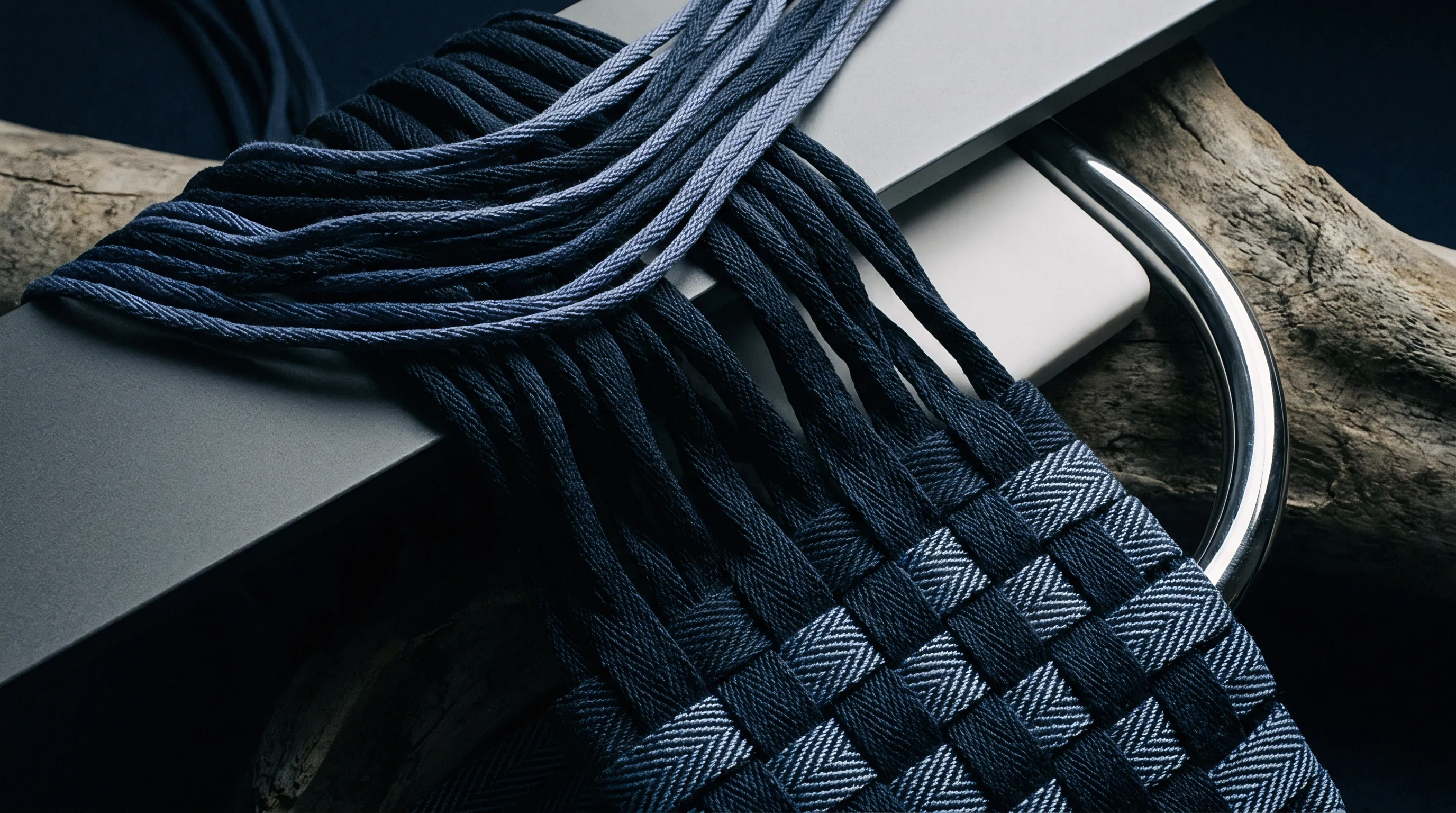
Financial settlement mechanisms cover dimensional discrepancies between greige loom states and delivered finished goods. Sourcing contracts specify strict limits for density variation to protect downstream garment manufacturing yields. Acceptance limits govern financial claims.
Clear specifications prevent trade disputes.
When finished warp end counts drop below specification boundaries, structural tensile loss directly accelerates seam failure during garment conversion.
- Cut three full-width swatches from the head, middle, and tail sections of five random rolls per production lot.
- Condition samples at 20 degrees Celsius and 65 percent relative humidity for four hours in accordance with ISO 139 standard conditions.
- Count warp ends at five distinct positions across each sample using a calibrated pick glass, recording counts to the nearest half thread.
- Calculate the mean warp density for each roll and compare the resulting average against the approved tech pack baseline figure.
Mill Adjustment Procedures for Non-Conforming Lots
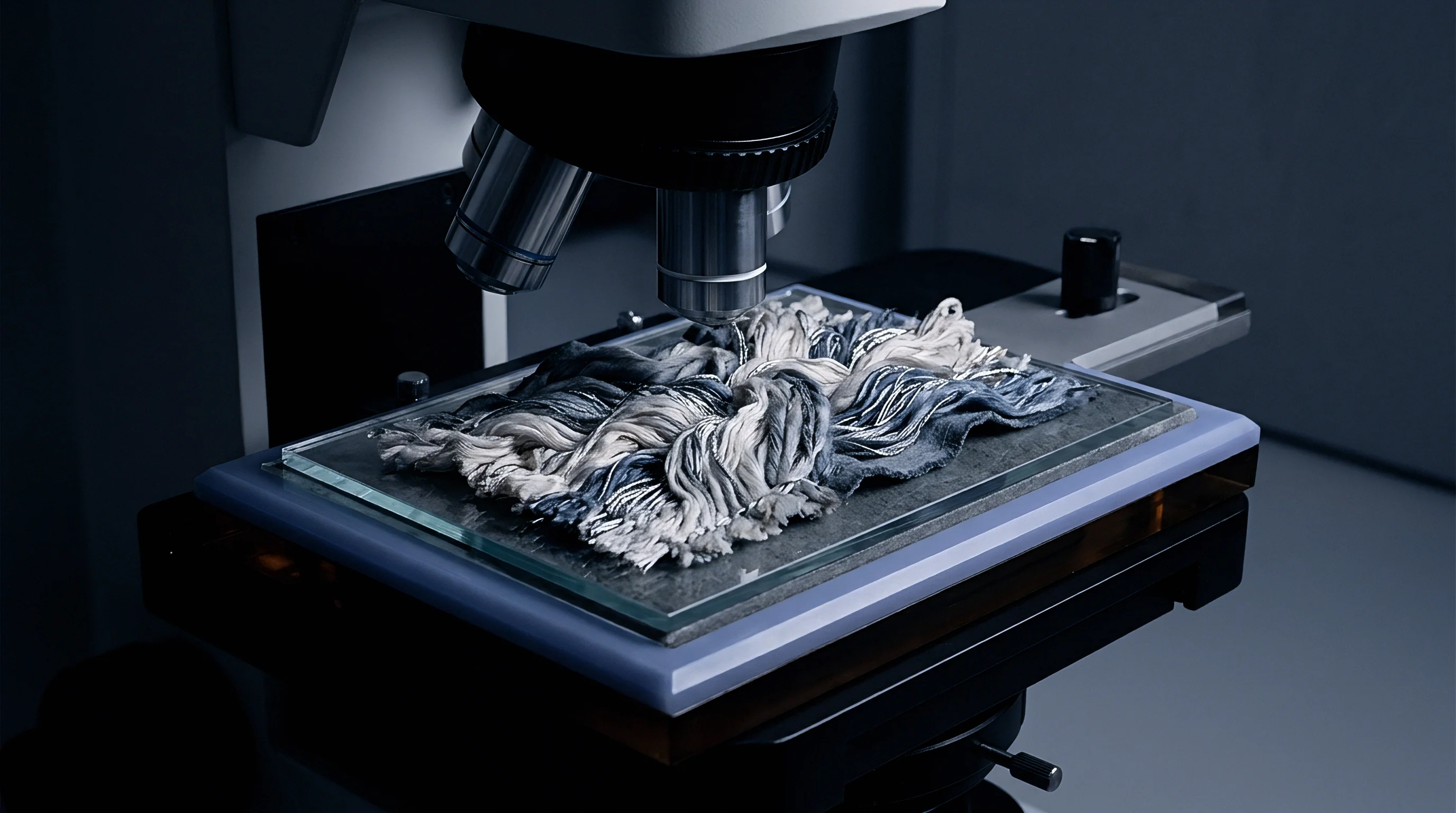
When incoming fabric testing reveals off-spec warp density, mills use mechanical re-processing to adjust roll geometry. Non-conforming rolls showing low warp density undergo re-stentering with reduced overfeed and increased lateral chain expansion. This secondary pass spreads the warp threads outward, reducing ends per centimeter to match the buyer target.
| Variance Range (%) | Compliance Status | Commercial Action | Settlement Protocol |
|---|---|---|---|
| 0.0 to 2.5 | Conforming | Full Lot Acceptance | Invoice paid at full purchase order price |
| 2.6 to 4.0 | Conditional | Minor Non-Conformance | One percent unit price discount applied to lot |
| 4.1 to 6.0 | Restricted | Major Non-Conformance | Three percent discount or mill re-stentering required |
| Greater than 6.0 | Rejected | Full Shipment Rejection | Lot returned at mill expense or replaced within 14 days |
Re-processing subjects finished fabric to additional thermal cycles, which can degrade sensitive fiber blends or alter shade fastness. Wet finishing plants monitor heating exposure duration carefully during secondary runs to avoid destroying finished hand feel while correcting density shifts.