Dynamic Mass Balance Control Protocols for Reactive Dyeing Pad Boxes under Atmospheric Humidity Fluctuations
Pad box mass balance protocols adjust dye liquor dosing rates continuously against ambient humidity changes to maintain color yield within a Delta E of 0.5.


Bath
Atmospheric relative humidity shifts inside the dyehouse floor alter the concentration of reactive dye and alkali mixtures contained within open continuous dipping troughs. Liquid balances alter rapid shade fixation. Trough volumes ranging from 12 to 35 litres experience surface evaporation rates directly governed by ambient dry-bulb temperature, room air velocity, and surrounding relative humidity.
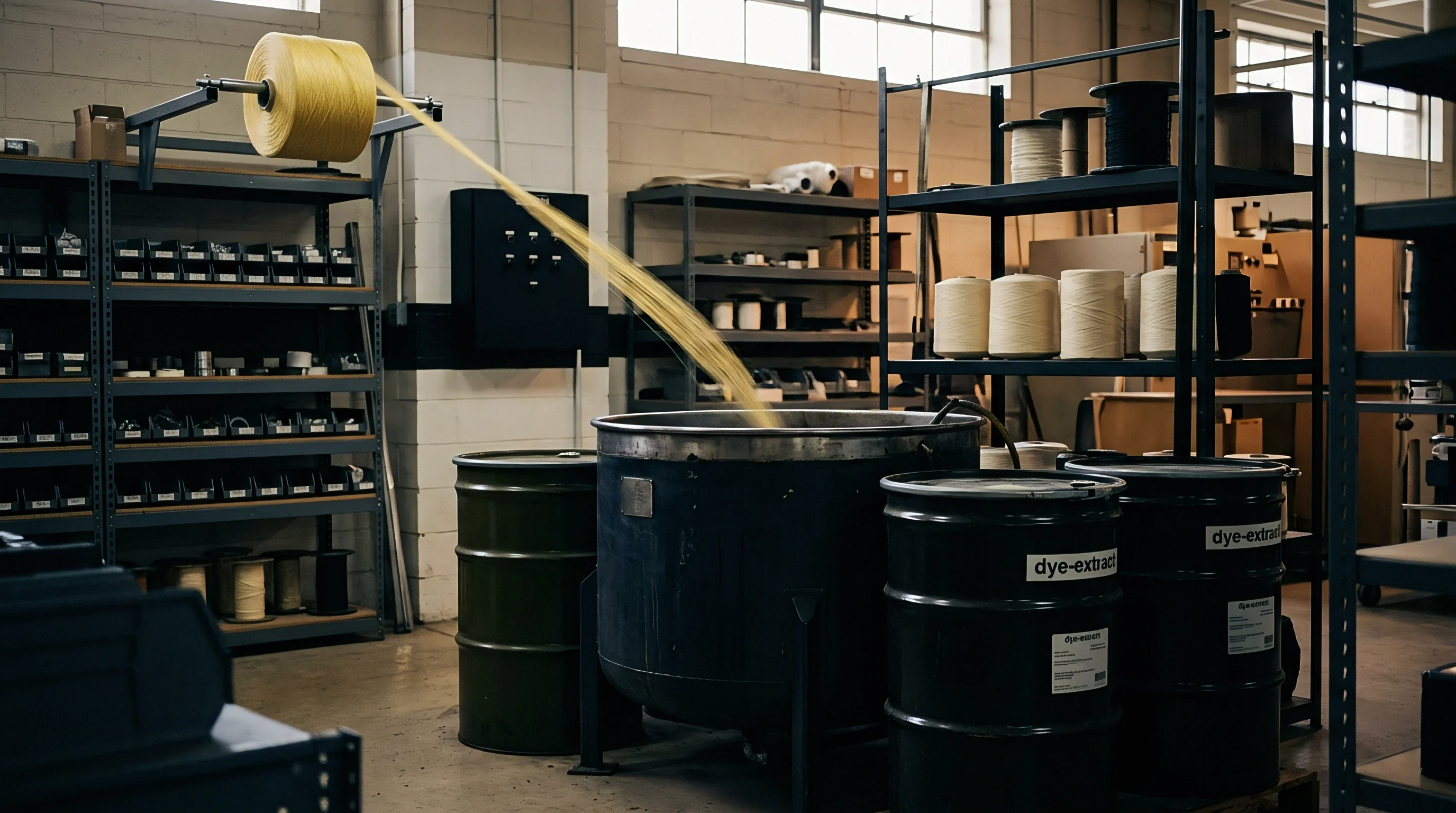
When relative humidity drops from 75 percent during early morning operating shifts to 38 percent during mid-afternoon ambient heating, water vaporizes from the open liquid surface at rates exceeding 4.5 litres per hour per square metre of liquid surface area. Reactive dye molecules and inorganic salts remain in the remaining liquid volume. Solvent loss through surface evaporation enriches pad liquor dye concentration faster than mechanical fabric substrate throughput replenishes fresh feed solution.
The resulting enrichment raises the active dye concentration inside the dipping box above the nominal target established during laboratory dip matching.
Evaporation alters liquor concentration. Substrates passing through an enriched bath absorb higher mass fractions of reactive dye per unit weight of dry textile material. Cold pad-batch and pad-dry-thermofix operations processing 100 percent combed cotton or cellulosic blends experience tailing effects when liquid equilibrium collapses.
Initial running metres match nominal shade targets. Subsequent production metres absorb liquor from a continuously concentrating reservoir, shifting color values toward darker chromatic coordinates. The color variance presents as head-to-tail shading across continuous production rolls exceeding 1,500 metres in length.
Solvent loss through surface evaporation enriches pad liquor dye concentration faster than mechanical fabric throughput can replenish fresh feed solution.
Open Trough Evaporative Rate Mechanics
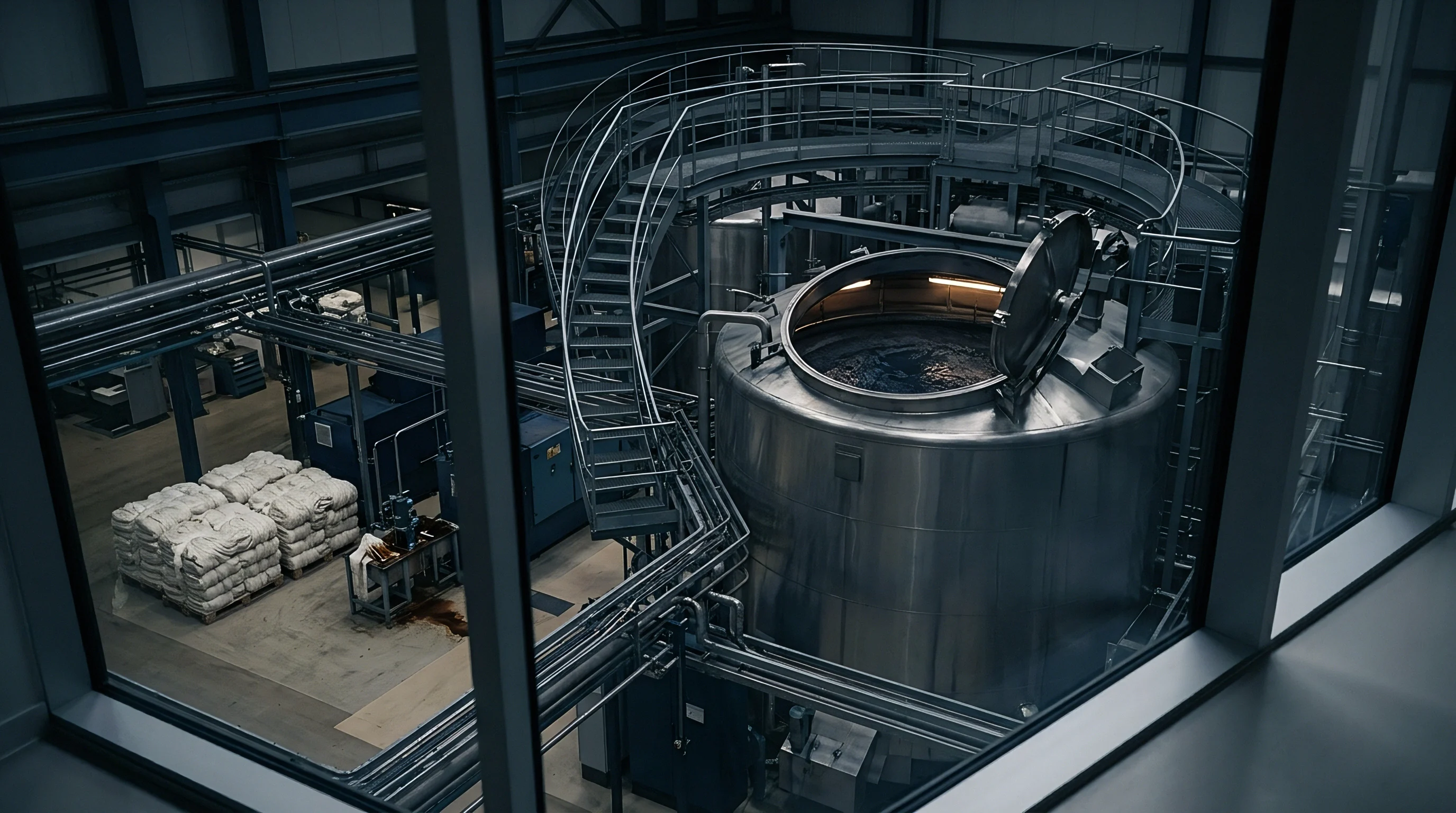
Vaporization from the open surface of a dyeing trough follows mass transfer models driven by partial vapor pressure differentials. The vapor pressure gradient between the liquid surface temperature and the surrounding ambient air governs moisture loss. Operating wet processing plants without closed environmental enclosures subjects the dye liquor to ambient boundary layer stripping.
Liquid temperatures maintained at 20 to 25 degrees Celsius for reactive dye stability create saturated water vapor conditions at the liquid-air interface. Dry room air passing across the surface carries moisture away continuous stream mechanics.
Water loss enriches reactive dye molecules. High air speeds generated by exhaust hoods or proximity to stenter entry frames increase the mass transfer convection coefficient. An open trough measuring 1.8 metres wide by 0.35 metres deep exposes approximately 0.63 square metres of liquid surface.
At 40 percent relative humidity and 28 degrees Celsius room air temperature, evaporative loss removes solvent while leaving vinyl sulfone or monochlorotriazine reactive dyes in high concentrations. The mass balance shift alters the ratio between dye, alkali, and dissolved solids, driving shade variation past acceptable commercial boundaries.
Reactive Dye Hydrolysis and Tailings Risk
Fixation chemistry relies on precise stoichiometric ratios between reactive dye chromophores, hydroxyl ions supplied by sodium hydroxide or soda ash, and cellulosic substrate reaction sites. Evaporative concentration enriches alkali concentration alongside dye molecules. Higher alkali concentrations elevate the pH of the padding liquor from a nominal 10.8 to values above 11.4 within two operating hours.
Raised pH levels accelerate the competitive hydrolysis reaction between reactive dye molecules and free water molecules in the bath. Hydrolyzed dye loses its vinyl sulfone or triazinyl reactive group, rendering the chromophore incapable of forming covalent bonds with cellulose hydroxyl groups during fixation.
Pad box geometry governs fluid residence. High hydrolysis rates reduce the active dye fraction capable of bonding with the fiber, while high physical concentration increases total chromophore deposition on the yarn surface. The simultaneous occurrence of these competing phenomena destabilizes visual color yield.
Unfixed hydrolyzed dye accumulates in the fiber structure, demanding higher wash-off temperatures and extended soaping cycles to meet ISO 105-C06 wash fastness standards. Uncorrected evaporative concentration causes bulk lots to fail shade matching protocols and color fastness thresholds, resulting in total lot rejections across commercial supply chains.
| Ambient Relative Humidity (%) | Evaporation Rate (L/m²/hr) | 30-Min Concentration Drift (%) | Color Difference Delta E (CIELAB) | Dominant Shade Shift |
|---|---|---|---|---|
| 30 – 40 | 4.82 | +6.4 | 1.45 | Darker, Dull Chromaticity |
| 41 – 50 | 3.35 | +4.2 | 0.92 | Slightly Darker Target |
| 51 – 65 | 1.90 | +2.1 | 0.41 | Within Acceptable Tolerance |
| 66 – 80 | 0.72 | +0.8 | 0.15 | Nominal Lab Match |
| Test conditions: Ambient temperature 26.5°C, trough volume 18 litres, fabric speed 42 m/min, 220 g/m² woven cotton twill, initial dye concentration 25 g/L Vinyl Sulfone Reactive Black. | ||||

Pickup
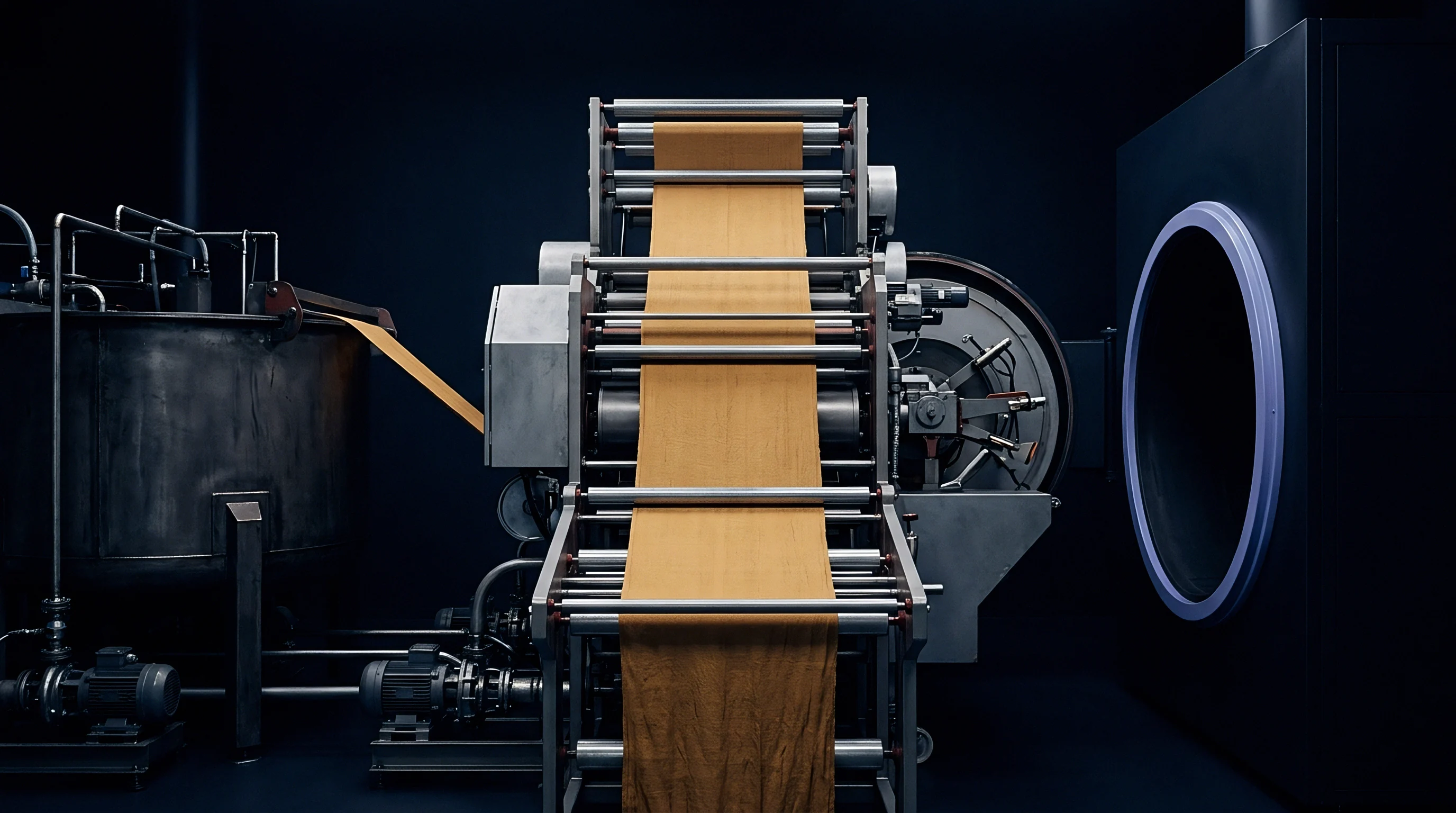
Substrate moisture regain off the unrolling frame dictates liquid intake upon initial immersion. Entry regain dictates liquor draw. Standard conditioning protocols define baseline fabric moisture regain at 65 percent relative humidity and 20 degrees Celsius, yielding 8.5 percent moisture content for pure cotton yarns.
Dry ambient storehouse conditions lower incoming moisture regain to 3.5 percent prior to pad box entry. Dry cotton fibers act as capillary sponges, drawing solvent rapidly out of the padding solution upon contact. This accelerated intake disrupts standard wet pickup projections established by squeegee roll pressure calibrations.
Continuous wet-on-dry padding relies on constant mass pickup percentages across thousands of production metres. Target wet pickup figures typically sit between 65 and 75 percent calculated on the bone-dry weight of the fabric. Fluctuations in ambient relative humidity alter fiber core hydration levels, forcing the mechanical nip rollers to press variable total fluid volumes into the textile structure.
A drop in ambient humidity increases substrate absorbency, causing higher initial liquor uptake while accelerating bath depletion rates. The interaction between substrate absorption and trough evaporation creates a dynamic mass balance error that standard static dosing formulas fail to address.
A 5 percent decrease in incoming fabric moisture regain elevates initial liquor pickup by 3.2 litres per thousand metres of woven cotton substrate.
Substrate Conditioning and Entry Moisture Regain
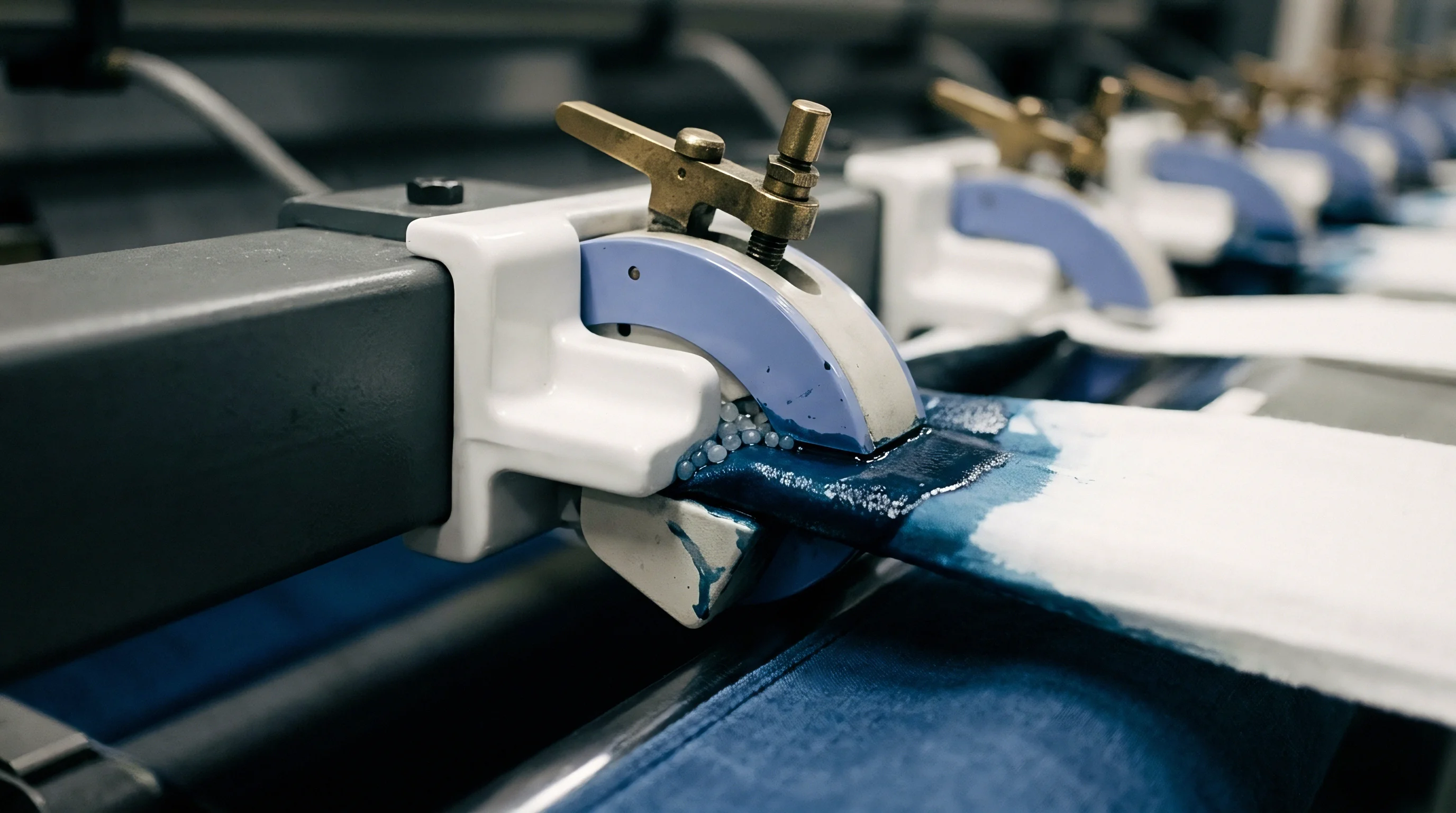
Pore structures inside natural cellulosic yarns respond dynamically to room humidity during storage and feeding. Yarns unrolling from dense batch rolls retain thermal and moisture gradients between inner core layers and external wrapper surfaces. Outer fabric layers lose moisture to dry room air, while inner layers retain baseline mill conditioning.
When fed into a continuous dyeing line, the fabric presents variable moisture regain along its length. Outer layers absorb excessive pad liquor, depleting the trough rapidly, while inner core layers absorb nominal volumes. The resulting shade variation manifests as cyclic tailing and roll-to-roll color inconsistency.
Low volume reduces chemical exposure. Non-uniform entry moisture alters the physical squeeze behavior within the pneumatic padder nip. Fiber swollen with internal moisture exhibits lower compressible volume than dry fiber, resisting liquid intake into inter-fiber voids during squeegee compression.
Dry fibers collapse under nip pressure and rapidly expand at the exit zone, sucking surrounding dye liquor deep into the core. Squeegee adjustments made without accounting for incoming regain variations produce fluctuating liquor pickup figures across consecutive production shifts.

Mass Differential Equation for Open Dip Boxes
Quantifying mass transport across an open pad box requires modeling three simultaneous liquid streams: fresh feed delivery, substrate exit extraction, and surface vapor losses. Mass differential equations capture this equilibrium:
fracd(V · Cbox)dt = Qfeed · Cfeed – Qout · Cbox – Eevap · Cvapor
Where V represents trough liquid volume in litres, Cbox represents dye concentration inside the box in grams per litre, Qfeed represents dosing feed flow rate in litres per minute, Cfeed represents feed solution concentration, Qout represents liquid volumetric pickup rate removed by fabric, and Eevap represents evaporative loss rate in litres per minute. Because water vapor carries no dye mass, Cvapor equals zero, simplifying the active dye mass conservation equation:
fracd(V · Cbox)dt = Qfeed · Cfeed – Qout · Cbox
Simultaneously, total fluid mass equilibrium follows:
fracdVdt = Qfeed – Qout – Eevap
When atmospheric relative humidity drops, Eevap increases significantly. Maintaining a constant volume (dV/dt = 0) demands increasing Qfeed to equal Qout + Eevap. If Qfeed is increased using nominal stock solution (Cfeed = Cbox), fresh dye mass enters the system to replace pure evaporated solvent, causing d(V · Cbox)/dt to become positive.
The dye concentration Cbox increases steadily over time, generating dark tailing across the run.
Calculations illustrate this operational shift. Assume a 240 g/m² 3/1 twill cotton fabric running at 40 metres per minute through an 18-litre trough at nominal 70 percent target pickup. Total fabric weight processed equals 576 kg per hour, requiring 403.2 litres of pad liquor per hour under target wet-on-dry conditions.
Nominal dye concentration Cbox sits at 30 g/L. Under 35 percent relative humidity, surface evaporation Eevap reaches 4.8 litres per hour from the exposed box area. If dosing pumps supply stock solution at 408.0 L/hr to maintain constant fluid height, total dye mass delivered per hour equals 12,240 grams. Substrate pickup removes only 403.2 L/hr at the active bath concentration.
Over a two-hour production run, dye mass inside the 18-litre box accumulates by 144 grams, raising bath concentration from 30.0 g/L to 38.0 g/L, representing a 26.6 percent rise in dye density. Mill technicians frequently misinterpret this shade darkening as batch-to-batch dye strength variation rather than mass balance failure.
Equipment operators frequently claim that nip pressure overrides incoming fabric moisture regain variations. Mill personnel state that increasing pneumatic cylinder pressure from 3.0 to 4.2 bar compensates for dry fabric intake without altering chemical dosing ratios. Squeegee adjustments change total wet pickup but leave the solvent-to-solute depletion ratio uncorrected, accelerating bath concentration drift.

Dosing
Proportional flow control systems prevent concentration shifts by decoupling water replenishment from dye concentration management. Dynamic dosing protocols employ dual-component dosing systems where pure solvent water dilutes stock dye concentrations dynamically based on environmental inputs. Dosing pumps utilize servo-driven diaphragm mechanisms tied to inline flow meters and real-time sensor loops.
When atmospheric humidity drops, control logic adjusts the ratio between concentrated dye stock solutions and pure water feeds, compensating for surface vaporization losses before concentration shifts occur inside the trough.
Substrate speed governs trough turnover. Trough volume minimization represents a physical method for stabilizing fluid dynamics. Troughs designed with displacement bodies reduce total bath volumes from traditional 30-litre capacities down to 3.5 to 7.0 litres.
Lower bath volumes increase fluid turnover rates dramatically. At a processing speed of 45 metres per minute on a 200 g/m² fabric with 70 percent pickup, a 5-litre trough renews its entire volume every 79 seconds. Rapid volumetric replacement leaves insufficient time for surface evaporation to measurably concentrate the liquid mass before substrate immersion removes it from the vessel.
Trough Residence Time and Dosing Ratios
Short residence times decouple fluid performance from room climate fluctuations. Reducing fluid dwell time inside the pad box suppresses hydrolysis reactions by limiting the duration dye molecules remain exposed to elevated temperatures and alkali chemicals. Two-component alkali dosing pumps meter sodium silicate, sodium hydroxide, or soda ash solutions into the dye stream immediately prior to trough entry.
Mixing chemicals 50 millimetres upstream of the distribution pipe eliminates precuring and hydrolysis inside supply pipelines.
Density sensors track chemical concentration. Controlling the stock dilution ratio requires dynamic mass balance corrections based on relative humidity metrics. Control software calculates required solvent compensation using real-time atmospheric measurements.
The system adjusts dosing feed streams to ensure that the total mass of active dye delivered per minute exactly matches the mass extracted by the moving textile web, regardless of ambient evaporation parameters.

Where Does Mass Balance Fail during Humidity Shifts?
Dynamic dosage recalculation sequence:
- Continuous ambient hygrometers measure room dry-bulb temperature and relative humidity every five seconds adjacent to the padding nip.
- Calculated evaporation rates trigger automated adjustments to the master water dilution valve feeding the stock mixing manifold.
- Optical flow meters verify that total volumetric input matches fabric liquid consumption plus evaporative losses.
- Substrate moisture sensors measure incoming regain, adjusting base wet pickup parameters within the control algorithm.
- Automated drain-and-flush cycles initiate if total volume turnover time exceeds three minutes during line stoppages.
Implementing feedback control loops relies on multi-stage dosing manifolds capable of adjusting stock dilution without altering total fluid line pressure. Variable speed peristaltic and diaphragm pumps maintain precision down to 0.05 litres per minute. When atmospheric conditions stabilize, dosing ratios return to nominal baseline profiles, ensuring shade consistency across multi-day production lots.
| Ambient Relative Humidity (%) | Evaporative Compensation (L/hr) | Stock Dye Flow (L/min) | Dilution Water Flow (L/min) | Net Bath Concentration (g/L) |
|---|---|---|---|---|
| 30 | 4.80 | 6.20 | 0.68 | 30.00 (Corrected) |
| 45 | 3.10 | 6.32 | 0.45 | 30.02 (Corrected) |
| 60 | 1.85 | 6.45 | 0.24 | 29.98 (Corrected) |
| 75 | 0.65 | 6.58 | 0.08 | 30.01 (Corrected) |
Standard ISO 105-J03 color evaluation rules trigger batch rejection whenever humidity-driven shade drift exceeds a total color difference threshold of 0.8 units.
Maintaining a shallow liquid depth across the full width of the squeegee roll prevents stagnant fluid pockets from developing along the vessel corners.
Sensing
In-line analytical sensors track bath parameters continuously to validate physical mass balance models. Critical sensor installations incorporate differential refractive index measurement, sound velocity density sensors, and optical absorption flow cells. Online refractometers installed directly in the re-circulation pipe measure total dissolved solids, tracking salt and alkali build-up in real time.
Refractometric measurements detect dissolved solid shifts of 0.1 Brix, providing rapid feedback before shade alterations manifest on the finished substrate.
Optical flow cells detect bath exhaustion. Spectrophotometric flow cells equipped with fiber optic light guides measure light absorption at specific dye absorption wavelengths. The instrument compares active absorbance values against calibrated transmission spectra established during lab dip matching.
A measured rise in optical density indicates evaporative bath concentration, while a drop indicates substrate over-absorption or stock dilution errors. Connecting spectrophotometric output directly to stock dosing valves forms a closed-loop real-time feedback system that maintains target concentration within 0.5 percent tolerances.
Spectrophotometric Flow Cell Instrumentation
Transmission optical density measurements within dense pad dye liquors demand extremely short optical path lengths. Standard 10-millimetre cuvettes blind spectrophotometric detectors due to high light absorption in concentrations exceeding 15 grams per litre. Specialized flow cells utilize micro-gap sapphire windows providing optical path lengths between 0.1 and 0.5 millimetres.
Pumping pad liquor through micro-gap cells allows unscattered light transmission across visible spectrum wavelengths from 400 to 700 nanometers.
Air bubbles corrupt refractometer readings. Entrained air carried into pad liquor by high-speed fabric webs causes optical scattering, generating false absorbance spikes. Micro-bubble separators positioned upstream of sensor flow cells eliminate gas pockets before fluid enters the measurement chamber.
De-aerated liquor flows smoothly across sapphire interfaces, delivering clean optical measurements to the control unit.

Atmospheric Sensor Integration in Feed-Forward Control
Integrating environmental parameters into dosing logic transforms passive feedback loops into predictive feed-forward systems. Ambient temperature and relative humidity sensors mounted 50 centimetres above the open box calculate immediate evaporative risk. Control algorithms process atmospheric metrics alongside line speed and fabric weight, adjusting water injection valves before liquor concentrations deviate from target values.
Online density and optical sensor failure modes include:
- Sapphire window fouling occurs when alkali silicate mixtures deposit crystalline films across optical measurement surfaces, reducing transmitted light intensity and corrupting calibration baselines.
- Entrained air cavitation generates micro-bubbles at high pump impeller speeds, causing false density drops within ultrasonic sound-velocity measurement chambers.
- Thermal drift error manifests when uncompensated temperature variations alter liquid refractive index metrics independent of actual chemical concentration shifts.
- Particulate lint accumulation blocks micro-gap flow cell channels, inducing localized pressure drops that disrupt fluid circulation through the analytical loop.
Flow cell cleaning cycles utilize automated back-flush valves operating every 45 minutes during continuous runs. Softened warm water flushed through measurement chambers clears lint and chemical residues without stopping line throughput. Validating sensor accuracy against lab titrations ensures long-term system reliability across extended dyehouse operating campaigns.
Bubbles generated in high-speed nip passages distort inline spectrophotometric density readings unless de-aeration channels precede the measuring cell.
Whether multi-wavelength optical arrays can reliably differentiate between active dye concentration changes and reactive dye hydrolysis product accumulation during continuous 24-hour operations remains an open technical question.


Drift
Uncontrolled mass balance shifts manifest visually as spatial shade variations across finished fabric rolls. Head-to-tail shade drift develops when bath concentrations change progressively along the timeline of a continuous production run. Listing variations, where fabric edges differ in color shade from the center panel, occur when room cross-drafts accelerate local surface evaporation near exposed box ends.
Environmental isolation guards positioned along dipping vessels reduce air velocity gradients, stabilizing evaporation profiles across the full working width of the machine.
Fixation rates shift with concentration. Chemical imbalances alter reactive dye fixation efficiency during subsequent steaming or thermofixation stages. Higher chemical concentrations shift the equilibrium of hydrolysis reactions, altering the fraction of bonded dye relative to unfixed surface color.
When shade values drift past standard color tolerance thresholds, entire bulk rolls require stripping and re-dyeing, damaging fabric tensile strength and generating severe financial losses.
Tailings and Head-to-Tail Shade Migration
Tailing represents the most common systemic defect in cold pad-batch dyeing of cellulosics. Positive tailing occurs when the fabric ends up darker at the tail end of the batch than at the head. This defect stems from continuous evaporative concentration or preferential water absorption by overly dry greige stock.
Negative tailing occurs when the fabric turns lighter toward the tail, driven by dye exhaustion exceeding fresh feed stock delivery rates or excessive water dilution.
Mathematical modeling of tailing behavior allows engineers to set pre-mating concentration gradients inside pad boxes. Setting the initial box fill concentration slightly lower than the stock feed concentration compensates for rapid early-run evaporation. As the line reaches thermal and chemical equilibrium, concentration levels stabilize at the target value, eliminating initial head-end shade off-sheds.

Fixation Mechanics under Unbalanced Mass Ratios
Cellulose reactive dyeing relies on nucleophilic addition or substitution reactions between fiber hydroxyl groups and dye reactive centers under alkaline conditions. Excessively high alkali concentrations caused by evaporative mass loss shift the liquor pH above the optimal reaction window. Monochlorotriazine dyes experience rapid hydrolysis at pH levels above 11.2, reducing total covalent bonding efficiency.
Vinyl sulfone dye systems undergo premature elimination reactions, converting active sulfate ester forms into unreactive hydroxyethyl sulfone species before reaching fiber fixation chambers.
Decision checklist for wet-on-dry reactive pad-batch plant design:
- Box volume selection specifies liquid capacities below 10 litres to force fluid turnover rates under two minutes at standard operating speeds.
- Enclosure design incorporates transparent polycarbonate covers over open dipping zones to create saturated micro-climates that suppress evaporation.
- Dual dosing manifold isolates alkali feeds from dye stock streams until immediate entry into the padder distribution pipe occurs.
- Integrated hygrometer feedback ties room air relative humidity measurements directly to dynamic water injection valves.
- Substrate entry conditioning installs steam pre-moistening units to equalize fabric moisture regain prior to liquor immersion.
Standard commercial supply agreements incorporate ISO 105-J03 instrumental color pass/fail specifications, mandating that bulk continuous production stay within a total color difference Delta E of 0.6 units relative to approved laboratory dips. Contract provisions specify that shade variations exceeding this boundary empower buyers to reject delivered yardage outright, transferring full material costs back to the dyeing converter.


Audit
Technical facility audits verify whether wet-processing mills maintain active environmental mass balance control capabilities. Auditing teams examine pad box geometry, automated dosing infrastructure, and sensor feedback integration. Facilities relying on manual stock bucket additions or open, high-volume troughs represent high risks for shade variation under changing ambient weather conditions.
Automated dosing records and continuous relative humidity logs are inspected to ensure operational compliance during bulk runs.
Off-shade runs create unrecoverable waste. Re-dyeing off-shade reactive goods demands stripping bonded dyes using powerful reducing agents like sodium hydrosulfite at high temperatures, followed by re-bleaching and secondary dyeing. This stripping and re-dyeing sequence damages cellulosic fiber structures, reducing fabric bursting strength by 15 to 25 percent and lowering tear resistance below ISO 13937 standards.
Furthermore, re-processing adds substantial energy, chemical, and water costs that eliminate processing margins.
Economic Impact of Shade Off-Sheds
Financial losses stemming from mass balance failure scale rapidly across continuous dyeing plants processing thousands of metres per day. A single continuous dyeing line running at 45 metres per minute produces 2,700 metres of fabric per hour. Unchecked relative humidity drops that alter bath concentration over a three-hour operating shift ruin over 8,000 metres of fabric before quality control inspection frames identify the defect.
Mill audits reveal dosing capabilities. Sourcing practices evaluate landed cost structures by calculating off-shade waste allowances into base yardage prices. Mills operating precise dynamic mass balance systems achieve first-time-right shade matching rates above 98 percent, whereas unmonitored open-trough dyehouses experience shade rejection rates exceeding 6 percent during dry weather seasons.
| Dyehouse Control Infrastructure | First-Time-Right Rate (%) | Average Shade Stripping Rate (%) | Tensile Loss Risk (%) | Landed Cost Penalty ($/Metre) |
|---|---|---|---|---|
| Manual Trough, High Volume (>30L) | 88.5 | 8.2 | 18.5 | 0.48 |
| Automated Fixed Dosing, Open Vessel | 93.2 | 4.5 | 12.0 | 0.26 |
| Dynamic Mass Balance, Low Volume (<8L) | 98.6 | 0.8 | 2.1 | 0.04 |
Specification Boundaries for Continuous Dyeing Mills
Enforceable fabric purchase specifications state explicit environmental control boundaries for continuous wet-processing contractors. Engineering specifications demand that mills hold dipping trough liquid temperatures within plus or minus 1.0 degree Celsius and maintain environmental relative humidity inside padding enclosures above 70 percent using localized ultrasonic humidification nozzles. Implementing these technical requirements isolates the dye liquor from ambient floor fluctuations, preventing solvent evaporation and guaranteeing exact shade replication across multi-thousand-metre bulk production orders.
Supply agreements require converters to retain electronic telemetry logs capturing bath concentration, dosing rates, line speeds, and ambient humidity levels for every production lot. Technical auditors review these digital receipts prior to authorizing final invoice payments, establishing clear commercial accountability across global fabric sourcing operations.