
Warp and Weft Crimp Exchange Mechanics in High Density Weaving
Warp and weft crimp exchange in high-density weaving shifts structural waviness across processing, dictating finished sett, shrinkage, and air permeability.
Warp and weft crimp exchange in high-density weaving shifts structural waviness across processing, dictating finished sett, shrinkage, and air permeability.
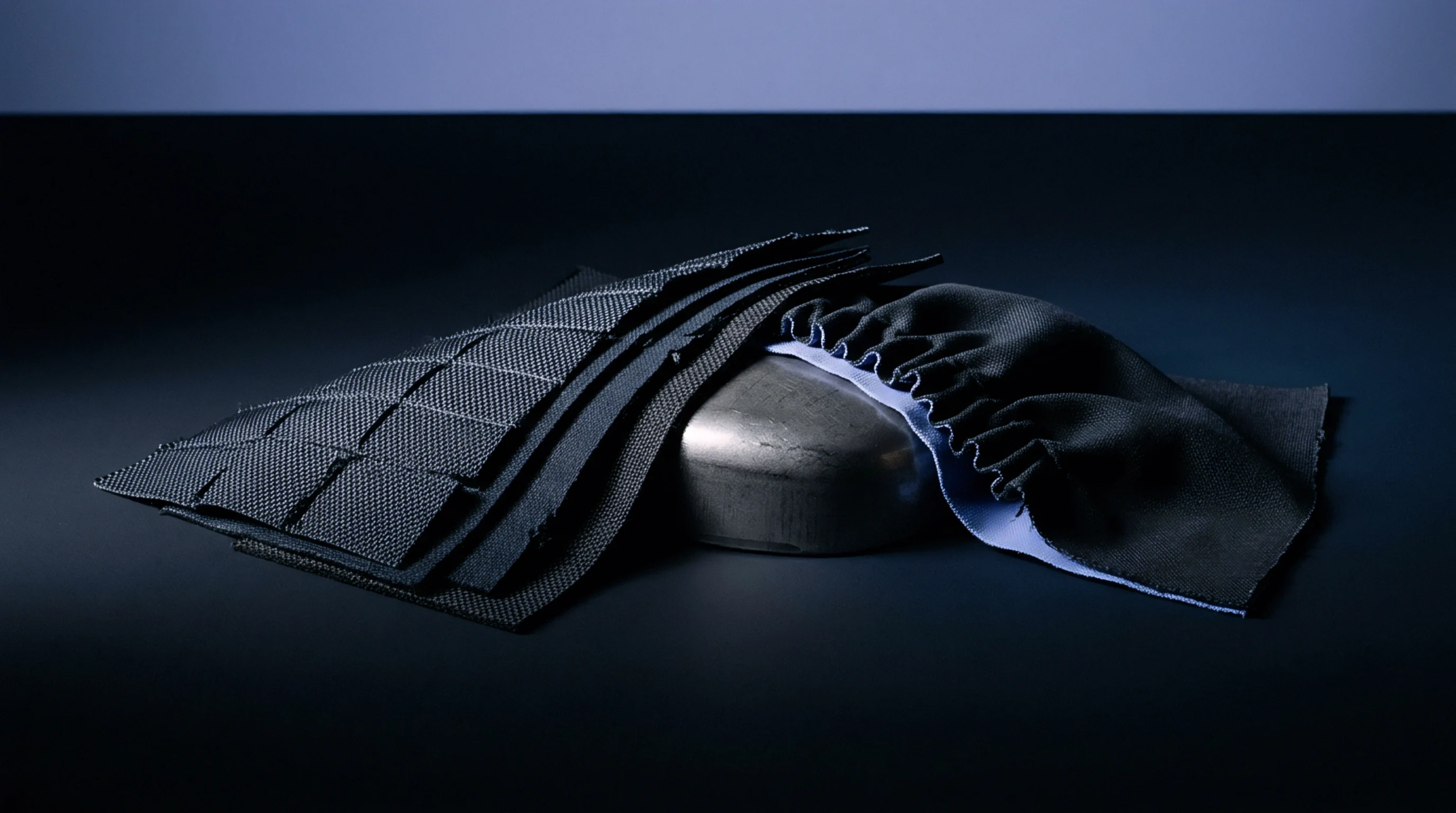
Boundary layer mass transport limits in ultra-dense mercerized twills demand continuous high-velocity liquor shear to prevent surface ring dyeing.
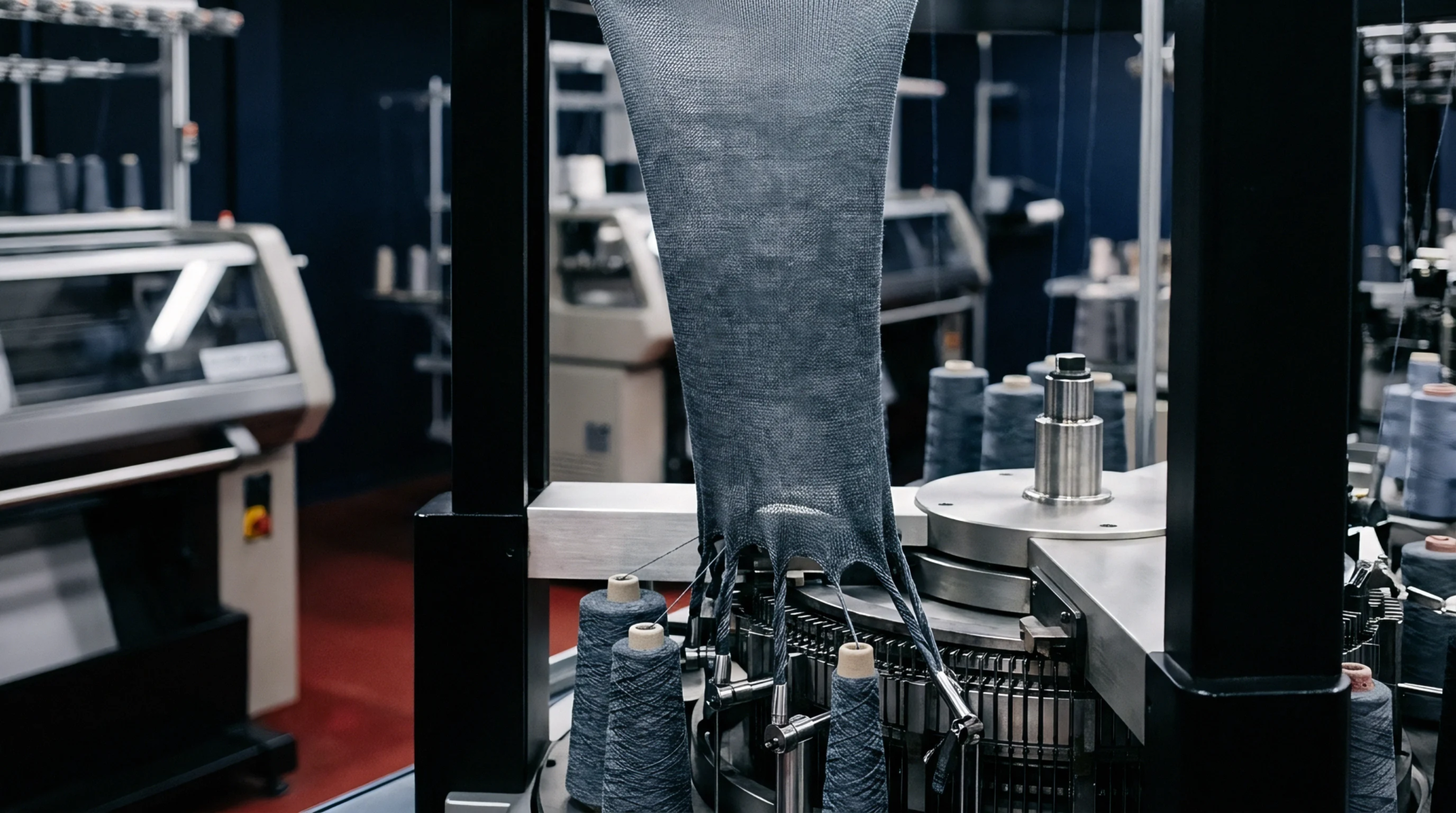
Matching knitting machine gauge to yarn linear density fixes loop tightness factor, setting the upper limit for aqueous dimensional contraction during wet finishing.
Greige qualification governs wet processing uptake through conditioned mass accounting, chemical size identification, capillary absorbency, and bow tolerances.
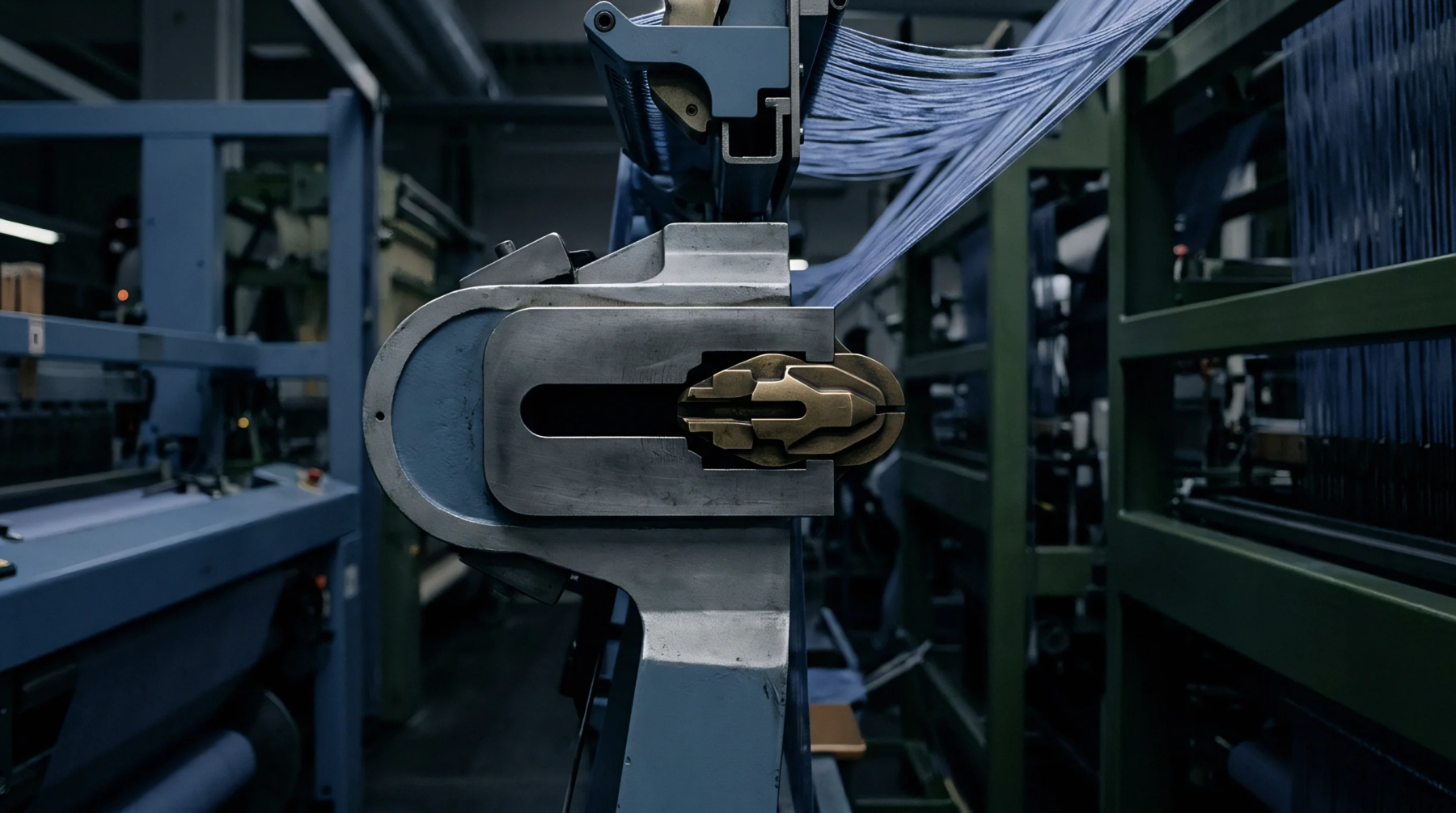
Warp and weft crimp exchange during wet finishing balances longitudinal overfeed and lateral rail draft to set fabric weight and arrest post-wash shrinkage.
Predictive loop length modeling eliminates fabric weight and yield variations by matching positive yarn feed settings directly to fully relaxed geometric constants.
Geometrical modeling of crimp interchange predicts width collapse during wet finishing by balancing yarn swelling against mechanical jamming boundaries.
Dense cellulosic wet transport is limited by swelling-induced micro-pore collapse; forced hydraulic convection and controlled diffusion times prevent core pale-outs.
Fabric specifications mandate exact finished thread densities, stitch lengths, and test conditions to enforce supplier compliance and control landed costs.
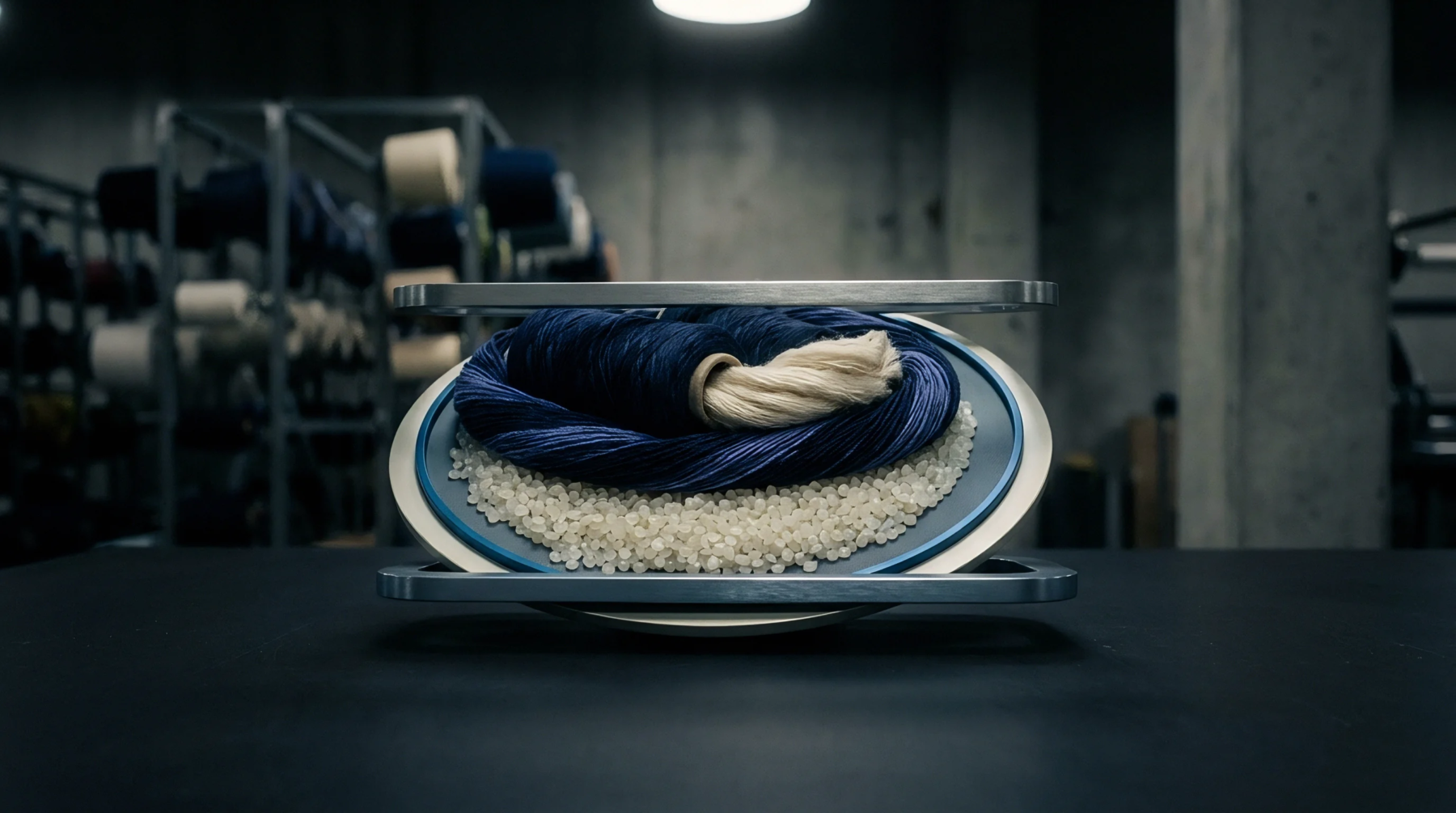
Crosslink density decay during repeated wet processing dictates the trade-off between durable crease recovery and catastrophic fabric tear strength loss.
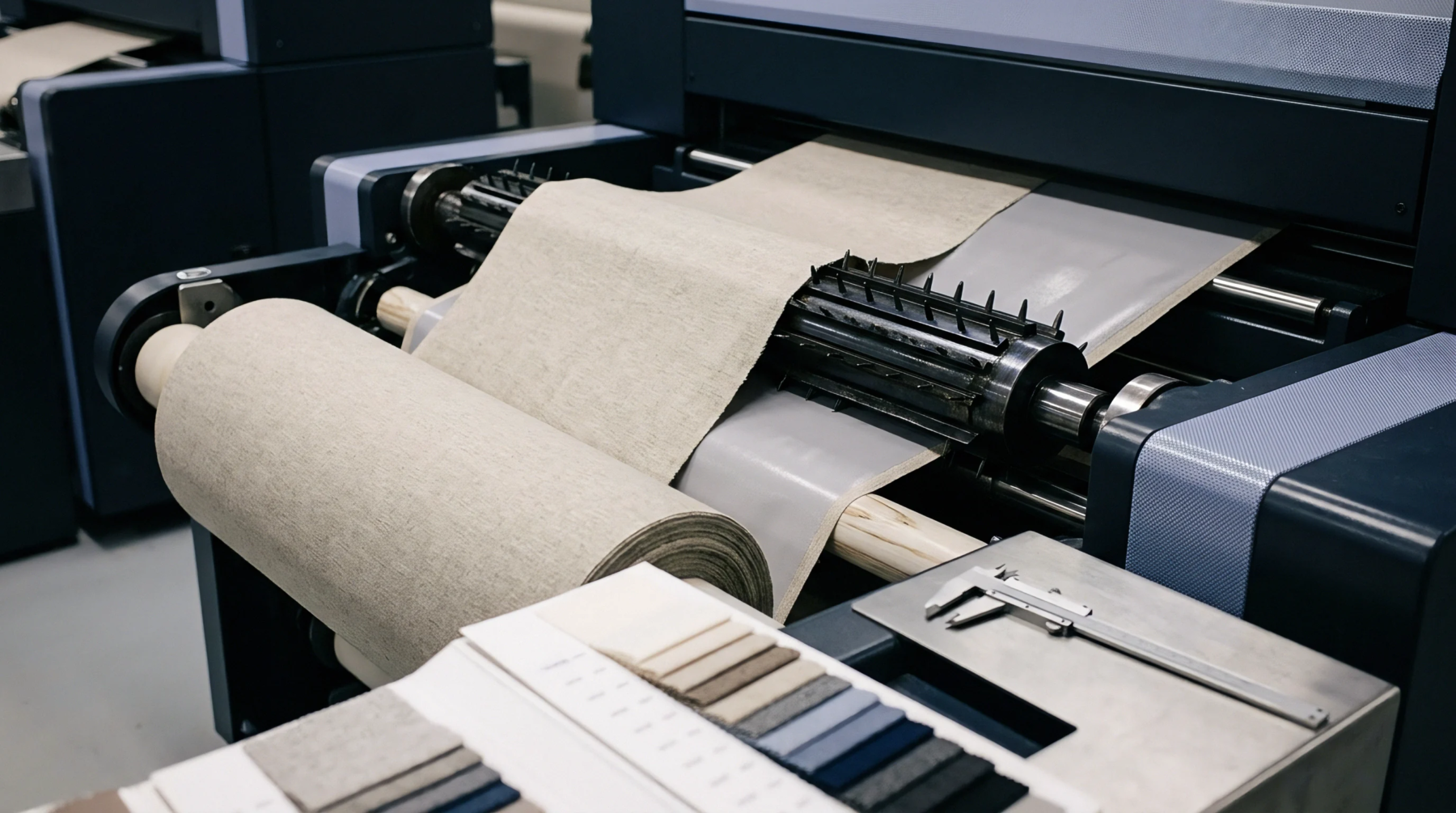
Establishing dual-route printing tolerances requires CIEDE2000 spectral limits under D65/TL84 illuminants paired with strict ISO 105 fastness verification.
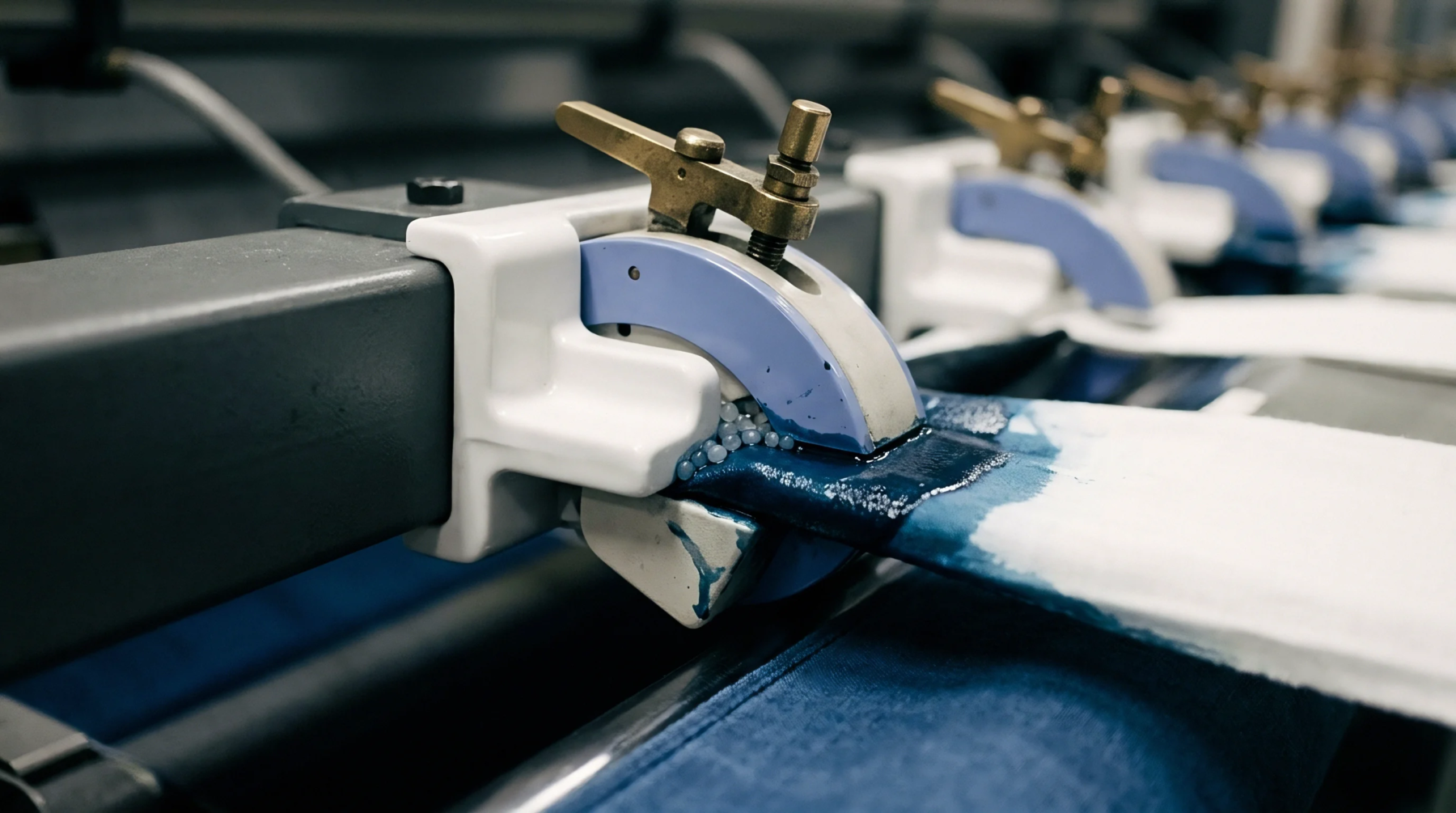
Dense fabric wash-off requires electrolyte removal below 1 g/L before 95°C soaping to extract residual hydrolyzed dye without fastness failures.
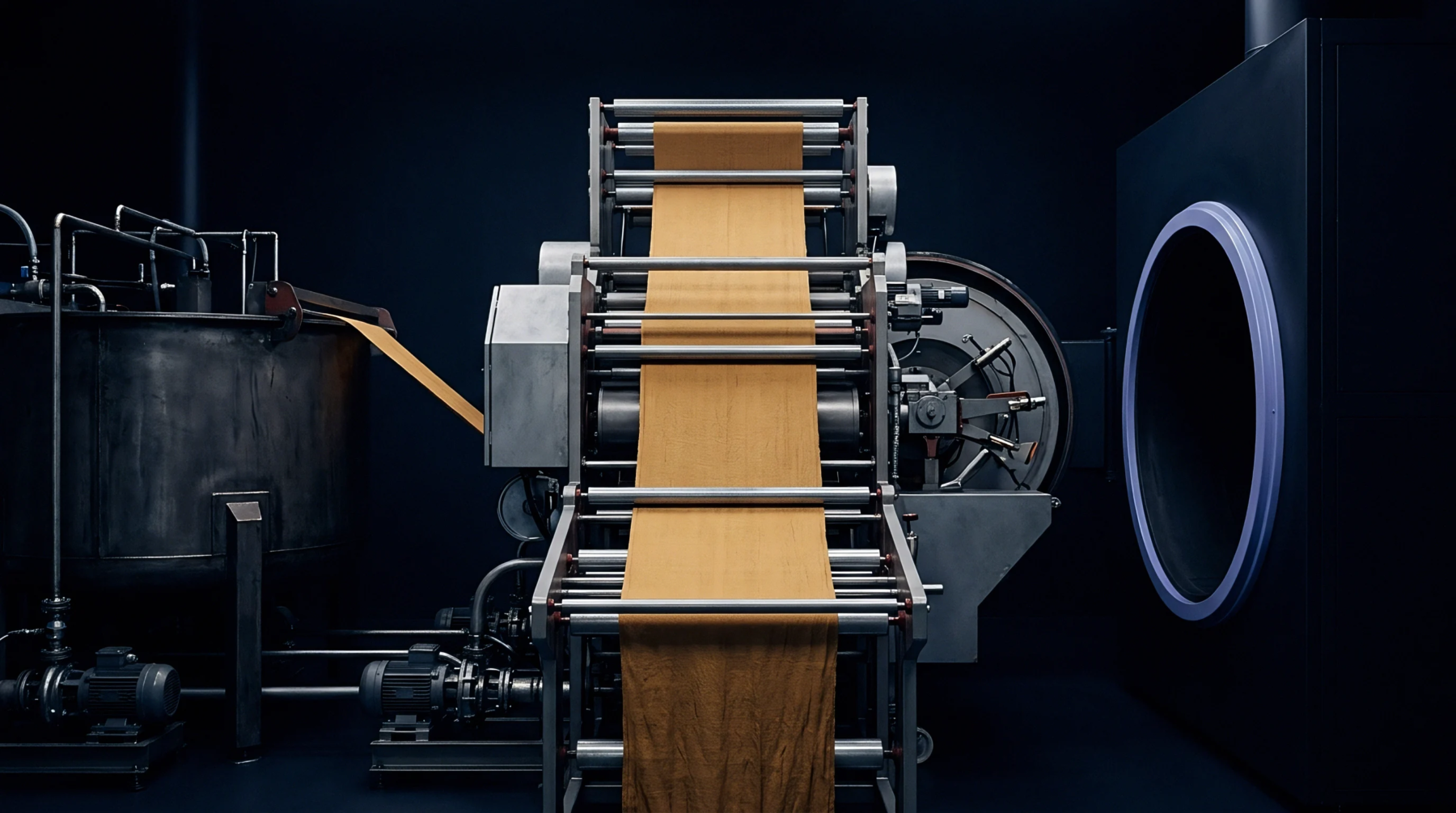
Intermediate drying needs balanced radiative heat, controlled convection air speed, and pseudoplastic antimigrants to eliminate dye migration across woven fabric.

High cover factor twills restrict intra-yarn mass transport, requiring wash-off temperatures above 85 degrees Celsius to desorb trapped hydrolyzed reactive dye.

Dynamic control of ambient regain, pad bowl deflection, wet-bulb drying temperatures, and steam saturation halts continuous shade drift across variable weather.
Correlating loom sett and machine gauge to wet shrinkage requires matching grey thread density and stitch length to wet relaxation limits before finishing.

Cold pad batch dyeing of dense twills requires low-volume trough turnover, dual-component alkali dosing, and precise rotation to eliminate tailing and core defects.
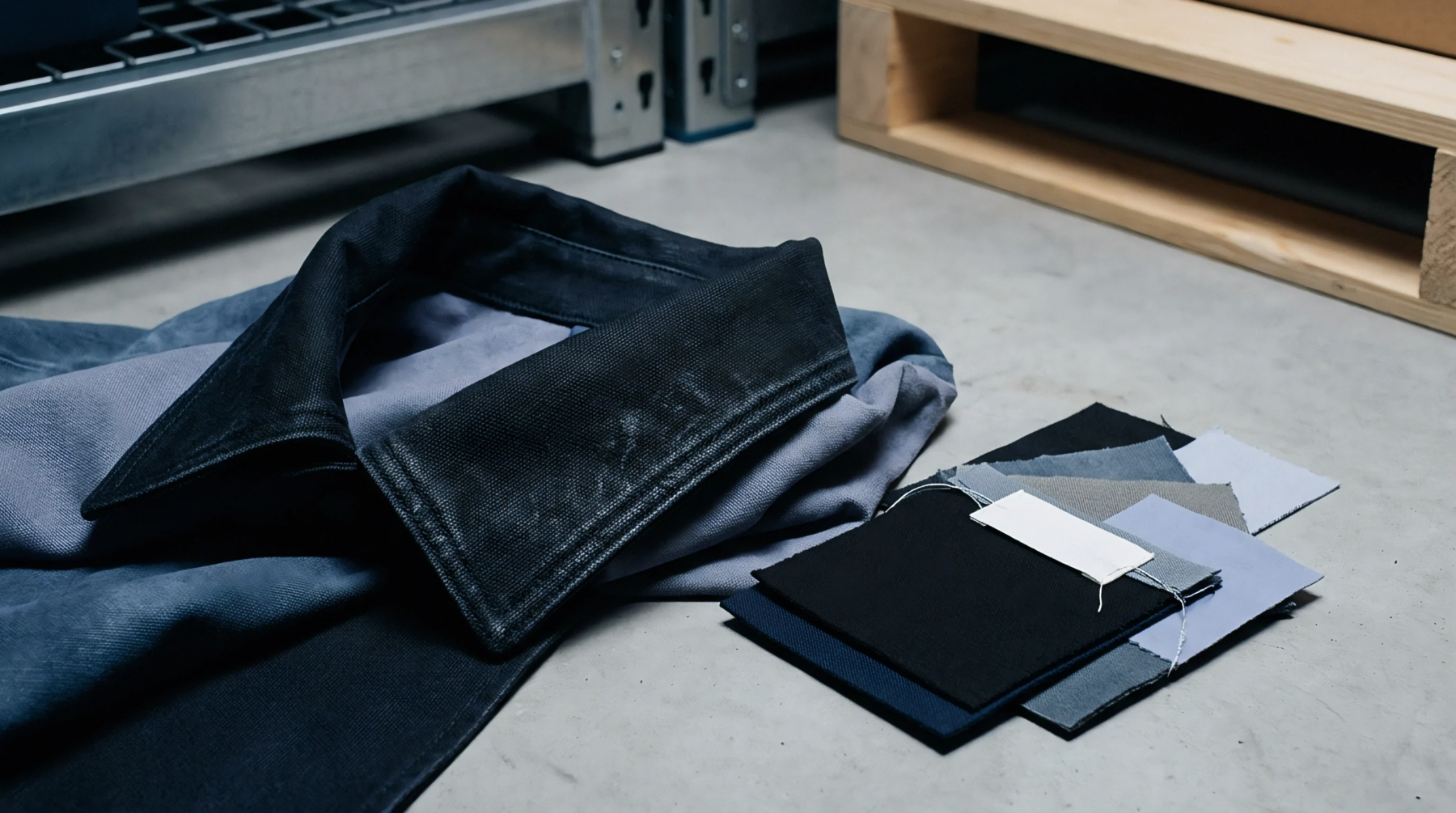
Progressive exponential salt dosing prevents surface strike spikes and forces reactive dye penetration into heavy cotton duck yarn cores.

Fabric performance depends on greige interlacing geometry, wet processing relaxation, and multi-mill supply chain lead times.
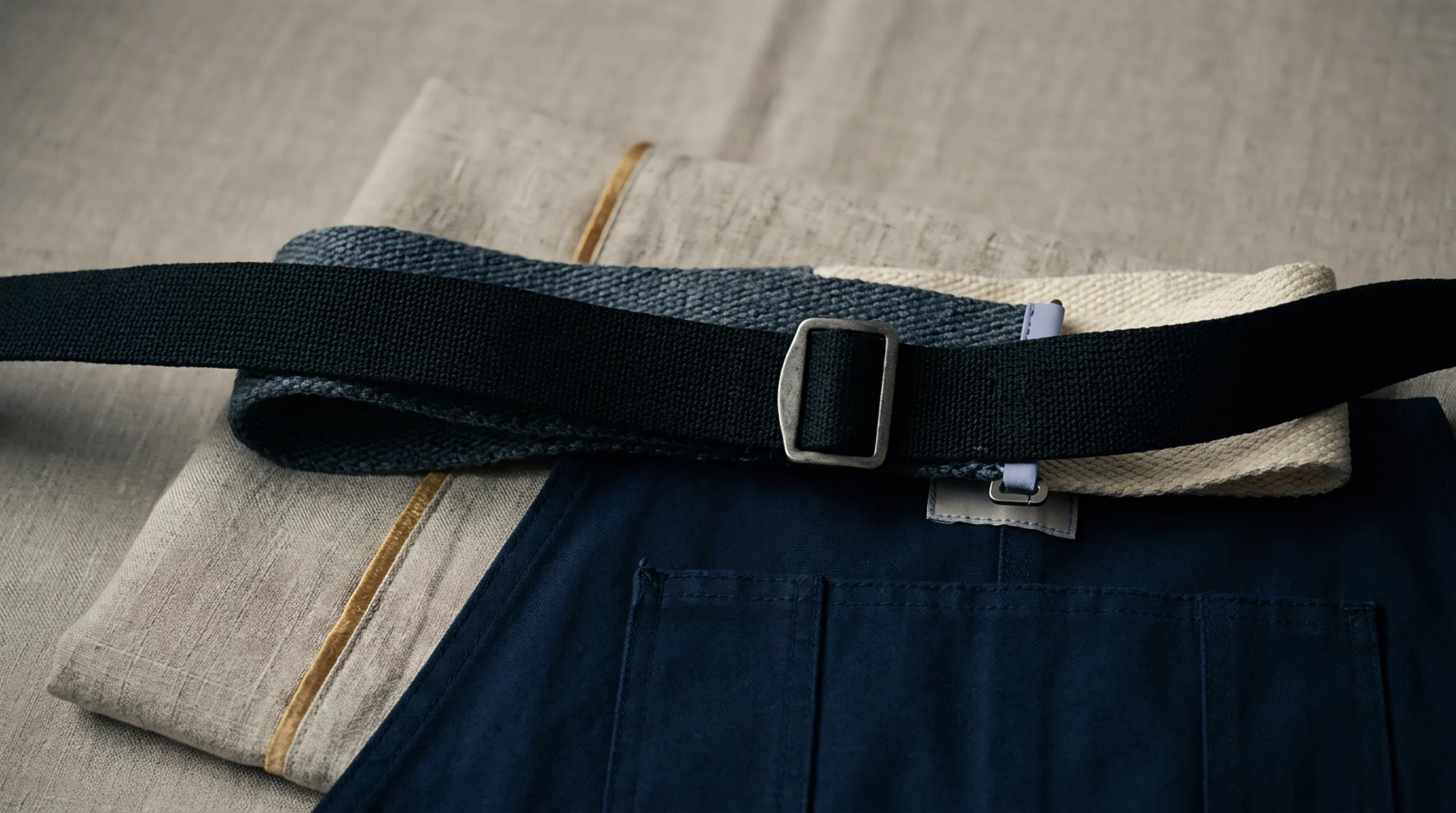
65/35 poly-cotton workwear performance relies on ring twist multipliers near 4.4 and early shed timing to maximize warp cover factor without pilling failure.

Standard one cycle wash tests hide progressive shrinkage; verifying dimensional stability requires multi cycle laundering data and mill finishing tension audits.

Sett and cover factor define structural thread packing; maintaining high pick density and tight fractional cover locks yarn crowns to maximize abrasion life.
Expertise is a utility, not a secret. sentiention™ publishes its working knowledge as open reference: intelligence layer covering the materials it sources, the markets it enters, and the reference that serves both.