Quantifying Wet Processing Shrinkage Interactions with Greige Crimp and Slashing Elongation Limits
Excessive slashing stretch locks latent strain into warp yarns, causing severe wet processing shrinkage unless offset by calculated stenter overfeed.
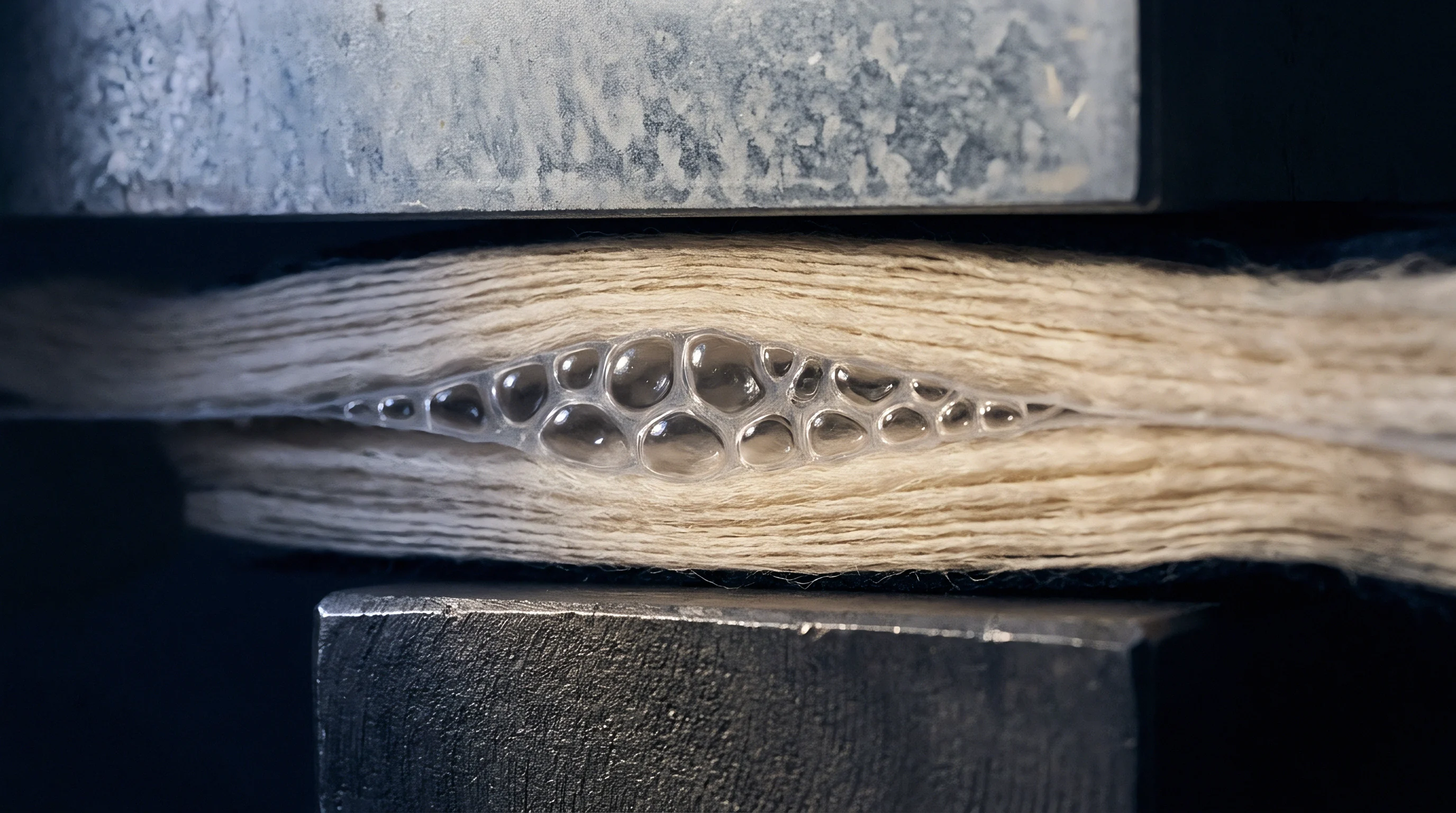

Slashing
Warp yarn tension applied during beam preparation permanently alters the viscoelastic recovery range of cotton and blended spun yarns prior to weaving. High line speeds and aggressive squeeze roll nip pressures stretch individual ends beyond their yield point, driving temporary elongation that locks into the yarn core as size paste dries. When size compounds based on polyvinyl alcohol, carboxymethyl cellulose, or modified maize starch consolidate on the drying cylinders, they freeze this axial extension into the yarn architecture.
The locked deformation remains stable through loom beaming and weaving, masking the true physical length of the yarn strands until hot wet processing removes the protective chemical binder.
Creel braking forces combined with differential drive speeds between the size box and drying section govern total warp strain accumulation. Squeezing roll pressure forcing starch penetration into the yarn core creates a rigid composite matrix. Excessive strain reduces remaining yarn elasticity, leading to higher loom break rates and unrecoverable length expansion.
Sizing starch locks filament alignment under tension. When warps experience elongation above target limits during sheet passage, internal fiber-to-fiber slippage occurs alongside molecular bond alignment within amorphous cellulose regions.
- Creel Tension Equalization sets uniform yarn unwinding resistance across all beam positions to prevent strand-to-strand stretch differentials.
- Size Box Viscosity Calibration maintains correct liquor pick-up and penetration depth to anchor fibers without stiffening the yarn core.
- Squeeze Roll Pressure Adjustments expel excess liquor moisture while controlling mechanical nip elongation at the entrance of the drying zone.
- Drying Cylinder Speed Synchronization eliminates speed differentials across temperature zones to restrict thermal strain accumulation.
- Lease Rod Separation Alignment breaks split sheets smoothly without snapping individual starch bridges or inducing localized yarn drawing.
Standard ring-spun cotton warps tolerate an absolute elongation limit between 1.2 percent and 1.5 percent during sizing before fiber cohesion degrades. Rotor-spun yarns withstand up to 2.0 percent elongation due to their wrapper fiber geometry and higher structural twist cohesion. Exceeding these thresholds strains individual fibers beyond their elastic recovery limit, transferring artificial length into the greige cloth.
Mill operators frequently increase warp tension on sizing machinery to maximize yardage yield from expensive yarn lots, operating under the assumption that downstream wet processing finishing machinery will effortlessly shrink the fabric back to specification width and linear mass.

Crimp
Interlacing pattern geometry forces warp and weft yarns into undulating wave shapes as they interweave on rapier or air-jet looms. Beat-up force drives the weft pick against the cloth fell, bending warp threads around straight crosswise yarns or forcing crosswise yarns to bend around tight warp threads. The ratio of wave amplitude to linear yarn axis defines crimp percentage, a structural parameter distinct from mechanical yarn stretch.
Crimp redistribution alters cover factor. Warp crimp percentage (Cw) and weft crimp percentage (Cf) directly govern greige cloth dimensions, tear strength balance, and structural density off the loom.
High tension on the loom warp beam flattens warp yarns during weave shed formation, transferring structural wave amplitude almost entirely into the weft picks. This crimp interchange mechanism yields a greige fabric with low warp crimp and exceptionally high weft crimp. Plain weave constructions exhibit intense crimp competition due to maximum interlacing points per unit area, whereas 3/1 twill or 5/1 satin weaves permit freer yarn path displacement.
Warp strain remains stored. When greige cloth leaves the loom under tension, structural relaxation begins immediately, but complete crimp balance equilibrium cannot develop while dried sizing film encapsulates the warp yarns.
Crimp interchange during weaving dictates whether dimensional contraction occurs primarily in the warp or weft direction during subsequent scouring and dyeing operations.
Greige crimp levels dictate how much structural room the fabric possesses to contract when size dissolves. A fabric woven with flat, highly stretched warp yarns holds high latent energy for longitudinal contraction once chemical restraints disappear. Fabric structural density limits the physical movement of these flexing yarns.
When warp ends pack tightly against each other, high thread counts restrict lateral displacement, forcing axial shortening into structural bucking or localized fabric thickening.
| Fabric Construction | Greige Sett (ends x picks/cm) | Slashing Stretch Target (%) | Greige Warp Crimp (%) | Greige Weft Crimp (%) | Potential Relaxation Range (%) |
|---|---|---|---|---|---|
| Plain Weave 20s/1 Cotton | 24 x 20 | 1.2 – 1.4 | 7.5 – 8.5 | 8.0 – 9.0 | 6.0 – 8.0 |
| 2/1 Twill 30s/1 Cotton | 38 x 22 | 1.4 – 1.6 | 6.0 – 7.0 | 10.5 – 12.0 | 5.5 – 7.0 |
| 3/1 Twill 40s/1 Cotton | 42 x 26 | 1.5 – 1.8 | 5.2 – 6.2 | 12.0 – 14.0 | 7.0 – 9.0 |
| 5/1 Satin 60s/1 Combed Cotton | 52 x 32 | 1.0 – 1.2 | 3.8 – 4.5 | 14.5 – 16.5 | 4.5 – 6.0 |
Tension drives warp growth. Heavy beat-up force on light warps forces weft yarns to buckle, driving weft crimp percentages above 14 percent in dense twill weaves. This geometry creates wide greige widths relative to reed width, setting up significant width contraction during wet processing as warp yarns relax and regain their wave shape.
Balancing sizing extension against weaving crimp requires tracking the exact thread path lengths before water and heat enter the equation.
Sizing binders retain warp extension until aqueous chemistry dissolves the film.
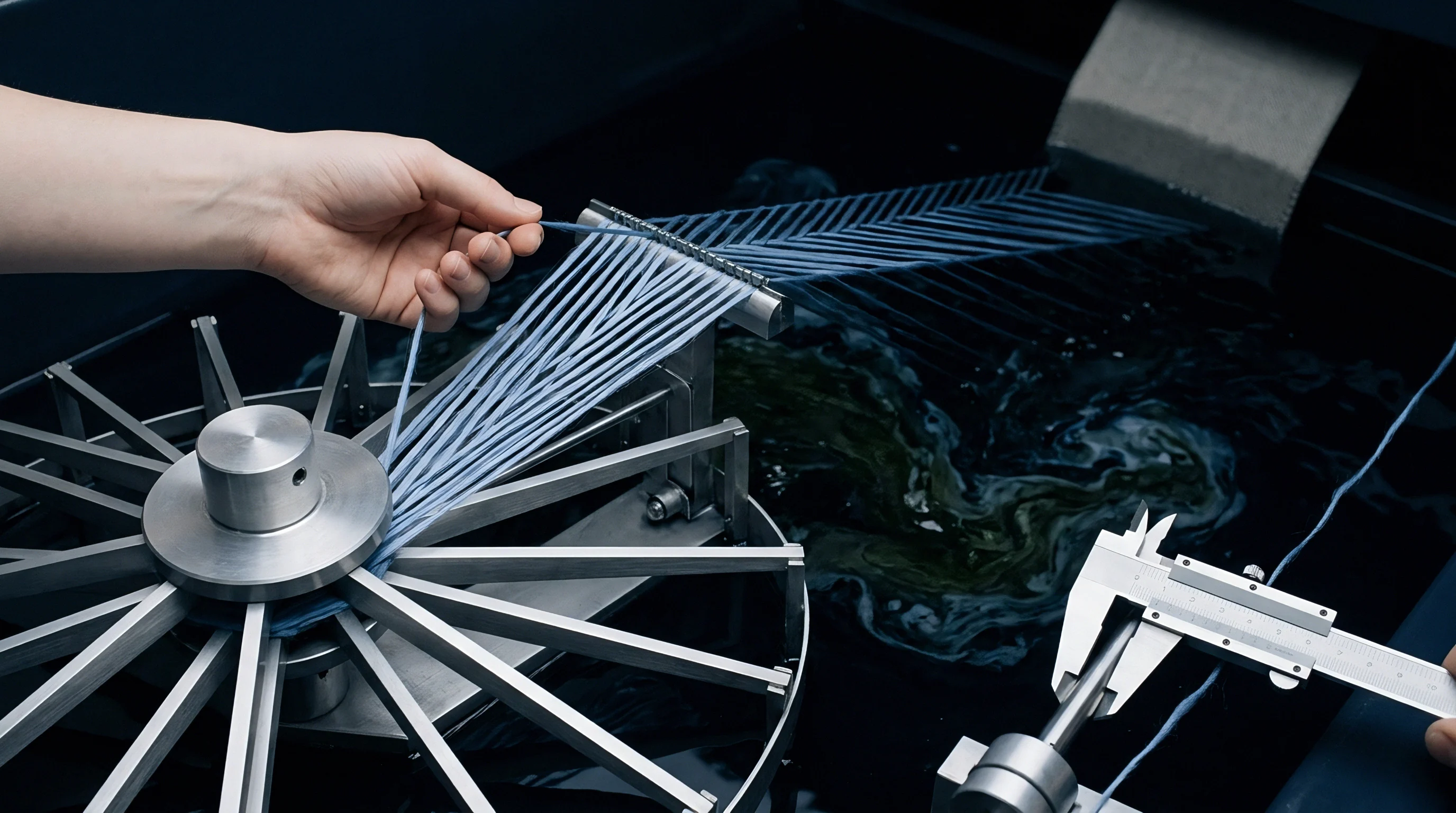
Swell
Aqueous immersion during desizing and scouring triggers immediate physical expansion of cellulosic and synthetic fibers. Water molecules penetrate amorphous polymer zones, breaking intermolecular hydrogen bonds and forcing fiber cross-sections to expand laterally. Cotton fibers swell up to 14 percent in diameter while expanding less than 1 percent in length.
Yarn twist alters swell capacity. This asymmetrical volumetric expansion increases yarn diameter, shortening the path length available for yarn bending and forcing the interlacing wave amplitude to rise sharply throughout the cloth web.
Desizing unlocks latent fiber stress. Caustic soda treatment during mercerization accelerates lateral swelling, transforming kidney-bean cotton fiber cross-sections into circular profiles. As yarn diameters double in the liquid bath, warps and wefts demand greater thread-path deflection around each other.
Because the physical length of the yarn remains constant, this geometrical bending forces the whole fabric sheet to shrink longitudinally and laterally. Hot liquid baths simultaneously dissolve size polymers, releasing the mechanical strain locked into warps on the slashing machine.
Mercerization under tension increases dye uptake uniformity while permanently altering the structural crimp recovery threshold of cellulosic yarns.
Mechanical stress release happens concurrently with structural fiber swelling. Tension applied during previous processing stages dissipates as water acts as a molecular plasticizer. If sizing machinery over-stretched the warp by 2.5 percent, that stretch reverses violently during hot enzyme desizing at 90 degrees Celsius.
Fiber swelling shifts yarn path. Fabrics subjected to excessive slashing elongation experience high relaxation shrinkage in continuous open-width washers, often exceeding the width-adjustment capabilities of downstream finishing machinery.
- Warp Line Contraction Spike occurs when hot aqueous baths dissolve polyvinyl alcohol size, instantly releasing structural elongations applied during beam slashing.
- Weft Width Compression Defect develops when intense warp crimp recovery drives crosswise yarn bending, pulling selvages inward beyond stenter chain reach.
- Differential Relaxation Ripple manifests when irregular size paste application causes uneven mechanical release across the fabric width.
- Fiber Jamming Threshold reached when lateral swelling forces adjacent yarns into maximum packing density, blocking further dimensional relaxation and causing severe fabric stiffness.
Jet dyeing equipment introduces additional dynamic forces through mechanical action and thermal cycling. Fabric ropes cascading through transport nozzles at elevated temperatures experience rapid alternating cycles of tension and compression. Relaxation requires thermal energy.
The combination of liquor turbulence, temperature changes up to 130 degrees Celsius for polyester blends, and liquor pressure accelerates relaxation toward thermodynamic equilibrium. Skimming over swelling dynamics leads directly to off-spec finished fabric weights and uncontrollable residual garment shrinkage.
| Processing Stage | Dominant Mechanism | Cotton Fiber Diameter Change (%) | Cumulative Warp Contraction (%) | Cumulative Weft Contraction (%) |
|---|---|---|---|---|
| Enzyme Desize (85°C) | Size Binder Dissolution & Stress Release | + 6.0 to + 8.0 | 2.5 to 3.5 | 1.0 to 1.5 |
| Caustic Scour (95°C) | Pectin Removal & Hydrophilic Swelling | + 8.0 to + 10.0 | 3.8 to 4.8 | 2.0 to 2.8 |
| Caustic Mercerization (28°Be) | Cellulose Fiber Restructuring & Swelling | + 12.0 to + 15.0 | 6.5 to 8.5 | 4.5 to 6.0 |
| Jet Dyeing (100°C – 130°C) | Hydrodynamic Relaxation & Crimp Balance | + 10.0 to + 12.0 | 8.0 to 10.5 | 6.0 to 8.0 |
Inadequate width control during caustic swelling leads to permanent fabric skewing that cannot be corrected downstream.
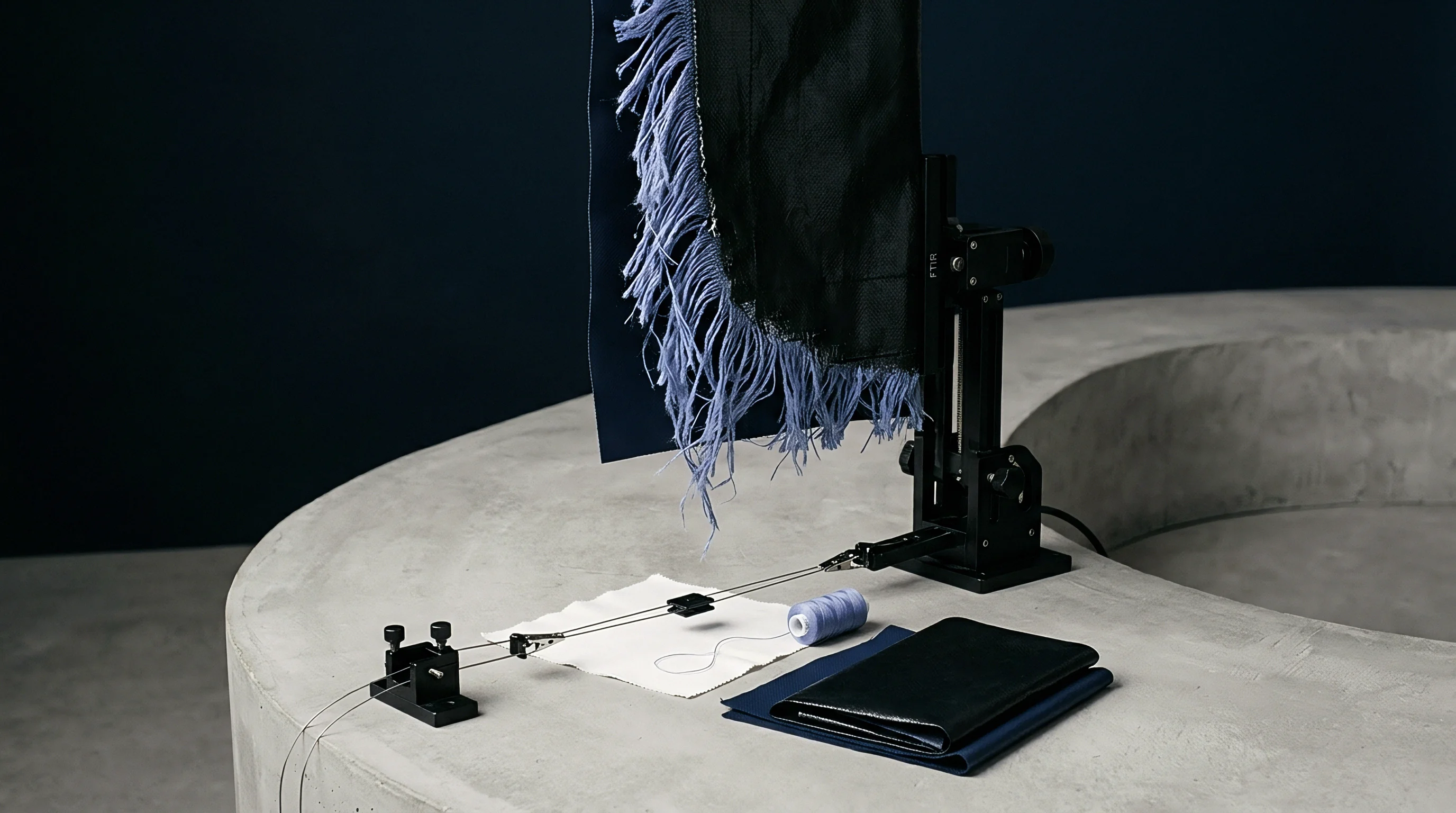
Stenter
Chain-guided drying frames provide the mechanical means to reset width, control density, and lock residual shrinkage levels into finished woven fabrics. Variable speed entry rollers drive fabric onto pin or clip chains at overfeed ratios ranging from minus 5 percent to plus 20 percent. Overfeed prevents length loss.
Applying positive longitudinal overfeed feeds extra fabric length into the drying chamber, allowing the warp ends to contract freely around weft picks while water evaporates, fixing stable crimp geometry into the dried structure.
Drying under overfeed establishes the permanent balance between warp and weft crimp profiles. Moisture breaks hydrogen bonds. Stenter heat zones re-establish hydrogen cross-links within cellulosic fibers while locked-in strain is neutralized.
If a fabric enters the frame under high longitudinal tension, finished goods will exhibit excellent yardage yield but poor dimensional stability in laundering. Width loss alters cloth weight. Conversely, maximizing overfeed forces warp ends into high crimp waves, increasing finished weight per square metre while lowering linear yardage yield.
Contractual delivery terms governing finished fabric stability strictly enforce maximum allowable dimensional change under ISO 5077 testing at +/- 2.0 percent.
Setting pin chain width setting relative to greige reed width decides final weft density and warp crimp amplitude. Pulling fabric out wide on the pin chain flattens weft crimp, which mechanically forces warp ends to bend more sharply. This structural action reduces longitudinal shrinkage while increasing transverse shrinkage during garment home laundering.
Density rises with contraction. Finding the operational equilibrium requires tailoring the stenter chain profile to offset mechanical stretch imparted during warp slashing and continuous wet processing.
- Entry Overfeed Setting controls the exact amount of linear fabric density introduced to allow uninhibited longitudinal warp crimp recovery during drying.
- Pinning Edge Tension maintains transverse pull forces across the cloth web to hold uniform target width without tearing selvages off pin plates.
- Temperature Profile Mapping manages moisture evaporation rates across heating zones to prevent premature cross-linking or localized scorching.
- Air Velocity Balancing balances top and bottom nozzle air impact pressures to prevent fabric flotation, surface distortion, or differential drying.
- Exit Cooling Zone lowers cloth temperature below plastic transition thresholds before wind-up to lock in established dimensional settings.
A supplier who promises zero warp shrinkage while running continuous wet processing lines at top speed relies on aggressive mechanical pulling on the drying frame to gain linear yield.

Shrinkage
Dimensional stability testing under standard ISO 5077 and ISO 6330 laundering protocols reveals the final interaction between slashing strain, greige crimp, and wet finishing relaxation. When finished fabric undergoes domestic washing, water and thermal agitation release residual mechanical stresses that survived stenter processing. The measured dimensional change represents the net sum of structural crimp movement and unrecovered yarn elongation.
Total warp shrinkage (Sw) correlates mathematically with slashing elongation (εs), greige warp crimp (Cwg), finished warp crimp (Cwf), and stenter overfeed percentage (Of).
The total longitudinal dimensional change equation integrates yarn stretch and structural geometry parameters:
Sw = left( 1 – frac1 + Cwf(1 + εs)(1 + Cwg)(1 + Of) right) × 100
Where εs is expressed as a decimal fraction of slashing strain, Cwg is greige warp crimp fraction, Cwf is finished warp crimp fraction, and Of is fractional stenter overfeed. When slashing elongation increases without a corresponding increase in stenter overfeed, residual laundering shrinkage rises predictably.
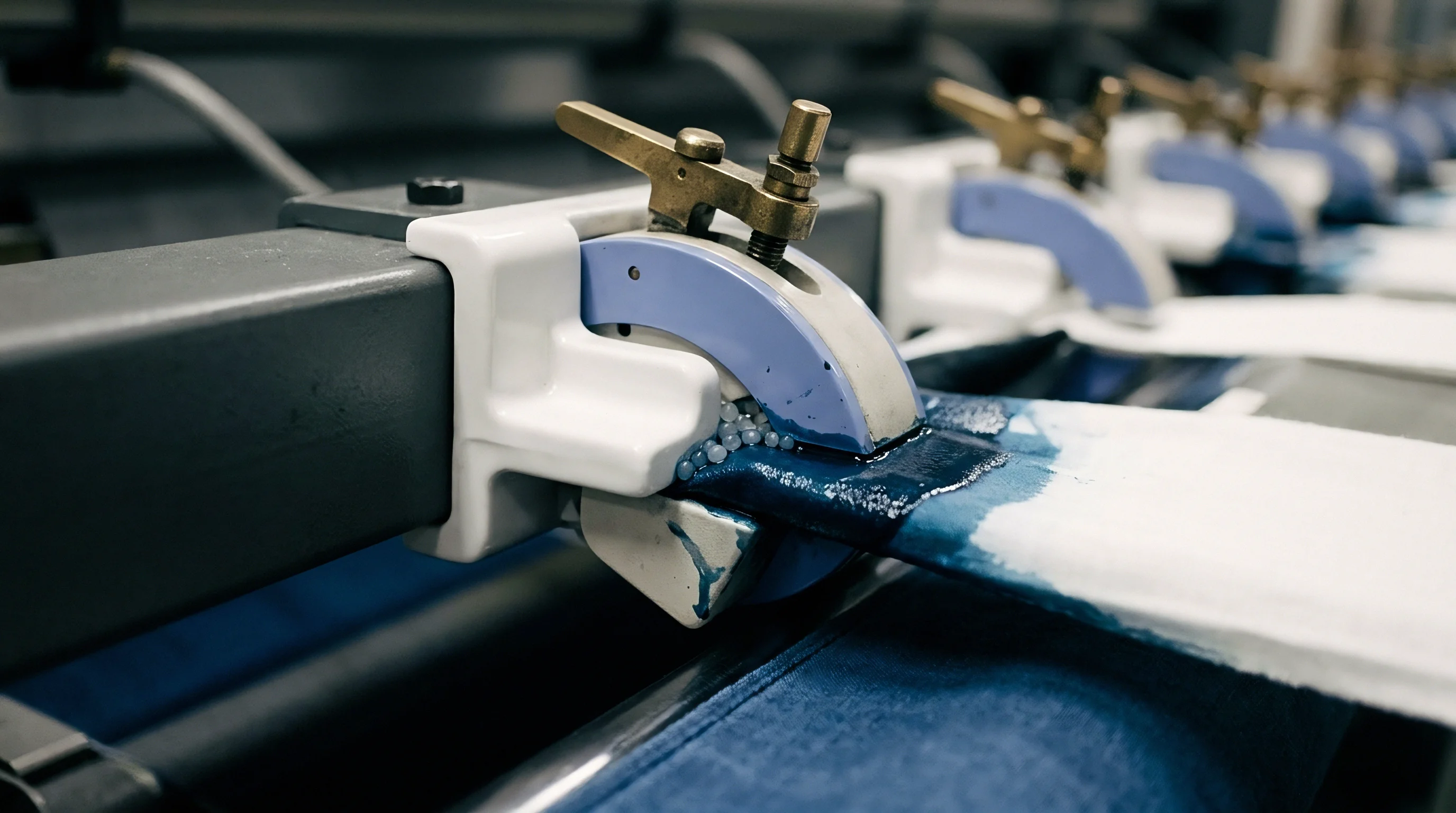
Where Does Sizing Strain Convert to Residual Fabric Contraction?
Unrecovered yarn stretch locked into the starch matrix remains dormant through light finishing, only to collapse when consumer laundering dissolves temporary fiber bonds. A worked construction analysis illustrates this physical mechanism. Consider a 100 percent cotton 3/1 twill fabric (30s/1 warp, 20s/1 weft, target finished weight 220 g/m²).
Assume Mill A operates slashing machinery at high speed with 2.2 percent warp strain, while Mill B operates at controlled tension with 1.1 percent warp strain. Both mills weave the yarn under identical loom settings, obtaining a greige warp crimp of 6.0 percent. During wet processing (desizing, scouring, Mercerizing, jet dyeing), both fabrics undergo structural swelling.
At the stenter frame, both mills dry the fabric at target width, but Mill A applies only 1.5 percent overfeed to maximize yardage sales, while Mill B applies 4.0 percent overfeed to stabilize the cloth.
Calculated outcome parameters for Mill A show a finished warp crimp of 7.2 percent. Substituting these values into the interaction formula yields a residual laundering warp shrinkage of 3.4 percent under ISO 6330 procedure 4N at 40 degrees Celsius. This value fails standard commercial apparel buyer specifications, which cap warp shrinkage at 2.0 percent.
For Mill B, controlled slashing strain (1.1 percent) combined with high stenter overfeed (4.0 percent) produces a finished warp crimp of 9.1 percent. The resulting calculated residual warp shrinkage drops to 0.8 percent, well within buyer limits.
To determine target greige warp crimp and slashing limits during development, follow this standard analytical sequence:
- Measure greige yarn breaking elongation and elastic limit using ISO 2062 test procedures on single strand yarn testers.
- Establish maximum allowable slashing machine stretch below 60 percent of the yarn elastic limit to avoid permanent structural damage.
- Calculate required greige warp crimp on the loom using cover factor equations based on target finished thread counts and weave repeat structure.
- Measure cumulative longitudinal contraction during lab-scale mock wet processing (desize, caustic scour, boil-off) under zero-tension conditions.
- Calculate required stenter overfeed percentage using the interaction equation to balance target linear weight against ISO 5077 shrinkage limits.
Residual dimensional instability in finished woven goods originates primarily from unreleased longitudinal strain applied during warp beam preparation.
Evaluating total length loss across a complex finishing line requires balancing mechanical extension against thermal relaxation at every single roller nip. The unresolved question remains whether high-speed continuous processing ranges can ever achieve complete stress relief without sacrificing linear production speed.
Yield
Calculations governing fabric purchasing balance linear yardage yield against mass per unit area. Purchasing woven fabric on a linear metre basis incentivizes buyers to demand maximum length output from a given mass of raw yarn. Mills respond by increasing warp stretch during slashing and reducing overfeed on finishing frames, producing fabric that meets initial width and visual appearance requirements but fails dimensional stability testing.
Fabric specifications must define finished weight in grams per square metre alongside strict density limits (ends and picks per centimetre) tested according to ISO 3801 and ISO 7211.
| Processing Strategy | Slashing Stretch (%) | Stenter Overfeed (%) | Finished Weight (g/m²) | Finished Yield (m/100m Greige) | ISO 5077 Warp Shrinkage (%) | Commercial Compliance Status |
|---|---|---|---|---|---|---|
| High-Yield / Low-Overfeed | 2.4 | 0.5 | 210 | 101.8 | + 4.2 | Rejected (High Shrinkage) |
| Standard Commercial | 1.8 | 2.0 | 218 | 99.2 | + 2.1 | Marginal Pass |
| Controlled Tension / High-Overfeed | 1.1 | 4.5 | 226 | 96.1 | + 0.7 | Fully Compliant |
| Compacted Finish | 1.2 | 6.0 | 230 | 94.8 | – 0.2 | Premium Stability |
Over-stretching warp yarns to gain 2 percent in linear yardage reduces finished fabric mass, moving a nominal 220 g/m² fabric down to 210 g/m². This mass reduction alters garment drape, seam strength under ISO 13935 testing, and abrasion resistance measured via ISO 12947 Martindale methods. When the garment factory washes constructed prototypes, the missing weight returns as linear shrinkage, shortening trouser legs and torso lengths beyond acceptable tolerance bands.
The financial saving achieved on raw linear fabric purchases converts into massive cut-and-sew rejection claims at the garment factory desk.
Writing fabric purchase contracts requires specifying minimum finished weight after conditioning under ISO 139 alongside maximum allowable ISO 5077 dimensional change. Buyers who audit slashing tension logs and demand documented overfeed targets protect their supply chains from latent dimensional failures. Contract clauses must link linear metre pricing directly to certified square-metre weight compliance, eliminating the financial incentive for mills to trade warp stability for artificial linear yield.
Sourcing agreements that integrate these structural parameters bind the mill to verifiable engineering practices across every process stage.