Weave Distortion
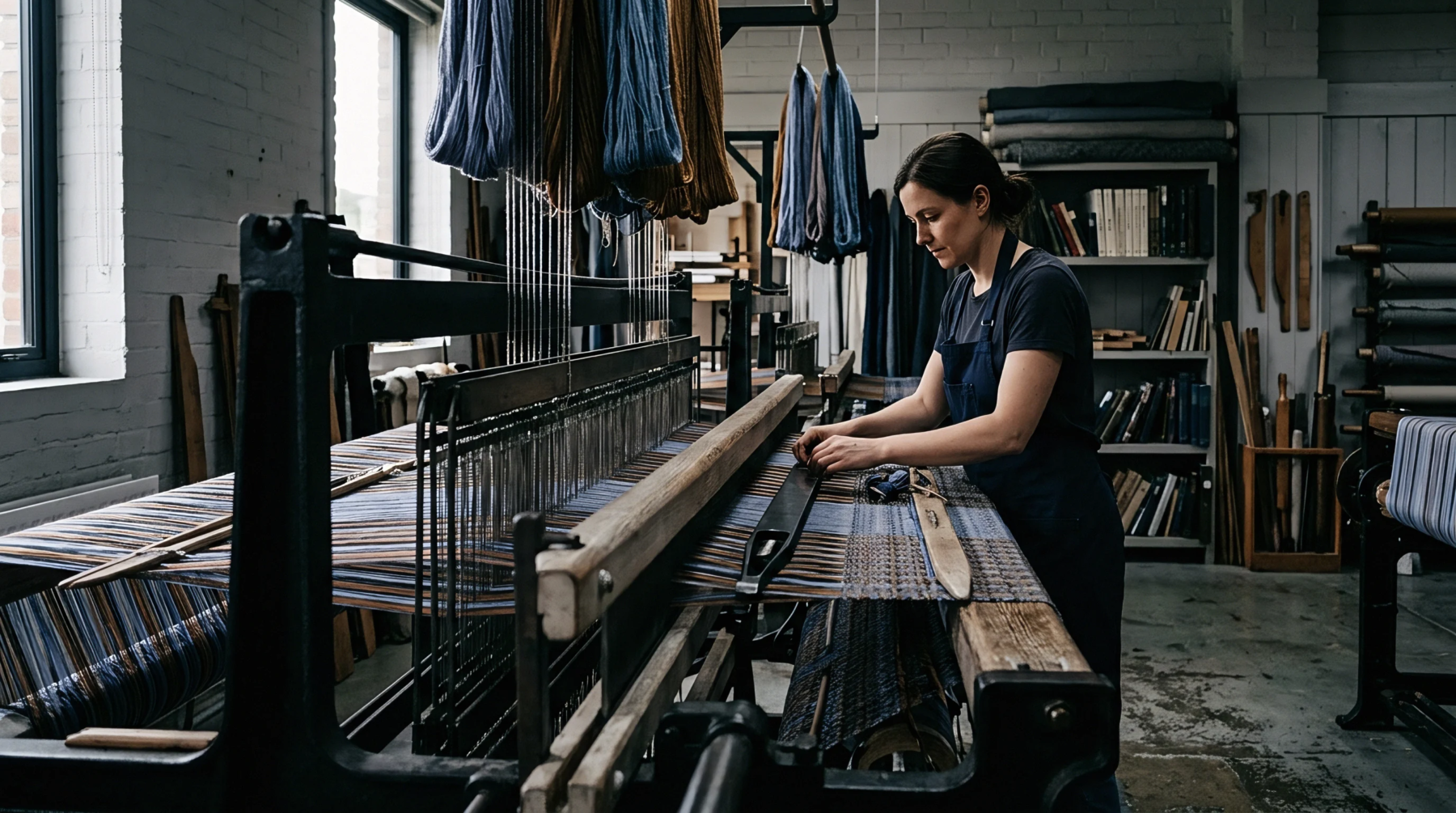
Greige warp crimp defines the measure of yarn undulation within unfinished woven fabric, quantifying the geometrical displacement perpendicular to the longitudinal direction of the loom state material. Textile engineers calculate this deformation percentage by comparing straightened yarn length against the planar span occupied inside the loom state construction. Unprocessed cotton and synthetic fabrics arrive at the dyeing plant with varying levels of this linear displacement, which directly influences subsequent dimensional shrinkage during wet processing.
Tension variations across the loom beam create uneven stress distributions, resulting in localized differences in yarn deformation before any finishing treatments occur.
Tensor Analysis
Mechanical testing laboratories mount yarn specimens extracted from the unwashed cloth onto specialized tensiometers to record load extension curves. Technicians isolate individual threads from the longitudinal orientation and apply controlled tension until the wavy geometry flattens entirely. Mathematical conversion formulas then evaluate the difference between the initial undulating span and the straightened length to establish the final percentage value.
Standardized evaluation protocols require multiple samples across the fabric width to account for edge effects and center to selvedge variations originating during the weaving process.
Thermal Response
Subsequent wet processing stages including scouring and heat setting alter the original yarn geometry permanently through thermal relaxation and moisture absorption. Synthetic filaments react differently to hot water immersion compared to natural cellulose fibers, changing the internal stress state of the unfinished textile. Mills monitor these structural shifts closely because excessive yarn undulation leads to unpredictable bow and skew defects after dyeing.
Precise control of tenter frame overfeed parameters during finishing counteracts extreme dimensional alterations caused by stored mechanical stress in the untreated material.
Commercial Tolerance
Purchasing contracts between garment factories and fabric mills specify acceptable thresholds for yarn deformation to guarantee predictable cut yield during apparel manufacturing. Exceeding agreed limits introduces severe alignment problems during automated marker laying and high speed cloth spreading operations. Quality control inspectors verify these compliance metrics upon delivery before approving bulk roll acceptance for mass production lines.