Greige Cotton Twill Singeing and Desizing Parameters
Optimize singeing with 10-12 mbar burner pressure at 100 m/min, followed by an amylase quench and 95°C washing to achieve Tegewa 8+ desizing on cotton twill.
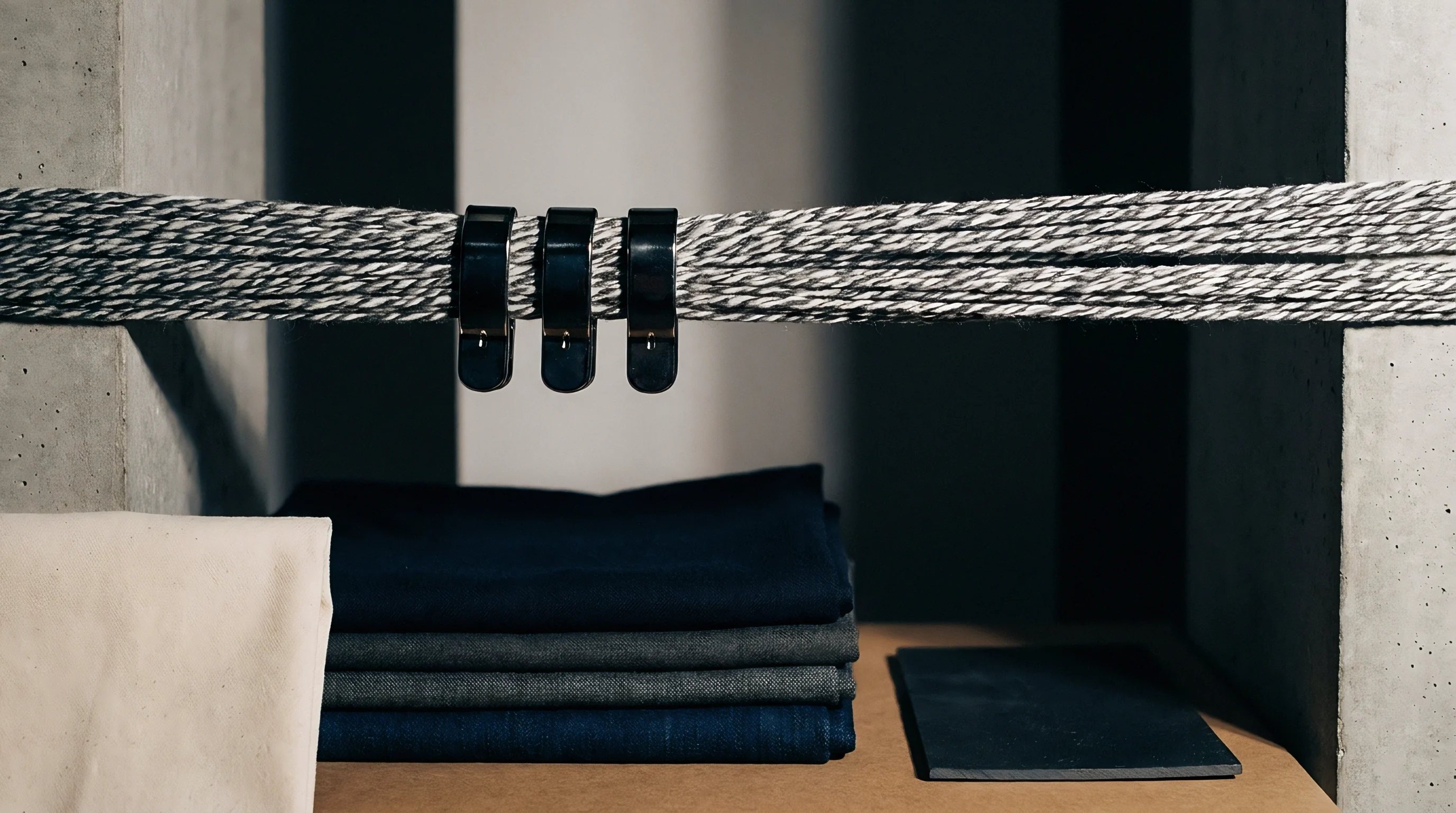
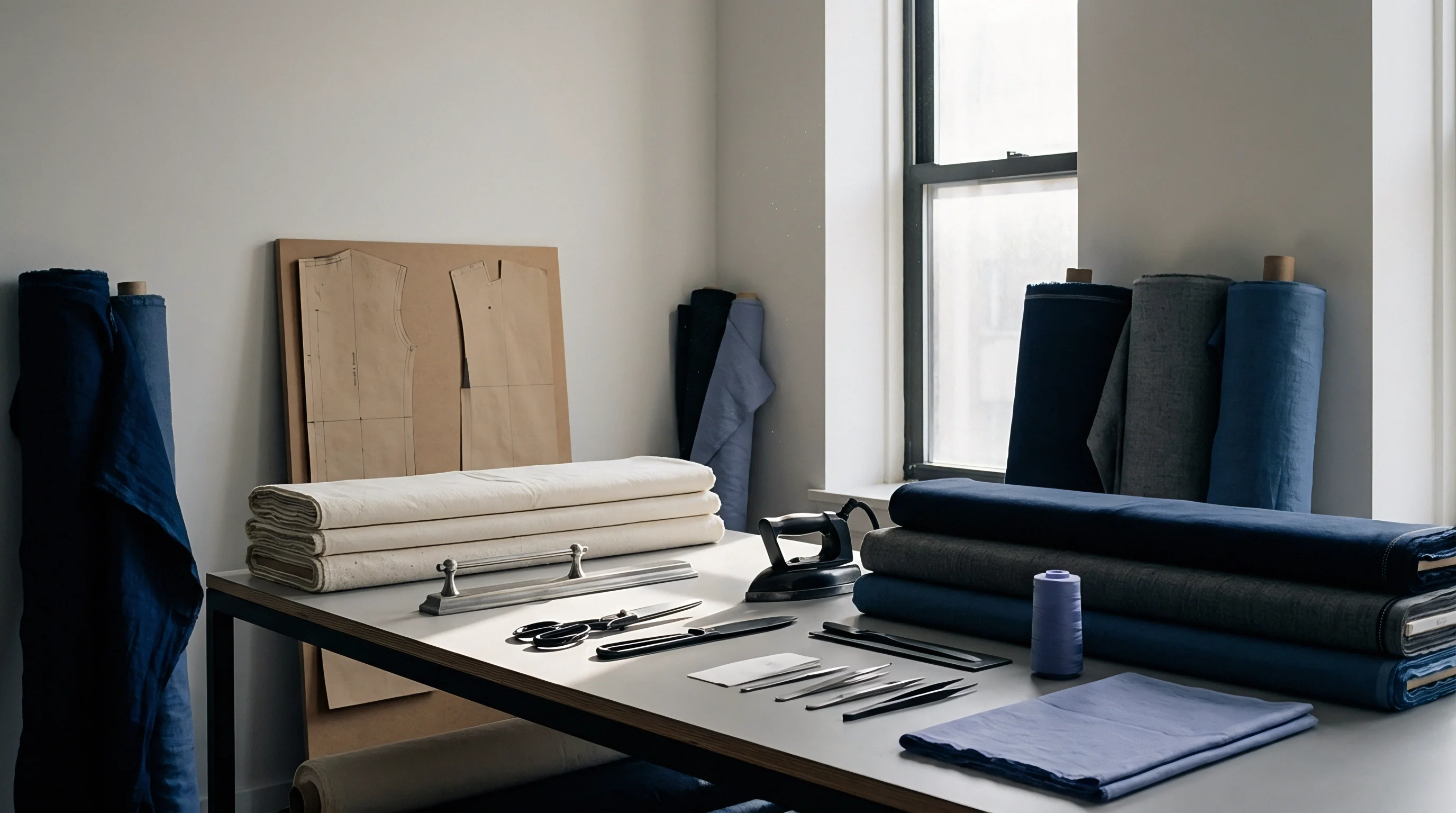
Flame
Greige cotton twills present an asymmetrical surface topography that dictates thermal exposure during preparation. A standard 3/1 right-hand twill exposes long warp floats on the technical face, while the reverse technical back displays short filling knuckles. These long floats carry protruding staple fibers that ignite easily, yet the diagonal twill ribs create recessed valleys that shield micro-fibrils from uniform thermal contact.
Running a singeing unit without adjusting burner geometry for this diagonal terrain produces uneven hairiness removal across the piece. The face of a heavy bottom-weight twill demands direct, high-velocity flame contact, whereas the back requires a glancing or tangential flame to avoid scorching the lower-mass weft crowns.
Machine velocity on the singeing range balances thermal transfer against fabric exposure time. Running a 240 g/m² 3/1 cotton drill requires a web velocity between 90 and 120 meters per minute when using natural gas burners operating at manifold pressures between 8 and 14 mbar. When line velocity falls below 85 meters per minute at these pressures, thermal accumulation within the cotton cellulose triggers surface embrittlement and depolymerization.
Conversely, line speeds above 130 meters per minute fail to bring projecting fiber tips to their pyrolysis temperature of roughly 350 to 400 degrees Celsius during the millisecond exposure window. Twill face hairiness remains largely intact at excessive line speeds, causing cloudy or frosted appearances after continuous pad-steam vat or reactive dyeing.
Burner manifold pressures operating between 10 and 12 mbar deliver flame velocities near 20 meters per second, ensuring combustion gases reach the root of twill valleys.
Burner position controls the depth of penetration into the twill valley. Direct impingement perpendicular at 90 degrees to the fabric face projects the combustion zone straight into the weave valleys, clearing the fuzz that obscures twill lines. Tangential singeing directs the burner output across the fabric plane as the cloth passes over a water-cooled guide roller, shearing off long surface fibers without heating the fabric body.
Heavyweight twills intended for uniform vat dyeing run face-singed by perpendicular flame and back-singed by tangential flame. This split setting protects the exposed filling yarns while stripping the primary twill ribs of fiber fuzz.
Flame intensity depends on the gas-air stoichiometric ratio inside the burner chamber. Natural gas requires an air-to-gas mixing ratio of approximately 10 to 1 by volume, adjusted continuously to yield a compact, pale-blue flame cone measuring 12 to 15 millimeters in height. Excess combustion air creates an oxidizing, cooler flame that leaves stubble on twill ridges.
Excess gas produces a lazy, yellowish flame that deposits unburned carbon particles directly into the greige starch sizing layer. A yellow flame also drops combustion velocity, permitting the heat to linger on the fabric web and drop warp tensile strength.
Cooling rollers positioned immediately after the flame zone arrest surface thermal progression. Greige cotton retains heat within its packed yarn core, and an uncooled 300 g/m² twill exiting the burner chamber will sustain thermal degradation across the roll batch if entered directly into a hot desize saturator. Internal water circulation within stainless steel drums keeps surface temperatures below 50 degrees Celsius, quenching lingering sparks.
An operator inspects the flame exit through an infrared scanner, monitoring across-the-width surface temperature spreads to verify that edge-to-middle thermal variance stays within a 4-degree window.
A supplier explains edge shading in finished navy twill as raw fiber micronaire variance.
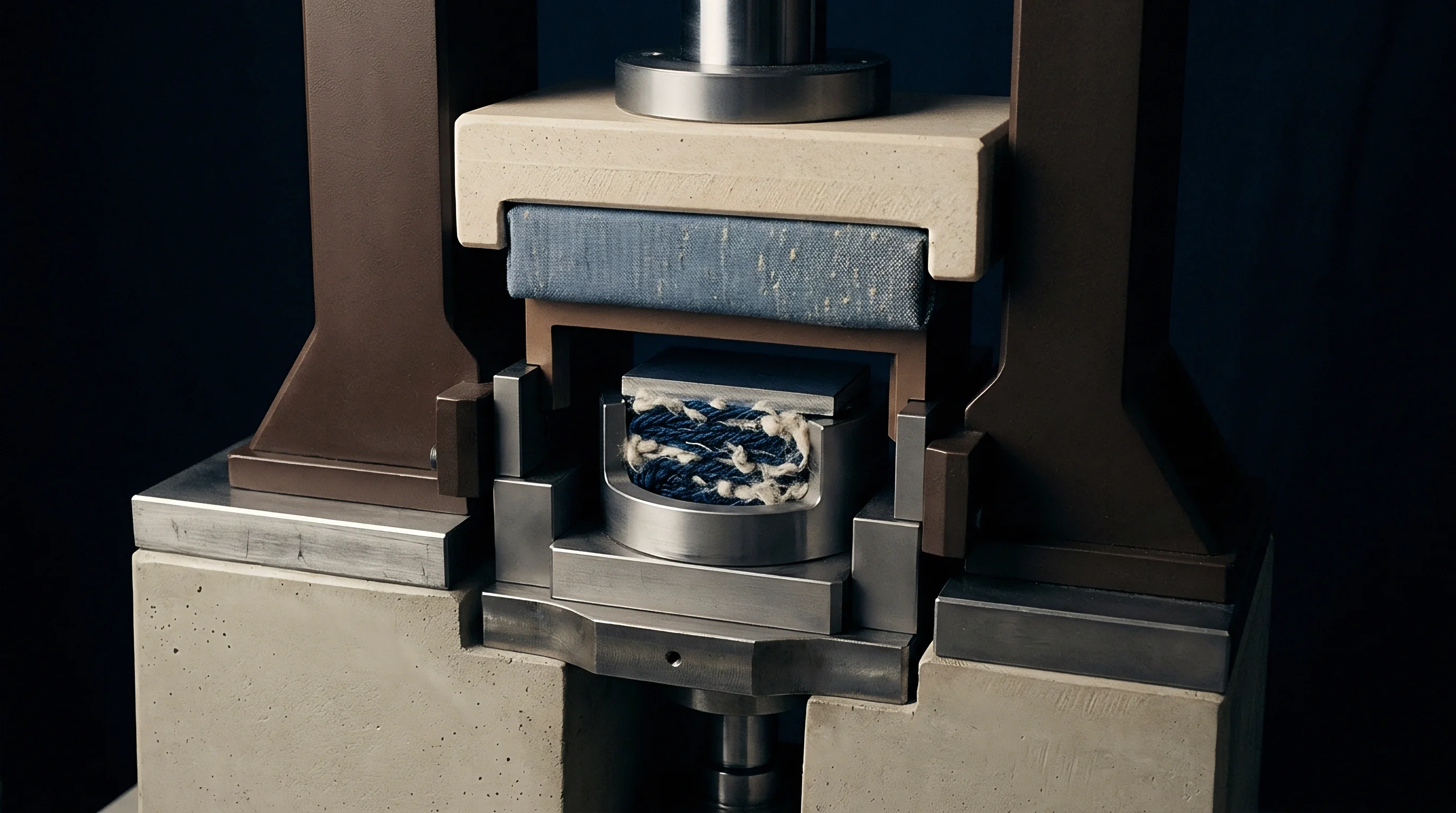
Quench
Passing the singed web through an immediate chemical quench bath extinguishes residual smoldering and initiates enzyme saturation in a continuous sequence. Greige cotton carries small combustible seed coat fragments that catch fire at the burner and glow without an open flame. Submerging the fabric into an aqueous chemical solution within 0.8 seconds of flame exit snuffs these embers before localized pinholes burn through the cotton matrix.
The quench box acts simultaneously as the spark arrestor and the desize application liquor trough, combining safety controls with chemistry delivery.
Liquor pickup control across the quench squeeze rolls governs desizing chemical distribution. High-speed continuous preparation ranges utilize a heavy-duty two-bowl or three-bowl padding mangle positioned directly below or adjoining the quench trough. Pneumatic or hydraulic loading across the padder applies linear nip pressures between 40 and 60 N/mm.
Heavy cotton twills require a wet pickup target of 85 to 95 percent calculated on the dry greige fabric weight. Wet pickup rates below 80 percent leave the yarn bundle core dry, preventing amylase enzymes from reaching native potato or corn starches packed inside the warp yarn interior.
Thermal stability inside the quench bath requires automatic heat exchanger regulation. Water temperature in the quench box shifts as thousands of meters of flame-heated cloth enter the bath every hour. While typical bacterial amylase formulations tolerate temperatures between 60 and 70 degrees Celsius, thermostable bacterial amylases operate efficiently between 95 and 105 degrees Celsius.
If line interruptions occur and fresh cooling water fails to compensate for latent web heat, bath temperatures spike above 110 degrees Celsius, denaturing the enzyme protein structure. Denatured amylase loses all catalytic capability instantly.
Wetting chemical formulation added to the quench bath accelerates penetration into raw cotton wax. Raw greige twill yarn carries roughly 0.5 to 1.0 percent natural fats and waxes by weight, rendering the unboiled cotton hydrophobic. Fast running speeds allow the fabric only 1 to 2 seconds of submersion in the quench trough.
Formulators blend 2 to 5 g/L of a rapid-acting, low-foaming non-ionic surfactant capable of lowering aqueous surface tension below 30 mN/m. Without this surfactant, the quench solution beads on the singed surface, creating patchy pickup across the twill ribs.
Surfactant stability must withstand the mechanical shear of the continuous nip rollers. Repeated circulation of the quench liquor through pumps and filtration baskets generates heavy mechanical agitation. Foaming at the nip lifts the fabric off the roll face and causes hydrodynamic aquaplaning, which creates wet pickup variations across the piece width.
Adding a non-silicone defoamer at 0.2 to 0.5 g/L maintains bath clarity without leaving silicone oil spots that resist reactive dye uptake.
Skipping quench liquor circulation filtration leaves floating charred fiber lint to redeposit into the twill weave valleys.

Enzyme
Sizing materials applied during warp beaming shield yarns from loom friction but block subsequent wet processing. Weaving mills apply combinations of modified native starches, polyvinyl alcohol (PVA), carboxymethyl cellulose (CMC), and polyacrylates to cotton warp threads. Greige bottom-weight twill fabrics feature size add-on levels ranging from 8 to 14 percent relative to warp weight.
Unconverted starch prevents water-soluble dyestuffs from accessing the secondary cellulose cell wall. Classical desizing employs endo-amylases, which cleave internal alpha-1,4-glucosidic bonds inside amylose and amylopectin polymer chains, reducing insoluble long-chain macromolecules into short-chain, water-soluble dextrins.
Enzymatic breakdown efficiency depends strictly on four operational variables: enzyme concentration, liquor pH, bath temperature, and mechanical dwell time. Amylases do not attack the cotton cellulose substrate, unlike aggressive acid or oxidative cracking chemistries. They remain sensitive to bath environmental drift.
Alpha-amylases sourced from Bacillus licheniformis function across a broader thermal band than fungal amylases, maintaining catalytic activity above 90 degrees Celsius. Maintaining strict control over these reaction inputs ensures reproducible size hydrolysis across consecutive dye lots.
| Desizing Chemistry Platform | Operating Temperature Band | Operational pH Range | Minimum Dwell Time | Surfactant Compatibility |
|---|---|---|---|---|
| Bacterial Mesophilic Amylase | 60 to 75 °C | 6.0 to 7.0 | 4 to 8 hours | Non-ionic only |
| Thermostable Bacterial Amylase | 95 to 105 °C | 5.8 to 6.8 | 15 to 45 seconds | Non-ionic and select anionics |
| Oxidative Persulfate System | 100 to 105 °C | 10.0 to 11.5 | 2 to 4 minutes | Alkali-stable anionic |
| Enzyme-Surfactant Hybrid Blend | 80 to 90 °C | 6.2 to 7.2 | 1 to 2 hours | Built-in non-ionic package |
Chemical sizing formulations incorporating synthetic polymers demand auxiliary extraction aids. Polyvinyl alcohol and acrylic sizes disperse in warm water without requiring enzymatic chain cleavage. Native starches blended with PVA form a protective matrix that traps synthetic components within the yarn bundle.
Enzymatic hydrolysis digests the starch backbone, loosening the mechanical grip on the PVA chains. Adding 1 to 2 g/L of a specialized swelling agent or complexing sequestering builder prevents PVA from precipitating back onto the cotton face inside subsequent hot washing units.
Water hardness salts alter enzyme catalytic kinetics. Calcium ions stabilize the molecular tertiary structure of bacterial alpha-amylase against thermal denaturation, elevating the enzyme deactivation threshold. Plants dosing softening chemicals directly into the quench trough risk starving the enzyme of these needed cofactors.
Maintaining calcium hardness levels between 50 and 100 ppm calcium carbonate preserves enzymatic longevity in continuous operations. Excess sodium hexametaphosphate or EDTA chelation agents strip necessary calcium ions away, dropping amylolytic activity during long production shifts.
Calcium concentrations maintained near 70 parts per million protect alpha-amylase tertiary structures from premature heat collapse inside the steamer.
The Tegewa violet scale provides the standard qualitative evaluation of residual starch content. Operators spot an acidified iodine-potassium iodide analytical solution directly onto desized, washed, and dried twill samples. Free starch complexes with triiodide ions to produce intense blue or purple stains, while degraded dextrins show brown or yellow responses.
Fully cleared twill yields a violet scale rating between 8 and 9, matching pale yellow or colorless reactions. Samples reading below 6 retain unconverted starches that will generate resists, patchy penetration, and uneven shade depths in dye baths.
Residual sizing polymers left inside tightly woven twill yarns cause streaky shade variation across continuous pad dye runs.
Steam
Dwell conditions inside continuous atmospheric or pressurized steamers accelerate enzymatic reaction rates by orders of magnitude. The Arrhenius relationship dictates that chemical and enzymatic reaction kinetics roughly double with every 10-degree Celsius increase, up to the thermal denaturation boundary of the protein catalyst. Injecting saturated steam into an airtight reaction chamber keeps the fabric web saturated with moisture while holding temperatures at 98 to 102 degrees Celsius.
Tight roller-bed steamers or tight-strand steamers advance the fabric smoothly, preventing the friction marks and edge curling typical of heavy twills run under slack conditions.
Steam quality determines moisture retention throughout the processing chamber. Dry superheated steam pulls water out of the padded web, drying out the twill before the enzyme completes starch hydrolysis. Once fabric moisture drops below 40 percent of dry weight, enzymatic migration and catalytic activity cease entirely.
The steam delivery manifold requires dedicated desuperheaters to supply 100 percent saturated vapor without carrying liquid water condensate droplets that cause water-spotting defects on greige goods.
Holding time inside continuous steamers typically spans 2 to 4 minutes for tight-strand configurations and up to 15 minutes for roller-bed steamers processing heavyweight workwear twill. A 320 g/m² 2/1 twill woven from ring-spun 20/1 Ne cotton yarns contains dense yarn intersections that slow chemical diffusion. Longer steamer dwell times permit thermal diffusion to plasticize the starch sizing sheath inside the core of the yarn, giving activated amylase molecules direct access to interior polymer chains.
Cold-pad-batch desizing replaces continuous steam exposure with prolonged room-temperature storage. Mills running smaller production lots pad the twill with mesophilic amylase, non-ionic wetting agents, and sequestering builders at 30 to 40 degrees Celsius, achieving 90 percent wet pickup. The saturated cloth is wound onto batch A-frames, sealed immediately inside airtight polyethylene wrapping film, and rotated continuously on motorized stands at 4 to 8 rpm for 8 to 16 hours.
Continuous rotation eliminates gravitational liquor migration toward the lower edge of the roll, which would otherwise induce wide side-to-side and end-to-end size removal discrepancies.
Unsealed batch rolls suffer rapid surface drying on their exposed outer edges and outer wraps. Moisture loss drops the internal chemical mobility needed for catalytic starch cleavage, producing dry-edge defects that yield heavy selvage-to-center shade bands during piece dyeing. Proper plastic film overlapping with tensioned strapping holds internal relative humidity at 100 percent across the dwell period.
How does warp tension regulation prevent twill distortion during high-speed steaming?
Tension control systems across multi-roller steamers prevent diagonal skewing and rib distortion in asymmetric twill weaves. A 3/1 twill tends to curl along its selvages when pulled under wet longitudinal tension due to unbalanced internal yarn torque. Automated load cells mounted to internal guide rolls modulate drive motor speeds, maintaining web tension between 1.5 and 2.5 N per centimeter of fabric width.
Excessive warp tension pulls the twill diagonal flat, narrowing the greige width permanently and crimping weft yarns, which restricts access for the subsequent washing sequence.
The standard processing contract specifies that mechanical skew in finished twill shall not exceed 2.5 percent measured against perpendicular weft alignment.
Wash
Hot mechanical washing extracts hydrolyzed dextrins, degraded wax emulsions, and residual processing chemicals from the twill structure. Digested starch products remain trapped inside the dense cotton structure until high-energy water turbulence displaces them. Washing ranges operate multiple counter-current washing boxes equipped with upper and lower staggered guide rolls.
The fabric web repeatedly threads through liquor baths and exits through intermediate nip squeezers that force dirty boundary-layer water out of the yarn core before the web enters cleaner water downstream.
Temperature gradients across consecutive wash boxes determine starch solubility and prevent re-precipitation. Hydrolyzed starches and PVA synthetic sizes shed from the fabric core form colloidal dispersions that gel if exposed to sudden thermal drops. The initial wash boxes must maintain temperatures between 90 and 95 degrees Celsius to keep size fragments thoroughly dissolved.
Subsequent compartments step down to 80, 70, and finally 50 degrees Celsius to prepare the twill for neutralization or subsequent scouring stages.
| Compartment Stage | Water Temperature | Water Flow Direction | Chemical Additions | Intermediate Nip Pressure |
|---|---|---|---|---|
| Box 1: Primary Extraction | 95 °C | Counter-current exit | 1.0 g/L Detergent/Dispersant | 35 N/mm |
| Box 2: Size Dispersion | 90 °C | Counter-current transfer | 0.5 g/L Dispersant | 40 N/mm |
| Box 3: Dilution Wash | 80 °C | Counter-current transfer | Fresh water cascade | 40 N/mm |
| Box 4: Warm Rinse | 65 °C | Counter-current transfer | Fresh water cascade | 45 N/mm |
| Box 5: Cold Rinse / Sour | 40 °C | Fresh water entry | 0.5 g/L Acetic acid (as needed) | 50 N/mm |
Counter-current water flow logic slashes fresh water consumption while maintaining high dilution gradients. Fresh water enters exclusively at the final compartment and flows upstream against the direction of fabric travel, progressively accumulating extracted solids. Contaminated wash water exits through an overflow weir situated at the first washing tank, where size concentration reaches its maximum.
Operating at a water-to-fabric ratio of 4 to 6 liters per kilogram of cloth provides sufficient washing efficiency while limiting thermal energy consumption and downstream wastewater treatment plant loads.
Mechanical turbulence within the washing tank determines boundary layer displacement rates across the fabric face. Standard immersed guide rolls move fabric smoothly through the liquid, but heavy twills generate a stagnant boundary layer of viscous water that travels with the cloth. High-efficiency washing units deploy grooved perforated drums, internal spray nozzles delivering water jets at 2 to 3 bar, or mechanical wave-generating agitators.
These devices drive turbulent water across the angled twill ribs, dislodging stubborn starch pastes from the warp valleys.
Intermediate squeezer nips fitted between wash compartments prevent dirty water carryover into cleaner stages. Squeezer nips working at 40 N/mm drop fabric water retention down to 65 to 70 percent, stripping the boundary layer away. Inadequate nip pressure allows liquor carrying high concentrations of suspended size polymers to pass into the subsequent compartment, collapsing the concentration gradient and redepositing sizing films back onto the cotton fibers.
Wash performance failure leads directly to streaky dye pickup and uneven shade uniformity during cold-pad-batch dyeing.
Ledger
Preparation chemistry and mechanical settings establish the foundational cost per finished meter on any continuous textile line. Greige bottom-weight twills carry high mass per linear meter, making chemical consumption, gas burn rates, and freshwater throughput significant drivers of wet processing overhead. Optimizing singeing and desizing parameters prevents costly shade rejections, re-dyes, and fabric degradation across downstream bleaching and continuous dyeing ranges.
Cost modeling across a continuous singeing and enzymatic desizing range processing a 280 g/m² 3/1 cotton drill reveals clear operational allocations. Natural gas consumption for dual-burner singeing at 100 meters per minute consumes approximately 0.035 cubic meters of natural gas per linear meter of fabric. Thermostable alpha-amylase dosed at 3.0 g/L in a quench bath operating at 90 percent wet pickup consumes 2.7 grams of enzyme formulation per linear meter.
Adding wetting surfactants, sequestering builders, steam utility generation, and five-stage counter-current wash water establishes the baseline preparation cost structure.
- Natural Gas Utility Cost accounts for 0.015 to 0.022 USD per meter based on burner manifold pressures, line speed, and industrial gas tariffs.
- Chemical Quench Formulations add 0.018 to 0.028 USD per meter for the combined package of thermostable enzyme, rapid-wetting agents, and anti-foaming chemistries.
- Steam Thermal Energy represents 0.020 to 0.035 USD per meter to maintain atmospheric saturation inside the reaction steamer and heat wash boxes to 95 degrees Celsius.
- Freshwater Supply and Effluent demands 0.008 to 0.014 USD per meter based on a 5 L/kg consumption ratio and local chemical oxygen demand discharge levies.
- Direct Machine Labor and Maintenance contributes 0.012 to 0.018 USD per meter covering continuous range staffing, burner nozzle cleaning, and drive calibration.
Process control failures during preparation generate compounding financial losses downstream. Insufficient singeing forces mills to run aggressive mechanical shearing after dyeing, which drops fabric weight by 2 to 3 percent and risks cutting structural warp threads. Incomplete desizing leaves unhydrolyzed starch patches that block dye molecule diffusion during continuous pad-steam dyeing, producing cloudy, mottled defect rolls that must be downgraded from prime apparel yardage to seconds at a 40 to 60 percent market discount.
Every kilogram of residual starch left on the cloth consumes additional hydrogen peroxide during subsequent bleaching, escalating chemical utility costs.
Tensile and tear strength degradation represents a critical risk during singeing adjustments. Excessive flame dwell times or uncalibrated burner heights scorch exposed twill crowns, degrading cellulosic polymer chains before chemical processing begins. ISO 13934-1 strip tensile tests and ISO 13937-1 tear tests conducted on singed versus unsinged greige twill identify thermal damage early.
A loss in warp direction tensile strength greater than 5 percent signals uncalibrated flame temperatures or inadequate web travel speeds.
Continuous quality verification uses automated Tegewa iodine testing and laboratory moisture balances to validate line settings. Every production batch of 5000 meters undergoes five-point widthwise extraction testing to confirm starch clearance ratings across the selvage, quarter, center, three-quarter, and opposite selvage zones. Consistent ratings of 8 or higher on the Tegewa scale confirm uniform preparation, clearing the twill for consistent, reproducible dyeing across long production runs.
Does flame singeing reduce tearing strength more severely in twill than in plain weave fabrics?
Twill weaves experience higher localized tear reduction when flame exposure settings run out of specification. Because twill weaves concentrate yarn mass into floating ridges on the fabric face, high-energy flame jets direct thermal flux straight onto these exposed yarn crowns. Plain weave fabrics distribute thermal exposure uniformly across balanced, alternating warp and weft intersections, dissipating heat more evenly across the surface.
When singeing parameters run hot, twill floats sustain concentrated surface fiber embrittlement, accelerating tear propagation along the twill diagonal during Elmendorf pendulum testing.
What remaining variable causes desizing inconsistency across different weaving mill origins?