Core Sampling Mechanics for High Density Cotton Bales
Rotary mechanical core sampling extracts representative lint strata from high-density cotton packages while preserving fibre length profiles for accurate arbitration.


Compression
Universal density packages pack raw lint to a minimum density of 448 kilograms per cubic metre. High-density export packages compress that same lint beyond 560 kilograms per cubic metre, driving internal interstitial air void ratios below 0.38. At these volumetric packings, mechanical probe penetration ceases to function as a simple displacement event.
Probe entry acts as an anisotropic cutting and compaction event governed by lateral hoop stresses, fibre crimp collapse, and frictional resistance along the probe tube wall.
Standard gin universal density units operate at gross bale dimensions of 1400 millimetres length, 530 millimetres width, and 760 millimetres depth under tie restraint. High-density compresses reduce package width to approximately 470 millimetres and thickness to 530 millimetres, elevating outward pressure on peripheral steel straps or high-tensile wire bands above 18 kilonewtons per strap. When a sampling corer enters this compressed structure, it encounters non-uniform radial densities across the cross-section.
The periphery directly beneath the bands exhibits elevated compaction, while regions between ties display lateral bulges with altered fibre orientation.
ASTM D1441 specifies mechanical pneumatic extraction using rotary hollow augers operating at penetration velocities between 150 and 250 millimetres per second to prevent compressive fibre buckling ahead of the cutter tip.
Mechanical probing tools struggle with these density regimes. Hand-driven sampling irons or simple push probes fail to penetrate beyond 75 millimetres into a high-density package without buckling the steel shaft. Modern commercial receiving bays employ powered electromechanical or hydraulic coring apparatus mounted on overhead rails or mobile gantries.
The cutting head utilizes hardened tool steel or tungsten-carbide tips ground with internal reverse tapers to sever compacted fibres cleanly rather than packing lint forward ahead of the cutting edge.

Mechanical Resistance Gradients across Universal Density Packages
Dynamic penetration resistance correlates with bale packing density and moisture regain. As ambient relative humidity drops below 55 percent at 21 degrees Celsius, commercial lint moisture drops below 6.5 percent dry basis. Dry fibres exhibit elevated brittle fracture susceptibility, higher inter-fibre frictional coefficients, and increased resistance to lateral displacement.
Hydraulic thrust values climb rapidly during the first 120 millimetres of probe penetration. Penetration resistance reaches an initial peak as the cutter severs the dense outer shell, levels briefly within intermediate layers, then spikes if the tool approaches the central core zone where gin tramper foot strokes overlap. Table 1 outlines the operational mechanics recorded across standard international cotton packaging formats.
| Bale Format | Nominal Density (kg/m³) | Internal Restraint Stress (kPa) | Probe Thrust Requirement (kN) | Cutter Speed (RPM) |
|---|---|---|---|---|
| Modified Flat | 224 to 280 | 85 to 120 | 1.8 to 2.4 | 450 to 600 |
| Gin Universal Density | 448 to 480 | 280 to 350 | 4.5 to 5.8 | 800 to 950 |
| Standard Compress | 380 to 420 | 210 to 260 | 3.8 to 4.9 | 700 to 850 |
| High-Density Export | 560 to 620 | 420 to 580 | 6.8 to 9.2 | 1100 to 1400 |
Probe barrels without adequate wall clearance bind in the core hole due to immediate elastic recovery of the severed cotton. Cotton fibres exert high normal forces against the probe outer diameter within milliseconds of cutter passage. To prevent frictional seizure and drive motor stall, modern corers incorporate a barrel step-down: the outer diameter of the tube behind the cutting crown is machined 1.2 to 1.8 millimetres narrower than the outer cutting lip.
A buyer drafting lot verification clauses specifies corer tip geometry directly.
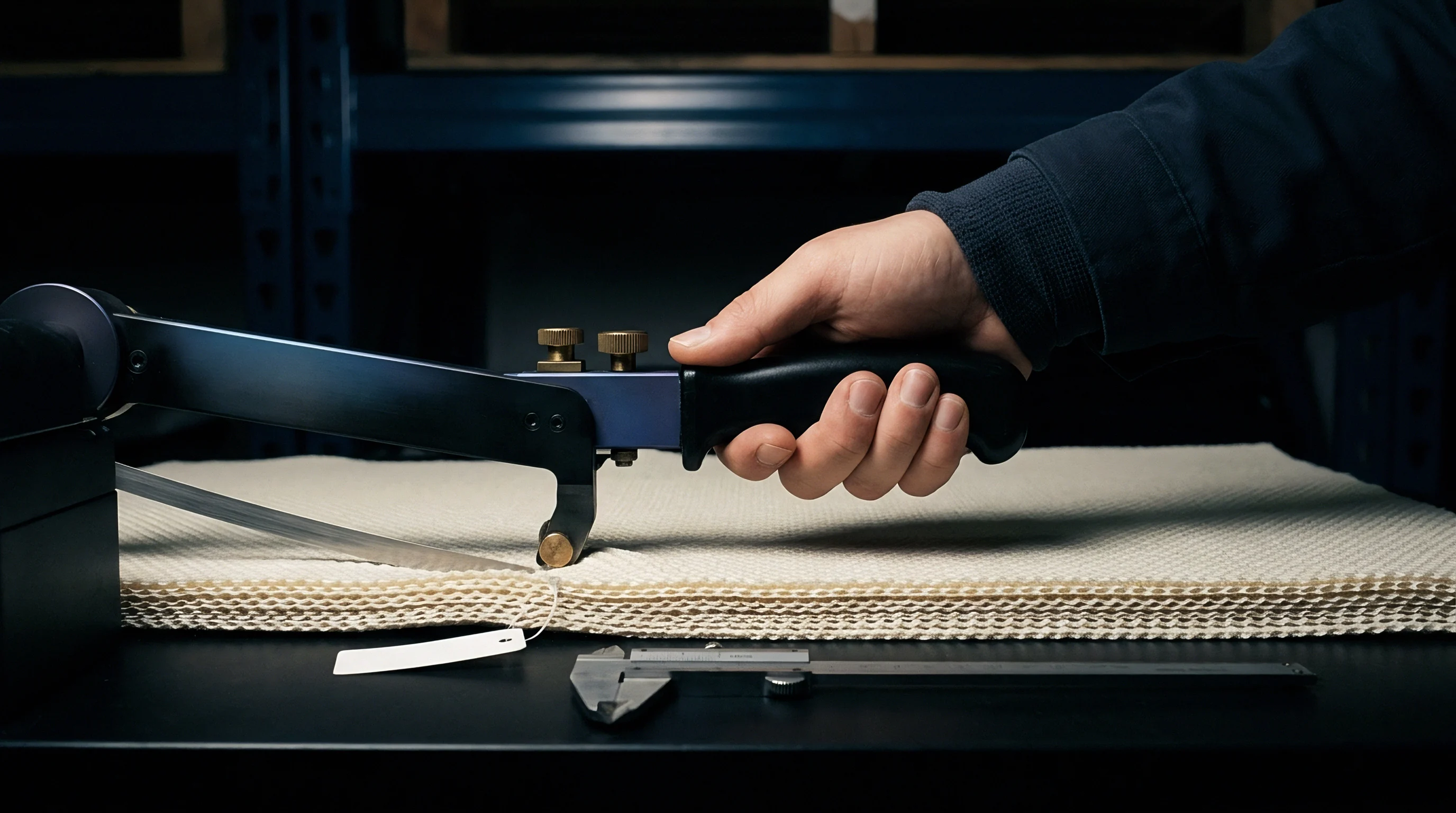

Barrel
A coring tube functions simultaneously as a thin-walled pressure vessel, a rotating driveshaft, and an extraction conduit. Core sampling mechanics demand strict metallurgy. Standard mild steels deform under cyclic axial shock loads exceeding 8 kilonewtons.
Barrels machined from cold-drawn AISI 4140 chrome-molybdenum alloy steel or heat-treated 17-4 PH stainless steel withstand torsional strain while providing wear resistance against particulate contamination embedded in raw cotton lint.
Surface friction along the inner barrel wall governs sample integrity. When a cotton plug enters the tool, internal drag creates axial compressive forces along the core column. If internal friction exceeds the shear strength of the unsevered lint core ahead of the tip, the tool stops cutting fresh material.
Instead, the mechanism pushes a dense, compacted plug through the bale, disrupting packaging layers and destroying fibre alignment. Polishing internal tube surfaces to an arithmetic mean roughness value below Ra 0.25 micrometres reduces inter-fibre drag.

Geometry of the Cutting Crown
Cutter tips feature either serrated scallop teeth or continuous bevel geometry. Scalloped edges provide localized pressure concentrations that shear high-tenacity fibres with lower axial thrust. Continuous bevels produce smoother sample cores suitable for high-volume automated testing lines.
The rake angle of the cutting edge determines whether fibres slice cleanly or shear through tearing.
- Scallop Pitch establishes the spacing between shearing points, where profiles ground at 6.35-millimetre intervals balance torque demand with chip evacuation across dense lint matrices.
- Bevel Clearance Angle prevents the outer heel of the rotating crown from rubbing against the compressed sidewall, requiring an external relief profile of at least 7 degrees.
- Internal Taper Angle widens the passage into the central barrel, utilizing a reverse conical taper between 1.5 and 3.0 degrees to allow immediate longitudinal expansion of the severed plug.
- Hardness Differential between the cutting tip and the structural tube prevents brittle fracture at the mounting threads, demanding Rockwell C 58 to 62 on the cutting crown and Rockwell C 38 to 42 along the main tube.
Radial core compression during entry alters sample mass per unit length. A 50-millimetre internal diameter cutter operating in 580 kg/m³ high-density cotton yields a core that expands laterally to 54 millimetres upon exiting the rear of the sampling tube into atmospheric collection bins. Core diameter dictates specimen mass validity for subsequent testing apparatus.
A core cutter diameter below 45 millimetres increases edge-damage mass fractions beyond acceptable thresholds for High Volume Instrument length determinations.
Excessive rotational speeds induce thermal degradation. Friction between steel tips and dry cellulosic fibres generates localized surface temperatures exceeding 140 degrees Celsius when cutter rotational velocities surpass 1600 RPM without adequate forward advance. Thermal exposure above 120 degrees Celsius alters moisture equilibrium, desiccates natural cotton waxes, and skews micronaire flow rate measurements.
Axial feed speed must synchronize with spindle rotation to maintain penetration rates between 0.25 and 0.40 millimetres per revolution.
The mechanical tolerance between probe guide sleeves and bale handling clamps ensures that the probe enters strictly parallel to the internal layered batt structures. Skewed probe entry crosses multiple strata at variable angles, introducing mass variations across the extracted specimen column.


Shearing
Cellulose fibrils withstand substantial longitudinal tension, exhibiting individual single-fibre tenacities between 25 and 40 centinewtons per tex. Transverse shear strength, by contrast, is significantly lower. Mechanical corers rely on this anisotropic property.
When the cutter edge contacts individual cotton fibres lying across its circular path, it must shear them before axial tension exceeds fibre tensile yield strength, which would otherwise pull fibres out of the adjacent compressed mass without cutting.
If a blunt edge encounters an unconstrained fibre bundle, the bundle deflects into the void of the tube or slips beneath the cutting bevel. The fibre undergoes high tensile elongation until rupture occurs, leaving jagged, fibrillated ends rather than clean transverse cuts. This tensile pull-out damages the sample and extracts fibres preferentially based on length and orientation.
The resulting specimen displays false short fibre index values when submitted to photoelectric or capacitive staple testing.
Mechanical Degradation and Fibre Length Realities
High Volume Instrument length determinations depend on an uncompromised staple distribution. When coring tools induce cutting or pulling artifacts, Upper Half Mean Length values drift downward while Short Fibre Index readings inflate artificially. Peripheral edge effects produce damaged fibre fragments along the outer circumference of the cylindrical core plug.
Let the volumetric ratio of peripheral cut damage describe the specimen integrity. For a cylindrical sample core of radius r and total length L, edge damage occurs within an annular boundary layer of thickness d, where d corresponds to the average effective fibre staple length. Table 2 details the calculated perimeter-to-volume relationships and observed measurement drifts across differing probe inner diameters.
| Core Internal Diameter (mm) | Cross-Sectional Area (mm²) | Boundary Layer Fraction (%) | UHML Drift (mm) | SFI Increase (% points) |
|---|---|---|---|---|
| 25.4 | 506.7 | 68.4 | -1.85 | +4.8 |
| 38.1 | 1140.1 | 49.2 | -1.15 | +2.9 |
| 50.8 | 2026.8 | 38.6 | -0.42 | +1.1 |
| 63.5 | 3166.9 | 31.5 | -0.18 | +0.4 |
As cutter inner diameter increases, the boundary layer volume fraction drops significantly. A 50.8-millimetre corer limits edge-induced staple distortion to commercially acceptable limits, while a 25.4-millimetre probe produces samples unusable for contractual length arbitration. The smaller corer cuts a higher proportion of its captured fibres at both ends.

Do Alternative Extraction Velocities Alter Fibre Damage?
Hydraulic feed stroke velocity dictates the strain rate applied to raw lint fibres during shearing. High strain rates above 300 millimetres per second increase the dynamic shear modulus of native cellulose, promoting brittle fracture directly at the cutter interface without extensive longitudinal bundle draw.
Slow penetration velocities below 80 millimetres per second allow fibres to flex and reposition ahead of the advancing bevel edge. Fibres orient parallel to the penetration vector, sliding between the cutter and the untamped lint layers. This slippage creates rope-like aggregates, known as probe neps, along the surface of the core plug.
Probe neps distort trash analyzer optical counts and introduce false positive neppiness ratings during automated image classification. Regulating hydraulic advance pressure to maintain continuous forward velocity preserves natural fibre distribution.
A dull cutter edge increases mechanical nep counts on core plug boundaries by more than three hundred percent compared to factory sharpened tooling.
Worn edges compress lint laterally rather than severing cell walls. The classing office spots this immediately on the comb: the sliver breaks unevenly and the base beard shows artificial brush ends where bundles snapped in tension rather than yielding to a clean blade pass.
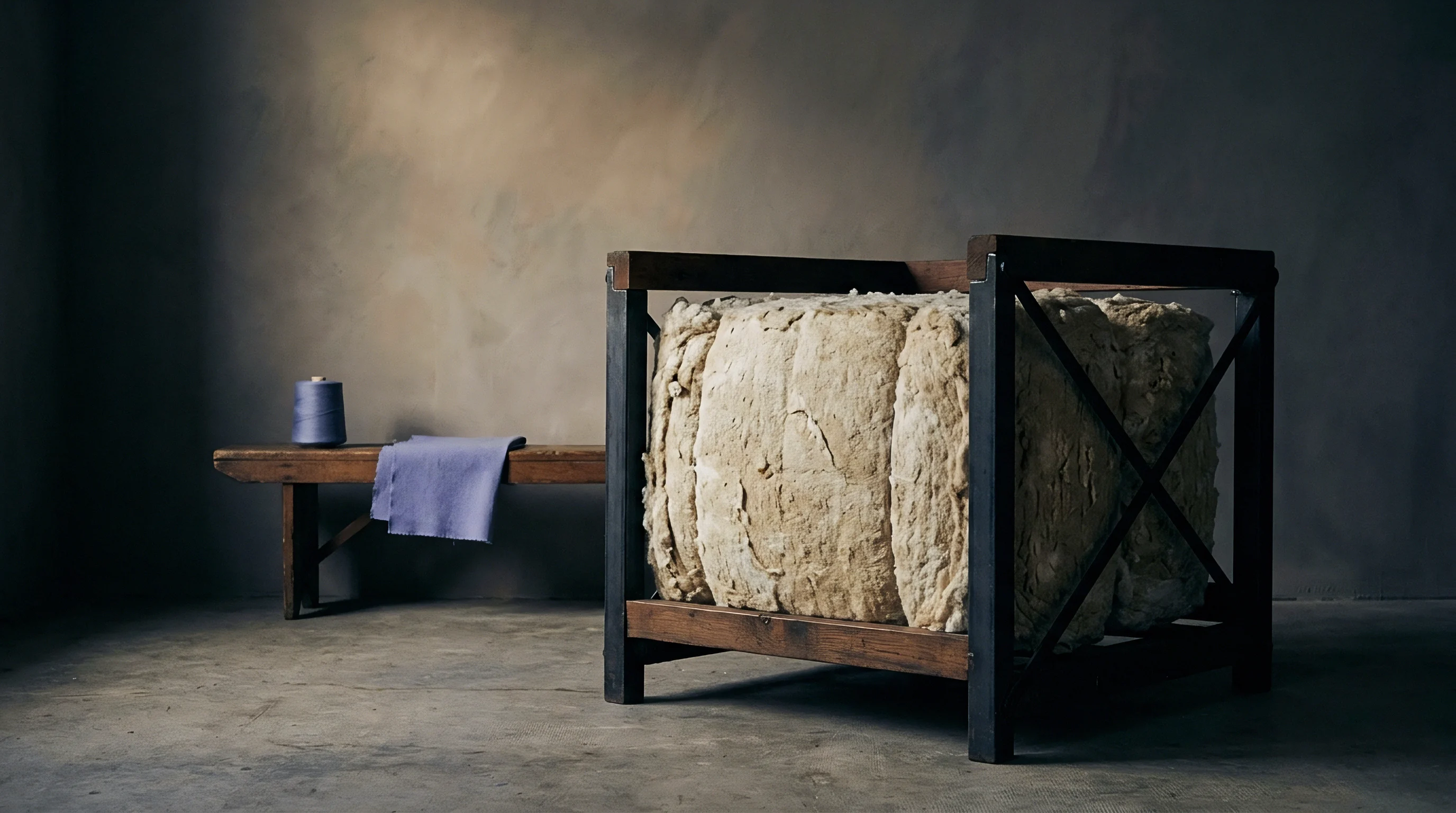
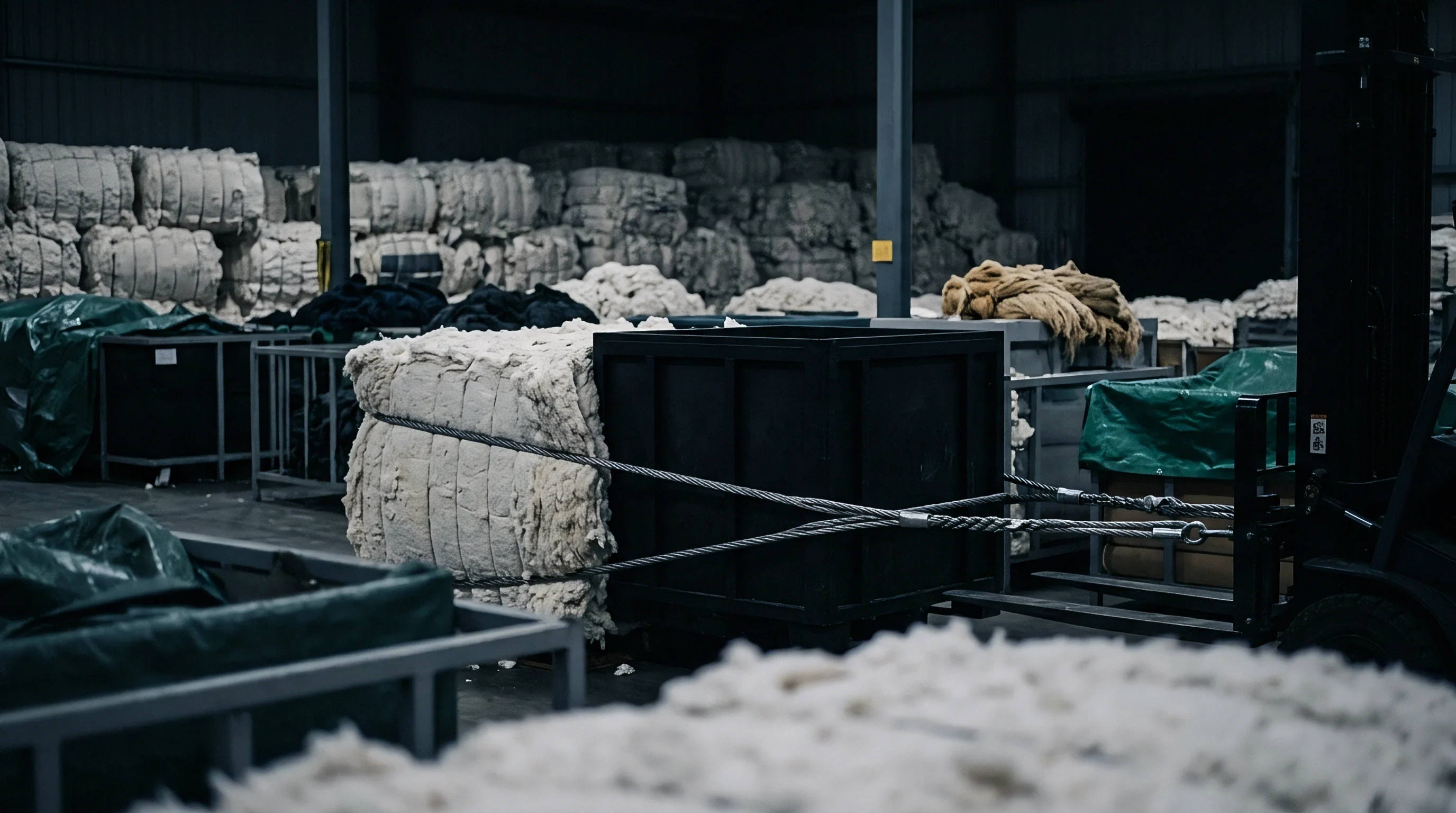
Vacuum
Severing a core plug inside a high-density bale does not guarantee extraction. The surrounding lint exerts substantial inward normal pressure on the core column. When the tool retracts, friction between the core and the interior of the bale often exceeds the structural tensile strength of the extracted lint plug, tearing the column and leaving the cut sample inside the bale cavity.
Automated systems employ high-volume pneumatic suction to pull the specimen rearward through the rotating spindle.
The pneumatic transport loop couples directly to the tool head via rotary air unions. Air velocities must remain within controlled operational windows: insufficient airflow leaves dense plugs lodged in the tool neck, while excessive velocity slams fibres against cyclonic separator screens, causing mechanical abrasion and moisture loss. Pneumatic transport air systems target conduit velocities between 22 and 28 metres per second at static negative pressures of negative 18 to negative 26 kilopascals.

Pneumatic Sample Transfer and Cyclonic Collection
The sample travels through static-dissipative flexible hosing into an individual collection canister. Static dissipation prevents electrostatic cling, which causes selective loss of fine fibres, immature thin-walled lint, and botanical trash fragments during collection.
- Cutter Plunge Initiation occurs alongside rotary air valve activation, establishing negative differential pressure across the hollow drill crown before mechanical contact with bale packaging.
- Continuous Extraction Phase draws core segments rearward into the mandrel as the cutter advances through the sequential bale layers.
- Retraction Stroke Blowback reverses airflow momentarily through secondary nozzles along the outer cutter barrel to clear lint tags from the penetration aperture.
- Canister Decoupling seals the pneumatic sample vessel to prevent atmospheric moisture exchange with ambient gin or warehouse air before conditioning.
Pneumatic transport induces sensible heat transfer and adiabatic cooling. Dry transport air pulls moisture out of the newly cut core plug within seconds of contact. If the relative humidity of the air supply inside the sampling station stands at 30 percent, a core harvested at 7.5 percent moisture regain drops to 6.8 percent during pneumatic transfer to the bagging unit.
Moisture drops alter sample mass determinations, skew commercial yield calculations, and require extended laboratory conditioning periods.
ASTM D2495 governs commercial mass calculation by demanding moisture reconciliation between gross sample mass at extraction and dried mass post-conditioning.
Canister seals feature conductive nitrile gaskets that ground the pneumatic stream to prevent spark ignition. Raw cotton moving at high velocity inside metallic ducting generates static potentials exceeding 15 kilovolts in low-humidity environments. Grounding networks maintain total electrical resistance to earth ground below 10 ohms across all moving and rotating spindle assemblies.
The pneumatic transport circuit must not alter the physical composition of the lot it represents.
A supplier who blames transit desiccation for a two-percent weight shortfall across high-density lots routinely ignores the volumetric exhaust volume of the coring station itself.

Strata
A cotton bale is not an isotropic block of material. Gin presses assemble packaging units by feeding discrete layers, known as batts or biscuits, into the press box using mechanical tramper feet. A standard 227-kilogram bale contains between 28 and 42 individual batts, each representing a distinct sliver of processing time across gin lint cleaners.
High-density compresses squeeze these distinct strata together, but they retain discrete mechanical boundaries and variable internal densities.
Fibre quality varies significantly across these internal layers. Variations in seed cotton feed rates, field harvesting conditions, module moisture profiles, and lint cleaner efficiency impart distinct properties to individual batts. A single bale may carry a full grade spread across its internal depth.
A surface sample drawn from the outermost layers captures only the terminal output of the press, failing to represent the internal mean of the parcel.
Spatial Distribution of Lint Properties inside High-Density Units
Universal density compresses apply pressure predominantly in the vertical plane before side doors latch and horizontal rams compress the block to export dimensions. This orthogonal compaction aligns fibres preferentially within planes parallel to the press platen surfaces. Coring perpendicular to these bedding planes captures an aggregate cross-section of all sequential batts.
Figure 1 illustrates the directional properties encountered during probe entry relative to batt lamination planes.
Horizontal core sampling through the bale flat side penetrates across the transverse laminations. Probe entry through the top or bottom heads runs parallel to the bedding planes, capturing material from only one or two batts along its entire stroke. Contractual sampling procedures require penetration through the bale side, oriented perpendicular to the primary compression axis, achieving an operational penetration depth of at least 400 millimetres into a 530-millimetre package depth.
Variations across individual batts alter airflow resistance during micronaire testing. If a core captures three batts of high maturity and two batts of immature lint, mechanical blending of the sample plug prior to laboratory presentation dictates the reproducibility of the reading. Table 3 presents typical property variations observed across discrete stratified layers within a single high-density bale lot.
| Layer Depth Position | Micronaire Value | UHML (mm) | Leaf Grade (Visual) | Moisture Regain (%) |
|---|---|---|---|---|
| Outer Crown (0 to 50 mm) | 4.42 | 29.2 | 2 | 6.2 |
| Upper Sub-surface (50 to 150 mm) | 4.18 | 28.7 | 3 | 6.8 |
| Mid-Core Center (150 to 300 mm) | 3.85 | 27.9 | 4 | 7.6 |
| Lower Internal (300 to 450 mm) | 3.92 | 28.1 | 4 | 7.5 |
| Opposing Face (450 to 530 mm) | 4.35 | 28.9 | 2 | 6.4 |
Moisture gradients match internal density gradients. Ambient moisture absorption during warehouse storage affects only the outer 75 millimetres of high-density lint. The central core retains the moisture profile present at the moment of gin compression.
Surface-drawn lint measures lower moisture and higher micronaire, while deep-core plugs provide true commercial lot moisture and unexposed trash values.
Sampling depth verification ensures the cutter enters deeply enough to bridge internal mechanical transitions. Short probe strokes skew sample distributions toward outer layer characteristics, misrepresenting the commercial mass and spun-yarn performance of the lot.
Failure to penetrate through the core leaves the buyer holding invoices billed on clean dry shell measurements while the spinning floor unloads trashy, high-moisture interiors into the blowroom.
Arbitration
Commercial disputes over high-density cotton lots center on mass reconciliation and classing discrepancies between origin testing dossiers and destination laboratory returns. When an import shipment arrives at a spinning mill, deviations in Micronaire, Upper Half Mean Length, or total invoice weight generate formal claims under rules established by the International Cotton Association. Core sampling serves as the legal and mechanical baseline for all subsequent laboratory verification and settlement actions.
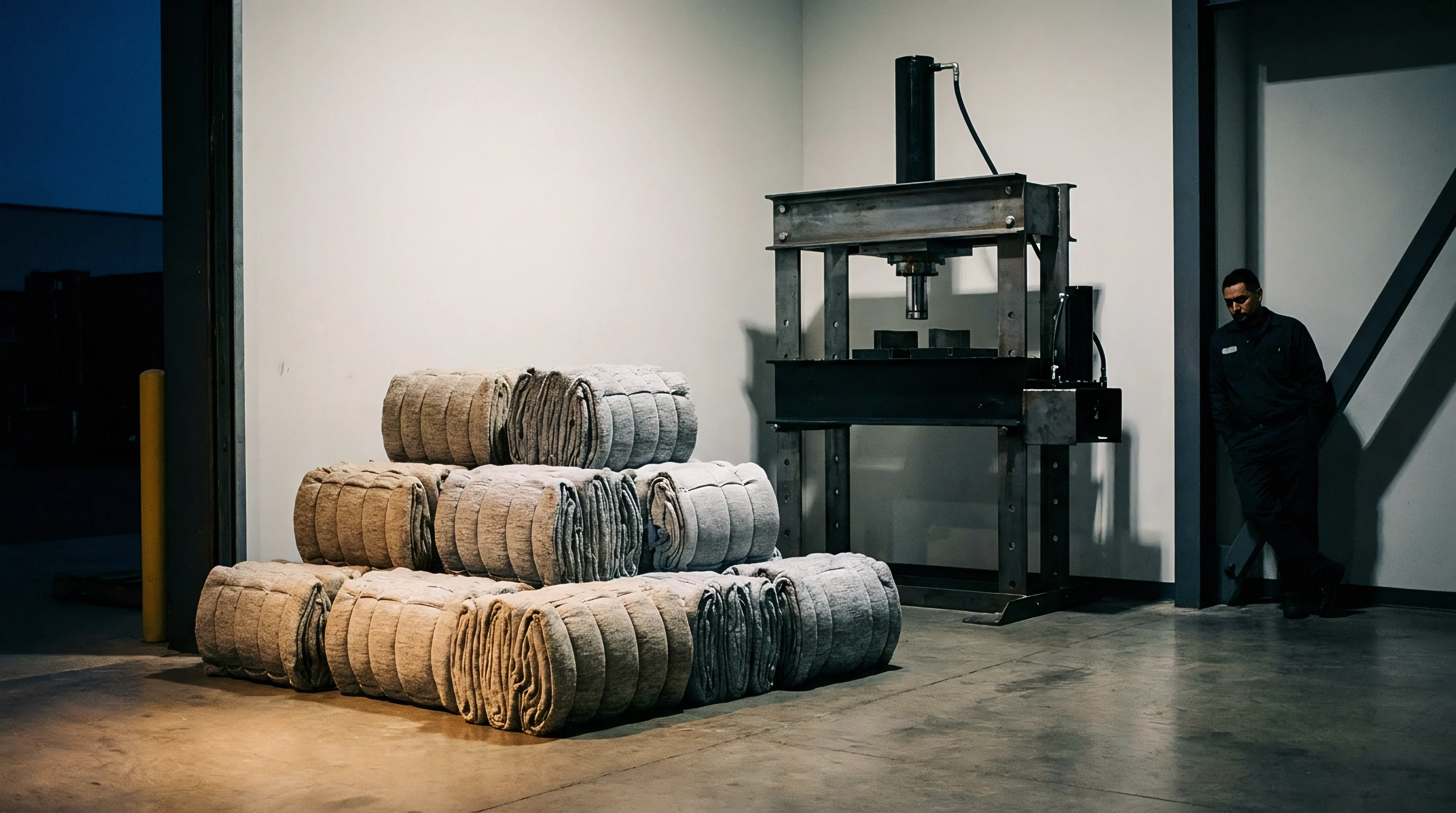
Manual cut sampling, historically performed by cutting packaging bands and drawing manual hand-plugs, is prohibited on high-density export packages. Slashing bands releases massive stored kinetic energy, deforming the bale, preventing subsequent mechanical transport, and exposing warehouse personnel to physical hazards. Mechanical core sampling through probe apertures preserves package physical dimensions, maintains strap integrity, and protects lot provenance.

Contractual Sampling Intensity and Statistical Lot Coverage
Sampling frequency dictates risk exposure for both mills and merchants. Testing every single package provides total quality characterization but incurs high testing costs and slows automated receiving bays. Statistical acceptance sampling protocols balance verification expense against claim detection probability.
- One Hundred Percent Coring samples every package within an identified gin lot, required for premium combed ring-spinning programs where micronaire uniformity tolerances sit within tight bands of plus or minus 0.10.
- Ten Percent Random Selection extracts cores from every tenth bale in consecutive sequence, standard for open-end spinning lines consuming broad-blend growths where aggregate averages govern yarn break counts.
- Square Root Sampling sets the extraction count at the square root of total shipment bale quantity plus one, applied primarily to preliminary origin screening before ocean container loading.
- Arbitration Re-Coring mandates extraction by an independent certified sworn sampler from at least twenty-five percent of disputed packages, drawn equally from both sides of the package across original probe entry axes.
When origin testing certificates disagree with destination High Volume Instrument lines, moisture content serves as the primary arbiter. Textile trade settlements determine commercial weight by applying the standard official moisture regain allowance of 8.5 percent to the bone-dry mass of the fibre lot. Core samples provide the exact moisture data necessary to calculate commercial weight reconciliations.

Calculation of Adjusted Commercial Invoice Weight
Consider an import shipment of 200 high-density cotton bales. The gross landed weight measured on port arrival scales is 45,400 kilograms, with tare packaging (ties, composite plastic wrapping, and base tags) accounting for 1.8 kilograms per bale, yielding a total tare of 360 kilograms and a net delivered weight of 45,040 kilograms.
Destination laboratory core sampling via ASTM D2495 oven drying determines that the average moisture content of the lot is 6.20 percent dry basis. Origin documentation billed the shipment at standard commercial regain of 8.50 percent, assuming an incoming moisture content of 7.83 percent wet basis. Commercial weight adjustments calculate through precise dry mass recovery.
Dry mass equals net landed mass multiplied by the complement of wet-basis moisture content. At 6.20 percent dry-basis regain, the wet-basis moisture fraction calculates as 0.0620 divided by 1.0620, yielding 0.05838 or 5.838 percent. The absolute bone-dry lint weight of the parcel corresponds to:
Bone-Dry Mass = 45040 kg (1 – 0.05838) = 42410.5 kg
Commercial mass allows 8.50 percent regain on bone-dry weight. Therefore, the legally adjusted commercial weight permitted for invoice settlement calculates as:
Invoice Commercial Mass = 42410.5 kg 1.085 = 46015.4 kg
The delivered shipment contains 975.4 kilograms more marketable lint than the scale weight reflects, representing dry fibre delivered to the mill below standard regain. When core sampling reveals the reverse condition, where wet-basis moisture sits at 10.2 percent due to excessive gin moisture restoration systems, the calculation reduces the payable weight below scale weight, protecting the buyer from paying lint prices for water.
International Cotton Association Bylaws settle quality disputes by comparing destination core testing to origin values: if the destination micronaire reading falls outside a 0.15 tolerance band from the origin classing certificate, the merchant credits the buyer based on established value difference tables, with testing fees transferred to the losing party.