Solvent Swelling Limits and Entropic Chain Relaxation Mechanics in Oriented Polymer Bundles under Tension
Axial tension accelerates solvent uptake and chain relaxation in oriented yarns; controlling line tension prevents fibrillar shearing and catastrophic bundle creep.

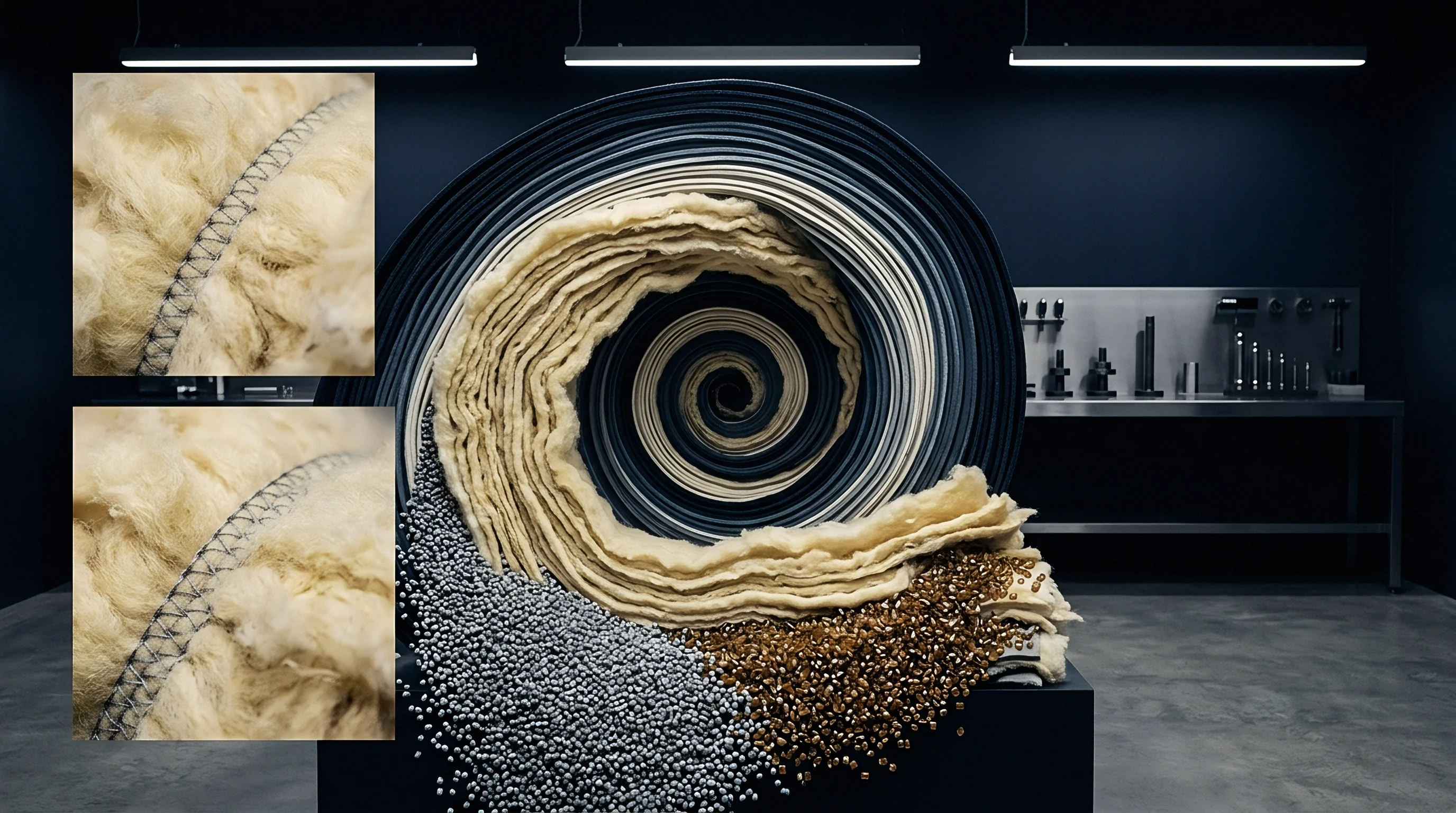
Creep
Tensile stress applied to oriented polymer filaments submerged in active solvating agents shifts the chemical potential across the fibrillar sheath. Flory-Huggins thermodynamics dictates that the chemical potential of the solvent drops inside an aligned filament network subjected to uniaxial stress. Axial tension dilates the inter-fibrillar amorphous zones.
This dilation opens transient free volume, accelerating solvent diffusion past the boundary layer and driving spontaneous swelling beyond static thermodynamic thresholds. In high-tenacity aliphatic polyamide and regenerated cellulose bundles, an axial preload lowers the activation energy for segmental rotation. The solvent plasticizes inter-chain hydrogen bonds, triggering instantaneous entropic retraction within the extended tie molecules that connect adjacent crystallites.
The operational result surfaces on the winding spindle as stress relaxation or irreversible dimensional strain. A multi-filament bundle under fixed mechanical elongation exhibits accelerated load decay upon fluid contact. Conversely, an oriented bundle held under deadweight loading shows instantaneous secondary creep rates exceeding dry benchmark values by orders of magnitude.
The swelling limits of the bundle cease to track pure solvent activity coefficients. Instead, the boundary conditions govern dimensional stability through a coupled stress-diffusion balance, where mechanical work feeds the free energy of mixing.
Under deadweight tension, solvent uptake accelerates until the chemical potential gradient balances the stored elastic energy of the stretched amorphous tie chains.
Quantifying these shifts across wet processing and continuous finishing lines prevents catastrophic line breaks. Laboratory evaluations measuring static equilibrium swelling fail to predict wet creep failure under operational string tension. The interaction of an aggressive solvent with oriented filaments produces plasticization, accelerated chain disengagement, and entropic recoil simultaneously.
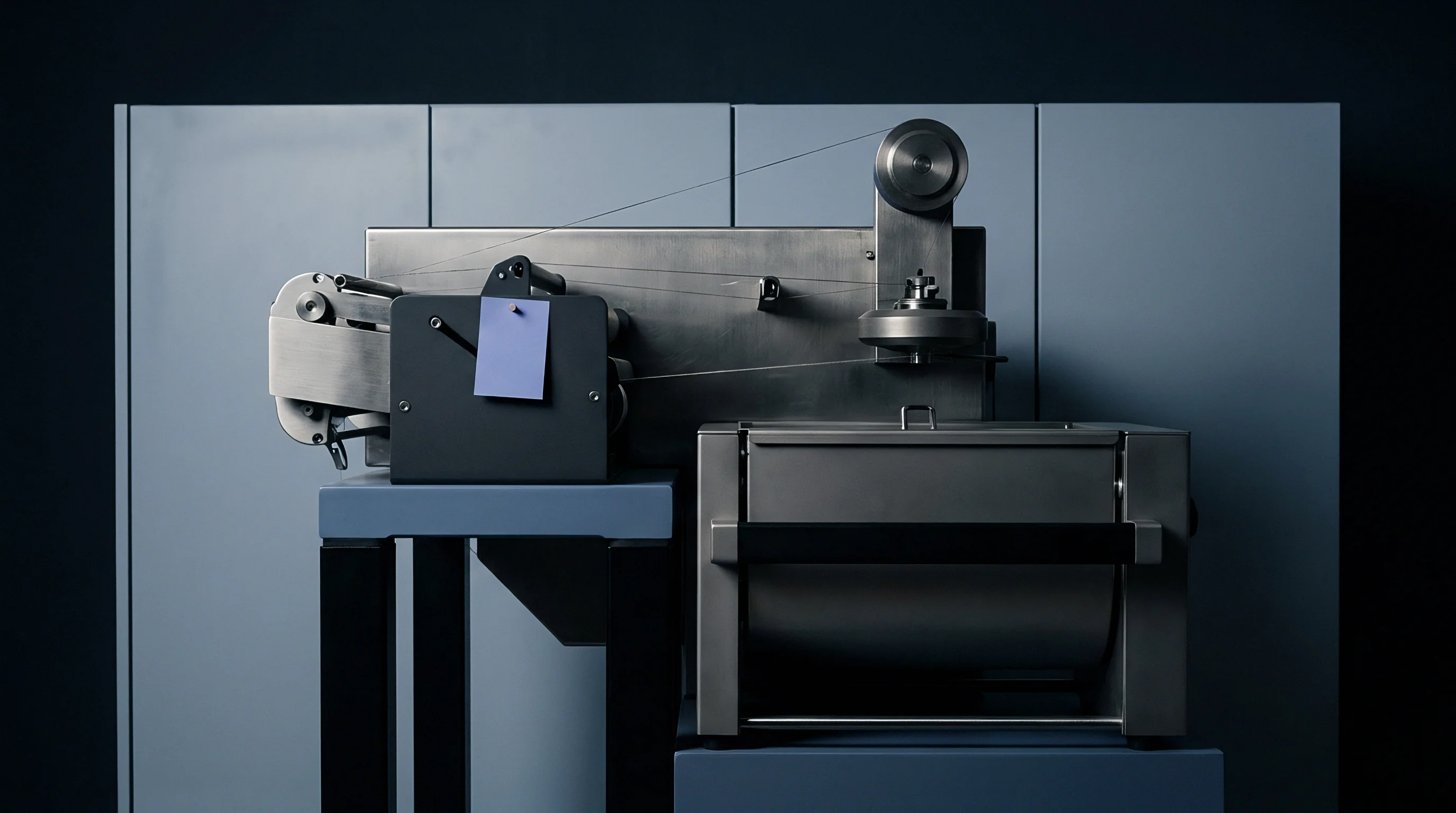
Dilatometry
Volumetric expansion of oriented yarn bundles under axial load proceeds along non-affine coordinates. The crystalline domains, characterized by dense packing and high cohesive energy densities, resist swelling penetrants entirely. Fluid ingress concentrates within the lower-density amorphous tie regions and misaligned inter-fibrillar domains.
When an external tensile force aligns the polymer chain segments, the amorphous tie molecules stretch toward their finite extensibility limit. This orientation restricts lateral expansion, forcing incoming solvent molecules into longitudinal defect tracks along the fibrillar axis.
Equilibrium uptake volumes change under these constraints. Classical swelling theories predict maximum solvent uptake via the balance between the free energy of mixing and elastic retractive forces. Under external load, the elastic component splits into applied mechanical work and intrinsic entropic restitution.
As the tie molecules extend, the conformational entropy of the polymer chains drops, creating an energetic penalty against further chain separation. The presence of aggressive solvent molecules lowers the glass transition temperature below ambient process conditions, allowing rapid translation of chain segments along the load axis.
A continuous optical dilatometer reveals distinct kinetics between unconstrained and constrained swollen bundles. Unconstrained yarns expand radially while contracting axially via entropic recoil. Constrained bundles show suppressed radial swelling, maintaining solvent uptake limits below those calculated from standard Flory-Rehner equilibrium equations.
Tension drives solvent partition coefficients away from equilibrium values, localizing plastic deformation at macroscopic bundle cross-sections.
The following table tracks mechanical and swelling equilibria across standard commercial synthetic and regenerated yarn bundles subjected to active fluid immersion under controlled axial tension.
| Polymer Bundle Base | Solvent System | Axial Load (cN/tex) | Radial Swell Ratio | Longitudinal Creep Rate (%/min) | Retraction Modulus (cN/tex) |
|---|---|---|---|---|---|
| Polyamide 66 Continuous Filament | Aqueous Phenol (1.5 wt%) | 2.50 | 1.18 | 0.042 | 185 |
| Polyamide 66 Continuous Filament | Aqueous Phenol (1.5 wt%) | 8.50 | 1.07 | 0.315 | 92 |
| Viscose Rayon High Tenacity | Aqueous Sodium Hydroxide (5.0 wt%) | 1.20 | 1.54 | 0.088 | 45 |
| Viscose Rayon High Tenacity | Aqueous Sodium Hydroxide (5.0 wt%) | 4.00 | 1.29 | 0.620 | 18 |
| Polyethylene Terephthalate Industrial | 1,1,2,2-Tetrachloroethane (Pure) | 3.00 | 1.12 | 0.019 | 310 |
| Polyethylene Terephthalate Industrial | 1,1,2,2-Tetrachloroethane (Pure) | 12.00 | 1.03 | 0.145 | 140 |
| Polyacrylonitrile Precursor | Dimethylformamide (10.0 wt% aq) | 2.00 | 1.22 | 0.055 | 220 |
| Polyacrylonitrile Precursor | Dimethylformamide (10.0 wt% aq) | 6.50 | 1.11 | 0.290 | 105 |
Data reflects standard ten-run averages measured according to continuous mechanical immersion protocols on 110-tex continuous filament yarns. An increase in external tension from low to elevated setpoints suppresses radial expansion across every chemistry, while simultaneously multiplying longitudinal creep rates.
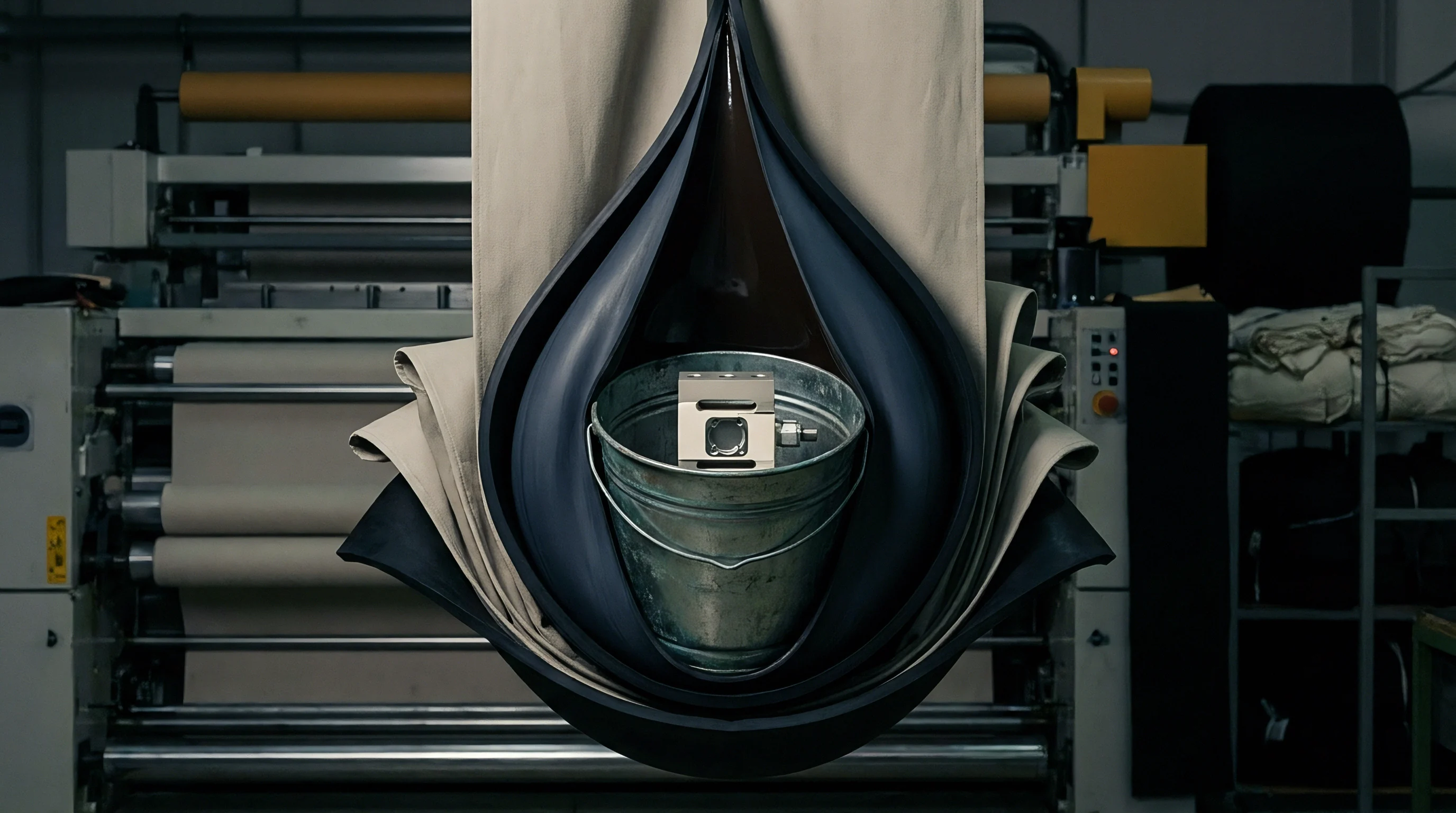

Relaxation
Entropic chain relaxation within an oriented bundle relies on segmental mobility within amorphous zones. In dry drawing, polymer chains orient along the fiber axis into metastable, low-entropy conformations. Intermolecular interactions, such as hydrogen bonding in polyamides and cellulosics or dipole forces in polyacrylonitriles, freeze these conformations below their glass transition thresholds.
When solvating molecules penetrate these domains, they disrupt intermolecular bridges. Solvent molecules solvate polymer backbones, lowering the energy barrier to rotation around main-chain single bonds.

Conformational Transitions and Recoil Forces
Chain segments rapidly sample rotational isomeric states upon solvent lubrication. They transition from extended trans configurations to random gauche conformations, lowering the overall free energy of the system through conformational entropy gains. If the bundle ends remain clamped at fixed positions, this conformational recoil manifests as macroscopic retraction tension.
The generated contractile force can damage mechanical processing frames or stretch yarn guides.
A fixed clamp spacing during chemical bath processing causes shrinkage tension to peak before viscous flow relaxes the internal stresses.
Tensile stress applied during solvent immersion alters the relaxation pathway. Chain segments experience both entropic retraction driving contraction and applied tensile forces driving shear slipping between adjacent microfibrils. At modest axial loads, entropic contraction dominates, causing bundle shortening or elevated tension.
At high axial loads, external mechanical energy overcomes the viscous friction of the solvated amorphous zones, resulting in microfibrillar slipping, localized necking, and sudden tensile failure.
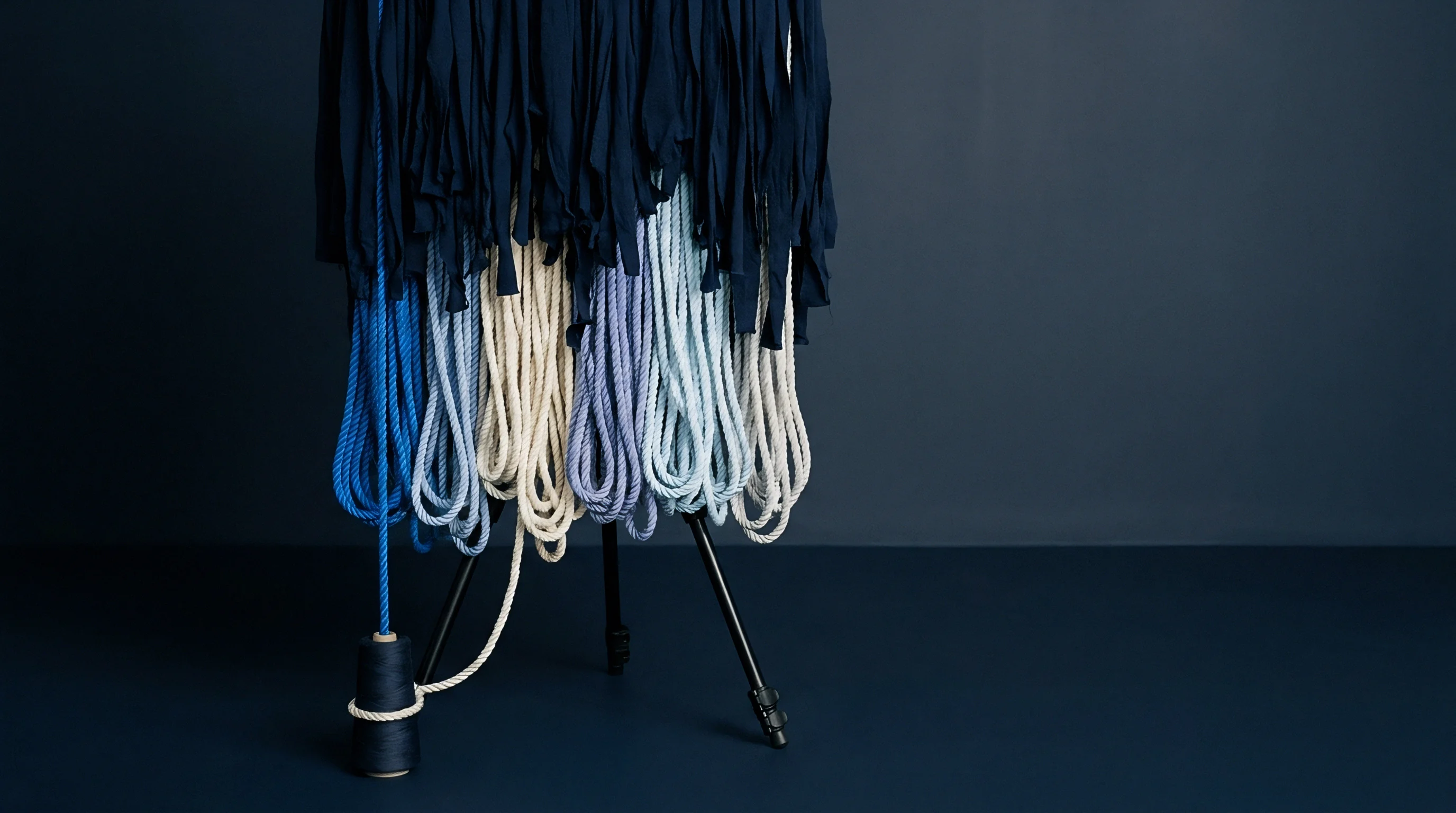
Constitutive Modeling of Solvated Bundle Dynamics
Predicting the time-dependent mechanical response requires viscoelastic representations that incorporate chemical potential dependencies. The standard linear solid framework must adapt solvent-concentration-dependent shift factors. Fibrillar slipping manifests as a non-linear Dashpot component operating in parallel with the entropic spring of the amorphous tie molecules.
Relaxation times shorten exponentially with increasing local solvent concentration, mirroring classic time-temperature-plasticization superposition mechanics.
Engineering these phenomena governs wet draw-spinning lines, post-spin finishing baths, and wet tow processing. Filament bundles experience high chemical and mechanical stresses across these continuous operations. Unbalanced tensions lead directly to process instabilities.

Rupture
Stress-cracking and solvent-induced bundle rupture proceed through distinct stages within oriented filament arrays. Filament surfaces develop surface microcavities where solvent concentration gradients produce sharp localized stresses. These stress concentrations initiate microcracks that traverse amorphous regions orthogonal to the orientation direction.
The rupture path does not break covalent bonds in crystalline domains; it separates microfibrillar interfaces via continuous chain pullout.
- Chemical Penetration involves solvent diffusion through surface boundary layers into external filament sheaths, initiating localized plasticization and lowering the effective yield stress.
- Cavity Formation occurs as applied tensile loads expand localized free volume pockets, developing transverse micro-voids across amorphous tie domains.
- Fibrillar Fibration emerges when stress concentrates at void tips, driving lateral shear yielding between aligned crystalline microfibrils and separating continuous bundles into splintered sub-elements.
- Catastrophic Pullout finishes the failure cycle as the remaining amorphous tie segments disentangle, causing complete filament bundle parting at fractional yield stress values.
Filament failure mechanics depend heavily on bundle tension during solvent exposure. Yarn breaks during high-speed chemical treatments display clean, transverse, non-fibrillated fracture surfaces characteristic of solvent-assisted stress rupture, rather than standard axial necking profiles. Minimizing these structural failures requires matching operating line tension to critical chemical exposure limits.

Draw
Establishing process boundaries for oriented filament bundles undergoing wet drawing demands precise control over three primary operating parameters. Chemical concentration in the immersion tank dictates the local solvation rate. Bath temperature governs segmental rotation rates, and yarn speed across godet rolls determines mechanical strain.
Deviations in any variable disrupt the stress-diffusion equilibrium, leading to unstable bundle profiles.

Can Process Windows Prevent Structural Fibrillar Slippage?
Operating boundaries prevent irreversible structural damage by confining yarn processing to safe tension corridors. When yarn tension exceeds upper critical thresholds, solvent plasticization accelerates microfibrillar slippage, leading to irreversible draw-down and loss of bundle cohesion. When tension falls below lower critical limits, entropic chain relaxation dominates, triggering structural loss of molecular orientation and lowering tenacity in the finished yarn.
The valid operational envelope lies between these boundaries.
| Polymer Tow Material | Solvent Medium | Bath Temp (°C) | Safe Tension Range (cN/tex) | Immersion Limit (s) | Failure Mode Outside Envelope |
|---|---|---|---|---|---|
| Viscose Tow (High Wet Modulus) | Aqueous Zinc Sulfate / H2SO4 | 65 | 0.85 – 1.65 | 4.5 | Excessive Creep / Surface Fibration |
| Aramid Precursor Tow | Dimethyl Sulfoxide / Water (50:50) | 45 | 2.10 – 3.80 | 8.0 | Inter-fibrillar Shearing / Delamination |
| Ultra-High Molecular Weight PE | Mineral Oil Hydrocarbon Extract | 115 | 4.50 – 9.20 | 12.0 | Plastic Flow Instability / Draw Break |
| Polyamide 6 Tow (Industrial) | Formic Acid Solution (2.0 wt%) | 25 | 1.40 – 2.90 | 3.0 | Entropic Recoil / Diameter Swell |
Processing tows outside these validated boundaries ruins yarn physical properties. Commercial suppliers frequently claim that unexpected filament breaks stem from raw polymer batch variations rather than tension-induced solvent stress failure within their bath units. Operating without continuous in-line tensiometers on wet godet rolls forfeits the technical foundation needed to reject degraded, poorly processed yarn lots.

Dossier
Enforcing raw material quality and process consistency requires comprehensive technical compliance documentation for oriented polymer bundles subjected to wet processing. Specifications must capture mechanical thresholds alongside thermodynamic solvent-interaction criteria. Standard procurement dossiers that only state tenacity, breaking elongation, and linear density fail to protect buyers from downstream wet-processing failures.
- Solvent Swelling Capacity Metrics must define maximum permissible volumetric uptake across specified chemical systems via calibrated optical dilatometry tests, including measurement tolerances of plus or minus 1.5 percent.
- Dynamic Creep Compliance Profiles document maximum acceptable longitudinal strain rates under targeted tension and fluid immersion conditions, verified by standardized immersion DMA testing protocols.
- Orientational Retraction Coefficients provide quantitative measures of entropic contractile force generated when bundles are held at static elongation during bath exposure.
- Solvent-Induced Critical Tension Limits establish the operational boundaries where inter-fibrillar shear yield transitions into irreversible microfibrillar rupture.
The standard supply agreement must incorporate standard quality verification clauses enforcing precise material specifications. A contract line mandating adherence to ASTM D5425 or ISO 6741 conditioning protocols, coupled with wet immersion creep thresholds under 0.25 percent per minute at operating tensions, legally shields the buyer from receiving unstable filament lots prone to solvent degradation.